-
-
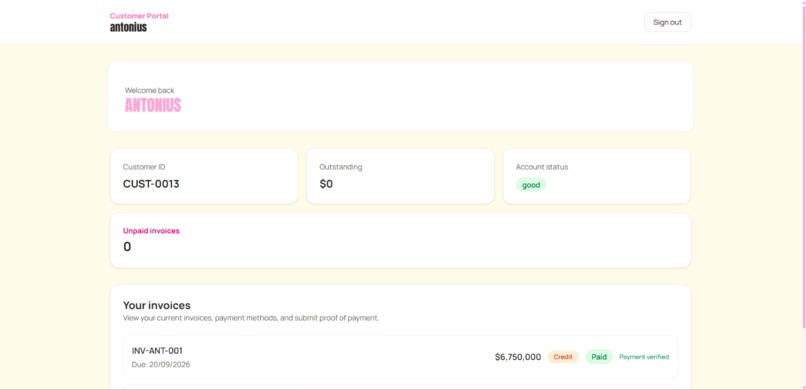
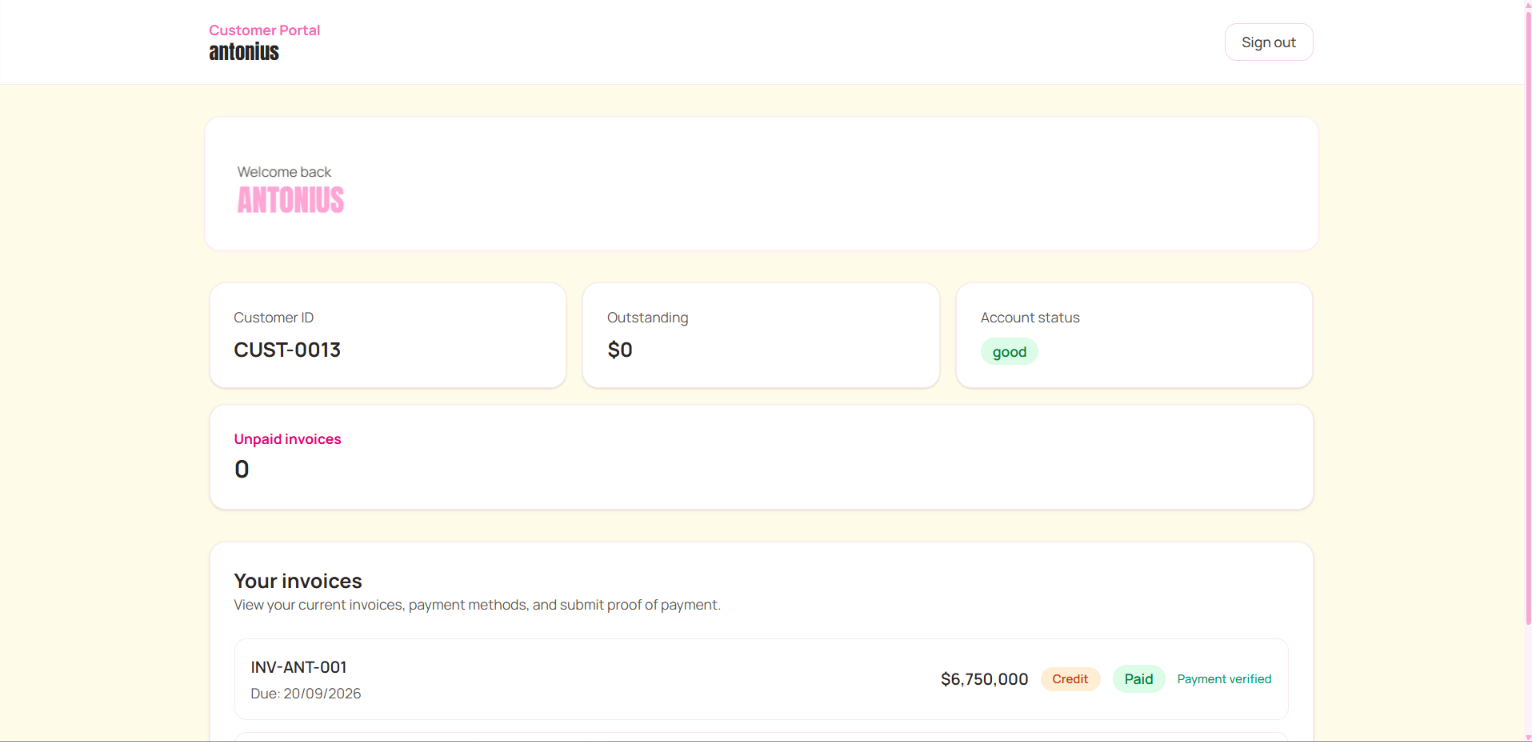
Client-side Dashboard Page
-
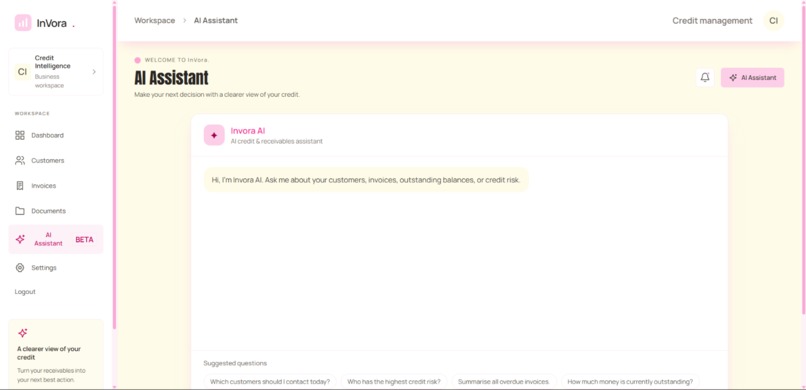
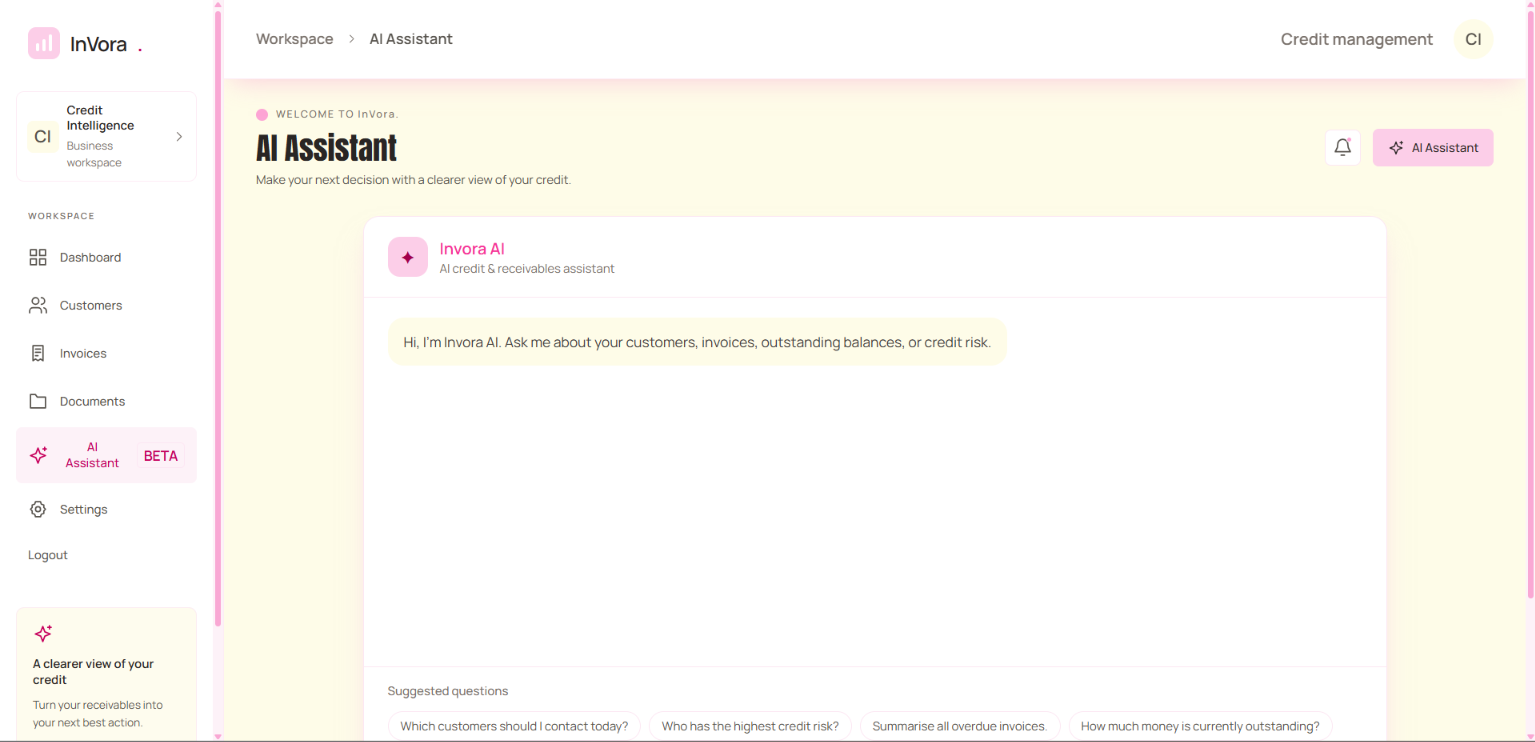
AI ChatBot Page
-
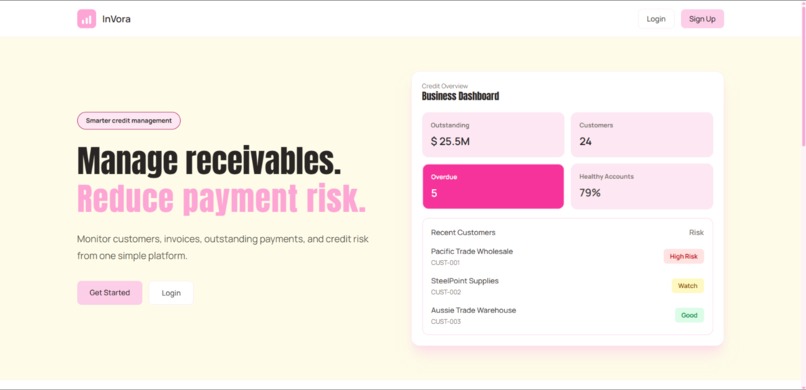
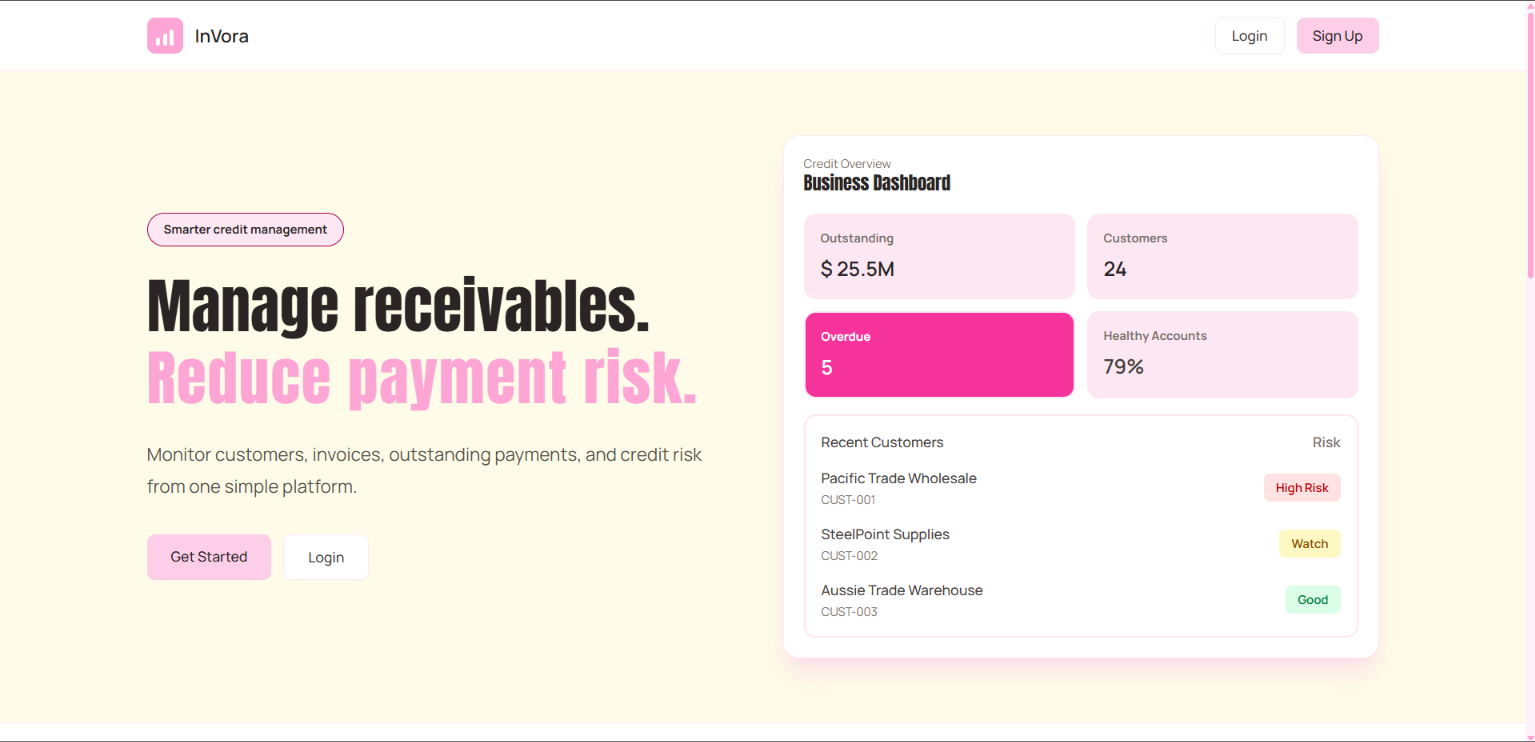
Landing Page
-
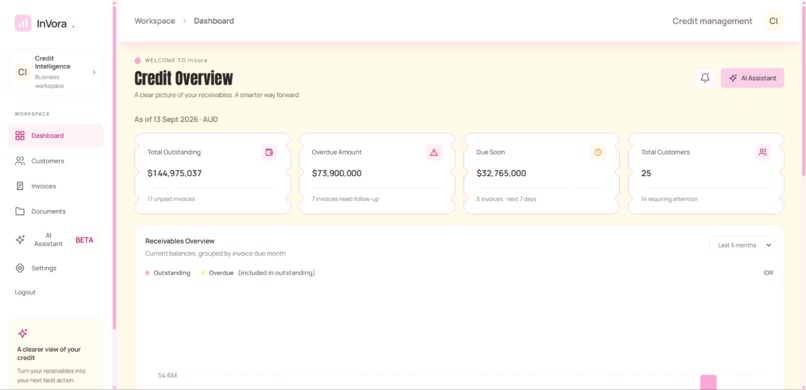
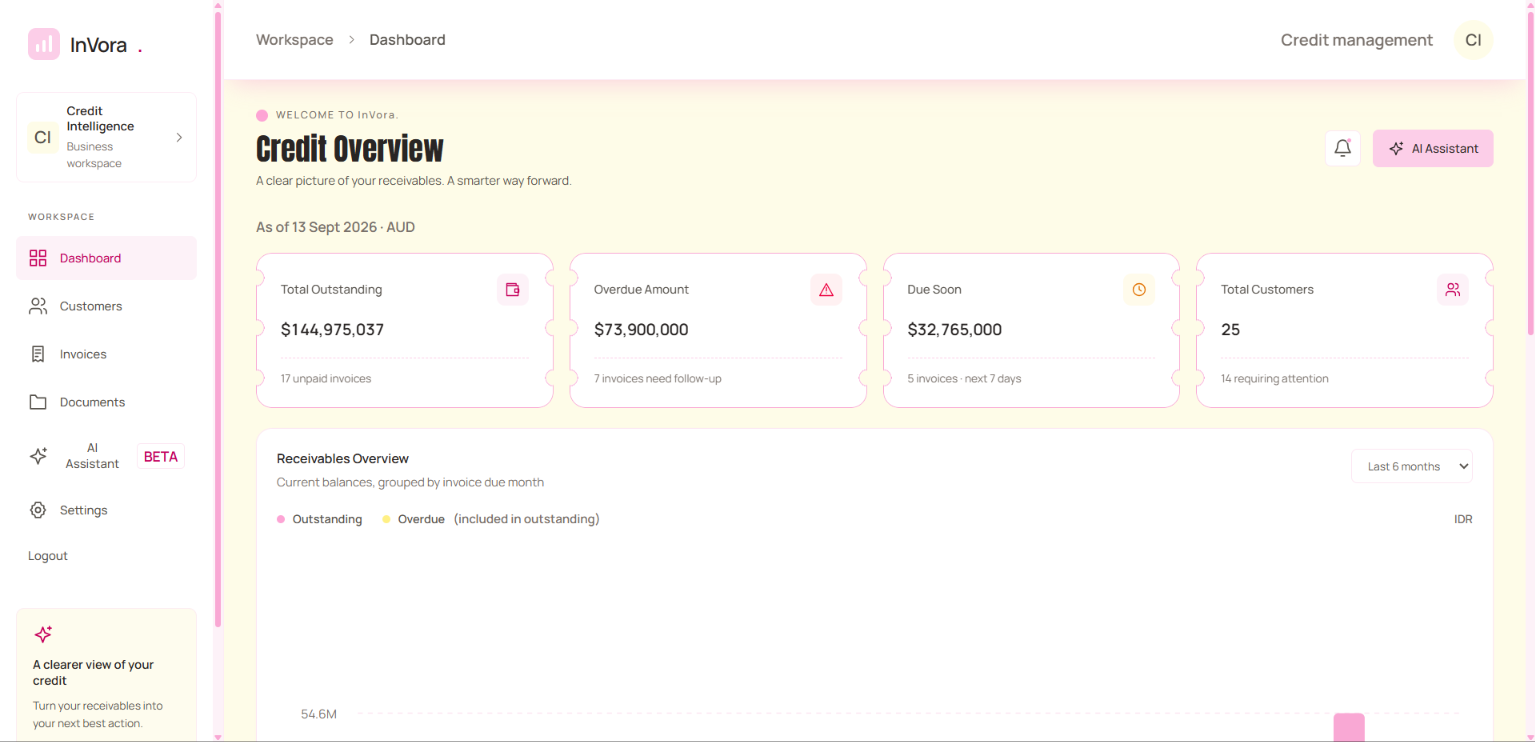
Admin-side Dashboard Page
Inspiration
A lot of businesses, including trade suppliers, wholesalers, and small distributors, still run their invoicing on physical, colour coded paper. It is the classic carbonless multi copy pad where white might mean a credit sale, yellow a return, and pink a cash sale. It is a real system that works, but it lives entirely in a staff member's head and a growing pile of paper. Nobody can quickly answer who is overdue and why without manually flipping through invoices, checking the due date, and cross referencing it against what that customer has paid before. We wanted to take that exact manual heuristic, the one businesses already trust, and let AI do it at a glance. It reads the invoice the way a clerk already does, then goes one step further and reasons about whether that customer's credit is still earned.
What it does
Invora scans an invoice, reads it the way a clerk would, and applies that business's own rules automatically. There is no more manually sorting through a pile of paper to figure out who has paid, who is overdue, and who is still trustworthy for credit. Every invoice is tied to a customer's unique ID, so Invora is not just filing a document, it is watching a whole relationship over time. On top of that sits an AI credit assistant that staff can actually talk to. Ask it who has the highest credit risk, or how to solve it, and it answers from live invoice and payment data instead of a static report, citing the specific invoice numbers and amounts behind every claim it makes. It cross checks the business's own recorded risk status against real payment behaviour, and lets business admins flag an account for human review or restrict further credit directly.
How we built it
We built Invora as a web application, designed to work across desktop and mobile.
- Frontend: Next.js, React, TypeScript, Tailwind CSS
- Auth & Database: Supabase
- AI agent: Groq
- PDF parsing: pdfjs-dist
- Deployment: Vercel
Challenges we ran into
We underestimated how tricky it would be to keep the customer facing and admin facing views in sync once a payment came in. Making sure that proof of payment recorded on one side showed up correctly and immediately on the other took more coordination than we expected.
Accomplishments that we're proud of
We are proud to be shipping a real, deployed, end to end working MVP rather than a static mockup. Invora is a working chatbot backed by live Supabase data, gated behind real authentication, that a finance admin could genuinely use today.
What we learned
The biggest lesson was being discipline around scope. It was tempting to keep expanding the idea mid build with new features, new integrations, and new angles, but every time we stuck to the current plan instead of reopening it, we made more real progress. Keeping the MVP tight is what actually got a working product across the finish line in the time we had.
What's next for InVora
We want to build a feature that lets customers request an extension to their credit tenure directly. The request would be evaluated automatically based on their credit classification, whether Good, Level 1, Level 2, or Danger, which is determined by two things: the business's own credit policy and the customer's history of invoices.
Built With
- css
- github
- groq
- next.js
- ocr
- postgresql
- react
- supabase
- tailwind
- typescript
- vercel


Log in or sign up for Devpost to join the conversation.