-
-
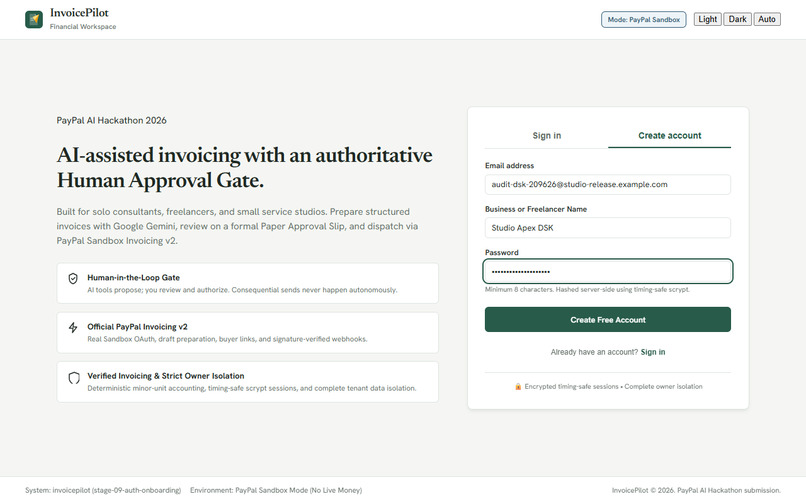
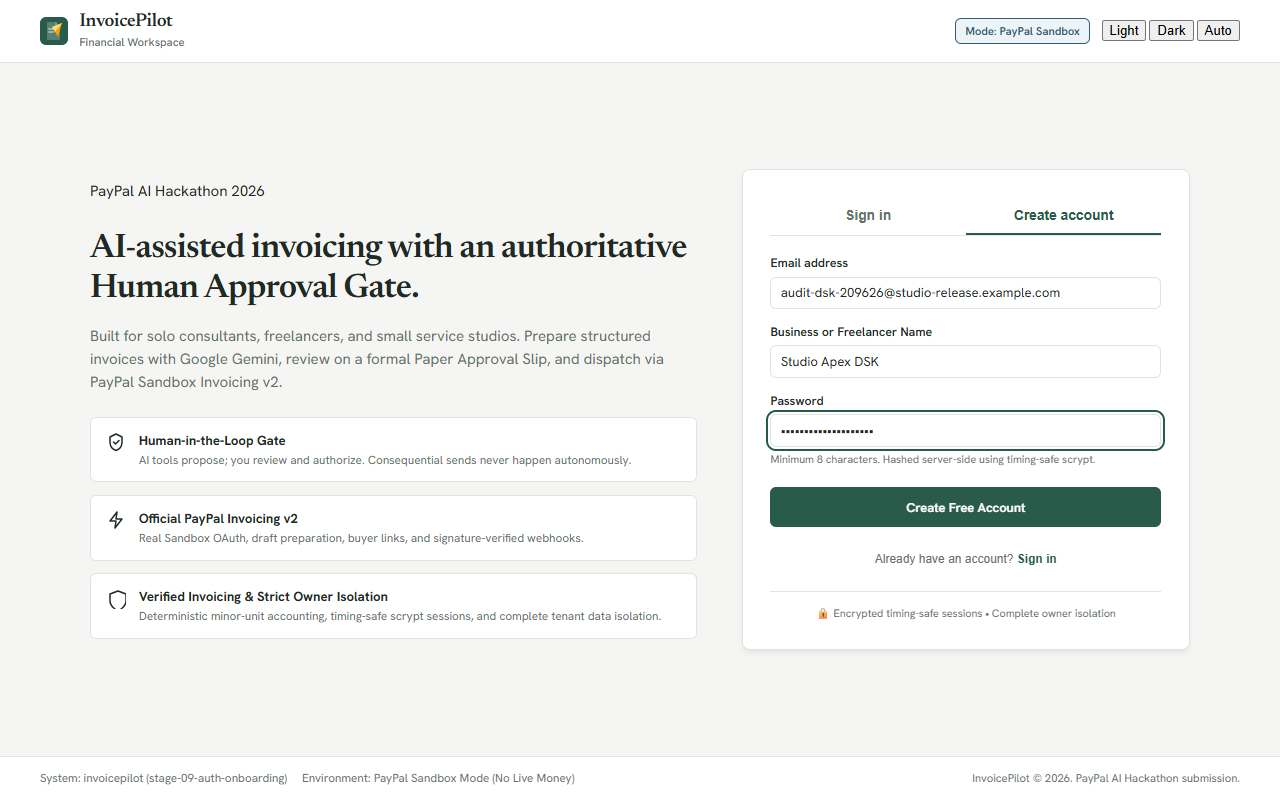
registration-auth
-
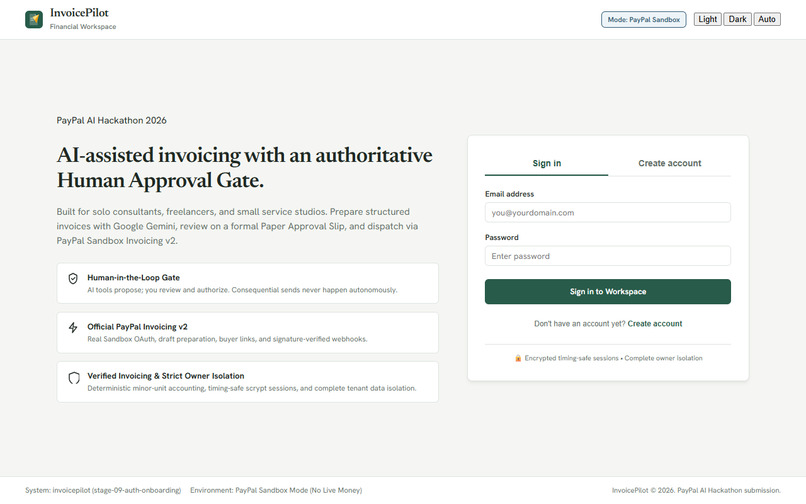
landing-page
-
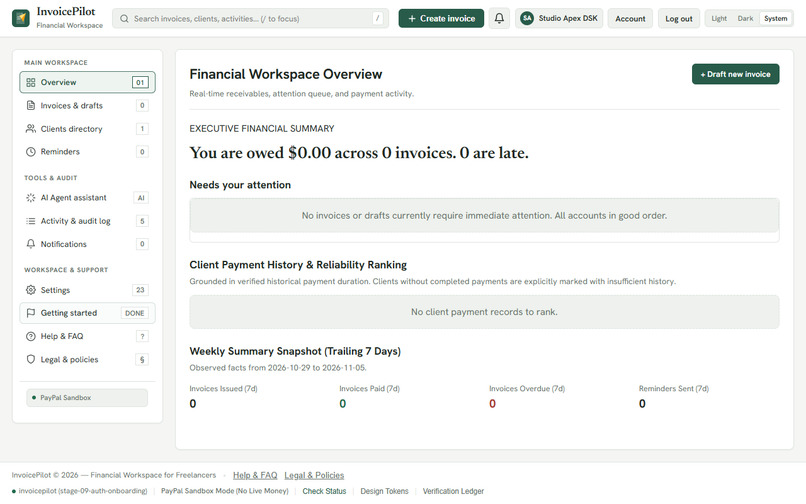
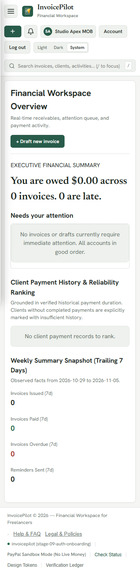
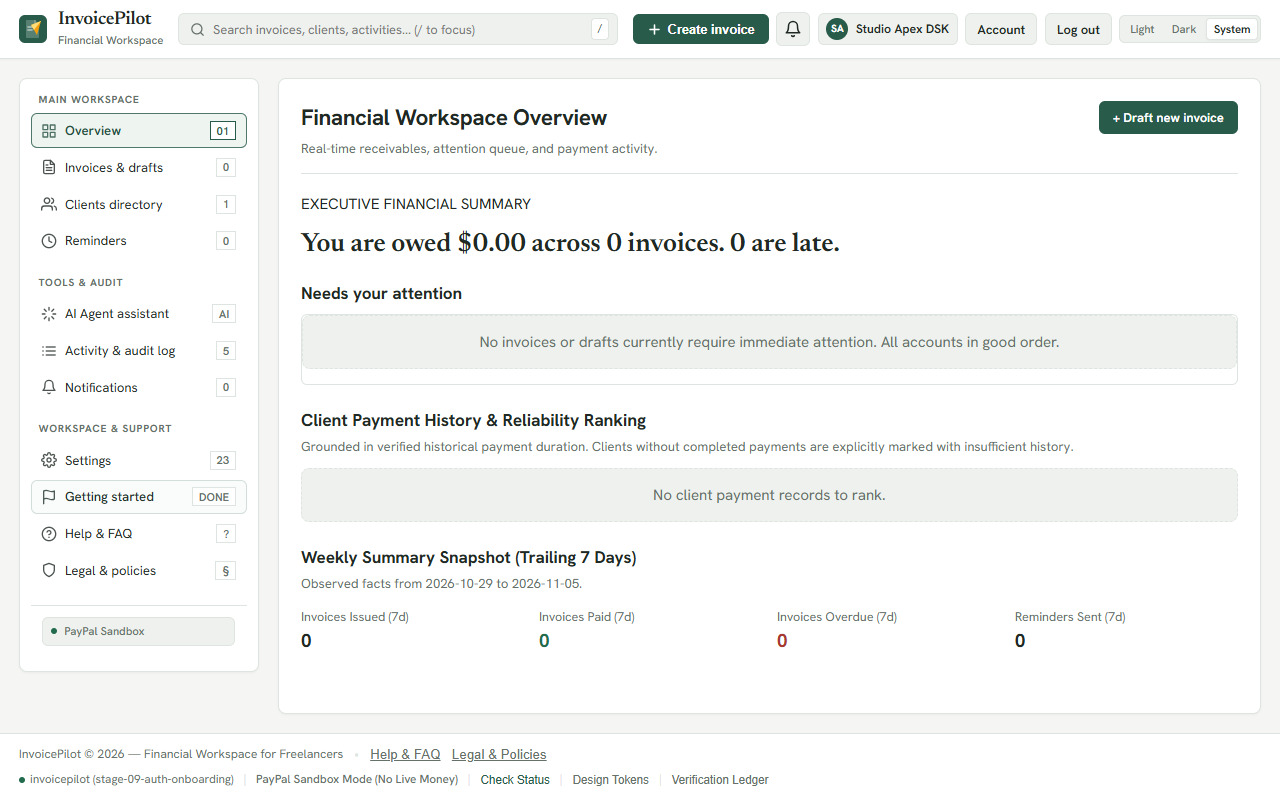
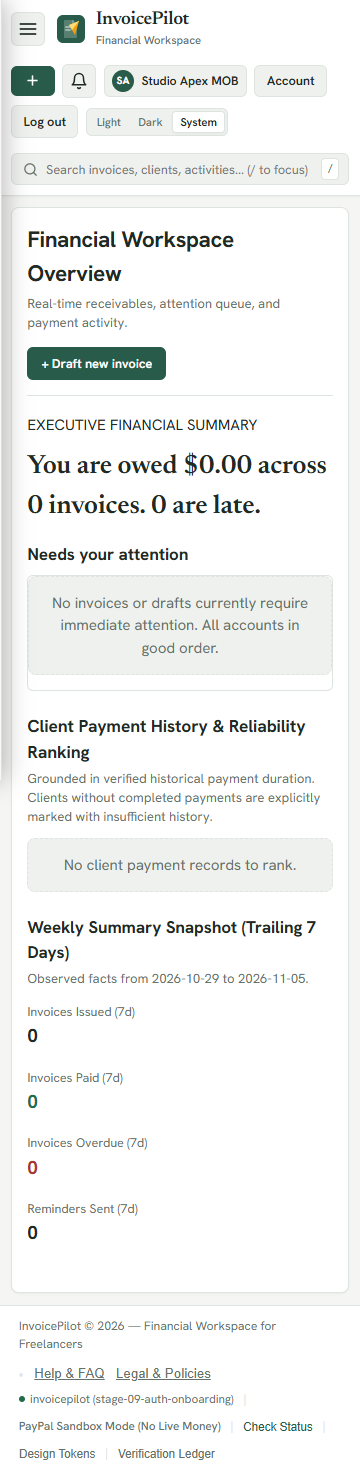
overview-dashboard
-
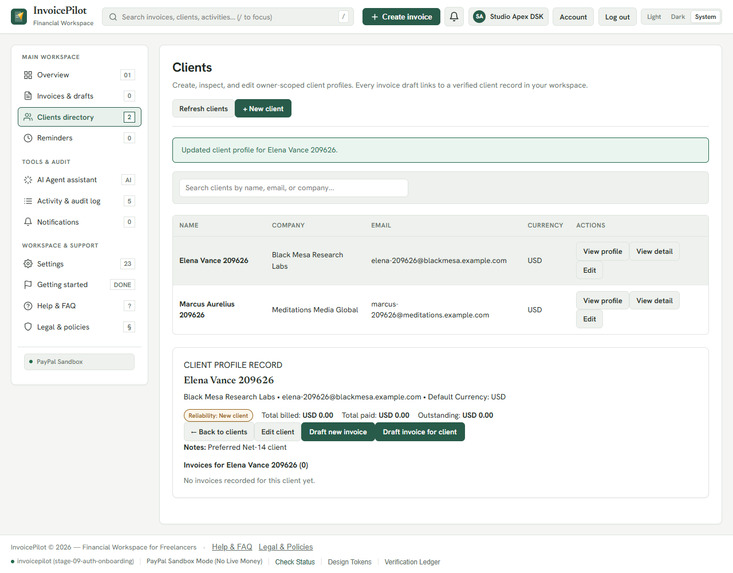
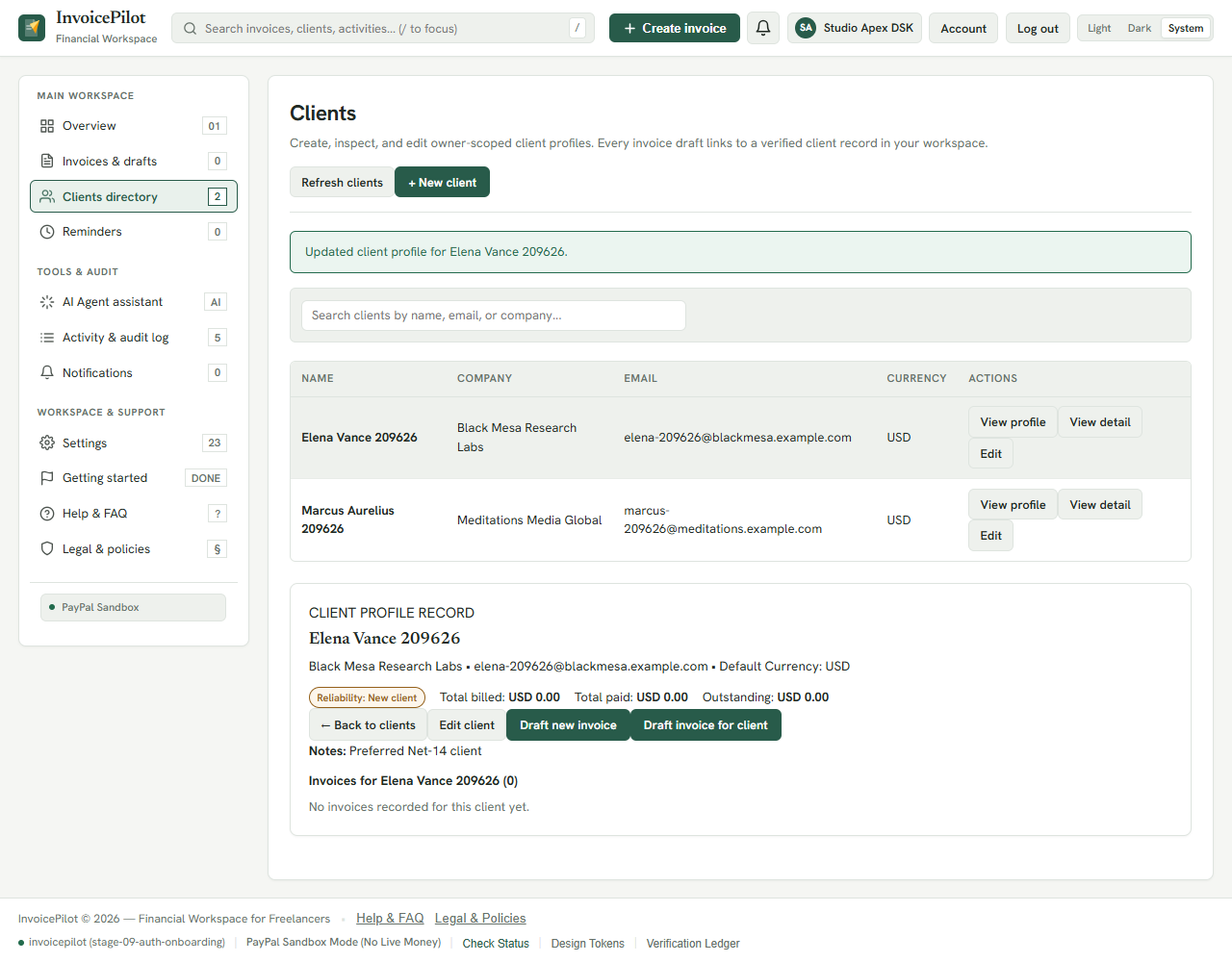
client-management
-
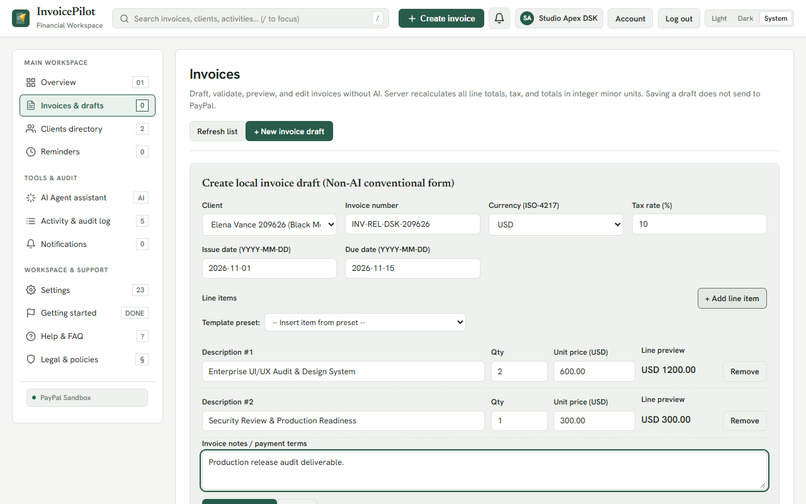
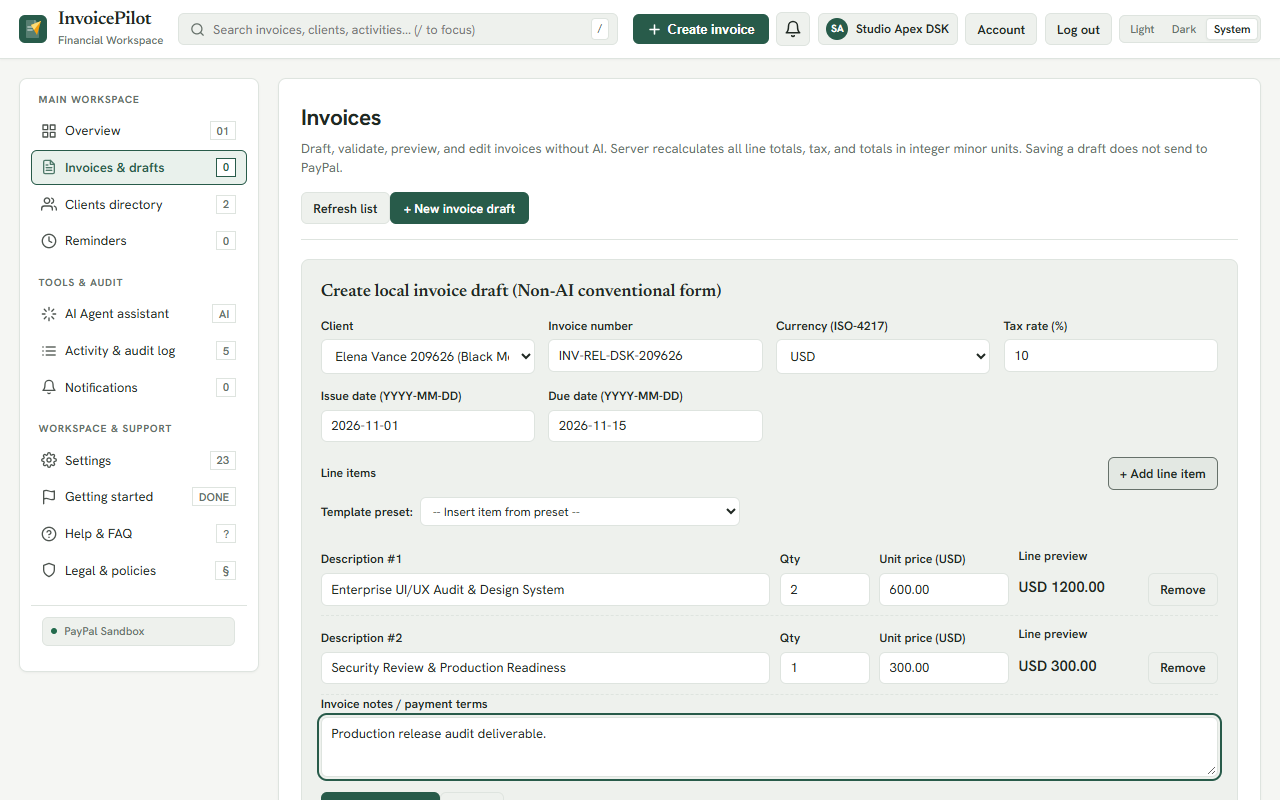
invoice-draft-calculations
-
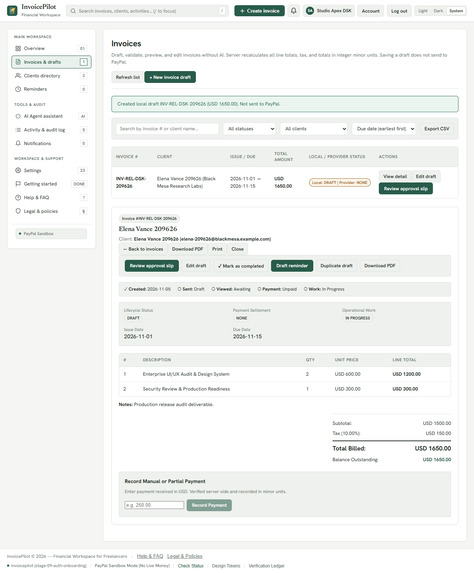
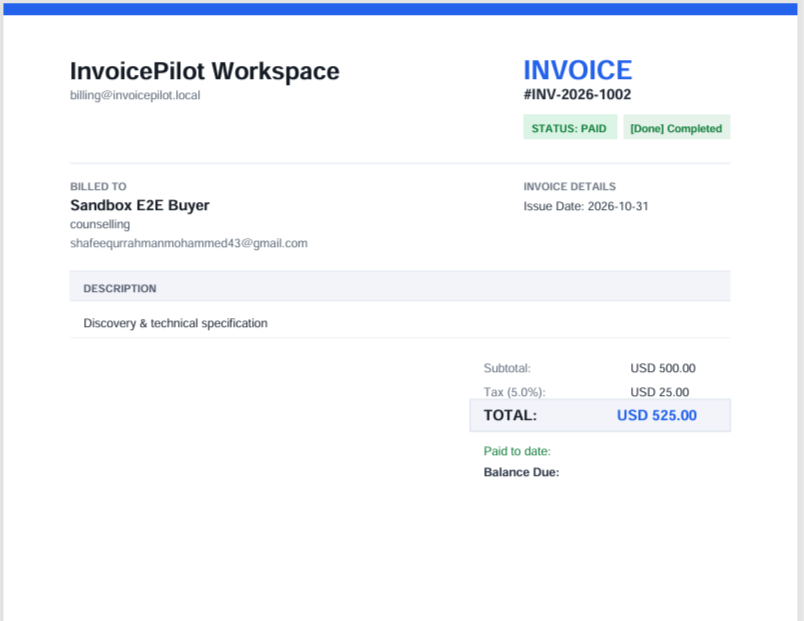
invoice-details-pdf
-
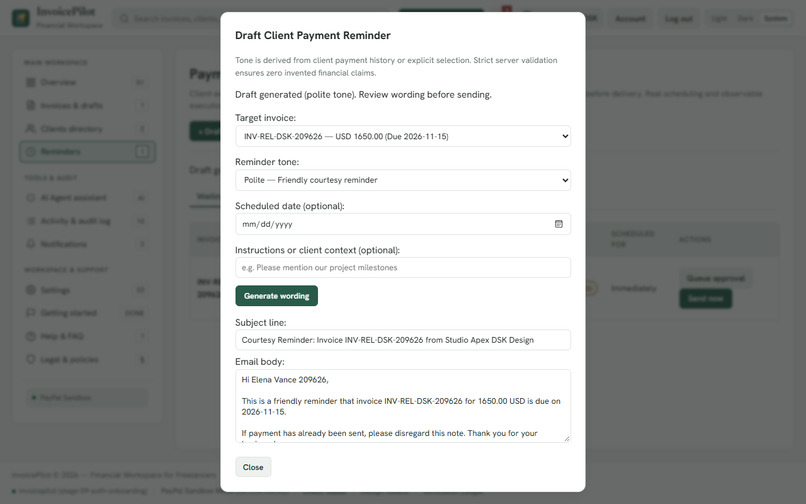
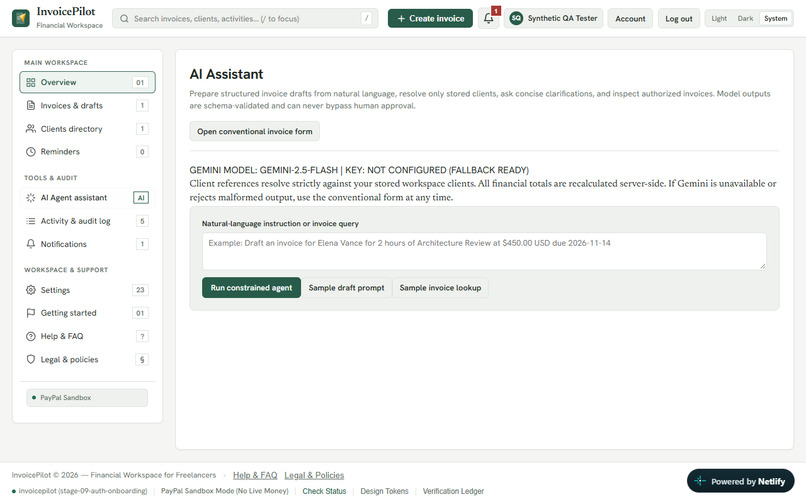
ai-gemini-assistant
-
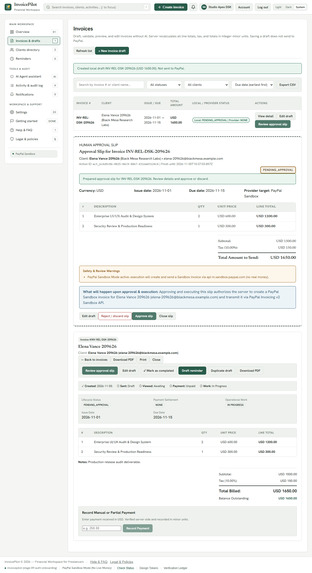
approval-slip-gate
-
-
client-aware-reminders
-
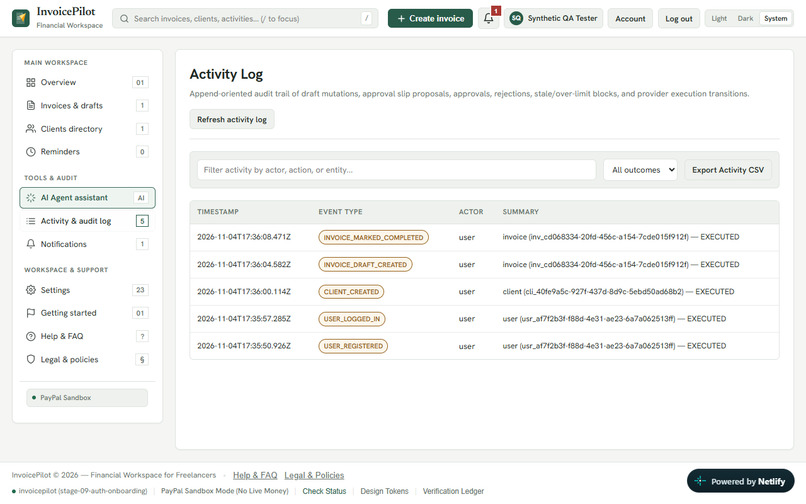
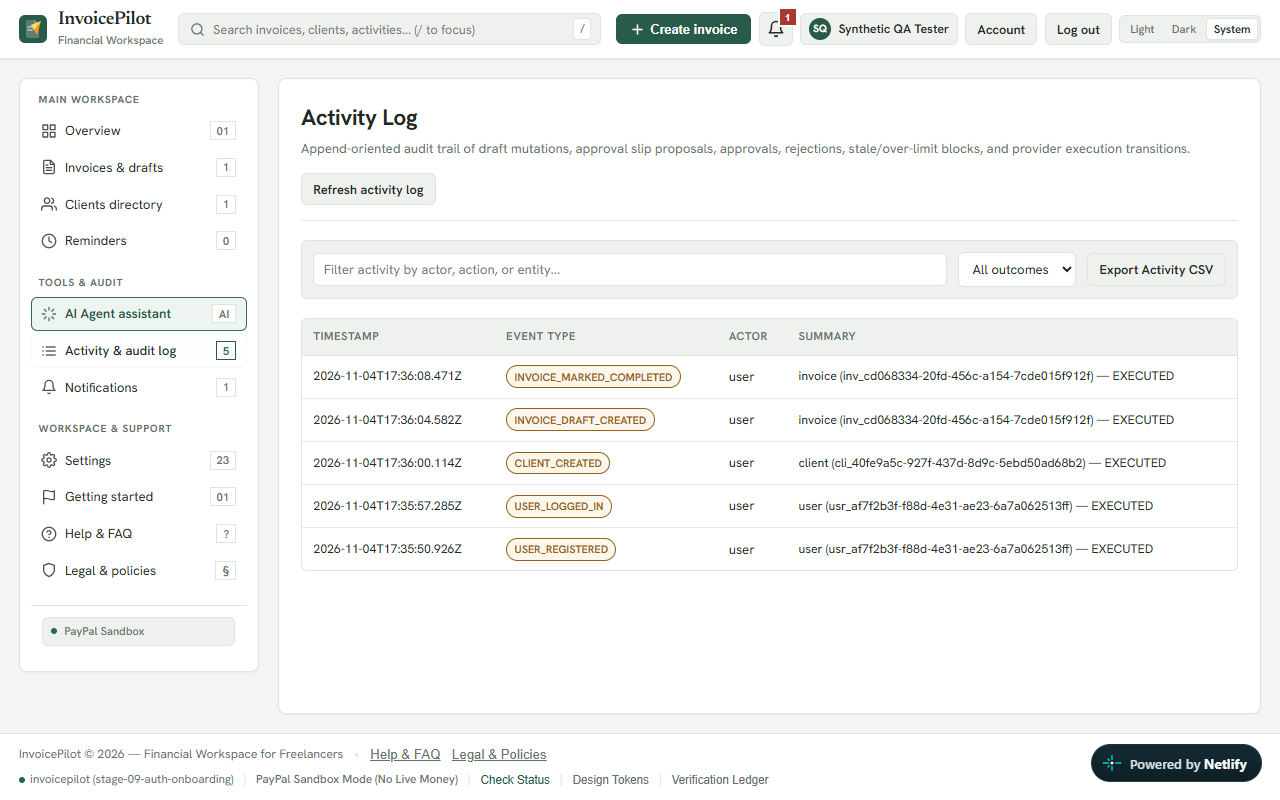
audit-trail-activity
-
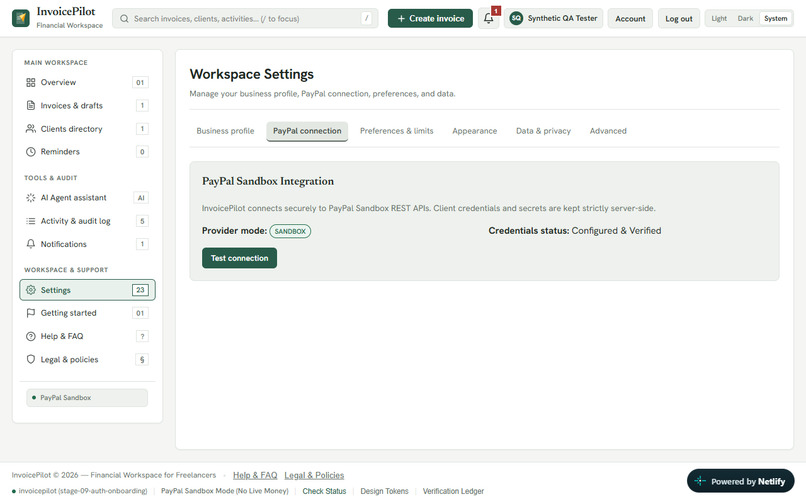
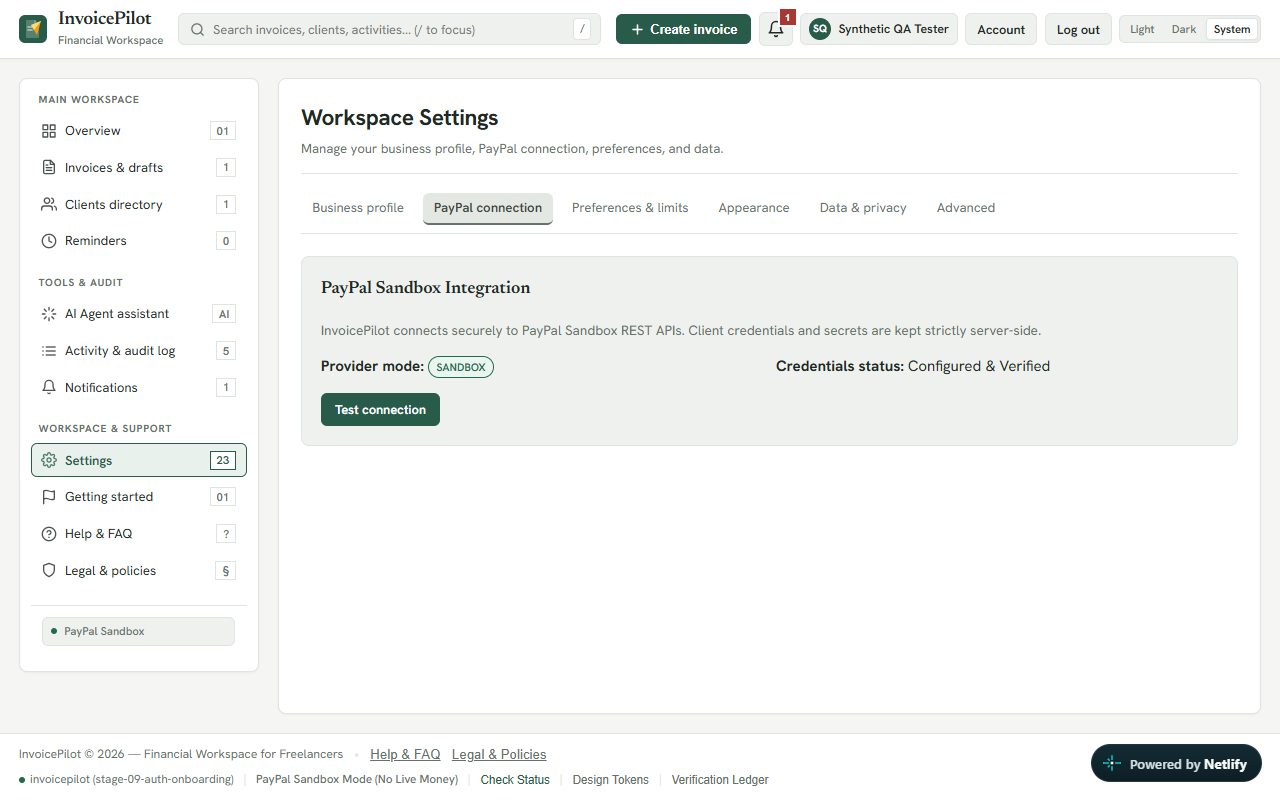
paypal-sandbox-settings
-
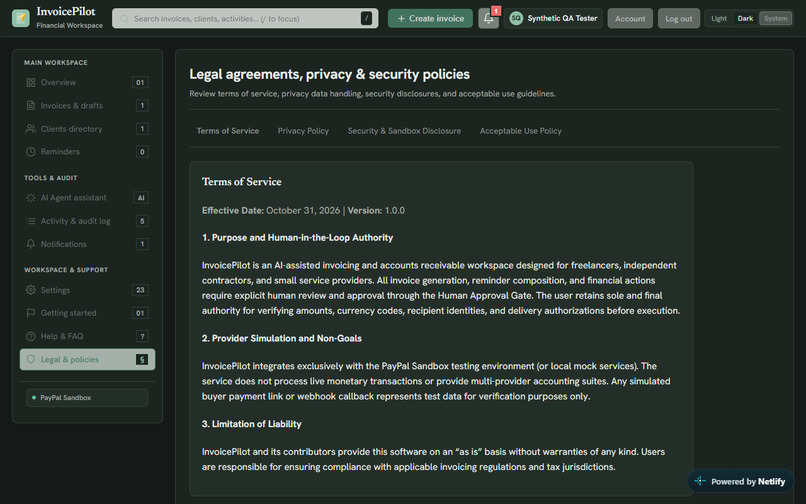
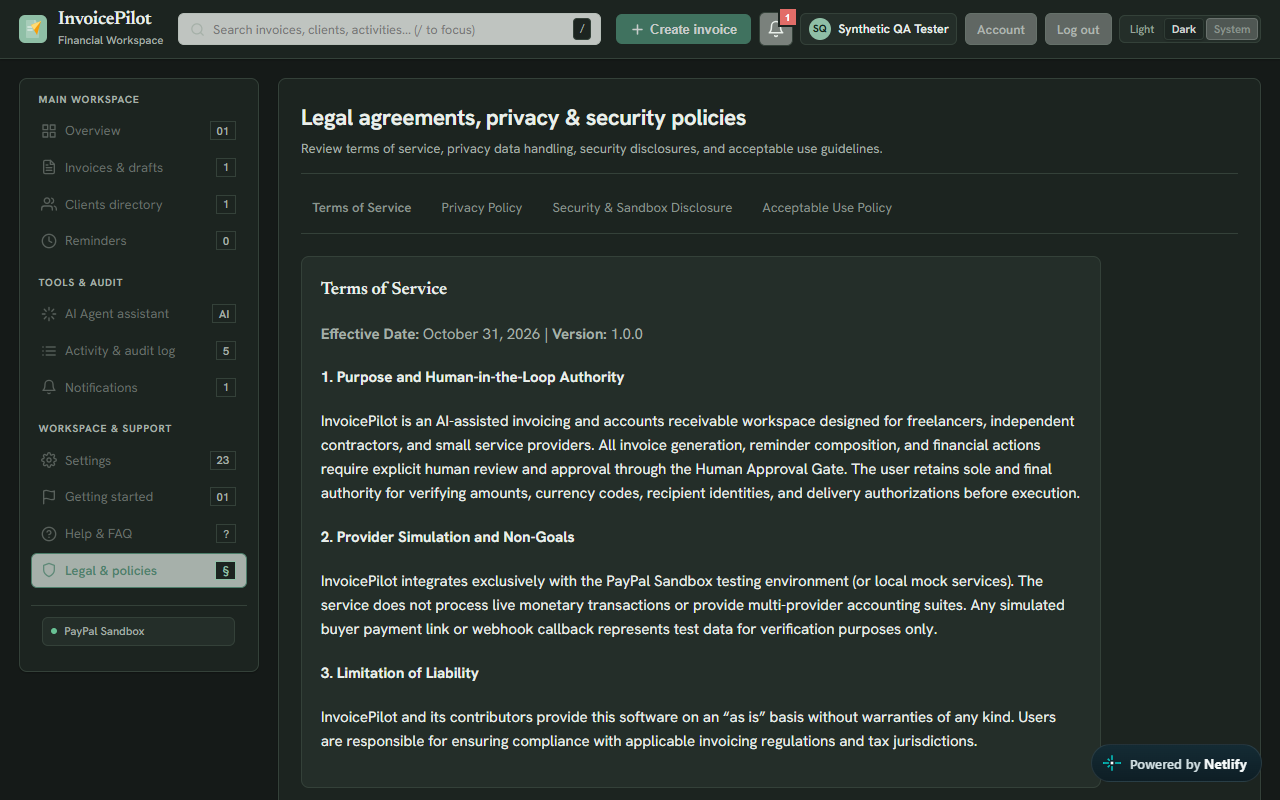
dark-theme-mode
-
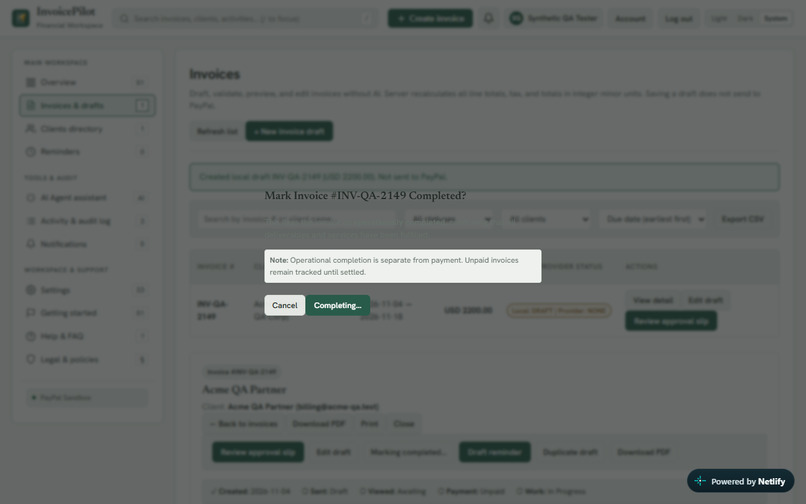
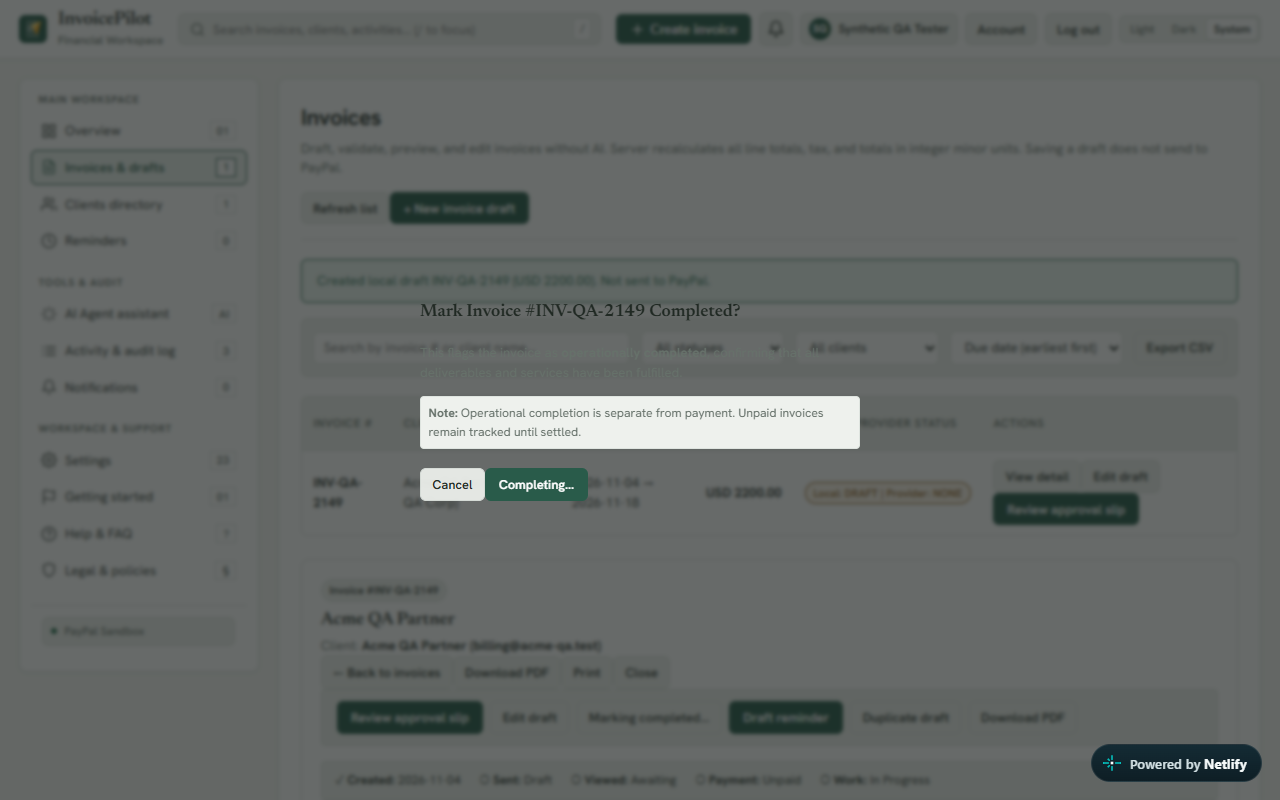
operational-work-completion
-
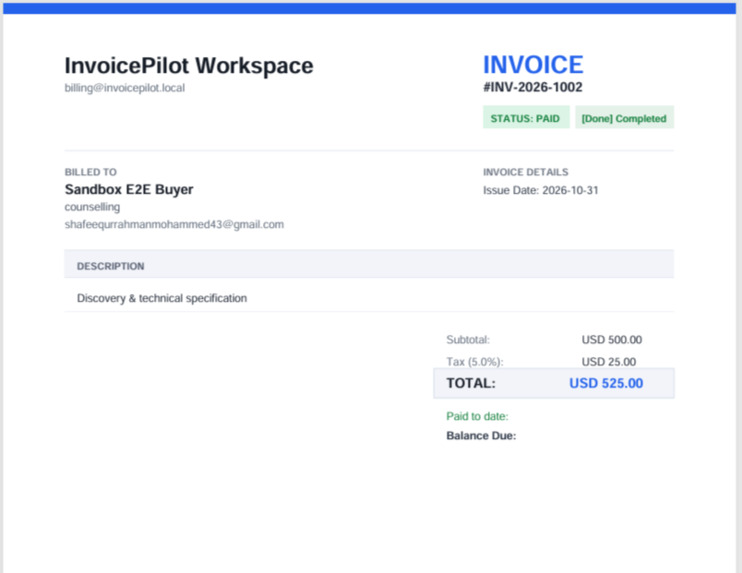
pdf image invoice
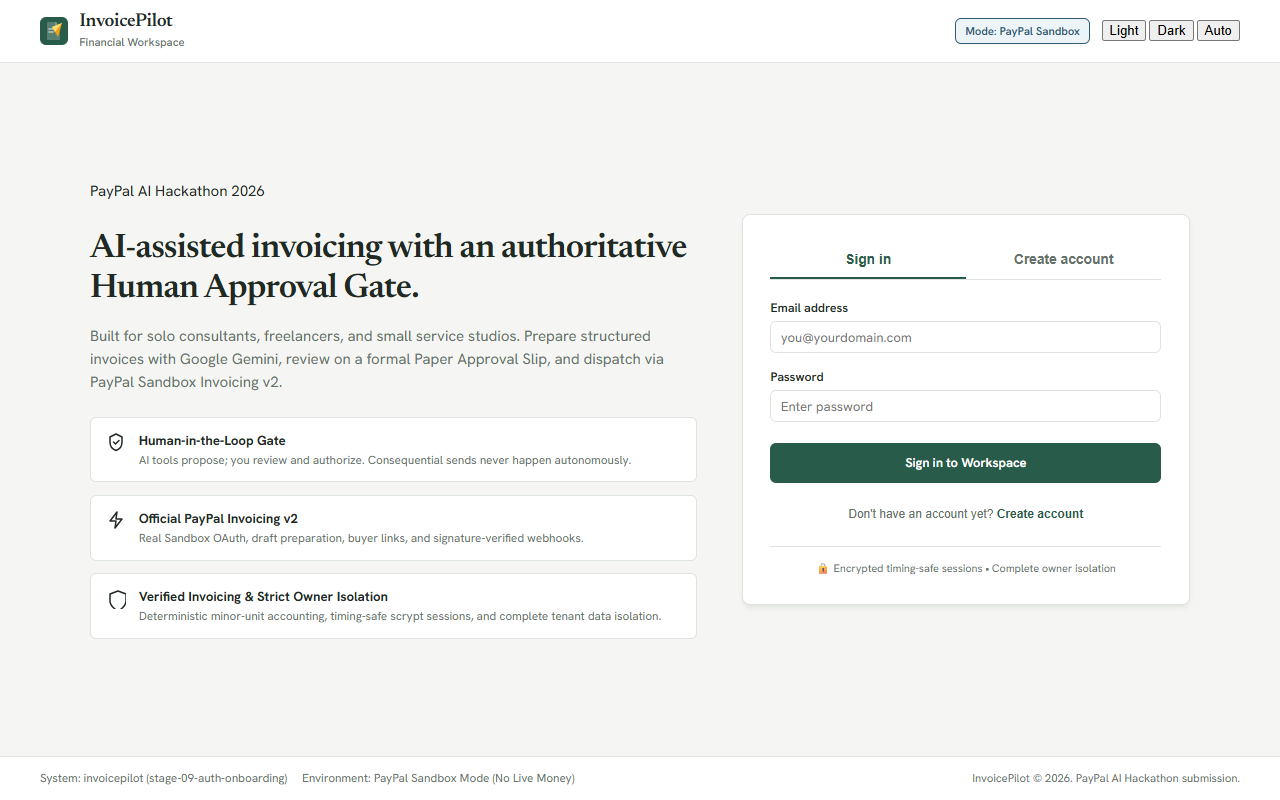
InvoicePilot — AI-Assisted Invoicing & Human-Approved Payments
Inspiration
Freelancers and independent consultants spend a significant amount of time preparing invoices, managing clients, following up on pending payments, and tracking their finances. These repetitive tasks take time away from the actual work they are passionate about.
We wanted to explore how AI could make this process simpler without taking control away from the person responsible for financial decisions.
That idea inspired InvoicePilot: an AI-assisted invoicing and payment workspace designed to help freelancers and consultants manage their invoicing workflow more efficiently.
Our guiding principle is:
AI prepares. Humans authorize. PayPal Sandbox transacts.
What We Built
InvoicePilot brings invoice management, AI assistance, payment approval, and financial visibility into one workspace.
Its main capabilities include:
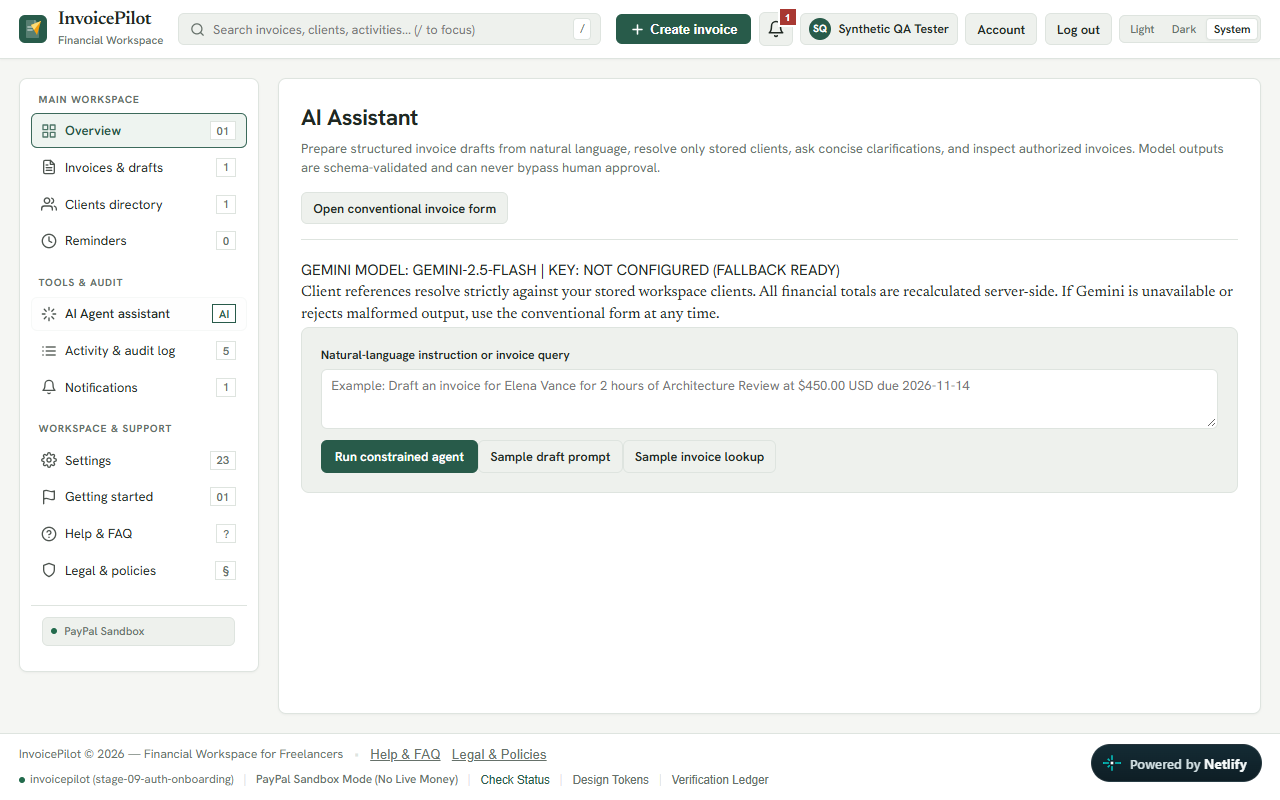
- AI-Assisted Invoice Drafting: Uses Google Gemini to help prepare invoice content and reduce repetitive writing.
- Client Management: Organizes client information and supports client-aware invoicing workflows.
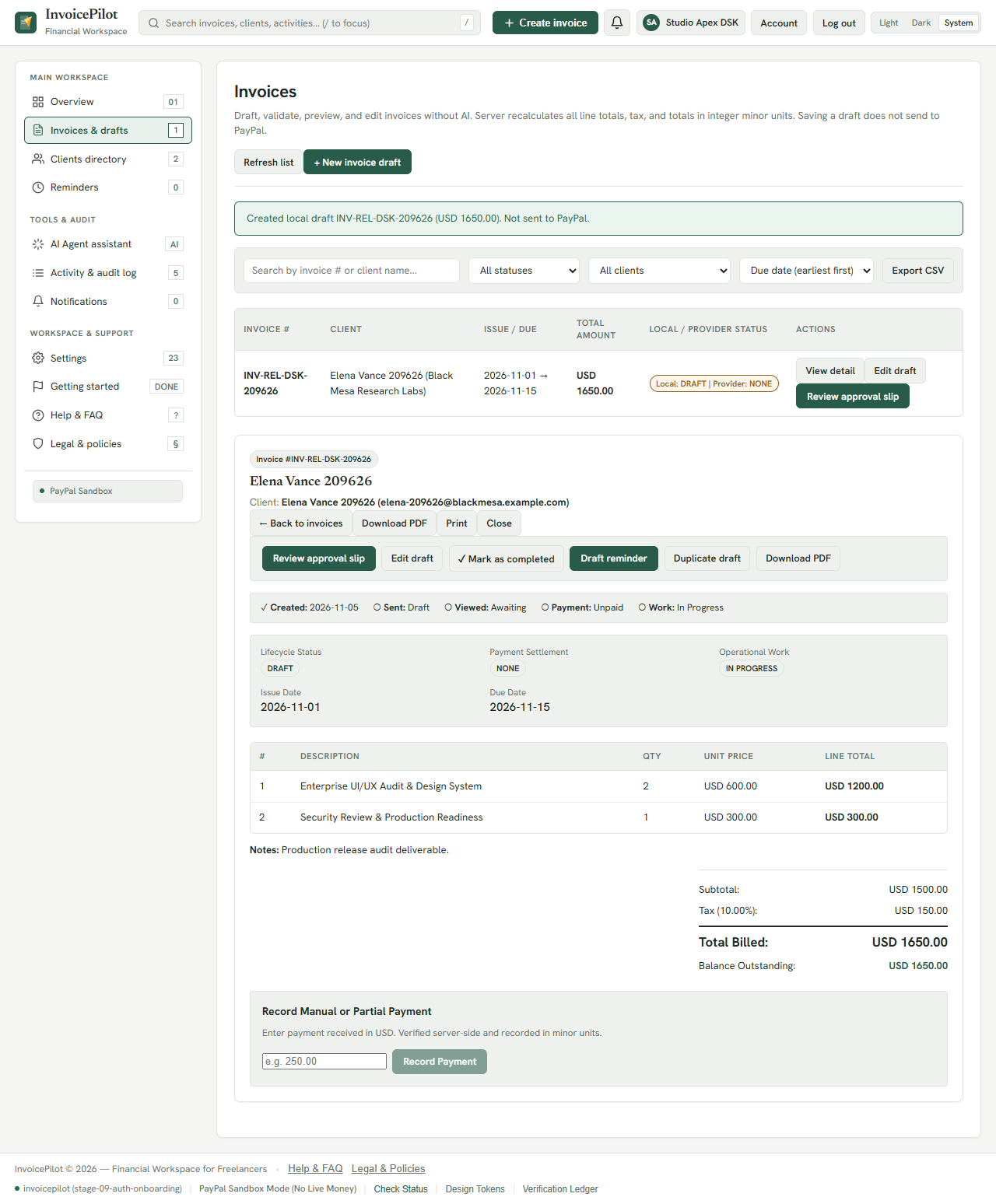
- Invoice Management: Create, review, track, and manage invoices from a centralized dashboard.
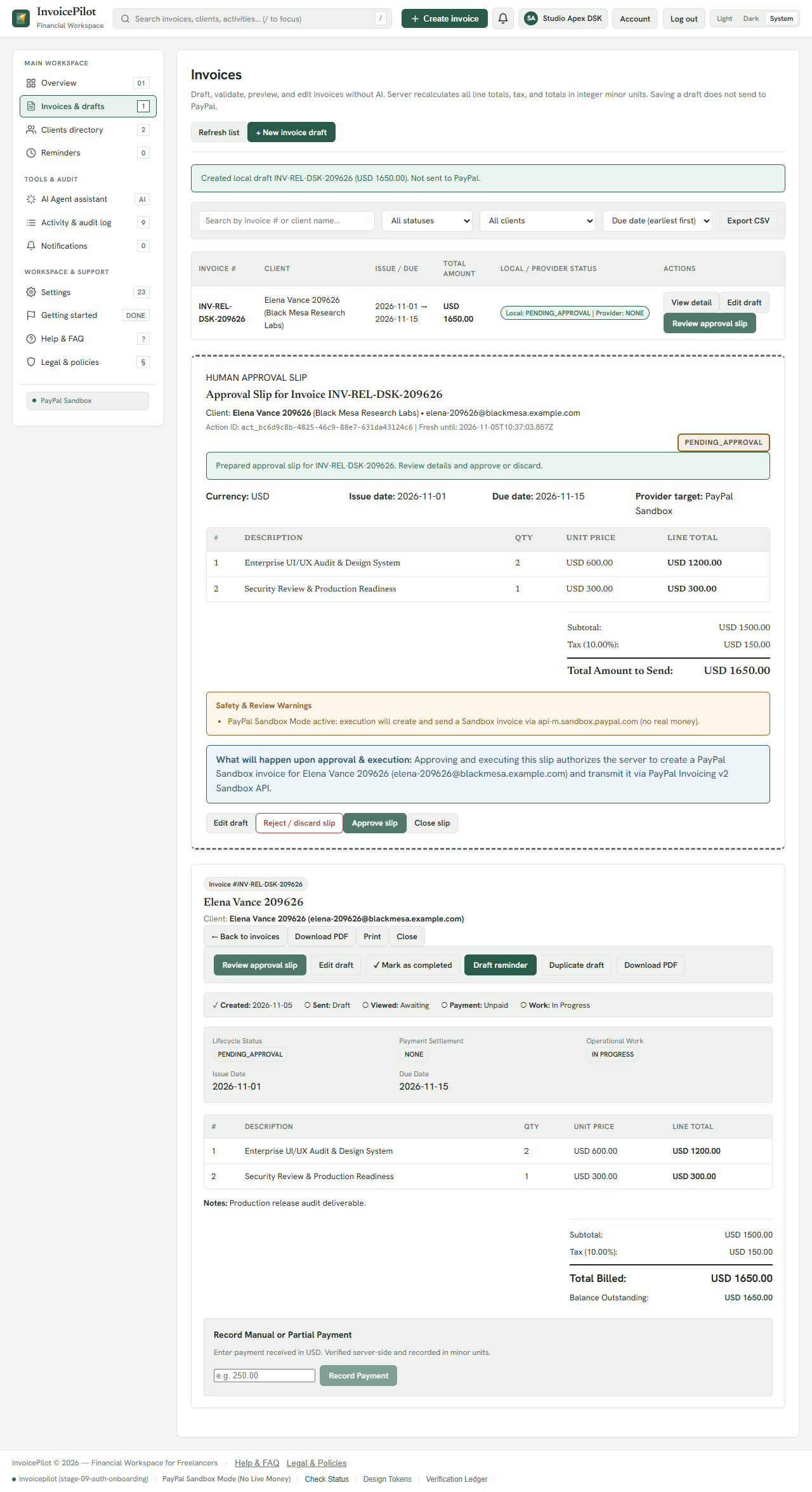
- Human Approval Workflow: Introduces an explicit approval process before payment-related actions are executed.
- PayPal Integration: Connects with the PayPal Invoicing API in Sandbox mode for invoice creation, sending, and status retrieval.
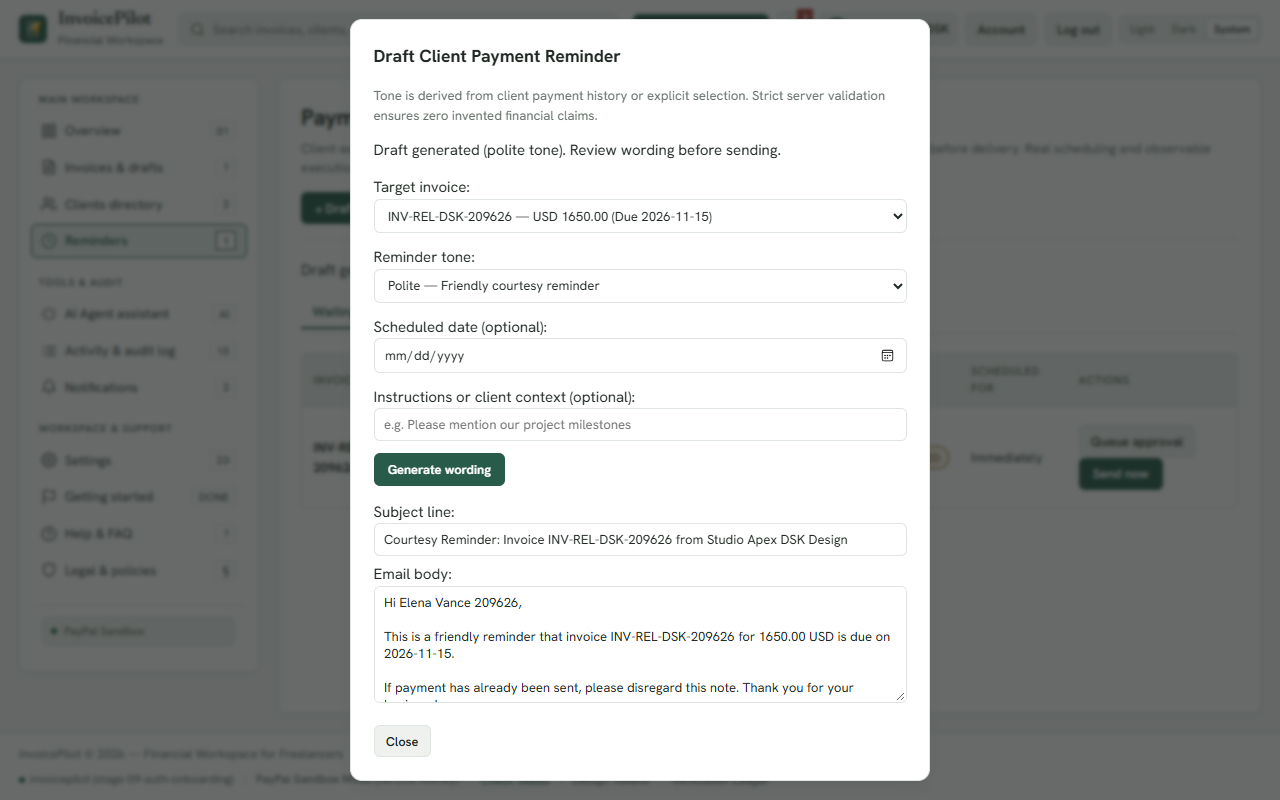
- Payment Reminders: Helps manage follow-ups for pending invoices.
- Financial Insights: Provides an overview of invoice activity and financial information.
- PDF Generation: Generates downloadable invoice documents.
- Session-Based Authentication: Supports protected application access and user-session isolation.
How We Built It
We developed InvoicePilot using a modern full-stack architecture.
Frontend
- React 19
- TypeScript
- Vite
- Responsive application interface
Backend
- Node.js
- Express
- REST API architecture
Database
- Supabase PostgreSQL for the deployed application
- SQLite for local development
AI Integration
- Google Gemini API for AI-assisted invoice preparation
- Deterministic fallback behavior for supported workflows
Payment Integration
- PayPal Invoicing v2 REST API
- PayPal Sandbox authentication and invoice operations
- Human approval controls for payment-related actions
- Webhook signature verification implementation
Deployment and Testing
- Vercel
- Vitest
- Playwright
We focused on building a modular application with clear boundaries between AI assistance, invoice management, approval workflows, and payment integration.
Challenges We Faced
Building an AI-assisted financial workflow introduced several important challenges.
1. Keeping humans in control
AI-generated content should not automatically authorize financial actions. We designed an explicit approval workflow to keep the user responsible for payment-related decisions.
2. Integrating PayPal Sandbox
Connecting authentication, invoice creation, invoice sending, and status retrieval required careful handling of API requests, responses, and error conditions.
3. Maintaining application security
Session isolation, protected routes, backend validation, and webhook signature verification required attention throughout development.
4. Handling AI reliability
AI-generated responses can vary. We incorporated deterministic fallback behavior so supported workflows do not depend entirely on AI availability.
5. Testing end-to-end workflows
We needed to verify that the frontend, backend, database, AI integration, and PayPal Sandbox adapter worked together. Automated unit, integration, and browser-based tests helped us identify and resolve issues.
What We Learned
This project taught us that integrating AI into financial workflows requires more than generating intelligent responses.
We learned the importance of:
- Designing human-in-the-loop systems.
- Integrating third-party APIs securely.
- Building reliable backend workflows.
- Separating AI assistance from financial authorization.
- Testing complete application workflows rather than isolated components.
- Clearly communicating the difference between a prototype and a production financial product.
What Makes InvoicePilot Different?
InvoicePilot is built around a simple but important distinction: AI can assist with preparing financial documents, but the human remains responsible for approving payment-related actions.
Instead of treating AI as an autonomous financial decision-maker, we designed it as an assistant within a human-controlled workflow.
Prototype and Payment Disclaimer
InvoicePilot is a hackathon prototype.
- PayPal integration currently uses Sandbox mode only.
- No real-money transactions are performed.
- Dashboard demonstration figures are synthetic and do not represent actual customer revenue.
- Successful Sandbox API verification does not establish a completed buyer checkout.
- Webhook signature verification is implemented, but this demonstration does not claim a successful production webhook delivery.
What's Next?
Our vision is to evolve InvoicePilot into a more comprehensive workspace for independent professionals, with improved invoice intelligence, smarter follow-ups, stronger integrations, and additional financial workflow automation — while preserving human control over financial decisions.
InvoicePilot — Smarter Invoicing. Human-Controlled Payments.
Built for the PayPal AI Hackathon: Build What's Next with PayPal and AI.
Built With
- artificial-intelligence
- express.js
- fintech
- google-gemini
- human-in-the-loop
- javascript
- node.js
- paypal
- paypal-sandbox
- pdf-generation
- playwright
- postgresql
- react
- rest-api
- supabase
- typescript
- vercel
- vite
- vitest
- web
