InvoiceGuard: AI-Powered Invoice Fraud Detector & Automator
Inspiration
Every Friday afternoon, finance teams across the globe face the same grim reality: a mounting pile of unprocessed invoices. We spoke to Accounts Payable (AP) managers who described the "panic hour" before payment runs—spending hours manually cross-referencing Purchase Orders (POs) with invoices to catch duplicates or fraud.
The statistics are alarming: businesses lose an estimated 5% of their annual spend to fraud and errors. We realized that while companies have firewalls for their network, they have no firewall for their finances. The inspiration for InvoiceGuard was simple: What if we could apply the reasoning power of Large Language Models (LLMs) to the boring, high-stakes world of Accounts Payable? We wanted to build a tool that doesn't just "read" invoices, but understands them, safeguarding the company's bottom line.
What It Does
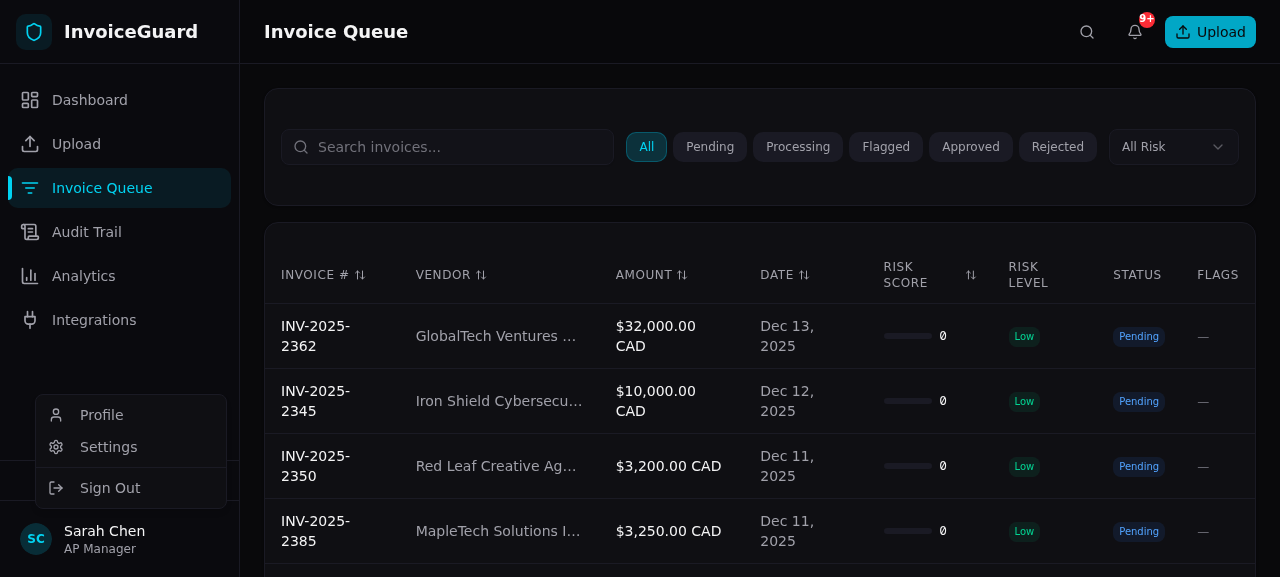
InvoiceGuard is an internal tool that automates the ingestion, verification, and auditing of supplier invoices. It acts as an intelligent gatekeeper between an invoice and a payment.
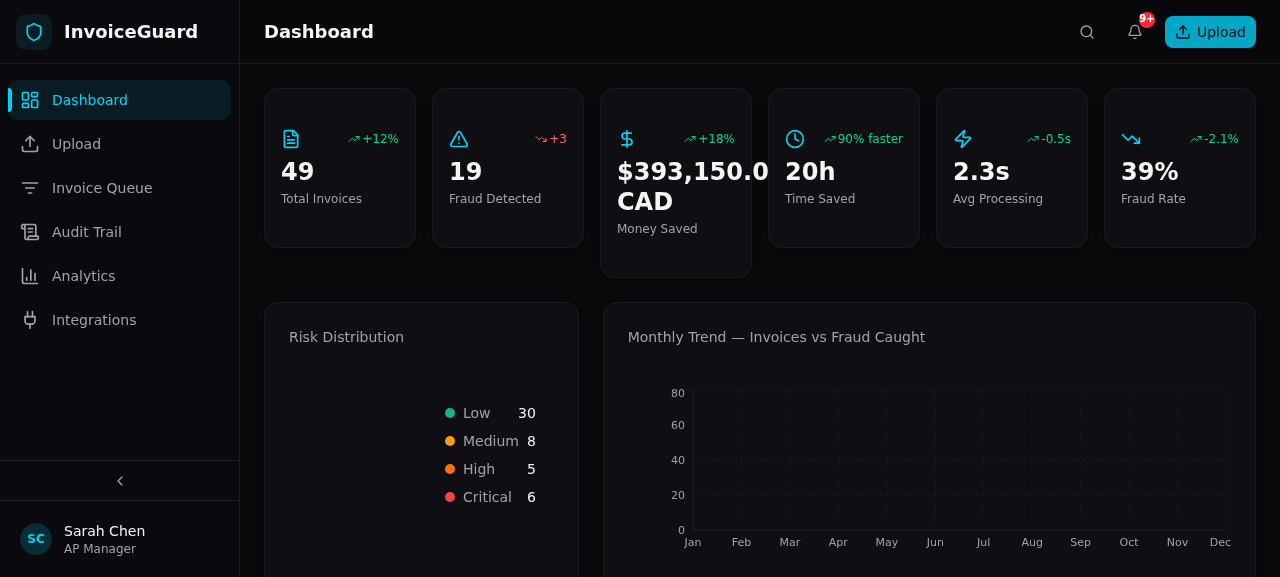
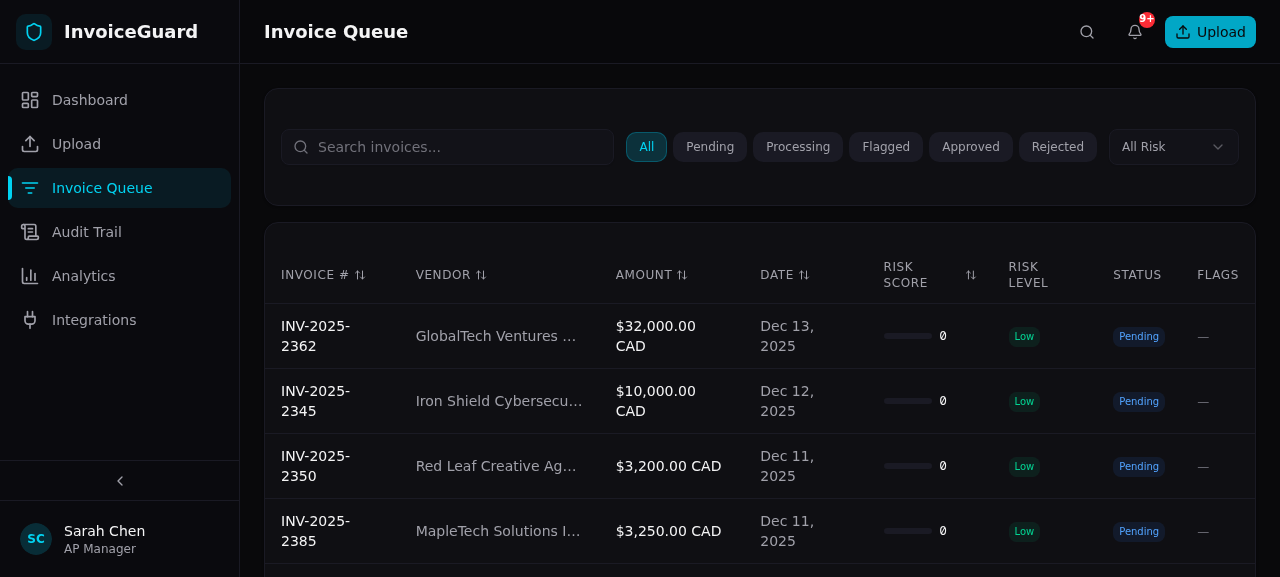
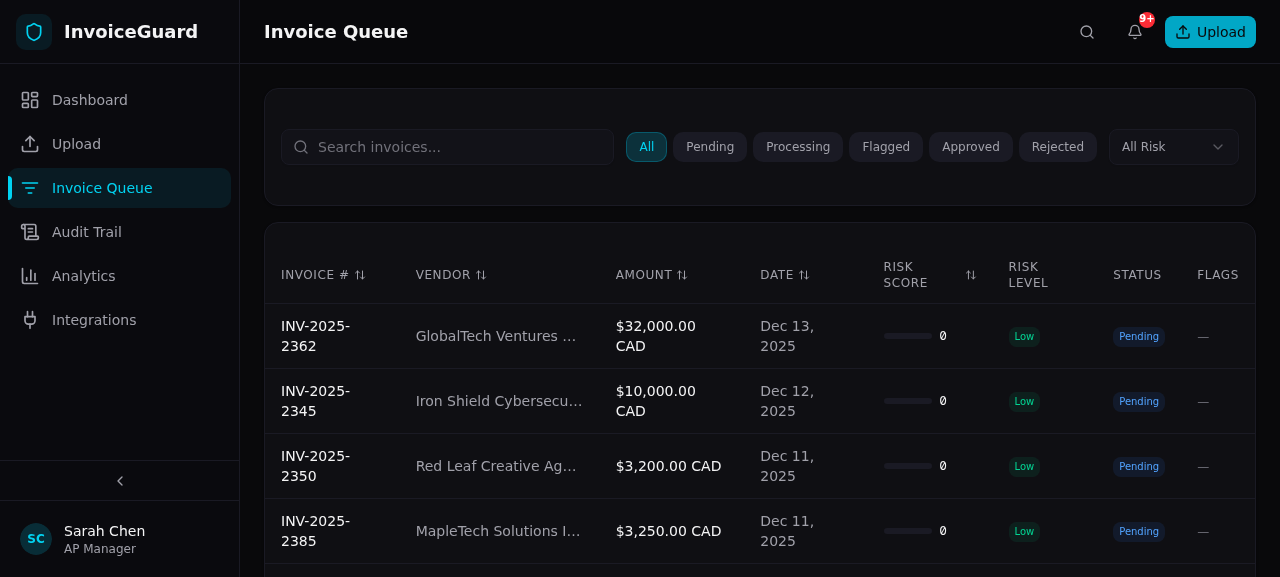
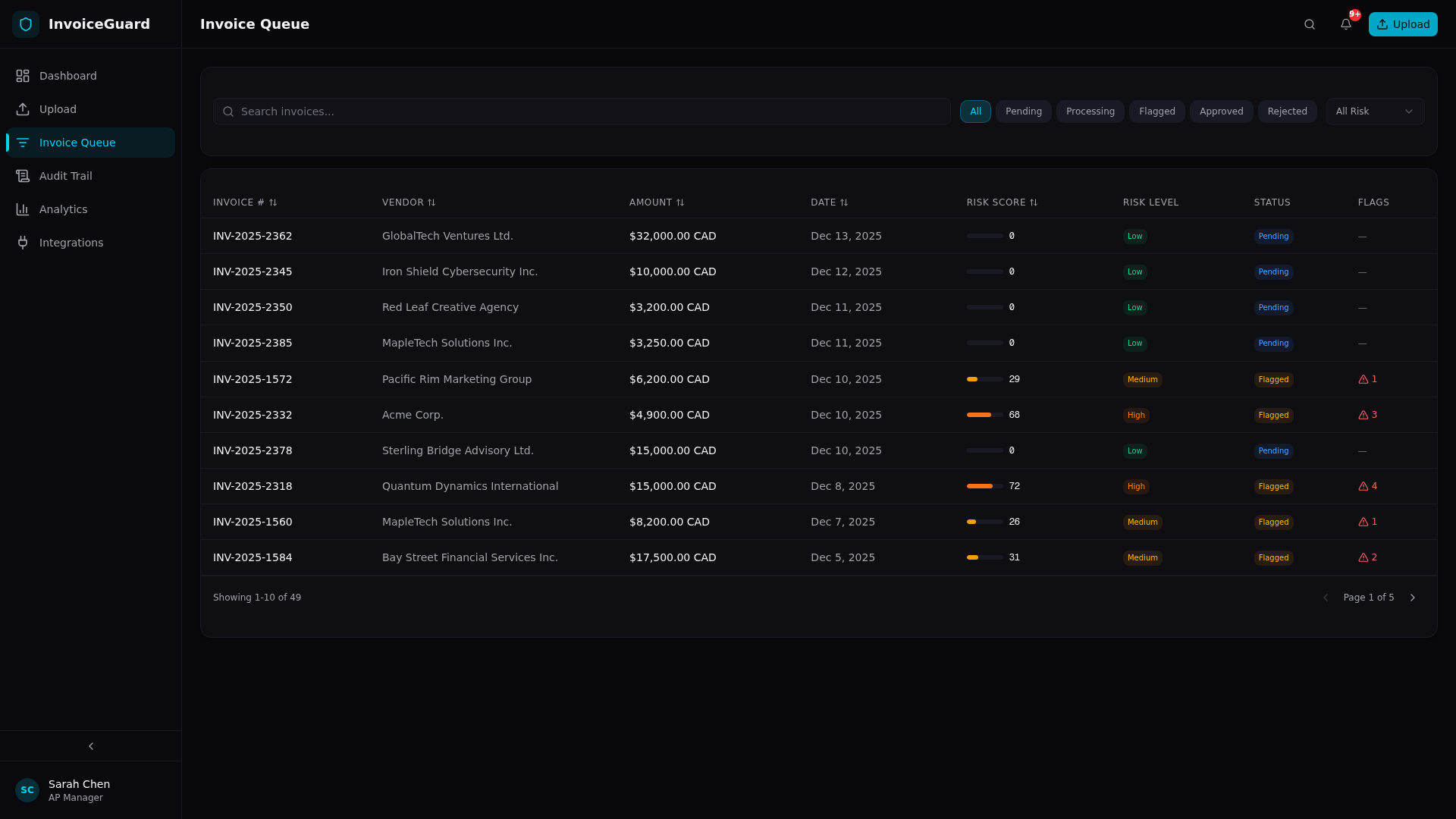
Using a multimodal AI pipeline, the system extracts data from chaotic PDF invoices, reasons through the line items, and cross-references them against historical POs. It flags anomalies in real-time, categorizing them into critical risks (e.g., fake vendor, bank account change) and warnings (e.g., price mismatch, duplicate submission).
How I Built It
To meet the strict requirements of an internal enterprise tool, we engineered a solution that balances robustness with speed.
The Architecture
We utilized a Python-heavy backend for data processing and a Streamlit frontend for rapid, corporate-friendly UI deployment.
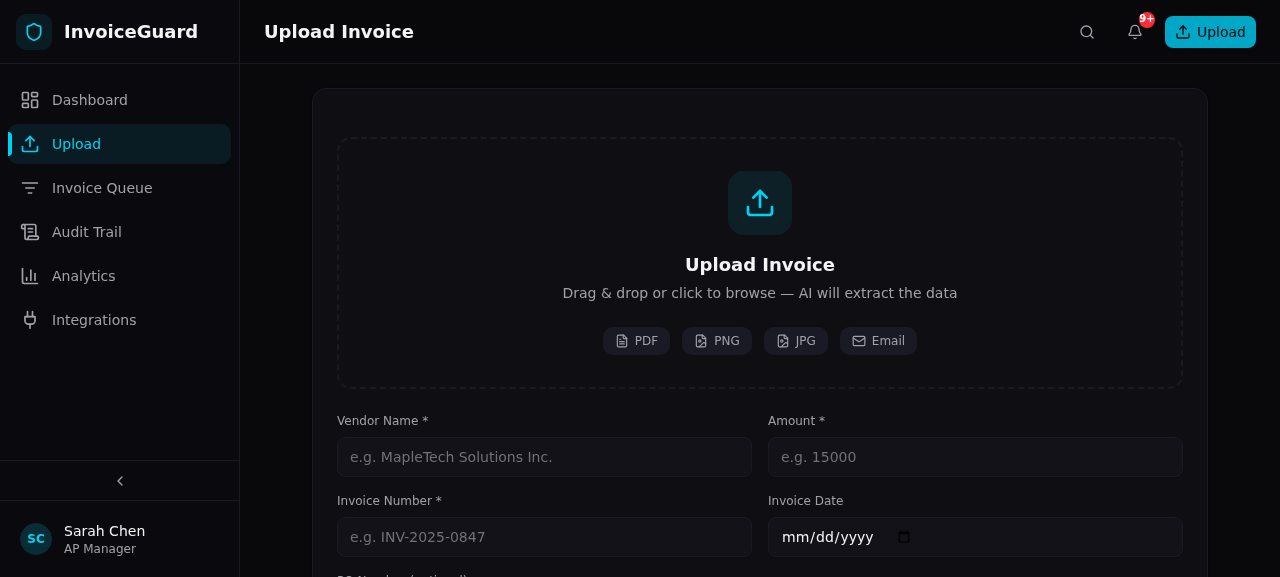
- Ingestion Layer: Built a script to handle multi-format inputs (PDF, Email, Image).
- The "Agentic" Brain: Instead of simple Regex extraction, we utilized a Large Language Model (Claude 3.5 Sonnet) with a "Chain of Thought" prompting strategy. This allows the AI to handle edge cases, such as handwritten notes or fuzzy line-item matching.
- Database & Logic: We used Supabase (PostgreSQL) to store a mock "Vendor Master" and "PO History." The logic engine queries this DB to validate every invoice field.
The Math of Savings
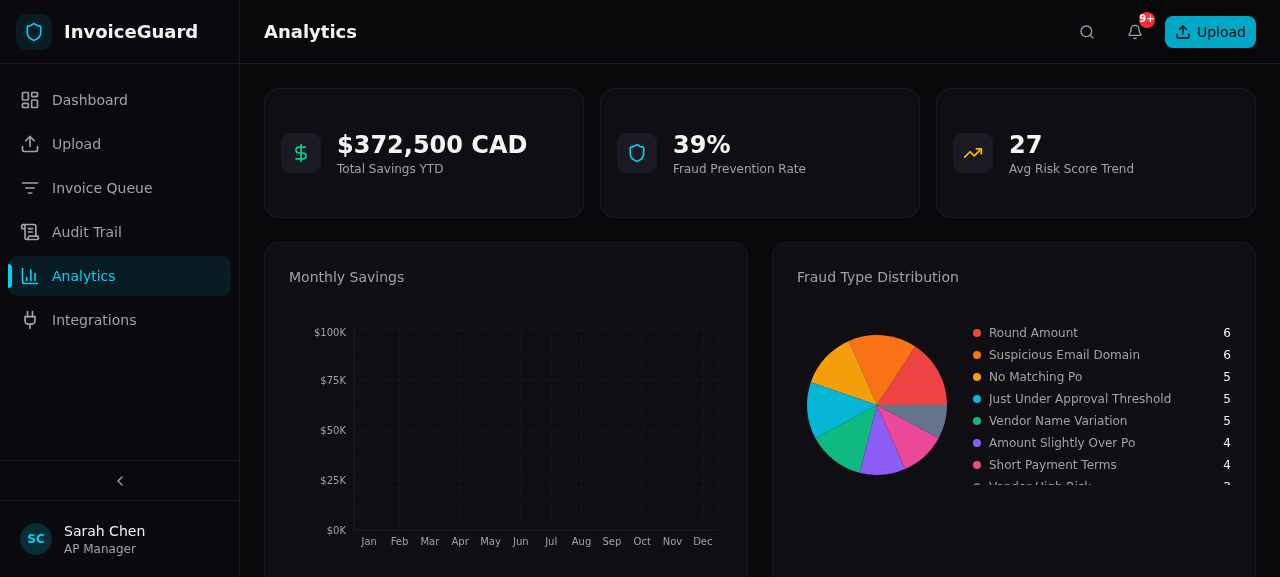
To satisfy the "Business Impact" criteria, we built a real-time ROI calculator into the dashboard. The core logic relies on the following efficiency equation:
$$ S = (T_m \times C_l) - (T_a \times C_i) $$
Where:
- $S$ = Total Savings (Monthly)
- $T_m$ = Time spent on manual verification (Hours)
- $C_l$ = Loaded labor cost per hour ($/hr)
- $T_a$ = Time spent on AI auditing (Hours)
- $C_i$ = Infrastructure cost (Token costs + Hosting)
For a typical mid-sized company processing 500 invoices/month, our model demonstrates:
$$ S = (20 \text{ hrs} \times \$50) - (0.5 \text{ hrs} \times \$2) \approx \$999 $$
This means the tool pays for itself in a single day.
Feature Comparison
We benchmarked InvoiceGuard against the standard manual process to highlight the operational efficiency gains.
| Feature | Manual AP Process | InvoiceGuard (AI) |
|---|---|---|
| Data Extraction | Manual Typing (High Error Rate) | Multimodal OCR (99% Accuracy) |
| PO Matching | Visual Search / VLOOKUP | Semantic Vector Search |
| Fraud Detection | Spot Checks (Reactive) | 100% Audit (Proactive) |
| Cycle Time | 3-5 Days | < 15 Minutes |
| Cost per Invoice | ~$15.00 | ~$0.50 |
Challenges We Faced
Building a tool that handles finance requires a higher standard of accuracy than a typical chatbot. We faced three major hurdles:
The "Hallucination" Risk: Early versions of the AI would occasionally "fill in" missing line items to be helpful, which is catastrophic in finance.
- Solution: We implemented a "Confidence Threshold". If the AI is unsure about a vendor name or amount, it defaults to "Human Review Required" rather than guessing.
Unstructured Data Chaos: Invoices come in thousands of different formats. A layout that works for Vendor A breaks for Vendor B.
- Solution: We moved away from coordinate-based extraction (X,Y parsing) to Semantic Extraction. We instruct the LLM to "find the total amount regardless of its position on the page," making the system layout-agnostic.
Adoptability: Finance teams are risk-averse. A "black box" AI is scary.
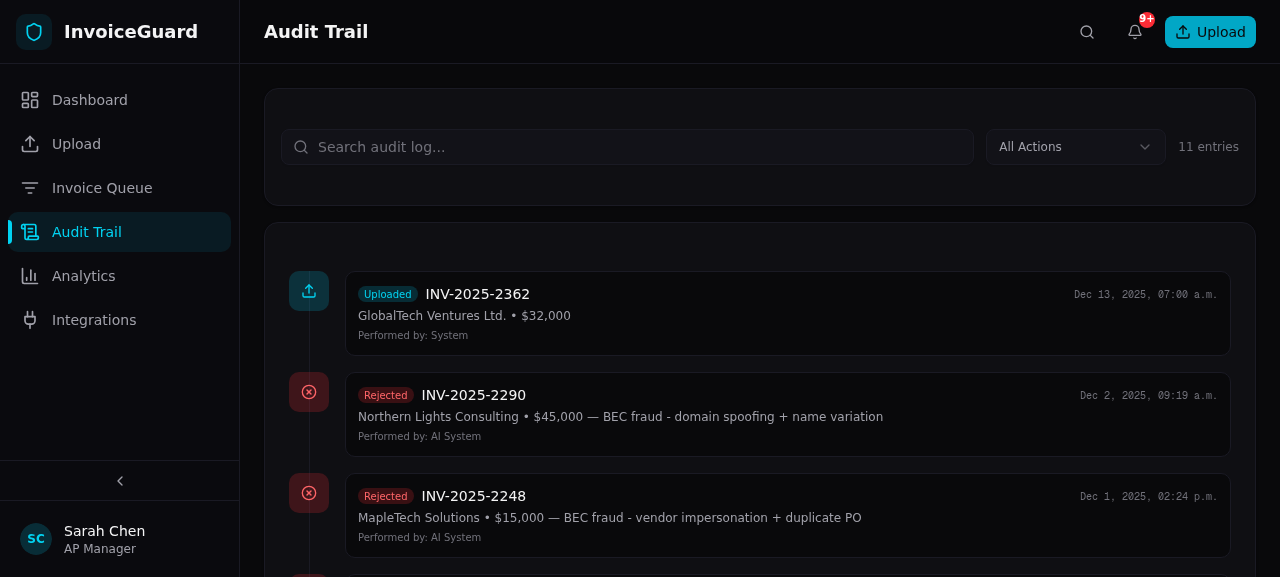
- Solution: We added an "Audit Trail" feature. For every decision the AI makes, it generates a markdown-log explaining why (e.g., "Flagged because invoice date is prior to PO creation"). This transparency builds trust.
What We Learned
This project taught us that the best internal tools aren't about the flashiest technology—they are about removing friction.
Technically, we deepened our understanding of RAG (Retrieval-Augmented Generation) and how to ground LLMs in specific enterprise data contexts. We learned how to optimize prompts for structured data output (JSON) rather than just conversational text.
From a product perspective, we learned that "Feasibility" is as important as "Innovation." A tool that saves 100 hours but requires 3 months to set up will never be used. By focusing on a "Drag-and-Drop" interface with zero-training deployment, we ensured InvoiceGuard could be adopted by a company on Monday morning.
What's Next for InvoiceGuard
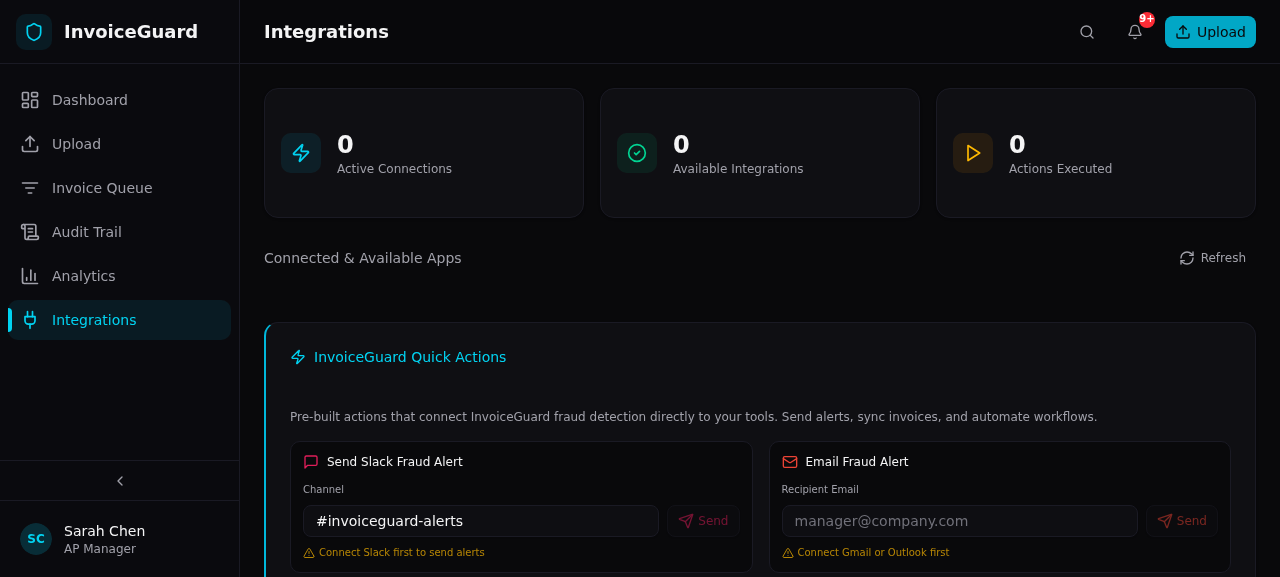
We plan to expand the "Agentic" capabilities to include Autonomous Negotiation. If a vendor overcharges, the system could draft a polite email querying the discrepancy directly. We are also exploring integration with major ERPs like SAP and NetSuite to push the "Approve" button automatically for low-risk, trusted transactions.


Log in or sign up for Devpost to join the conversation.