-
-
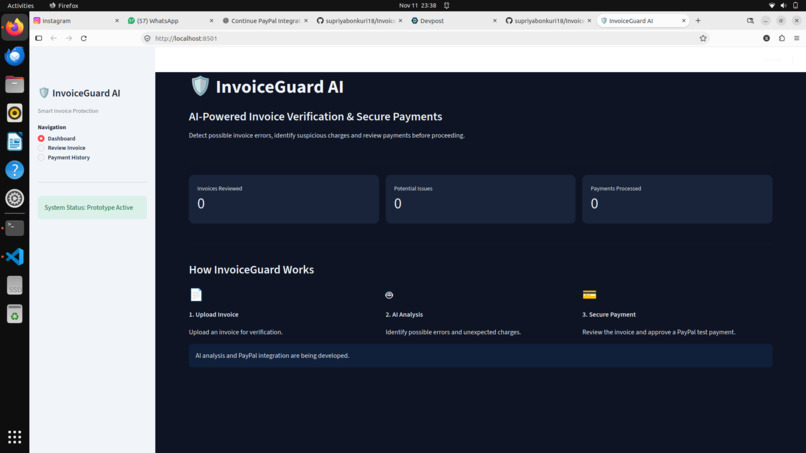
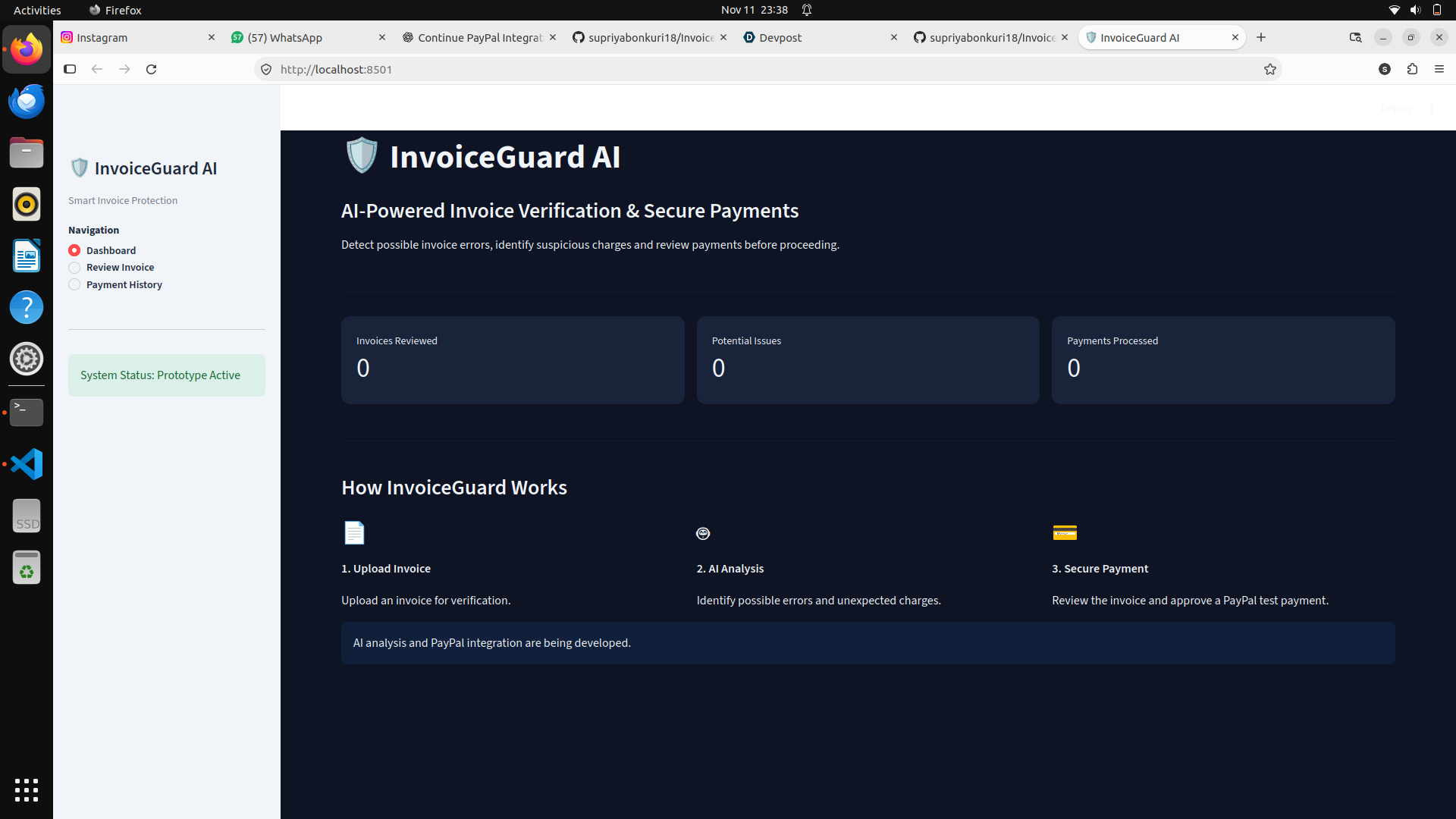
DASHBOARD
-
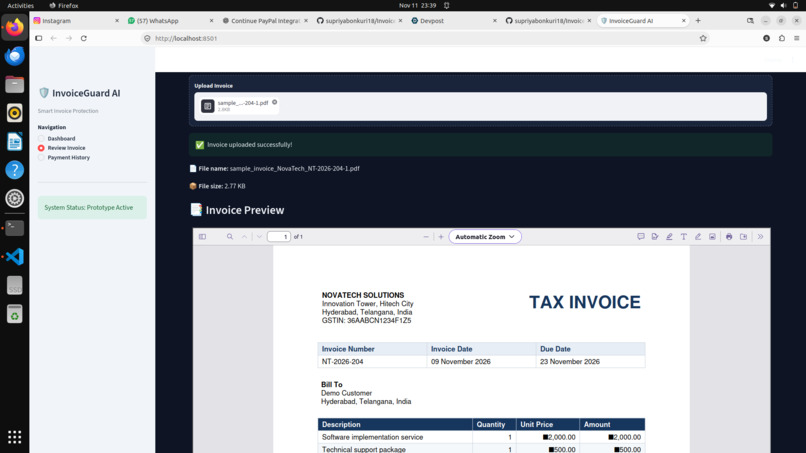
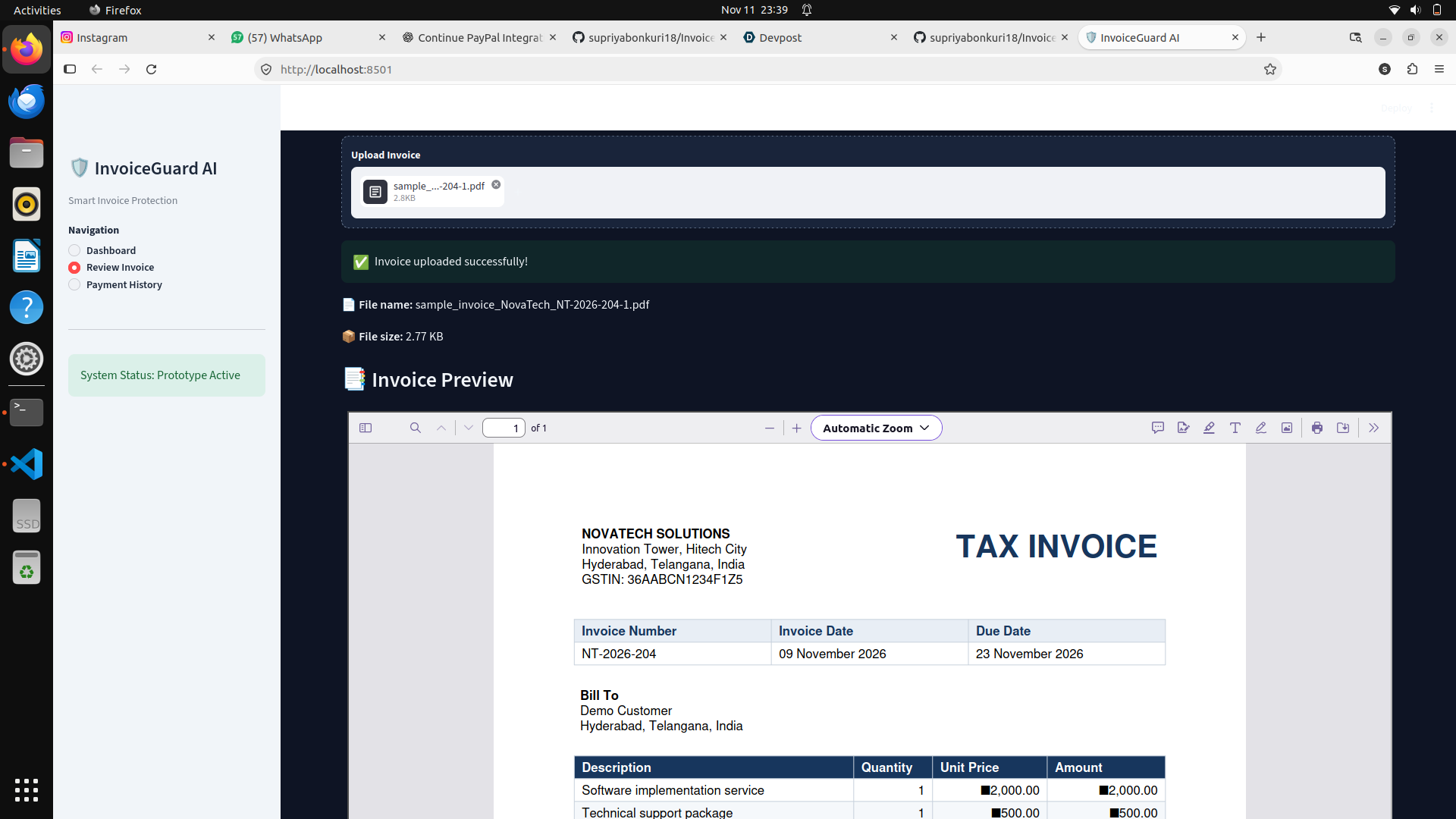
UPLOADING AN INVOICE
-
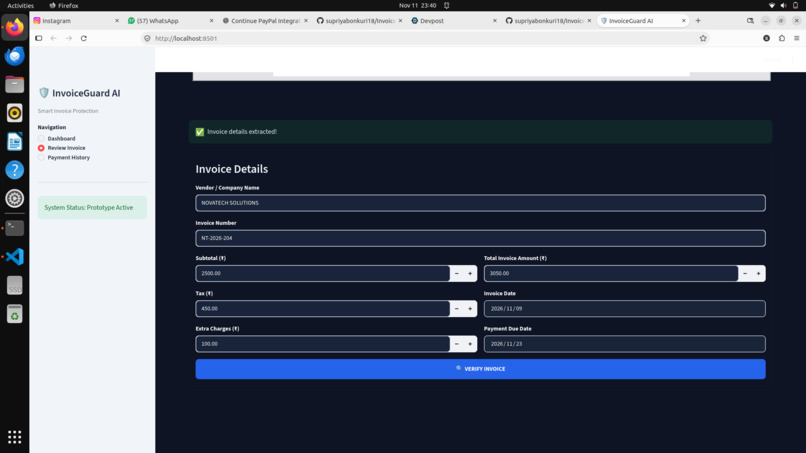
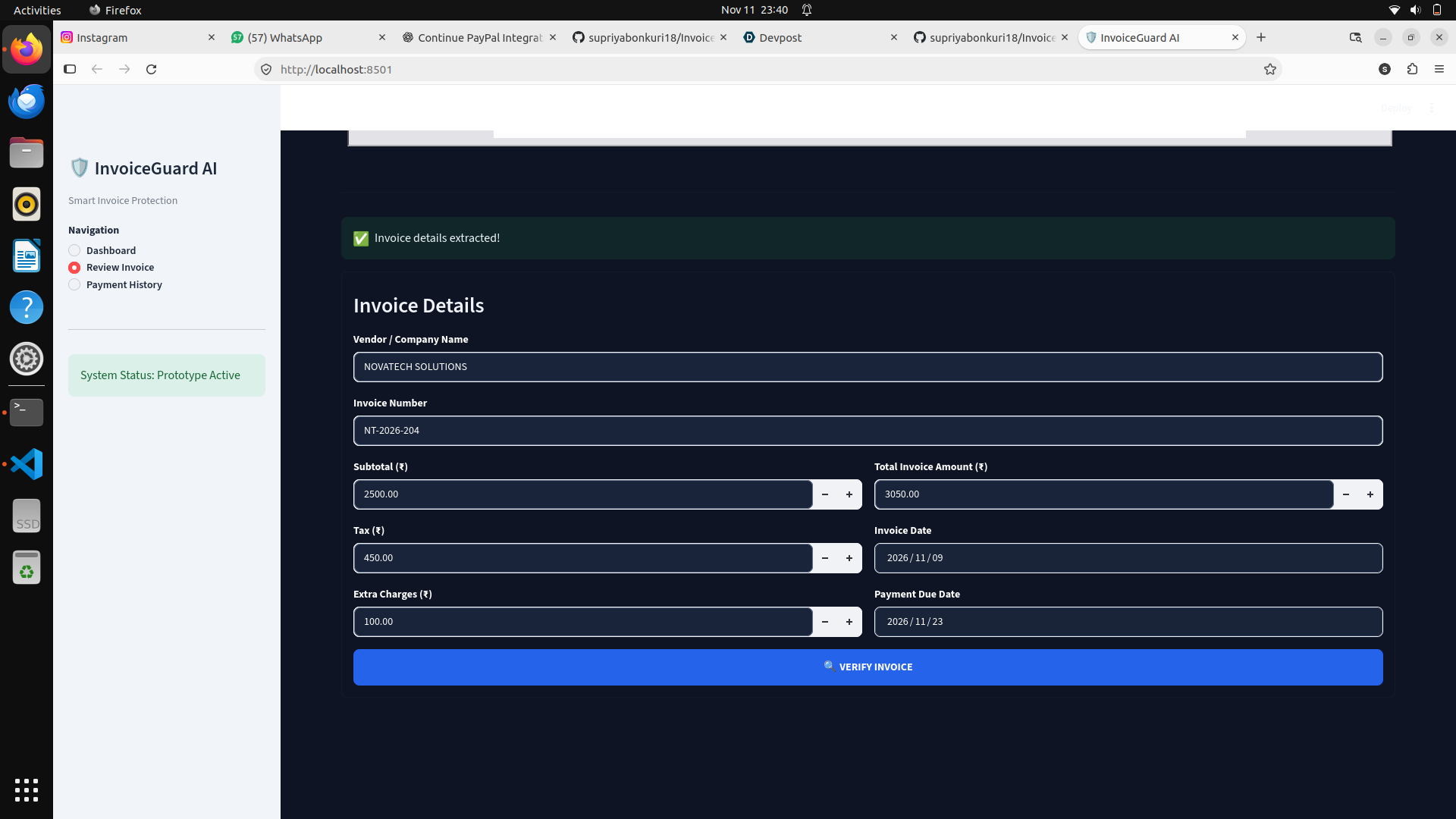
EXTRACTION OF THE INVOICE
-
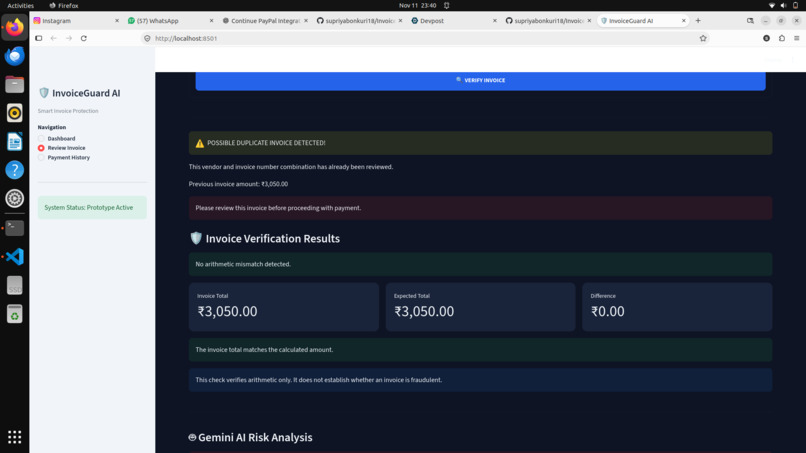
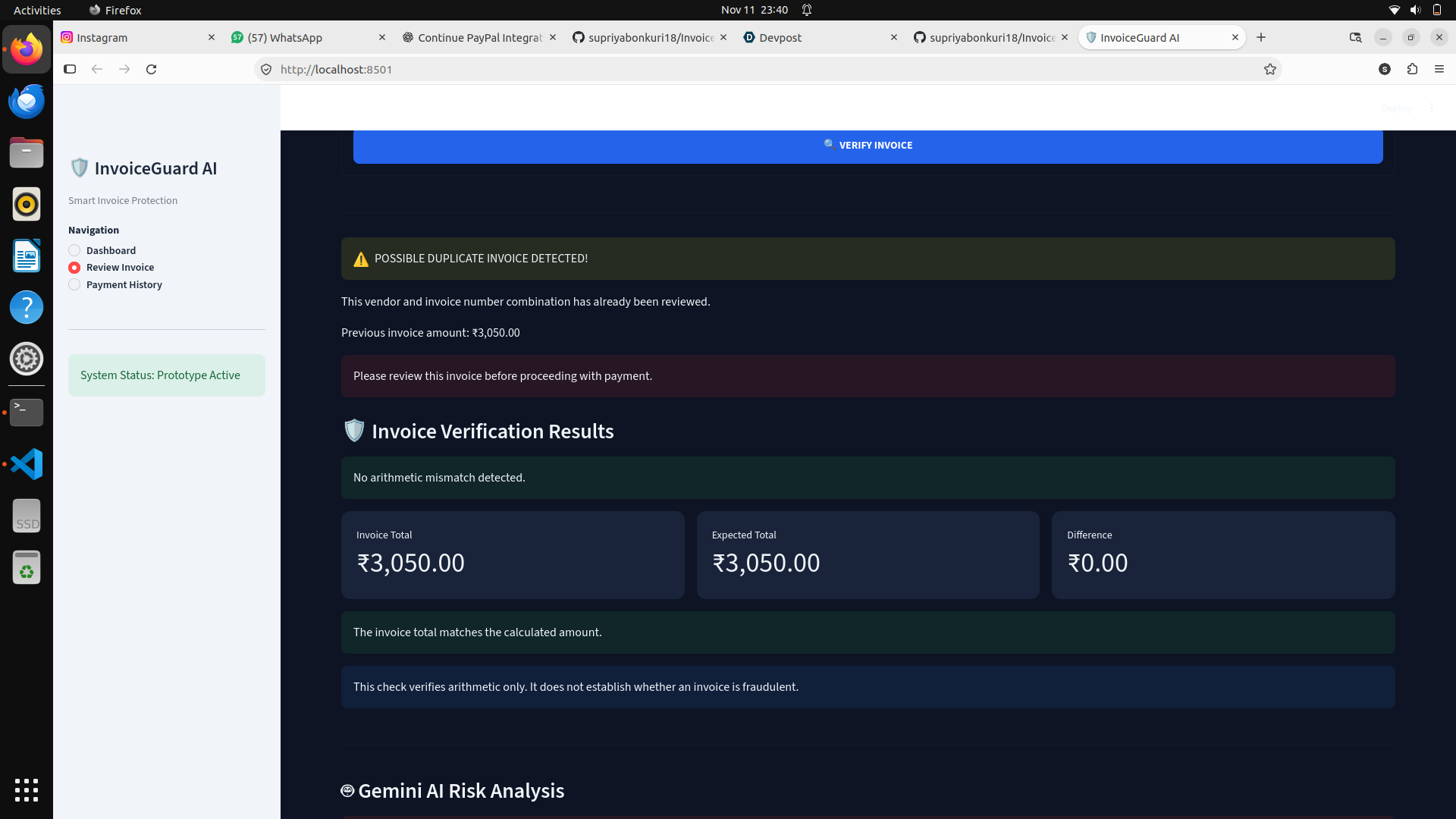
VERIFYING THE INVOICE
-
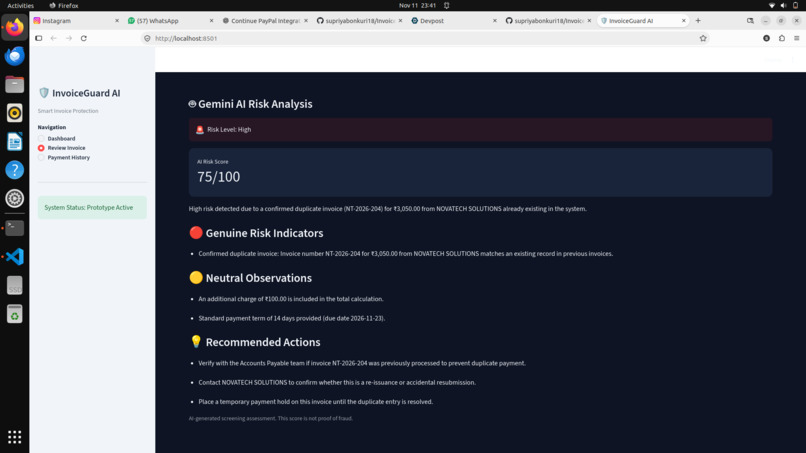
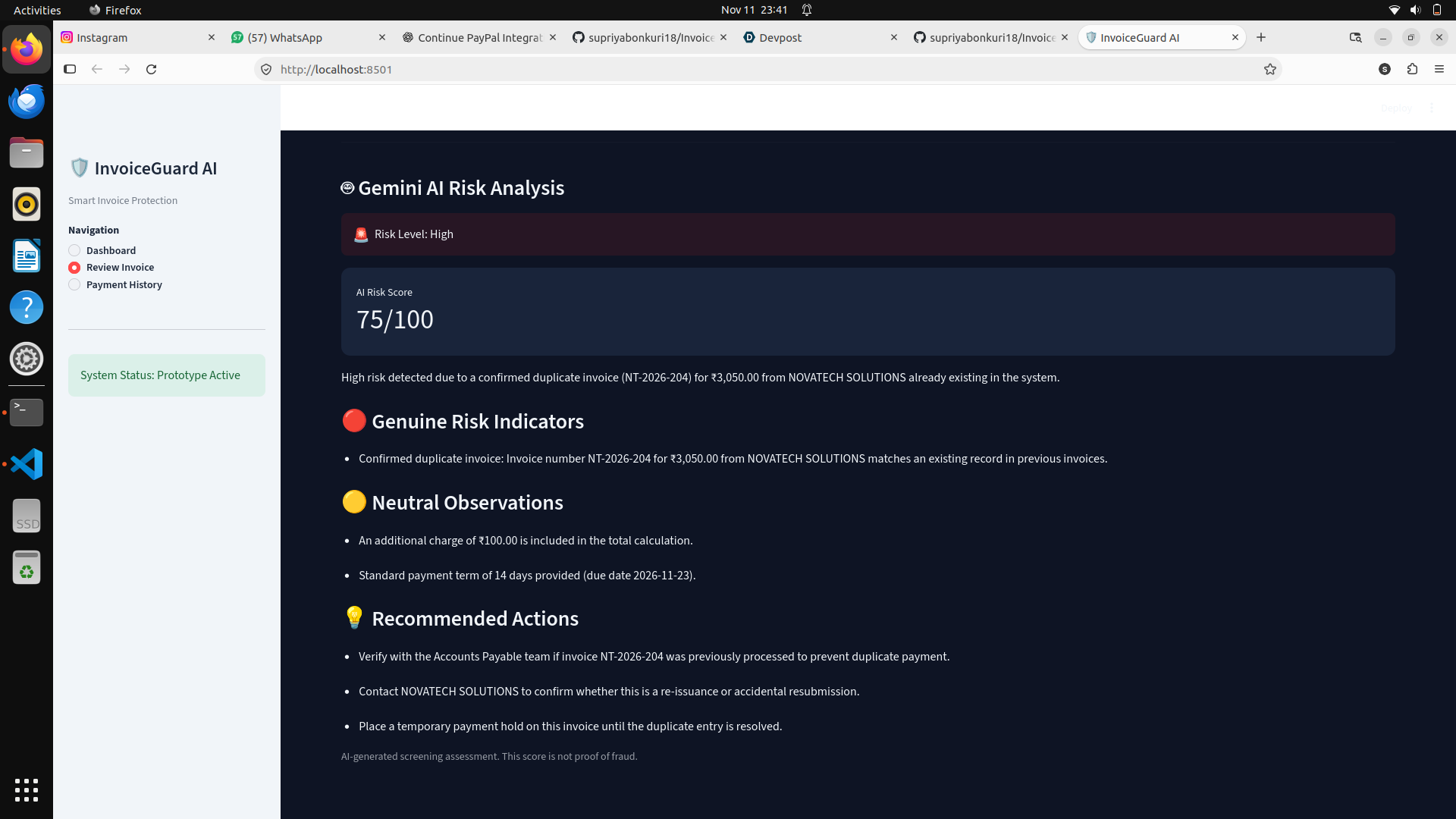
RECOMMENDATIONS USING GEMINI AI
-
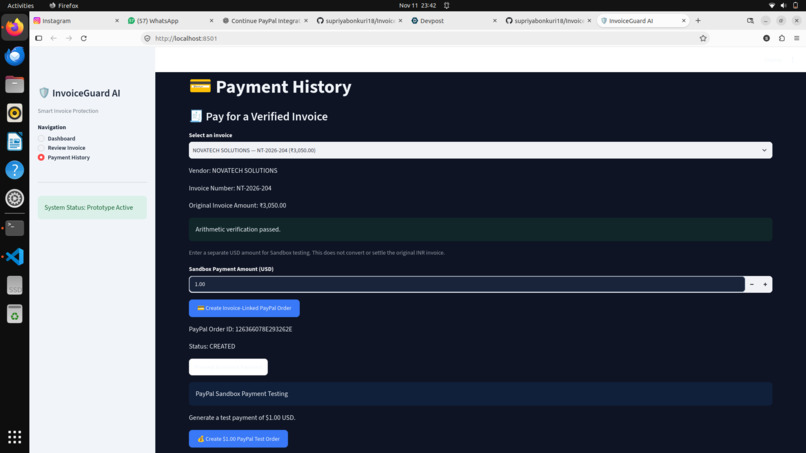
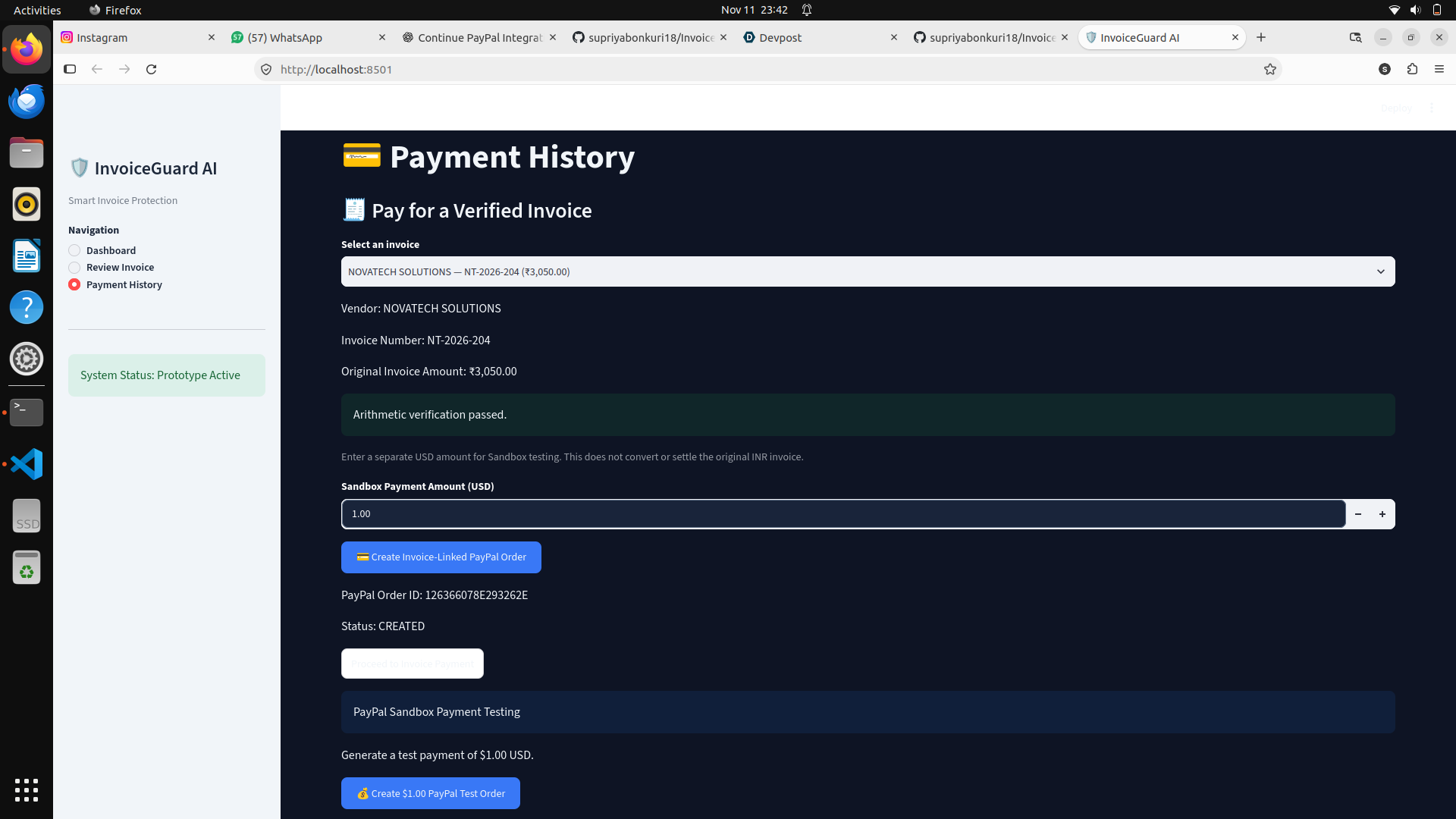
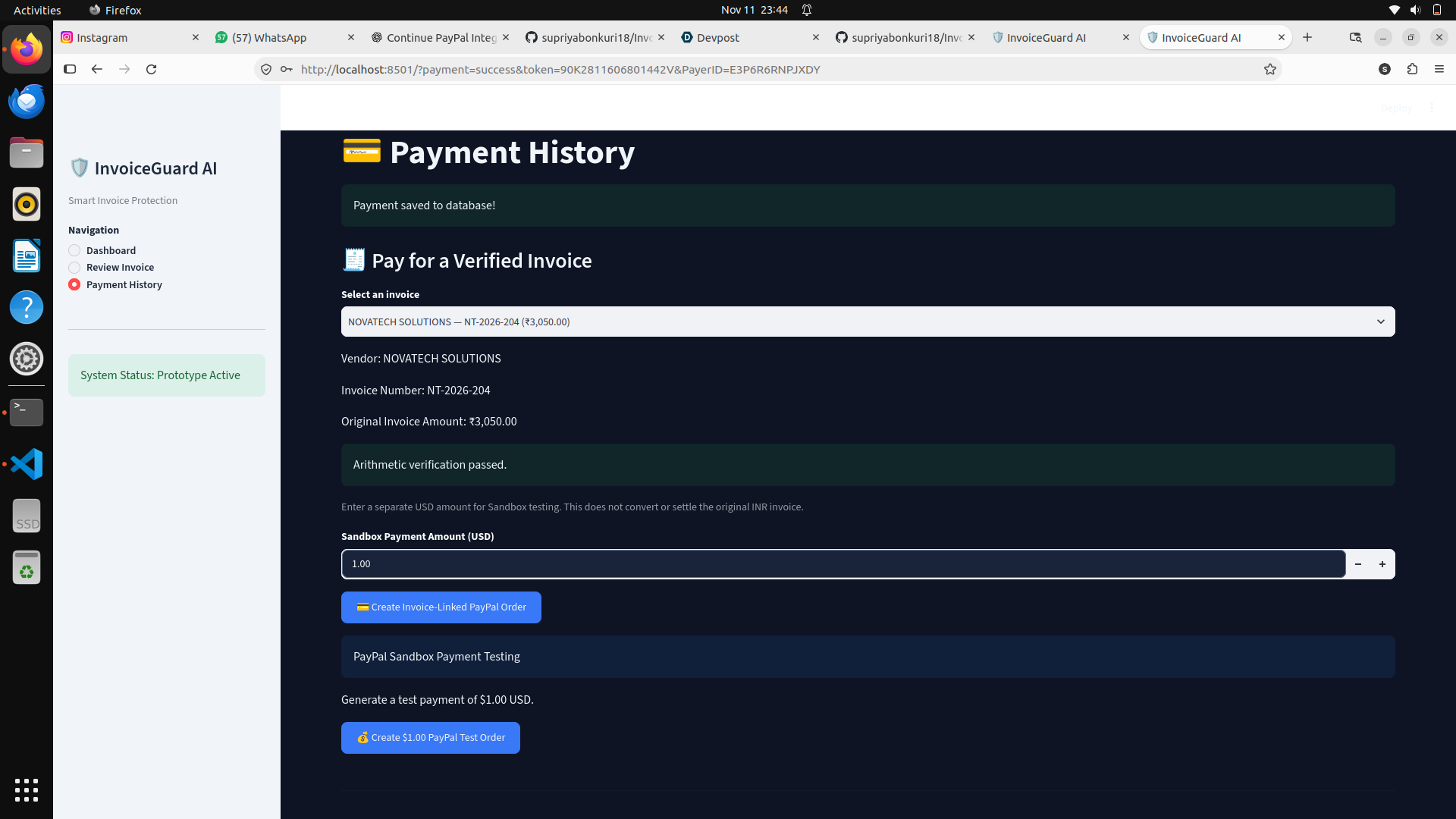
PAYMENT HISTORY
-
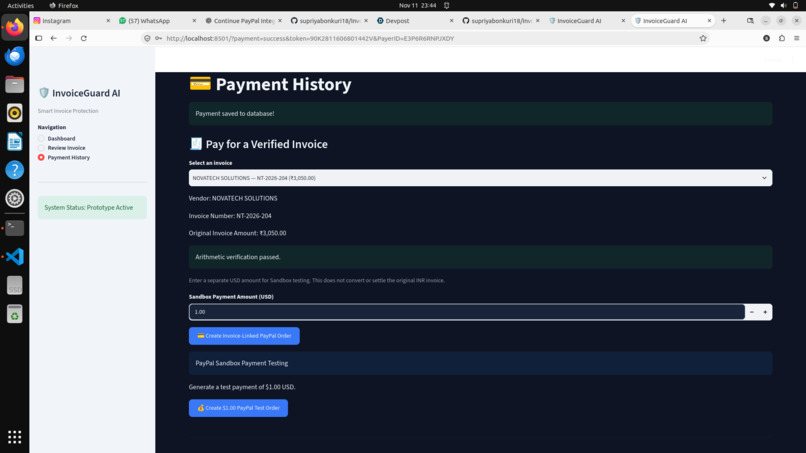
PAYPAL ORDER
-
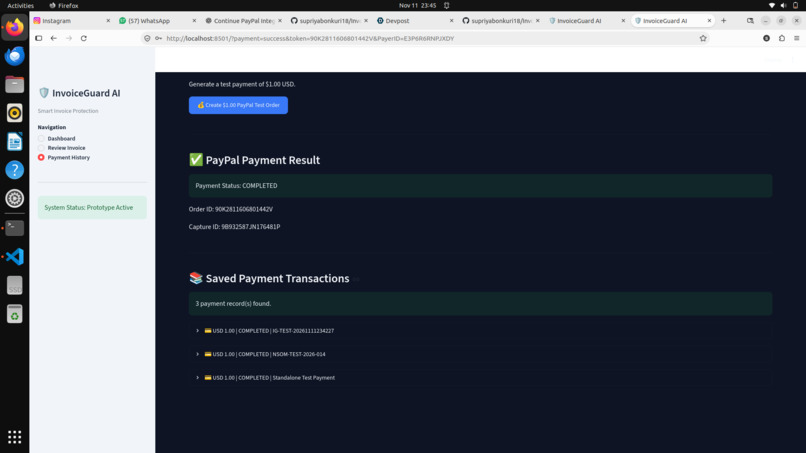
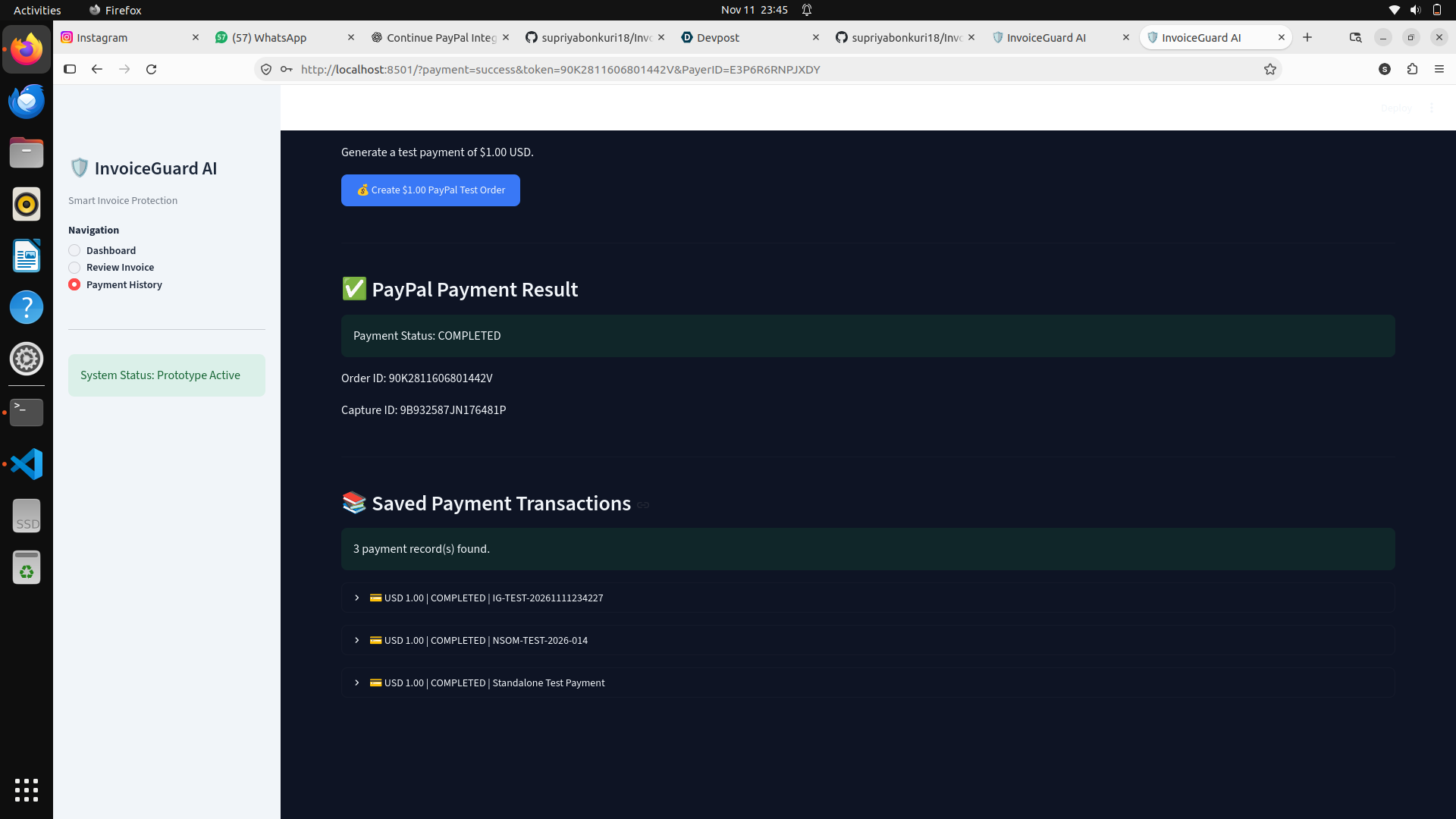
PAYMENT RESULTS
💡 Inspiration
Invoices are a critical part of everyday business operations, but manually checking every invoice before making a payment can be time-consuming and prone to human error.
Duplicate invoices, incorrect calculations, and suspicious invoice details can create financial risks, especially for small businesses and freelancers who may not have dedicated finance teams.
We wanted to build a solution that makes invoice verification smarter and helps users make more informed payment decisions.
🚀 What It Does
InvoiceGuard AI is an AI-powered invoice verification and payment protection prototype.
Its key capabilities include:
- Invoice OCR: Extracts important information from PDF and image invoices using Tesseract OCR.
- Calculation Verification: Checks subtotal, tax, additional charges, and total amounts for mathematical inconsistencies.
- Duplicate Detection: Identifies repeated invoices using vendor names and invoice numbers.
- AI Risk Analysis: Uses Google Gemini to identify potential warning signs and provide risk-related observations.
- Invoice Management: Maintains invoice review history using SQLite.
- PayPal Integration: Supports payment order creation and capture through the PayPal REST API using the Sandbox environment.
🛠️ How We Built It
We developed InvoiceGuard AI using Python and Streamlit.
The application uses Tesseract OCR and Pytesseract to extract invoice information, while custom Python validation logic checks invoice calculations and detects duplicate submissions.
Google Gemini provides AI-assisted invoice risk analysis. PayPal REST APIs handle Sandbox payment creation and capture.
SQLite stores invoice records and payment history.
The application brings these capabilities together in a single interface with a dashboard, invoice review section, and payment history.
🧠 Challenges We Faced
One of our biggest challenges was extracting structured information from invoice documents with different layouts and formats.
We also worked on making invoice calculations reliable, handling duplicate submissions, integrating external AI and payment APIs, and managing credentials securely.
Testing different invoice scenarios helped us improve the verification workflow and handle inconsistencies more effectively.
📚 What We Learned
Building InvoiceGuard AI helped us gain practical experience with:
- Integrating generative AI into a real-world application.
- Working with OCR and document processing.
- Building invoice validation and duplicate-detection logic.
- Integrating PayPal payment APIs.
- Managing API credentials and application configuration.
- Developing an end-to-end application using Python and Streamlit.
🌍 What's Next
We envision improving InvoiceGuard AI with more accurate document extraction, stronger anomaly detection, vendor verification, and production-ready payment workflows.
Our goal is to make invoice verification more accessible and help businesses approach payments with greater confidence.
InvoiceGuard AI — Verify smarter. Pay safer.
Note: This is a prototype. AI-generated risk assessments are preliminary indicators, not verified fraud probabilities. PayPal transactions currently use the Sandbox environment.
