Inspiration
The inspiration for InvoiceForge came from noticing how many small businesses, freelancers, and students still rely on manual calculations or messy spreadsheets to create invoices. Small mistakes in quantities or prices can easily lead to incorrect totals and confusion. I wanted to build a simple but reliable tool that removes calculation errors while still feeling modern and easy to use.
What it does
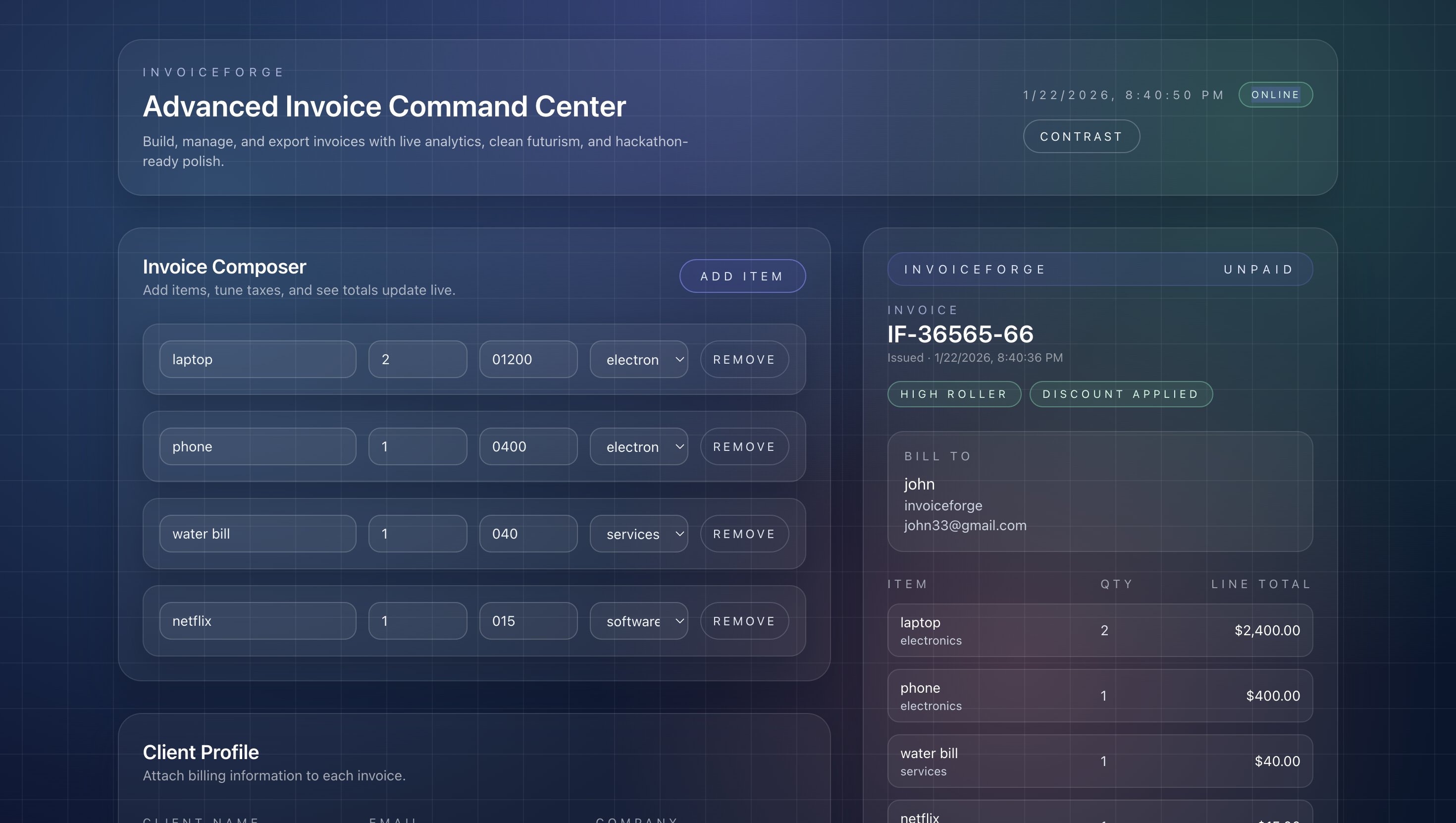
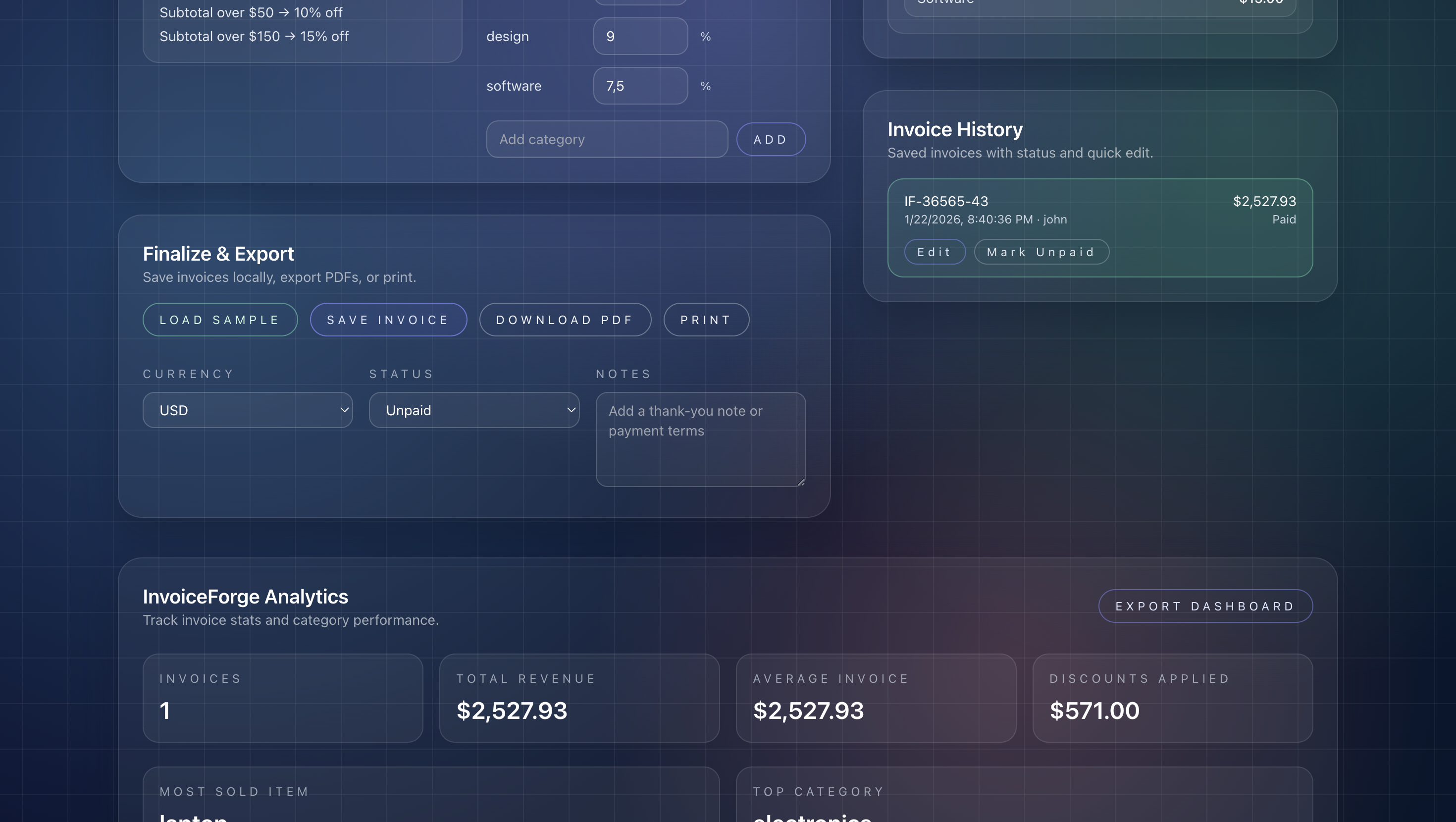
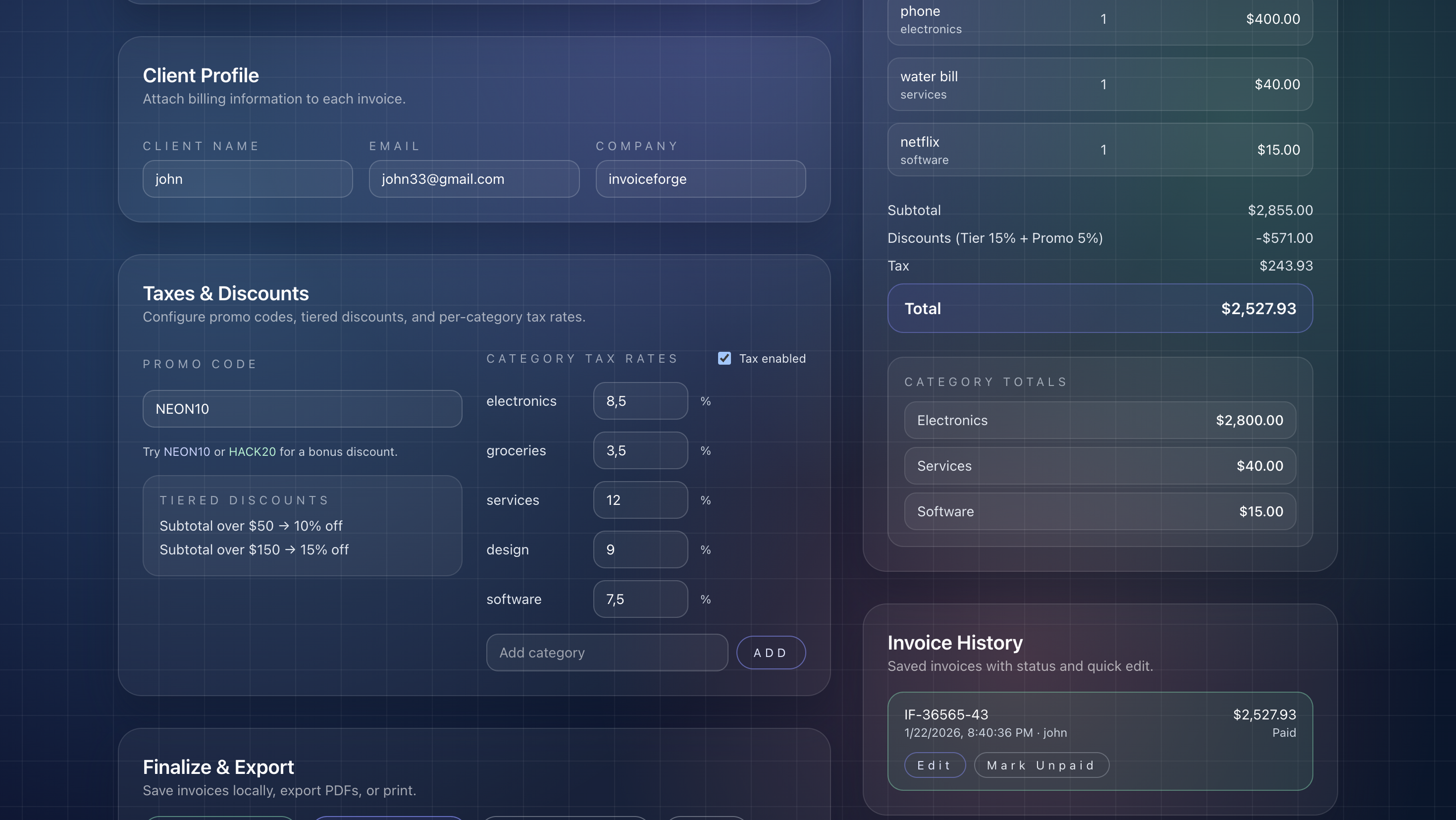
InvoiceForge is a web-based invoice system that allows users to create professional invoices by adding items with quantities, prices, and categories. It automatically calculates subtotals, taxes, discounts, and final totals in real time. Users can save invoices, mark them as paid or unpaid, view invoice history, and export invoices as clean, printable PDFs.
How we built it
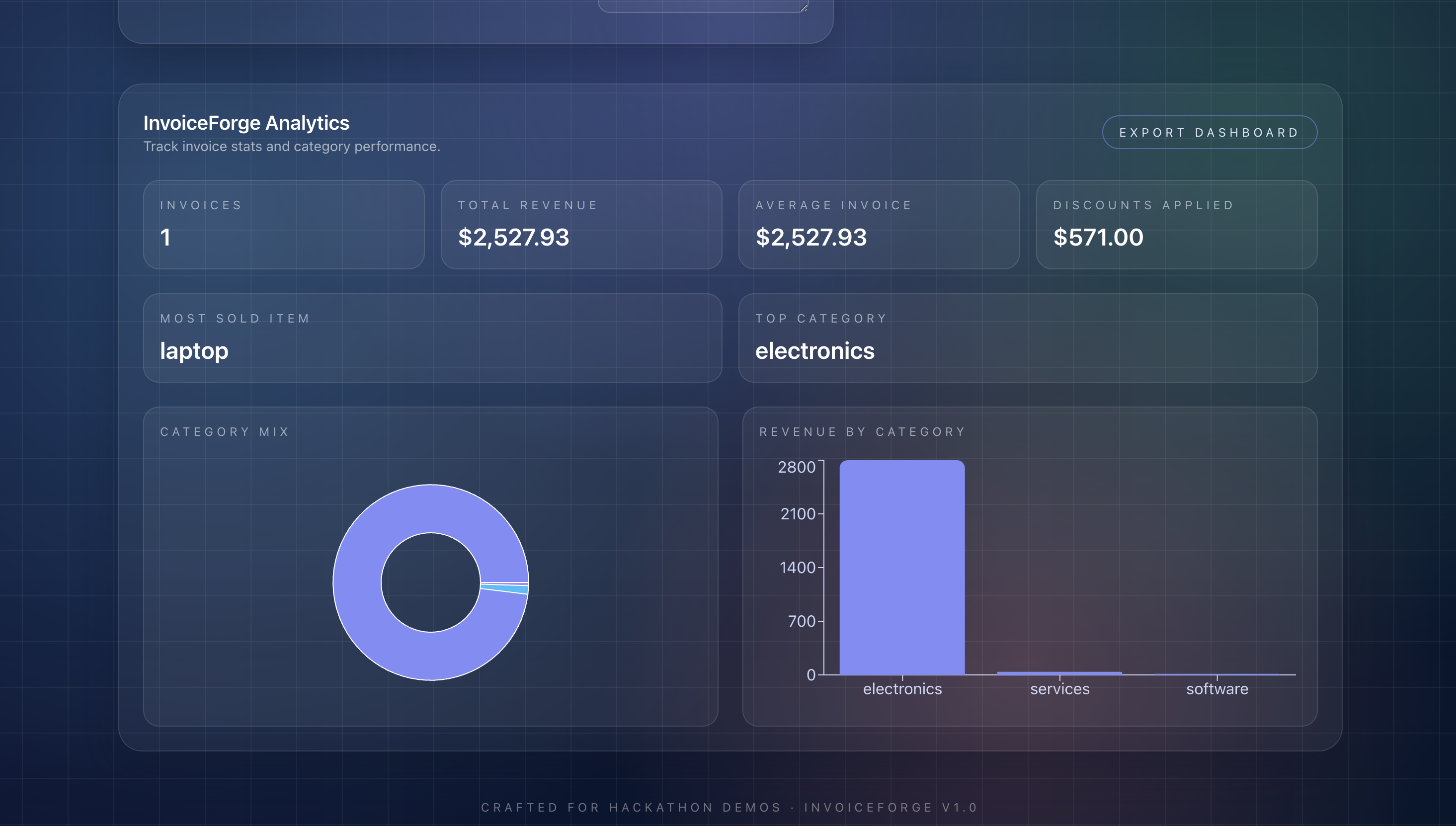
I built InvoiceForge as a solo project using React and Next.js for the frontend and Tailwind CSS for styling. State management handles invoice items, calculations, and validation logic. Local storage is used to persist invoices offline. PDF generation is handled using a client-side export library, and charts are used to display basic revenue analytics in the dashboard.
Challenges we ran into
One of the main challenges was keeping the calculations accurate while allowing users to edit items dynamically. Managing state updates without causing incorrect totals required careful logic. Another challenge was designing a clean interface that remained readable and functional on both desktop and mobile devices. Implementing offline storage in a reliable way was also a learning experience.
Accomplishments that we're proud of
I am proud that InvoiceForge is fully functional and feels like a real-world product rather than a simple demo. The automatic discount system, invoice history, offline-first behavior, and PDF export add real value. The clean design, input validation, and accessibility considerations make the app practical and easy to use.
What we learned
This project strengthened my understanding of state management, user input validation, and component-based design. I also learned how important user experience and accessibility are, especially for tools meant for everyday use. Building everything solo helped me improve my ability to plan features, manage time, and debug efficiently.
What's next for InvoiceForge
With more time, I would add user authentication, cloud-based storage, and multi-currency support. I would also improve analytics with more detailed reports and allow invoices to be shared directly via email. These additions would help turn InvoiceForge into a scalable invoicing platform suitable for real businesses.
Built With
- javascript
- jspdf
- localstorage
- next.js
- react
- tailwind-css


Log in or sign up for Devpost to join the conversation.