-
-
-
-
-
-
invoice ai
Inspiration
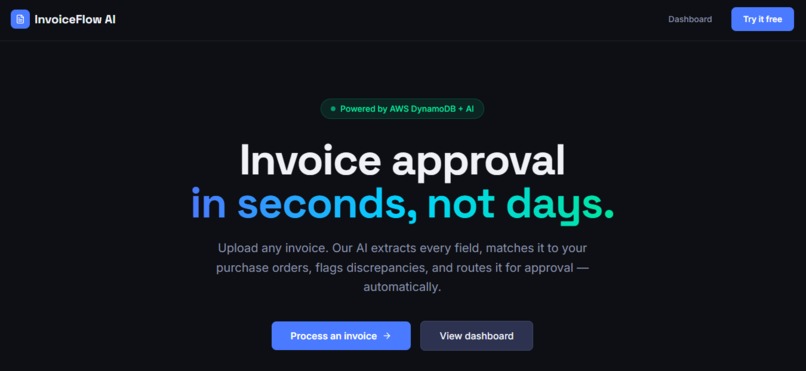
The inspiration for InvoiceFlow AI came from seeing how broken back-office finance operations truly are. Accounts payable departments routinely waste hundreds of hours manually verifying invoices against messy contract agreements, hunting down compliance errors, and fixing data entry typos. While large language models are great at extracting text, a standalone AI prototype on a laptop cannot safely handle an enterprise invoice workflow. We wanted to build a solution that combined the fluid, intelligent reasoning of AI agents with the rigid governance, auditability, and safety rails required by corporate finance teams.
What it does
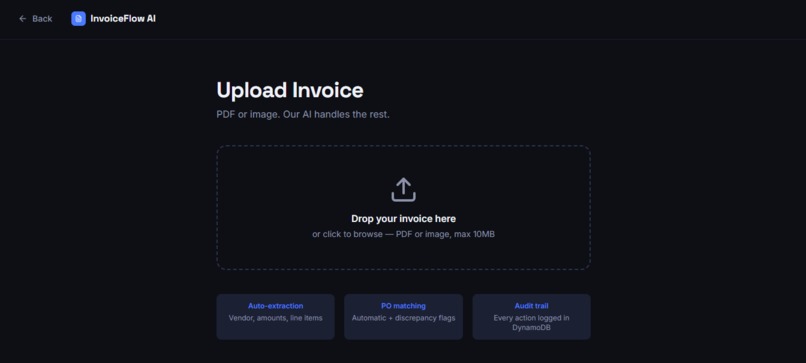
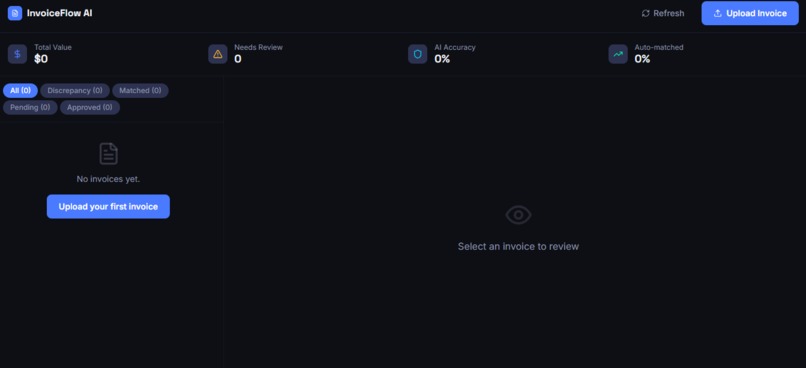
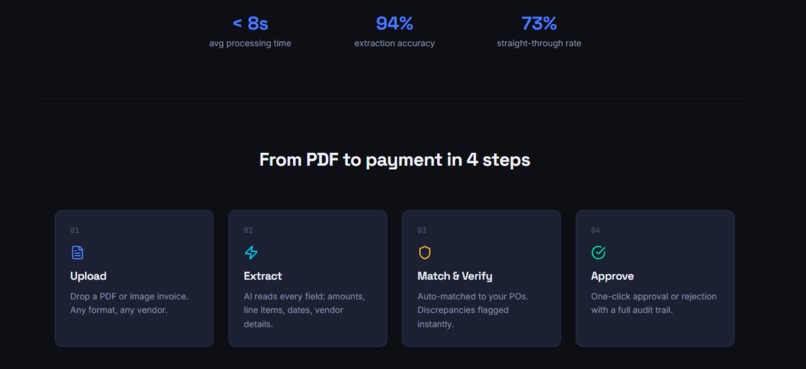
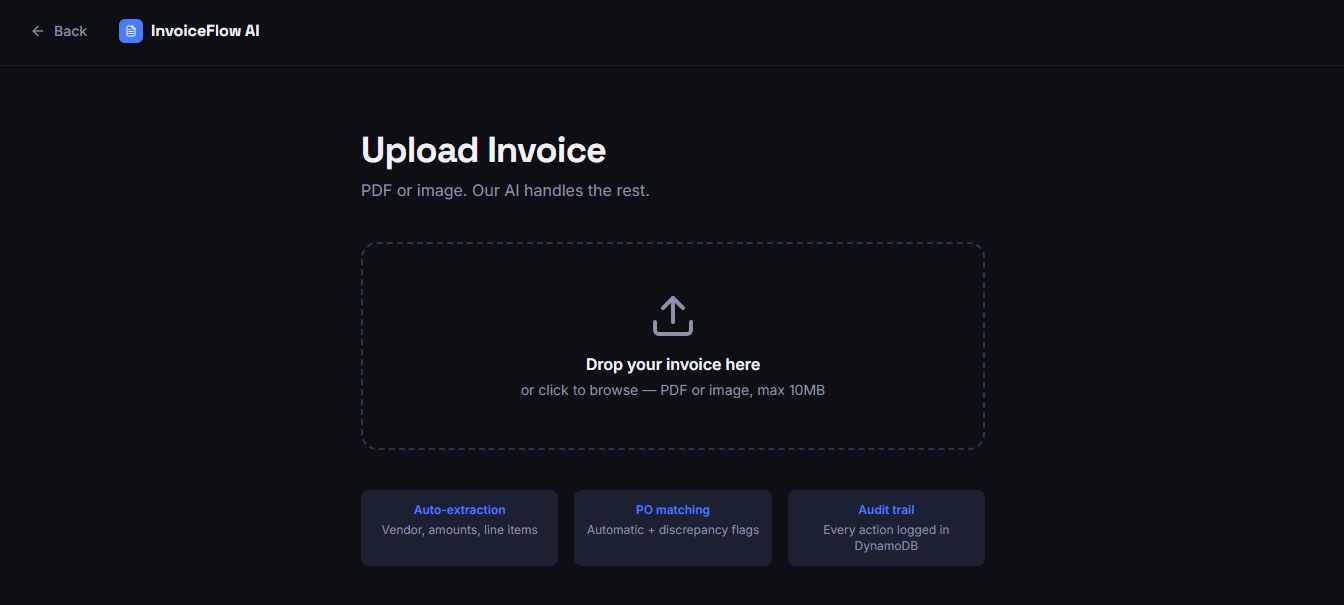
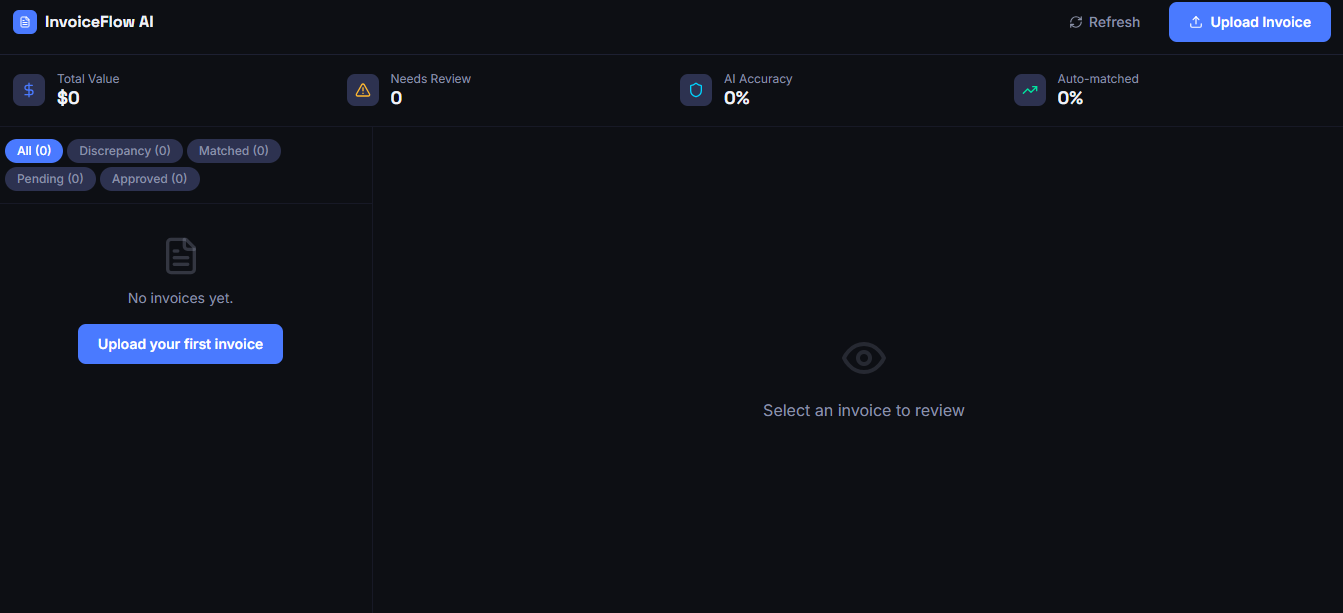
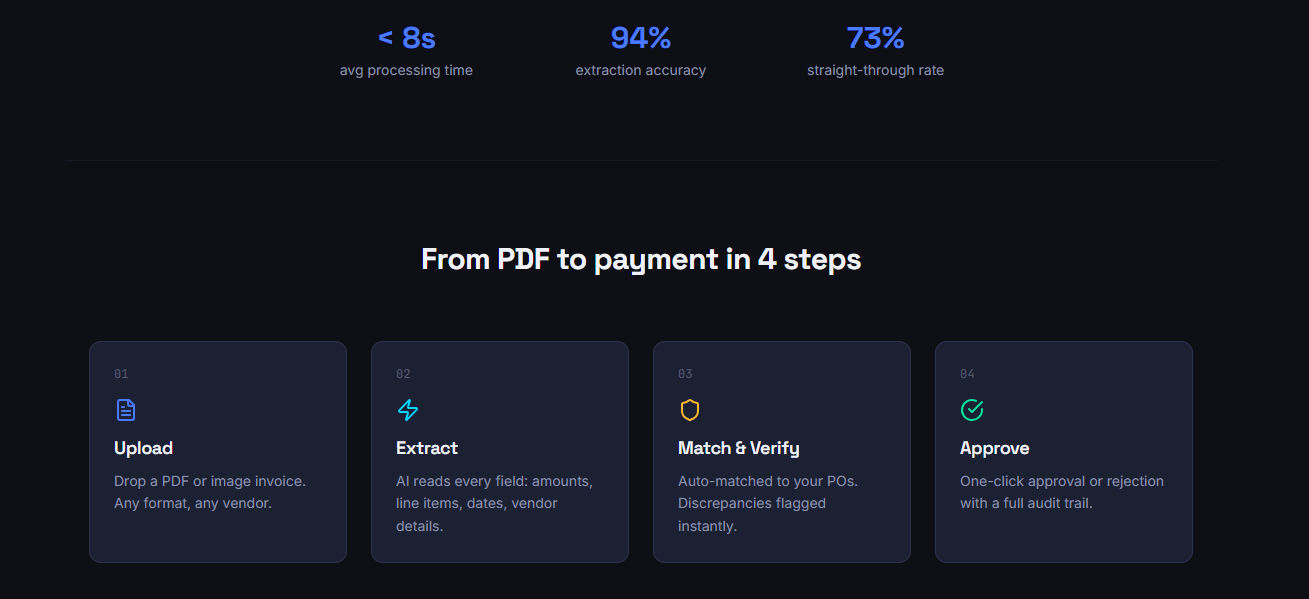
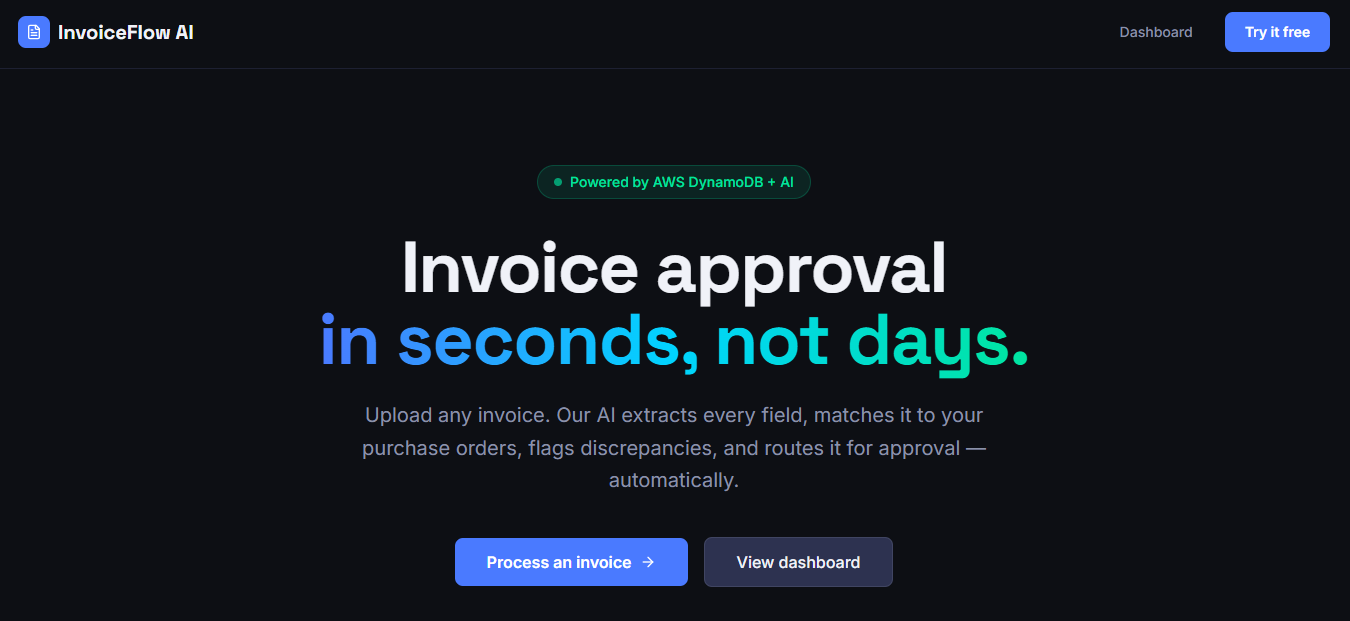
InvoiceFlow AI is an autonomous, end-to-end invoice ingestion and auditing ecosystem. The moment an invoice is received, a multi-agent system extracts line items, validates the totals using exact mathematical schemas, and runs a RAG-powered verification check against master vendor agreements to catch pricing anomalies or unauthorized services.
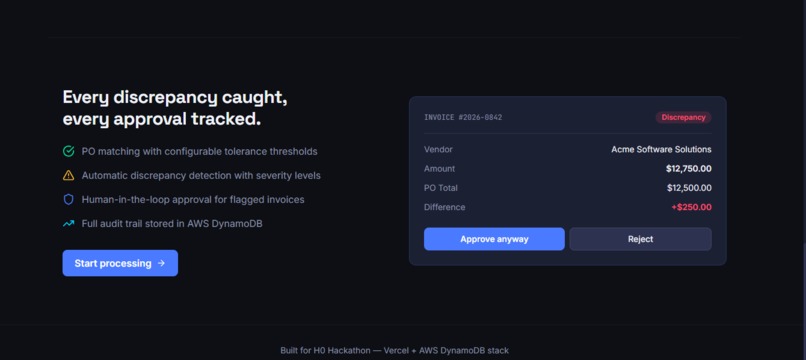
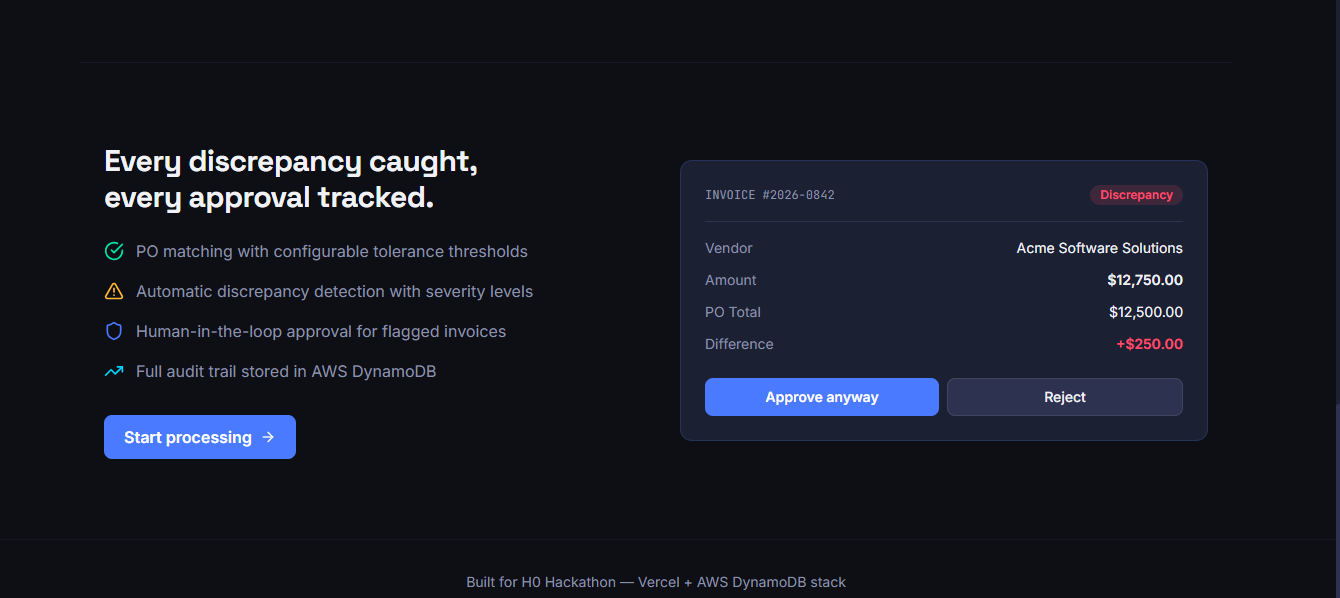
If the invoice passes all checks, it is processed for payment automatically. If an anomaly is detected—such as a $150/hr billing rate when the vendor contract stipulates a maximum of $120/hr—InvoiceFlow AI isolates the exception, flags the exact contract breach, and surfaces it to a human supervisor for a single-click review.
How we built it
We constructed InvoiceFlow AI using a modular, hybrid architecture that marries enterprise-grade orchestration with state-of-the-art AI tooling:
- Orchestration (UiPath Maestro BPMN): Serves as our enterprise control plane, managing the deterministic process flow from ingestion to final ERP data sync, ensuring clean handoffs between systems.
- Intelligence Pipeline: Built using LangChain and Pydantic to orchestrate specialized extraction and auditing agents powered by Anthropic's Claude 3.5 Sonnet via Amazon Bedrock.
- Verification Engine: Utilizes an integrated vector database containing embedded corporate contracts, allowing our auditing agent to query complex legal stipulations in real time.
- UiPath Action Center: Acts as our secure Human-in-the-Loop gateway, keeping humans in total control of financial decision-making without stalling the automated background pipeline.
- UiPath for Coding Agents: We extensively used coding agents like Claude Code and Gemini CLI to rapidly scaffold our Python microservices, validate JSON schemas, and write unit tests for our data extraction layer.
Challenges we ran into
One of our biggest hurdles was data formatting variance. Invoices lack a standardized layout, and multimodal LLMs can occasionally mix up tabular rows when handling multi-page documents. To guarantee absolute financial accuracy, we had to implement a strict, dual-layered verification schema:
$$\text{Line Item Sum Verification} = \sum_{i=1}^{n} (\text{Quantity}_i \times \text{Unit Price}_i) \equiv \text{Invoice Total}$$
If the mathematical extraction fails this strict programmatic identity check, the system bypasses AI assumptions and instantly routes the document for exception handling.
Additionally, managing token overhead during continuous contract matching threatened to bloat API costs. We overcame this by using selective semantic pre-filtering to pass only relevant contract sections to our agent's context window.
Accomplishments that we're proud of
- Production-Ready Resilience: We built a system that doesn't just work under "happy path" conditions. It intelligently handles dirty data, layout distortions, and missing variables without crashing.
- Successful Multi-Agent Synergy: Seamlessly blending external AI agent frameworks (LangChain/Pydantic) with UiPath's native enterprise execution engine.
- Effective Use of Coding Agents: Using Claude Code and Gemini CLI allowed us to develop, test, and debug our local codebase at roughly triple our normal manual speed.
What we learned
We learned that the true challenge of enterprise AI isn't the model itself—it’s the orchestration layer. A raw LLM prompt is fragile, but when it is wrapped in a strict UiPath Maestro BPMN workflow, it becomes a robust, compliant enterprise tool. We also realized that bringing humans into the loop shouldn't be an afterthought; designing clean exception paths is what actually makes an automation trusted by business users.
What's next for InvoiceFlow AI
Our immediate next step is migrating our unpredictable exception workflows over to UiPath Maestro Case. While our core processing flow follows a predictable sequence (Track 2), dynamic dispute resolutions with vendors can unfold in entirely unpredictable ways. Implementing Case Management will allow our agents to handle multi-day, exception-heavy back-and-forth negotiations autonomously. We also plan to build out proactive spend-analytics dashboards to alert procurement teams when vendors consistently edge close to their maximum contract budget thresholds.
Built With
- amazon-web-services
- data
- document
- dynamodb
- fastapi
- infrastructure:
- knowledge
- next.js
- storage
- streamlit
- typescript
- uipath-maestro-bpmn
- vector
- vercel

Log in or sign up for Devpost to join the conversation.