-
-
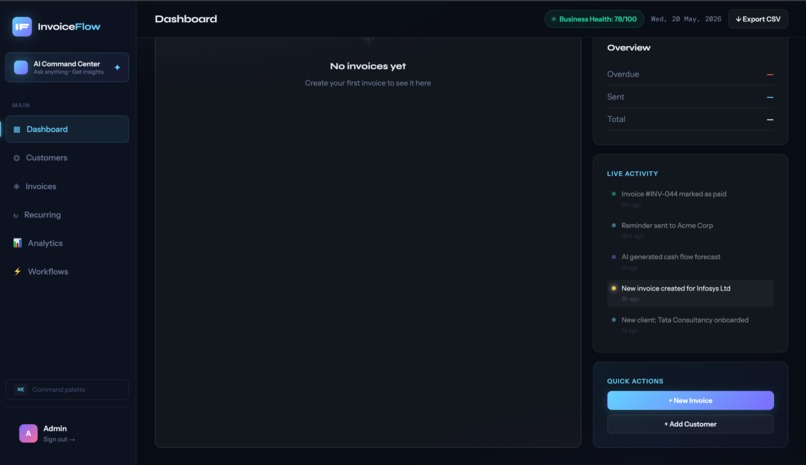
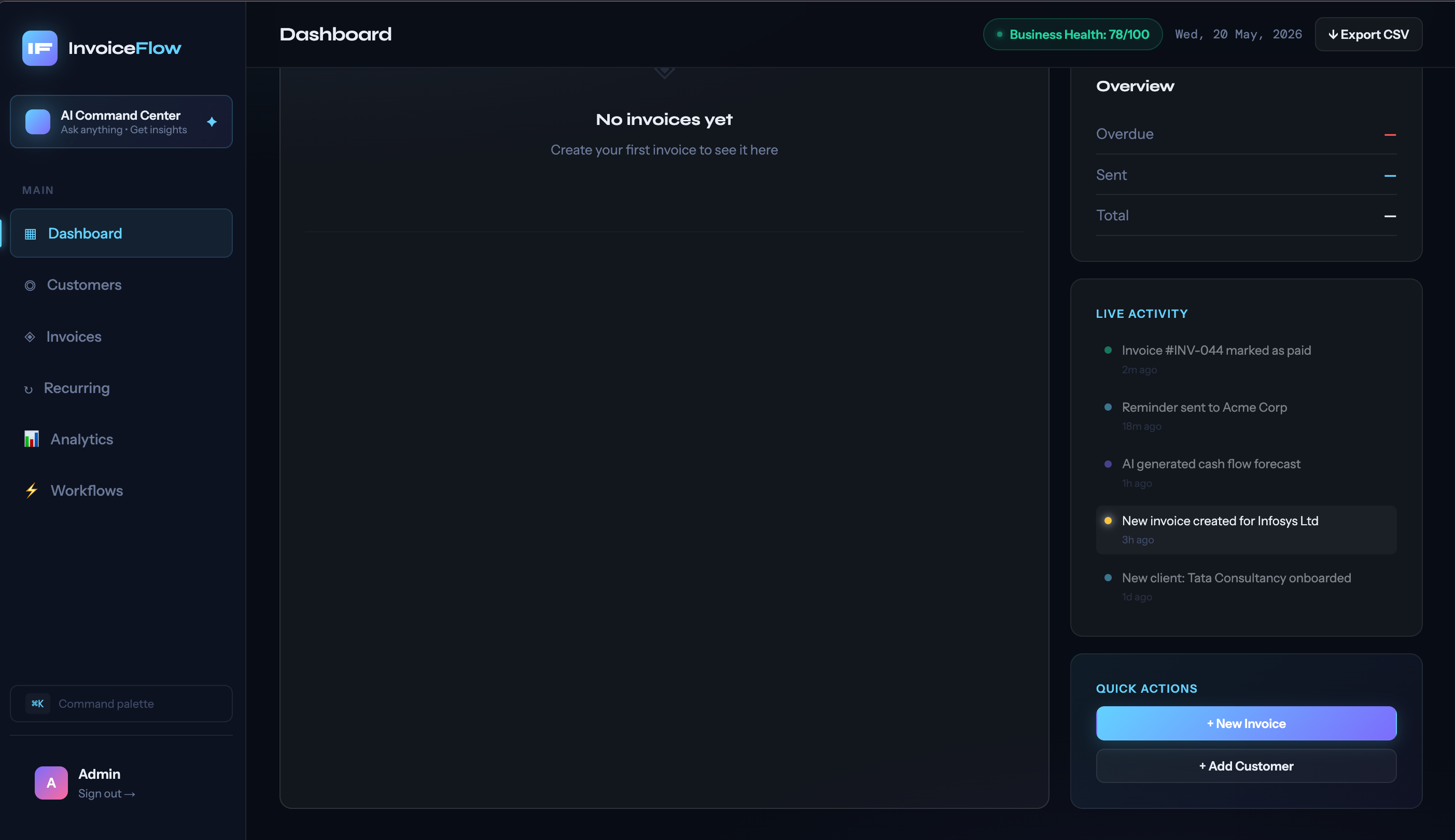
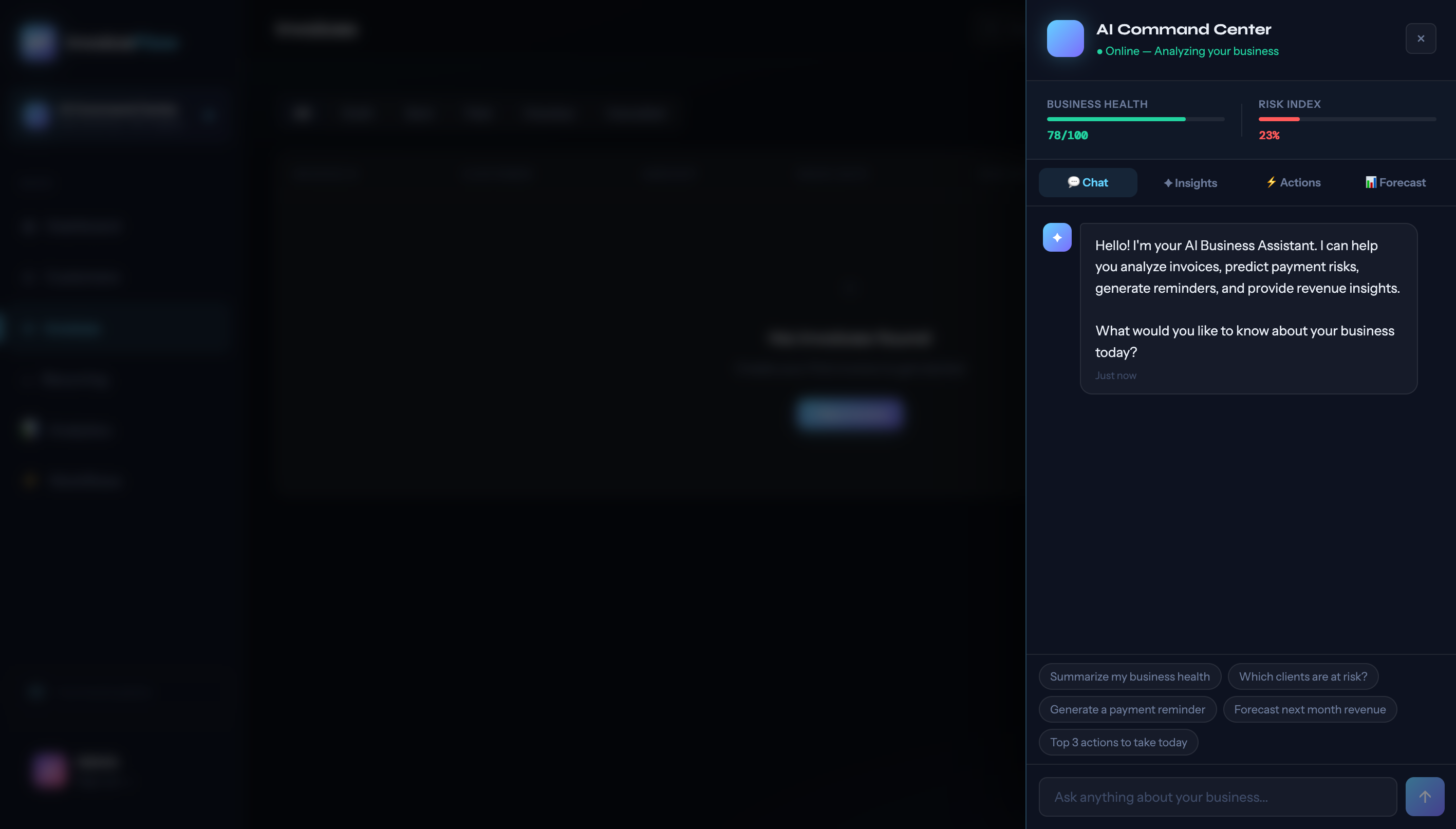
Dashboard-2
-
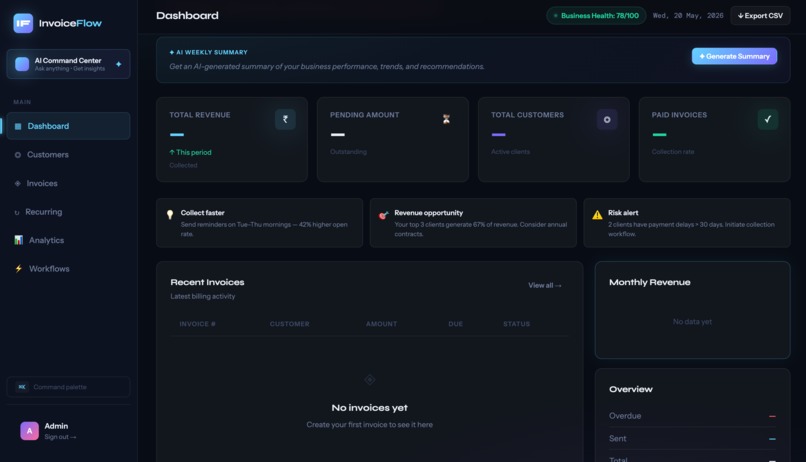
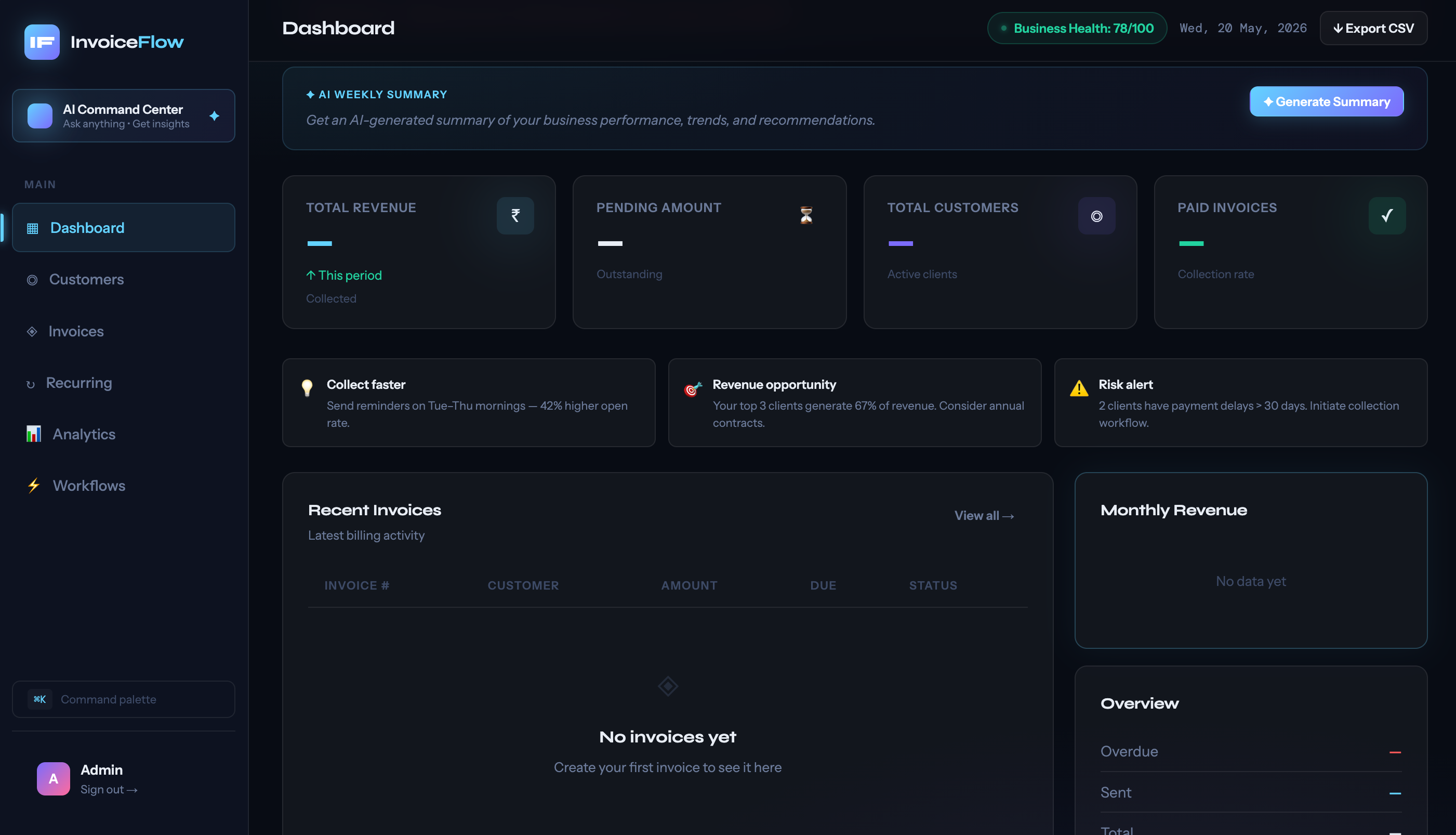
Dashboard-1
-
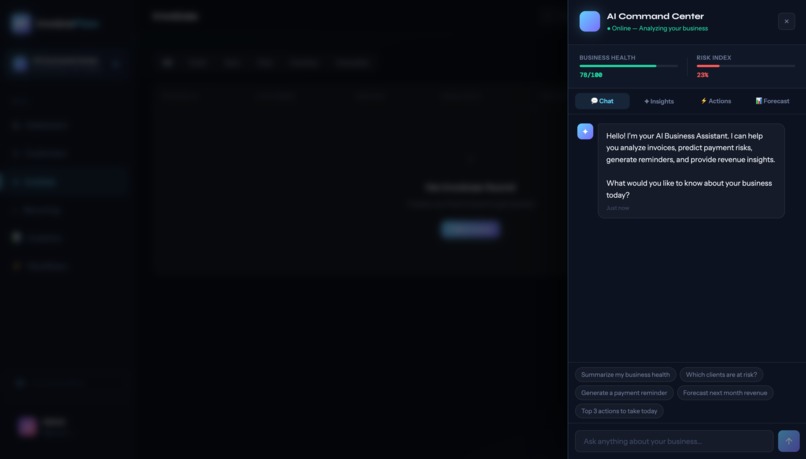
AI for weekly summary of business
-
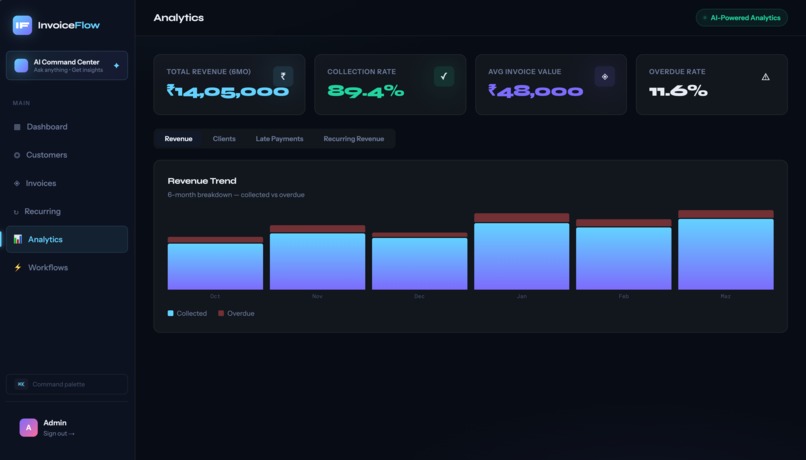
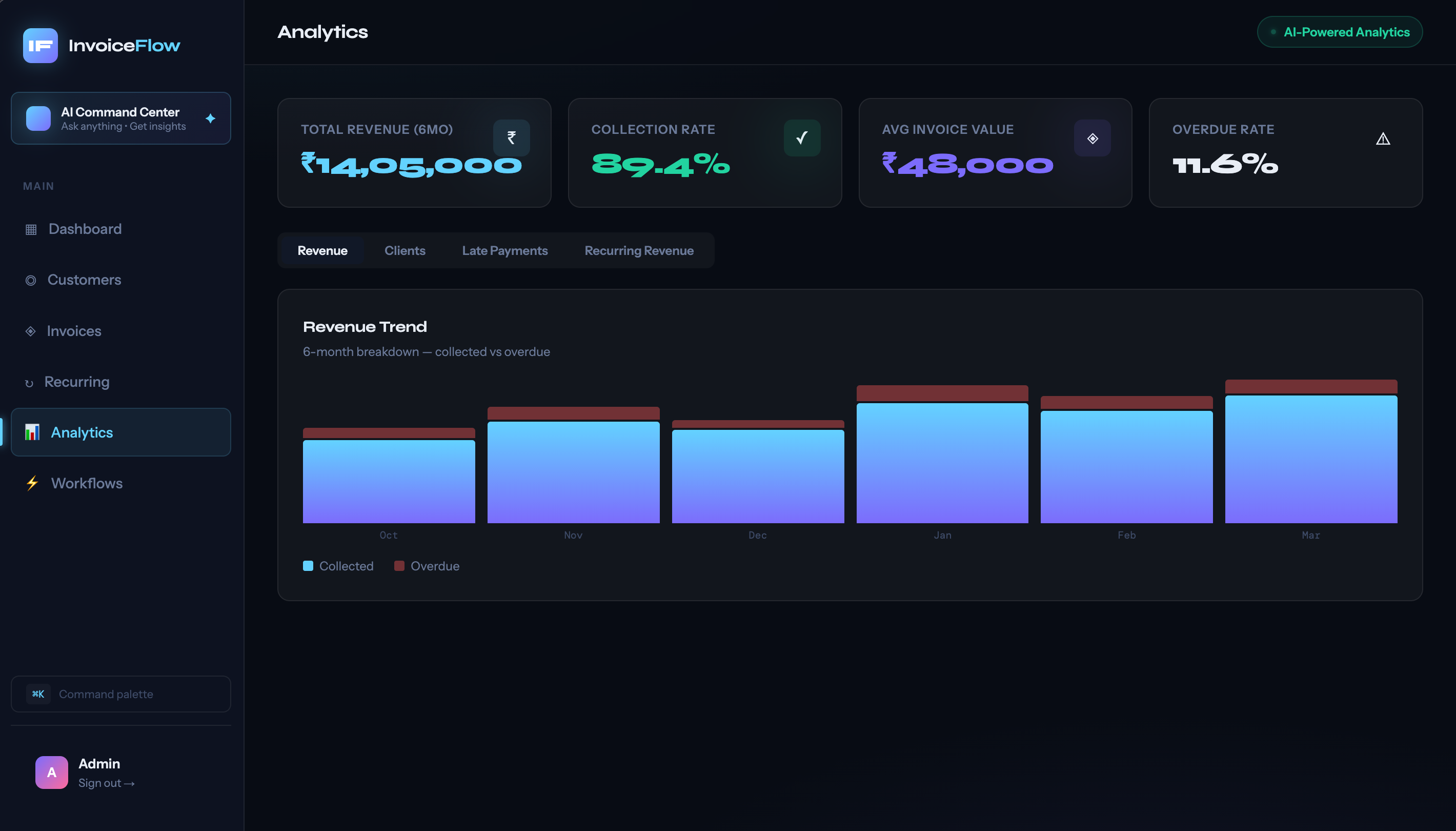
analytics for collective revenue , collection rate , avg invoice value and overdue rate
-
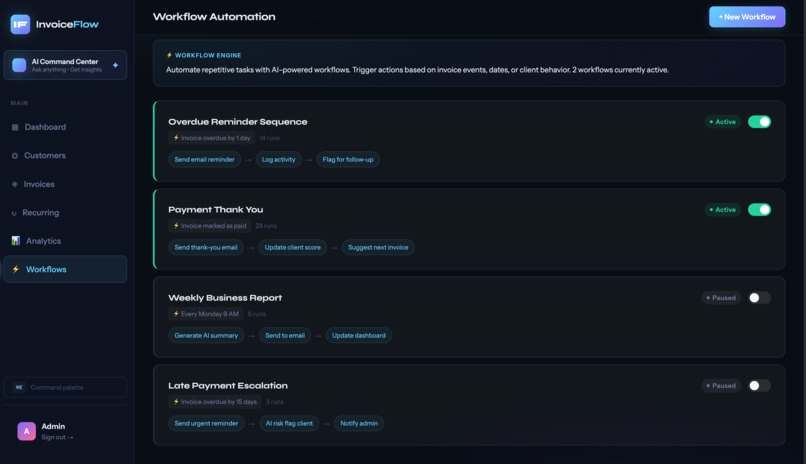
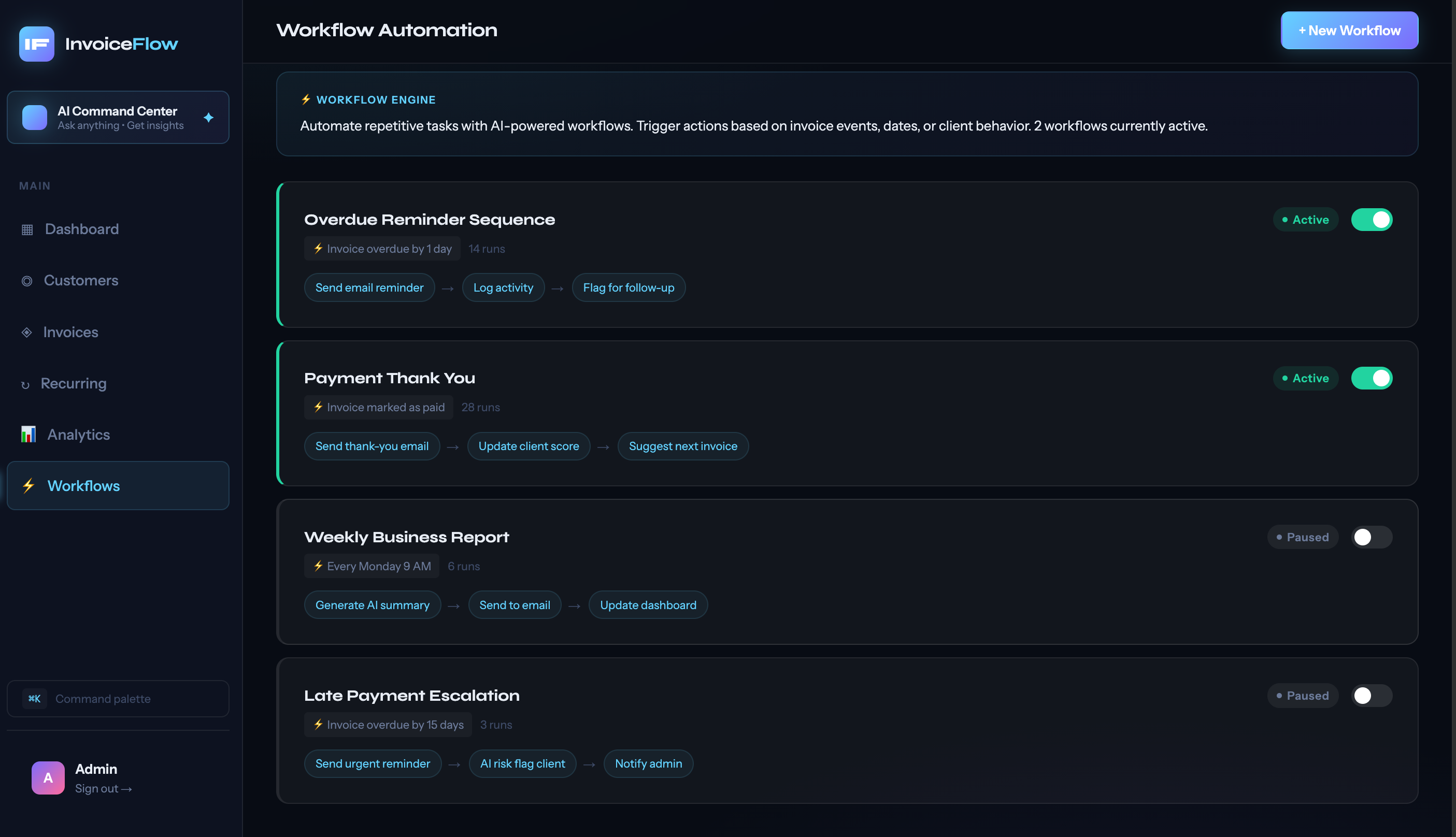
Workflow Engine
-
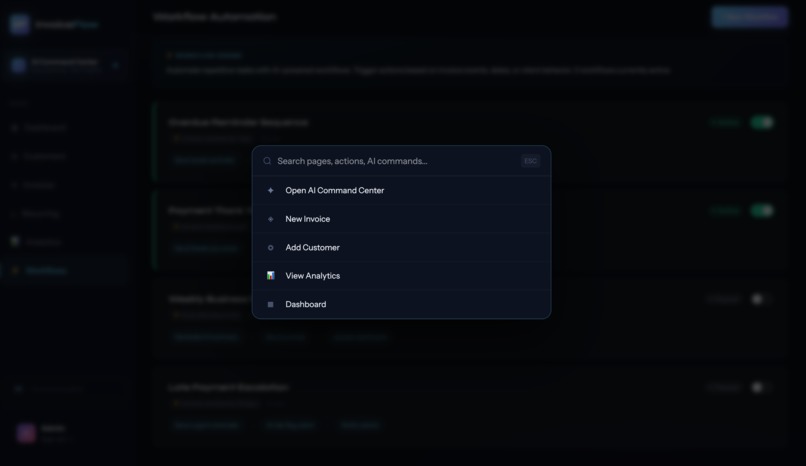
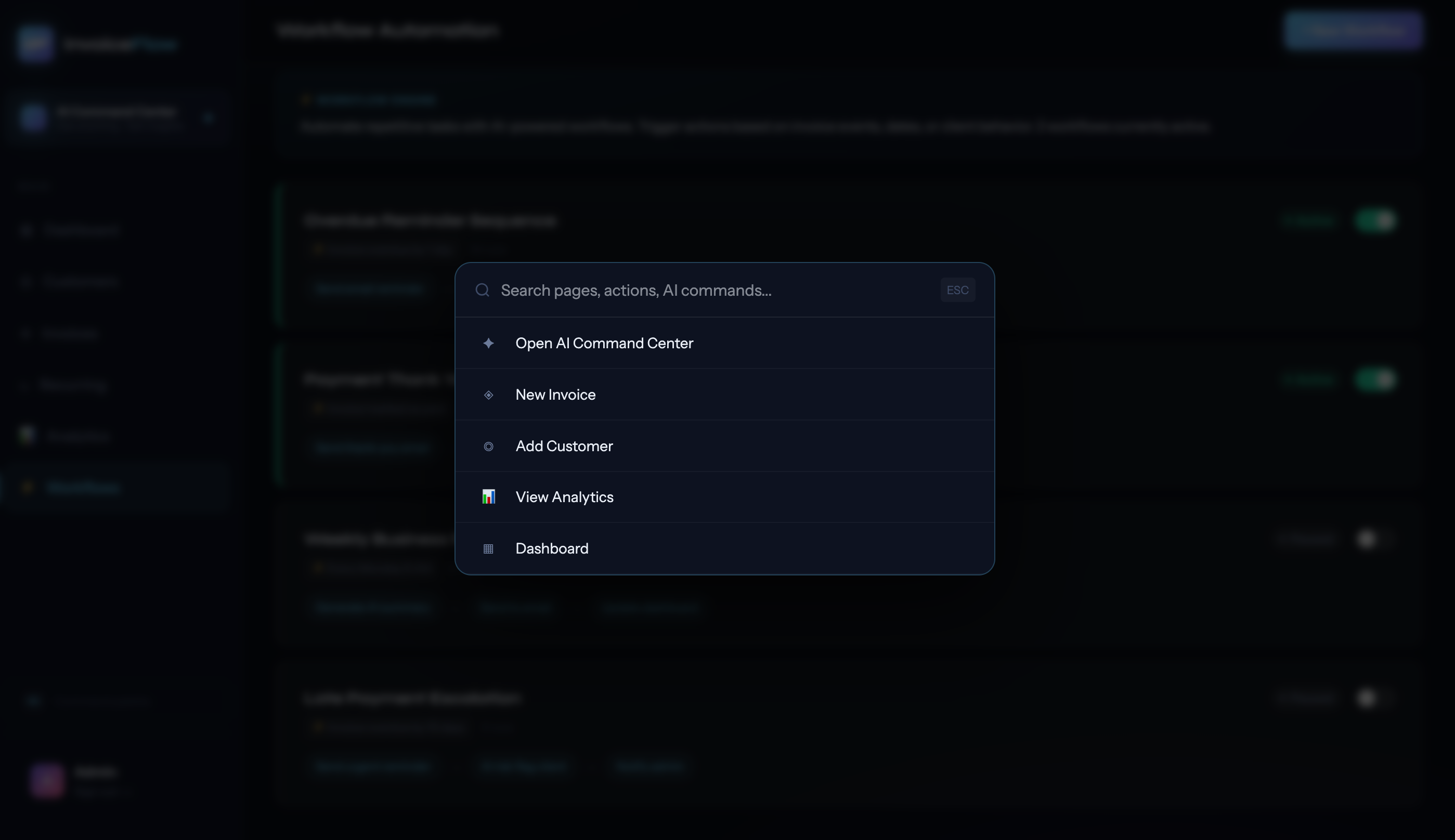
command palete
Inspiration
Modern invoicing tools feel fragmented, manual, and reactive. Small businesses spend too much time creating invoices, following up on payments, generating reports, and analyzing financial health instead of growing their business. We wanted to build an AI first financial operations platform that feels less like traditional accounting software and more like having an intelligent business assistant.
What it does
AI Invoice Platform is an intelligent invoicing and business operations system built for modern startups, freelancers, and teams.
How I built it
We built AI Invoice Platform using MeDo to rapidly design, structure, and iterate on a full-stack AI-powered business platform focused on intelligent invoicing, analytics, automation, and realtime financial operations. Using MeDo’s conversational workflow, we progressively generated and refined: backend architecture , API routes , database models , AI workflows , realtime systems , automation logic , reporting systems , premium invoice templates The project evolved through multi-turn conversations where we continuously improved features, expanded the architecture, and optimized the AI experience.
Challenges we ran into
One of the first problems we hit was scope. We were building far more than a typical hackathon project invoicing, analytics, AI assistants, realtime updates, reporting, and automation all in one system. Keeping the architecture clean and modular while moving fast was constantly a balancing act. The AI integration was another tricky part. We didn’t want a generic chatbot pasted into a dashboard. The real challenge was making it understand context financial data, invoices, and business behaviour and turn that into something actually useful like suggestions, insights, and forecasts instead of just responses.Realtime features added their own complexity. WebSockets powered live dashboards, KPI updates, notifications, and activity streams. Getting everything to stay in sync without breaking under fast changes took a lot of iteration. Reports were surprisingly heavy to get right. We weren’t just exporting PDFs we were trying to generate something that looked and felt “enterprise-ready.” That meant combining AI-written summaries, analytics sections, KPIs, forecasts, and branded layouts into a single coherent output. Design consistency also became a quiet challenge. As features stacked up, keeping the UI from feeling like a patchwork system was difficult. We spent a lot of time refining spacing, layouts, and visual hierarchy so it felt like a polished SaaS product instead of a prototype. And like every hackathon, time was the constant pressure. As the system grew, so did the temptation to keep adding more especially around AI and automation. Prioritising what actually mattered for the demo became a skill on its own.
Accomplishments that we're proud of
We turned a large, ambitious idea into a working system within the hackathon timeframe combining invoicing, analytics, AI, and realtime workflows into a single product. The AI layer was made genuinely useful, going beyond chat to deliver contextual insights, invoice suggestions, and financial analysis. We also shipped realtime dashboards with live KPI updates and notifications, along with a reporting system that generated structured, enterprise-style PDFs with summaries and forecasts.Despite the pace, we kept the architecture modular and the UI consistent enough to feel like a cohesive SaaS product rather than a prototype.
What we learned
We learned how to design and manage a scalable system under tight time constraints, especially when multiple complex features are being built in parallel. We gained practical experience in integrating AI in a way that adds real product value, not just surface-level interaction. We also worked through realtime system design, report generation pipelines, and modular backend structuring while shipping fast. Most importantly, we learned how to prioritise, cut scope, and still deliver a cohesive, usable product under pressure.
What's next for invoiceflow
We’re focusing on turning it from a hackathon build into a production-ready SaaS product. Next steps include strengthening the AI layer for deeper financial reasoning, improving automation across invoicing workflows, and scaling the realtime system for larger datasets and teams. We also plan to refine the UI/UX for long-term usage, add integrations with external financial tools, and improve reporting accuracy and customization. The goal is simple: move from a working prototype to a reliable, intelligent finance operations platform.
Built With
- ai
- apis
- caching
- docker-based
- github
- jwt-based
- llm
- next.js
- pipelines
- postgresql
- queueing:
- react
- realtime:
- redis
- rest
- tailwind-css-*-backend:-fastapi-(python)
- websockets

Log in or sign up for Devpost to join the conversation.