-
-
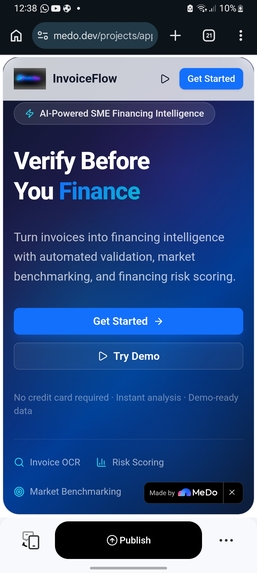
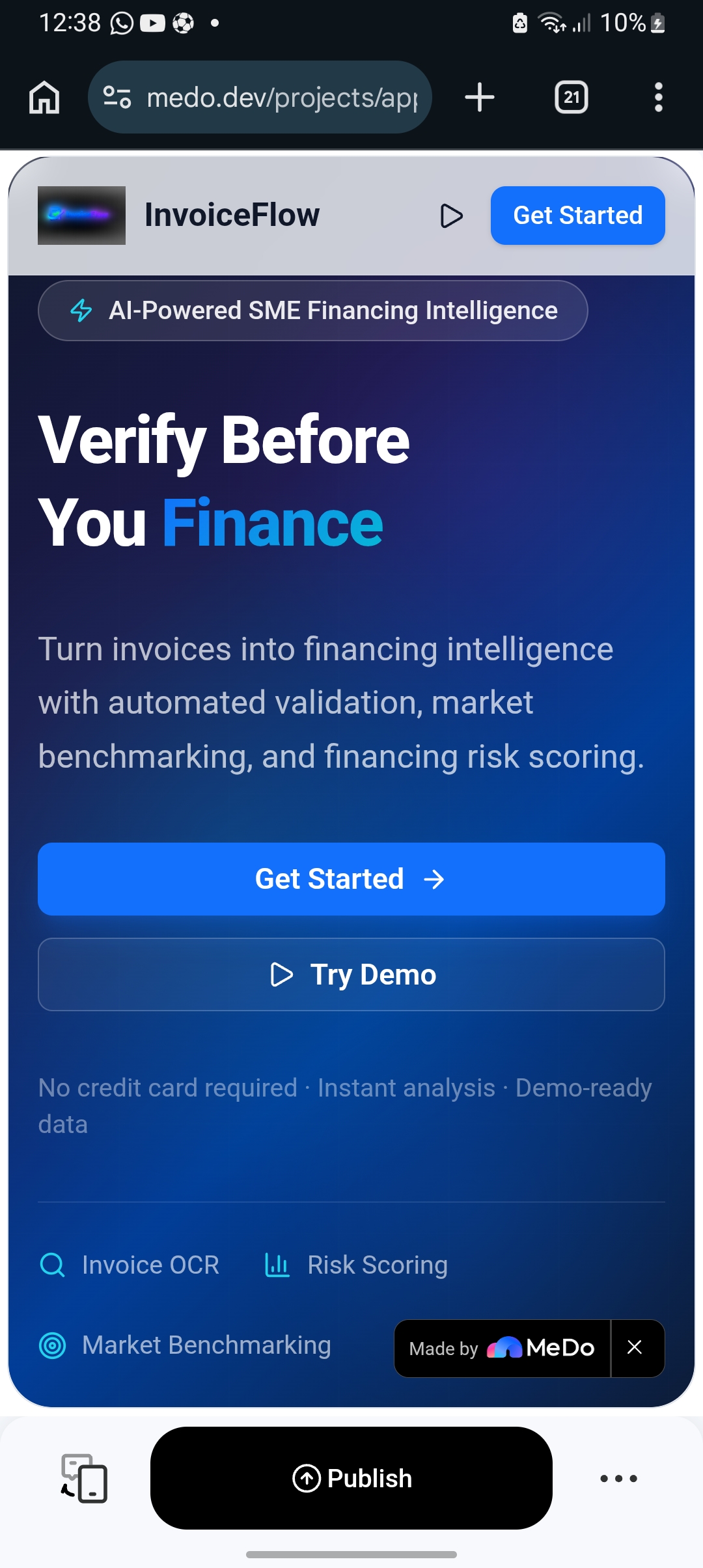
Landing Page
-
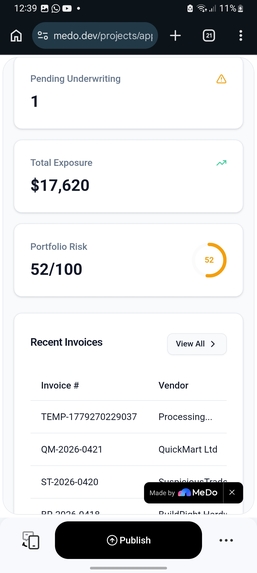
Dashboard
-
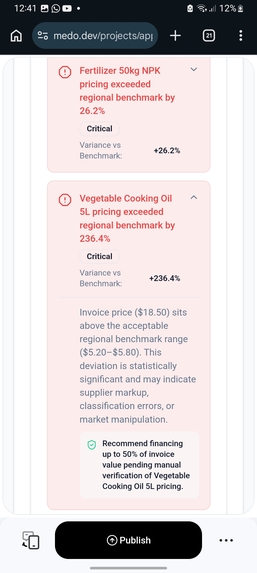
Insights
-
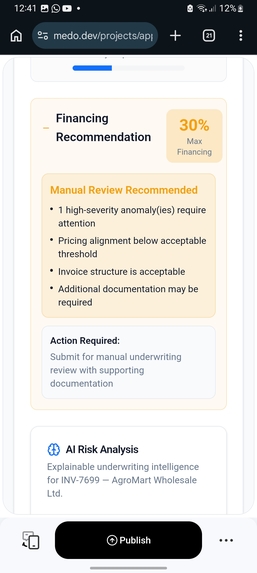
-
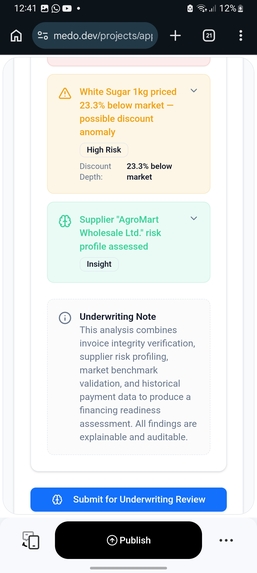
Breakdowns
-
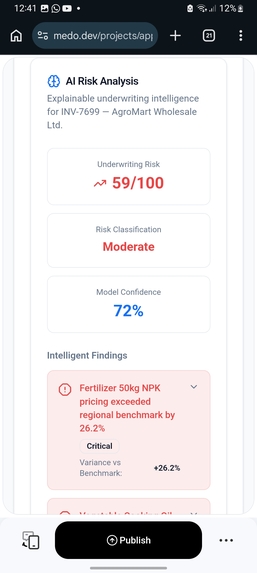
Indicators
-
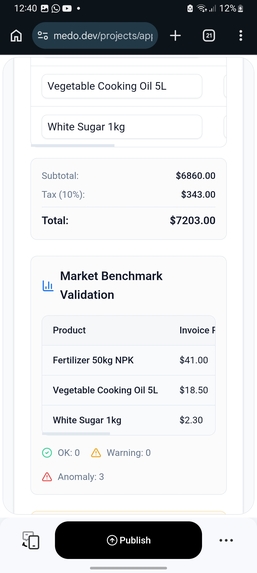
-
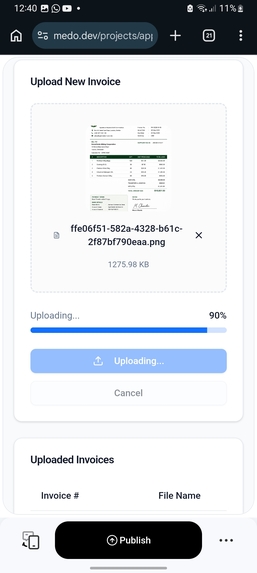
-
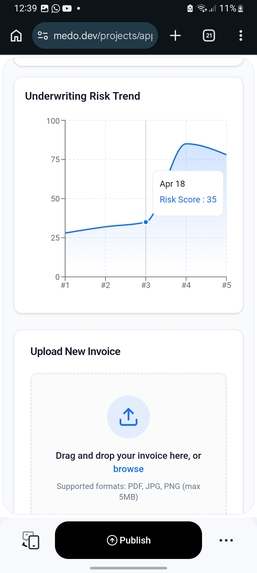
Metrics
-
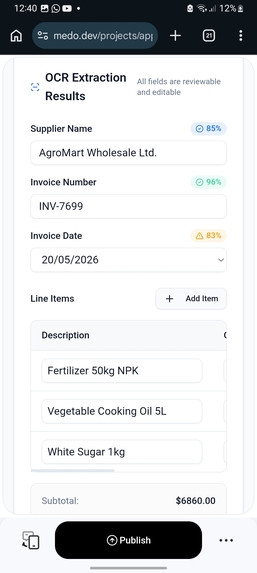
-
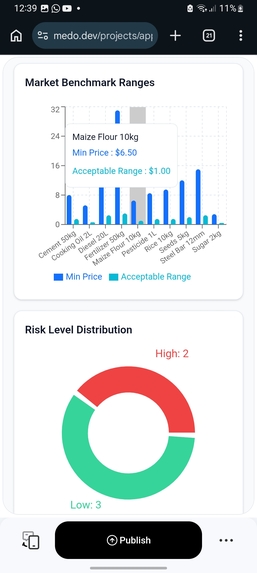
Metrics
Inspiration
SMEs across Africa often struggle to access financing because lenders lack reliable ways to verify invoice authenticity, pricing accuracy, and supplier credibility. Traditional underwriting processes are slow, manual, and highly dependent on incomplete financial histories.
We wanted to explore how AI could act as a trust layer for invoice financing by transforming ordinary invoices into financing intelligence. Instead of building another bookkeeping or invoicing tool, we focused on reducing financing uncertainty through explainable risk analysis and market validation.
The idea behind InvoiceFlow was to create a platform that helps answer a critical question:
“Can this invoice actually be trusted for financing?”
What it does
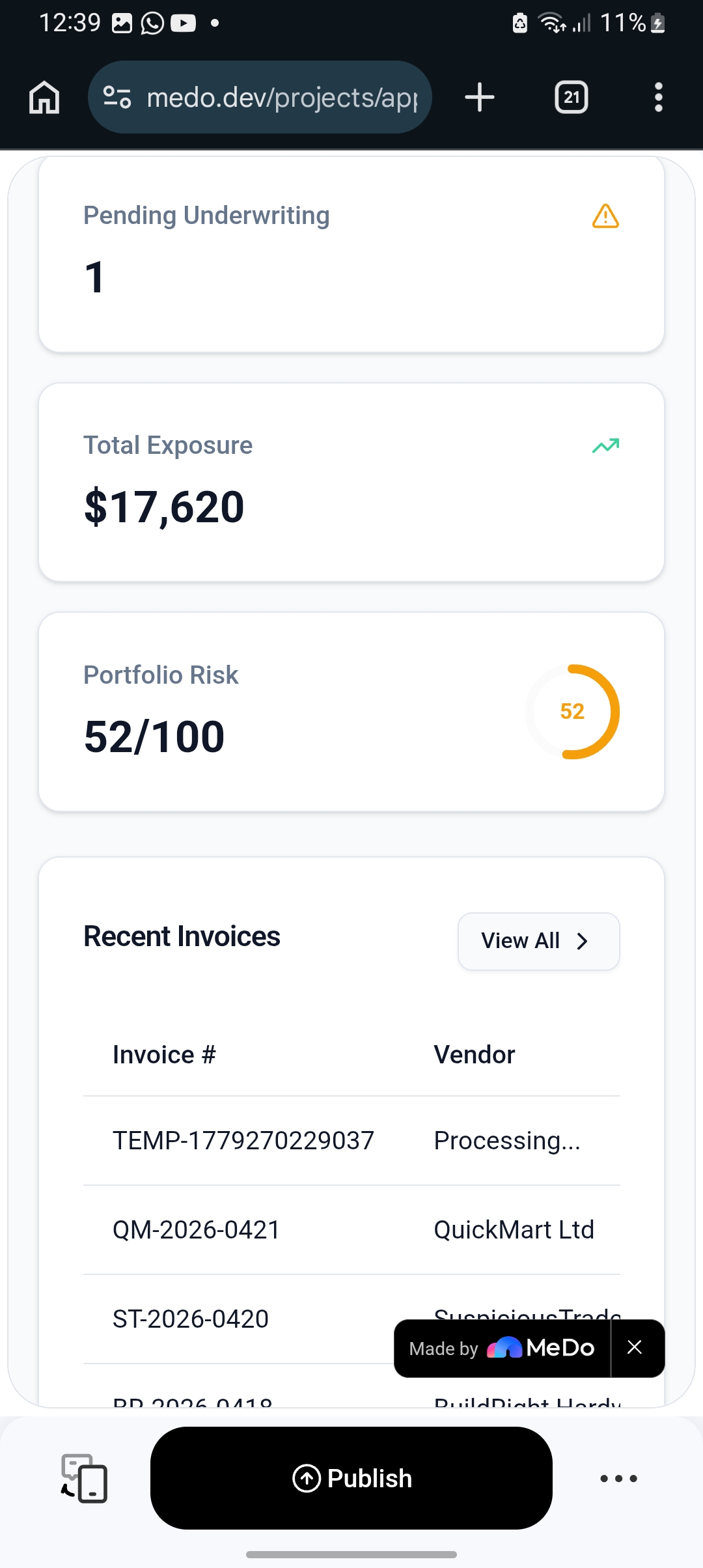
InvoiceFlow is an AI-assisted underwriting intelligence platform for SME invoice financing.
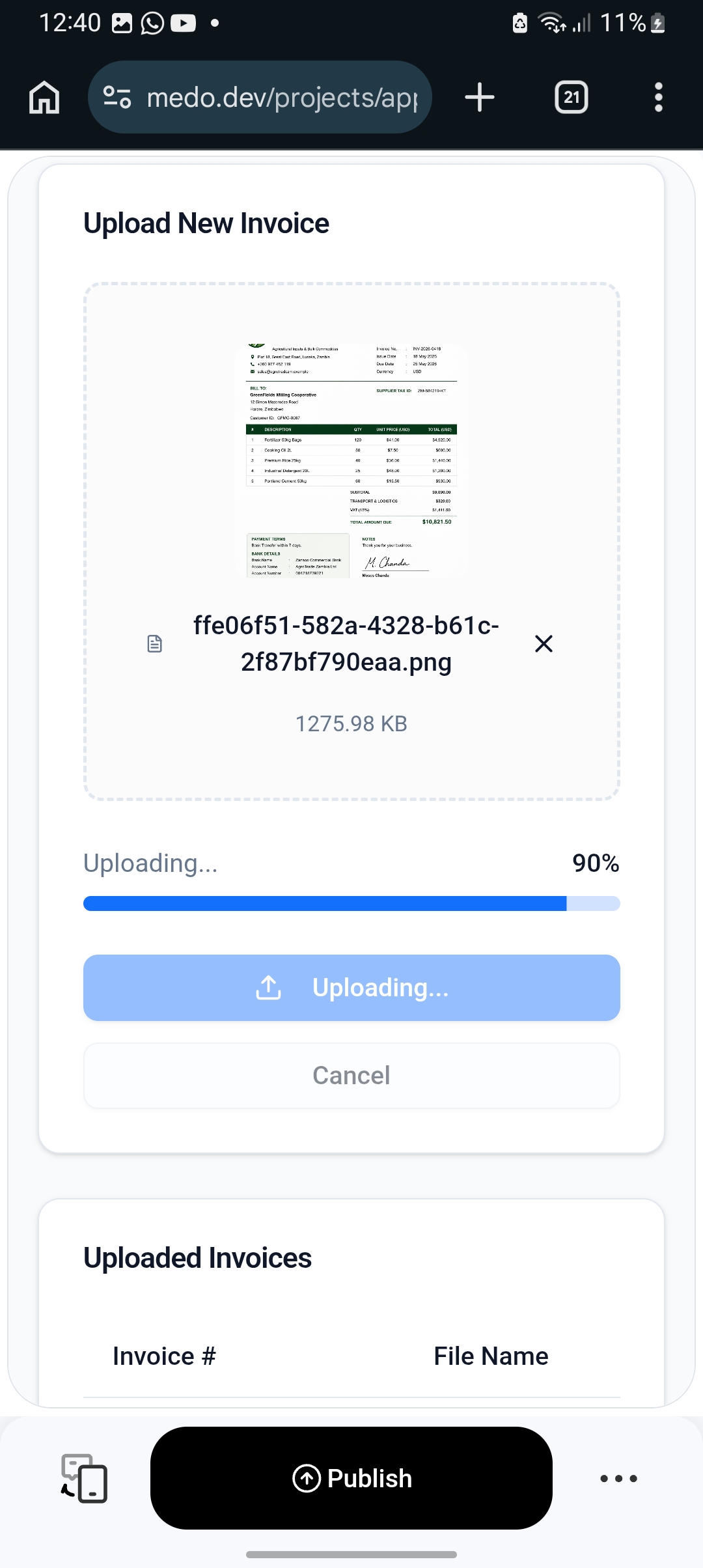
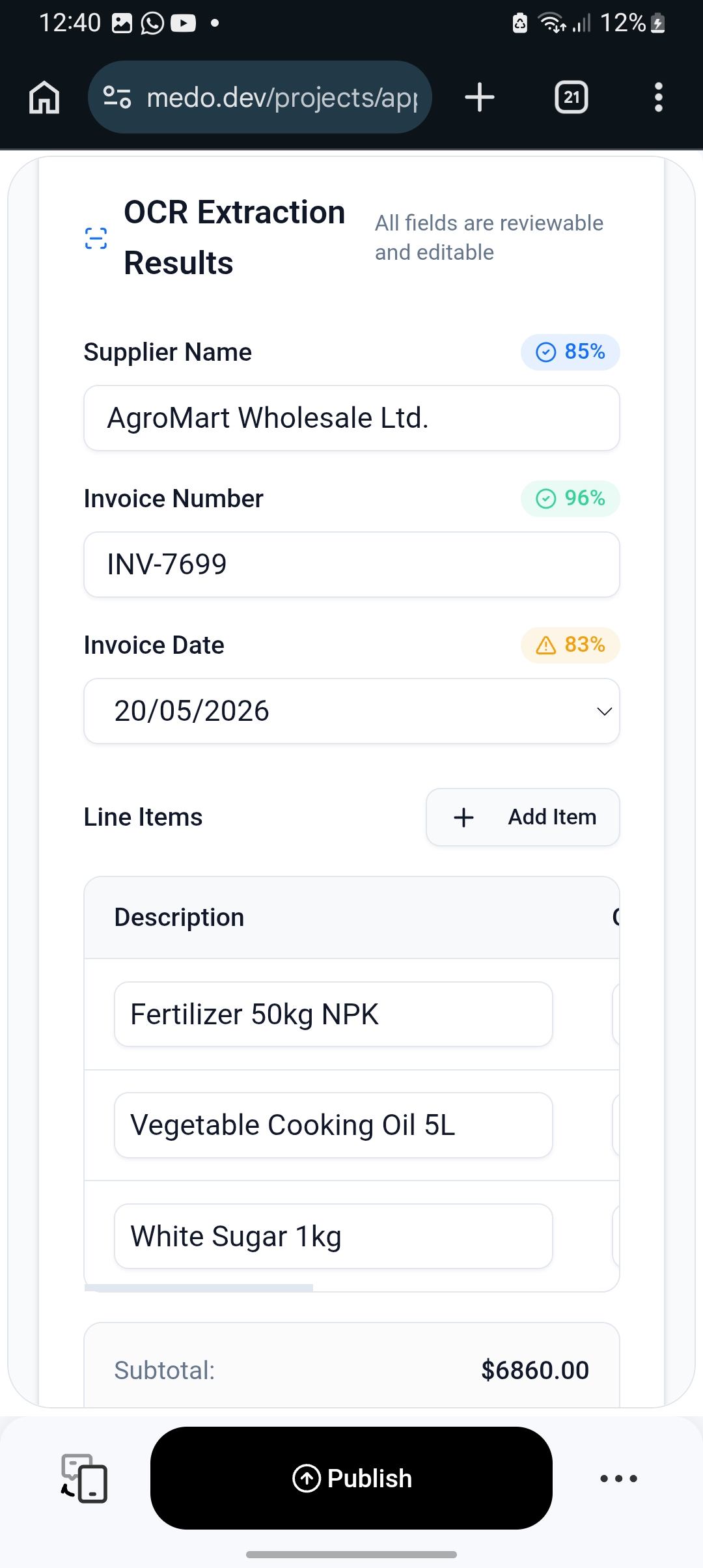
The platform allows users to upload invoices through PDF, image, or manual entry. InvoiceFlow then:
- extracts invoice data using OCR workflows
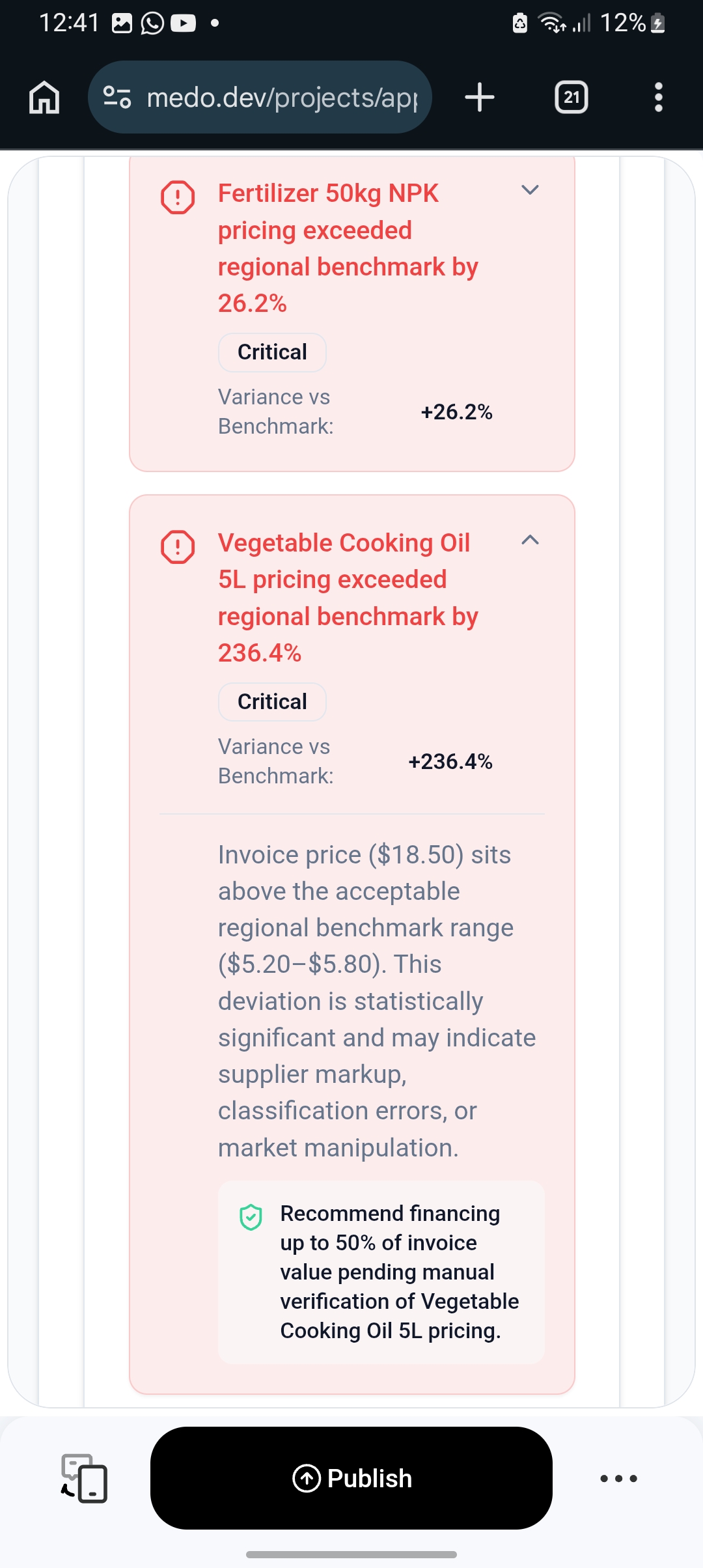
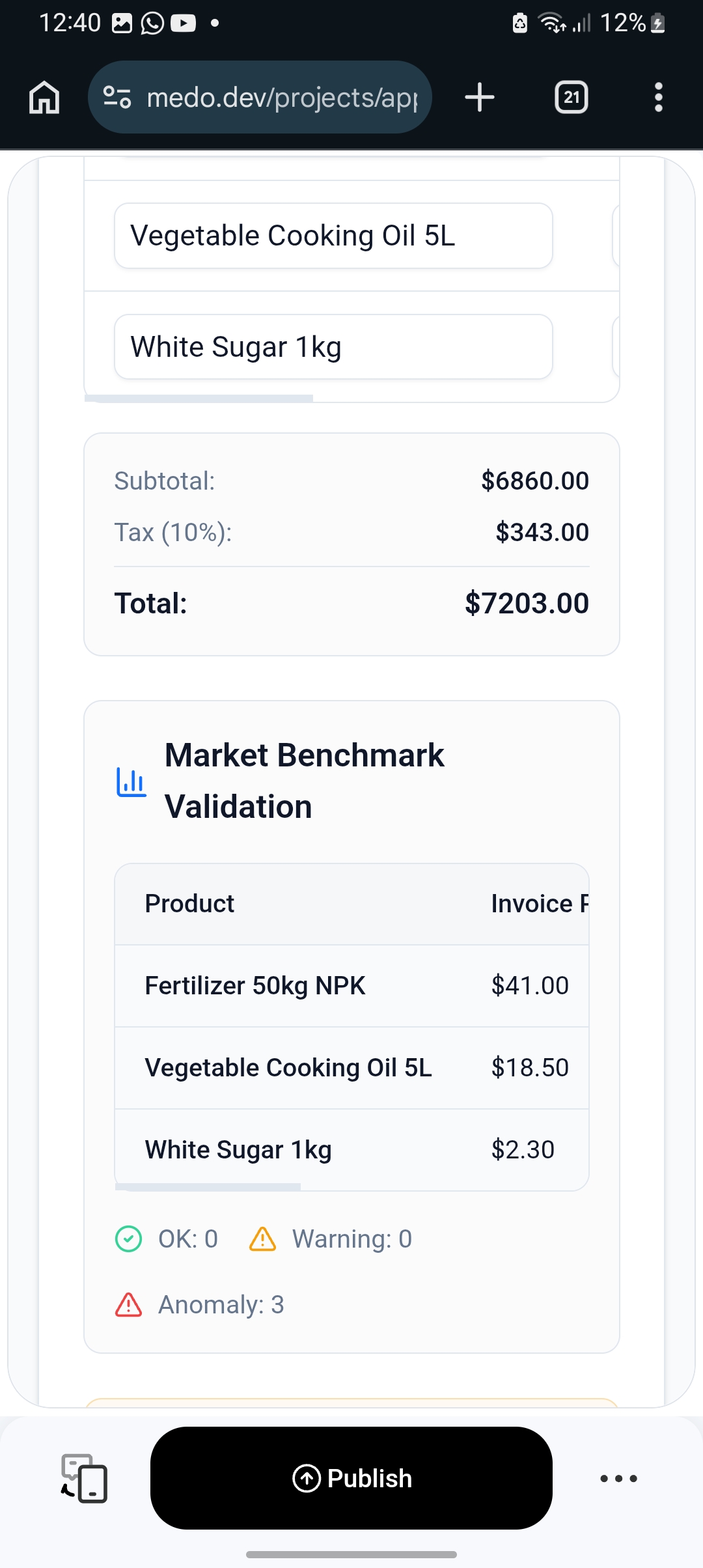
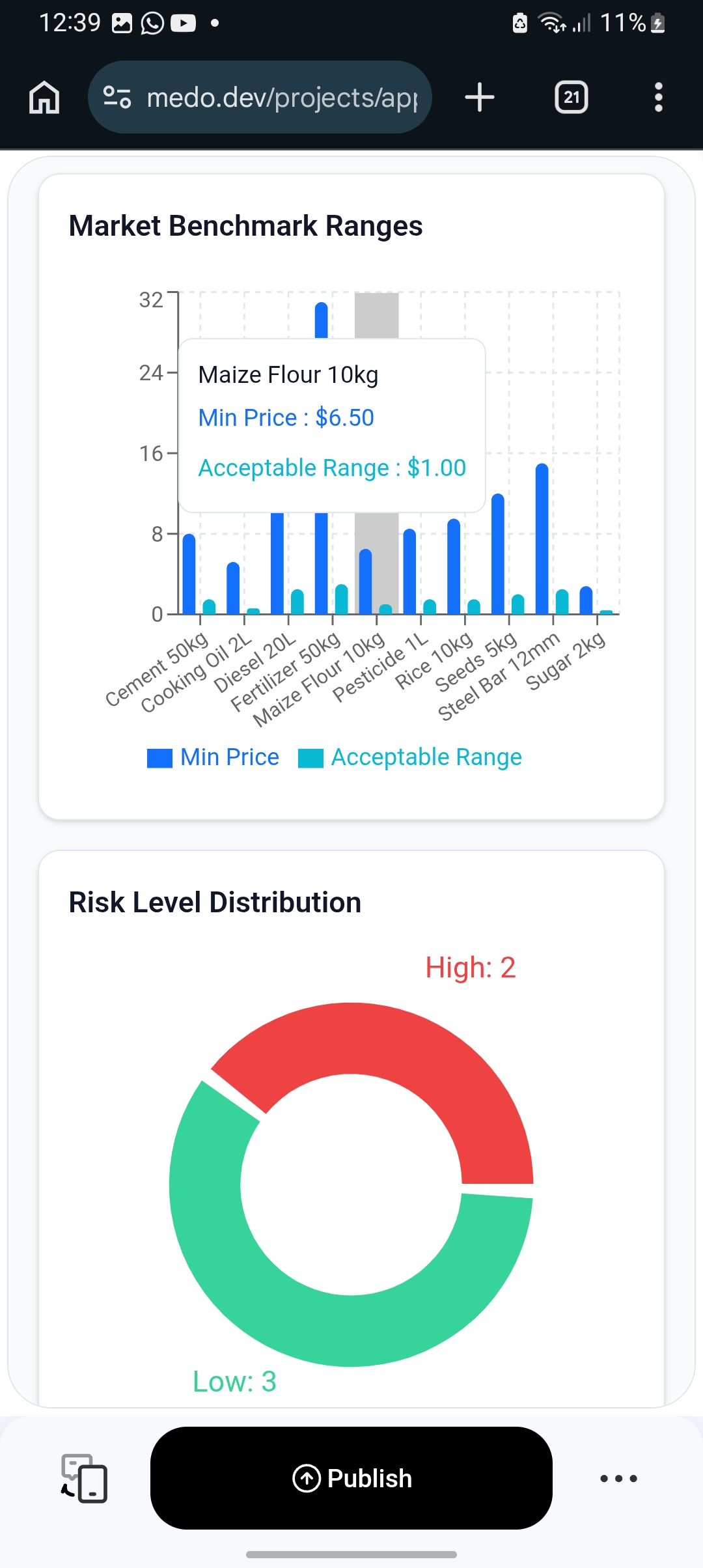
- analyzes line-item pricing against benchmark market ranges
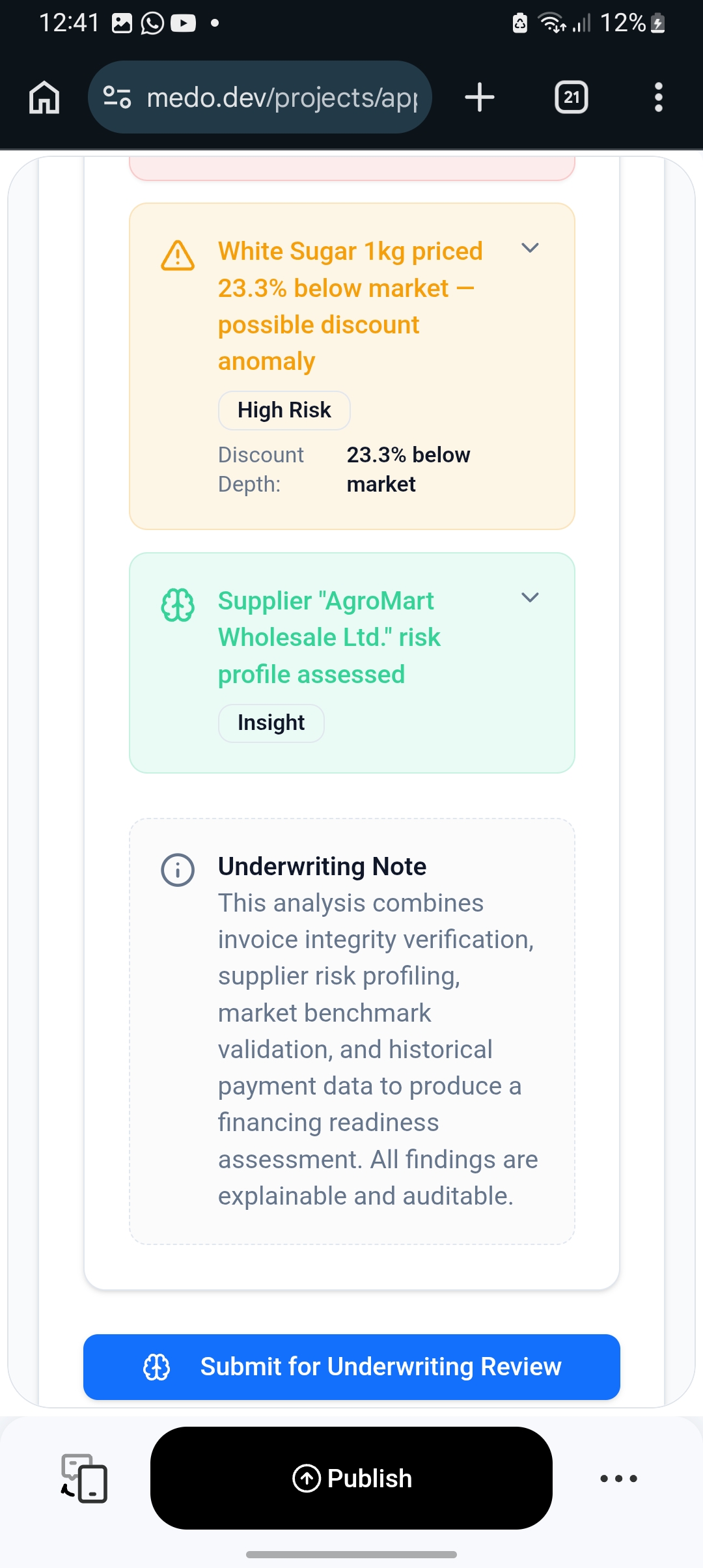
- detects suspicious pricing anomalies and supplier risk patterns
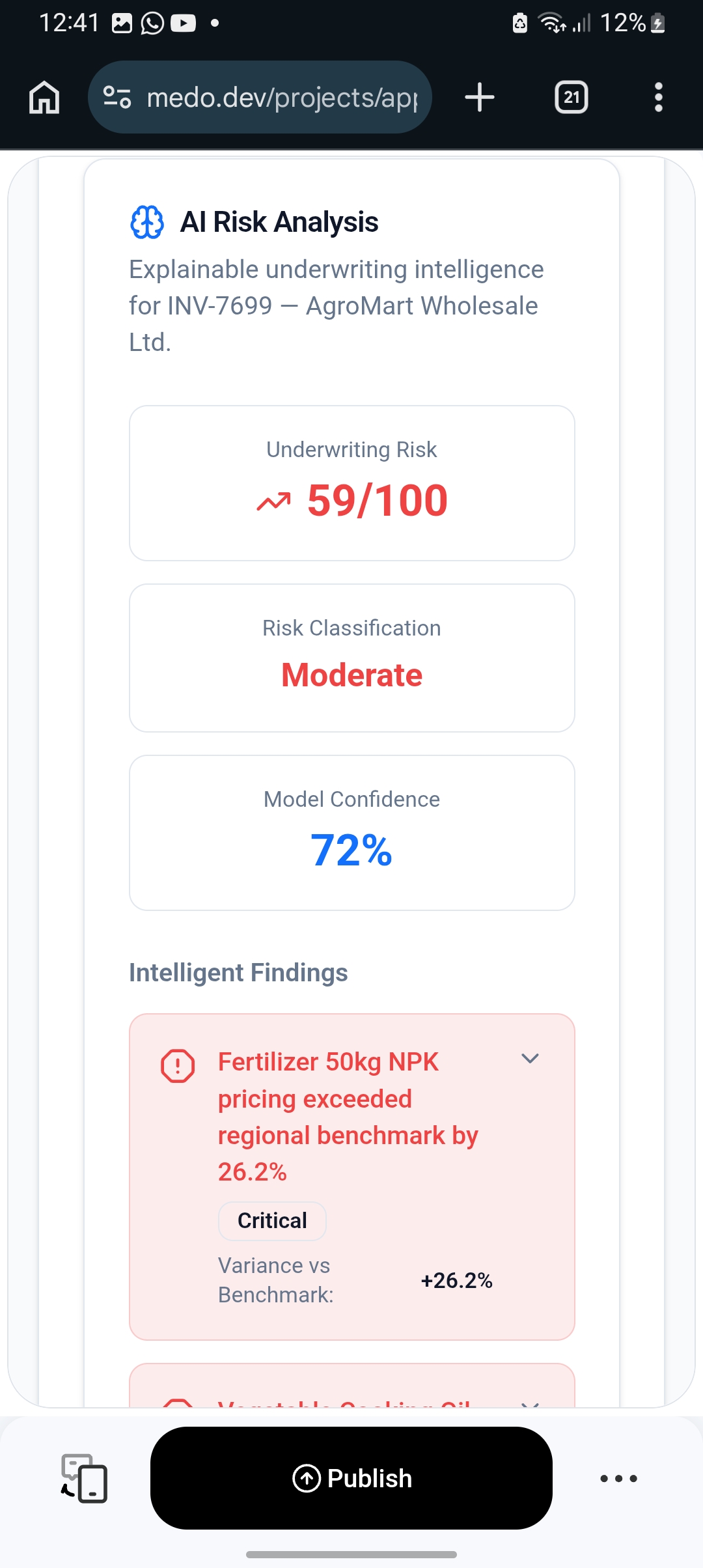
- generates explainable financing risk scores
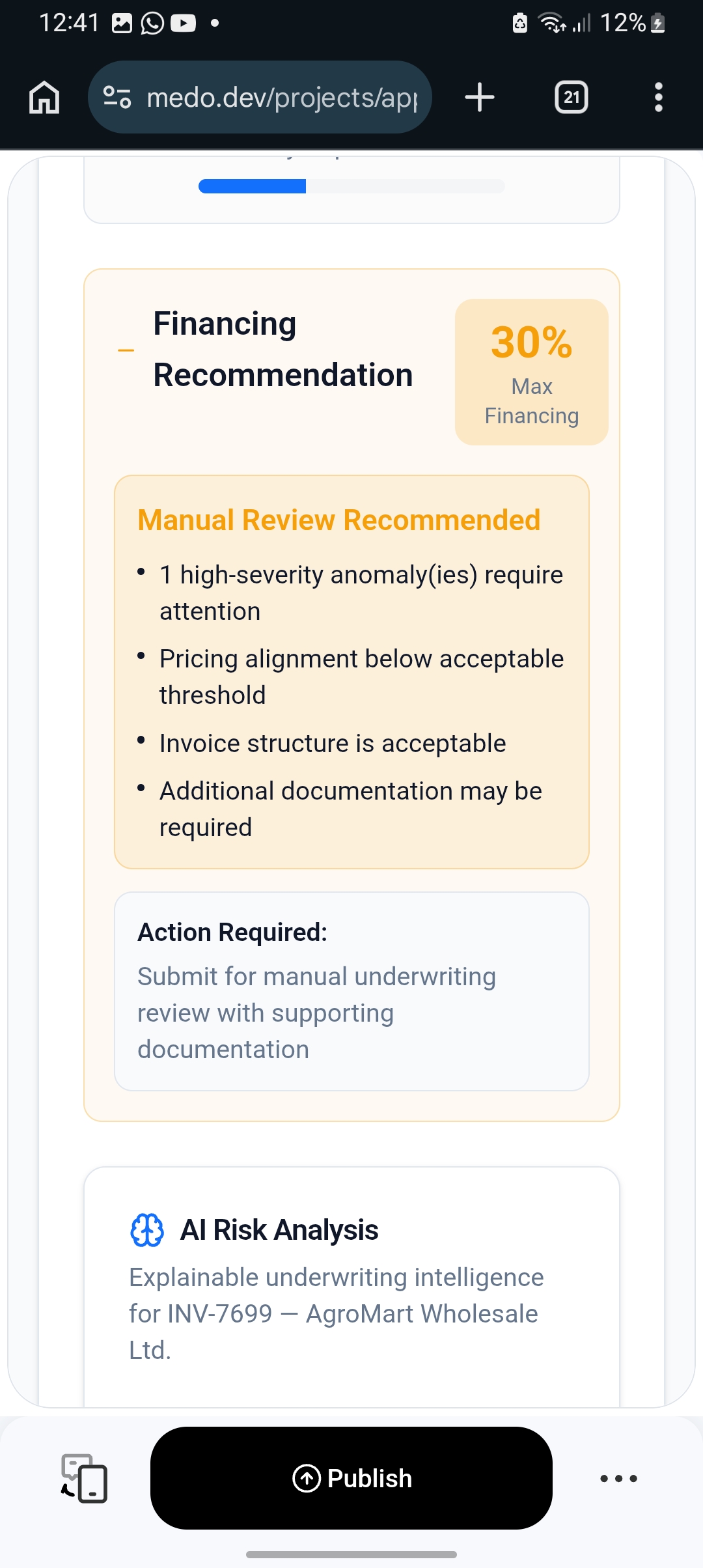
- provides underwriting recommendations and financing readiness insights
Key features include:
- Invoice OCR extraction
- Benchmark market validation
- Pricing anomaly detection
- Supplier risk analysis
- Financing readiness scoring
- Explainable AI risk summaries
- Financing recommendations
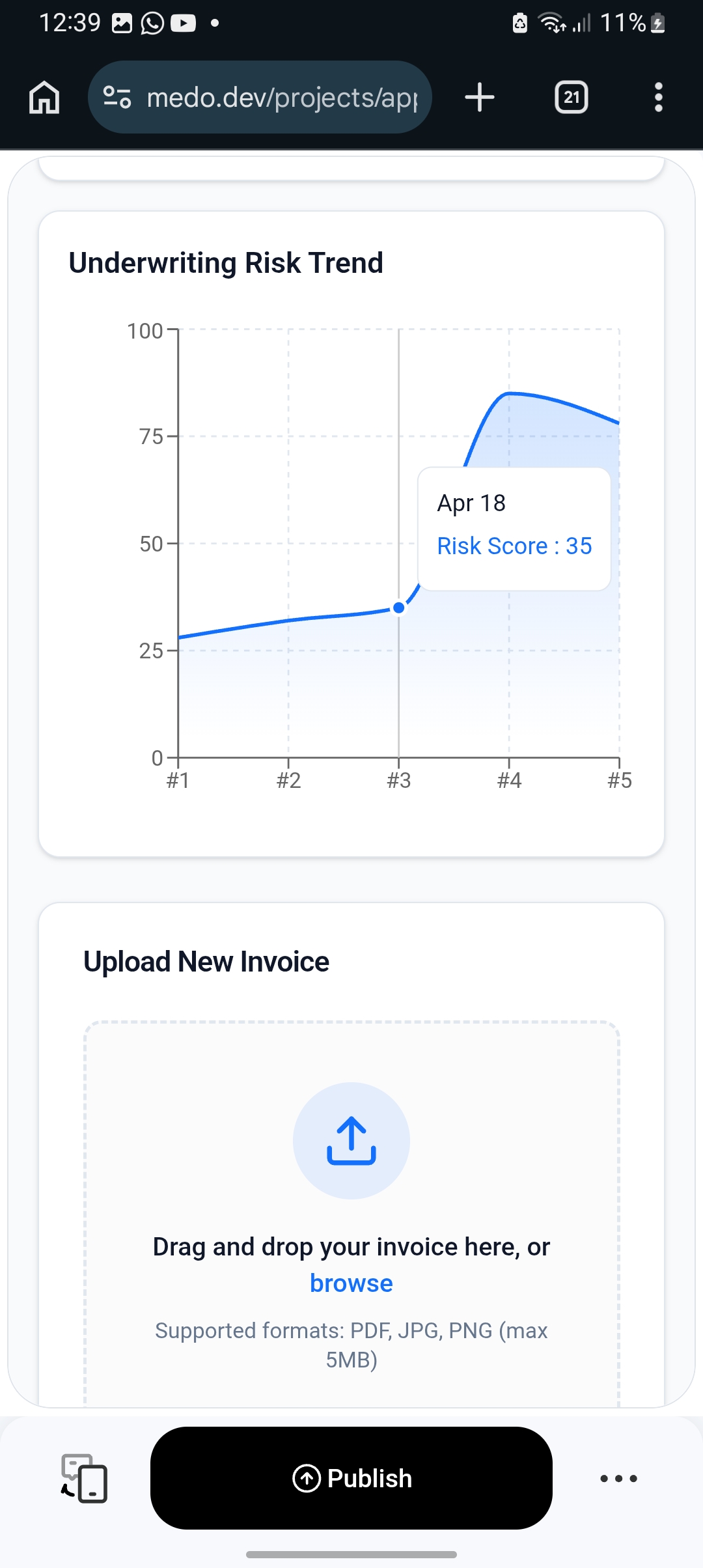
- Analytics dashboards and audit history
InvoiceFlow is designed to feel like “Stripe Radar for SME invoice financing.”
How we built it
We built InvoiceFlow using MeDo’s conversational full-stack application workflow.
Using natural language prompts, we rapidly generated:
- responsive fintech dashboards
- invoice upload workflows
- analytics visualizations
- underwriting interfaces
- risk scoring components
- mobile-friendly SaaS layouts
We iteratively refined the platform by:
- improving enterprise fintech UX
- enhancing dashboard intelligence
- adding explainable AI reasoning
- refining benchmark validation workflows
- polishing mobile responsiveness and visual hierarchy
The application combines:
- OCR-driven invoice extraction
- benchmark validation logic
- anomaly detection concepts
- financing risk scoring workflows
- explainable underwriting summaries
We used realistic African SME commerce data and financing scenarios to create believable underwriting intelligence demonstrations.
Challenges we ran into
One of the biggest challenges was balancing realism with hackathon scope.
We initially explored building a much larger fintech ecosystem with advanced integrations and complex workflows, but quickly realized the strongest product was a focused intelligence layer rather than a full financial platform.
Another challenge was making the analytics feel meaningful instead of decorative. We spent significant time refining:
- benchmark validation logic
- explainable risk analysis
- supplier intelligence
- underwriting recommendations
Mobile responsiveness and chart readability also became important challenges because financial dashboards can easily become visually overcrowded on smaller screens.
We also worked hard to ensure the platform felt credible enough for real-world financing workflows while still remaining lightweight enough for a hackathon MVP.
Accomplishments that we're proud of
We’re proud that InvoiceFlow feels like a believable fintech product rather than just a hackathon prototype.
Some accomplishments we’re especially proud of:
- Building a polished underwriting intelligence dashboard
- Creating explainable AI financing risk summaries
- Designing benchmark-based invoice validation workflows
- Achieving a production-grade fintech UI aesthetic
- Making the platform fully mobile responsive
- Creating realistic SME financing analytics and risk scoring
We’re also proud of how effectively we used MeDo to rapidly transform a natural language concept into a deployable full-stack application.
What we learned
This project taught us that strong product positioning matters just as much as technical complexity.
We learned:
- explainability dramatically improves perceived AI intelligence
- focused workflows are more compelling than feature overload
- dashboards should communicate insights, not just data
- fintech UX requires clarity and trust above all else
We also learned how powerful conversational full-stack generation can be when paired with iterative product thinking and strong UX direction.
Using MeDo allowed us to move from concept to functional product extremely quickly while continuously refining the experience through natural language iteration.
What's next for InvoiceFlow
Next, we want to evolve InvoiceFlow into a more advanced financing intelligence platform with:
- real-time commodity and wholesale market integrations
- supplier reputation scoring
- regional pricing intelligence
- fraud pattern detection
- lender workflow integrations
- financing portfolio analytics
- automated underwriting recommendations
We also want to explore:
- multilingual invoice processing
- SME financing APIs
- predictive financing risk models
- trade finance integrations
- document authenticity verification
Long term, we envision InvoiceFlow becoming a trust infrastructure layer for SME financing across emerging markets.
Built With
- medo


Log in or sign up for Devpost to join the conversation.