Inspiration
What it does
How we built it
Challenges we ran into
Accomplishments that we're proud of
What we learned
What's next for InvoiceFit
Inspiration
Invoice spreadsheets often contain the right numbers but still fail at the last mile: identifiers are clipped, dates print as ###, headers disappear across pages, and no auditable record shows what was produced. InvoiceFit makes that final document step safer and repeatable.
What it does
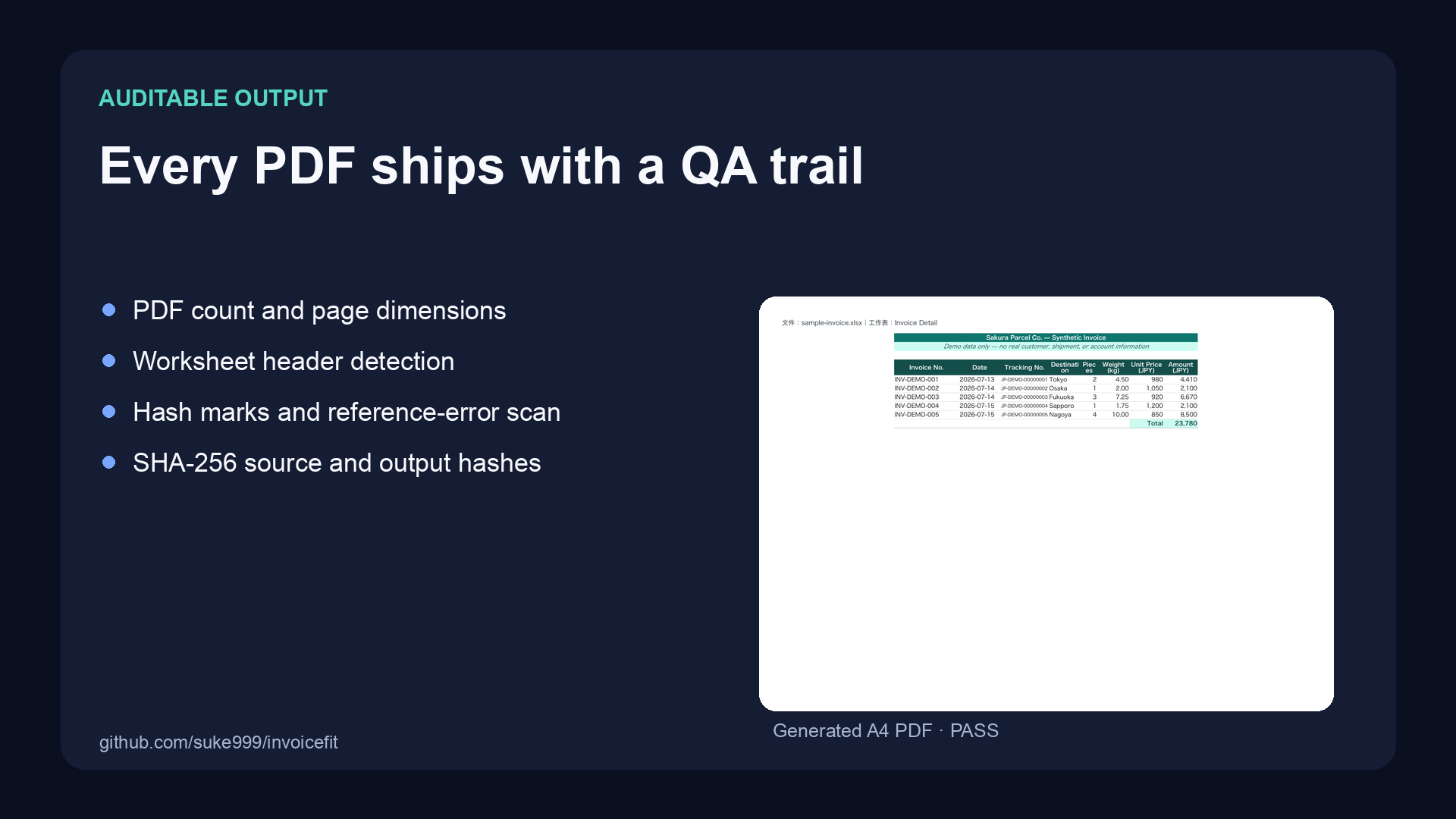
InvoiceFit converts folders of Excel invoices into readable, print-ready A4 PDFs without modifying the source workbooks. It protects invoice and tracking identifiers from clipping, repeats worksheet headers, validates A4 page dimensions, detects obvious spreadsheet error markers, refuses overwrites by default, and creates JSON and Markdown QA reports with SHA-256 hashes.
How we built it
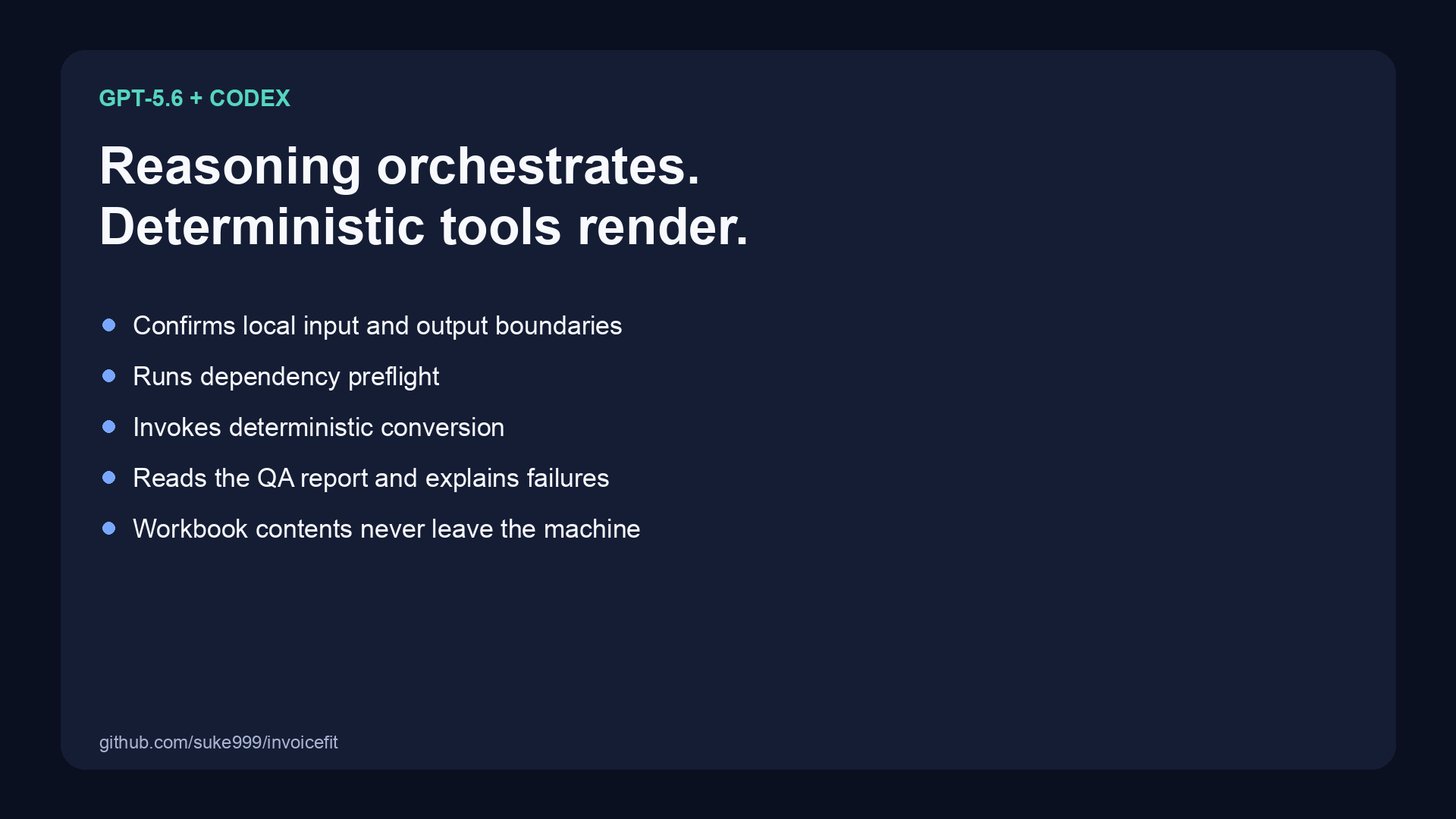
GPT-5.6 in Codex is the orchestration and explanation layer. The plugin skill helps Codex identify the intended local folder, explain privacy and overwrite boundaries, run dependency preflight and conversion tools, inspect the deterministic QA report, and turn failures into concrete next steps. Python and LibreOffice perform reproducible rendering and validation.
During Build Week, Codex helped package the workflow as a standalone plugin, design safer output semantics, add artifact manifests, create a synthetic demo workbook, diagnose a real clipping failure, extend English header detection, and add automated tests.
Challenges we ran into
Spreadsheet rendering is deceptively difficult. A workbook can look correct in the grid while printing dates or identifiers as ###. Our first end-to-end demo failed this exact QA check. We extended the engine to detect the actual table header below title rows and classify English invoice, date, and tracking fields before calculating safe widths.
Accomplishments that we're proud of
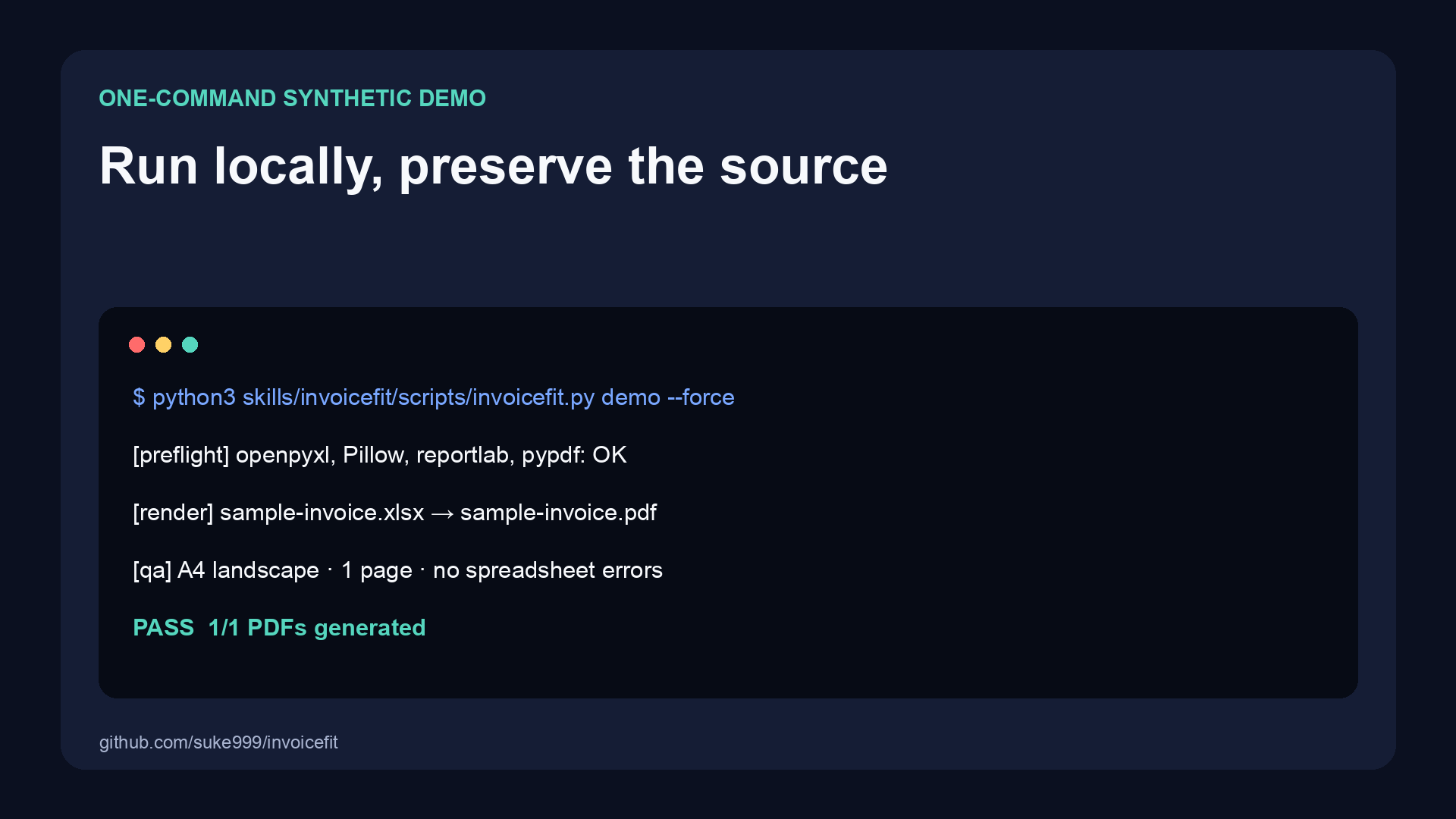
The one-command synthetic demo now produces a one-page landscape A4 PDF with visible identifiers and passes count, size, header, and spreadsheet-error checks. Each run also produces an auditable report and hashes for both source and output.
What we learned
The strongest design is agentic orchestration plus deterministic document processing: GPT-5.6 handles intent, guardrails, and failure explanation, while local tools render and verify bytes reproducibly.
What's next
Add verified Linux and Windows test runs, more locale-aware header dictionaries, and optional visual-diff regression tests for complex invoice layouts.
Build Week disclosure
The deterministic spreadsheet-to-PDF engine began as a pre-existing local productivity utility. During OpenAI Build Week it was meaningfully extended into a standalone Codex plugin with a GPT-5.6 orchestration skill, privacy-first output boundaries, dependency preflight, QA manifests, artifact hashes, a synthetic demo, tests, and public documentation.
Try it
python3 skills/invoicefit/scripts/invoicefit.py preflight
python3 skills/invoicefit/scripts/invoicefit.py demo --force
Built With
- codex
- gpt-5.6
- libreoffice
- openpyxl
- pymupdf
- python

Log in or sign up for Devpost to join the conversation.