-
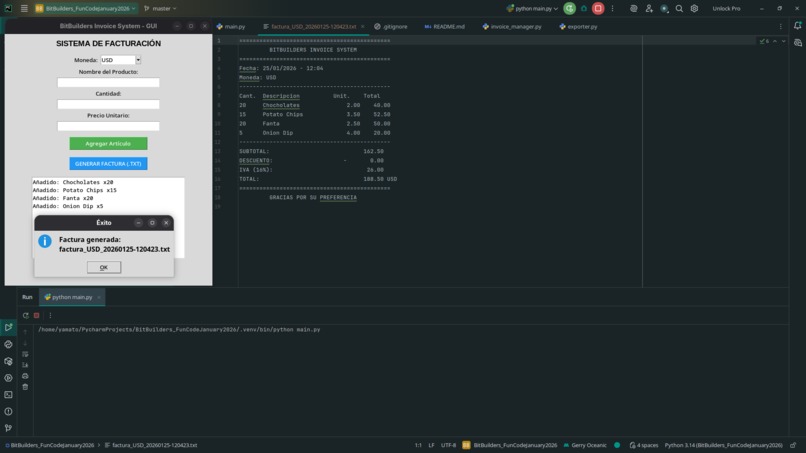
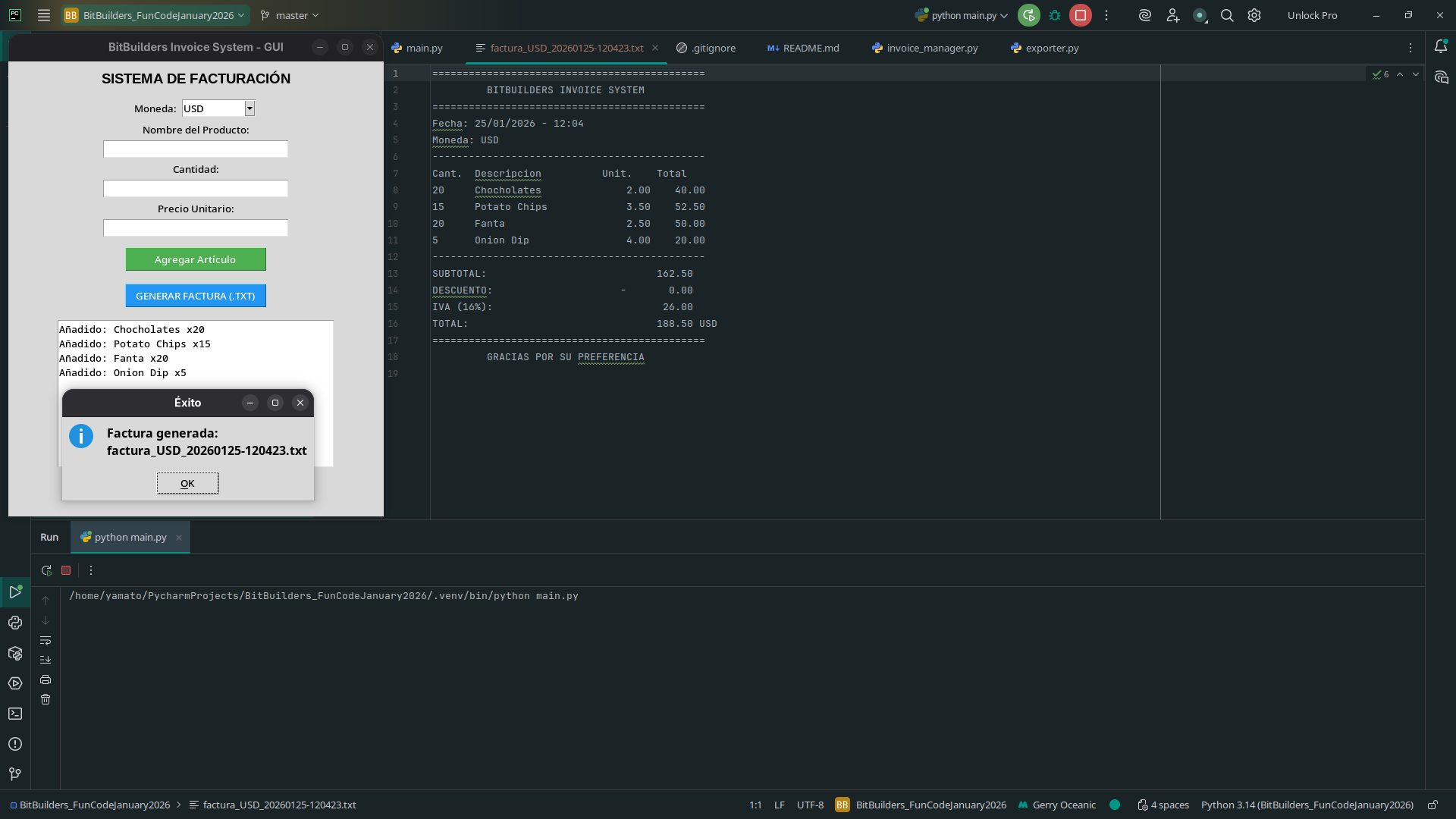
Proyect Running
-
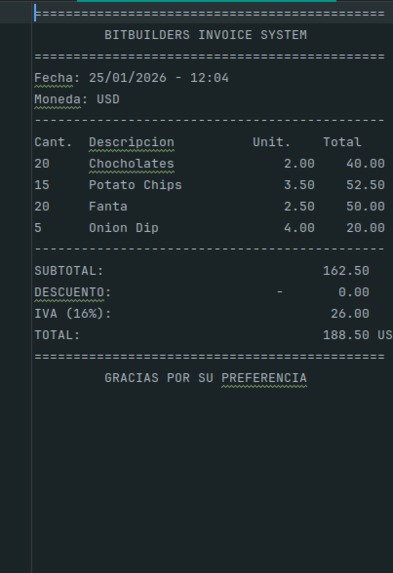
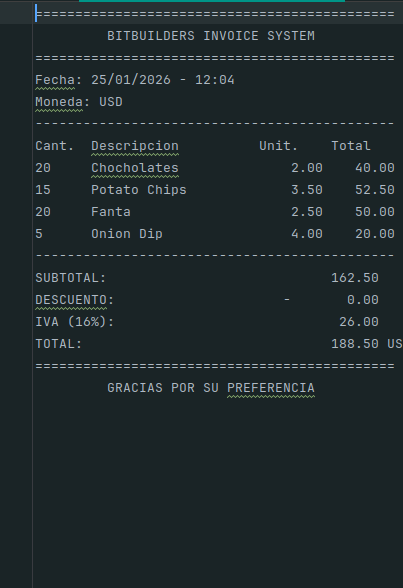
Example of Invoice
-
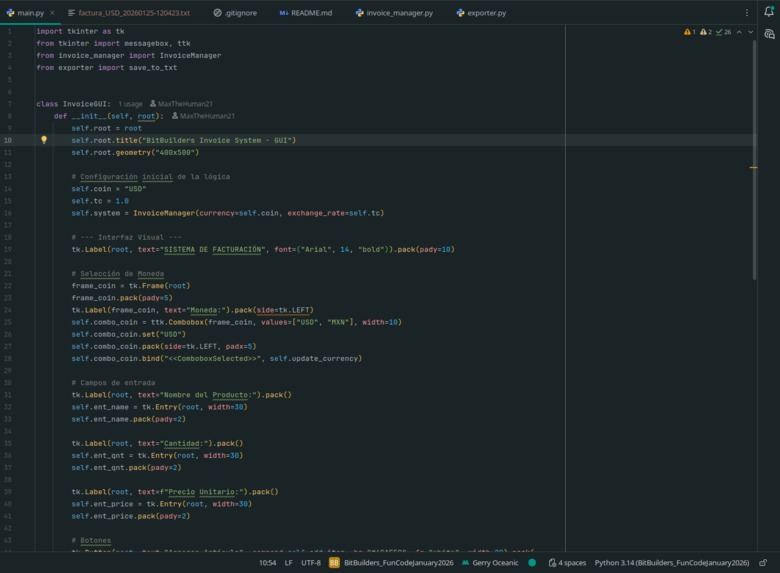
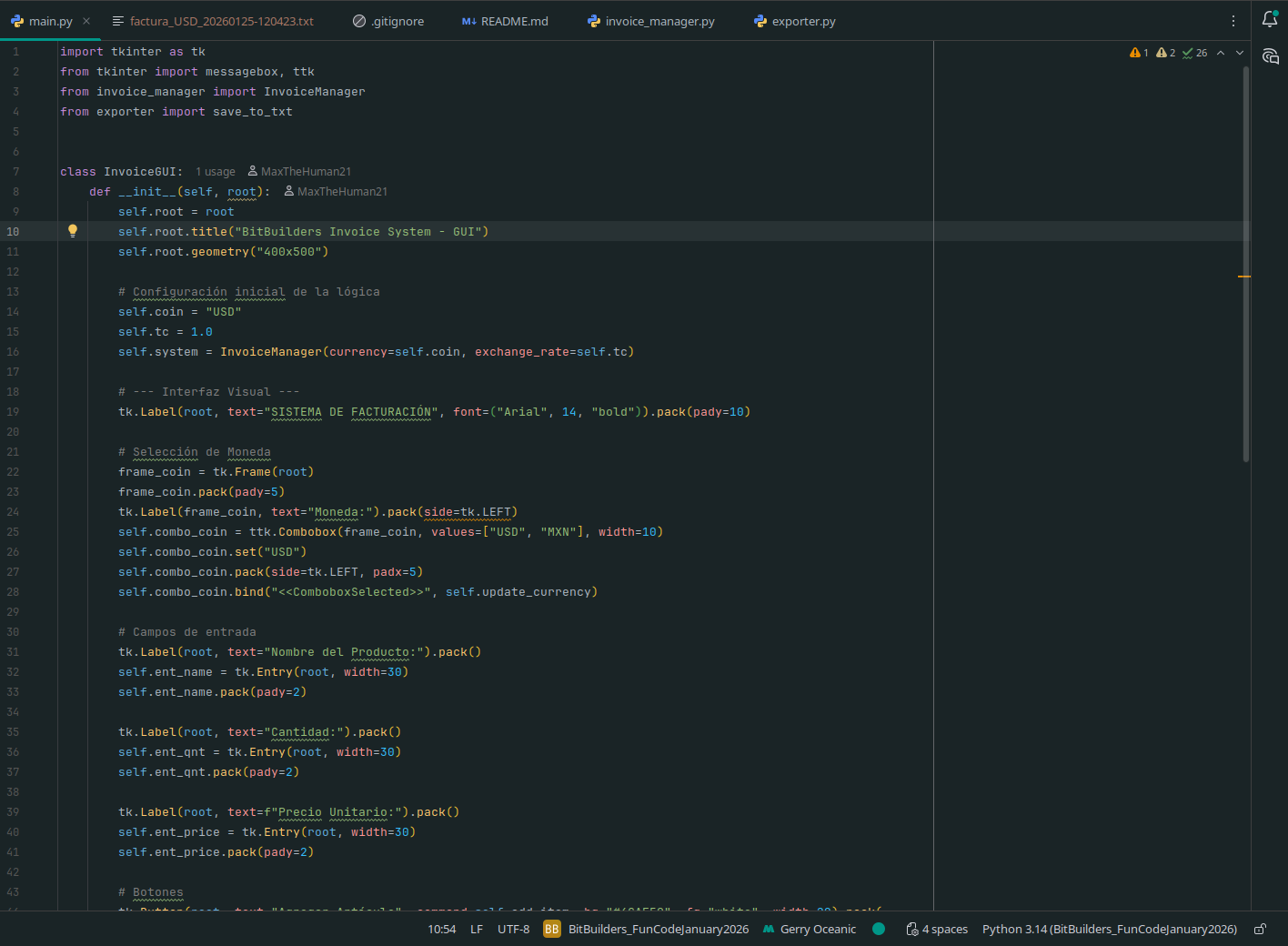
Main - GUI code
-
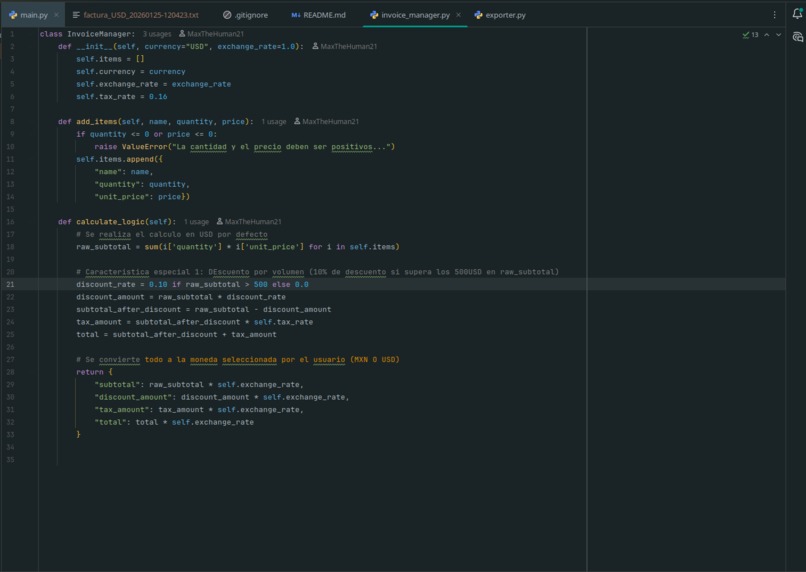
Invoice Manager System
-
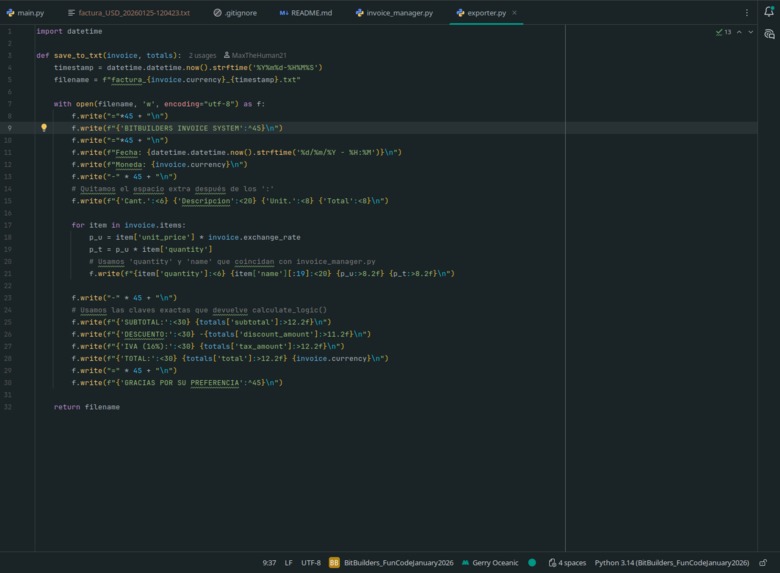
Exporter
Inspiration
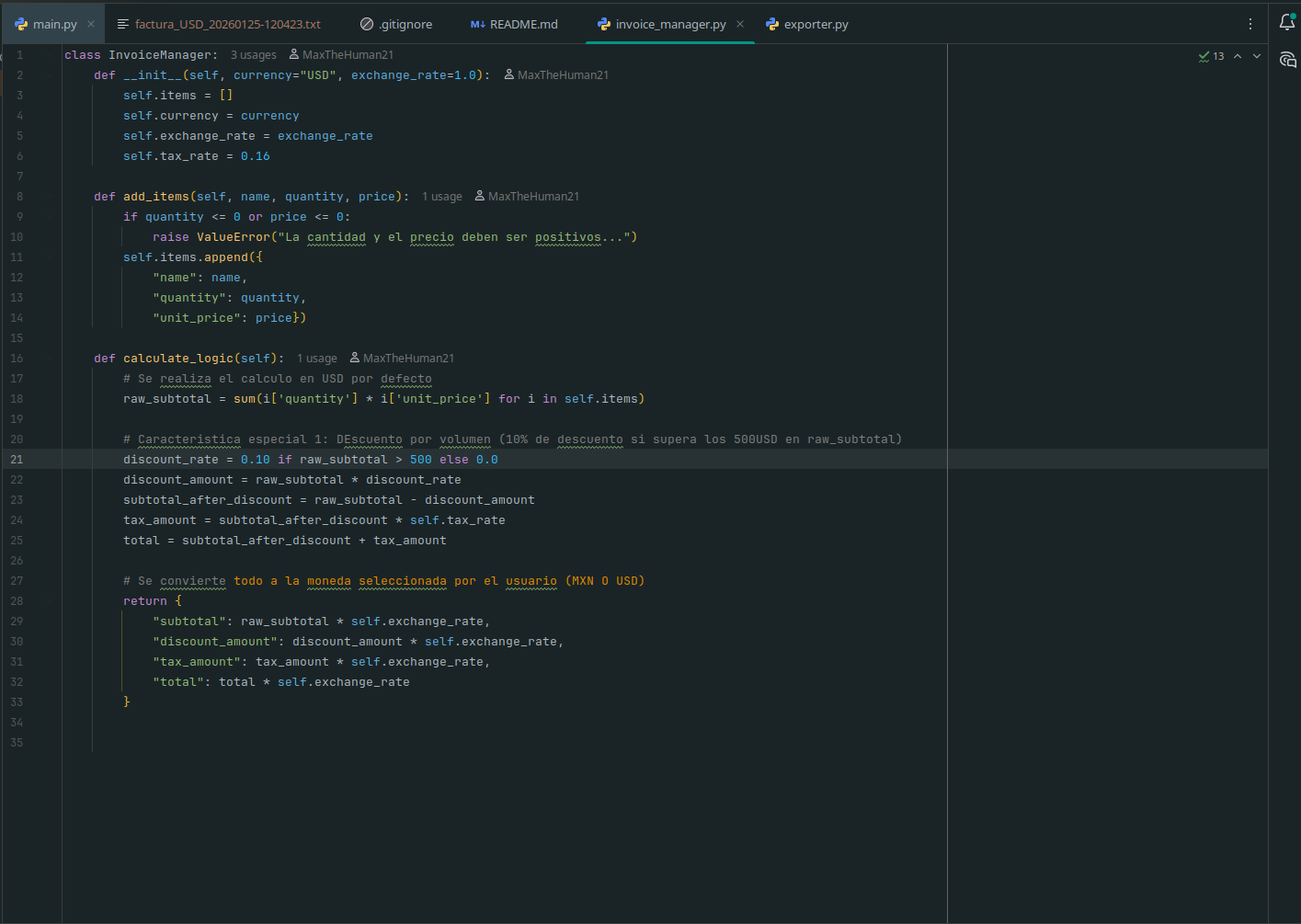
I wanted to bridge the gap between simple coding exercises and real-world business tools. Most beginner invoice systems are static; I was inspired to create something that feels "alive" by handling international currencies and business logic like volume discounts, mimicking a real SaaS product.
What it does
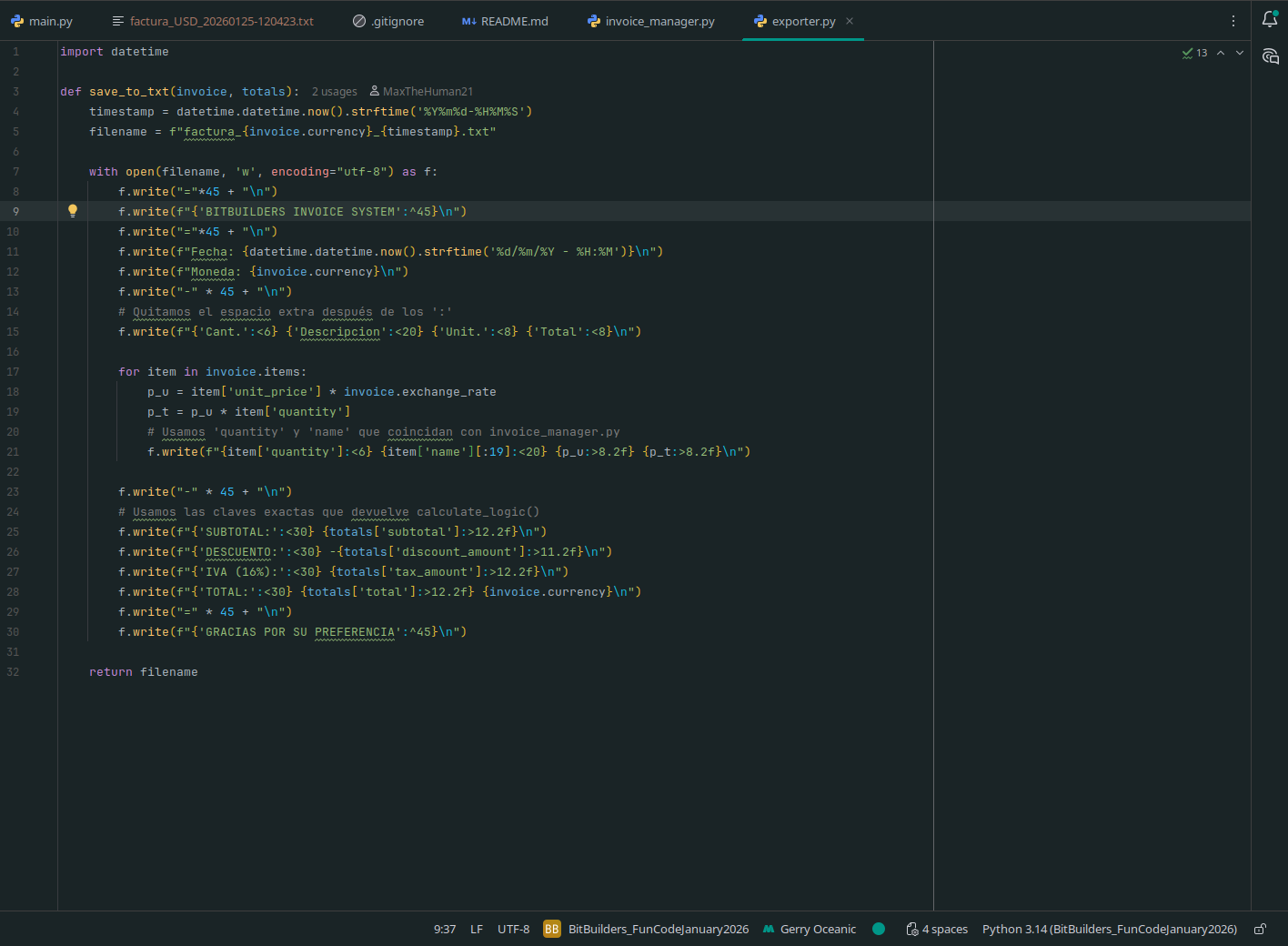
It’s a robust desktop application that allows users to input product details through a clean GUI. It automatically calculates totals, applies a 10% "Bulk Discount" if the subtotal exceeds $500, handles USD/MXN conversions, and generates a professionally formatted, timestamped TXT invoice ready for delivery.
How we built it
I used Python with a decoupled architecture. I strictly followed the Single Responsibility Principle (SRP) by separating the project into three modules: Core Logic: A dedicated engine for financial math. Export Module: A text-formatting specialist. GUI Layer: A Tkinter interface that communicates with the logic without being "glued" to it.
Challenges we ran into
The biggest hurdle was ensuring precision in currency conversion. Handling floating-point math can be tricky, so I implemented a "Base Currency" internal logic where all calculations are normalized before being converted back for the user. Another challenge was managing Tkinter's environment dependencies on Linux.
Accomplishments that we're proud of
I am proud of the modularity of the code. Being able to plug the same logic into a CLI script and a GUI app without changing the calculation engine is a testament to the clean architecture I maintained throughout the race.
What we learned
I reinforced my understanding of Object-Oriented Programming (OOP) and the importance of input validation. I learned that building a "bulletproof" UI requires anticipating every possible user error (like empty fields or invalid characters) and handling them gracefully.
What's next for Invoice Generator WIth Multi-Currency and GUI Interface
The next steps involve adding PDF Export capabilities using libraries like FPDF, implementing a local database (SQLite) to save a history of all generated invoices, and perhaps a Web Dashboard version using Flask to take the logic to the clo


Log in or sign up for Devpost to join the conversation.