InvoiceAI — AI-Powered Invoice Intelligence
Inspiration
Managing invoices manually is time-consuming and error-prone. Businesses often need to extract information from invoice images, verify the extracted data, calculate taxes, track billing, and generate reports—all through separate processes.
We wanted to build a single platform that could turn an invoice image into structured, validated, and actionable business information.
That idea led to InvoiceAI—an AI-powered invoice processing and business intelligence platform that combines OCR, local LLM processing, analytics, and automated reporting.
What It Does
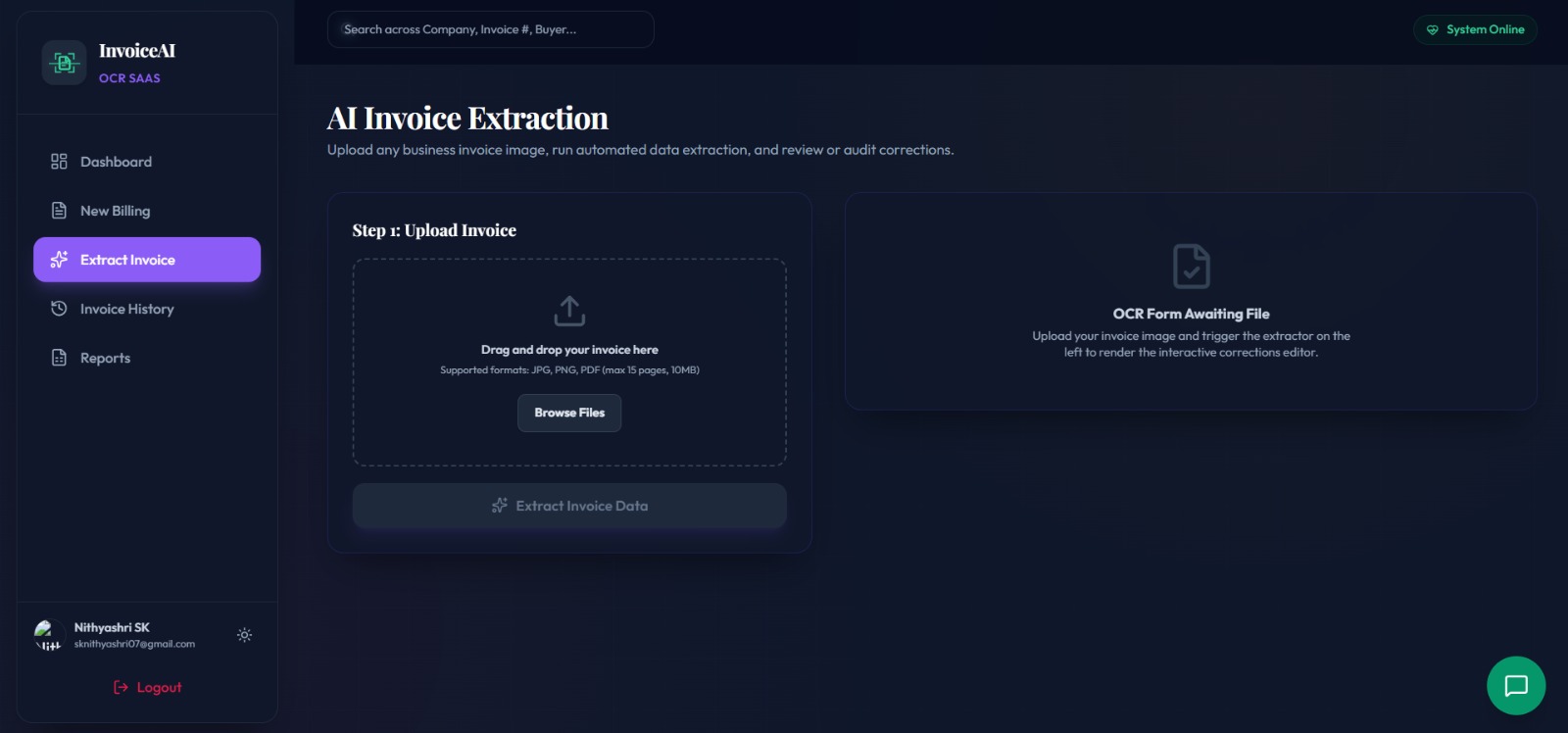
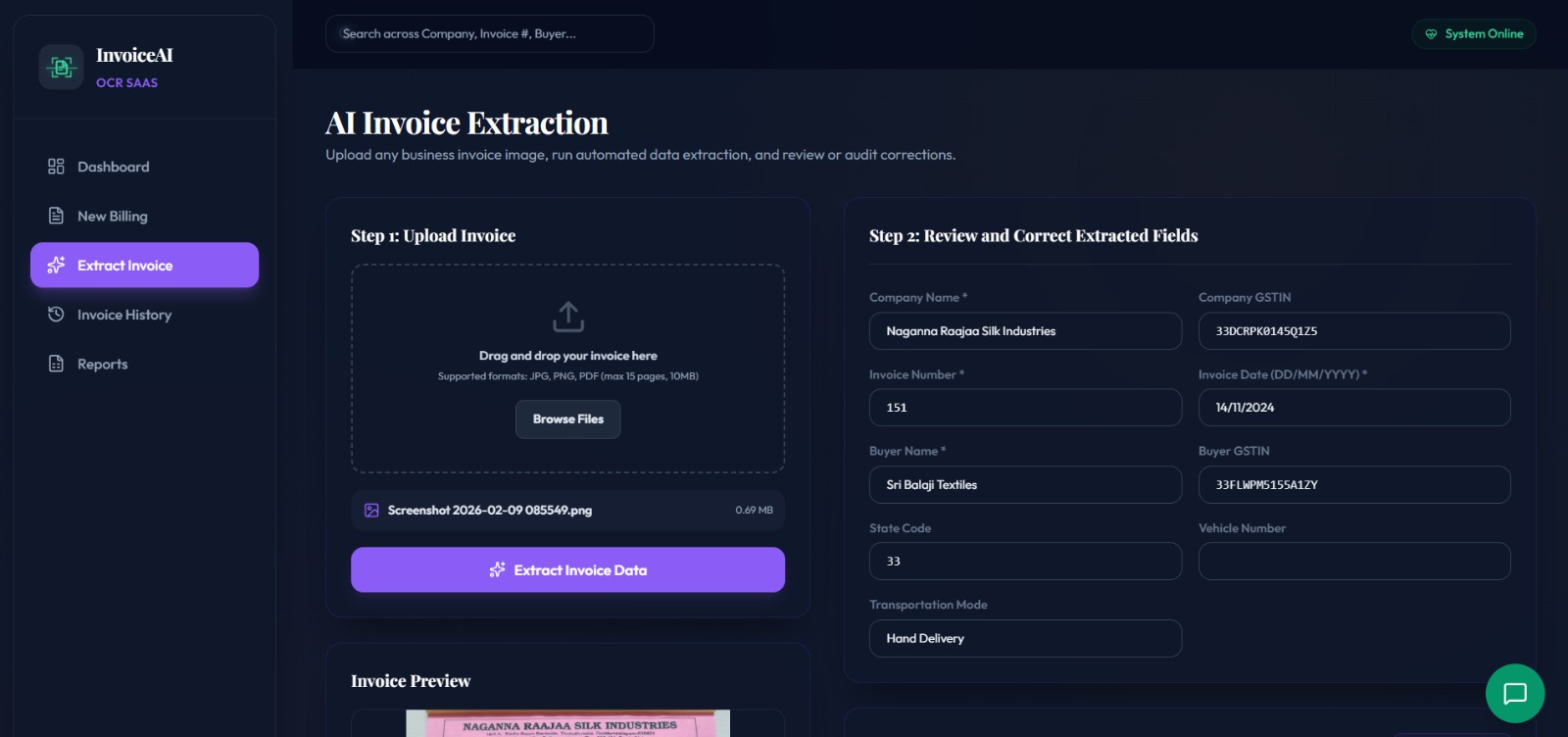
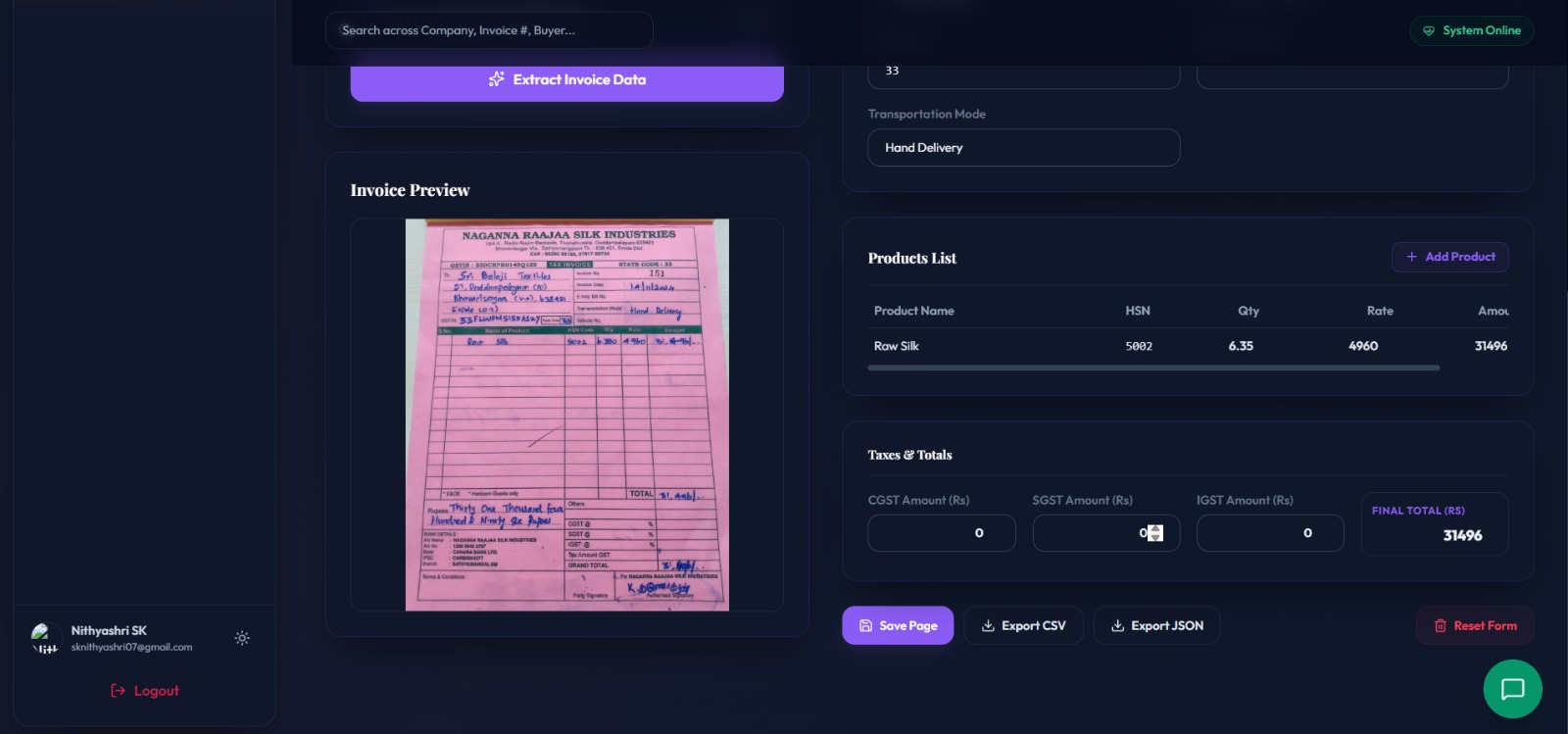
InvoiceAI allows users to upload invoice images and automatically extract important information such as invoice numbers, dates, vendors, buyers, items, taxes, and billing totals.
The platform provides:
- AI-powered invoice OCR using PaddleOCR-VL
- LLaMA3 post-processing for improved extraction and structuring
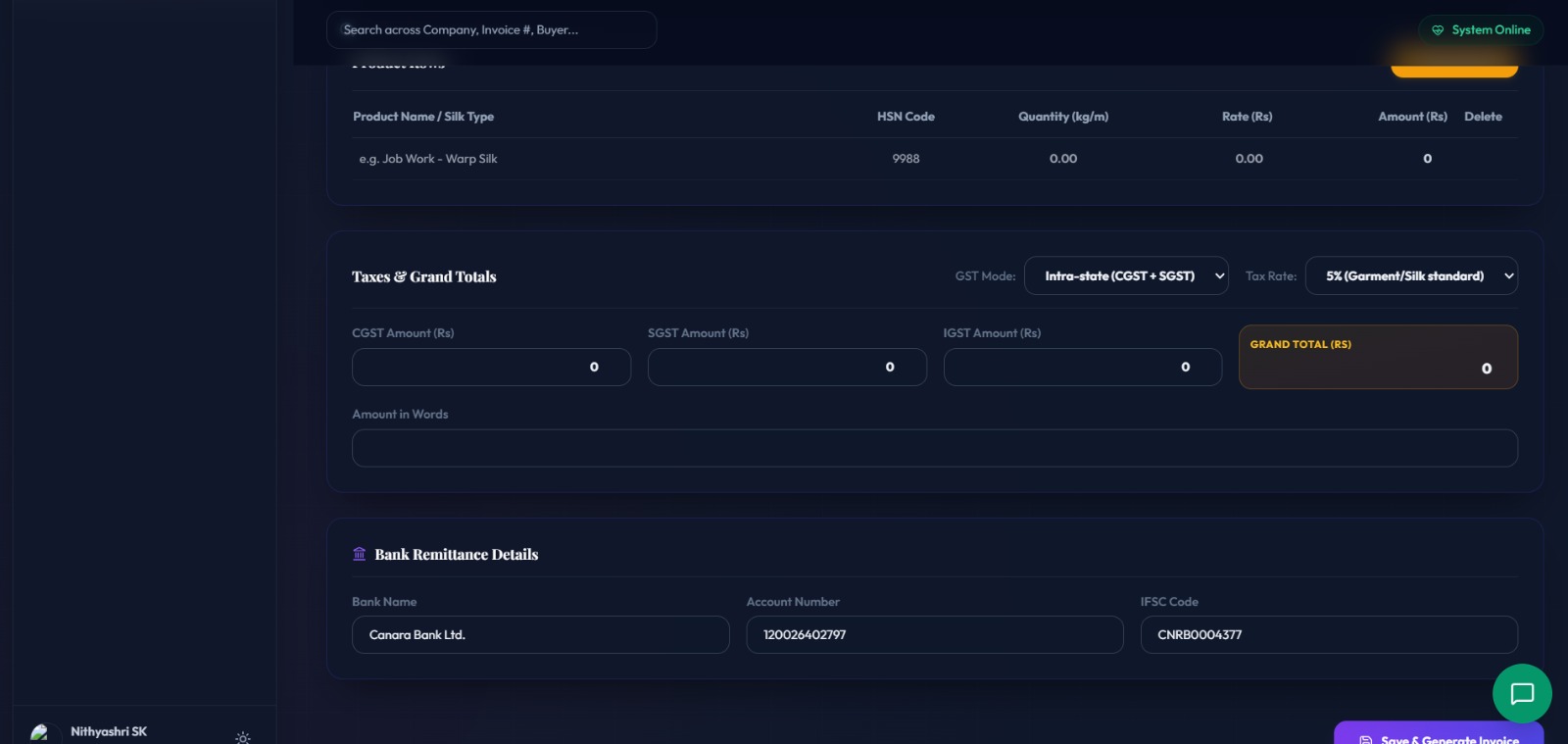
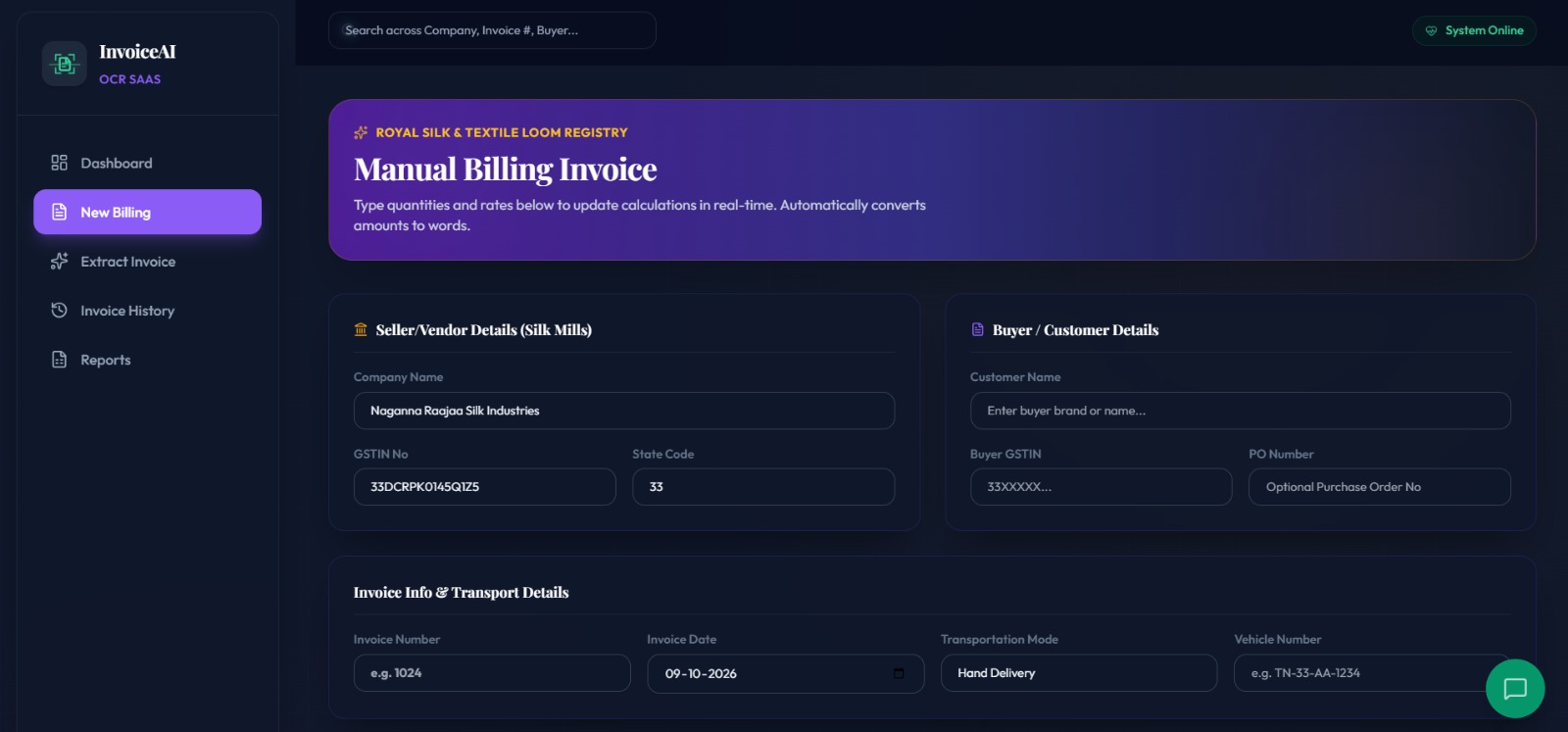
- Editable invoice fields for human verification
- Automatic CGST, SGST, and IGST calculations
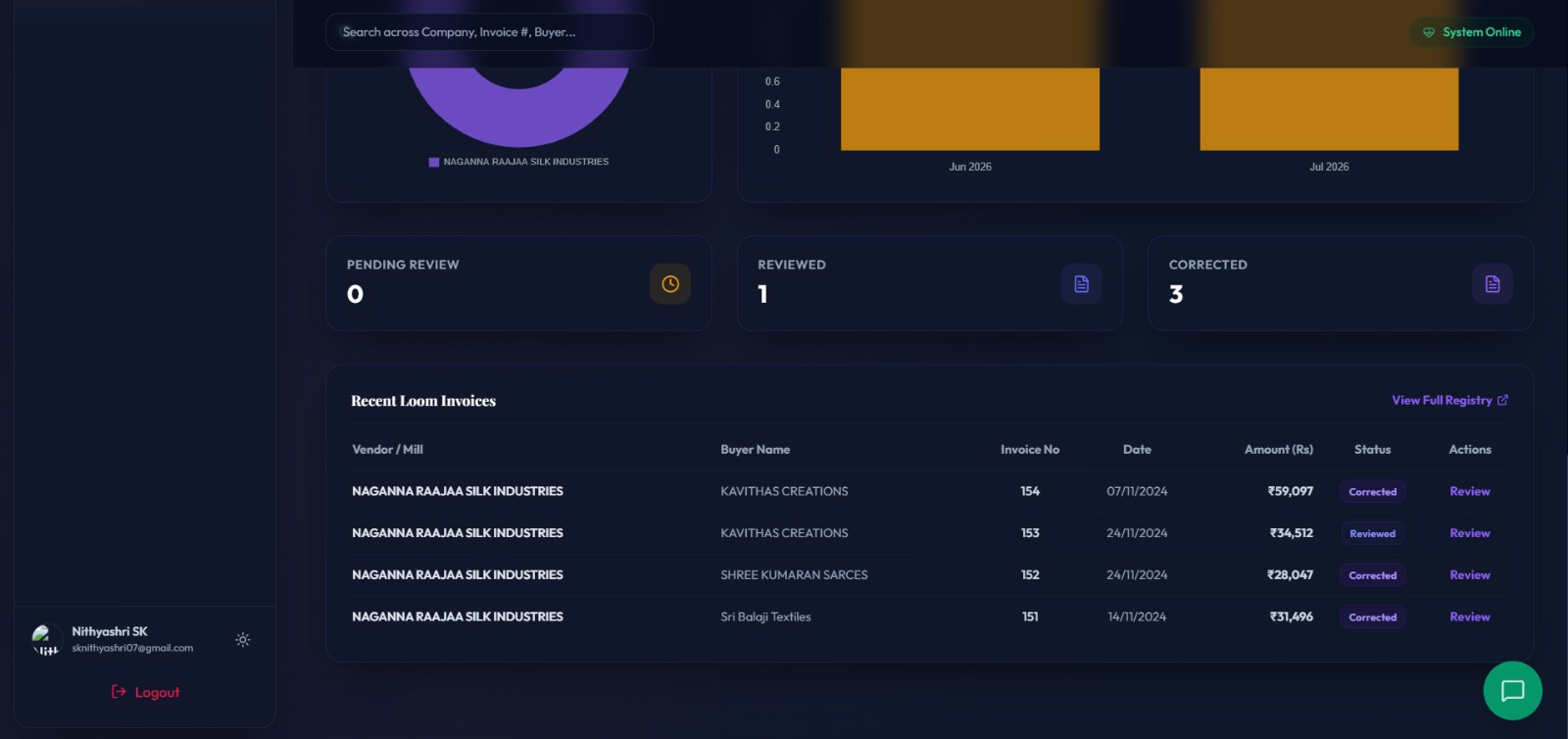
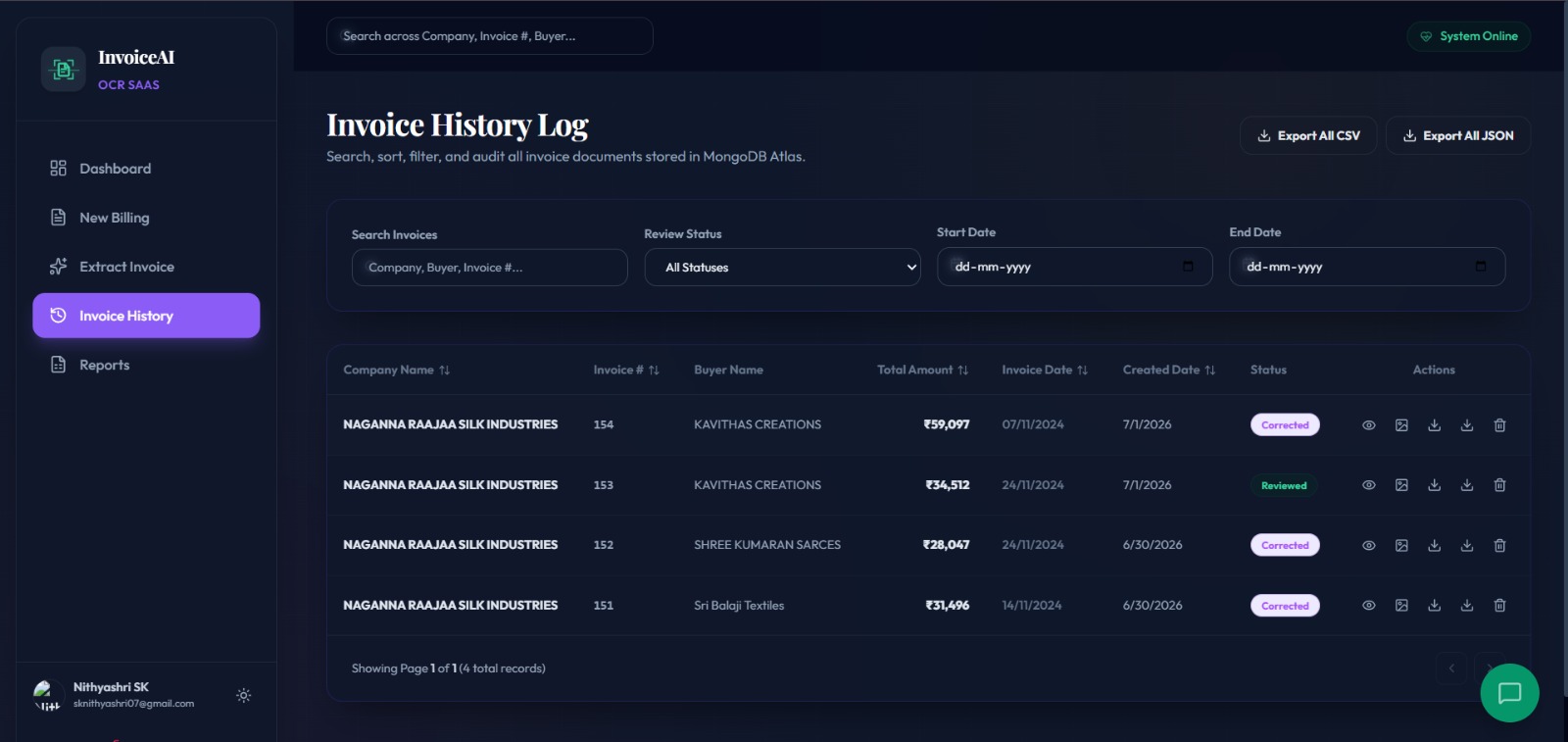
- Invoice review and correction workflows
- Complete invoice modification history
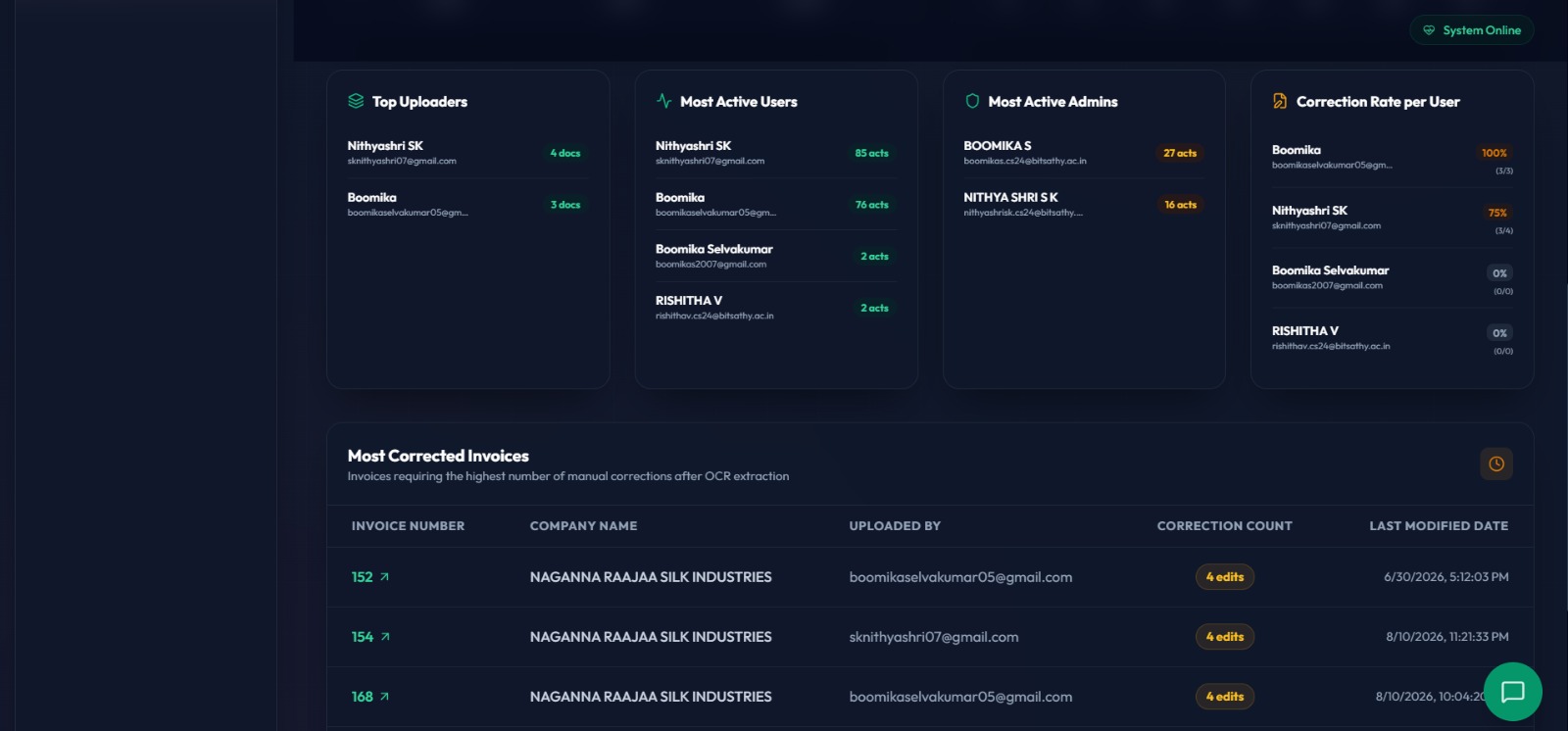
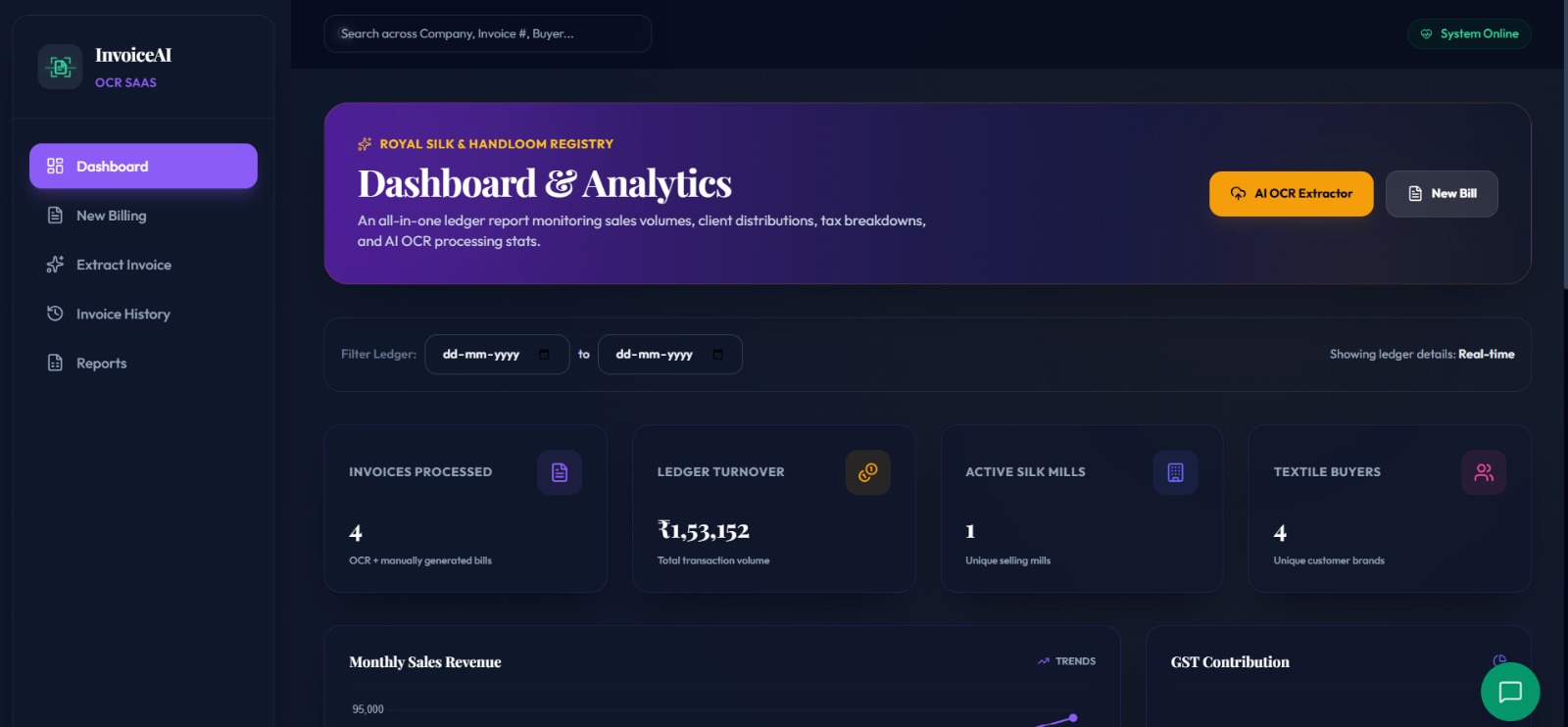
- Interactive business analytics dashboards
- GST and revenue analysis
- Buyer-wise revenue insights
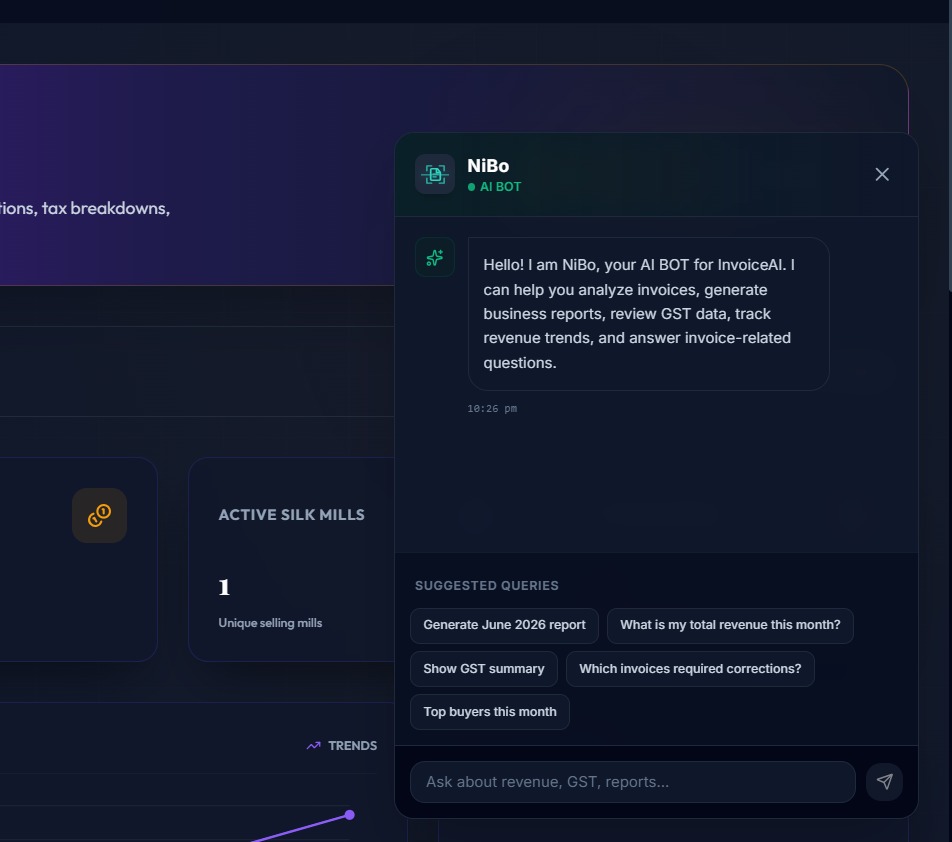
- NiBo, our AI business assistant for natural-language invoice queries
- On-demand PDF business reports
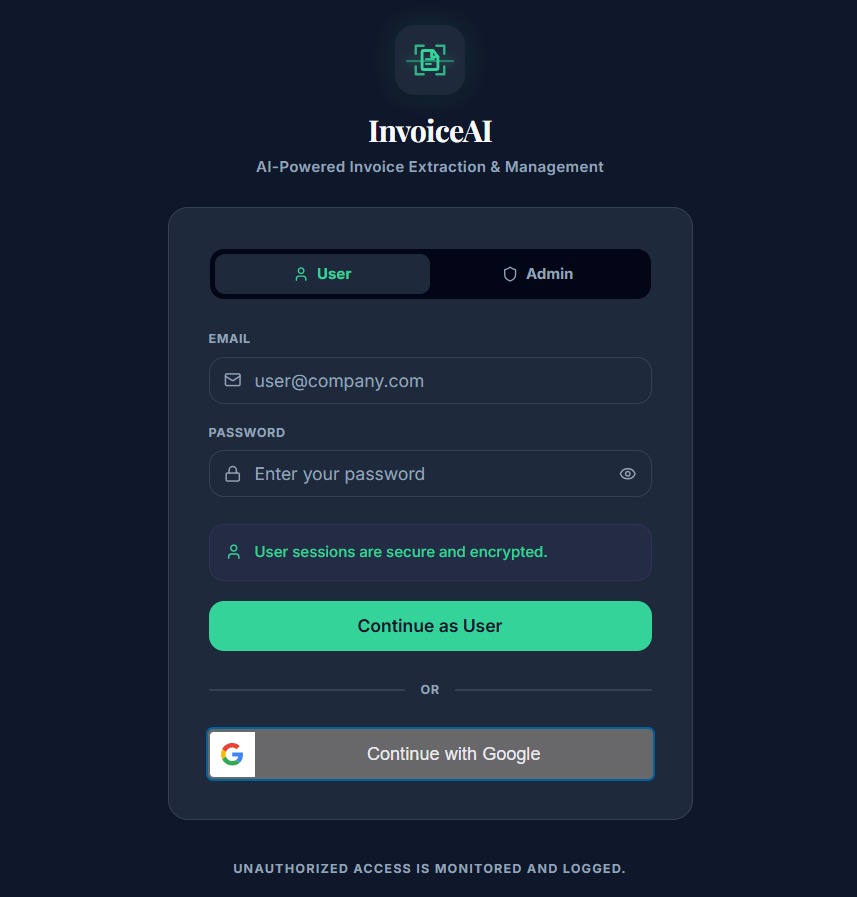
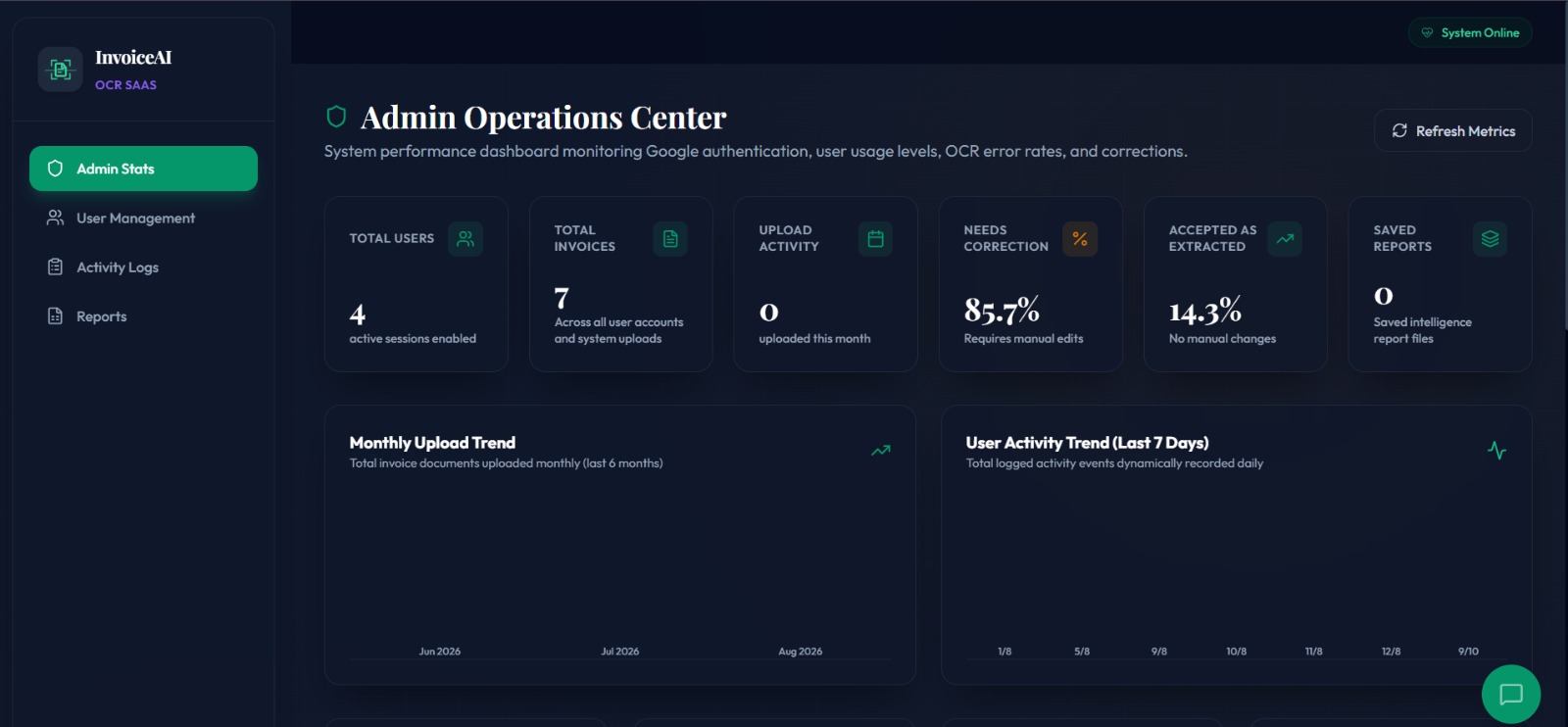
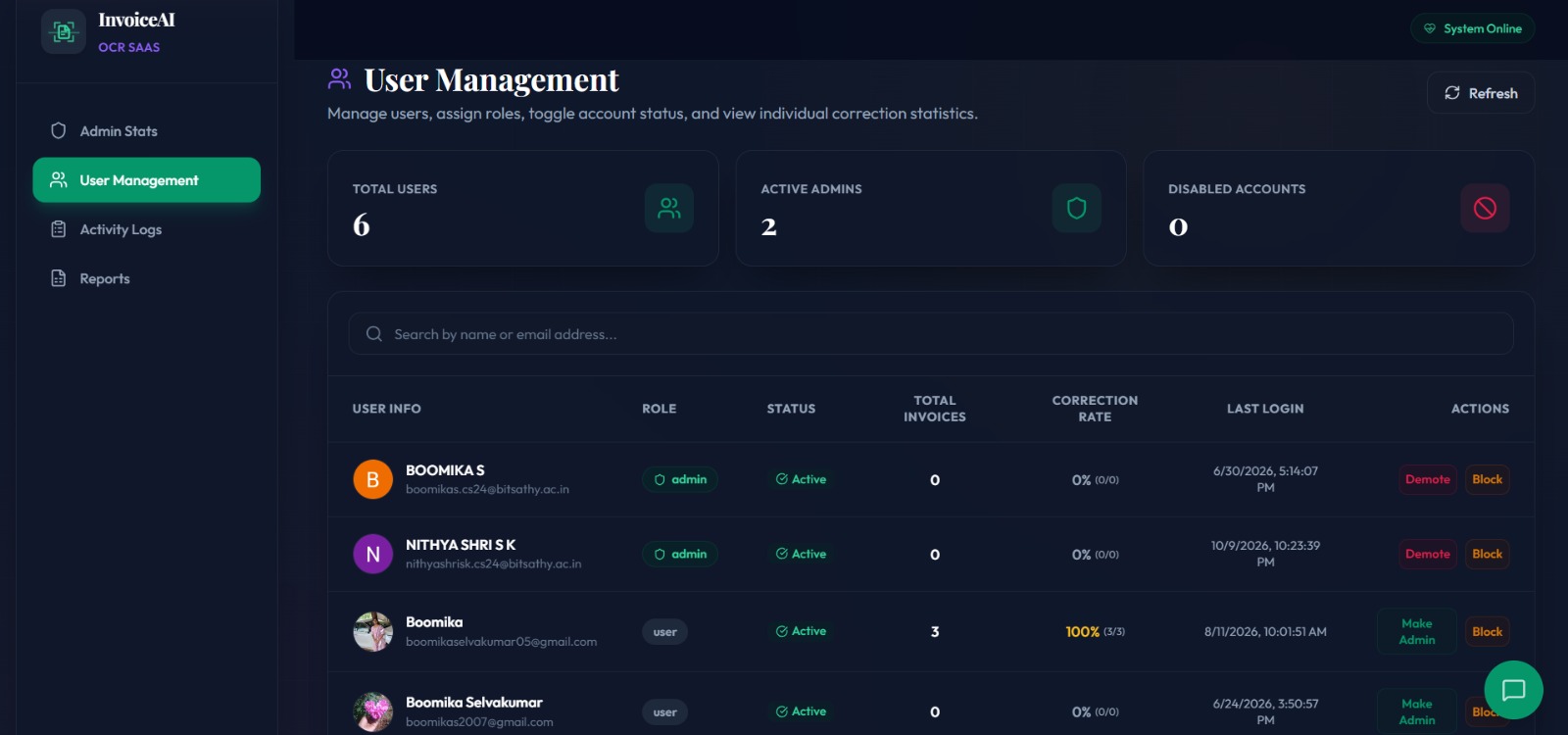
- Role-based access for administrators and standard users
- Secure authentication and protected APIs
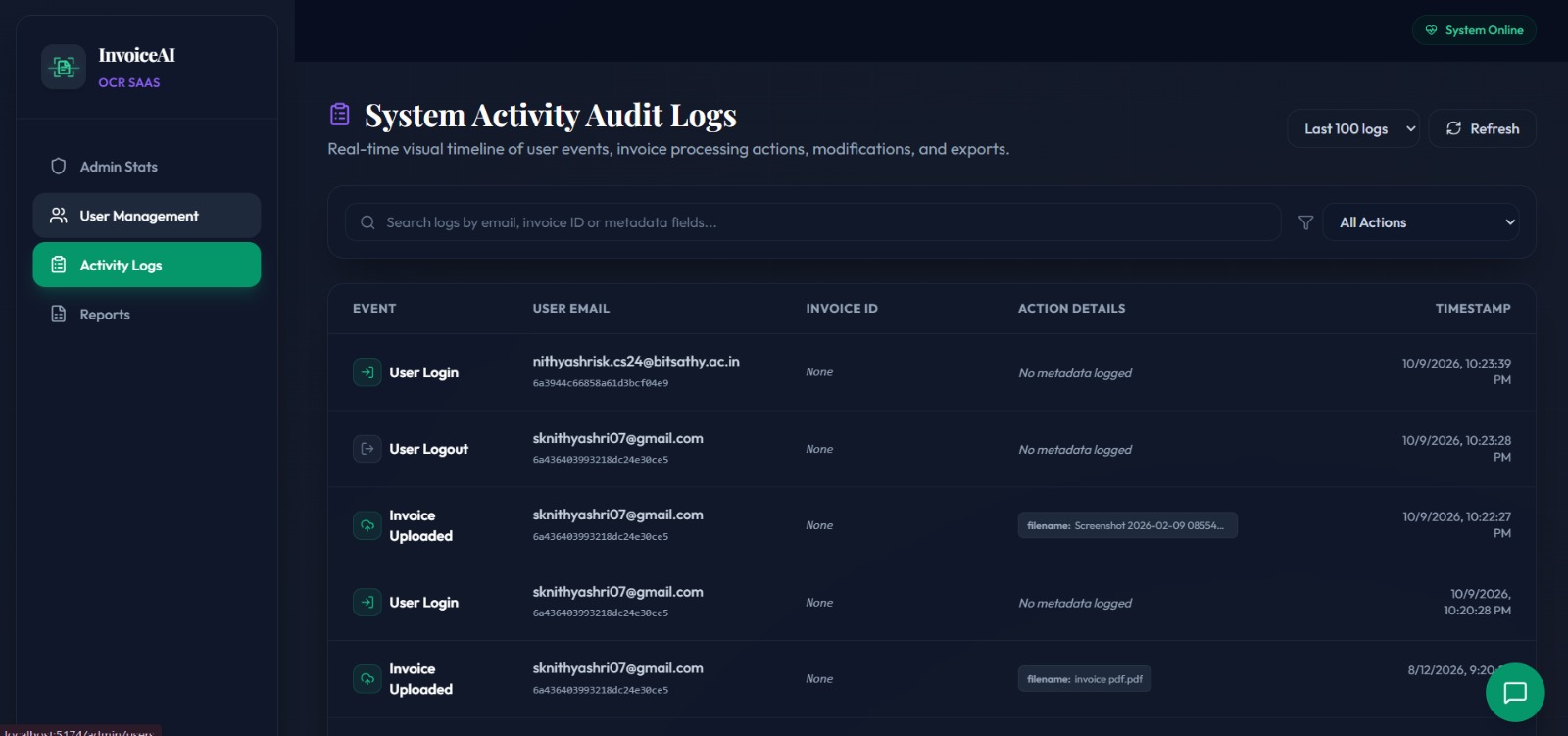
- Activity and audit logging
How We Built It
The frontend was built with React 19, Vite, and Tailwind CSS, with React Router and React Hook Form handling navigation and forms. Chart.js powers the analytics visualizations.
The backend uses Flask to provide REST APIs, with MongoDB Atlas storing users, invoices, activity logs, and generated report metadata.
For AI processing, we integrated PaddleOCR-VL for visual and text extraction and used a locally running LLaMA3 model through Ollama for post-processing and business-language analysis.
The system follows a pipeline:
Invoice Image → OCR → LLaMA3 Processing → Structured Invoice Data → Human Review → Analytics → AI Insights / Reports
We also implemented role-based permissions so standard users can work with their own invoices while administrators can access system-wide analytics, user management, and audit logs.
Challenges We Faced
One of our biggest challenges was making OCR output reliable enough for real-world invoices. Invoice layouts vary significantly, and extracted text doesn't always arrive in the structure required by a business application.
To address this, we combined PaddleOCR-VL with local LLaMA3 post-processing, followed by an editable human-review workflow.
Another challenge was designing the system so that analytics and AI queries respect user permissions. We implemented ownership validation and role-based API protection so standard users cannot access another user's invoice data.
We also had to design the platform so that computationally intensive AI processing could run locally. Using Ollama allows the LLaMA3 processing pipeline to operate without depending entirely on external LLM APIs.
What We Learned
Building InvoiceAI taught us that an AI application is more than simply connecting an AI model to a UI.
We learned how to combine:
- Computer vision and OCR
- Local LLM inference
- REST API architecture
- MongoDB data modeling
- Authentication and RBAC
- Human-in-the-loop verification
- Business analytics
- Automated PDF reporting
- Secure data isolation
Most importantly, we learned that AI becomes much more useful when it is integrated into an end-to-end workflow rather than being treated as a standalone feature.
What's Next
We plan to extend InvoiceAI with:
- Automated scheduled reports
- Email delivery and payment reminders
- Multi-language OCR
- Business revenue forecasting
- Vendor risk analysis
- Duplicate and anomaly detection
These enhancements would move InvoiceAI from an invoice-processing system toward a complete AI-powered financial intelligence platform.


Log in or sign up for Devpost to join the conversation.