Inspiration
Growing up, I've watched my mother work tirelessly - cooking before dawn, managing our household, caring for all the family members - every single day, including festivals and holidays that meant rest for everyone else but more work for her. Despite being the backbone of our family's functioning, she's often dismissed as "not working" because her labor didn't generate a paycheck. This personal reality hit me harder when I got to know that across India, women like my mother contribute $3.1 trillion annually in unpaid care work - nearly equivalent to India's entire manufacturing sector, and yet remain economically invisible.
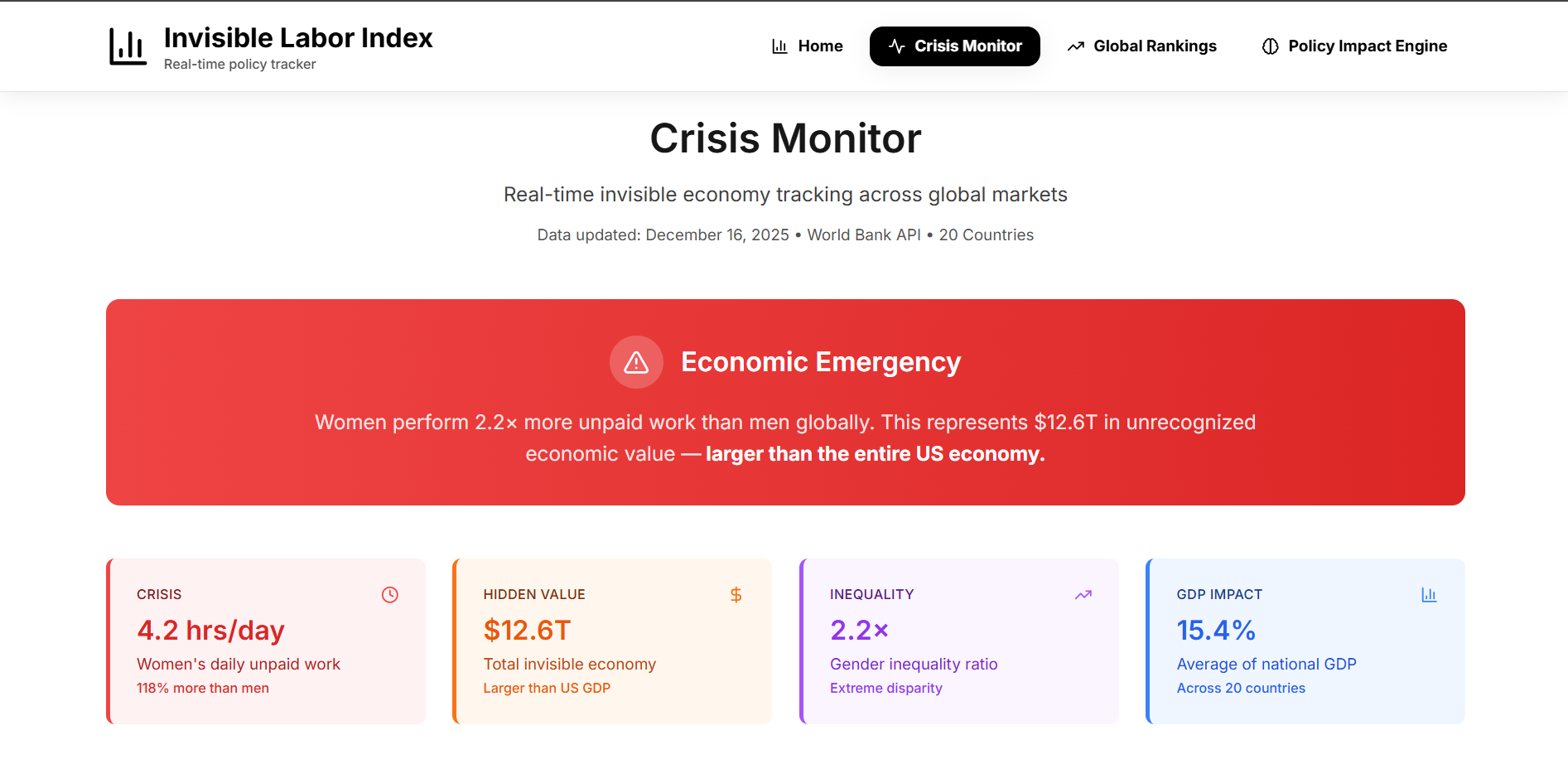
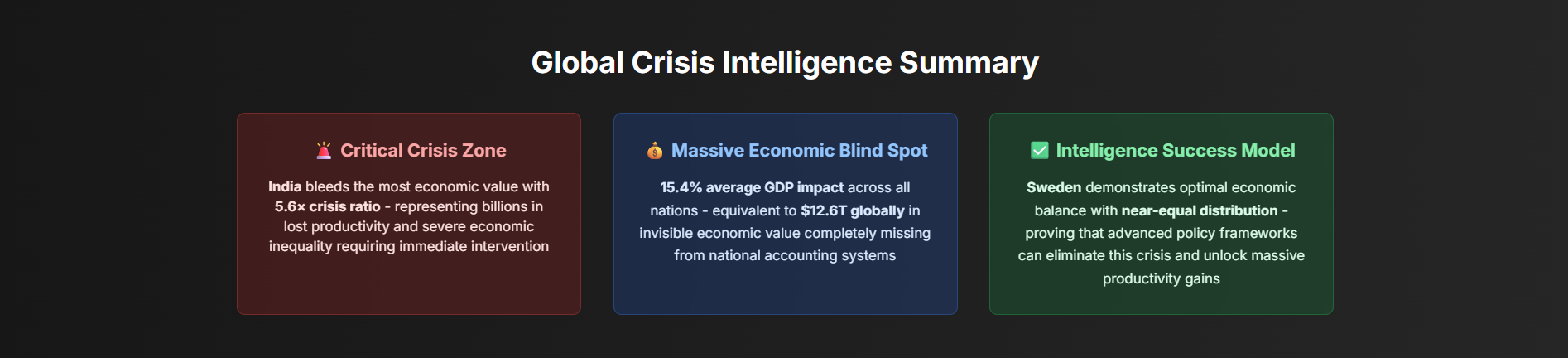
When I discovered that this isn't just an Indian story, but a global crisis affecting $18 trillion worth of women's labor worldwide, I knew we needed to build something that would finally make policymakers see what families like mine have always known: without this "invisible" work, economies would collapse overnight. The Invisible Labor Index exists because every mother, grandmother, and daughter deserves to have their economic contributions recognized and valued.
What it does
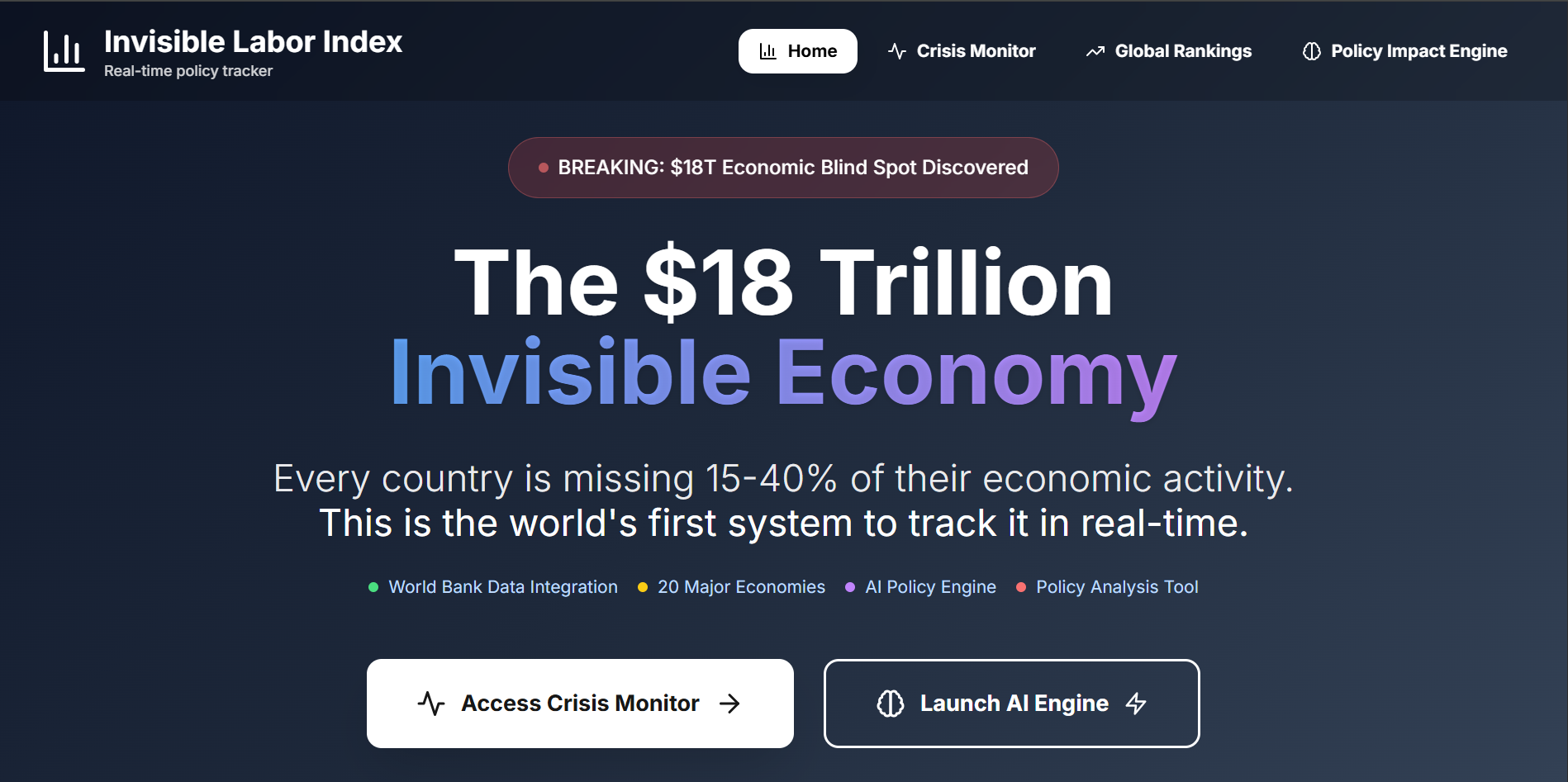
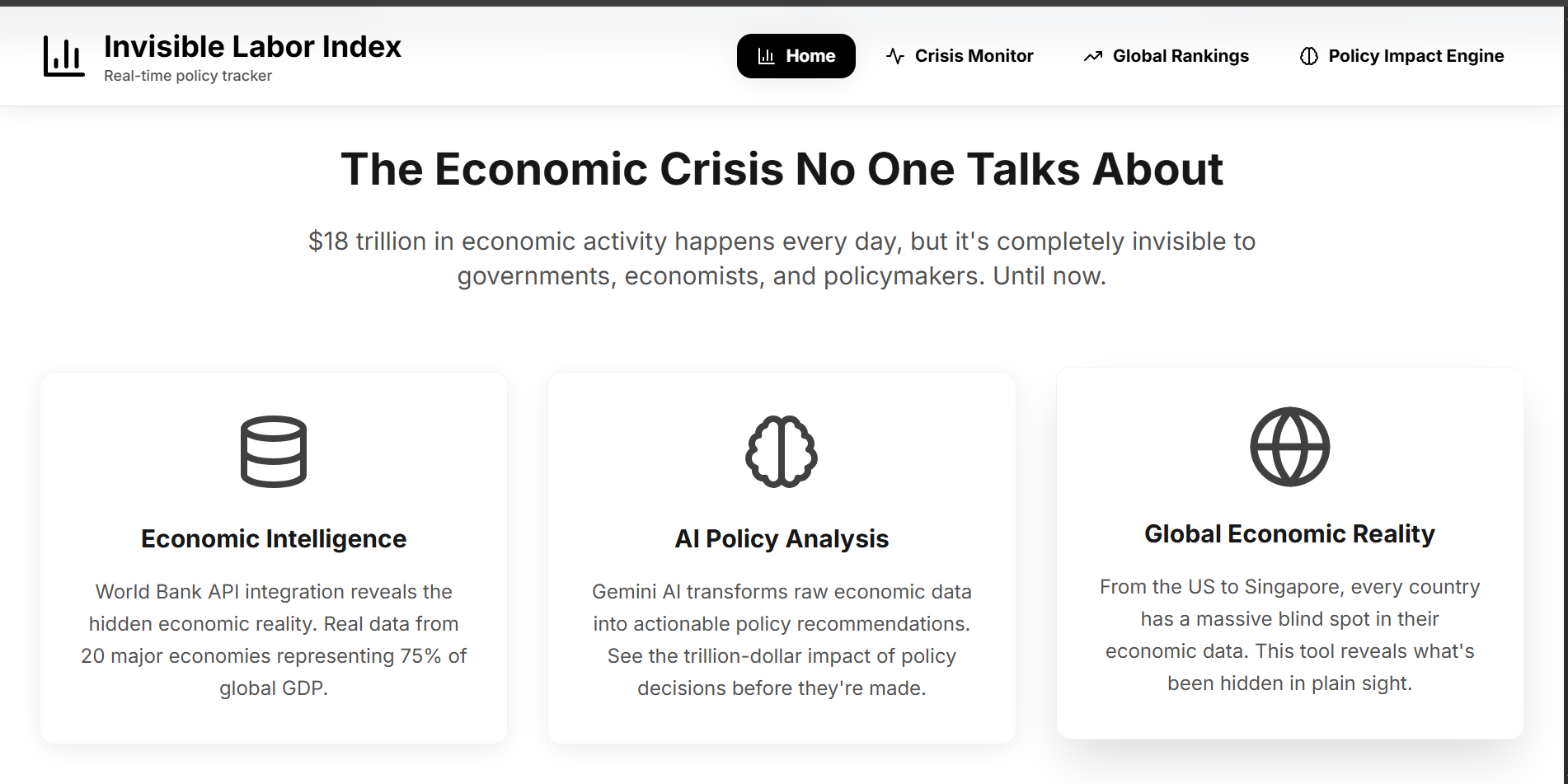
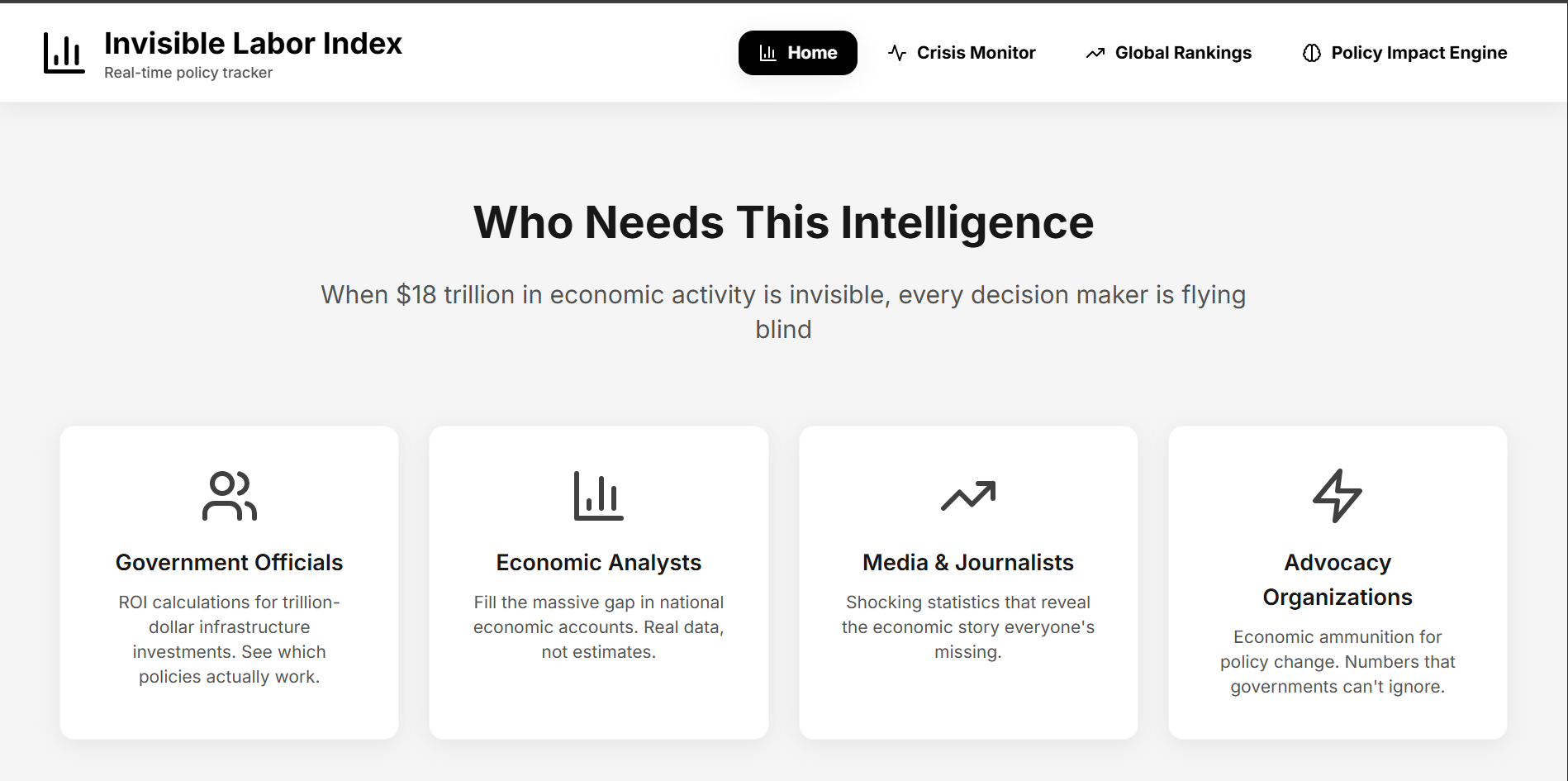
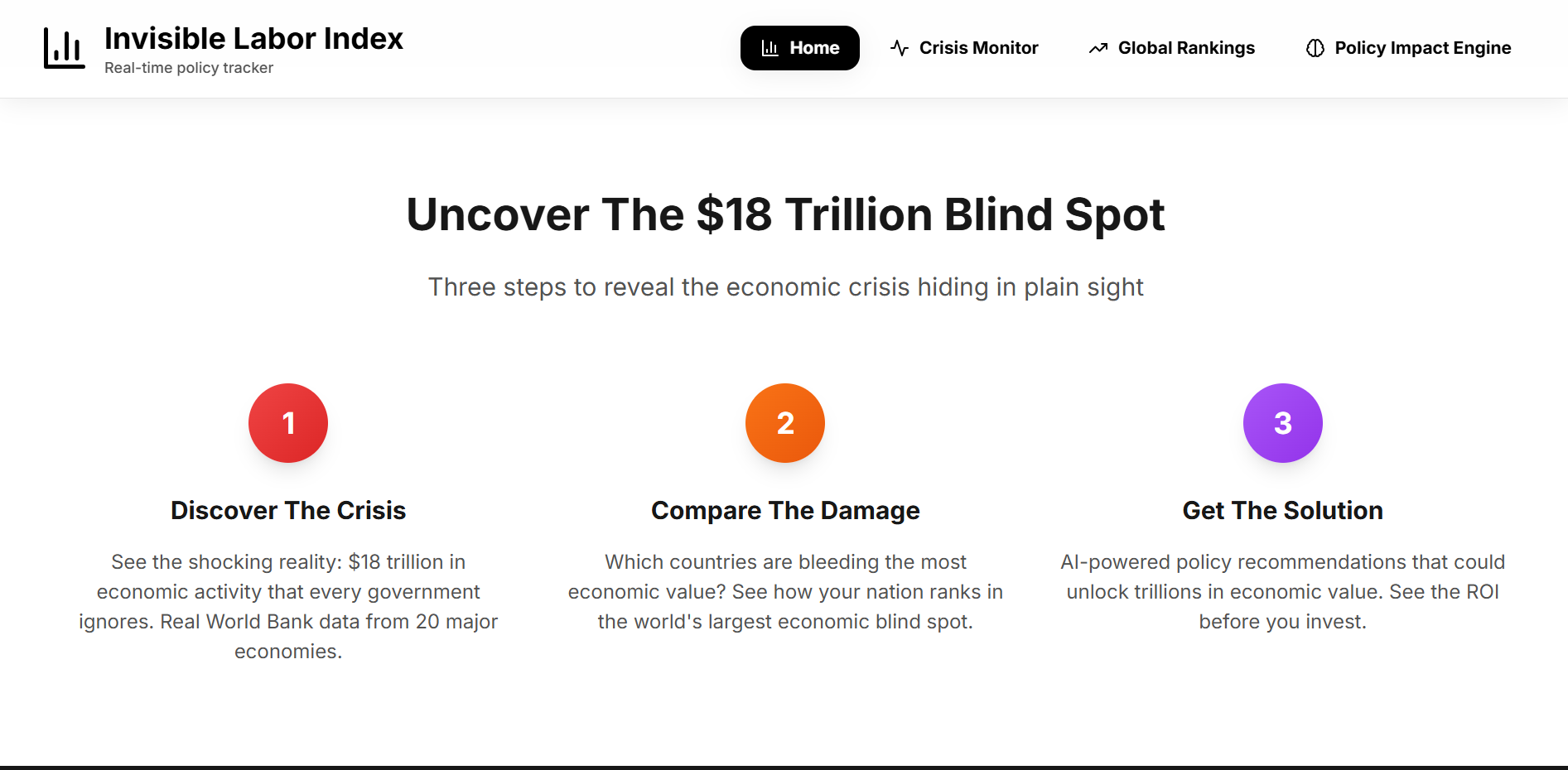
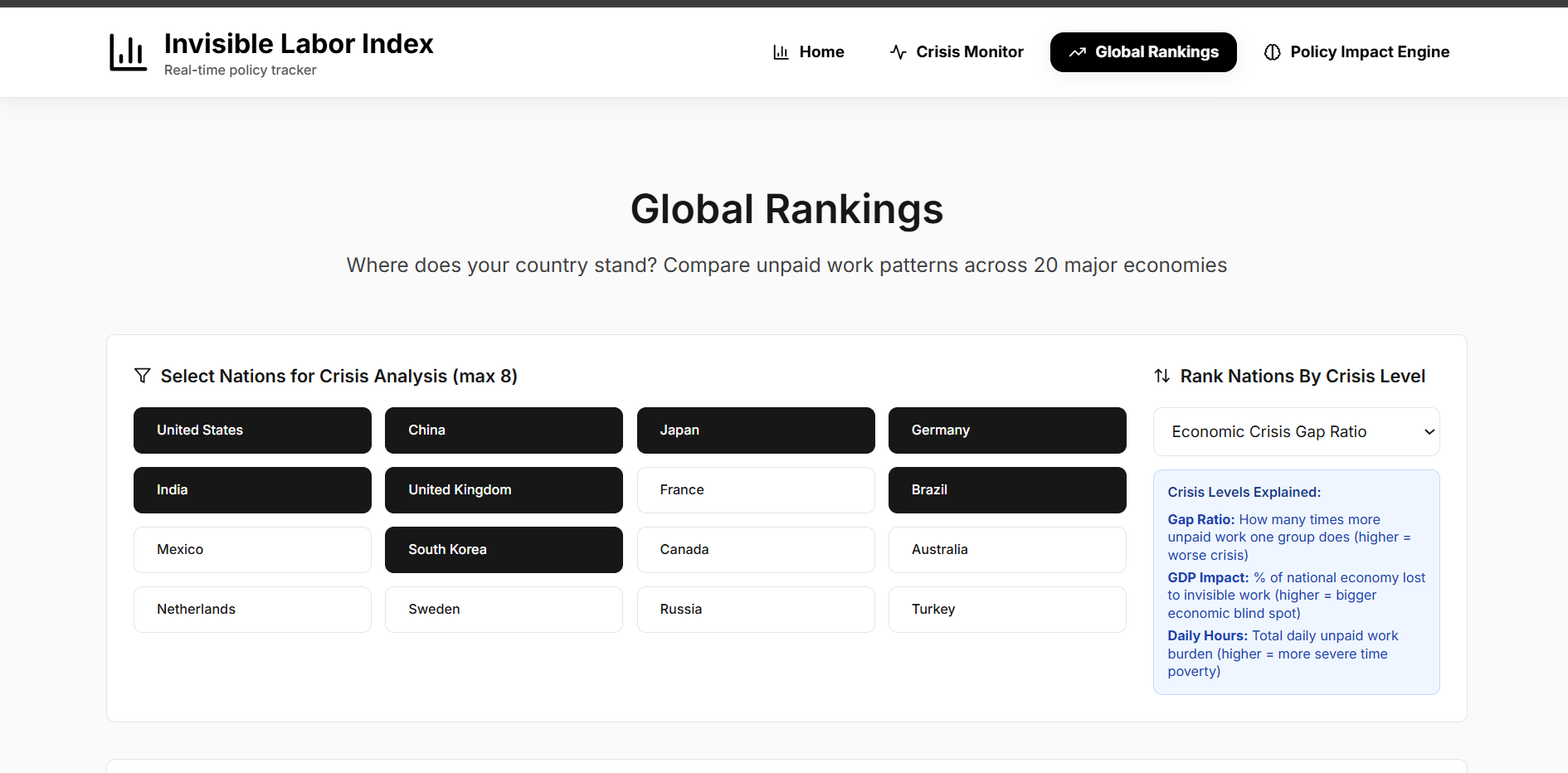
The Invisible Labor Index is the world's first comprehensive platform that quantifies unpaid care work across 20 major economies, transforming stories like my mother's into economic data that governments can't ignore:
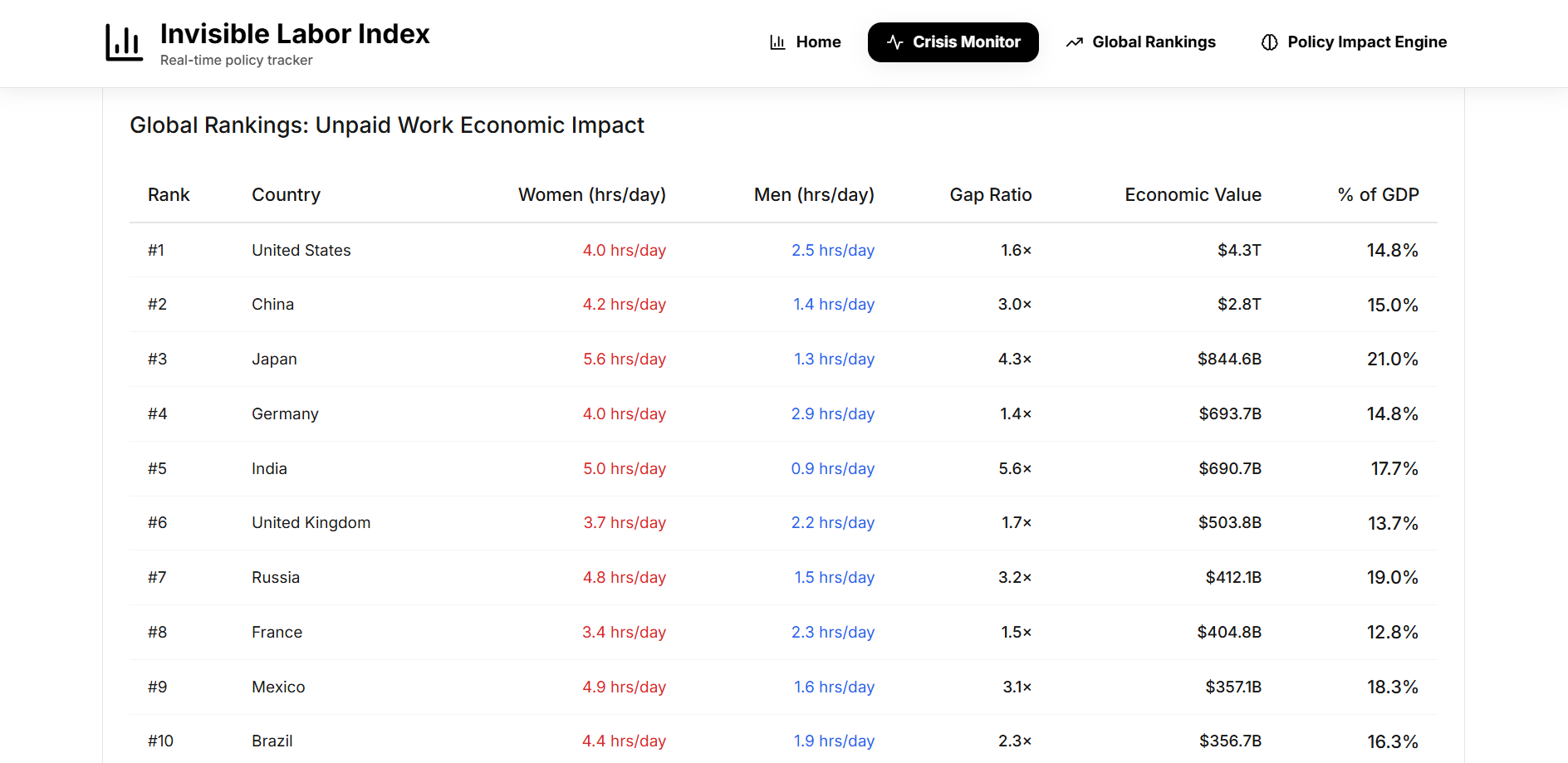
- Economic Impact Calculator: Shows how much unpaid work contributes to each country's true economic output - in India's case, revealing that women's unpaid labor equals 39% of GDP.
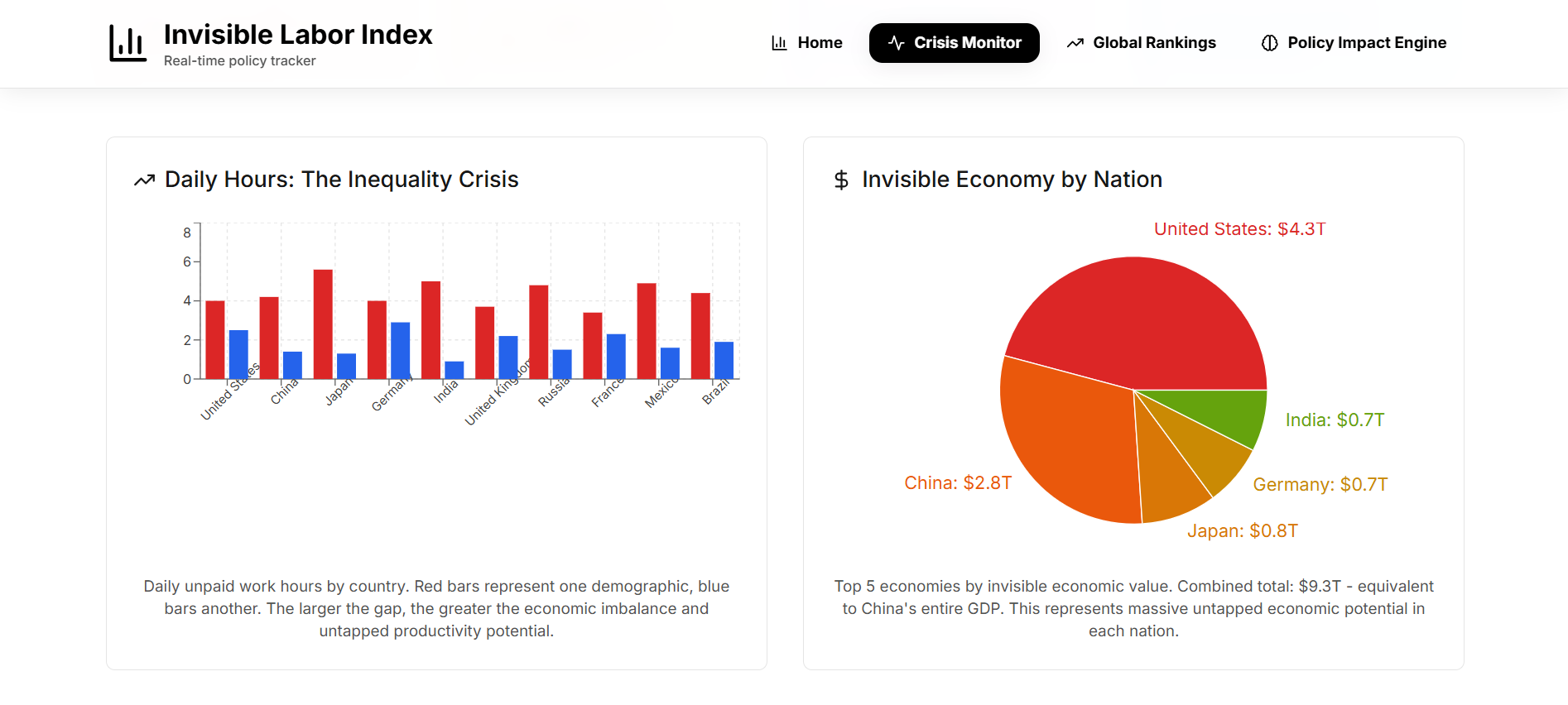
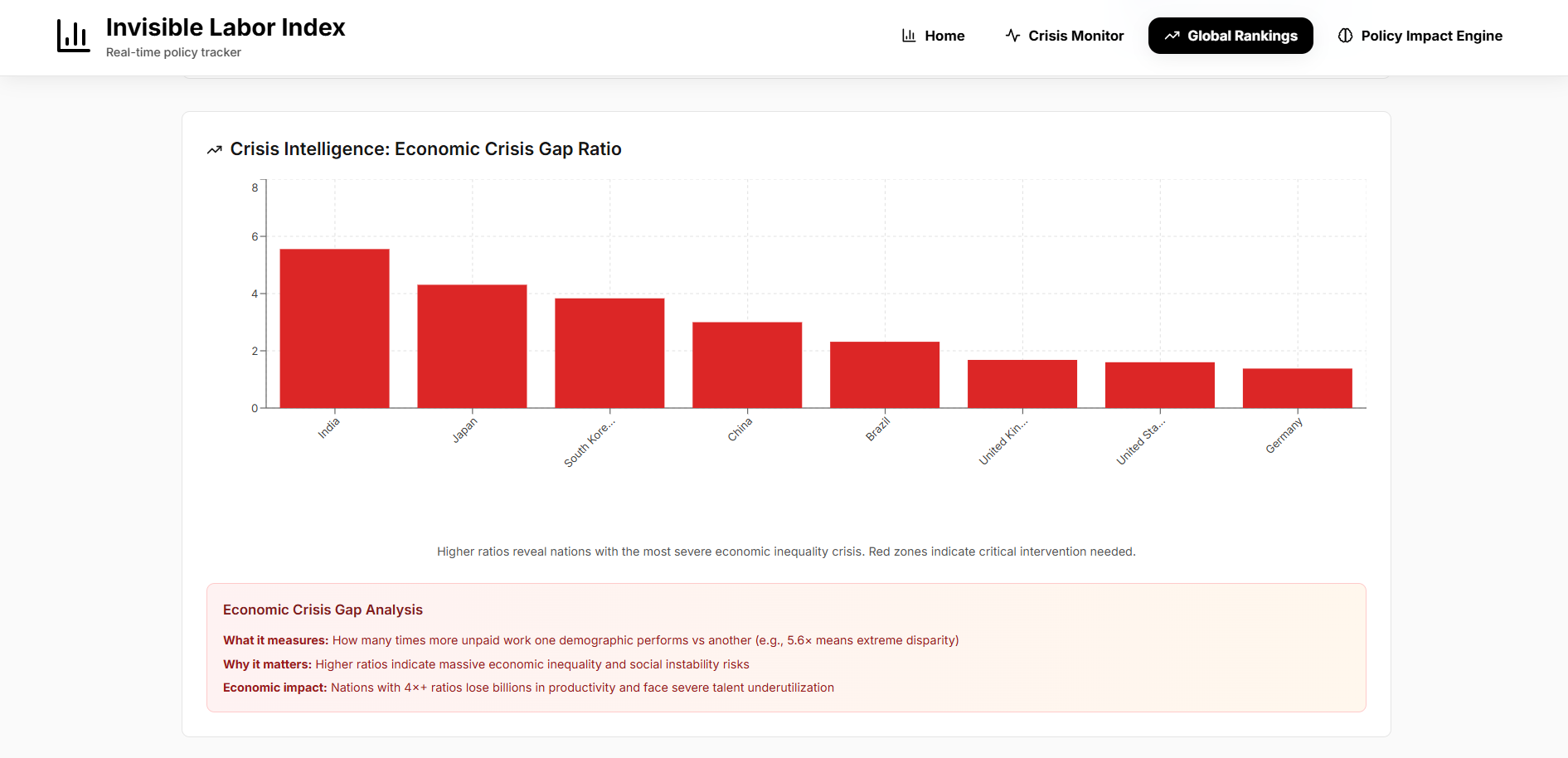
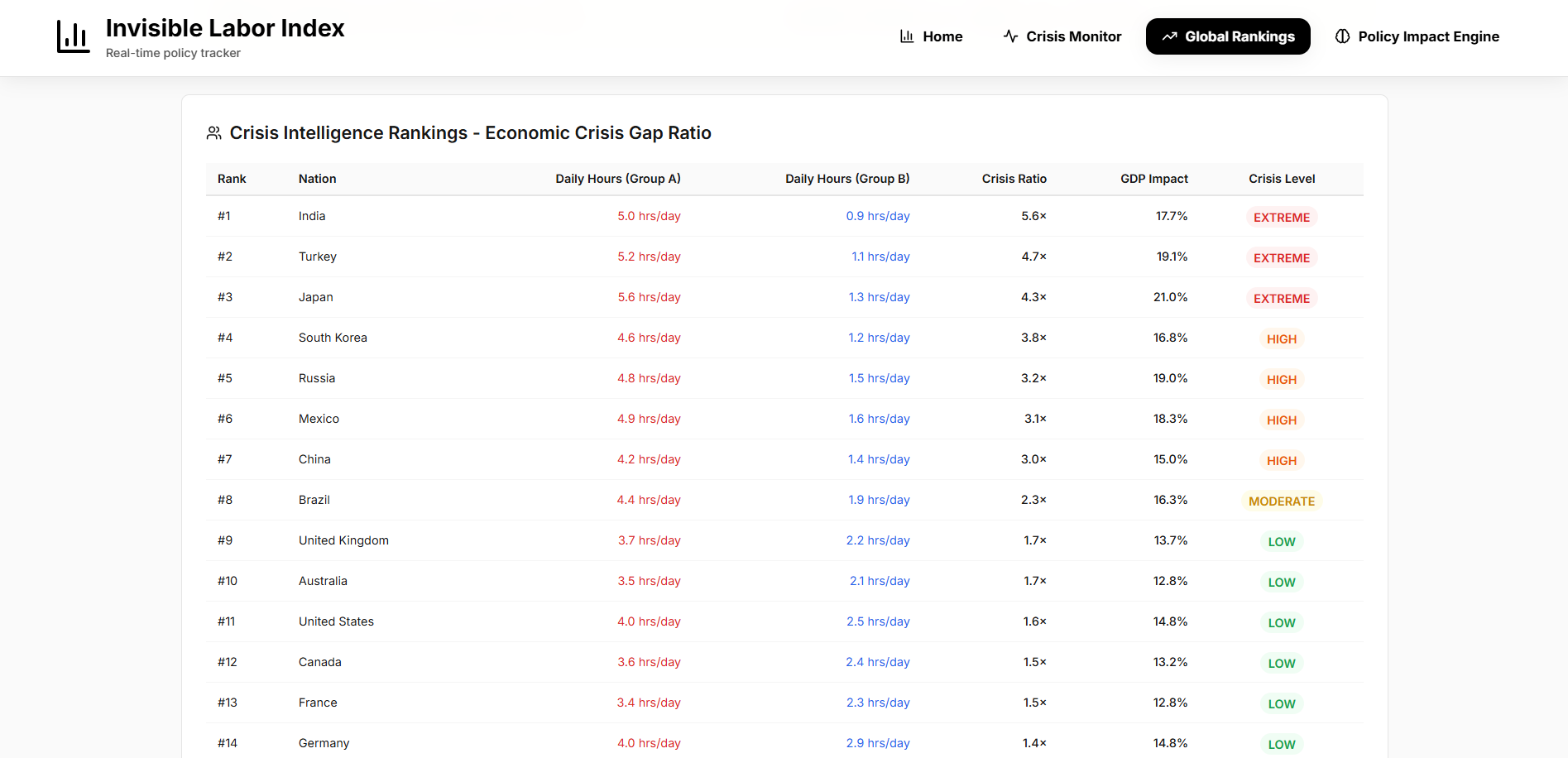
- Gender Gap Analyzer: Exposes the stark reality that Indian women spend 5 hrs daily (atleast on an average) on unpaid work compared to men's 0.9 hrs.
- Interactive Global Map: Visualizes invisible economies country-by-country with real data from World Bank and OECD.
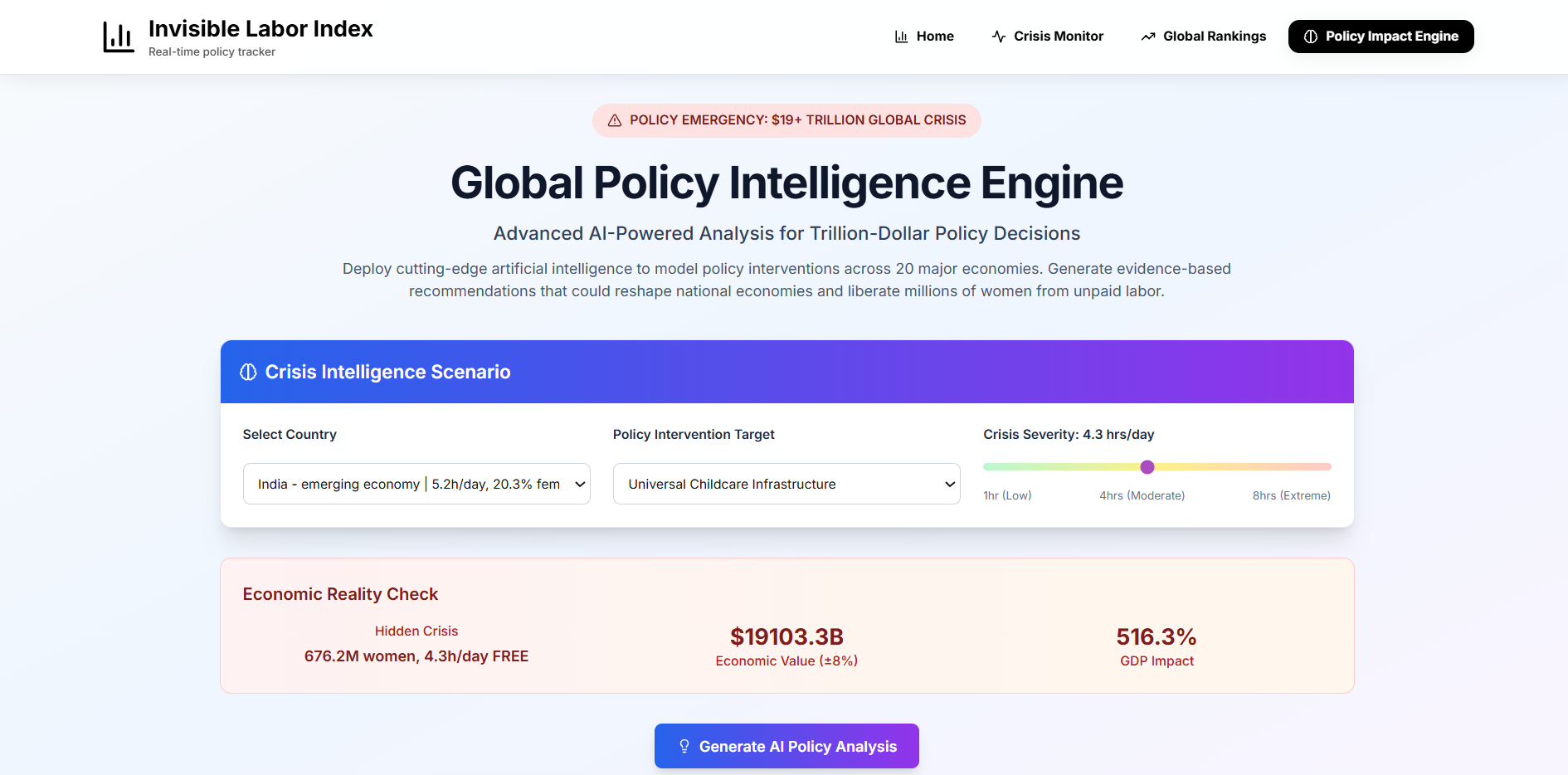
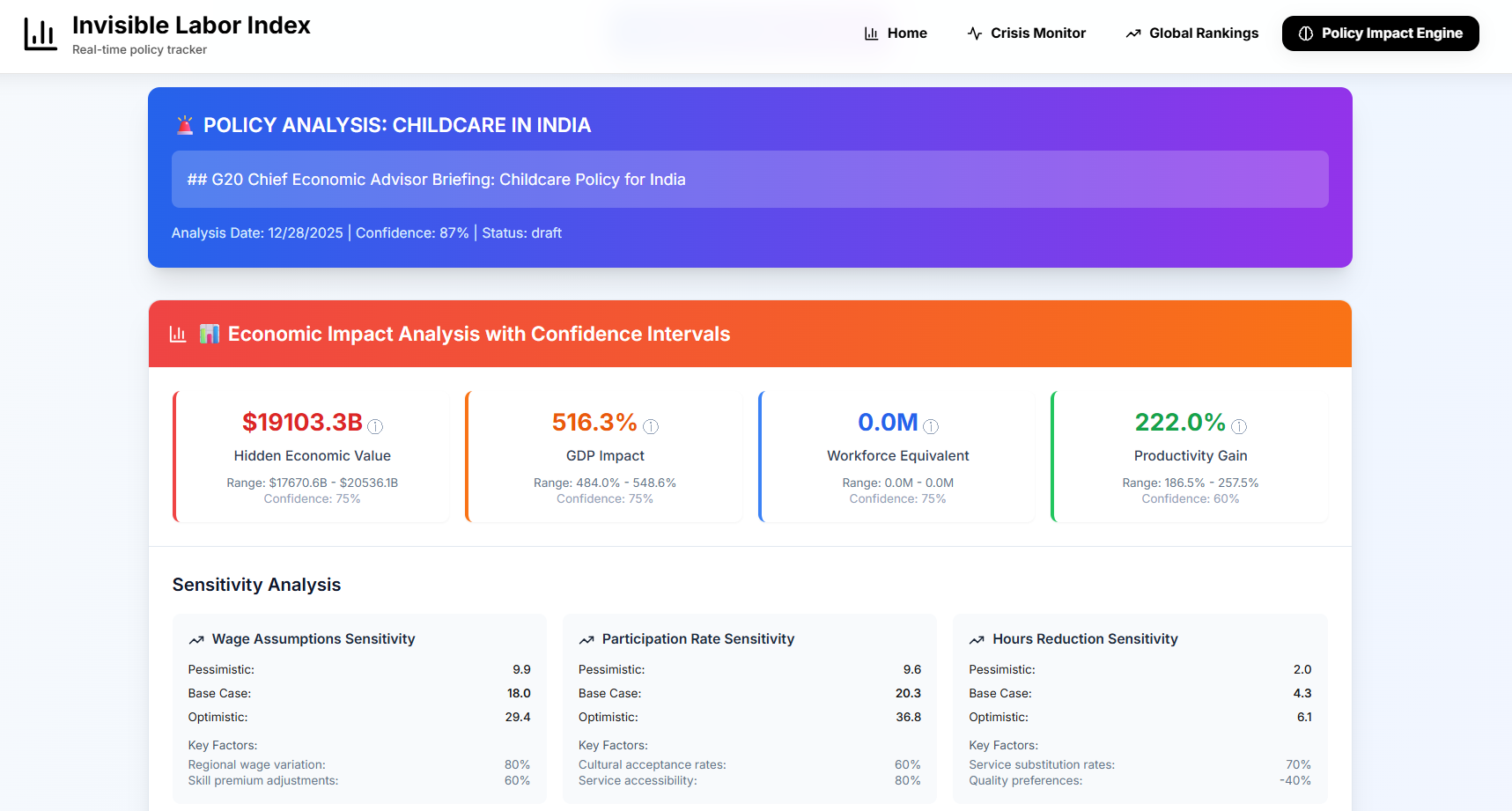
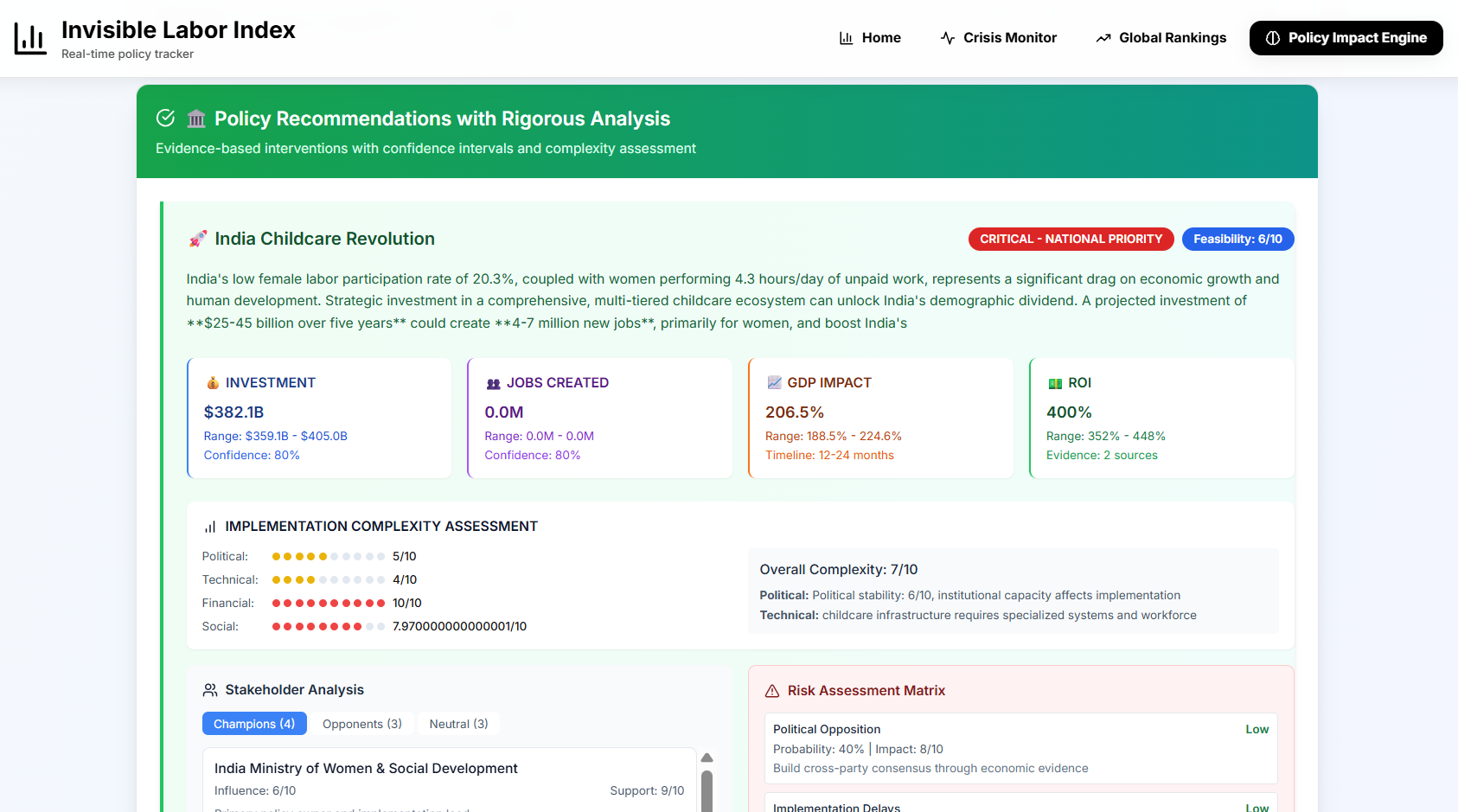
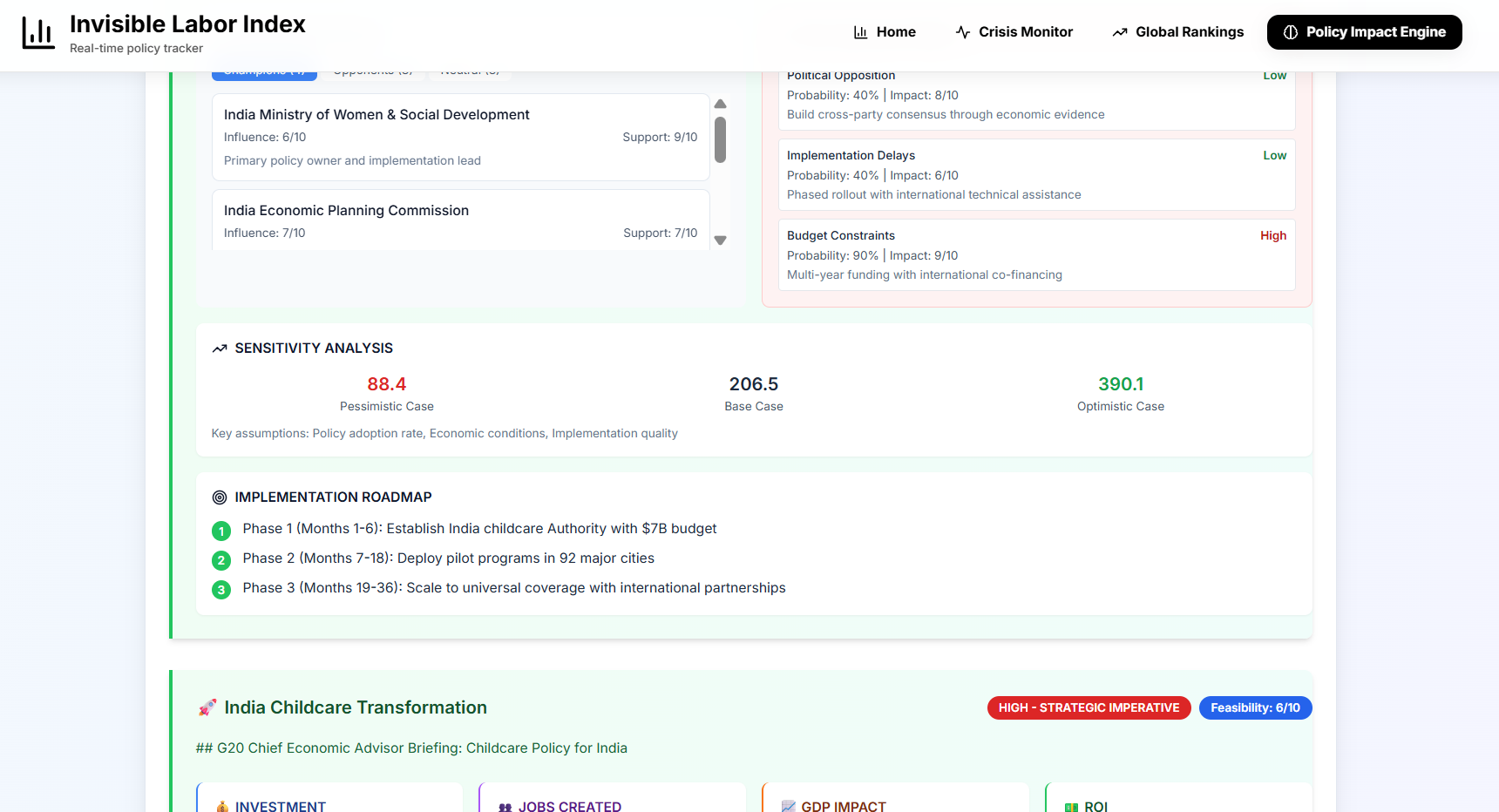
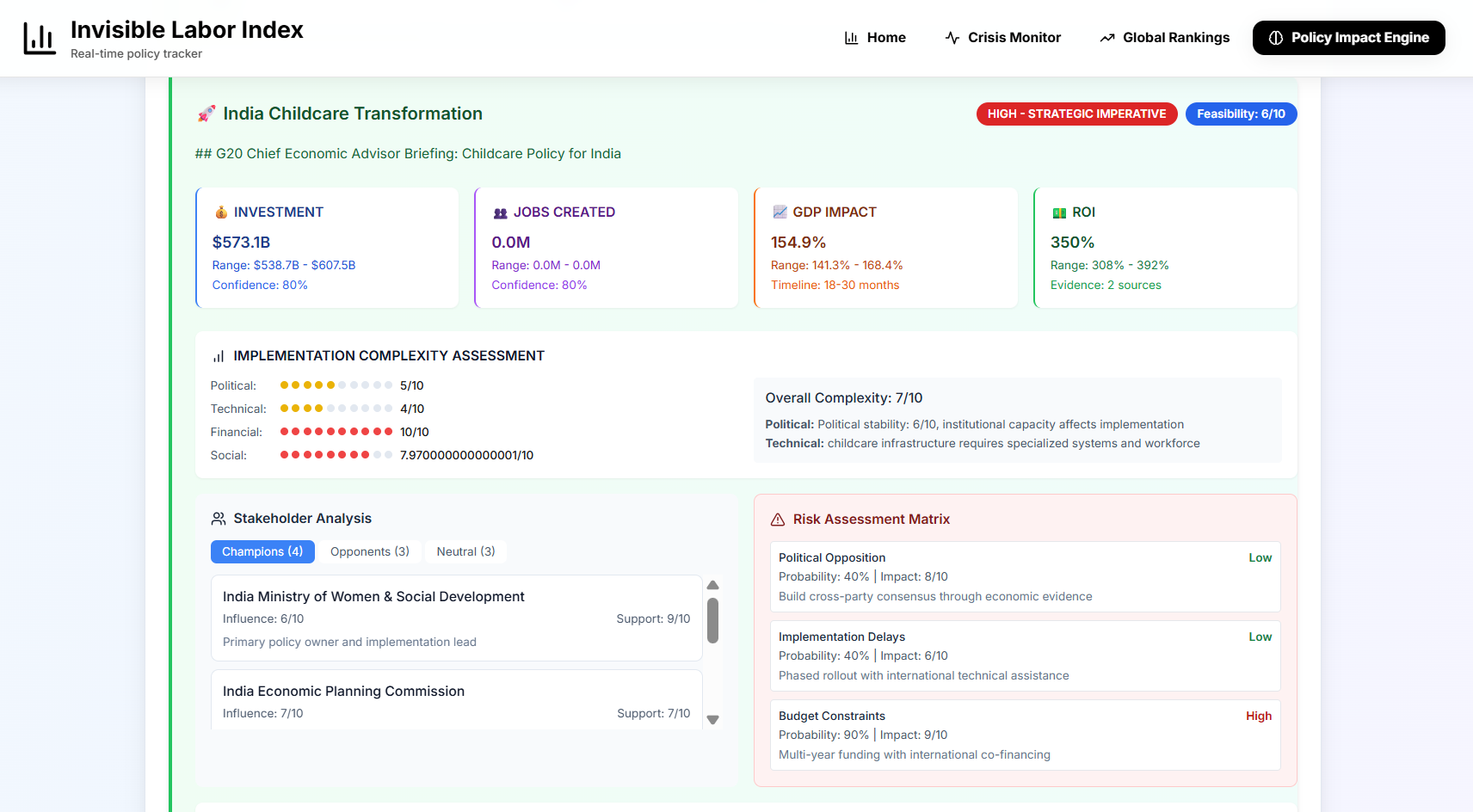
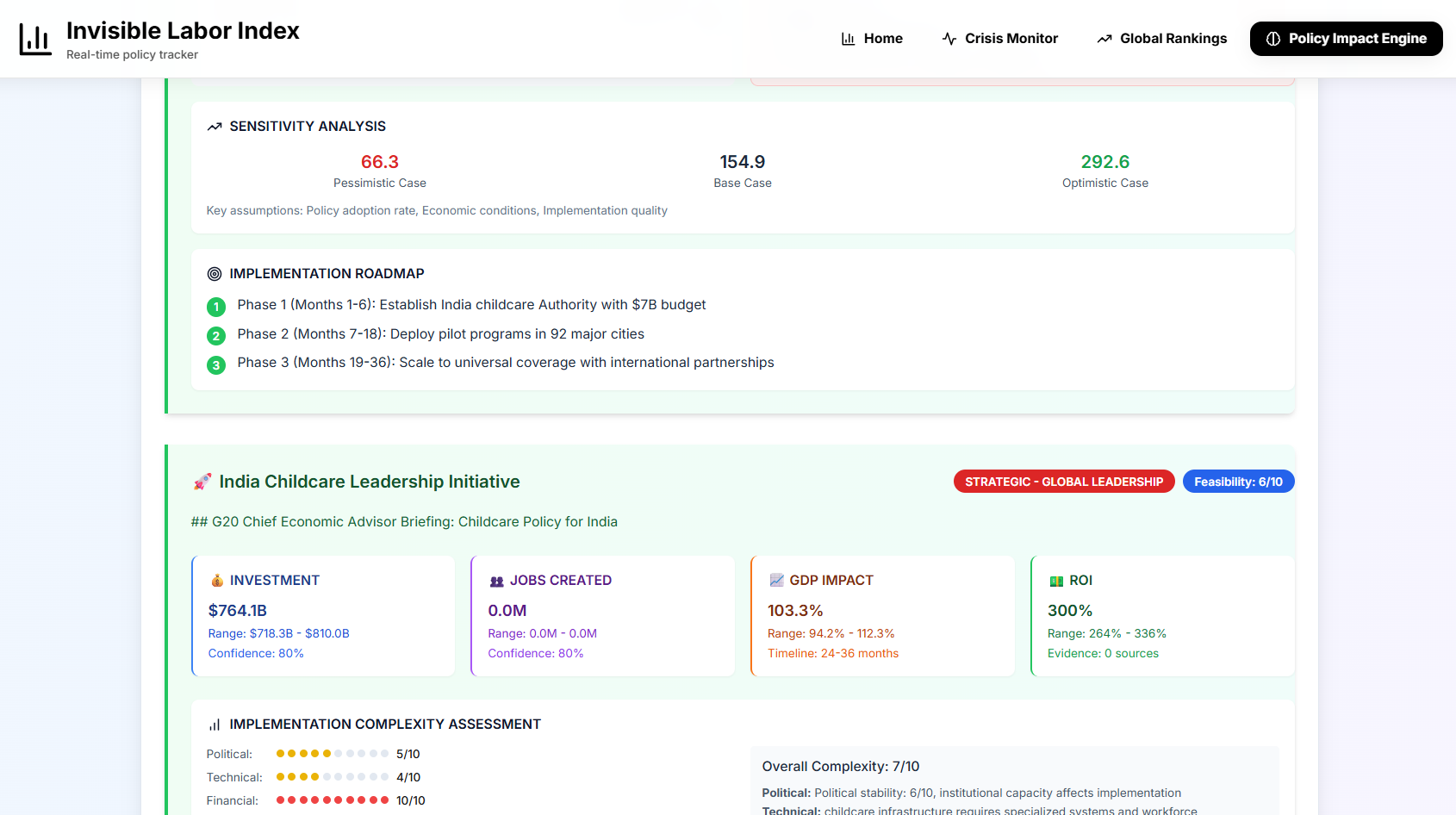
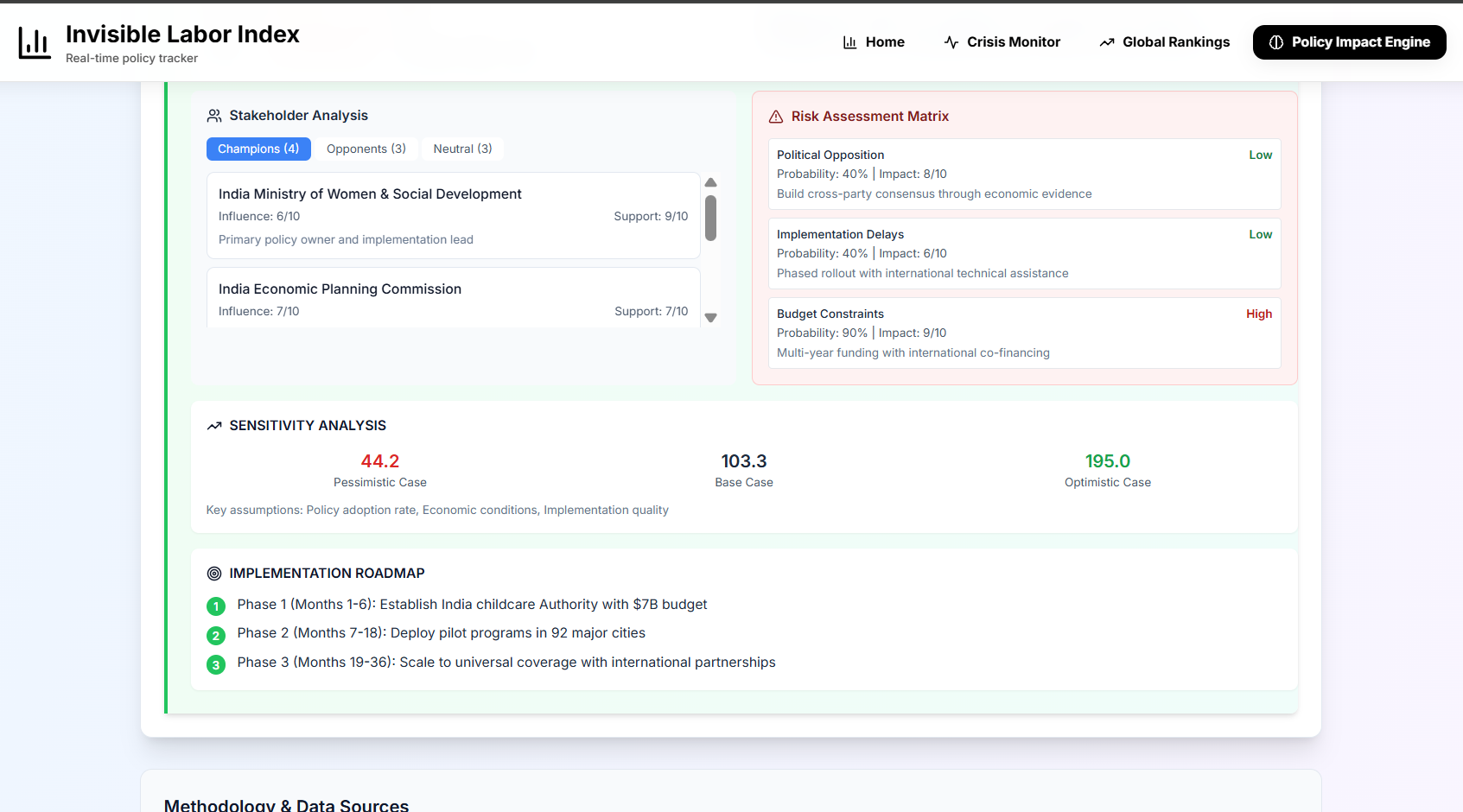
- Policy Simulator: Models economic scenarios showing what happens when governments invest in care infrastructure, like childcare centers that could free women to enter the formal workforce.
- Crisis Monitor: Tracks the $18 trillion invisible economy that keeps societies functioning.
The platform doesn't just show numbers, it validates the experiences of millions of women whose economic contributions have been systematically erased from official records.
How I built it
I architected a modern, scalable solution using React 18 and TS, designed to handle the complexity of economic data across diverse countries like India, where informal care work patterns differ significantly from Western models.
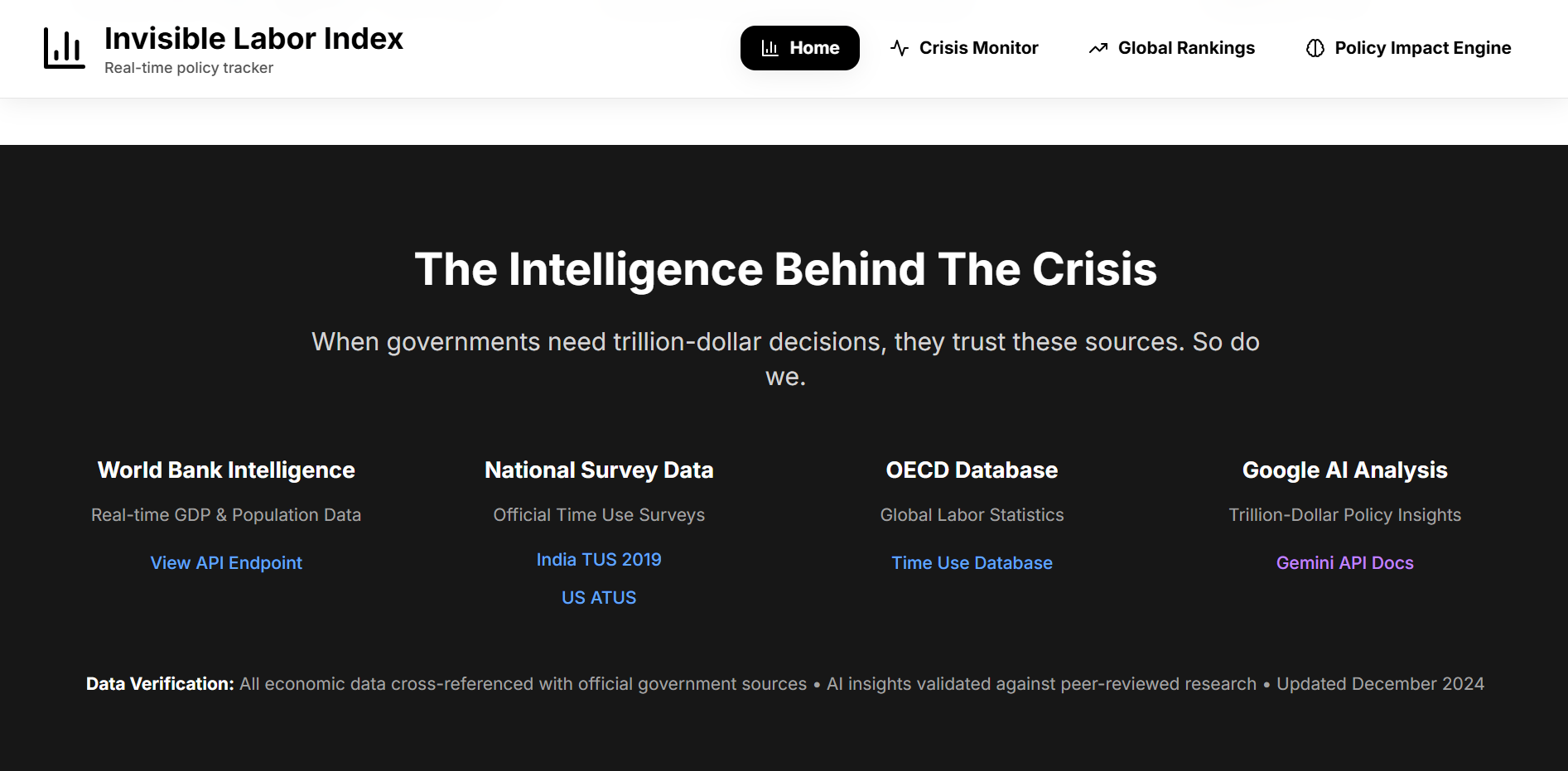
Data Integration: I processed real datasets from World Bank, OECD, and India's National Sample Survey Office, transforming raw time-use surveys into economic valuations using replacement cost methodology that accounts for local wage structures.
Visualization Engine: Built with Recharts for dynamic charts and React Leaflet for interactive mapping, ensuring complex economic data becomes accessible to policymakers from New Delhi to Washington.
Economic Modeling: Implemented sophisticated calculations that convert daily unpaid hrs into annual economic values, showing that my mother's daily 5 hrs( honestly, it's >8 hrs for my mum) of unpaid work represents ₹2.1 lakhs annually in economic value.
Cultural Sensitivity: Designed interfaces that respect different cultural contexts of care work, recognizing that Indian joint family systems create different unpaid labor patterns than nuclear Western families.
Performance Optimization: Leveraged Vite for lightning-fast builds, crucial for users in India and other developing countries with varying internet speeds.
Challenges I ran into
Data Standardization Across Cultures: India's National Time Use Survey measures care work differently than Germany's Federal Statistical Office. I'd to spend weeks harmonizing datasets where "childcare" in Sweden might not include the extended family care responsibilities common in Indian households.
Economic Valuation in Diverse Economies: How do you value care work in countries where domestic workers earn ₹8,000/month versus $3,000/month? I had to develop localized replacement cost models that reflect actual economic conditions rather than imposing Western wage standards.
Representing Invisible Complexity: Initial visualizations failed to capture the reality that women like my mother don't just "do housework" - they're project managers, healthcare coordinators, emotional support systems, financial planners, and honestly the complete package. I redesigned the entire interface to show the multifaceted nature of unpaid care work.
Performance with Global Data: Loading time-use data for 20 countries initially crashed my application. I implemented smart caching and progressive loading to ensure the platform works smoothly whether accessed from Bangalore or Boston.
Cultural Translation: Making economic concepts accessible across diverse cultural contexts, ensuring a policymaker in Mumbai and one in Munich could both understand the implications of invisible labor data.
Accomplishments that I'm proud of
Validating Millions of Women's Experiences: I created the first ever platform that transforms personal stories like my mother's into economic evidence that policymakers can't dismiss as "just housework."
Revealing Hidden Economic Powerhouses: These calculations show that in India, women's unpaid labor ($3.1 trillion) exceeds the entire agricultural sector's contribution to GDP, data that could revolutionize how we think about women's economic roles.
Technical Excellence with Purpose: Built a production-ready application that handles complex international datasets while remaining intuitive enough for activists and policymakers to use effectively.
Global Representation: Successfully integrated data from 20 diverse economies, proving that from Tokyo to São Paulo, women's invisible labor follows similar patterns of undervaluation.
Bridging Personal and Political: Connected intimate family experiences to macro-economic policy, showing how individual stories like mine scale to national economic blind spots.
Accessibility Across Contexts: Ensured the platform works for users regardless of their technical background, internet speed, or cultural context, because economic justice data should be universally accessible.
What I learned
Personal Stories Drive Policy Change: Raw statistics about unpaid work hours don't move people. But showing that my mother's daily labor could equal a software engineer's salary? That changes conversations in boardrooms and parliament halls.
Data Reveals Universal Truths: Despite cultural differences, the pattern is consistent globally, women everywhere perform 2-5 times more unpaid care work than men, representing massive economic contributions that remain invisible.
Technology Can Amplify Voices: Building tools that transform individual experiences into collective evidence gives marginalized communities the data they need to demand recognition and policy change.
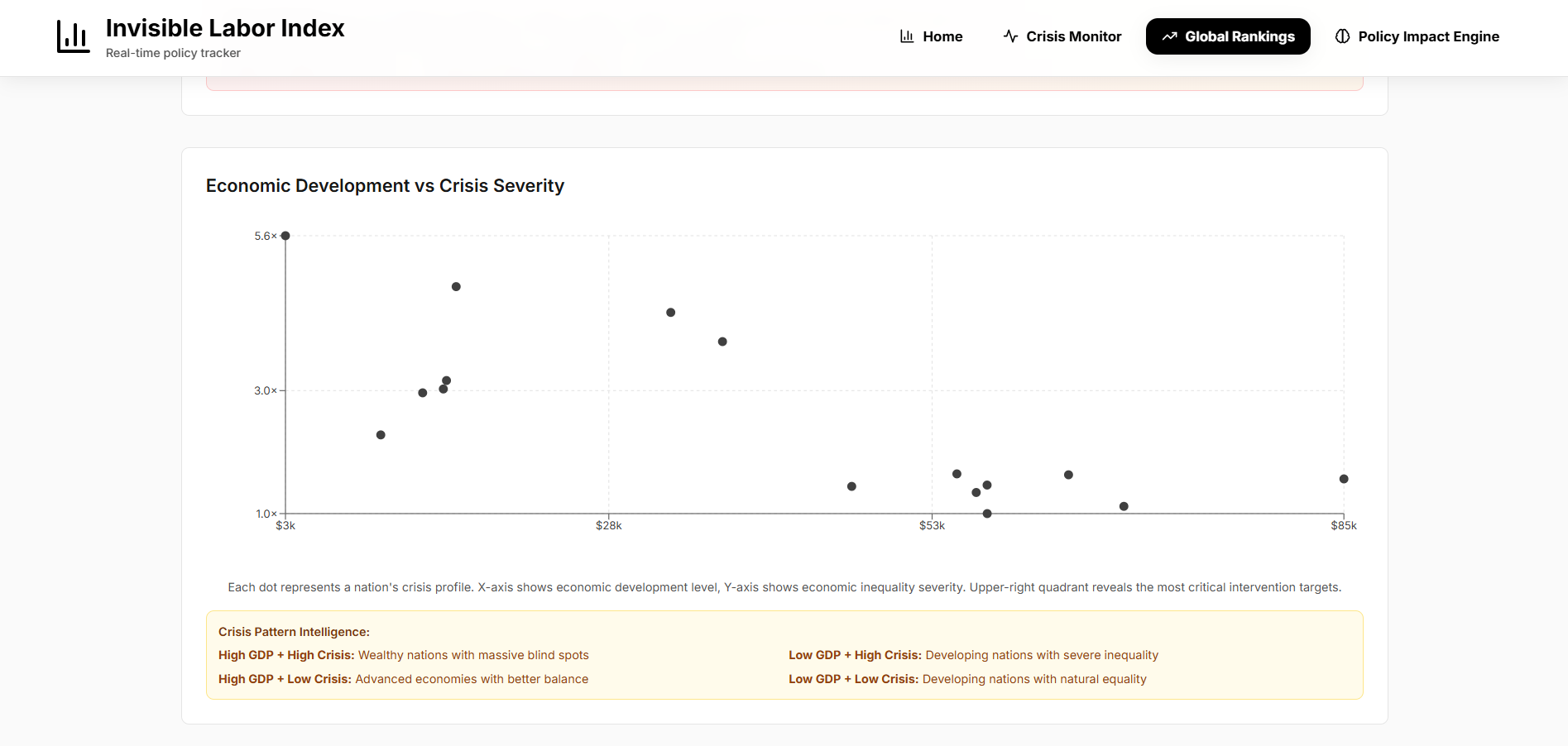
Representation Matters in Data: Including countries like India, Brazil, and South Africa revealed patterns that Western-centric economic models miss, showing that invisible labor issues are even more acute in developing economies.
What's next for Invisible Labor Index
Expanded Developing Country Coverage: Scale to include more countries where unpaid care work represents even larger portions of economic activity, places where women like my mother are the majority, not the exception.
Mobile-First Advocacy: Create simplified mobile interfaces that women's rights organizations across India can use during policy discussions, turning smartphones into tools for economic recognition.
Corporate Responsibility Integration: Develop frameworks that help Indian companies understand how their employees' unpaid care responsibilities affect productivity and retention, making the business case for family-friendly policies.
Educational Transformation: Partner with Indian universities to integrate invisible labor economics into standard curricula, training the next generation of economists to see what's been hidden.
Real-Time Policy Impact: Build systems that track when governments actually implement policies based on our data, ensuring that platforms like mine translate into real change for women like my mother.
The ultimate goal isn't just better data, it's a world where every mother's daily 5 AM wake-up call to prepare breakfast is recognized as the economic contribution it truly is, where "homemaker" becomes synonymous with "economic powerhouse," and where my mother's lifetime of invisible labor finally becomes visible in the policies that govern our lives.
Built With
- axios
- gemini-api
- leaflet.js
- netlify
- node.js
- npm
- oecd-api
- react
- react-leaflet
- recharts
- tailwind-css
- typescript
- vite
- world-bank-api


Log in or sign up for Devpost to join the conversation.