-
-
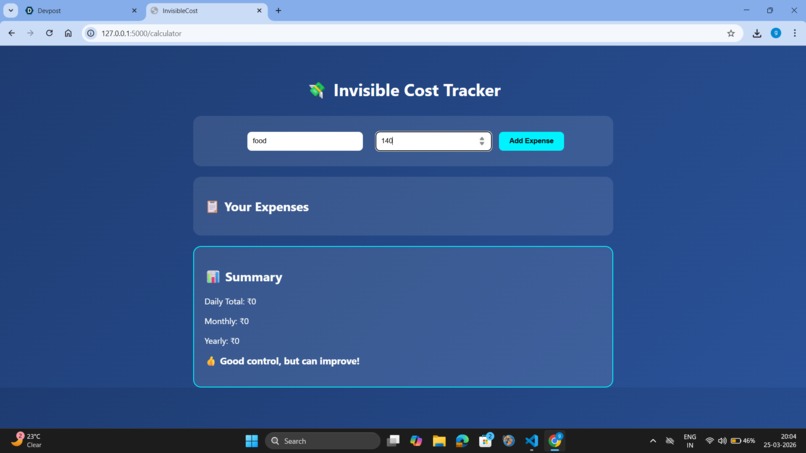
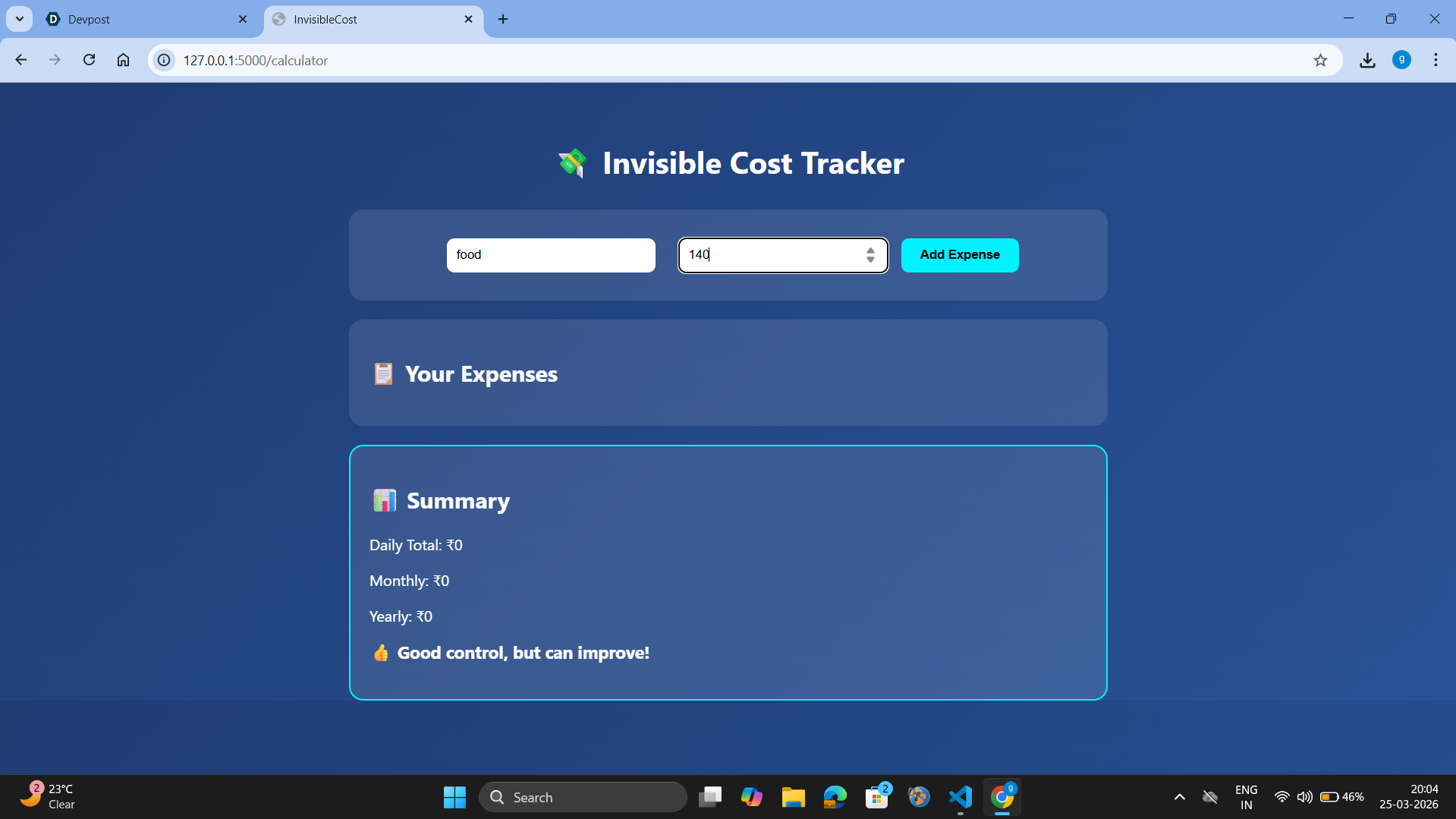
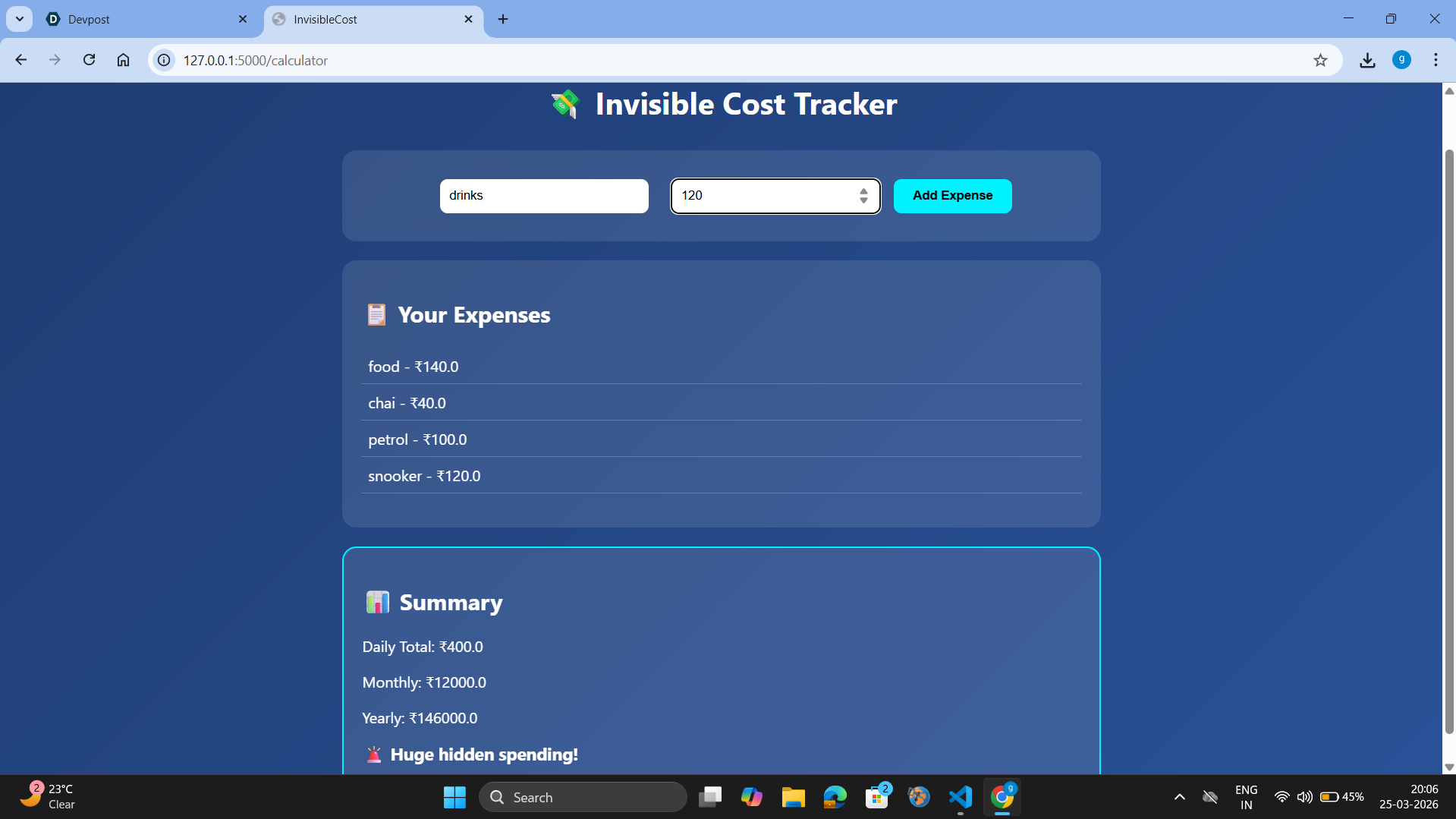
input
-
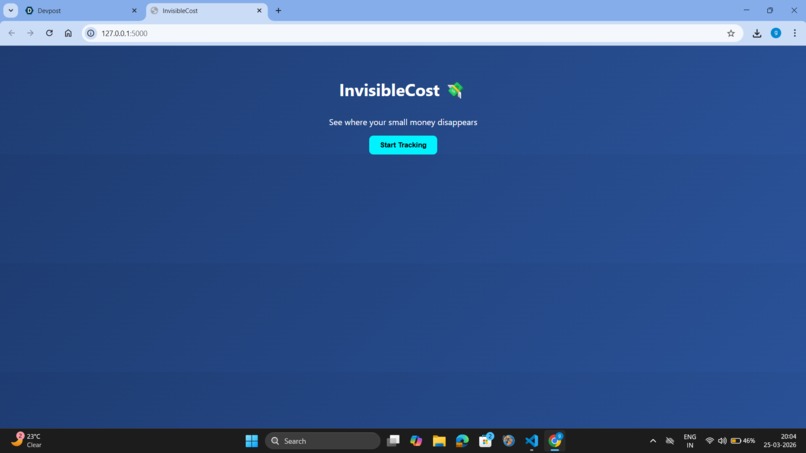
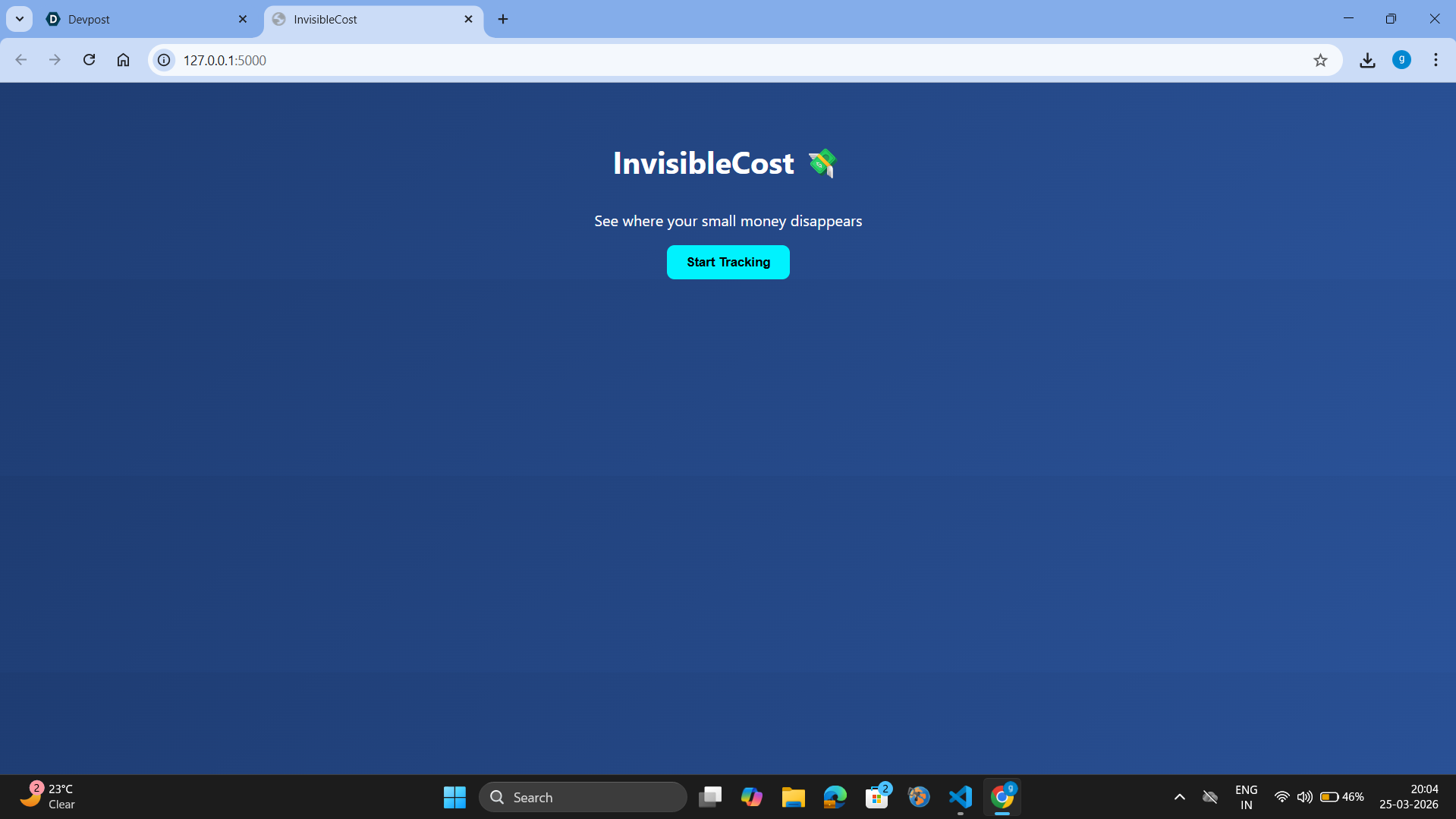
home page
-
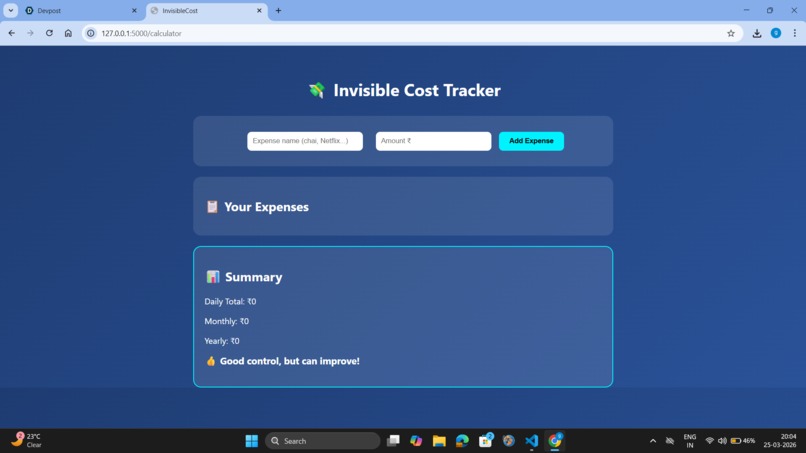
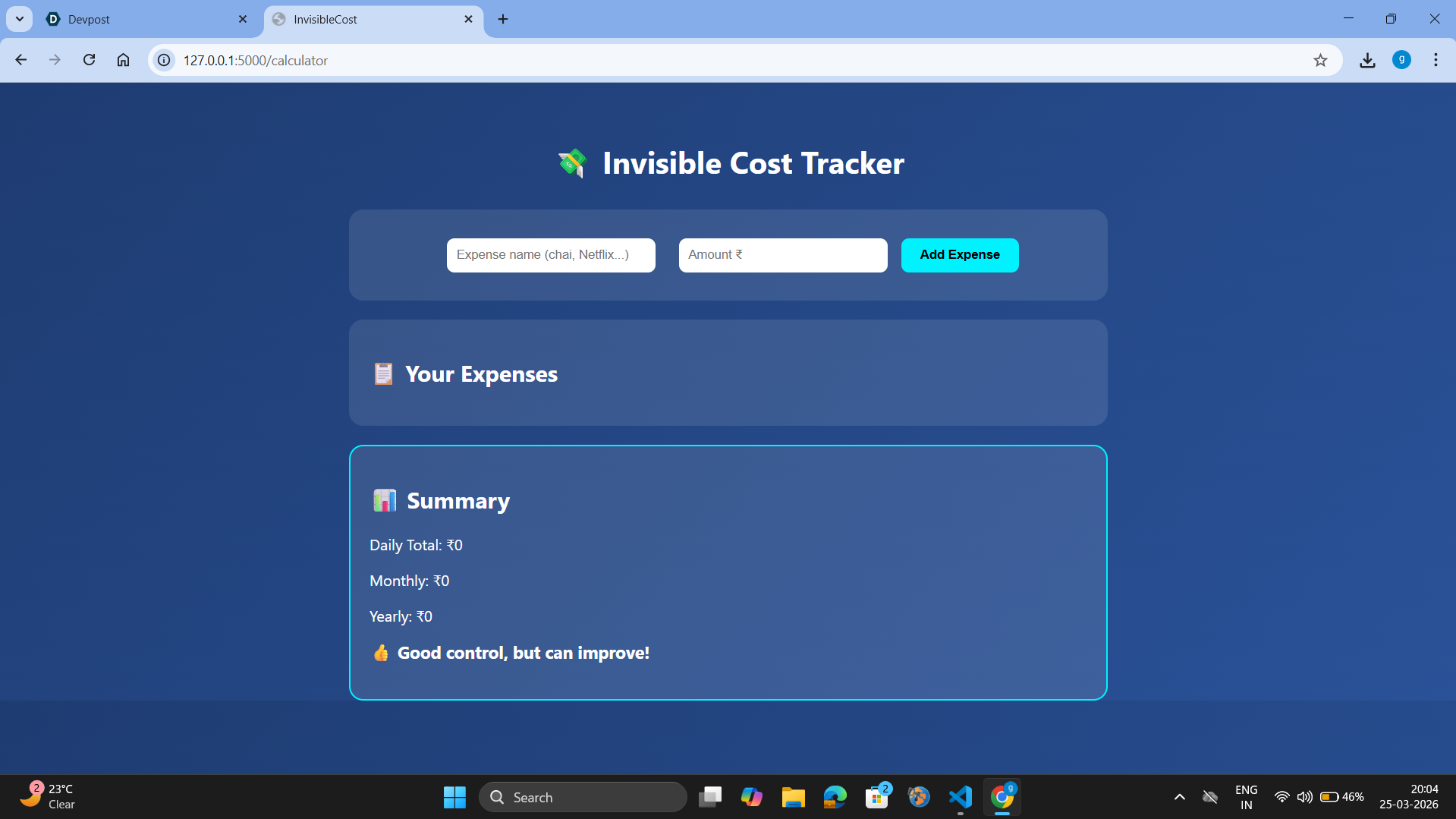
after start tracking
-
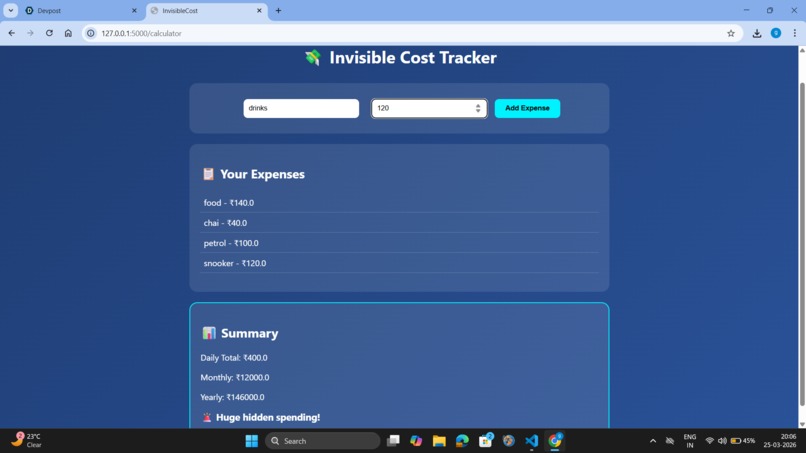
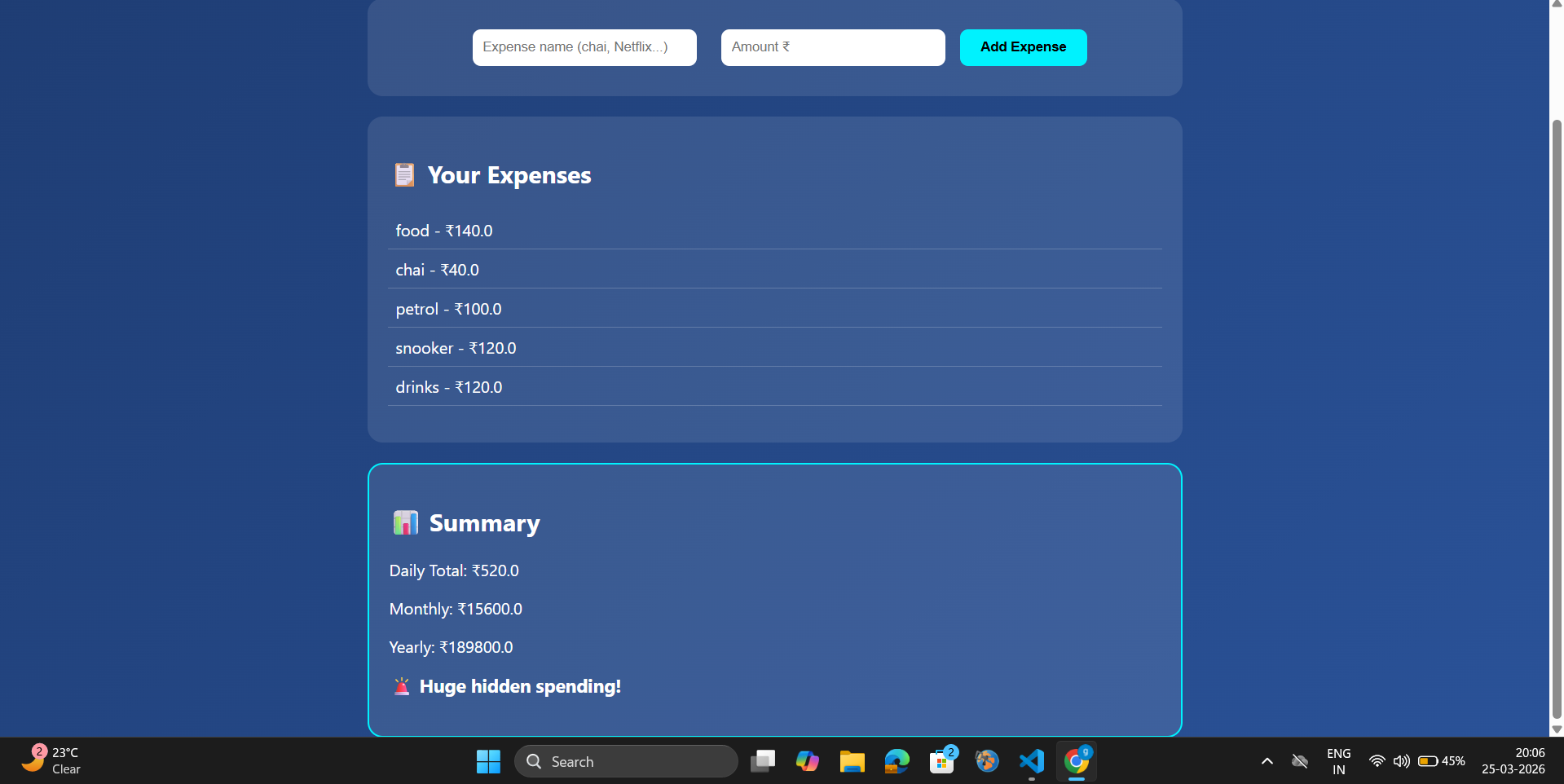
tracking total expenses
-
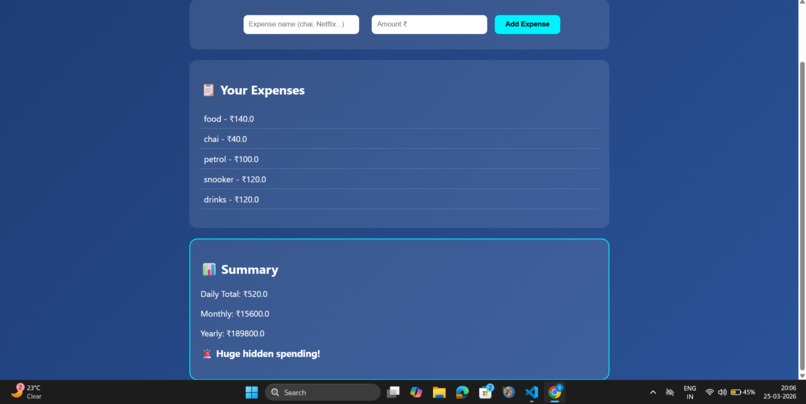
summary of total invisble expense
Invisible Cost Tracker Inspiration
As a college student, I developed this project to address a real-world problem faced by people of all ages—students, professionals, and business individuals alike.
Every day, we spend money on various things, but most of us don’t track how much we spend or whether those expenses are necessary. Over time, these unnoticed expenses accumulate and significantly affect our savings. This inspired me to build a solution that makes these “invisible costs” visible.
What It Does
Invisible Cost Tracker helps users monitor their daily expenses and understand their spending habits. It analyzes expenses on a monthly and yearly basis, giving users a clear picture of where their money goes.
The app also highlights unnecessary expenses and shows potential savings, enabling users to make smarter financial decisions.
How We Built It
I built Invisible Cost using HTML and CSS for a modern, interactive frontend and Python (Flask) for backend logic.
The application takes daily expenses as input, stores them, and performs calculations to determine total spending.
The core logic is based on simple calculations:
Monthly Expense = Daily Expense × 30 Yearly Expense=Daily Expense×365
The results are then dynamically displayed using Flask templates, along with smart insights that show how small expenses grow over time.
Challenges We Ran Into
I faced several challenges while building this project. The main issue was installing and setting up Flask, as without it the backend logic could not be implemented.
Once Flask was properly configured, the development process became smoother. After that, most of the effort went into designing a clean and interactive frontend using HTML and CSS.
Accomplishments That We're Proud Of
I am proud of successfully completing this project. Despite facing challenges, I overcame them with patience and consistent effort.
Solving these problems boosted my confidence and gave me a sense of achievement, motivating me to move forward and build more advanced projects.
What We Learned
Through this project, I learned how to build a complete web application by integrating frontend and backend technologies.
I gained practical experience in:
Using Flask for backend development Handling user input and data processing Performing real-time calculations Designing interactive and modern user interfaces
It also improved my problem-solving skills and helped me understand how to build solutions for real-world financial awareness.
What's Next for Invisible Cost Tracker
The next step is to enhance the application by adding more advanced features such as:
Data storage using a database Graphical insights using charts Edit and delete expense options Mobile-responsive design User authentication for personalized tracking
The ultimate goal is to transform Invisible Cost into a complete personal finance assistant that helps users build better financial habits.
Code Example
daily = 50 monthly = daily * 30 yearly = daily * 365
print("Monthly:", monthly) print("Yearly:", yearly)

Log in or sign up for Devpost to join the conversation.