-
-
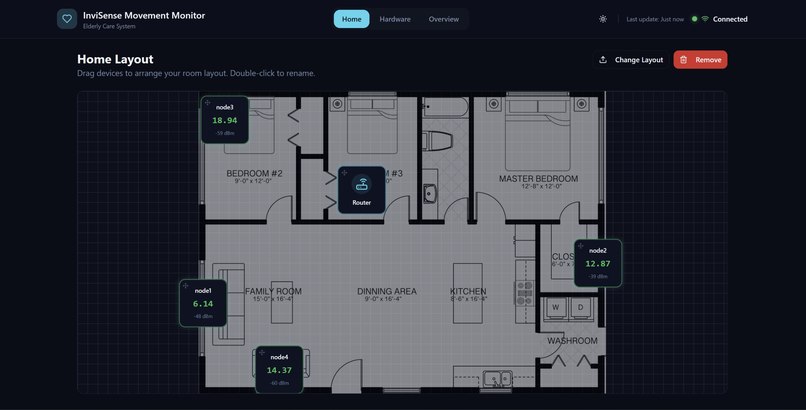
Home Page
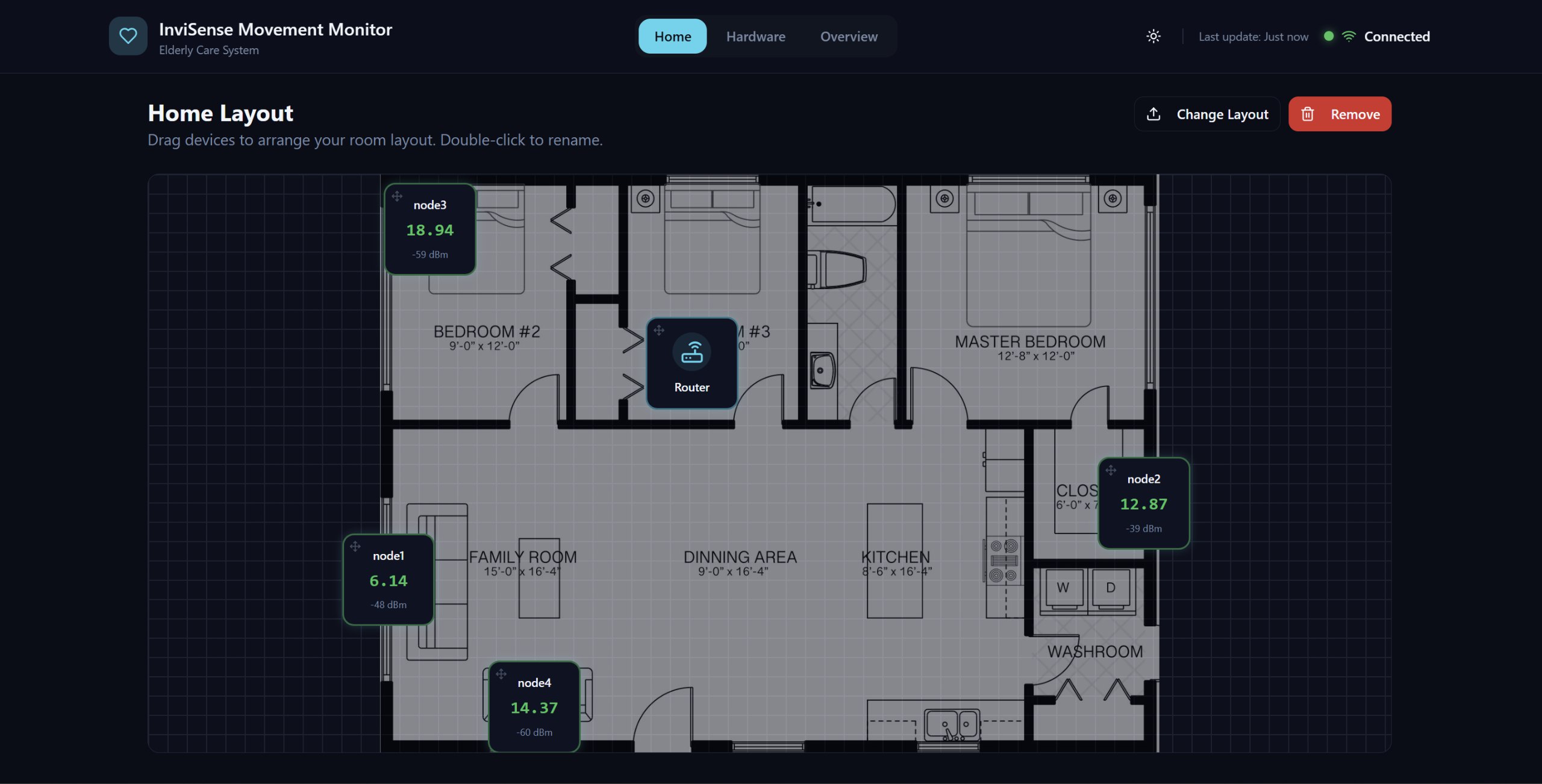
Inspiration
Many elderly live alone, and the usual ways to check on them either feel intrusive (cameras), unreliable (panic buttons), or annoying to maintain (wearables). We wanted something that gives families peace of mind without watching or recording anyone. Also, it’s Hack&Roll, so we added a fun twist: we turned the lanyard into a sensor too.
What it does
InviSense turns home Wi Fi into a motion sensor. ESP32 devices “listen” to Wi Fi CSI changes and convert them into a movement score. The dashboard shows:
Live activity spikes (movement vs idle)
Per sensor thresholds you can tune
A floor plan view with draggable sensor placement and live metrics The goal is to support inactivity detection for elderly living alone, and alert family if activity stops for an unusual period.
How we built it
ESP32 firmware (based on ESPectre CSI motion detection algorithms) to collect CSI and output movement metrics
Raspberry Pi backend (Python + FastAPI) to aggregate and stream sensor data
MQTT + WebSockets for low latency real time updates
React dashboard (TypeScript + Vite + Tailwind) for the live charts, threshold controls, and floor plan mapping
Challenges we ran into
Signal noise and environment differences: Wi Fi behaves differently depending on room layout, distance, and interference.
Getting stable “baseline” readings: movement detection is only good if the initial calibration is clean.
Real time streaming: keeping the dashboard responsive with multiple sensors updating frequently.
Making it understandable: translating “weird signal data” into UI that a caregiver can actually use.
Accomplishments that we're proud of
Built an end to end system: ESP32 → Pi backend → real time dashboard
Achieved sub second live updates of movement score and sensor status
Designed a UI that’s actually usable: threshold settings + overview + floor plan
Kept it privacy first by design: no cameras, no audio, no wearables
Bonus Hack&Roll energy: lanyard as a sensor
What we learned
CSI based sensing is powerful, but calibration and placement matter a lot
Real time systems are mostly about handling edge cases and stability
What's next for InviSense
Ship the notification system end to end so caregivers reliably get alerted (Telegram/WhatsApp/email) when inactivity is detected.
Test in real homes across different room sizes, layouts, and router placements to validate reliability and reduce false alarms.
Make alerts meaningful across different sensor sensitivities by adding auto scaling / normalisation: if a sensor’s movement score naturally peaks at 30%, we rescale that 0–30% range to 0–100% so the alert threshold slider stays consistent and intuitive.
Improve robustness with better calibration routines and multi sensor coverage for fewer dead zones.
Built With
- esp32
- espectre
- fastapi
- mqtt
- python
- raspberrypi
- tailwind
- typescript
- vite
- websockets

Log in or sign up for Devpost to join the conversation.