Inspiration
My name is Venkat Arikravula. After spending nearly 30 years in financial services, including more than 16 years at Citigroup, I semi-retired and took some time to reflect on what I wanted to do next. While I enjoyed managing my own investments and trading, I knew I wanted to build something meaningful that combined my business experience with a new challenge.
That opportunity came unexpectedly when a friend who owns a warehouse distribution business asked me to help improve his warehouse operations. As I worked alongside the business, I realized the ERP system they were using was far more complicated than what they actually needed. The problem wasn't that the software lacked features—it had too many. It required businesses to adapt to the software rather than the software adapting to the business.
That experience stayed with me. I began asking myself a simple question:
Could a focused, modern ERP platform deliver the operational control businesses need without the complexity of traditional enterprise systems?
Around the same time, I had been using ChatGPT extensively for investment research and trading, but I had never used Codex. I decided to challenge myself to see whether AI could help transform that idea into a real enterprise product.
What started as an experiment quickly became much more. Through many months of learning, iteration, and refinement with ChatGPT and Codex, that initial idea evolved into Inventra—a cloud-based ERP platform built specifically for inventory-driven businesses.
What it does
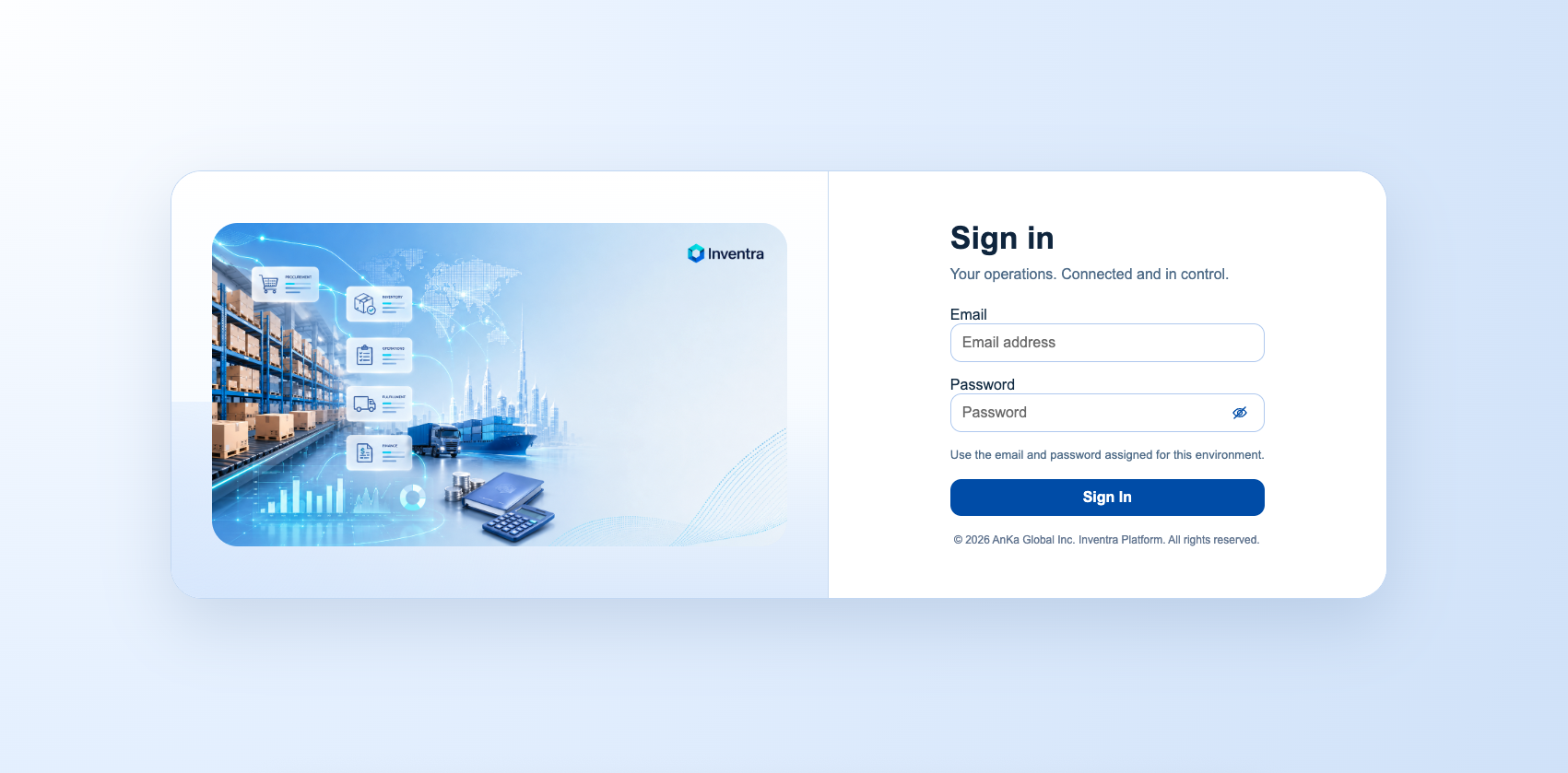
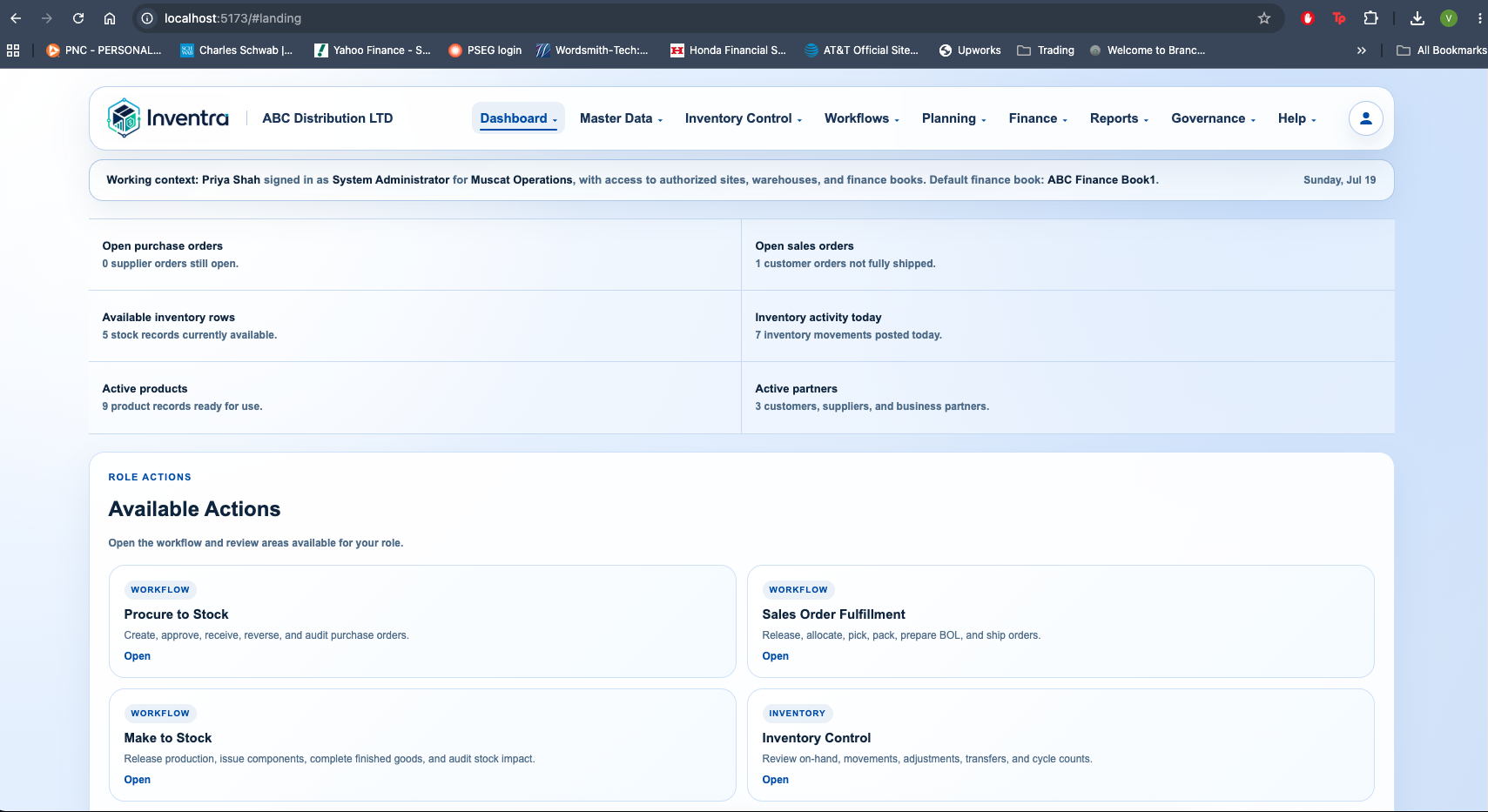
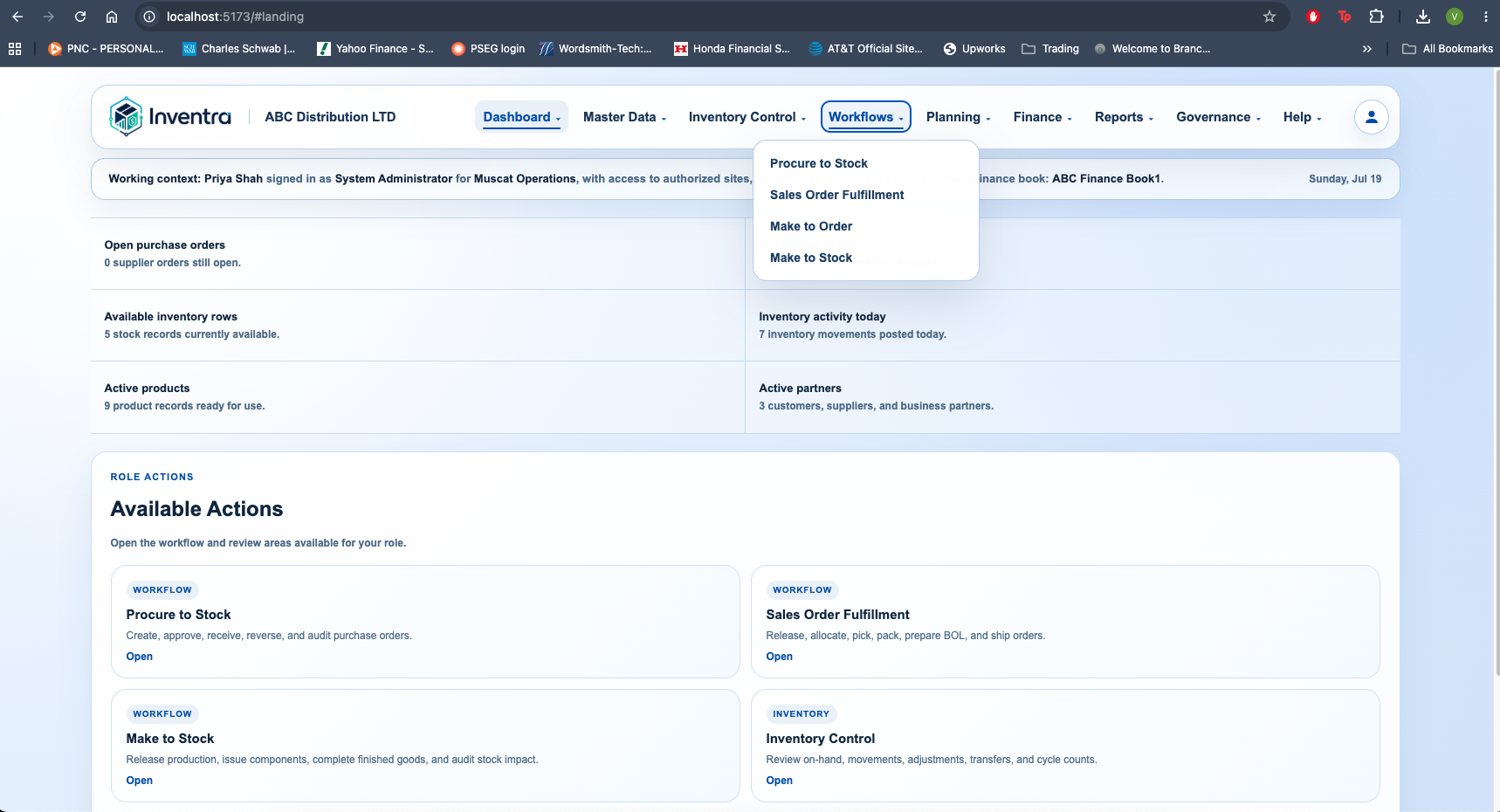
Inventra is a cloud-based ERP platform designed for inventory-driven businesses.
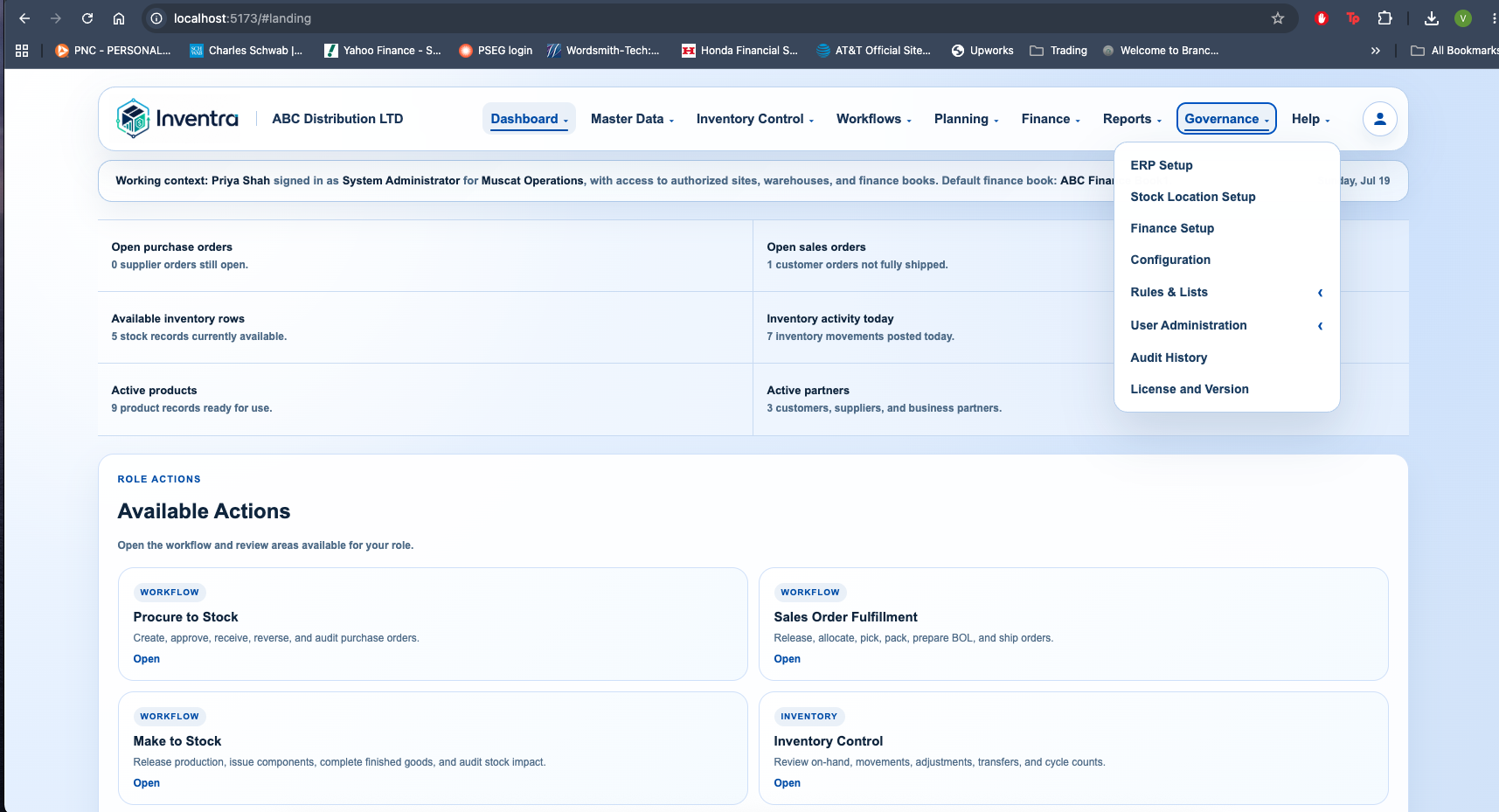
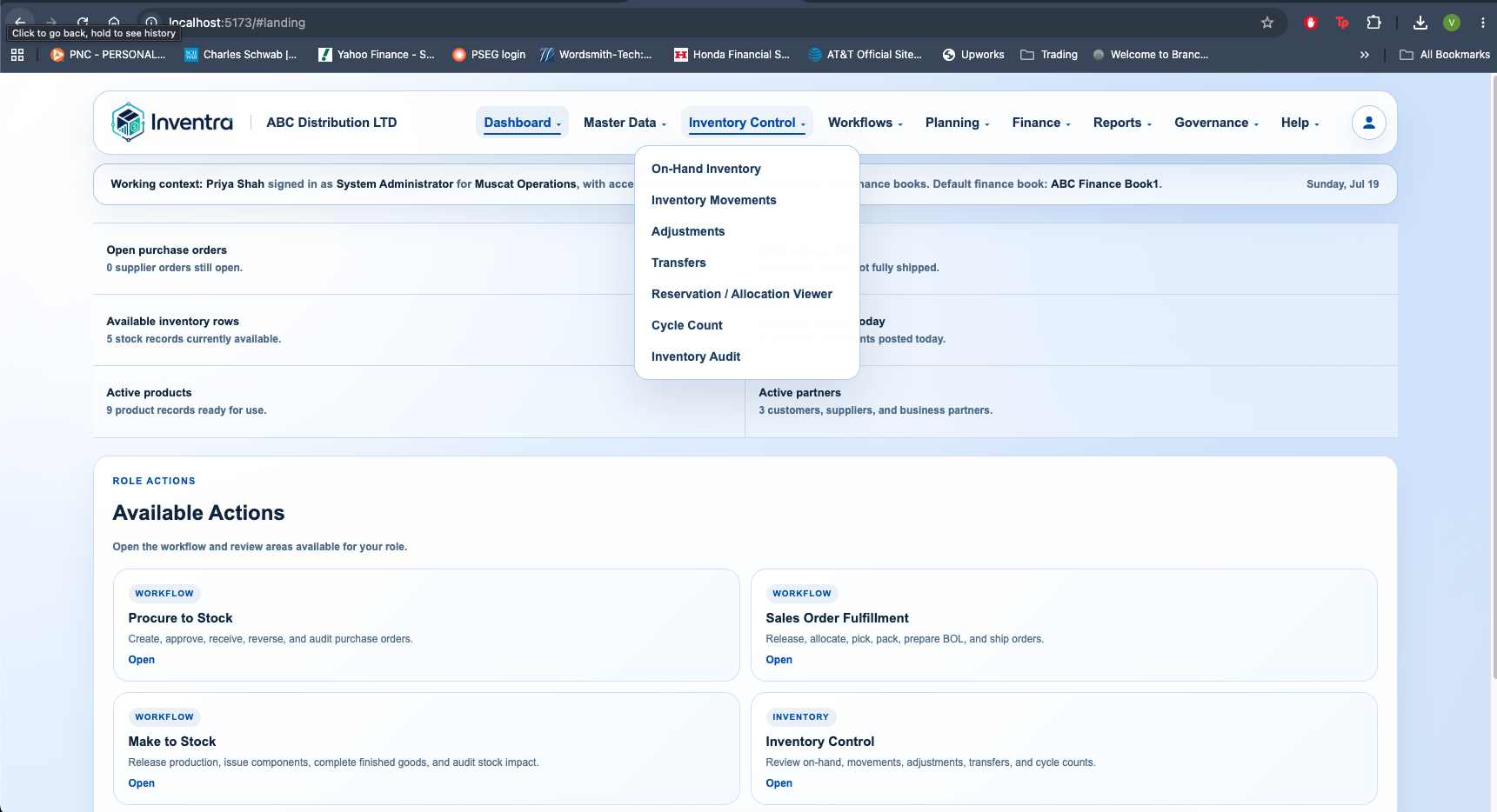
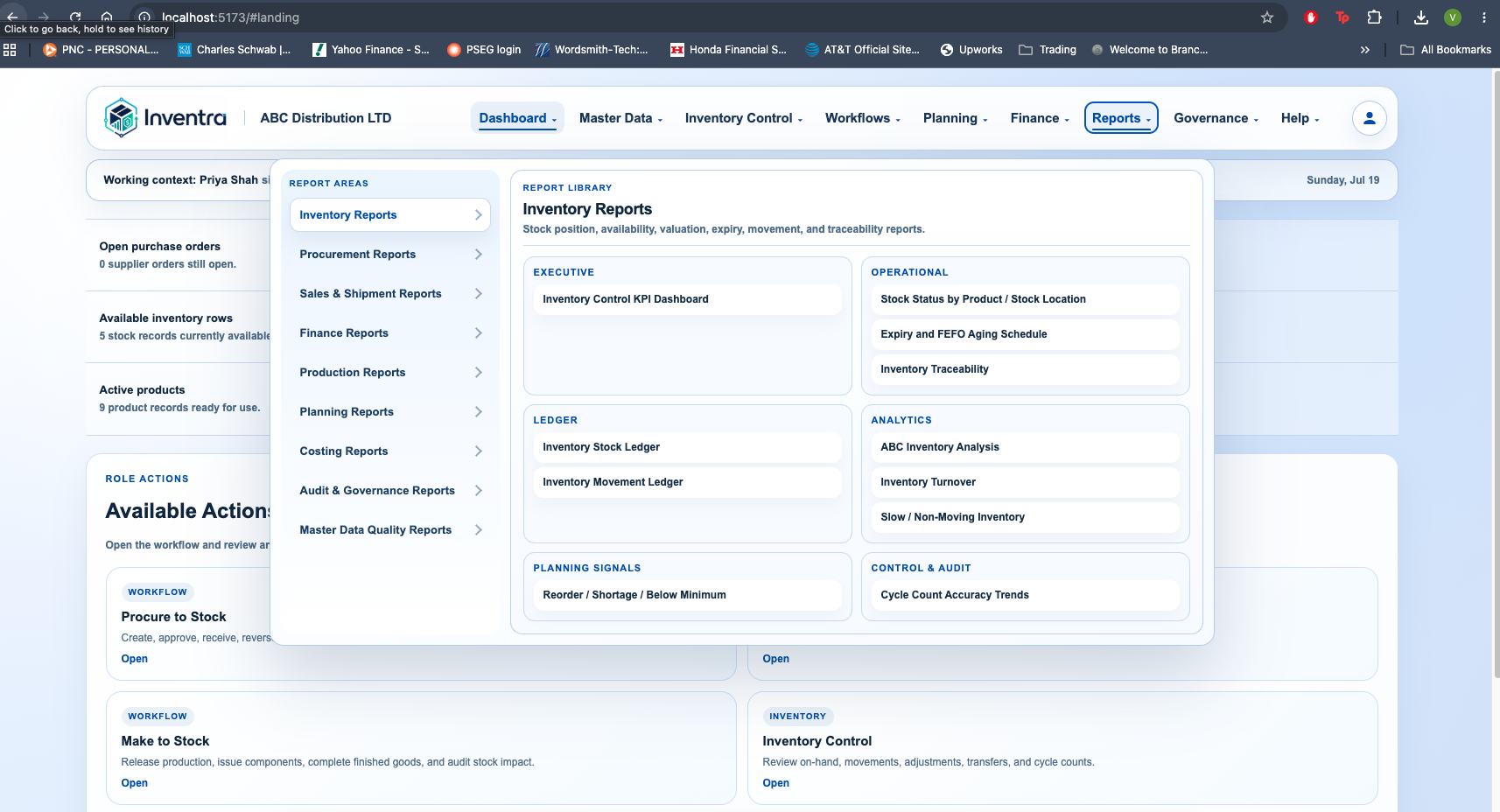
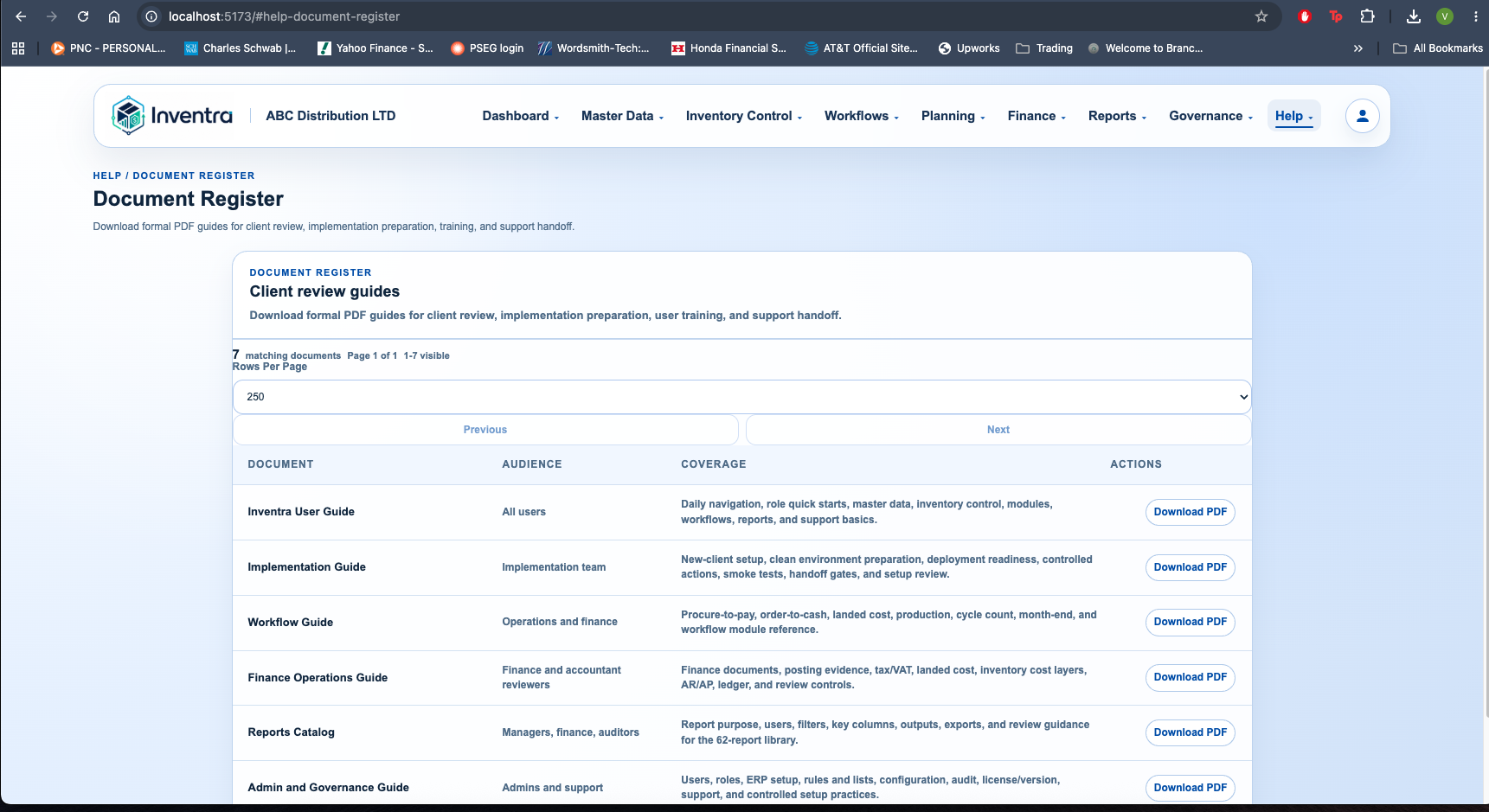
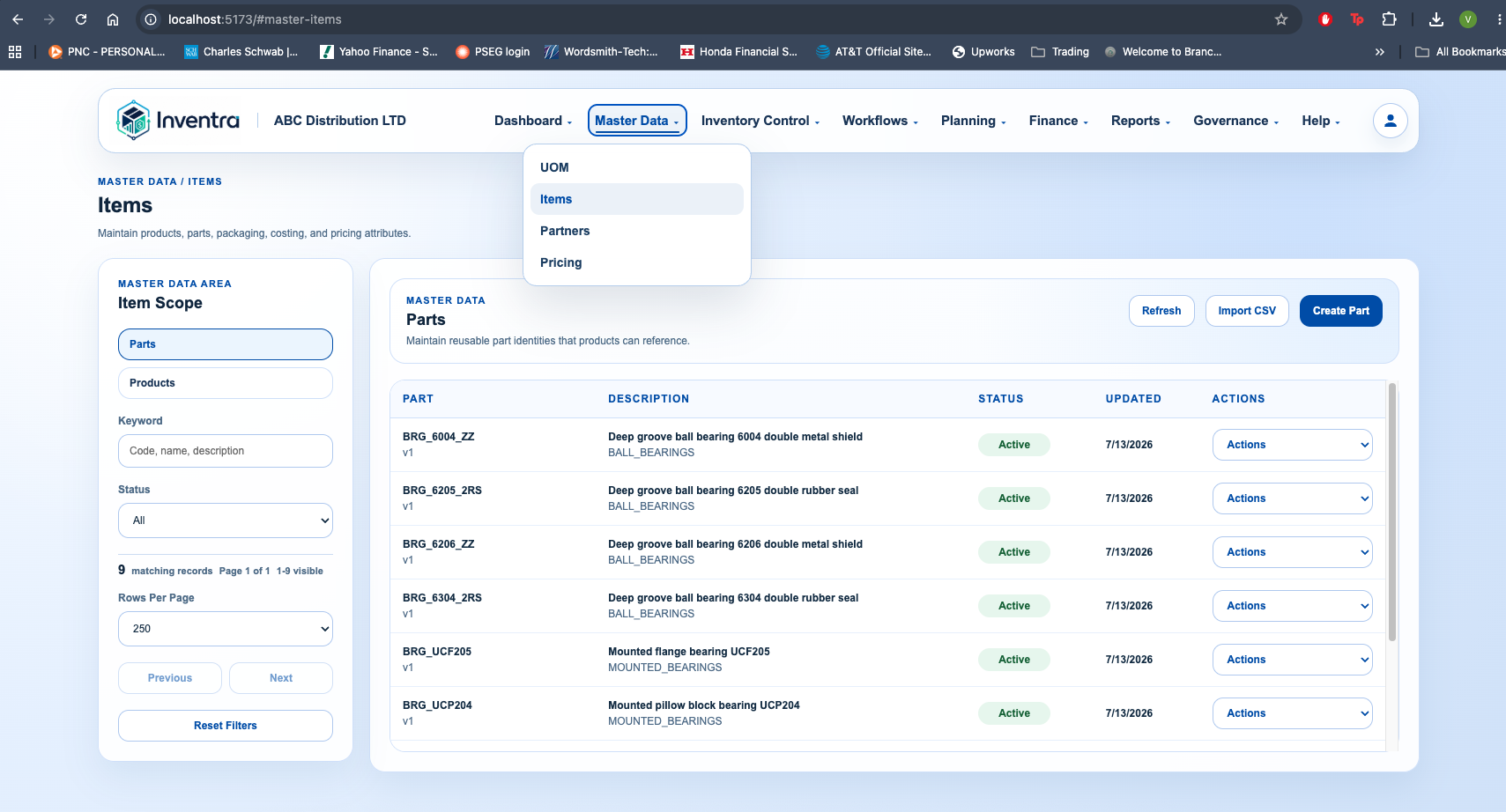
It brings together inventory management, purchasing, sales, fulfillment, production, finance, accounts payable, accounts receivable, and management reporting into a single governed platform.
The goal is simple: help businesses gain better operational control and financial visibility through a practical ERP solution that is easier to adopt and operate than many traditional enterprise systems.
How we built it
I approached Inventra as a structured software engineering project.
ChatGPT became my research and design partner. I used it to explore ERP concepts, accounting workflows, product architecture, user experience, and implementation strategies. Once I had a clear understanding of the business requirements, I translated them into detailed implementation instructions for Codex.
Codex generated the application code while I remained responsible for defining the business rules, reviewing every implementation, testing the workflows, and refining the product until it behaved as intended.
The development process became an iterative cycle:
Research with ChatGPT Define business requirements Implement with Codex Test the implementation Review the results Refine and improve
This cycle repeated over several months as Inventra evolved from an idea into a working beta-stage enterprise platform.
Challenges we ran into
The biggest challenge wasn't writing code—it was learning how to communicate effectively with AI.
I discovered that even small ambiguities in my instructions could lead Codex to interpret requirements differently than I intended. Sometimes it would successfully implement most of a feature while missing an important business rule or workflow.
That experience taught me to write much more precise requirements, break larger problems into smaller tasks, define clear acceptance criteria, and verify every implementation rather than assuming it was complete.
The project reinforced an important lesson: AI is incredibly capable, but achieving reliable results still requires clear direction, disciplined review, and human accountability.
Accomplishments that we're proud of
The accomplishment I'm most proud of is turning an idea that emerged during a warehouse consulting engagement into a working enterprise platform.
Coming from a financial services background rather than software engineering, I never imagined I would build an ERP system. ChatGPT and Codex made that journey possible by allowing me to translate business knowledge into working software.
Today, Inventra is a beta-stage product preparing for its first customer deployments. Watching a real enterprise platform grow from an initial idea has been one of the most rewarding experiences of my professional career.
What we learned
This project fundamentally changed the way I think about AI.
I learned that AI doesn't replace experience—it amplifies it.
The more clearly I defined business problems, requirements, and expected outcomes, the better the implementation became. I also learned that successful AI-assisted development still depends on human judgment, validation, testing, and continuous refinement.
Inventra is the result of combining decades of business experience with the capabilities of ChatGPT and Codex.
What's next for Inventra
The next step is taking Inventra from beta into production.
My focus now is on introducing the platform to early customers, learning from real-world deployments, and continuing to improve usability, scalability, and reliability based on customer feedback.
My long-term goal is to make Inventra a practical and affordable ERP platform for small and medium-sized inventory-driven businesses. Just as importantly, I hope it demonstrates that experienced professionals, even without traditional software engineering backgrounds, can use AI to transform practical business ideas into products that solve real-world problems.
Final Thoughts
Inventra is more than the ERP platform I set out to build—it represents a new chapter in my career and my belief that AI can empower domain experts to create software that was once possible only with large engineering teams.
I hope this project inspires other professionals to realize that deep domain expertise, combined with AI, can open doors that previously seemed out of reach.
Built With
- codex

Log in or sign up for Devpost to join the conversation.