-
-
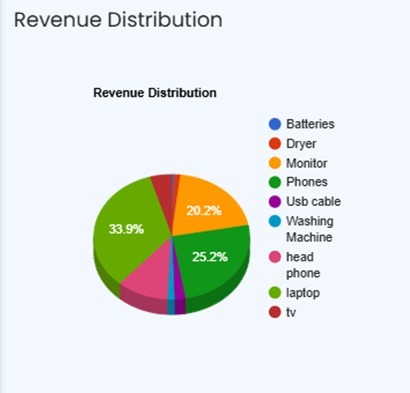
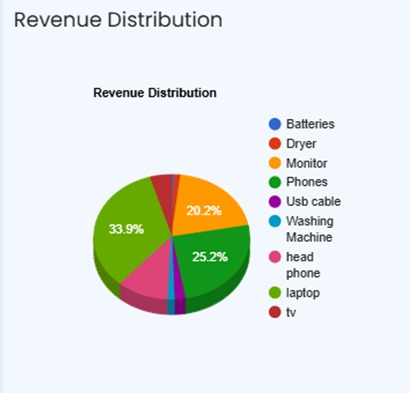
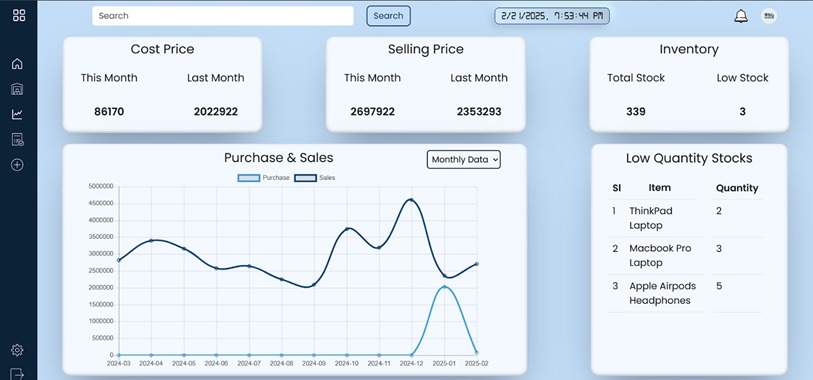
revenue distribution
-
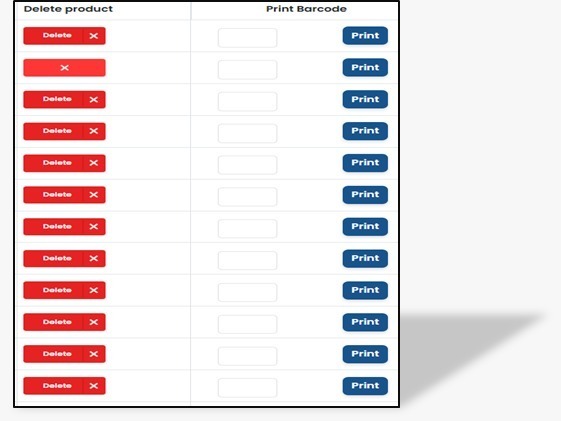
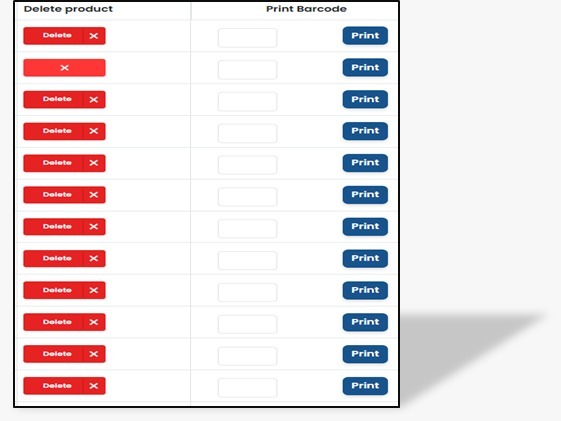
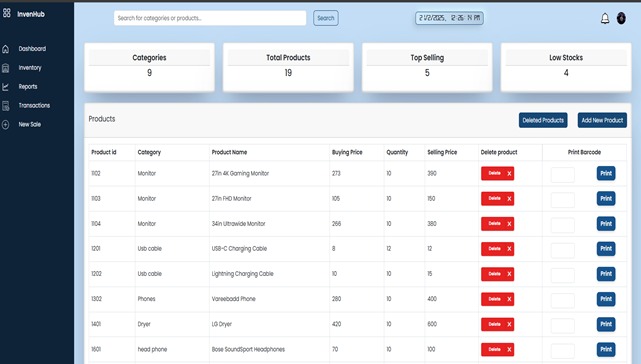
products
-
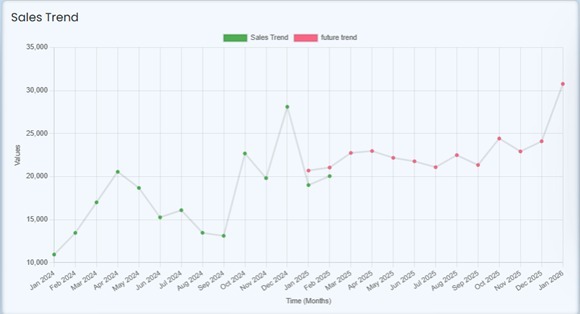
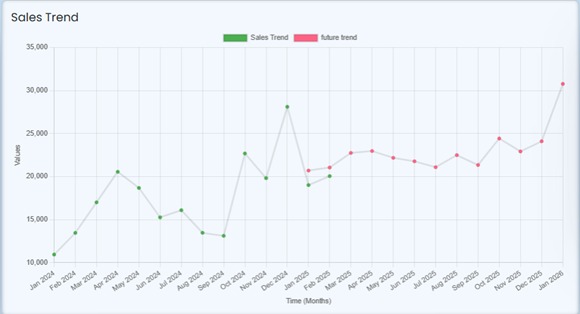
prediction graph
-
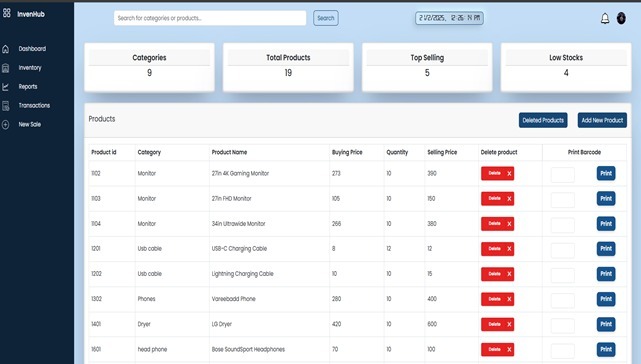
add products
-
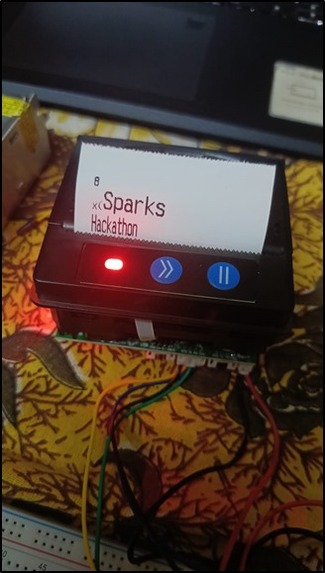
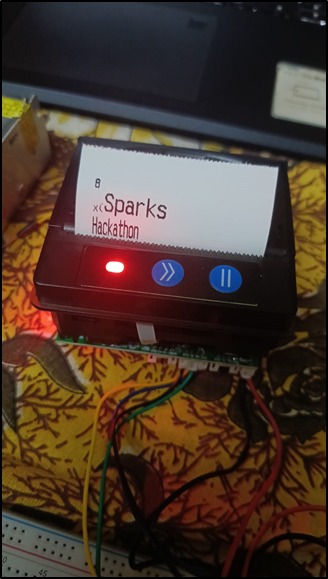
printer
-
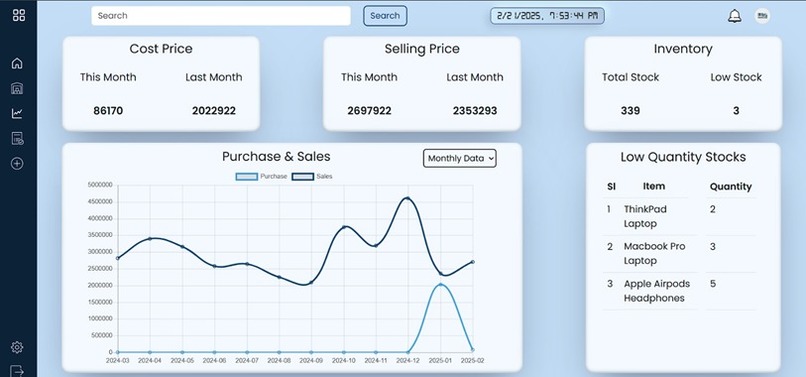
dashboard
About the Project
🚀 Inspiration
Managing inventory manually can be tedious, error-prone, and time-consuming. Many small to medium-sized businesses struggle with tracking stock, processing sales efficiently, and making data-driven decisions. InvenHub was built to solve these challenges by integrating automation, AI-driven sales forecasting, and barcode scanning into a seamless inventory management system.
🛠 How We Built It
We developed InvenHub using a Flask backend to handle server-side operations, authentication, and database management. The frontend, built by Biswajit, uses HTML, CSS, and JavaScript for an intuitive user experience. The database stores structured inventory, sales, and user data, ensuring smooth stock updates and financial tracking. Additionally, we implemented a machine learning model for sales prediction, helping businesses optimize inventory restocking.
💡 What We Learned
- How to structure a scalable database for inventory tracking and financial transactions.
- Optimizing Flask for handling authentication, API requests, and stock management.
- Enhancing security with OTP-based authentication and session management.
- Implementing machine learning for time-series forecasting to predict future sales trends.
- Integrating barcode scanning and printing APIs for faster product identification.
⚡ Challenges We Faced
- Ensuring accurate stock management – We designed an efficient database model to prevent stock mismatches.
- Improving sales prediction accuracy – We fine-tuned the ML model to provide reliable forecasts.
- Secure authentication – Implemented email verification, OTP login, and session timeout for user security.
- ESP-based barcode printing integration – Developed a custom API to send billing and barcode data to ESP devices.
🌟 The Impact
With InvenHub, businesses can save time, reduce errors, and make data-driven decisions with automated sales tracking, AI-powered analytics, and seamless barcode scanning. Future updates will bring multi-user roles, AI chatbots, cloud backups, and advanced demand forecasting to further enhance its capabilities. 🚀
Built With
- bootstrap
- css
- html
- javascript
- postgresss
- python
- sklearn


Log in or sign up for Devpost to join the conversation.