-
-
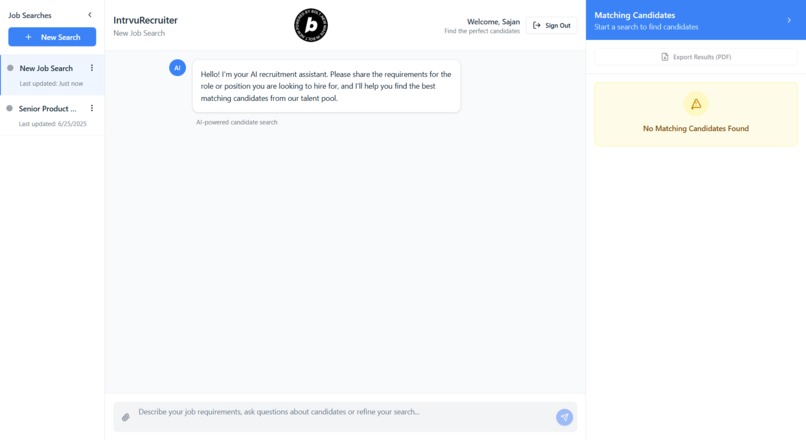
New Chat
-
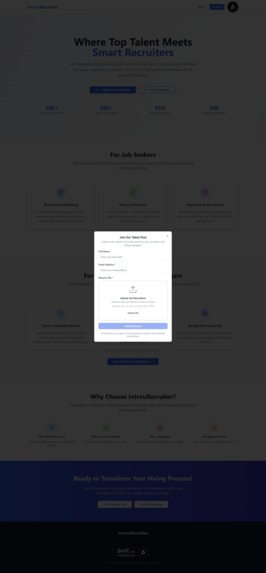
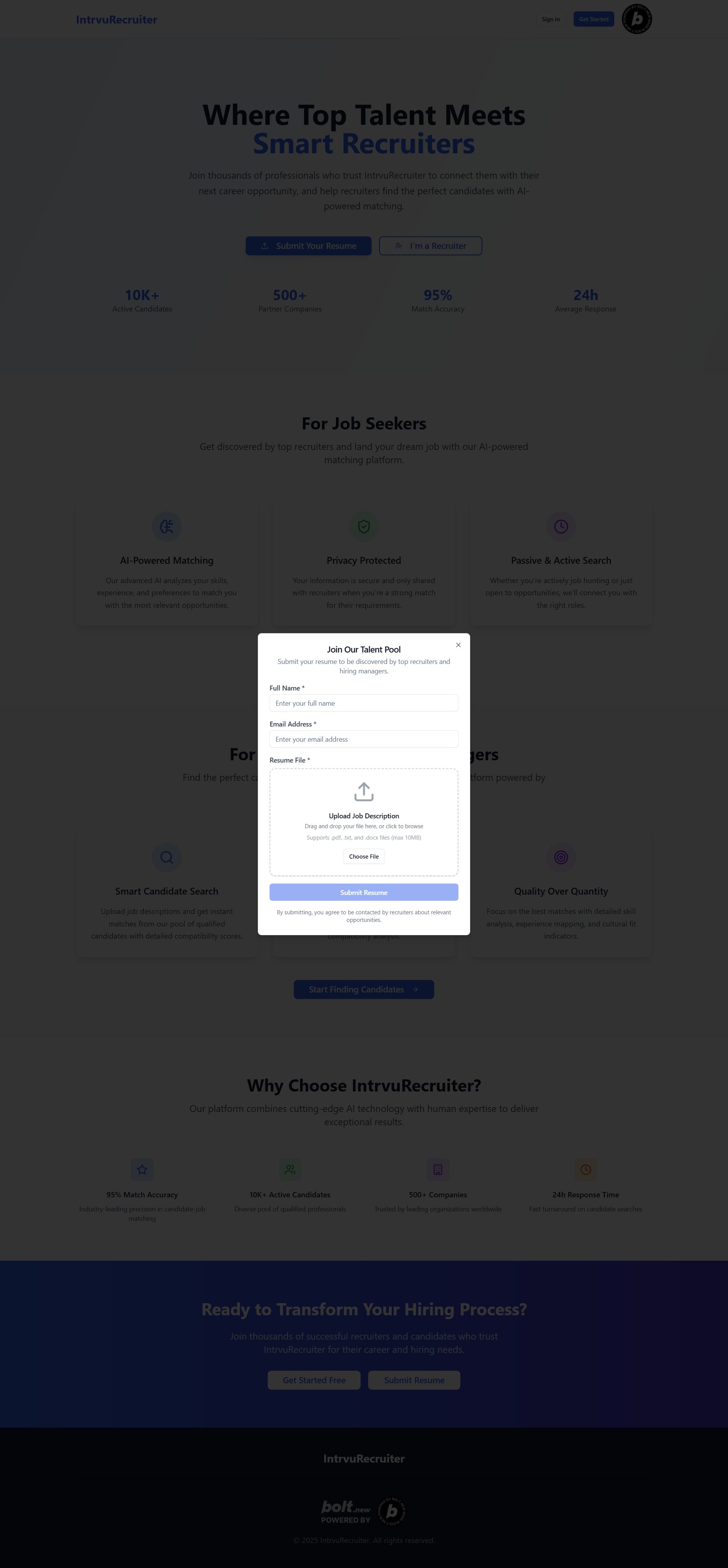
Candidate resume submission
-
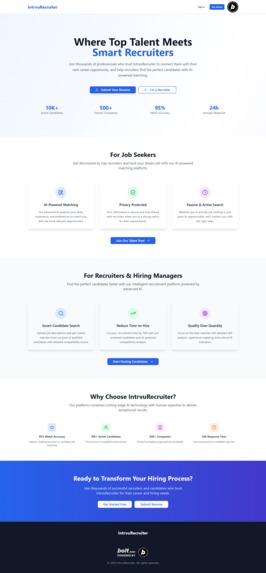
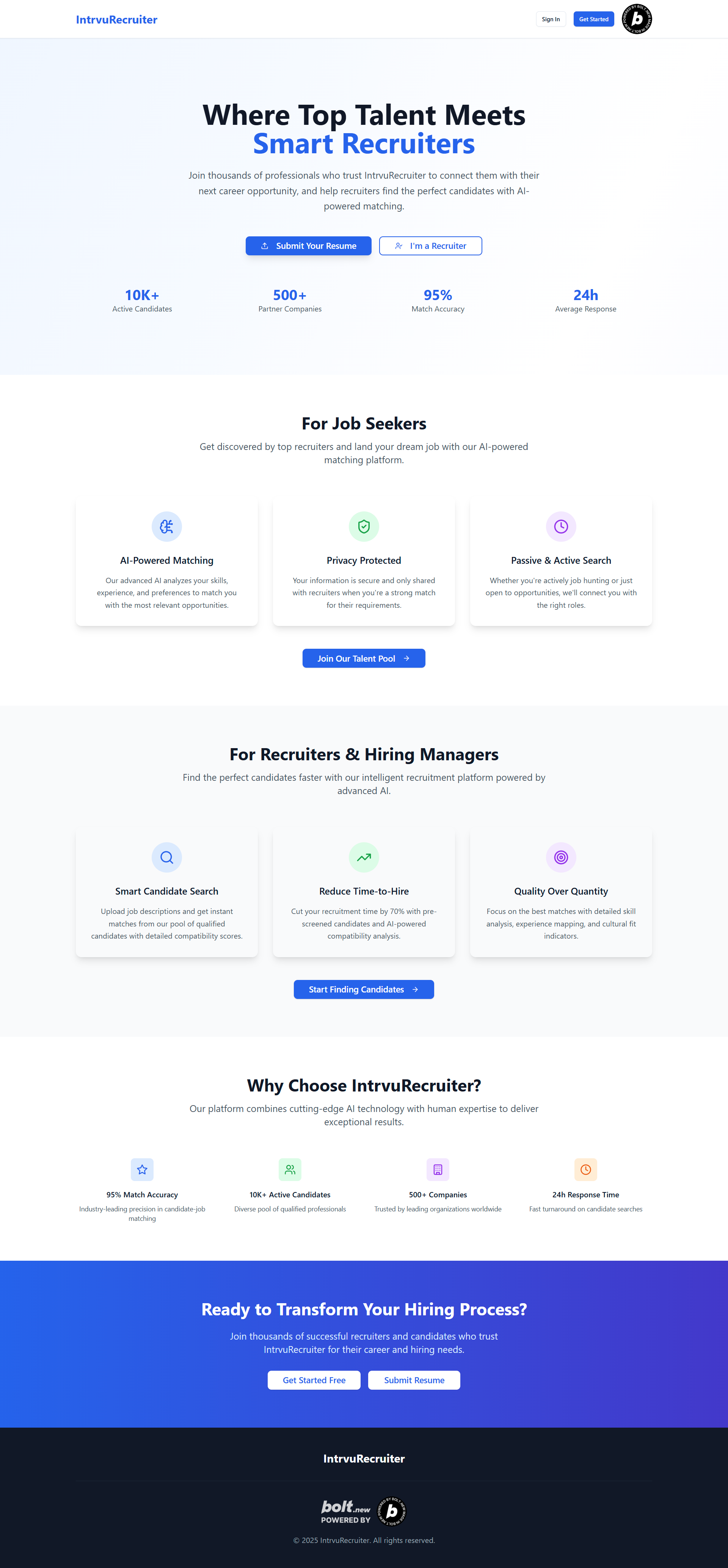
Homepage
-

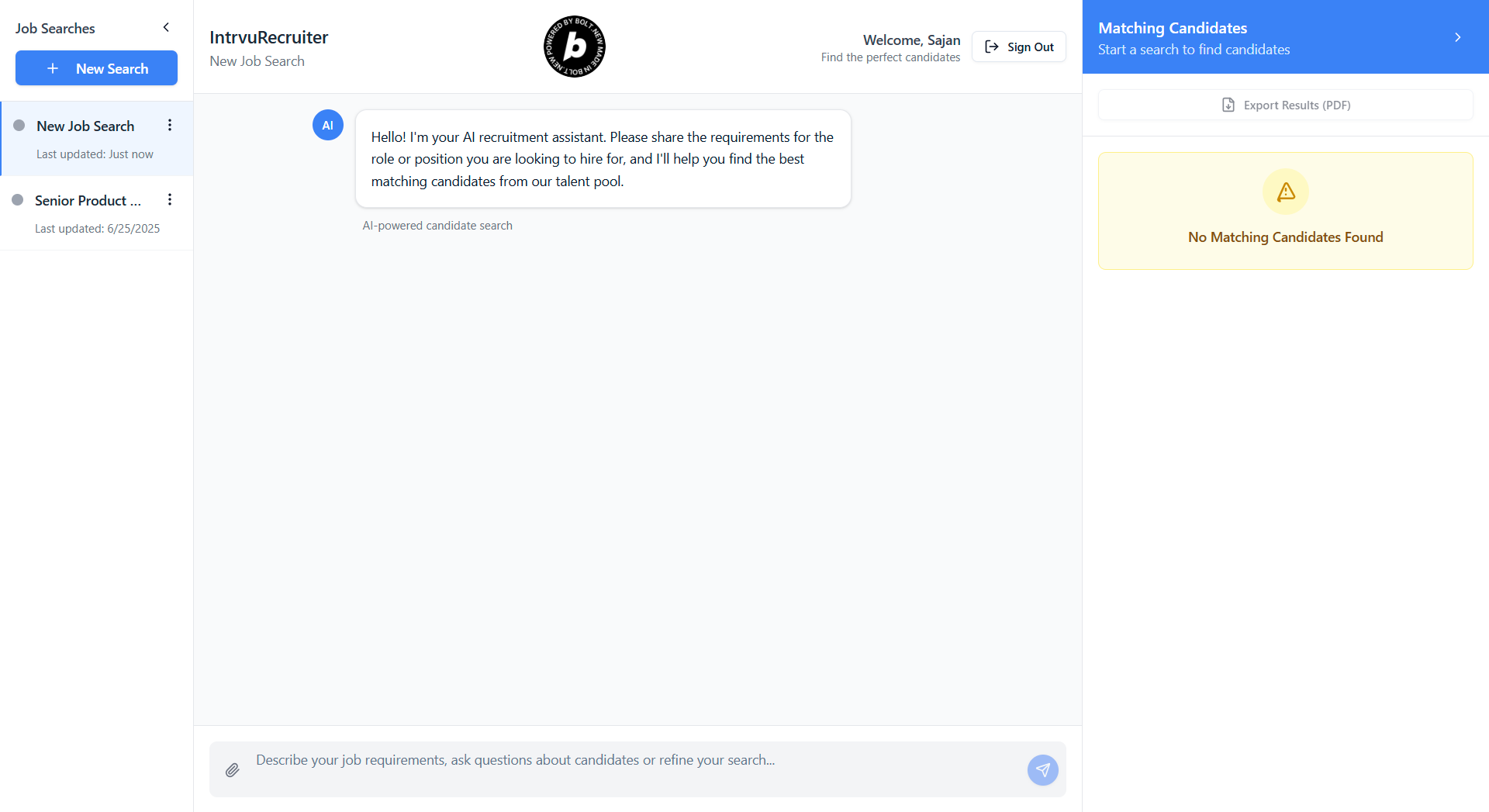
Chat with matching candidates results

Our Inspiration
Our own realization that how outdated is the hiring process today where recruiters have to still post a job and candidates have apply with a resume and a cover letter. This is how hiring has been for the last several decades. We want to change it into a seamless process where recruiters, hiring managers and sourcing specialists have an always-on access to a pool of candidate profiles (resumes) who are actively and passively looking for opportunities.
What We Built
We have built a talent marketplace where a recruiter can discover and filter through resumes that are a strong match to the job description or posting uploaded to the platform—simply by chatting with the AI recruitment assistant.
How We Built:
Vision & PRD
We began by drafting a concise Product Requirement Document that captured our vision: a conversational AI assistant that parses any job description and surfaces the best-fit candidates—quickly, transparently, and adaptively.
Rapid UI Ideation in Figma
Next, we translated those requirements into low-fidelity wireframes and a clickable prototype in Figma. This clarified user flows for both recruiters (multi-chat workspace) and candidates (one-step résumé upload).
Prompt-Driven Build Kick-off
We exported key artboards and wrapped them in a short design prompt, then headed to Bolt, an AI-assisted, full-stack builder. The prompt gave Bolt context on screen layouts, component hierarchy, and desired interactions.
Conversational Development with Bolt
From that point forward, development was almost entirely a dialogue. Using Bolt’s “Discuss” feature, we iteratively:
- Refined database schemas for Supabase storage
- Mapped OpenAI API calls for semantic matching
- Scoped secure auth for recruiters and candidates
- Tuned export/preview utilities — all through natural-language exchange
Plan → Implementation → Product
Once Bolt returned a build plan that satisfied usability, performance, and maintainability checks, we green-lit implementation. Within days we had:
- A Netlify-deployed web app
- GitHub-managed codebase
- Integrated AI matching logic delivering 85%+ relevant recommendations
Result A production-ready IntrvuRecruiter that lets hiring teams converse with their talent pool—slashing time-to-hire while keeping recruiter satisfaction sky-high. Built by Rushabh, Sajan, and Bhavik in record time, all thanks to a PRD-first mindset, design-led thinking, and the power of Bolt’s conversational development.
Our Challenges
- We ran into a looping problem as LLM lost the context and was repeating the same response.
- Between two independent chats, it was losing context and referring to the context of the other chat when responding to the current one.
- The processing time to find candidates was taking longer than what a user would expect.
- Once your product becomes big and complicated, sometimes if there is a bug, the AI is still not able to identify it. You still need to go to the depth manually to identify and solve it. It may even consider the bug as a feature.
Our Accomplishments
We're proud of getting an almost production-ready product for live use—including the landing page, signup process for both recruiters and candidates, and overall getting an idea off the ground in less than 15 hours.
What We Learned
- Vibe coding still needs some foundational understanding of the software building process and technical integrations.
- Starting with a clear definition of the product you want to build through a PRD document and a mock UI wireframe helps a lot in making the AI understand the context, objective, and end result.
- Vibe coding is addictive as it keeps you hooked, but at the same time frustrating when AI can't diagnose an issue fully.
- Developing products through vibe coding requires a different mindset and approach.
What's Next for IntrvuRecruiter
- We have built this platform focused on product management roles, so we want to pilot it with product management recruiters for feedback.
- Continue refining the product with integration with email systems such as SendGrid and build a login for candidates.
- Look for early capital/investment to launch it as a fully functional product.
Built With
- auth
- clsx
- css
- deno
- dom
- edge
- esbuild
- functions
- html
- javascript
- lucide
- mammoth
- npm
- openai
- pdf-parse
- pizzip
- postgresql
- react
- router
- shadcn
- sql
- storage
- supabase
- tailwind
- tailwind-merge
- typescript
- ui
- vite

Log in or sign up for Devpost to join the conversation.