-
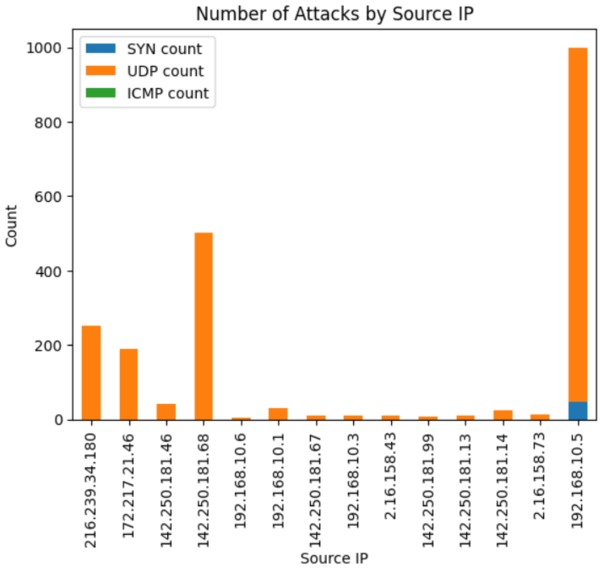
no of attacks types
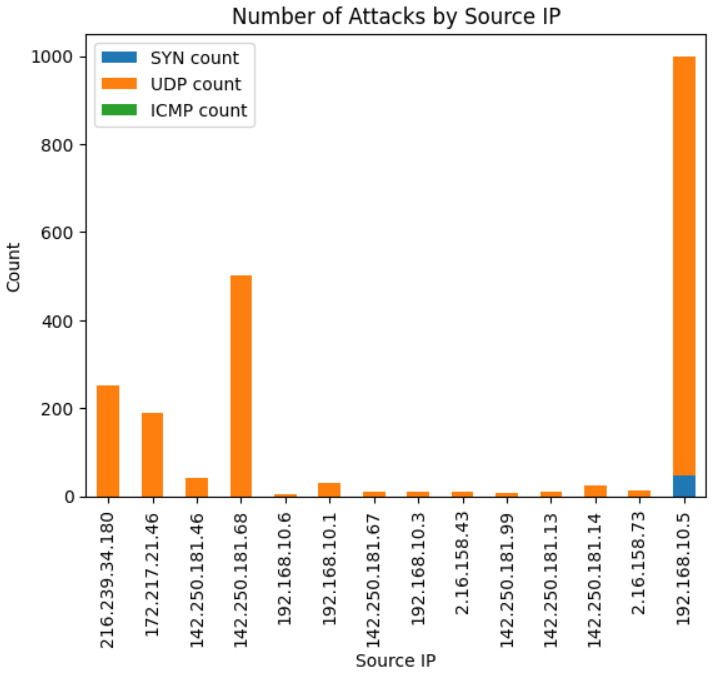
Intrusion_Detection_System
1. Introduction
Computer networks have become an integral part of our lives. They are used to store and transmit sensitive information, such as personal data, and financial records. As a result, computer networks are vulnerable to various security threats, such as hacking, and data theft. Intrusion Detection Systems (IDS) are essential tools for detecting and preventing these threats. The main purpose of an IDS is to monitor network traffic, identify potential security threats, and alert administrators to act. IDSs use various techniques like anomaly detection, and machine learning algorithms to detect malicious activity. Python Libraries like pandas, tkinter, scapy and matplotlib are used. When threat is detected, the IDS can trigger response mechanisms, such as blocking traffic or alerting security personnel. Various components of the system, including the sensors, analysis engine, response mechanisms, and management interface are implemented in code.
2. Methodologies:
2.1 System Architecture
Sensors: Software that monitors network traffic and collects data for analysis. In this regard Wireshark is used to capture packets.
Analysis engine: This component is responsible for processing and analyzing the data collected by the sensors. The analysis engine can use machine learning algorithms to identify potential threats. The graphs are made in this regard so that one can see the types of the attacks, who attacked like their source IP and number of attacks by specific IP’s.
Response mechanism: Once a threat is detected, it has a mechanism to respond and mitigate the threat. It involves sending an alert to ADMIN via email and blocking IP addresses.
Management interface: It has a user interface that allows administrators to monitor the system and view the results of the attacks.
2.2 Sensor Selection and Configuration
Wireshark file is used as a sensor which is used to capture the packets. The Wireshark file is saved and used for analysis.
2.3 Rules and Signatures Development
The SSH rule is designed to detect potential brute force attacks on SSH servers. Brute force attacks are often used by attackers to guess username and password combinations to gain unauthorized access to a system.
While the ARP rule is designed to detect potential ARP spoofing attacks. ARP spoofing is a technique used by attackers to link their own MAC addresses with the IP address of another device on a local network. This can be used to redirect network traffic or to conduct man-in-the-middle attacks.
2.4 Analysis Engine Development
For analysis, graphs are used like bar, pie and histogram. The protocols, IP addresses and attack types like probe, dos, etc are analyzed as shown in the figures:
2.5 Response Mechanism When the threat is identified from specific IP addresses then those were blocked, and the email was sent to identified threats.
Email Sent and received
2.6 Management Interface
Interface allows administrators to monitor the system and respond to security threats. The Wireshark.pcapng file was selected and threats were detected, if threats exceeded the threshold from the specific IP addresses, then it shows the FLOOD attack also shows that email is sent and IP has been blocked as show in figures.
2.7 Testing and Validation
Detection System is tested using another Wireshark file too for testing purpose to ensure that system is working fine.
## 3. Conclusion
In conclusion, the testing of Intrusion Detection Systems is important to ensure computer networks security. By implementing effective IDS solutions, organizations can protect their networks from potential security threats and ensure the confidentiality, and integrity of their data.
Built With
- jupyter-notebook
- python
- sklearn
- tkinter
- wireshark

Log in or sign up for Devpost to join the conversation.