-
-
Introducing: Sand
-
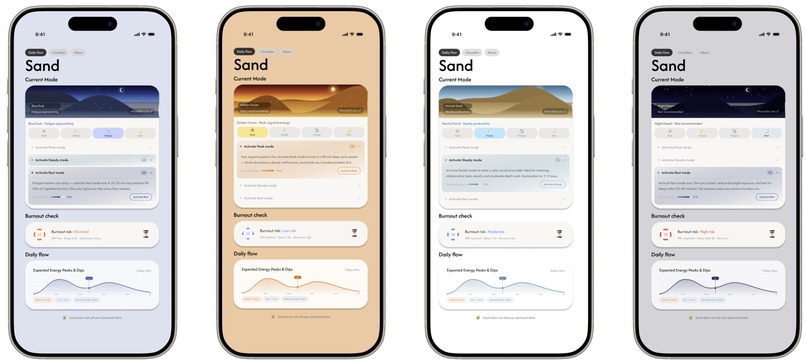
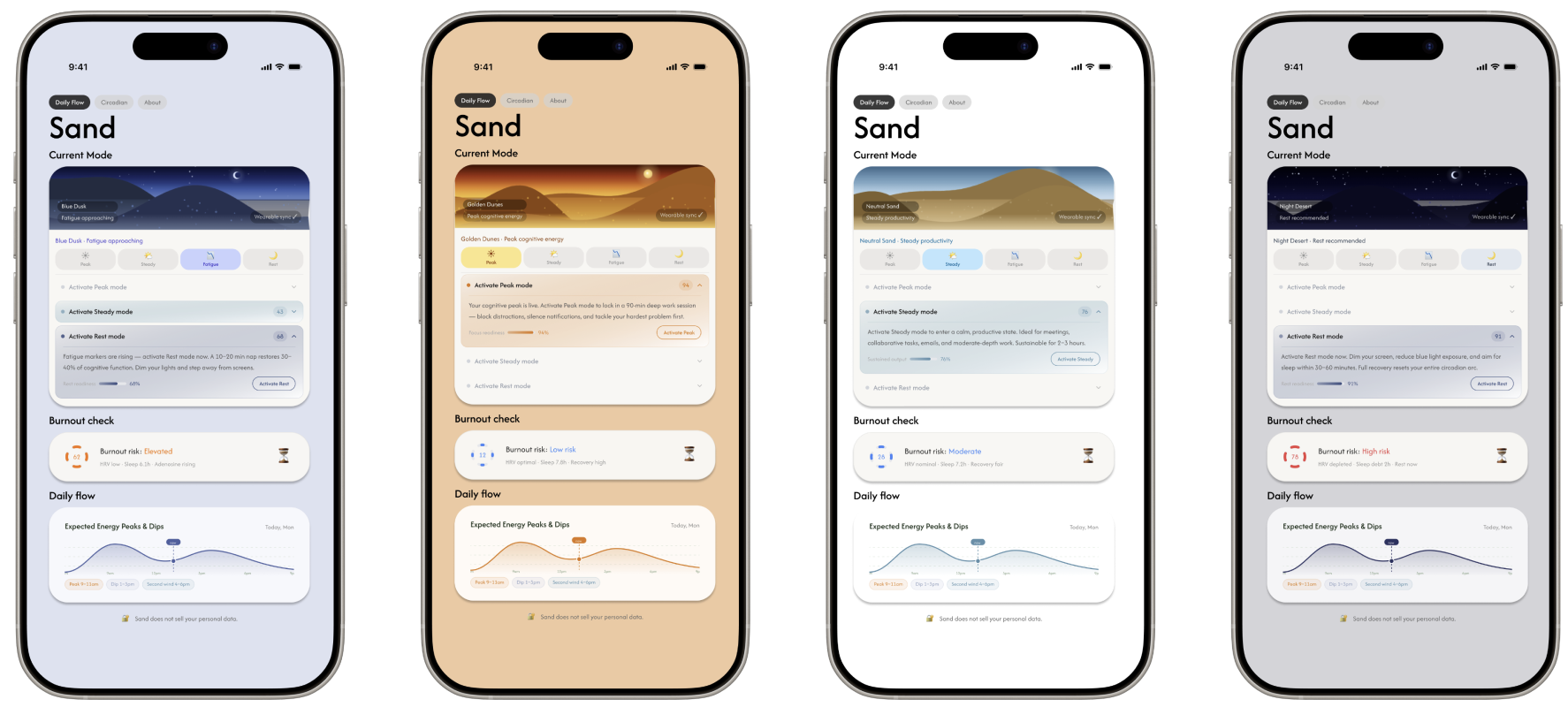
Different Tracking Time Modes
-
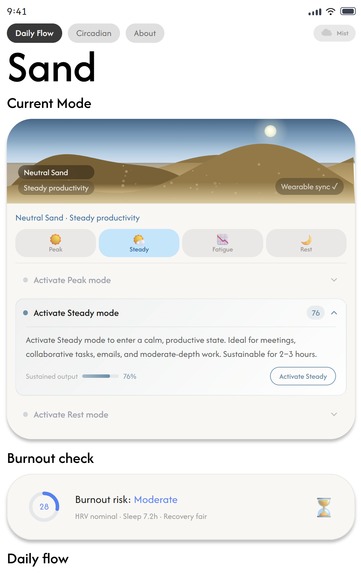
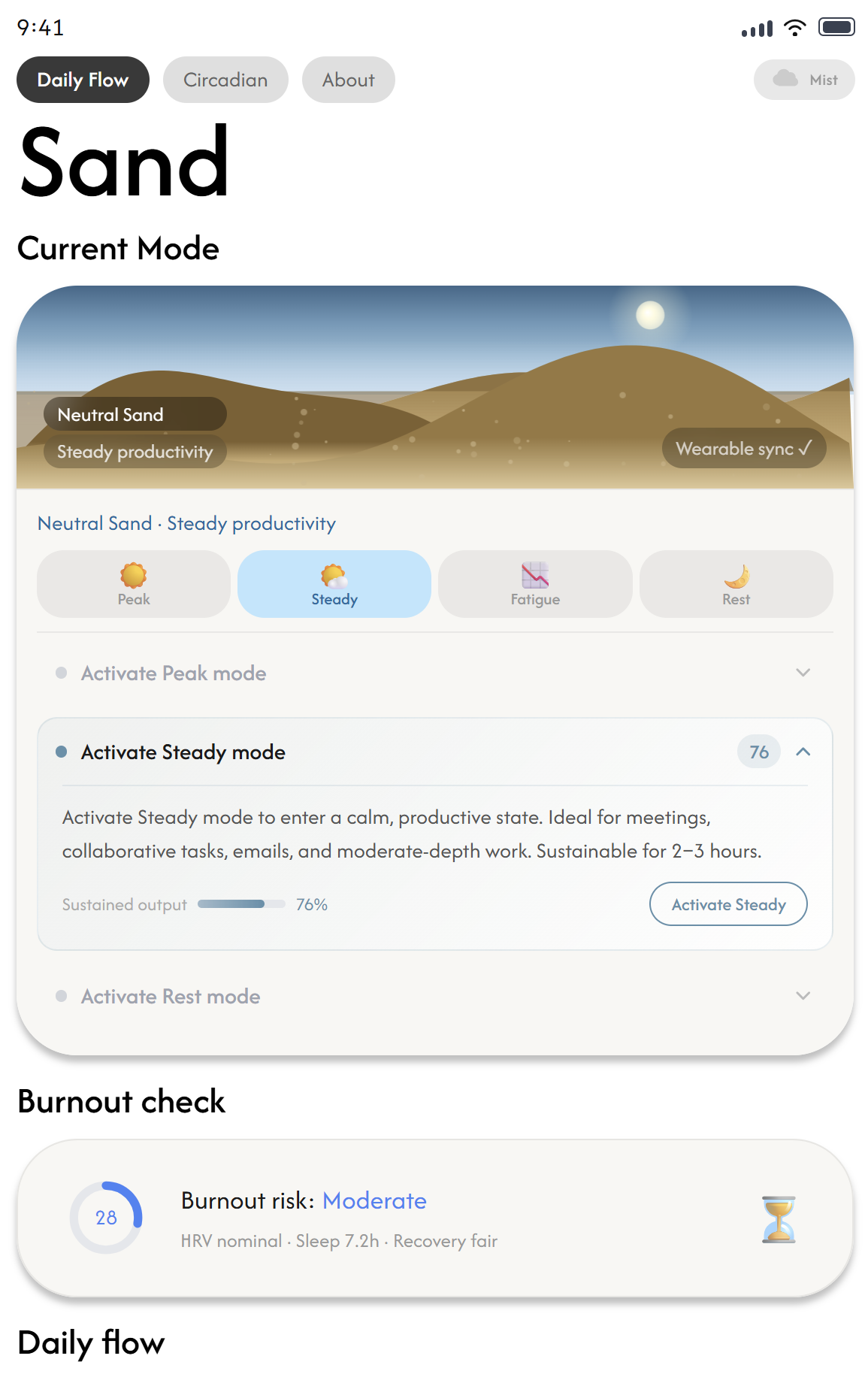
Home Interface
-
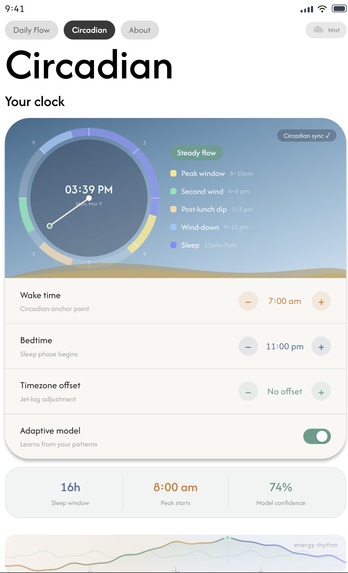
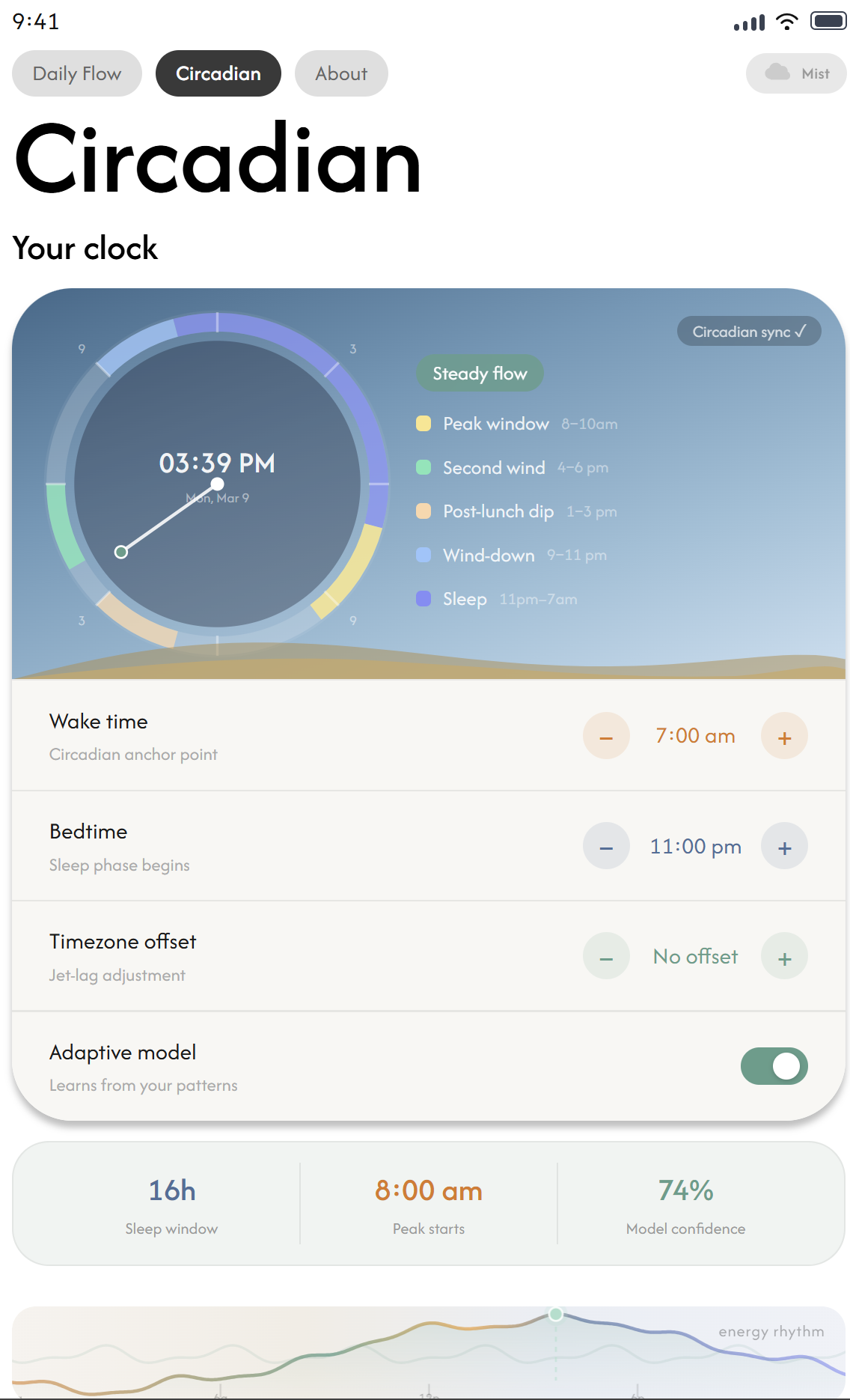
Circadian Rhythm Dashboard
-
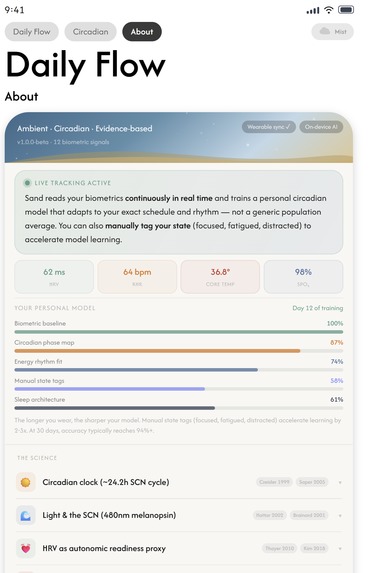
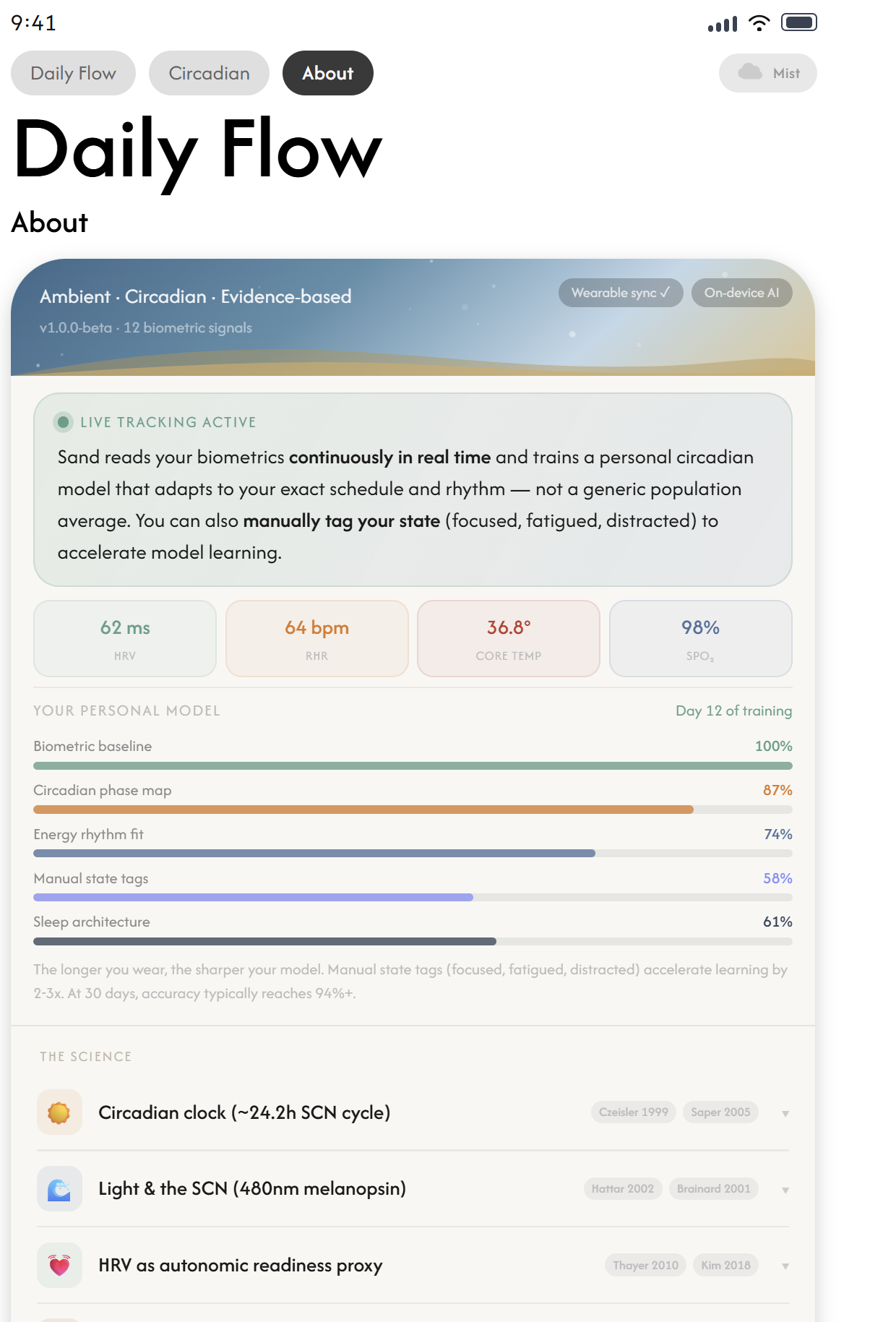
About Page
-
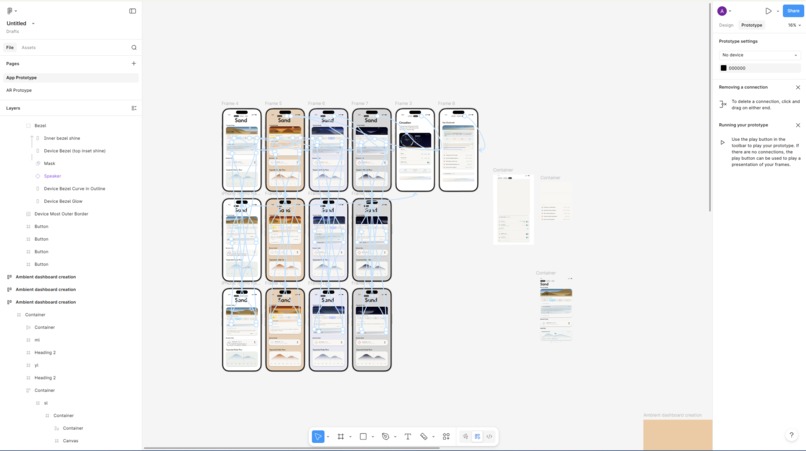
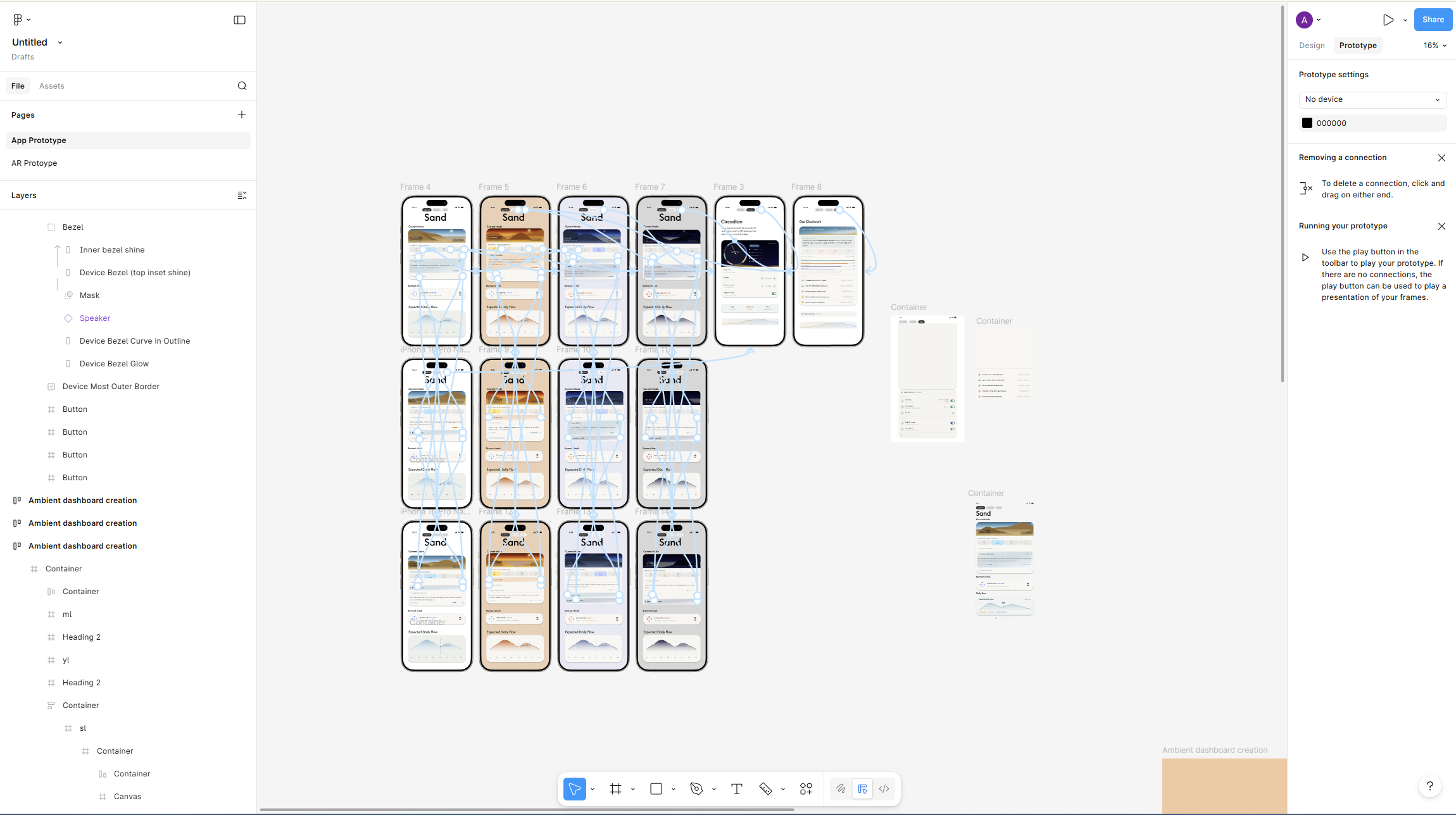
Figma Design Wireframes
-
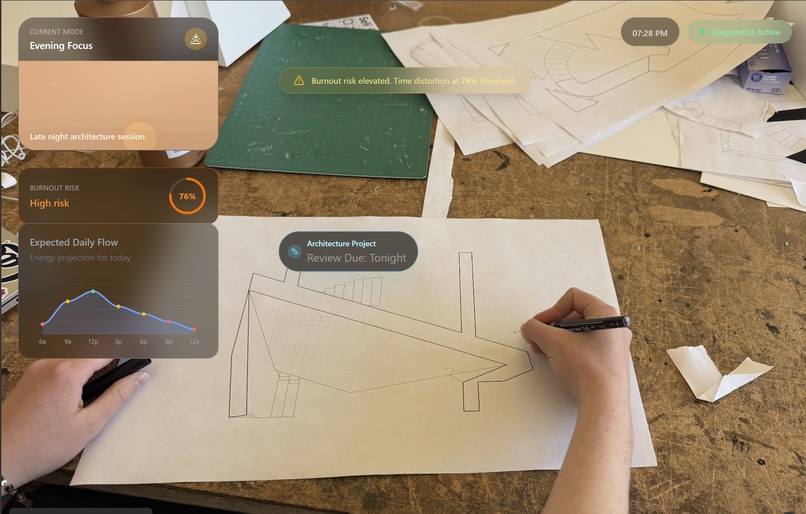
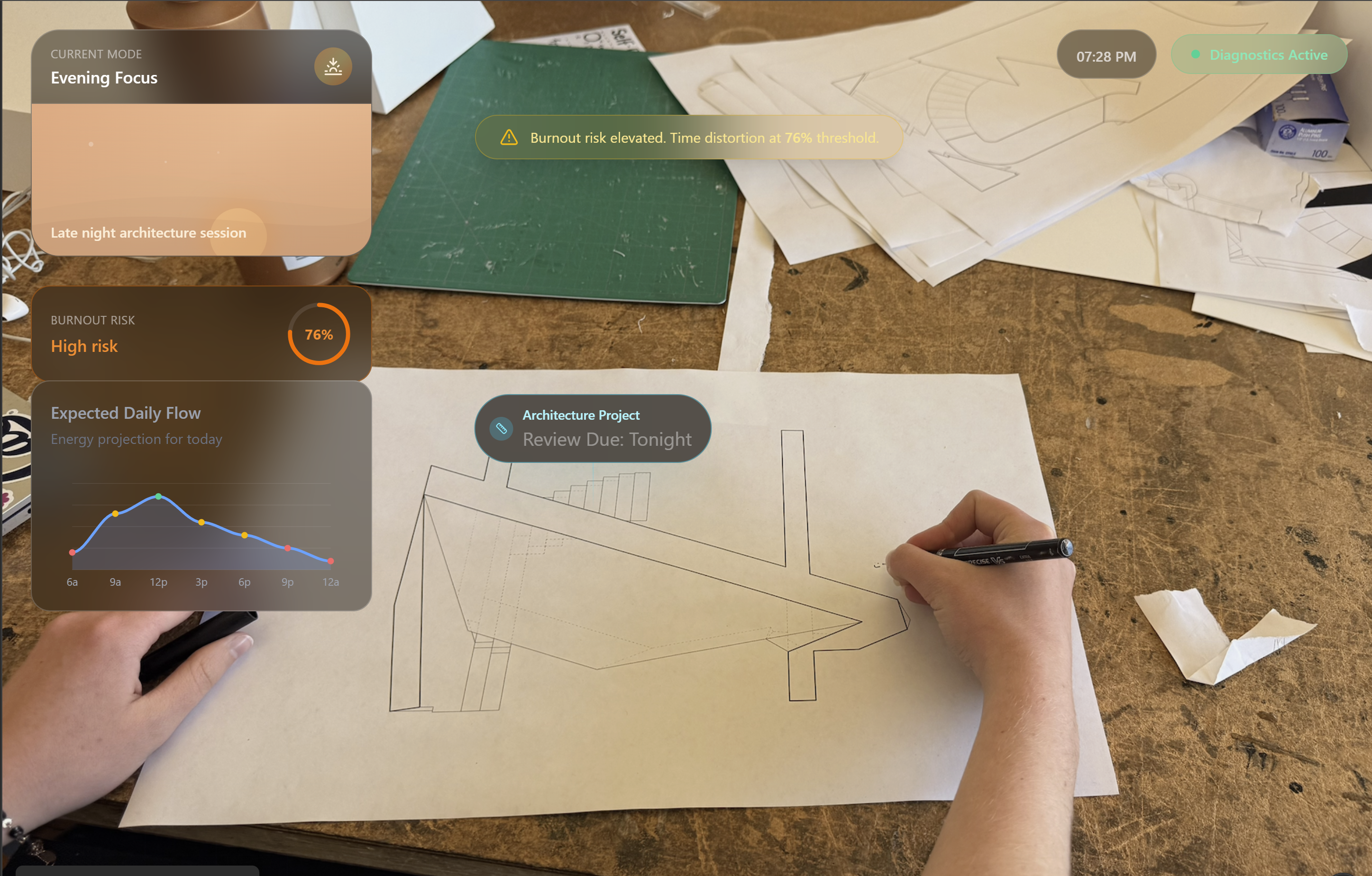
AR Interface
-
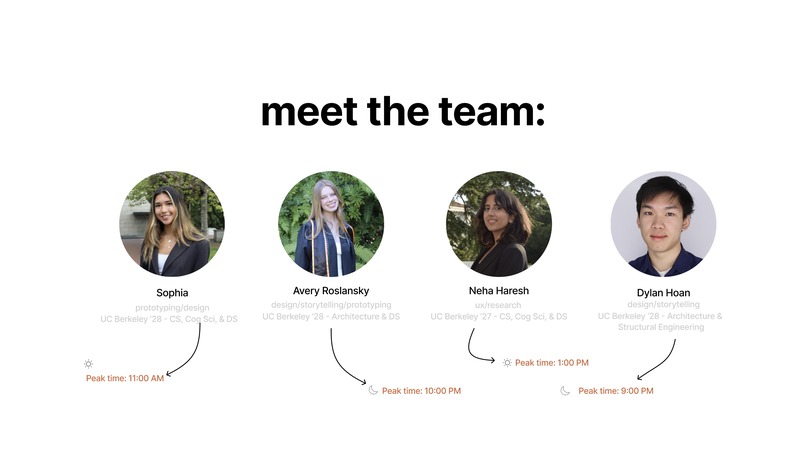
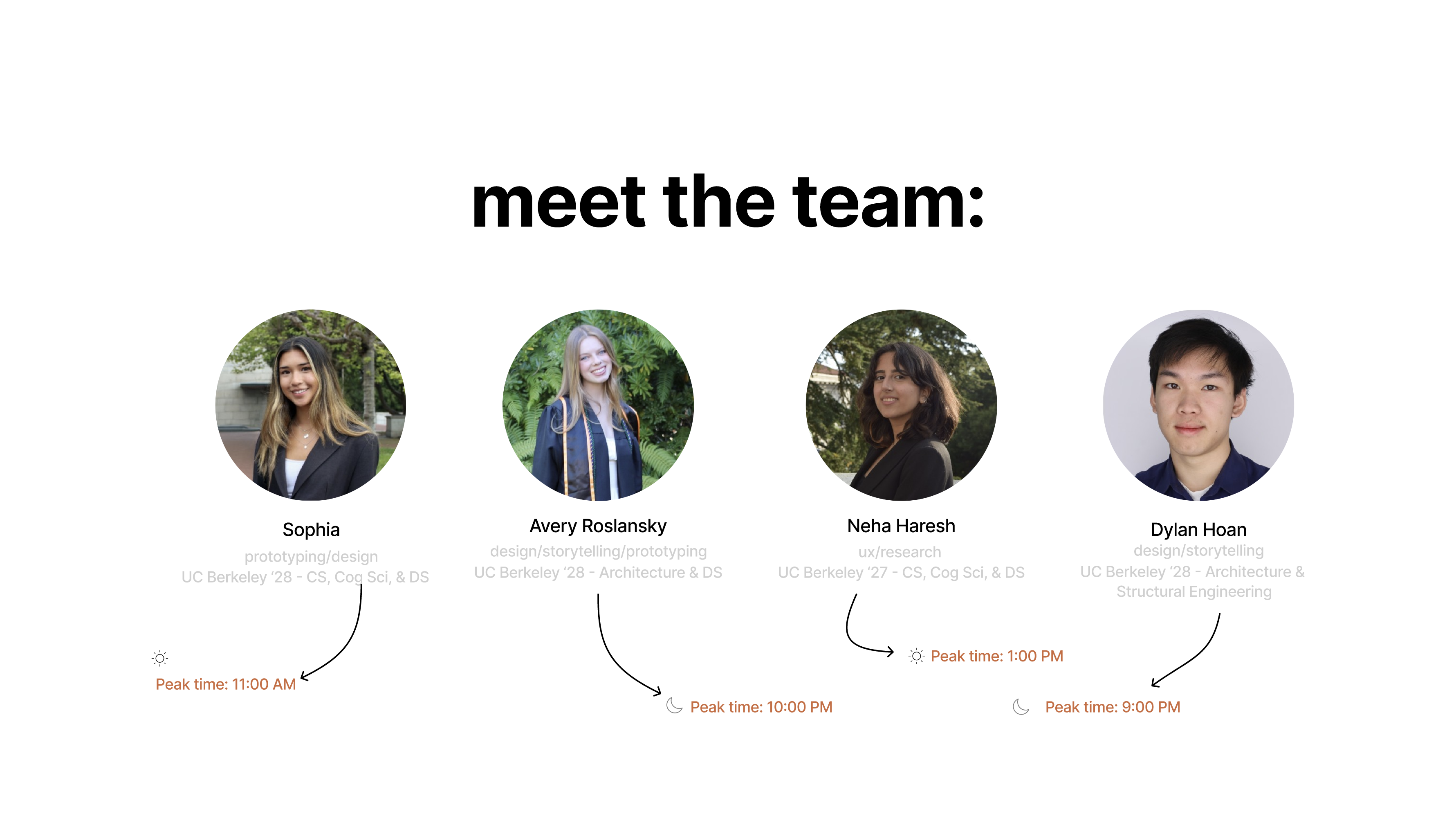
Meet the Team!
Inspiration
There's a word for what we were all feeling but couldn't name: chronoception i.e. the subjective perception of time. How 10 minutes on your phone becomes 2 hours. How 10 hours of studying feels like a lifetime. How you reach Sunday night and genuinely can't account for where the week went. We're a team of UC Berkeley sophomores and juniors, and we weren't just observing this problem, we were living it. Our generation isn't just "busy." We're biologically disconnected, running schedules that were never designed around the rhythms our bodies actually run on. Ultradian cycles, adenosine buildup, SCN-regulated peaks and crashes, our biology has a clock. We just stopped listening to it. So, we built Sand because we were tired of fighting our own bodies and feeling our days slipping away. And because we took a class, UC Berkeley's DATA C104: Human Contexts & Ethics of Data, that changed how we thought about what a wellness tool should actually be. Reading Foucault's Panopticon and Ian Hacking's work on the quantified self, we realized that most wearables today don't solve any pressing problems. They in fact deepen them, turning our bodies into dashboards, our identities into a score, and our lived experience into data to be optimized. We didn't want to build another tracker. We wanted to build something that disappears into feeling and your everyday environment.
What it does
Sand is a wearable ecosystem consisting of AR glasses and a biometric ring that makes the invisible visible. It translates your internal biological rhythms, like HRV, sleep pressure, and SCN cycles, into a more navigable sensory conscience. With the app, you can regulate your productivity and keep track of peak cognitive states, steady brain flow, fatigue, and rest.
How we built it
- Figma Design: We created a low-fidelity design and wireframe of the software and how it would connect with our problem scope
- Figma Make: We then turned it in through Figma make to create a seamless glanceable interface
- Figma Design <-> Figma Make : We then reiterated through Figma Design and Make multiple times to ensure that the application felt organic and human-centered.
Challenges we ran into
Ironically, time. As students constantly preparing for upcoming midterms and project deadlines, we found ourselves living the very "time blindness" we were trying to solve. The deeper challenge was conceptual. We had done the readings, Foucault, Lupton, Hacking, etc., and we knew what we didn't want to build. Designing away from something is harder than designing toward it, so every feature decision became an ethics question: does this give the user agency, or does it quietly surveil them? Does this surface data, or does it dissolve into experience? We reworked the interface more times than we can count to make sure the answer was always the right one.
From a design perspective, as sophomores and juniors, we learned how to use Figma Make on the spot and were intrigued and engulfed by everything we understood about the tool. Friday disappeared into problem scoping, Saturday into a research and design marathon, and Sunday into the sprint to finish. We ultimately didn’t just build a tool for chronoception, we lived it, proving that even when time is fleeting, focus is a choice.
Understanding the Problem: We all took/are currently taking UC Berkeley's Human Contexts & Ethics of Data class and learned about Michel Foucault's Panopticon and the harmful effects of quantifying user's everyday experiences. Thus, we wanted to prioritize building an experience instead of a tracker. We continuously reiterated this idea so that users have the agency rather than a simple measurement tool.
Accomplishments that we're proud of
We built something we would actually use! That sounds simple, but it's the hardest bar to clear, especially when you're the exact user you're designing for and you know when something rings false. We're also incredibly proud that Sand has a point of view and that it isn't neutral. It takes a position on what wearables of the modern age have gotten wrong and tries to do something different. For a weekend long project, that intentionality is what we're most proud of :)
What we learned
- How to operate Figma Make
- Responsible & Ethical Design
- AR Prototyping
- Understanding AI models
If we had more time...
We would focus on three next steps:
Functional prototype: Building a working system that integrates biometric sensors with AR feedback to test real-time chronoception cues.
Machine learning personalization: Developing adaptive models that learn a user’s unique biological rhythms and predict focus, fatigue, and recovery windows.
Longitudinal user testing: Studying how Sand affects focus, burnout, and perceived time over longer periods of use.
Our long-term vision is to turn Sand into a true perceptual interface for time, a wearable that doesn’t just measure the body, but helps people experience their lives more intentionally.
Built With
- figma
- figmamake
- gemini
- nanobanana


Log in or sign up for Devpost to join the conversation.