-
-
Smart iv Monitoring system
Inspiration:
What it does
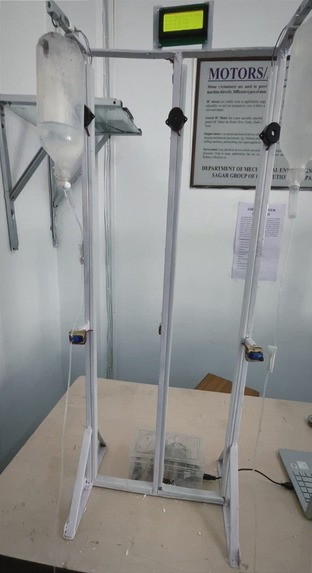
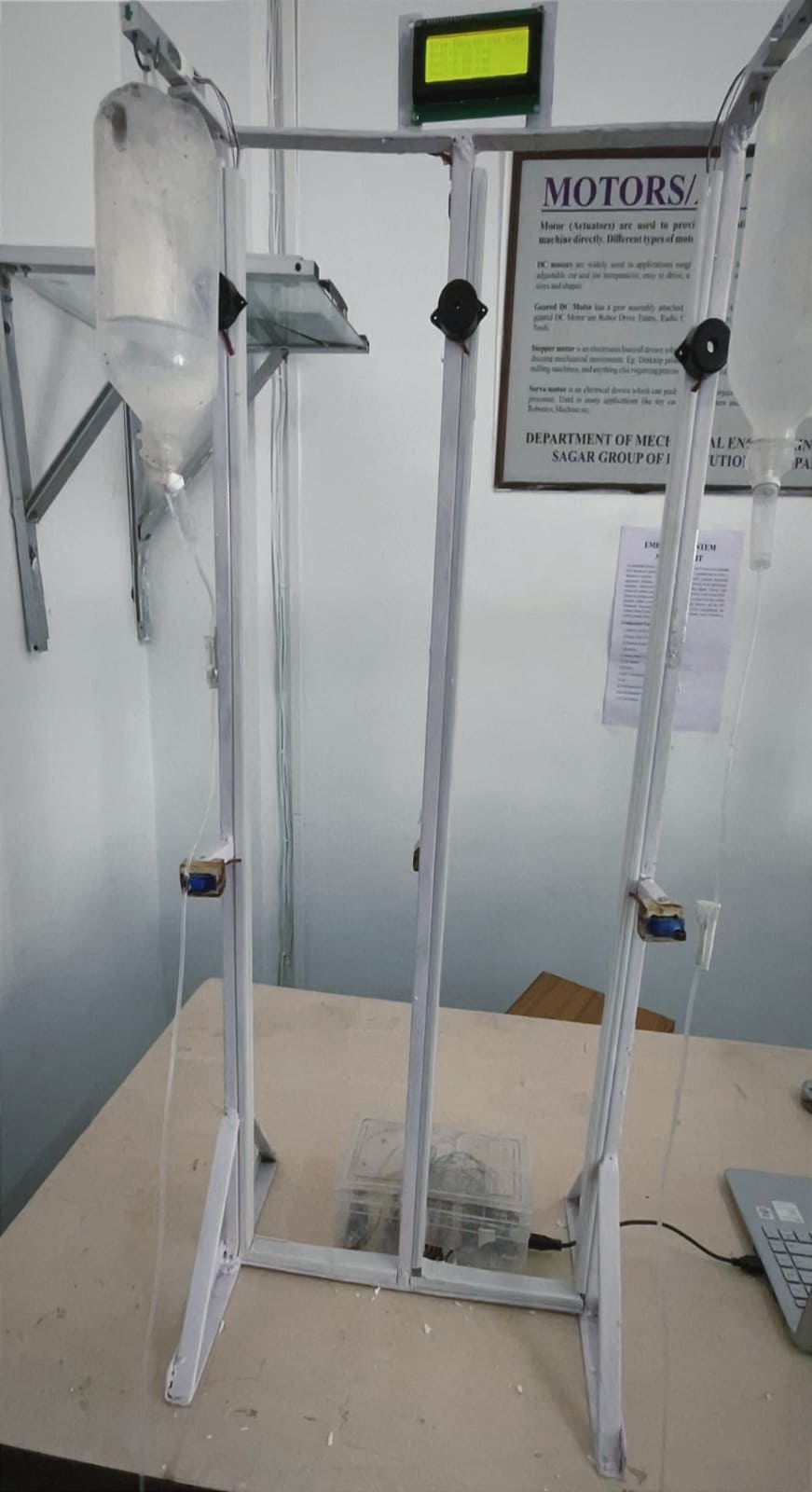
An intravenous (IV) drip monitoring system could be developed to improve patient safety and provide real-time monitoring for hospital staff. Here are some innovative features and components that could go into creating a modern IV drip monitoring system. We proposed a system called Automated Intravenous Drip Monitoring System. This monitoring system is also designed to provide a sound warning indicator in case of abnormal conditions in the monitored parameters. This system alerts the staff by making buzzer sounds We have used an LCD that shows the room number & bed number of the hospital. It also automatically cuts off the flow of fluid with the help of a servo motor at a critical limit. Some times, the veins get blocked, resulting in the no flow condition of fluid in the veins; in that case, we are using a red alert with sound at the LCD with bed number. This system also provides messages at the phone of doctors, nurses, and hospital staff members.
What it does
How we built it: Building an intravenous (IV) drip monitoring system involves integrating various technologies and engineering principles to create a reliable, real-time monitoring and management solution. Here's a breakdown of how such a system could be constructed.
Flow Sensors Wireless Module Alarm System Arduino Buzzer LCD i2c Cloud Database Data Analytics and Dashboard
Challenges we ran into: Scaling Manufacturing and Production Costs
technology-based solution Convincing to the customer Competiveness with existing Sellers
Accomplishments that we're proud of: his system alerts the staff by making buzzer sounds
We have used an LCD that shows the room number & bed number of the hospital. It also automatically cuts off the flow of fluid with the help of a servo motor at a critical limit. Some times, the veins get blocked, resulting in the no flow condition of fluid in the veins; in that case, we are using a red alert with sound at the LCD with bed number. This system also provides messages at the phone of doctors, nurses, and hospital staff members. Low cos.
What we learned: Importance of Precision and Reliability in Medical Devices
Challenges of Sensor Selection and Calibration Balancing Automation and Human Control Wireless Communication in Complex Environments Data Privacy and Regulatory Compliance in Healthcare Designing for Ease of Use in High-Stress Environments Power Efficiency and Battery Management Cost Optimization for Accessibility
What's next for Intravenous Drip Monitoring System: Integration with Smart Hospital Systems
Remote Patient Monitoring Capabilities Enhanced Data Analytics and Reporting Tools Integration with Patient Monitoring Wearables Telemedicine and AI-Powered Support System

Log in or sign up for Devpost to join the conversation.