-
-
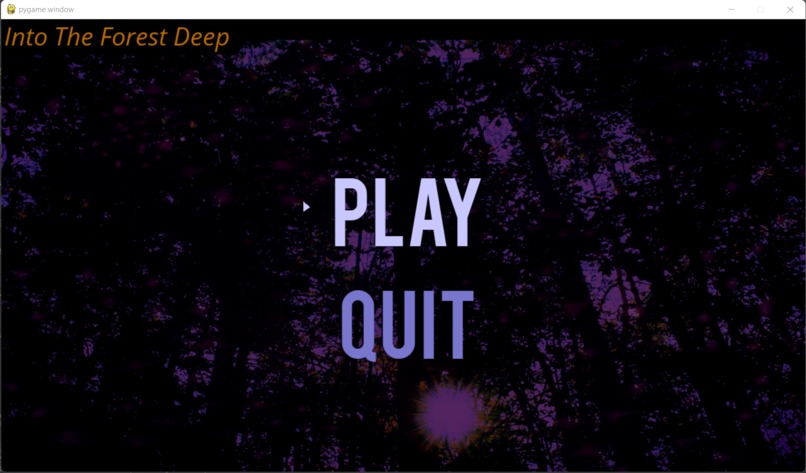
Main Menu
-
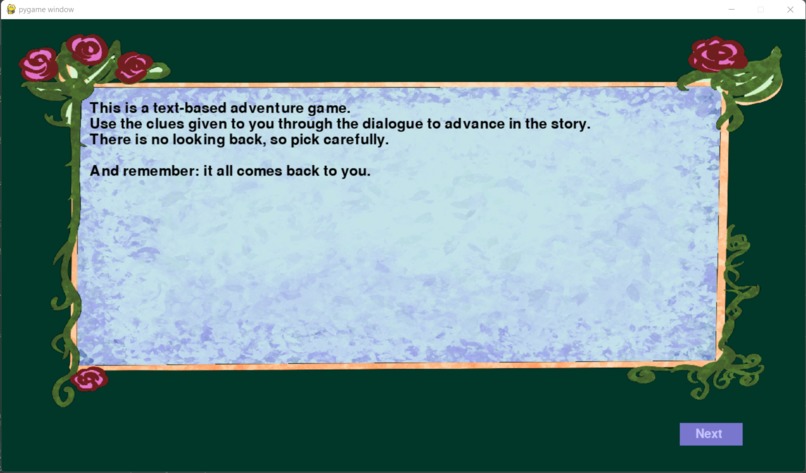
Sample Text Box
-
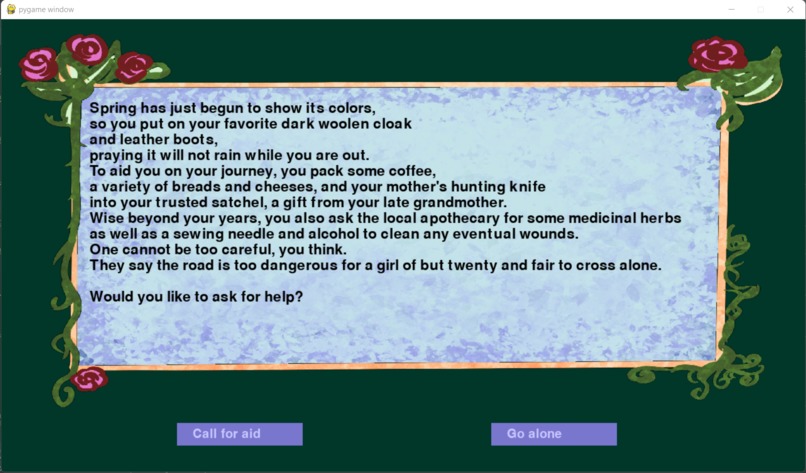
Your choices decide Delilah's path
Inspiration
After participating in the Pygame workshop during the first day of the event, I really wanted to put what I had learnt into practice. I was already quite familiar with Python from an OOP standpoint, but this was my first time using a game-specific API, and so I was very interested in exploring what it is capable of doing. I was also hoping to do a project that leaned more heavily into my creative and artistic side, rather than doing something that was more utilitarian.
What it does
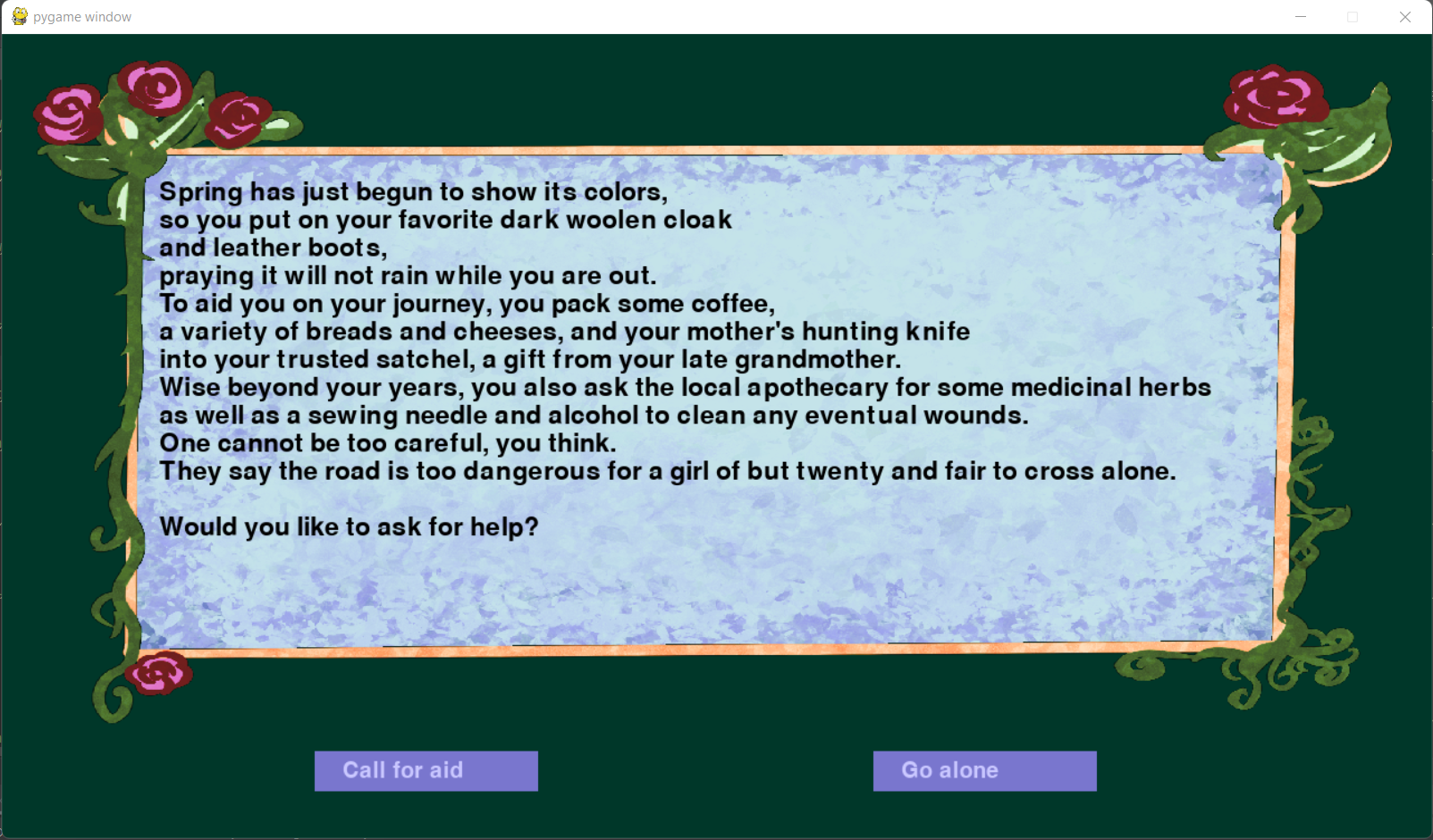
It is a text-based RPG. Players are brought into the story of the game through dialogue prompts and choices that tailor the game's outcome.
How we built it
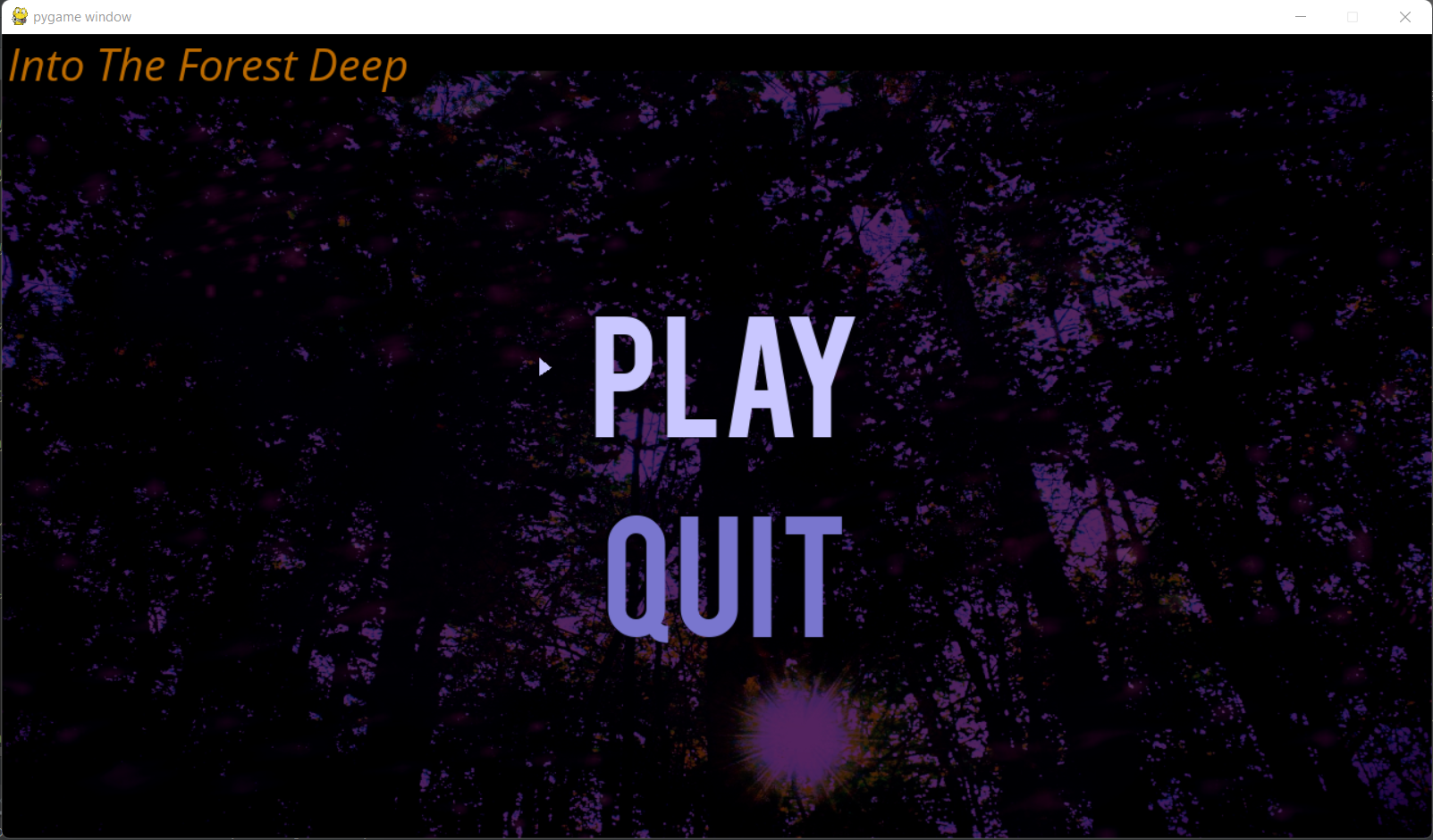
This project was built using Pygame as the main API, with Pygame Menu as an assist for the creation of the menu screen. Everything was coded using the PyCharm IDE and game assets were either drawn manually using GIMP and Procreate or, in the case of the photos of trees, taken from websites that offer copyright-free pictures. The background music is royalty-free from Bensound.
Challenges we ran into
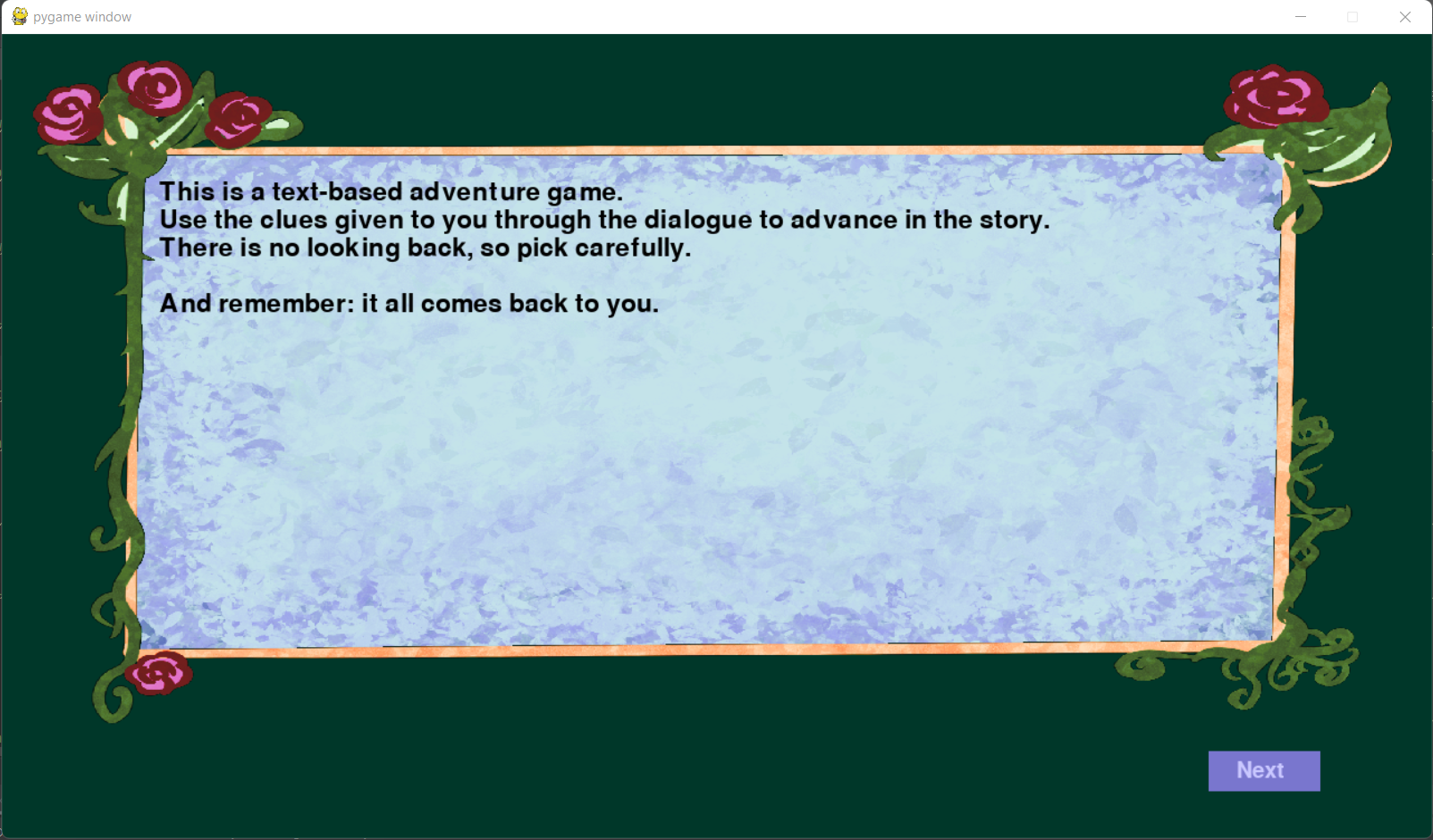
Learning a new API, especially under a time crunch, is always a big challenge. A lot of time was spent looking through the documentation and trying to understand how to use the framework in the best way possible. Another important challenge is a little obvious - making a game takes a lot of effort. I was also working on my own, which meant managing my time and scheduling breaks when necessary. For example, I wrote the scripts for the story as I was coding the base mechanics, which meant I often had to go back-and-forth to make the tale cohesive but also ensure the practical execution of the code was free of errors. Lastly, this project demanded a fair bit in terms of UI/UX design - from picking the right colors to make the text legible, to setting up the buttons and menu interactions, and even drawing my own dialogue box from scratch.
Accomplishments that we're proud of
I am very proud to have persevered through the aforementioned hardships and been able to deliver a game that can be played from start to finish. I am particularly happy to have successfully created the entire story as I coded, since creative writing is a hobby I hold very dear to heart. From a more technical standpoint, the decision tree and the multiple endings were a fun challenge to overcome.
What we learned
From the foundations of the Pygame API to the intricacies of decision-making, I believe this small project alone has taught me a lot of practical skills that will benefit me as an aspiring game developer. Approaching the game itself as a state machine made me re-evaluate the entire logic behind the developing and creative process and truly opened my mind in terms of how to break down complex structures into smaller, more manageable chunks.
What's next for Into The Forest Deep
Having been put together in so few hours, the game is rather simple as it is. I would love to be able to write a new draft of the storyline and include a more complex decision-making scheme that is not limited to simple "A or B" answers. I would also like to add visuals and more interactive elements, such as an inventory. My aim would be to expand both upon the narrative as well as the technical complexity of the project, thus testing the limits of what Pygame can achieve.

Log in or sign up for Devpost to join the conversation.