Inspiration
As a creator, I’d often jot down voice notes on walks or drives—brilliant ideas lost in messy audio files. I wanted to bridge the gap between verbal brainstorming and polished, publishable content, so I built a tool that turns raw voice into structured, multi-format content tailored to how we create in today’s fast-paced digital landscape.
What it does
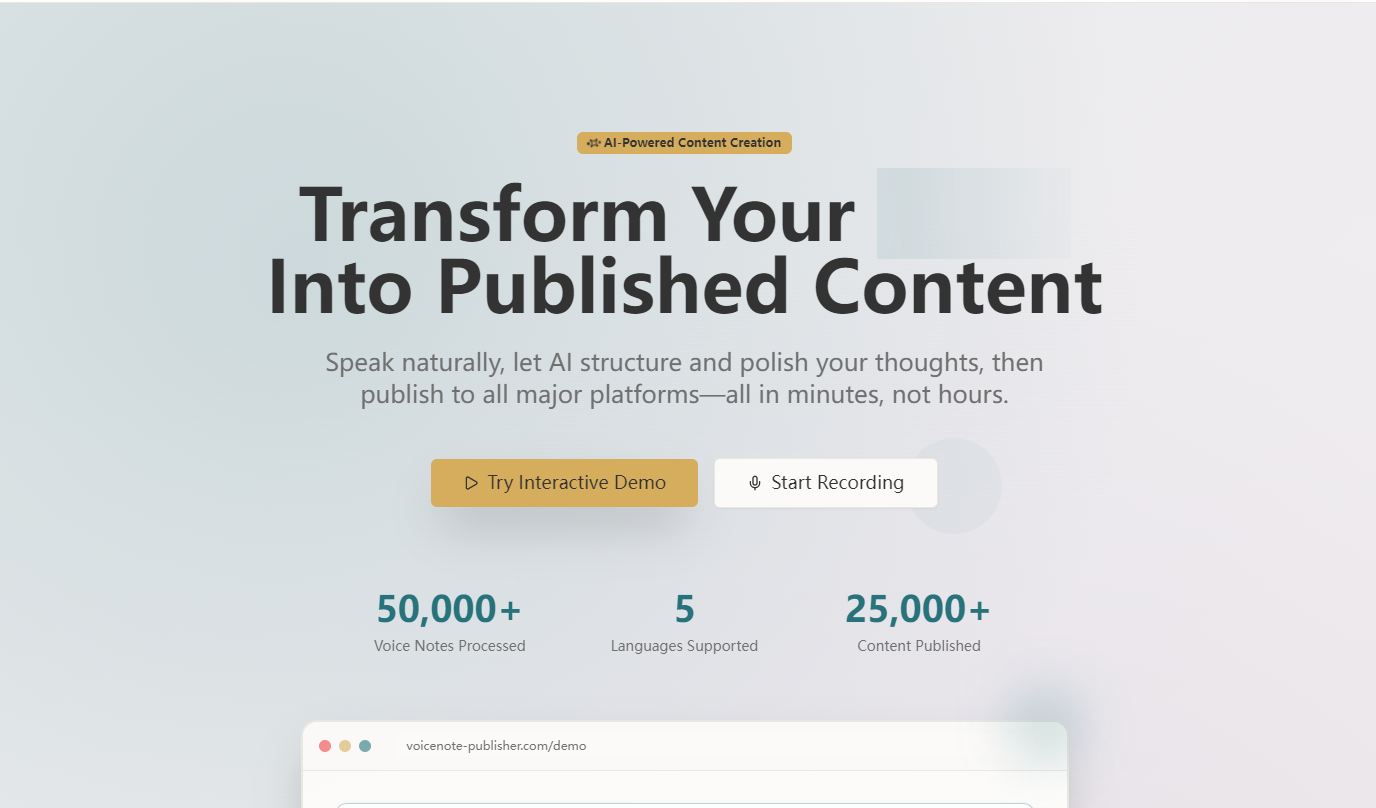
VoiceNote Publisher lets you record voice memos, instantly convert them into blog posts, tweet threads, or newsletters (in multiple languages), and publish directly to platforms like X, LinkedIn, and Substack—all through a visually immersive, intuitive interface.
How we built it
I started with wireframing the user journey in Figma, focusing on seamless animations and responsive design. I used React for the frontend, GSAP to craft fluid scroll and hover animations, and integrated the Web Audio API for real-time audio visualization. The backend (Node.js/Express) powers content formatting logic, while Vercel hosts the app for fast, reliable access.
Challenges we ran into
Balancing high-end animations with performance was tough—slower devices struggled with parallax and particle effects. I had to optimize GPU acceleration and add adaptive animation logic to keep the app smooth at 60fps without sacrificing visual appeal. Also, fine-tuning AI-driven content formatting to match different platform guidelines (e.g., Twitter’s character limits) required iterative testing.
Accomplishments that we're proud of
Creating an interface that’s both functional and visually stunning—scroll-triggered animations, 3D hover effects, and real-time waveform visuals make the tool feel intuitive and engaging. We also nailed multi-format content conversion, ensuring voice notes translate to platform-perfect content every time.
What we learned
I mastered balancing creative UI/UX with technical performance, and gained deep insight into how creators actually use voice-to-text tools (not just what they say they need). I also learned to prioritize accessibility—adjusting animations for reduced-motion preferences while keeping core interactivity intact.
What's next for this project
We’re adding support for more platforms (Instagram, Medium) and advanced AI customization (tone fine-tuning, SEO optimization). We’ll also roll out mobile responsiveness and offline recording to make the tool even more flexible for on-the-go creators.
Built With
- express.js
- intersection-observer-api
- node.js

Log in or sign up for Devpost to join the conversation.