Inspiration
For the past two years I have been teaching students, at a school and through private tuition. As a tutor I saw that many students found it hard to pick out the important points in long study material, and they were often unsure about their own weak areas. I built a Study Assistant to help with that. It summarizes study material, creates quizzes, and works in multiple languages.
Working on it made me think about another problem. Many students can prepare for an important interview on their own, but they rarely get a chance to practise one or receive useful feedback. Intervify came out of that. While building it I also realized that giving someone a score is not enough. A person needs to understand their mistakes and get a clear direction for improving.
What it does
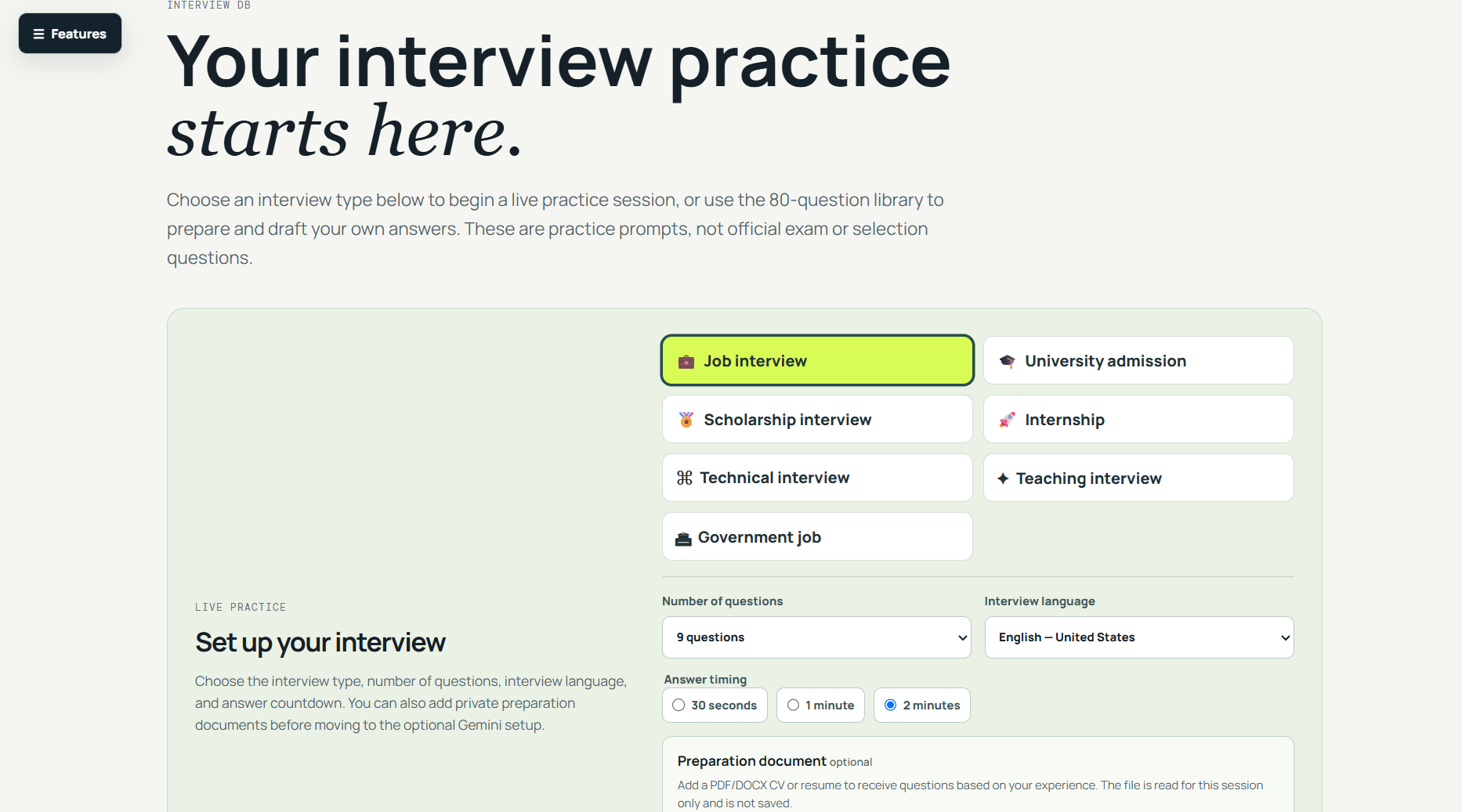
Intervify is an interview practice platform for students and early-career candidates. You choose one of seven modes: Job, Internship, Scholarship, University Admission, Technical, Teaching, or Government Job. Government Job practice covers UPSC Civil Services, NDA/SSB, SSC/Central Government, Banking/RBI, and State PSC.
The interview room is timed. You get 20 seconds of thinking time, then an answer countdown of 30 seconds, 1 minute, or 2 minutes, whichever you choose. You can type or speak your answers, and the interview can run in English, Hindi, Korean, Japanese, Spanish, French, or German.
The questions can use your own documents. Job, internship, technical, and government interviews can read a CV or resume, and scholarship interviews can read an SOP and Study Plan (PDF or DOCX). Behavioural answers get STAR coaching, which points out gaps in Situation, Task, Action, and Result. Scoring is explainable: every answer shows its Relevance, Evidence, Structure, and Role Fit checks, and the scorer rejects random text, repeated words, very short replies, and answers that ignore the question. After each answer you get a next-practice task, and at the end of every interview you get a personal improvement plan.
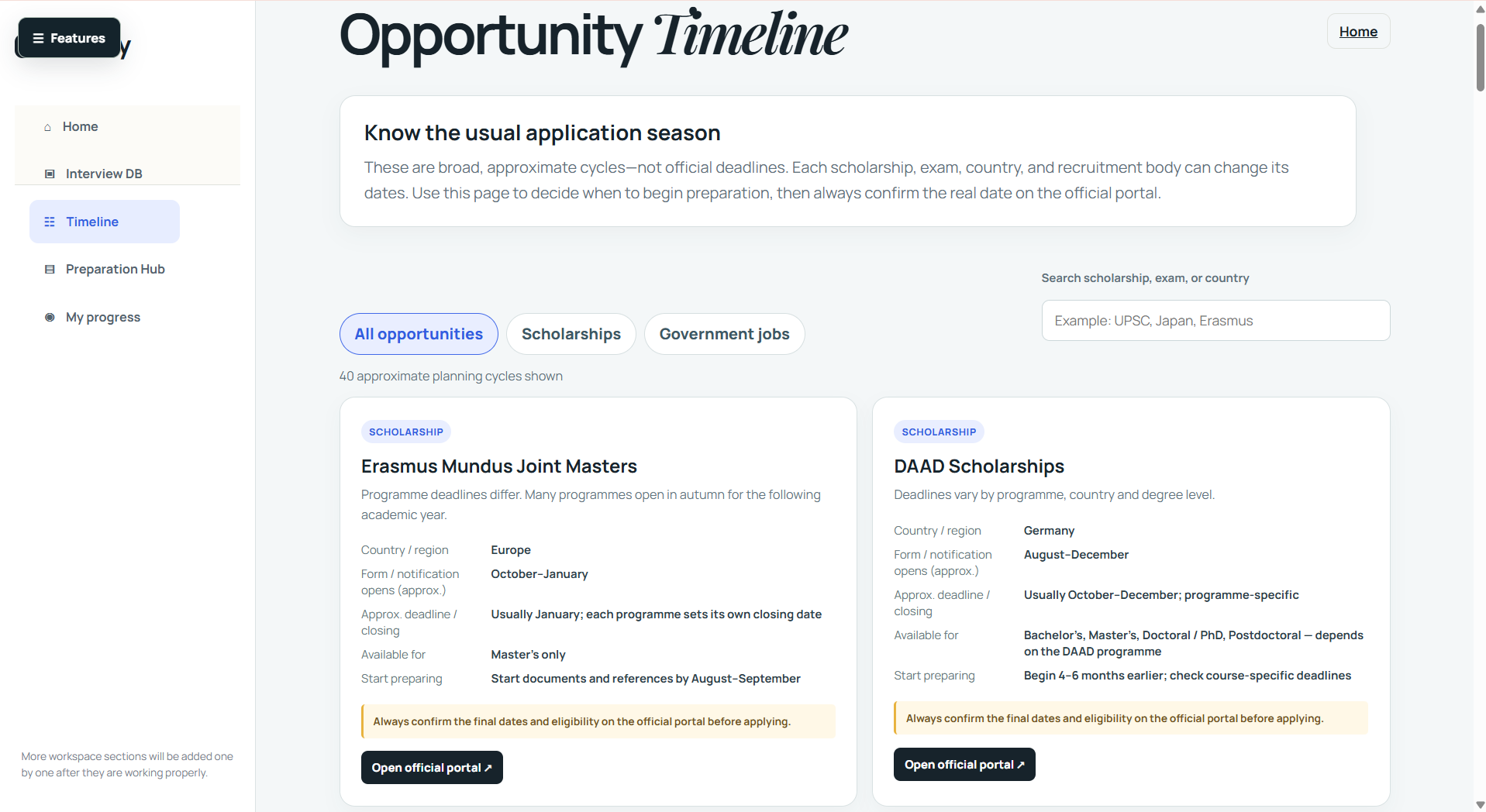
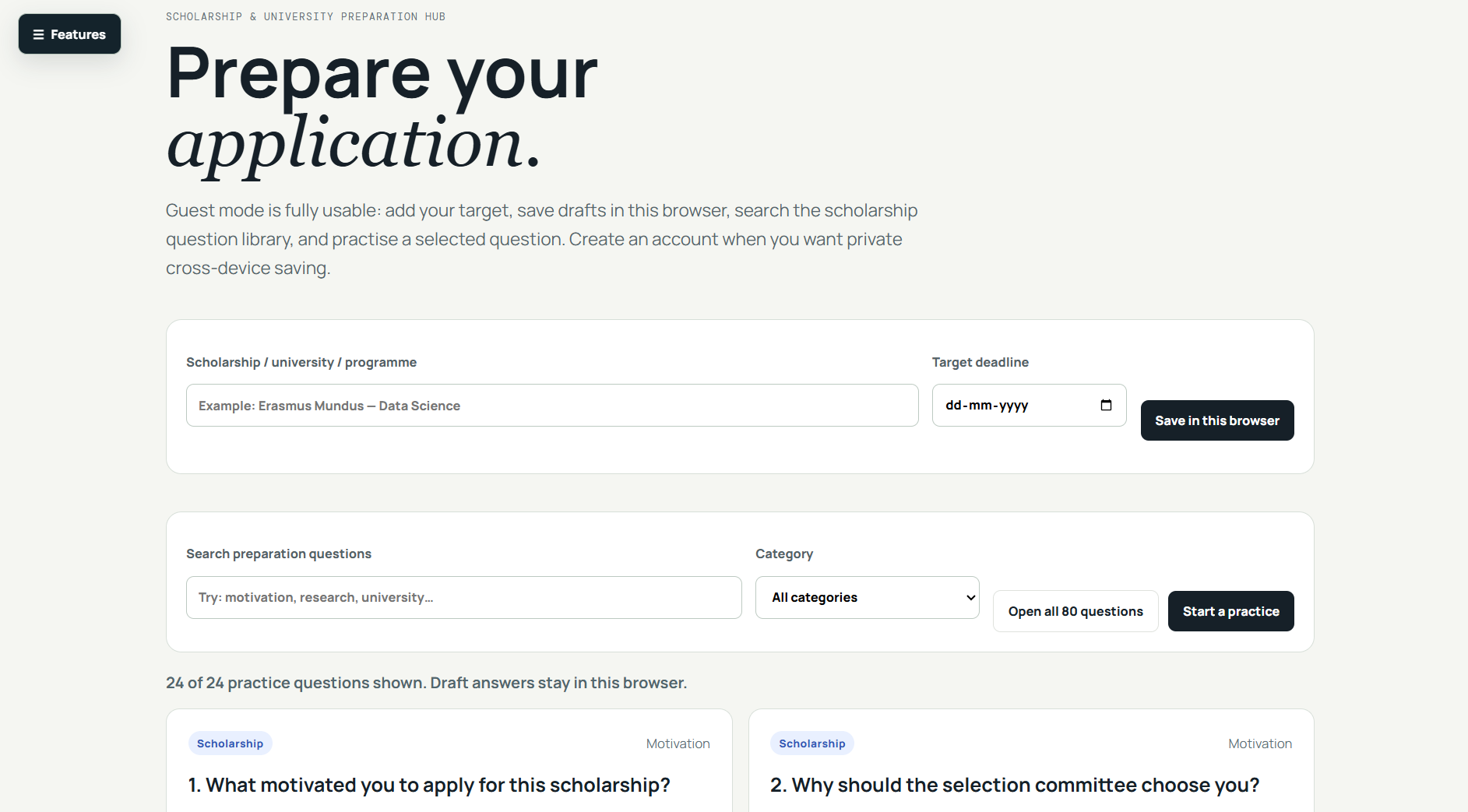
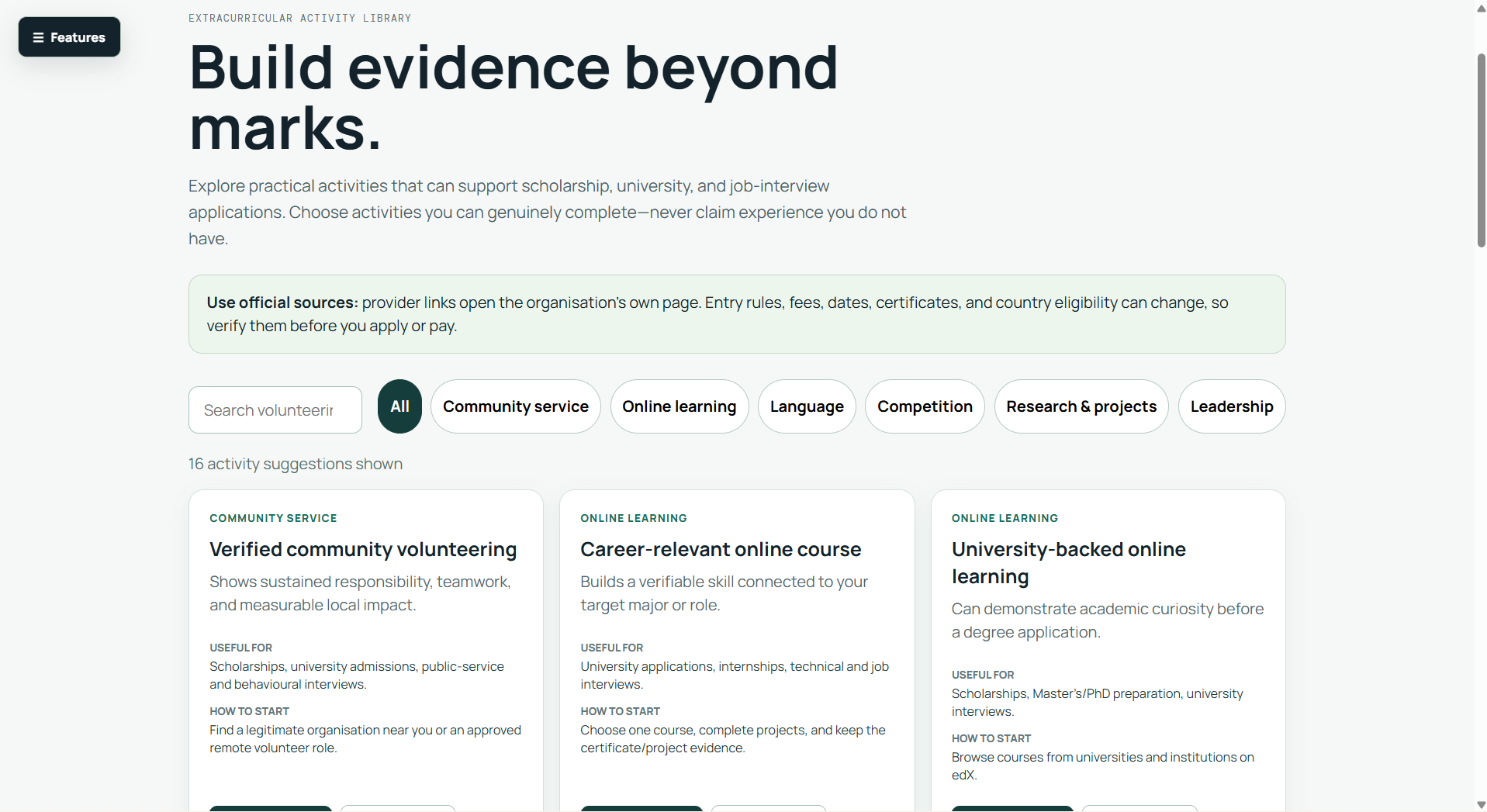
Around the interview room there is an 80-question preparation library, a Scholarship and University Preparation Hub with 27 common questions in eight categories, a deadline timeline, a checklist for 11 common scholarship documents, a skills test with a 200-question pool, resume review, job simulation, a role explorer, and PDF reports.
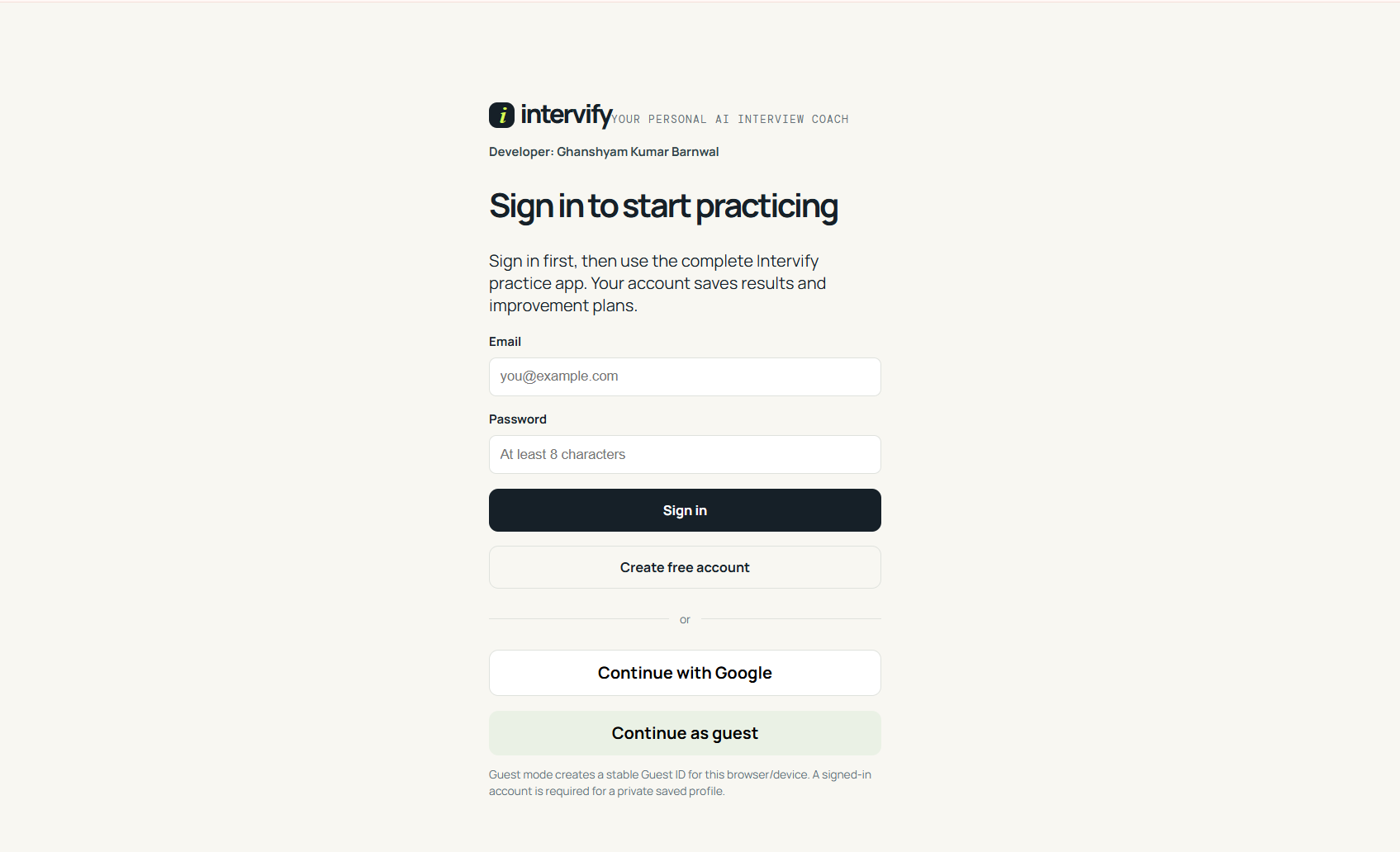
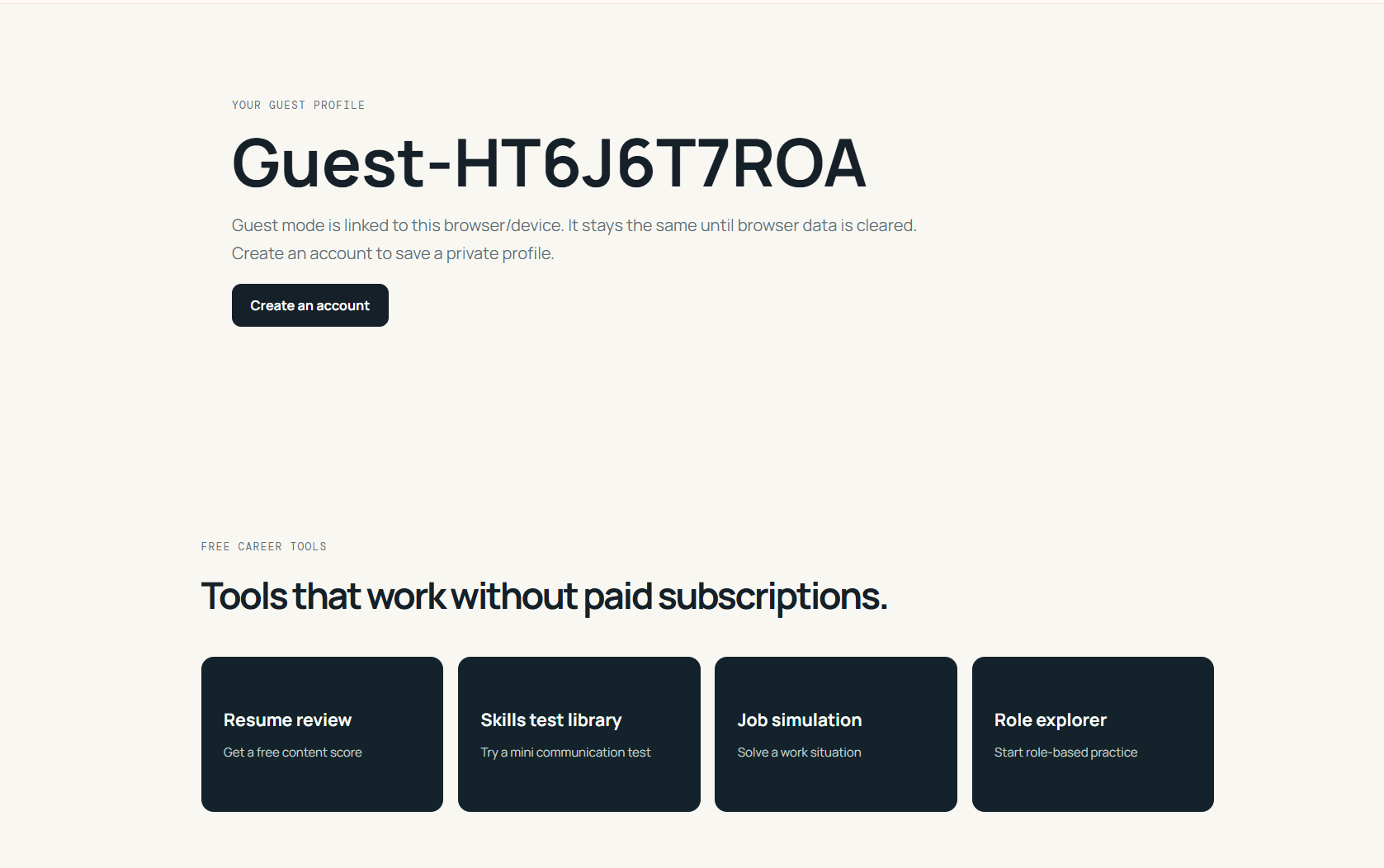
Camera and microphone are optional. The face-presence, framing, lighting, and blink checks run inside the browser. The camera video is never uploaded or stored, and the framing, lighting, and blink hints never count toward a score. Before an interview you can also paste your own Gemini API key. It goes straight from your browser to Google, and Intervify never receives or stores it. Anyone can try the app in guest mode without an account, and signed-in users can delete their account and data permanently from the dashboard.
Intervify is a coaching tool and research prototype. It does not make real hiring, admission, scholarship, or selection decisions.
How we built it
Intervify uses Python and FastAPI on the backend, and HTML, CSS, JavaScript, and Jinja2 templates on the frontend. Data is stored in SQLite for local development and PostgreSQL through SQLAlchemy in production. Login works with email and password, guest mode, or optional Google OAuth. CVs and SOPs are read with pypdf and python-docx. Voice output uses Edge TTS with a browser speech fallback, and PDF reports are made with ReportLab. The app is an installable Progressive Web App, and the live version runs on Vercel. It first ran on Render, and I am now connecting Supabase PostgreSQL so that saved accounts and history last.
Scoring is rule-based and runs locally, so every score comes with the checks behind it.
I designed Intervify to cover these seven kinds of interviews, with one aim in mind: a person should finish a practice interview knowing their mistakes and what to practise next.
Challenges I ran into
I wanted the feedback to do more than give a number, so each answer ends with a next-practice task and every interview ends with a personal improvement plan.
Rule-based scoring is stricter than counting words, but it cannot fully understand a joke, a song lyric, or a subtle off-topic answer. Speech recognition and browser voices behave differently across browsers and operating systems. The app also runs on a free plan, so the first page load can take a little while.
Accomplishments that I'm proud of
Intervify is live, and anyone can try it right now in guest mode without making an account. It began as a problem I noticed while tutoring, and it now has seven interview modes, including Government Job practice for UPSC Civil Services, NDA/SSB, SSC/Central Government, Banking/RBI, and State PSC.
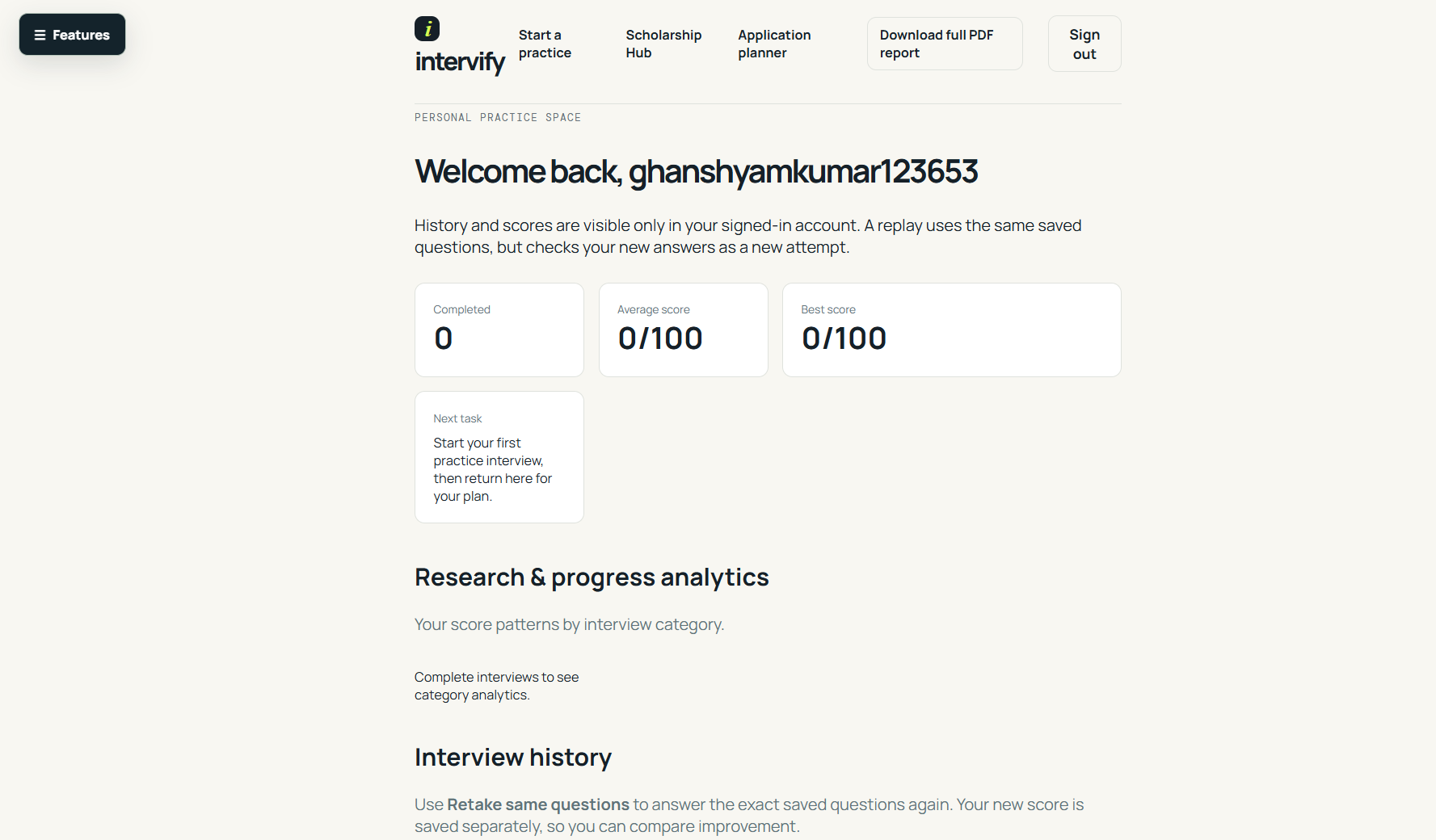
I am proud that the feedback goes beyond a score. Each answer shows why it scored the way it did, through Relevance, Evidence, Structure, and Role Fit checks. It also gets a next-practice task, and every interview ends with a personal improvement plan. This was the idea I cared about most. I am also proud of the privacy choices. Camera video is never uploaded or stored. A user's own Gemini API key goes straight from their browser to Google, and Intervify never receives or stores it. Signed-in users can delete their account and data permanently from the dashboard. The interview can run in English, Hindi, Korean, Japanese, Spanish, French, or German, and it can use a person's own CV or SOP to shape the questions.
What I learned
A score on its own does not help much. What helps is knowing why an answer lost marks and what to practise next. Building Intervify also changed how I see AI. I no longer see it only as technology for building applications. I see it as a tool for real problems that people face, one that should support human judgment and not replace it.
What's next for Intervify-AI Interview
- Finish the Supabase connection so accounts, history, and ratings are saved durably on the Vercel version.
- Add optional AI evaluation to improve how well the scoring understands whether an answer is relevant.
- Study Intervify as a research project: are personalized questions more useful than general ones, and how does AI feedback compare with human evaluation?
- Build question libraries for countries and universities with reviewed official sources, instead of claiming official ones.
Try it
Open https://intervify-ai-interview.vercel.app and choose "Continue as guest".
Built With
- css
- edge-tts
- fastapi
- gemini-api
- google-outh
- html
- javascript
- jinja
- postgresql
- progressive-web-app
- pypdf
- python
- python-docx
- render
- reportlab
- sqlalchemy
- sqlite
- supabase
- vercel

Log in or sign up for Devpost to join the conversation.