Try it free, no login: https://mockrep.onrender.com Code (MIT): https://github.com/ranjit-sahoo/mockrep (formerly InterviewPilot)
Inspiration
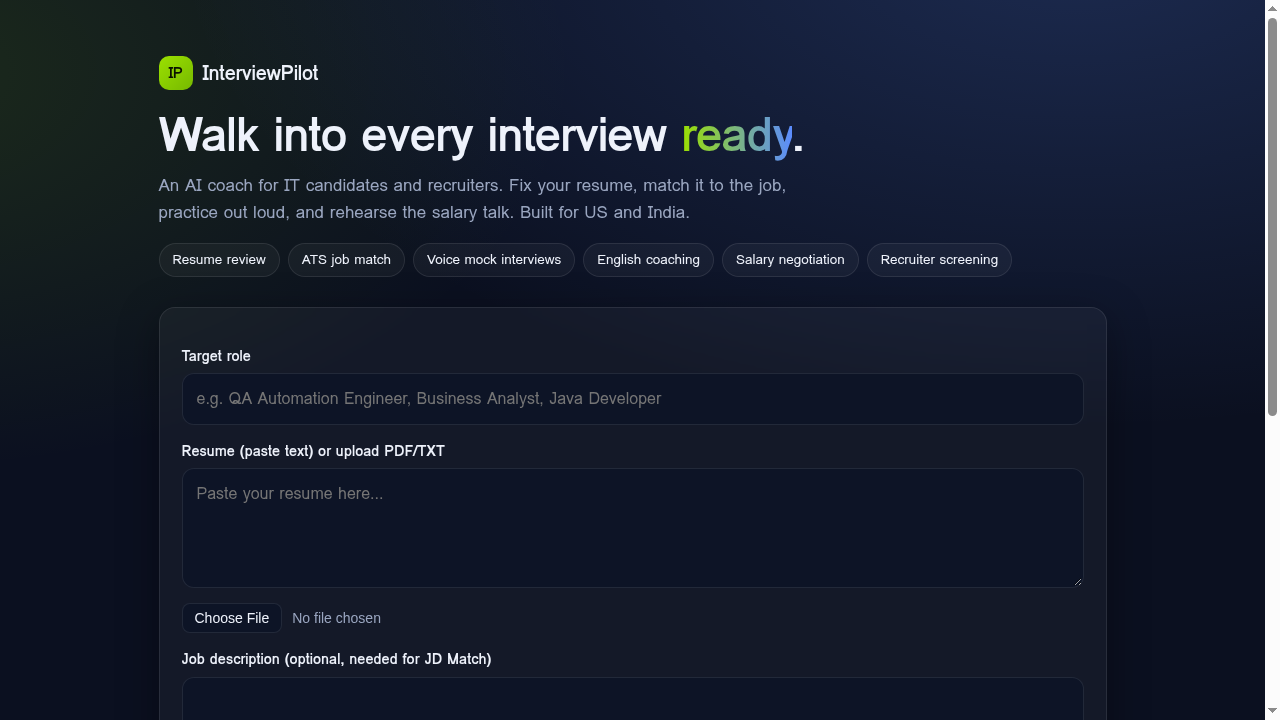
Most interview prep tools are built for US job seekers and cost $100-300 a year. Candidates, including people in India applying to roles abroad, get generic advice. I wanted one free tool that reads YOUR resume and the exact job you are applying to, and prepares you for that interview.
What it does
Interview Prep Pack (the core): paste your resume and a job description. In about 11 seconds you get 8 questions tailored to that resume and that JD, each with a model answer, plus coding questions when the role is technical.
- Question Bank: 28 roles (US and India markets) plus general questions, with instant profiles of 33 well-known US and India companies (interview style, what they look for), and AI-written questions for any other company.
- Coding Practice: 14 problems with AI code review and hints.
- Resume Builder: 3 templates, AI polish and summary, PDF export.
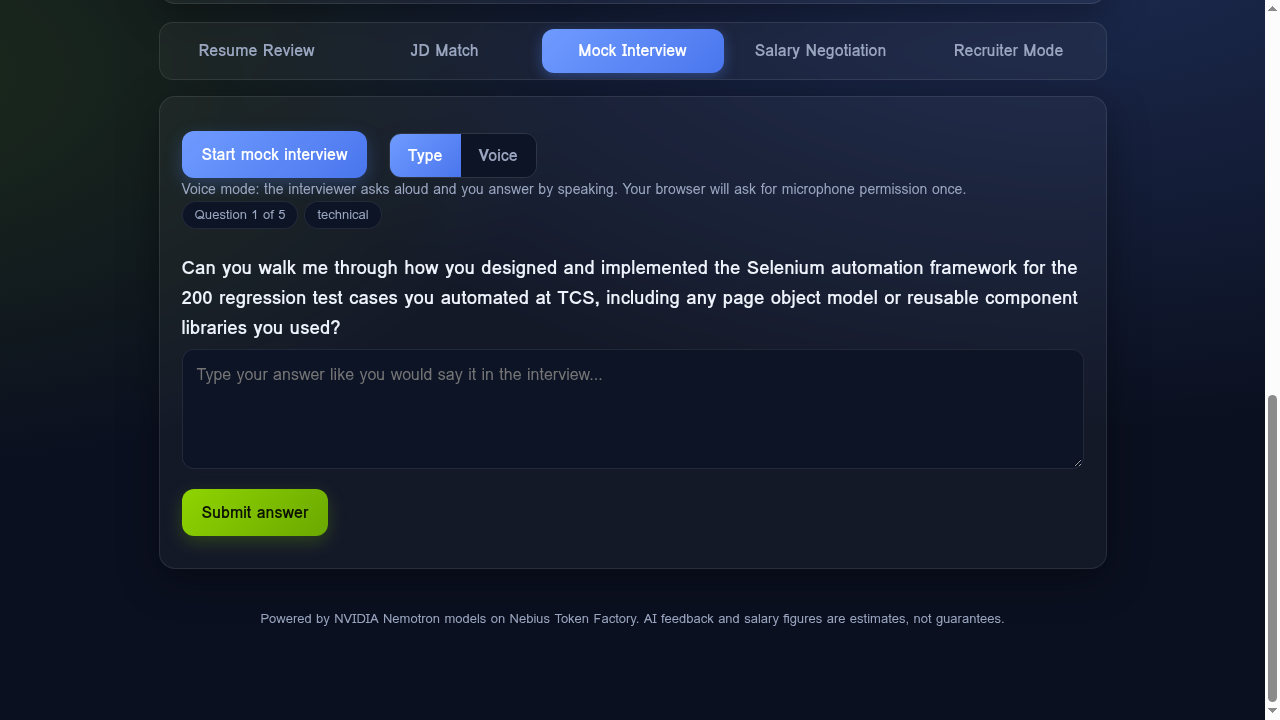
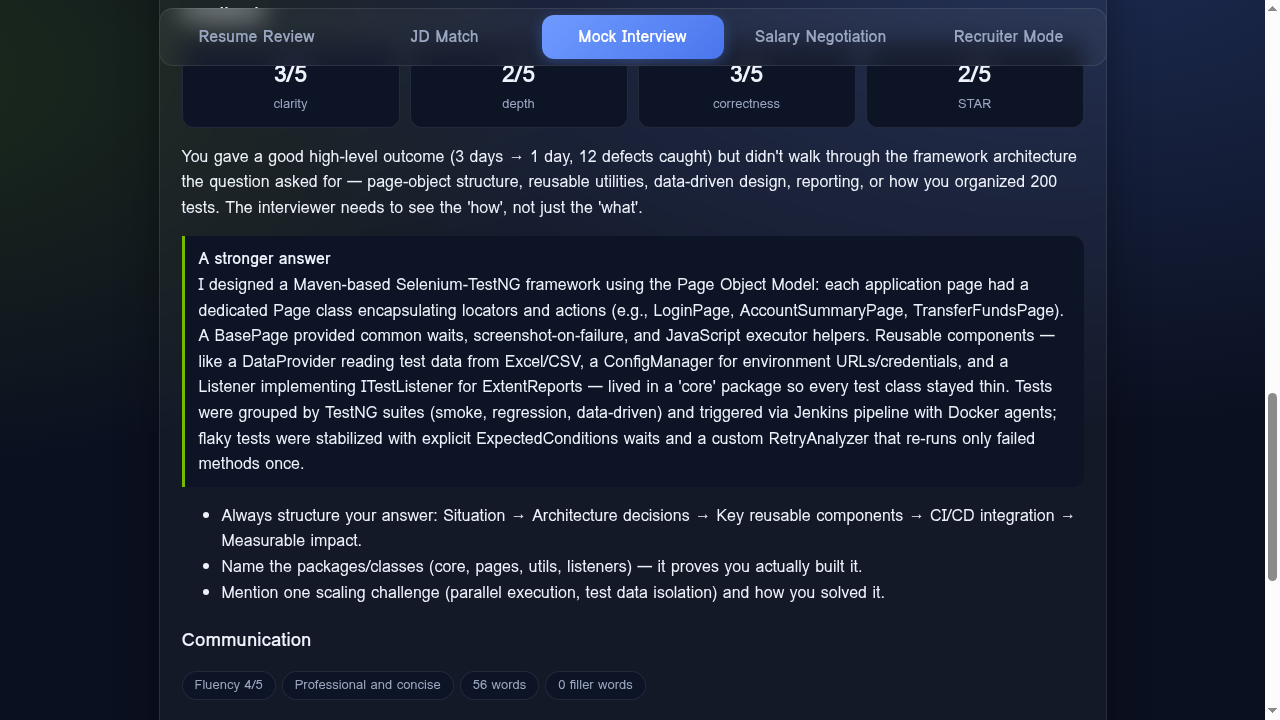
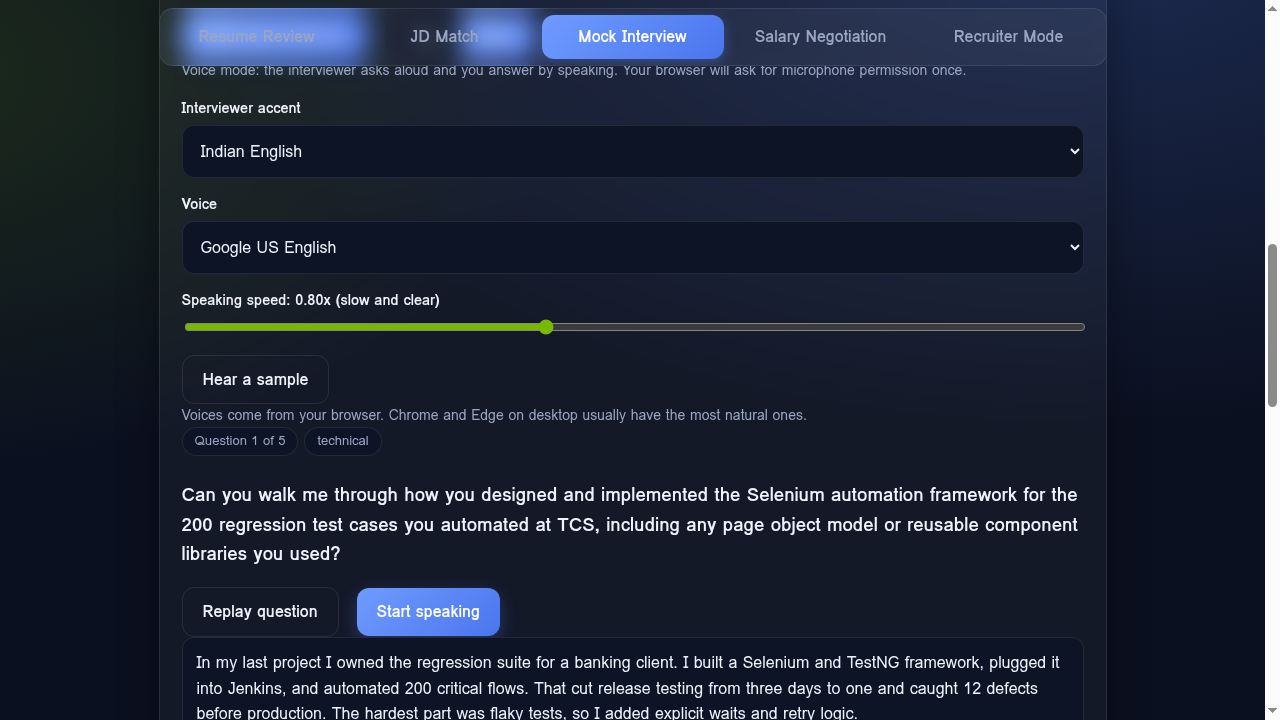
- Mock interview with follow-up questions that build on what you actually said, adaptive difficulty (stronger answers lead to harder questions, optional starting level), scored feedback and optional voice mode (Indian or US English).
- STAR Builder: turns rough notes into a Situation/Task/Action/Result answer you can speak, without inventing facts.
- Company Brief: what the company does, culture, interview rounds, question style and a "why join" angle, adapted to your country.
- Shareable score card: after a mock interview, get a clean image and link to post on LinkedIn or WhatsApp.
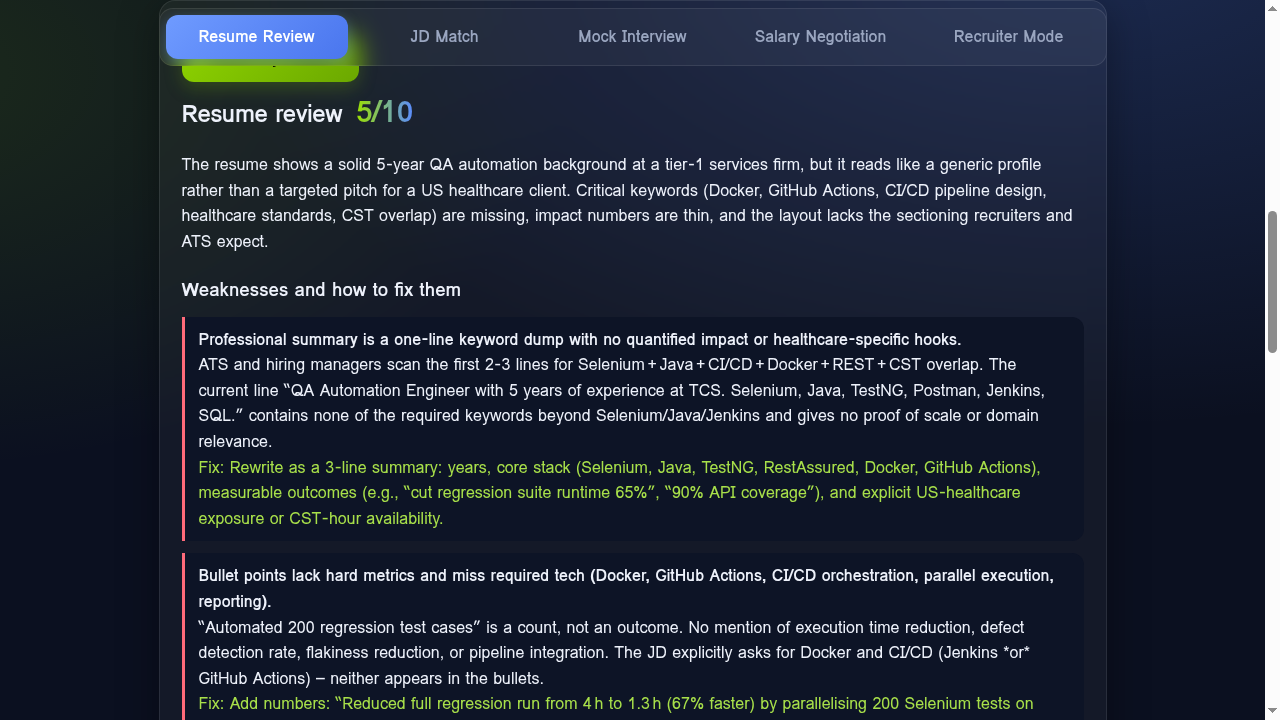
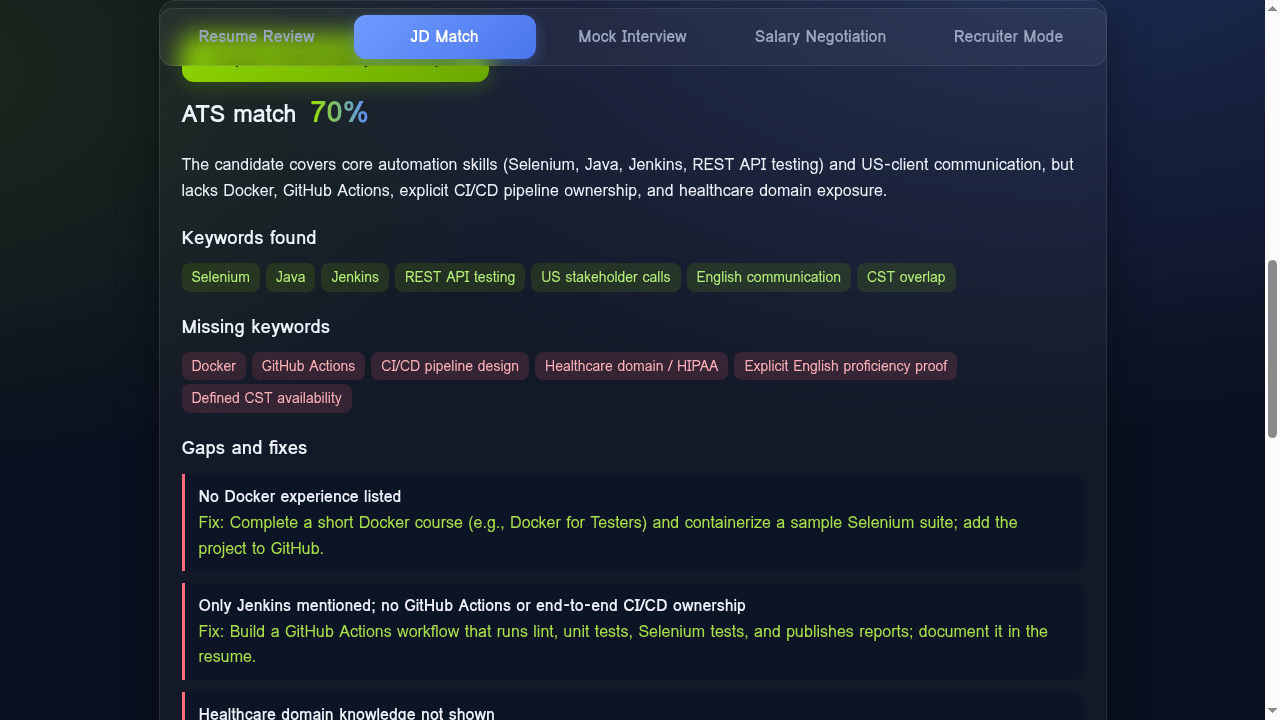
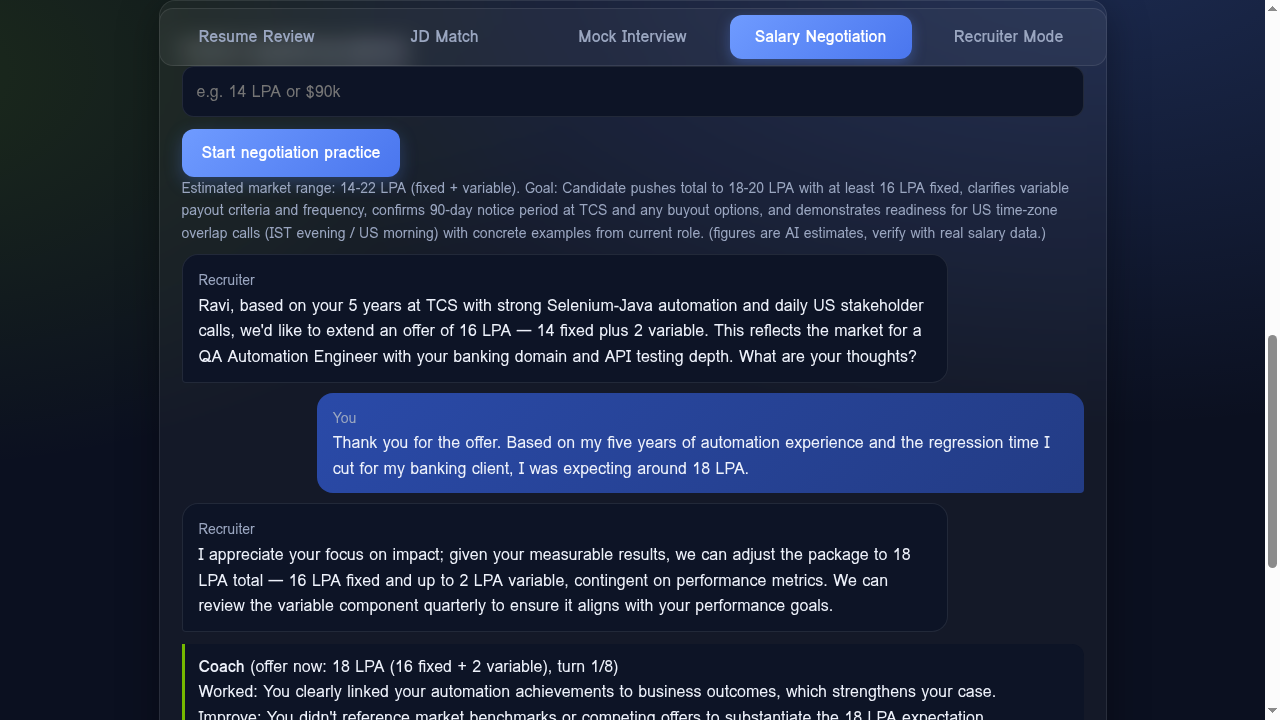
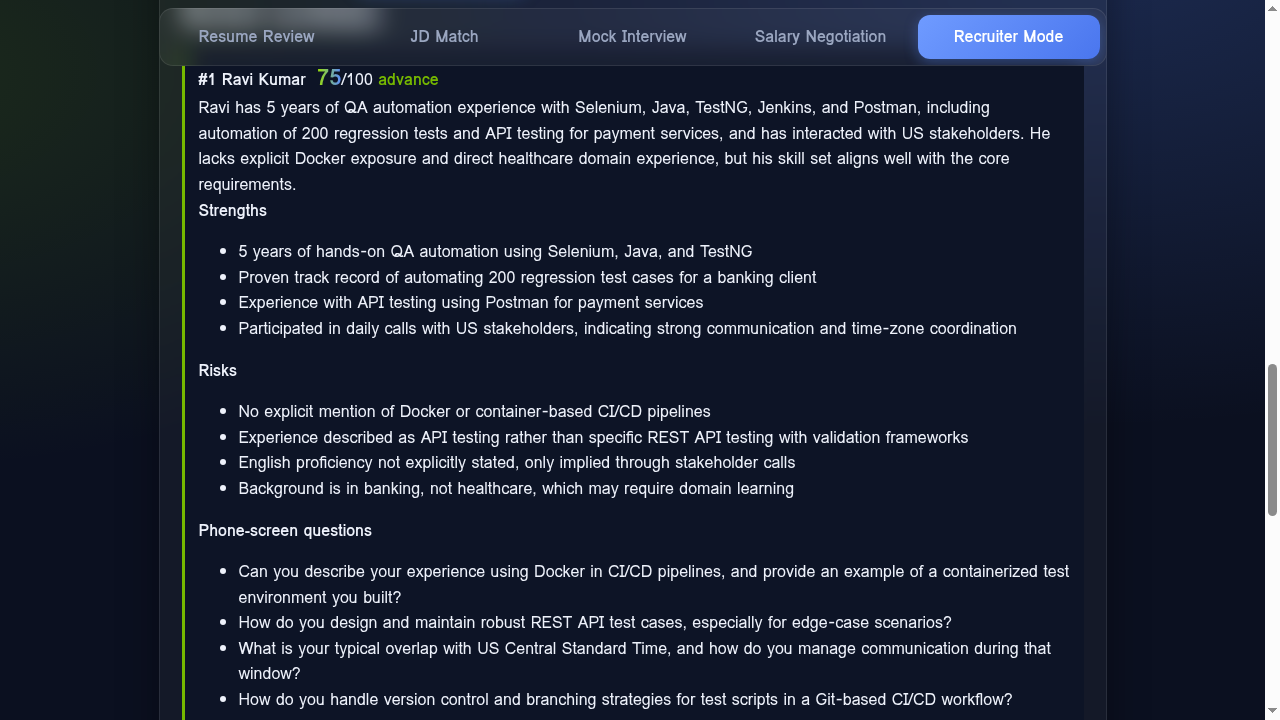
- Resume review, JD match, communication coaching, salary negotiation, recruiter mode.
- Country adaptation: it judges the candidate's own base (an India-based person applying to a US client is treated as India).
- Retry this answer: after feedback, answer the same question again and watch your score change (best score kept).
- Progress over time: logged-in users see a per-skill score chart across sessions (scores only, never answers).
- PDF export of the prep pack and session report, a guided start screen for first-time visitors, and a Pro waitlist.
- Optional login: save prep packs, code reviews and resumes in My History. Guest mode keeps every feature with no login.
How we built it
FastAPI backend on Nebius Token Factory. NVIDIA Nemotron 3 Nano handles fast turns (prep core, hints, detection). Nemotron 3 Ultra handles deep work (resume review, final scoring, code evaluation). The prep pack uses two parallel Nano calls to stay fast. Strict-JSON prompts, think-tag stripping, retries and timeouts. Per-session locks, rate limiting and a concurrency semaphore keep many users safe. Company profiles and coding questions are cached. Accounts use scrypt password hashing and hashed session tokens; history is stored on free managed Postgres (Neon). The UI is a single installable PWA page. 87 automated tests run in a mock-LLM mode.
Challenges
Reliable JSON from reasoning models. Keeping latency low on a free tier (fast/strong model routing, caching, loading states). Keeping the demo free and open for judges.
Accomplishments
A complete product, not a demo: resume+JD tailored prep, question bank, coding practice, resume builder, voice, PWA, optional accounts, tests, public MIT repo, live URL.
What we learned
Right-sizing the model per task matters more than always using the biggest one. Personalizing to the candidate's own resume and JD beats generic question lists.
What's next
More companies and roles, more coding problems, and sharing prep packs with mentors. A paid plan (India Rs 499/yr, elsewhere $49/yr) is a post-hackathon roadmap item; everything stays free for judges.
Feedback on Nebius Token Factory and NVIDIA tools
Token Factory: the OpenAI-compatible API made integration quick; Nano answers in about 3 s with thinking turned off (the chat_template_kwargs enable_thinking flag worked; 30-40 s without it) and Ultra in about 12 s. Billing and promo-credit setup took several steps and the dashboard showed "Billing: Suspended" while credit was active, which was confusing. A model catalog with latency and price per model would help. Nemotron: strong instruction following and good JSON when asked strictly, but reasoning models emit think-tags, so output needs cleaning; a documented "no reasoning" flag would help. Ultra is clearly better for resume and scoring; Nano is enough for short turns.
Built With
- docker
- fastapi
- javascript
- nebius-token-factory
- nvidia-nemotron
- postgresql
- python
- sqlite

Log in or sign up for Devpost to join the conversation.