-
-
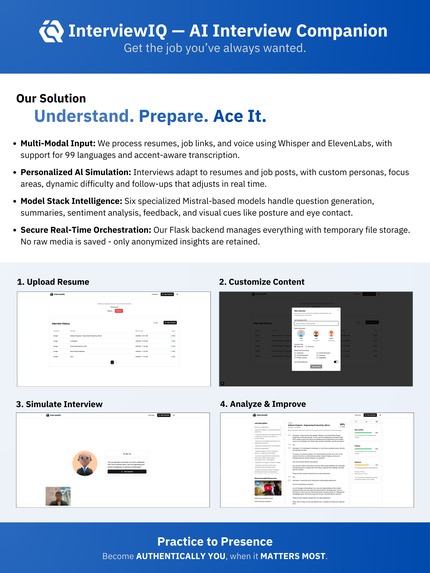
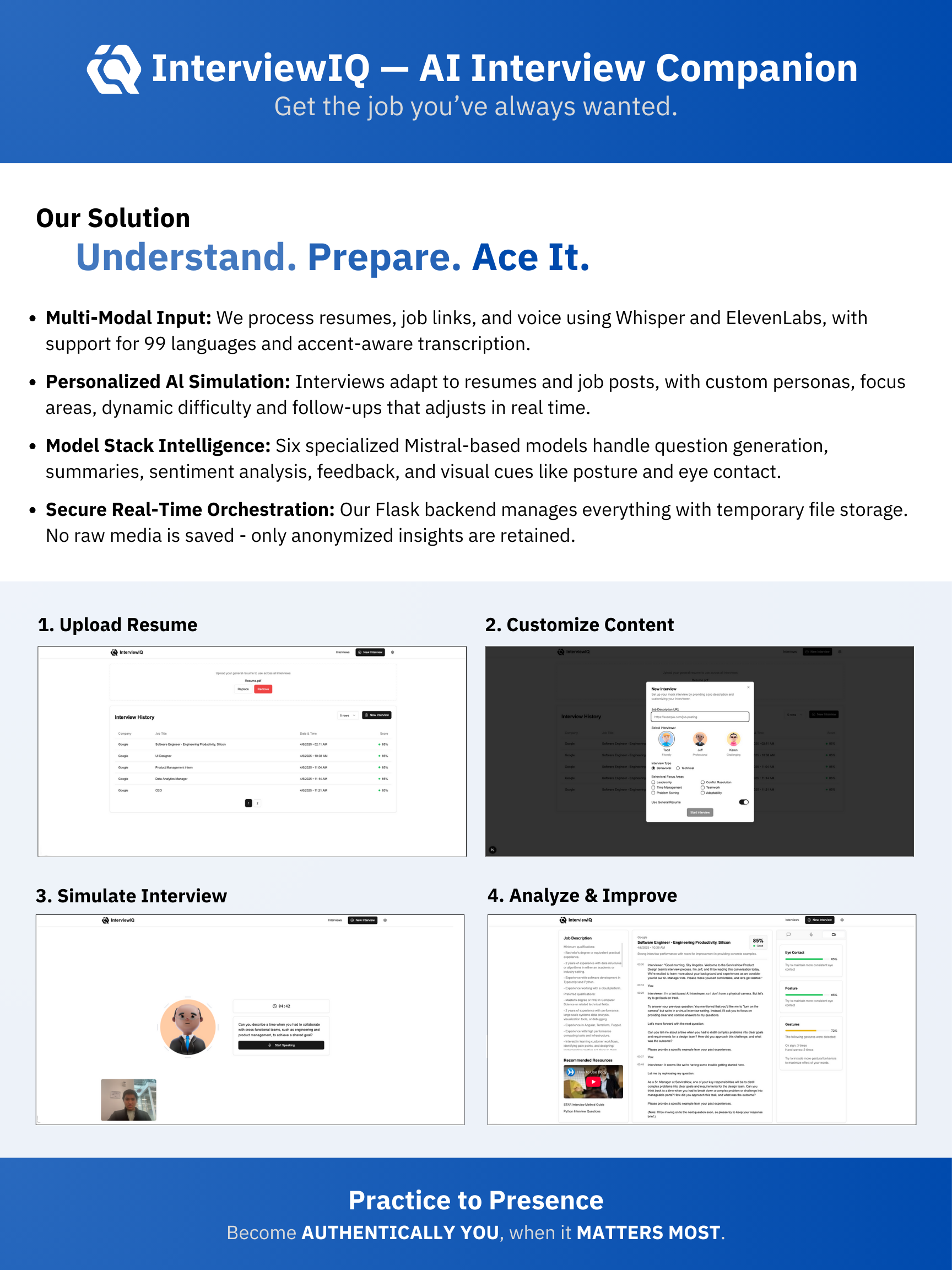
Summary Hand-Out
-
Todd
-
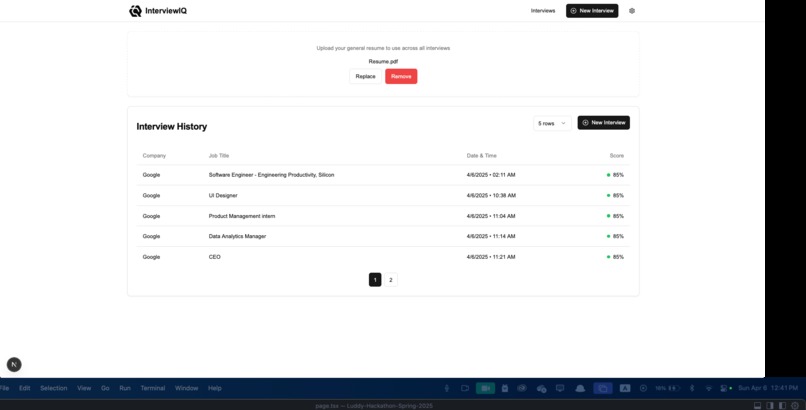
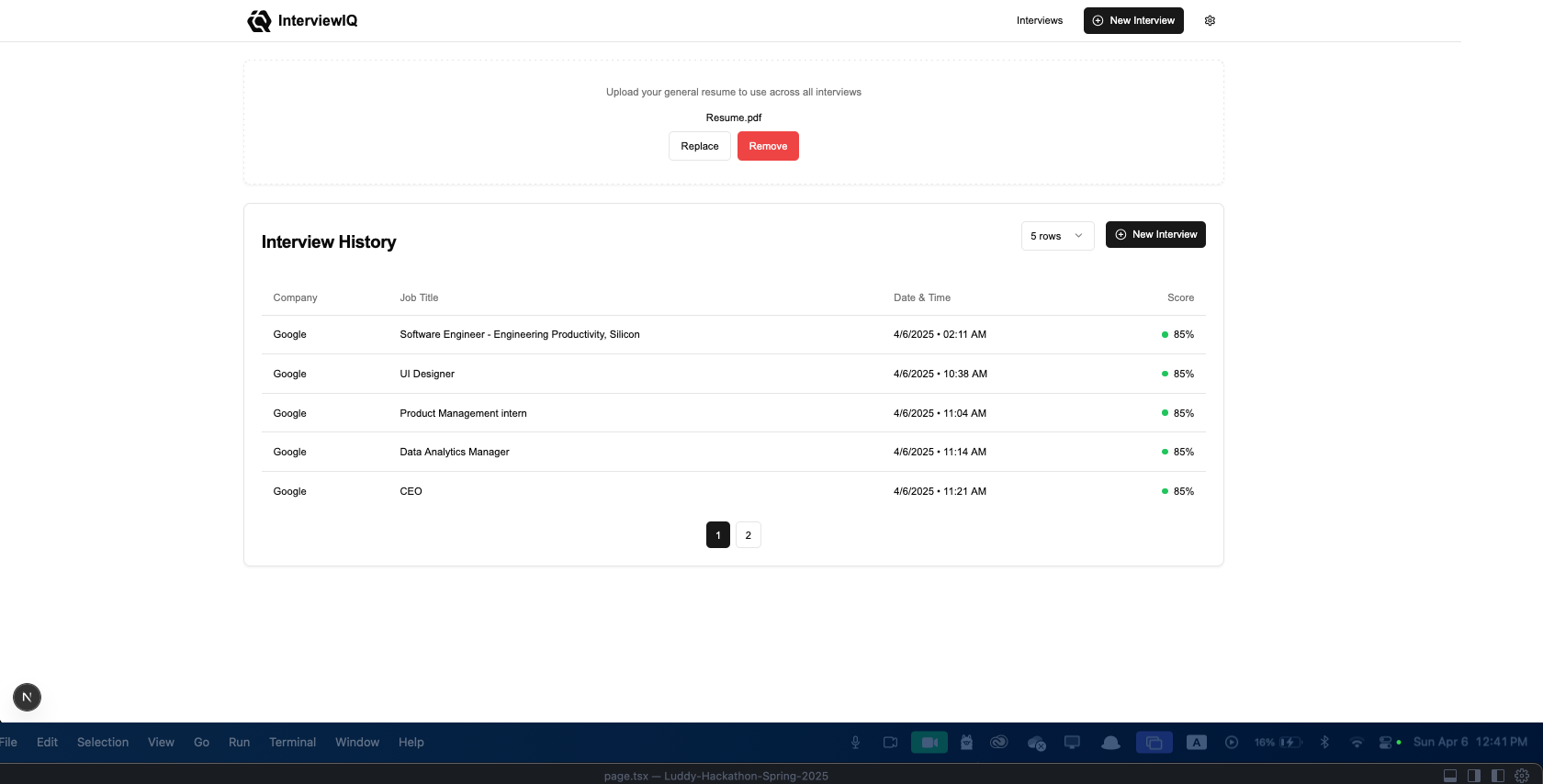
Main Dashboard
-
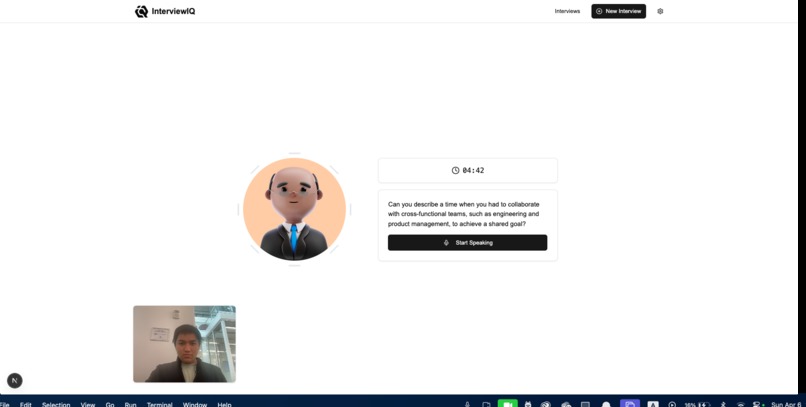
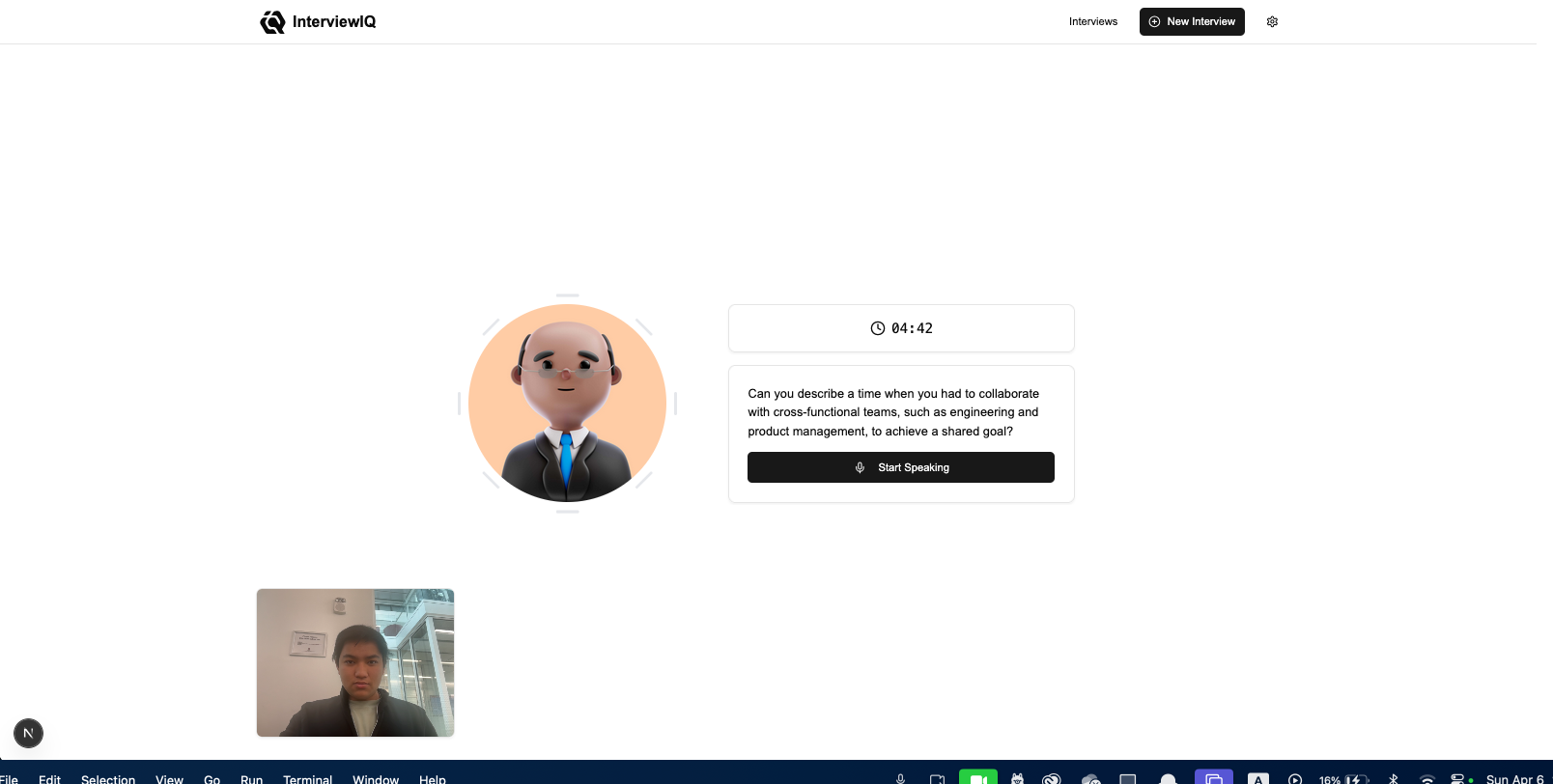
Interviewing with Todd :)
-
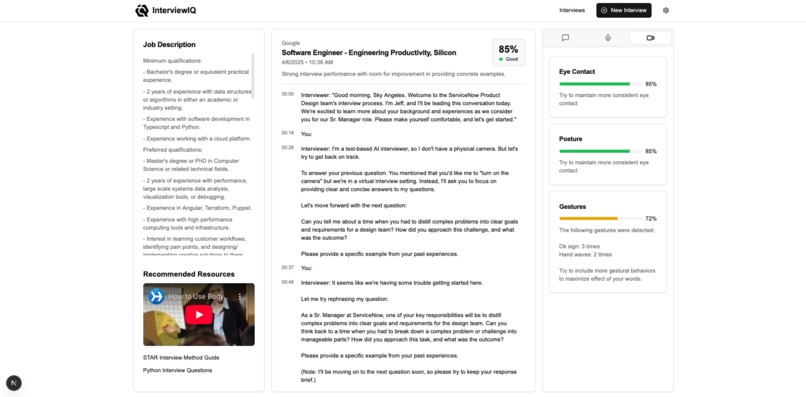
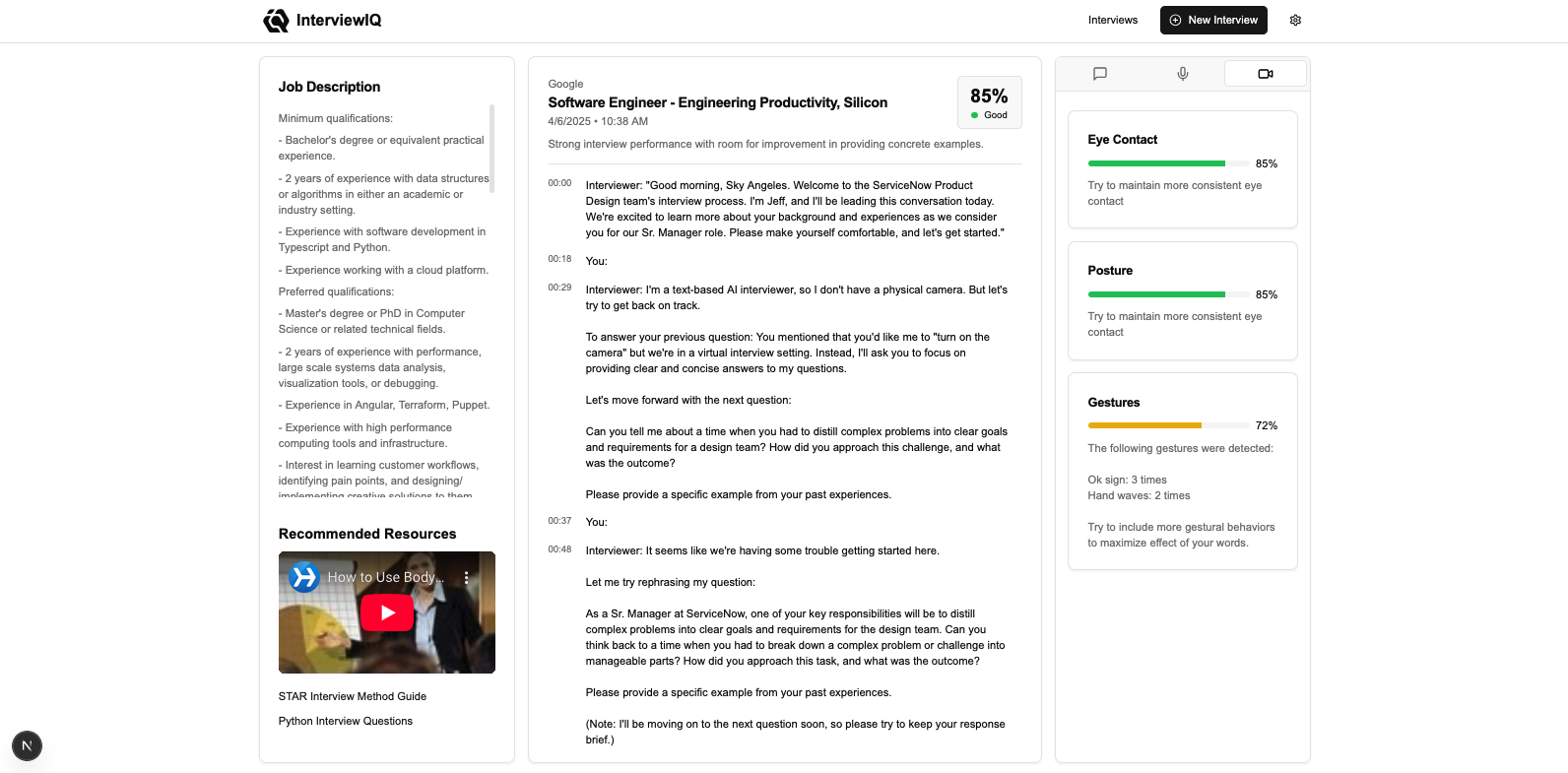
Feedback!
-
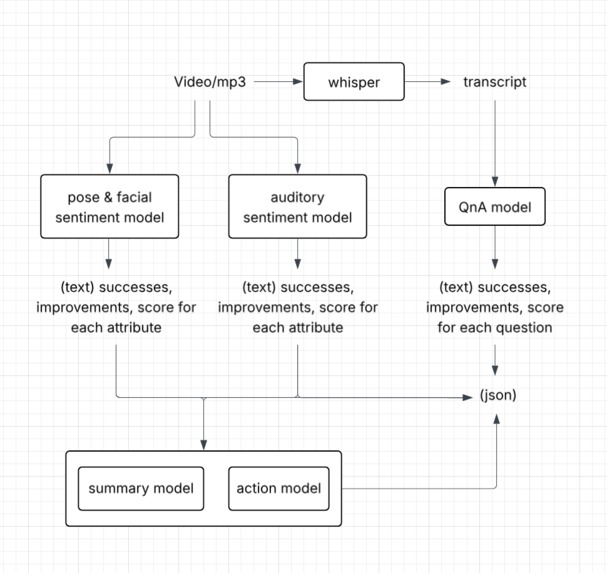
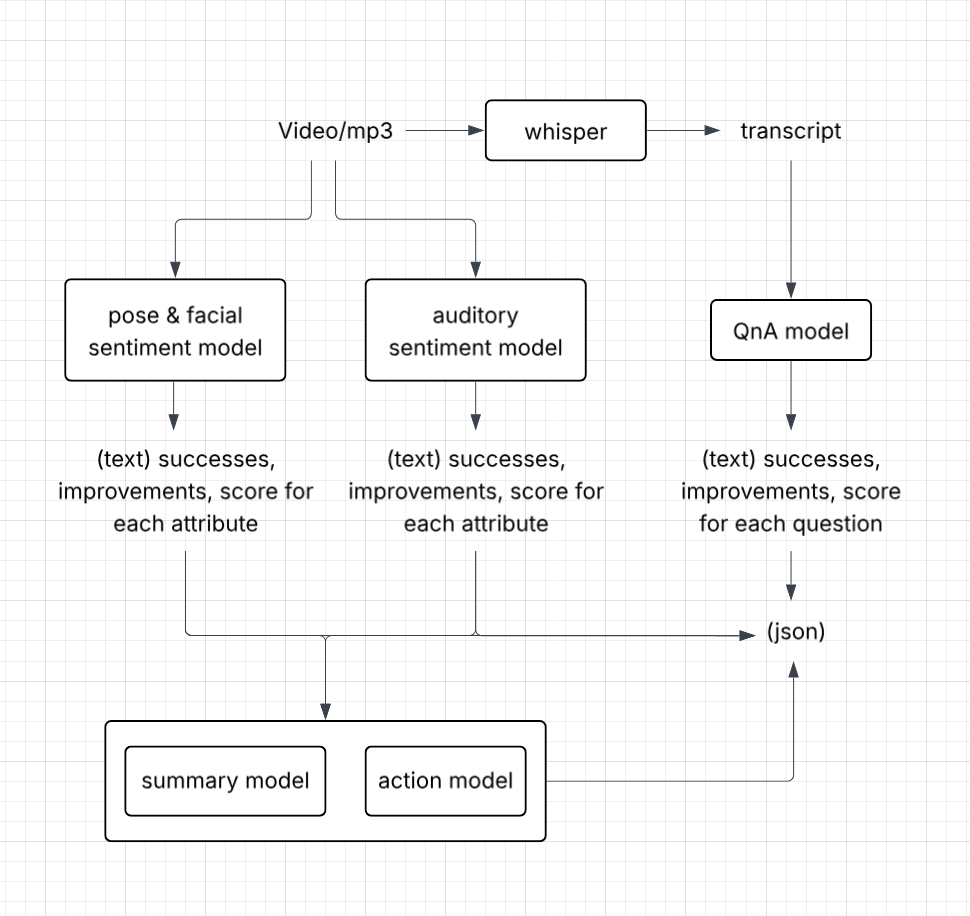
Architecture Diagram
-
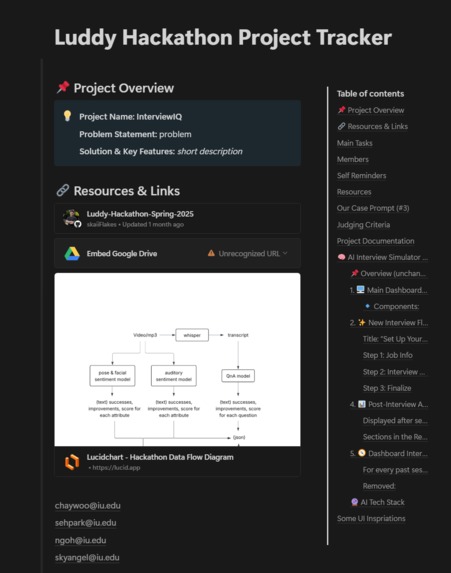
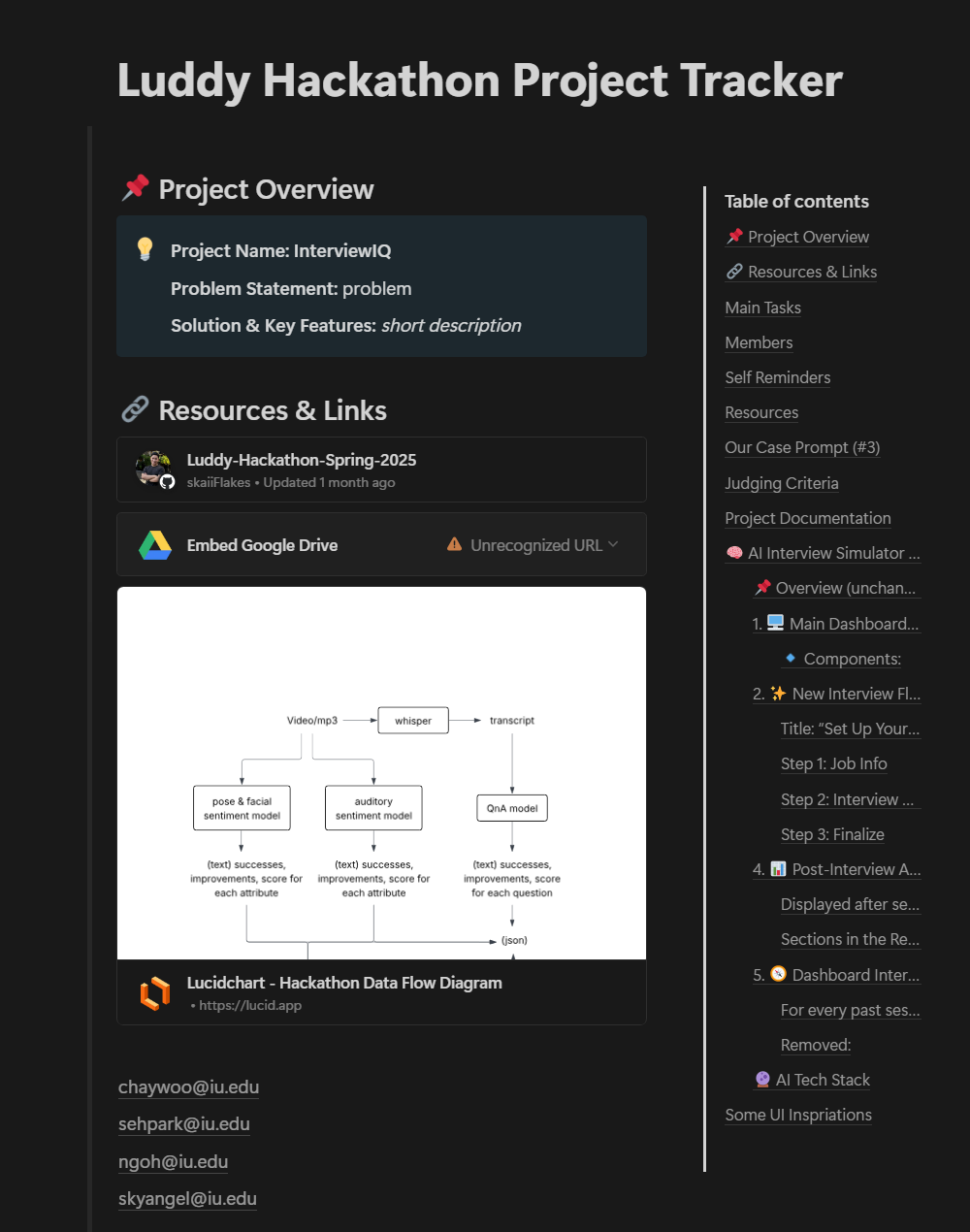
Notion
-
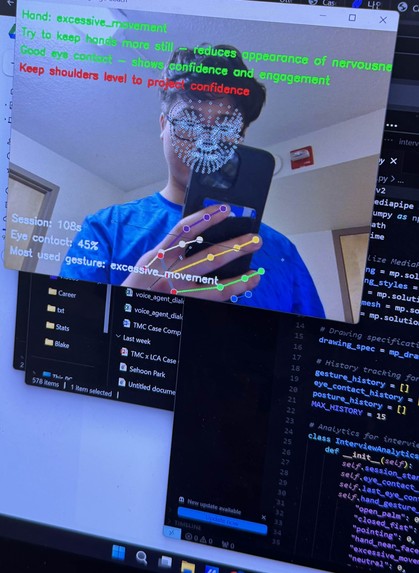
Vision Model
-
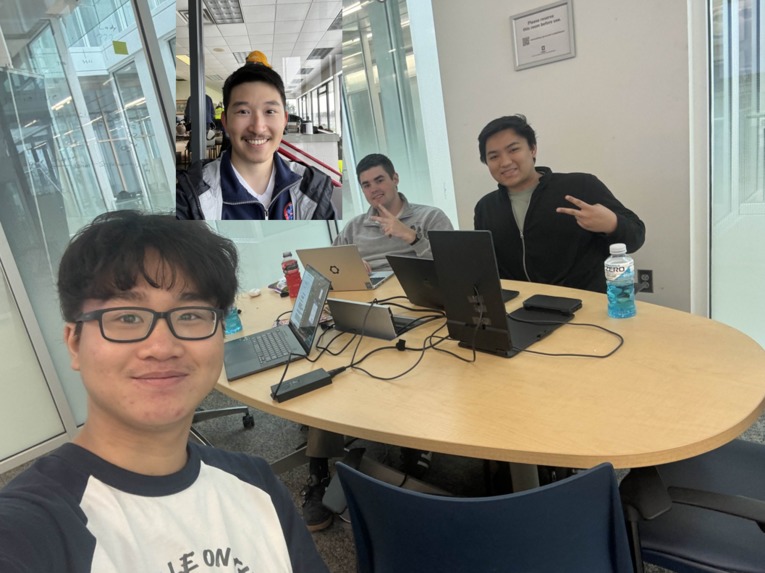
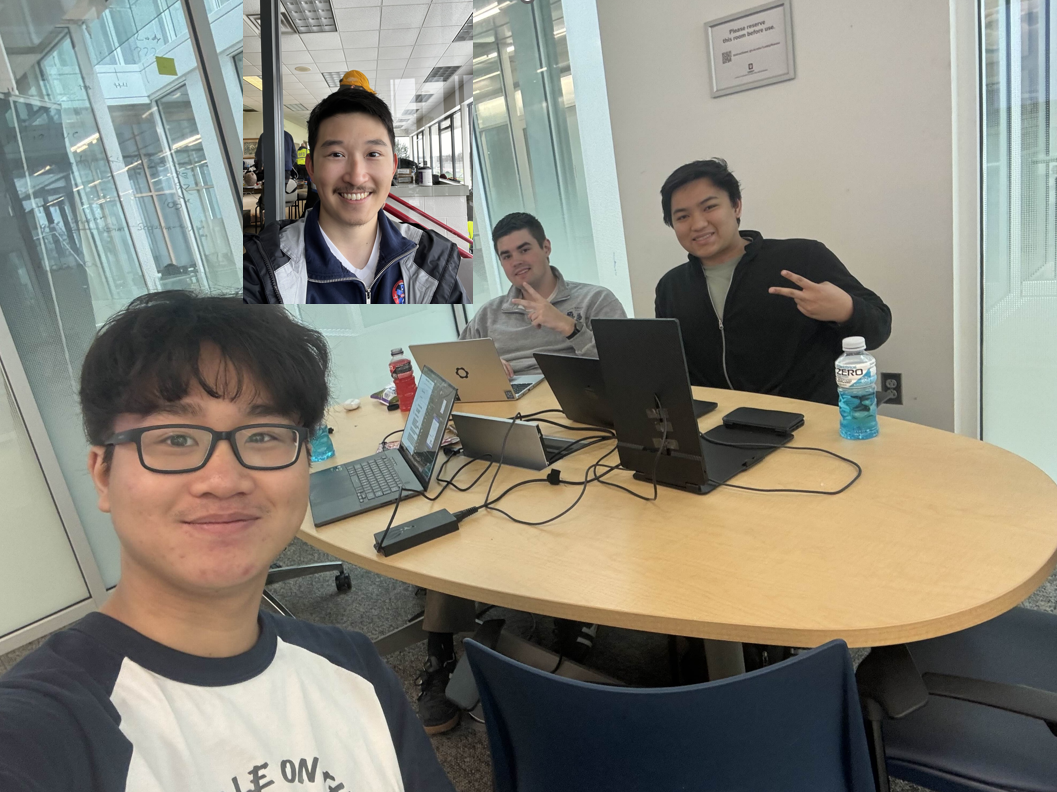
Our Team
Inspiration
During the development of InterviewIQ, our AI-powered interview simulation and feedback system, we set out to build something deeply personal.
It reflected the challenges we faced ourselves as students navigating the job hunt — struggling to know what to prepare, how we were being perceived, or where we could improve. We wanted to create the tool we always wished we had. One that could help us prepare with clarity, get meaningful feedback, and improve both what we say and how we come across.
We approached this challenge by reimagining the concept of an AI meeting companion through the lens of interview preparation — a high-stakes, emotionally charged use case that’s often overlooked while also meeting all 5 (including bonus) of the challenge’s criteria.
What it does
The experience begins with a simple but intentional flow. A user uploads their resume and pastes a job posting link for the role they are preparing for. We built a custom CloudScraper that extracts key job details like title, responsibilities, and qualifications. At the same time, the user's resume is parsed through our document extraction layer, which pulls out education, experience, and skills. These inputs are combined to create a contextual interview tailored to both the role and the individual.
Users then select the type of interview they want to simulate technical or behavioral and choose from three distinct AI interviewer personalities. Todd is warm and supportive. Jeff is direct and professional. Karen is blunt and skeptical, offering tough-love practice. Users can also specify custom focus areas such as leadership, system design, product thinking, or communication. These shape the conversation and ensure that each session targets the areas that matter most to the individual.
What truly sets InterviewIQ apart is our revolutionary dynamic difficulty adjustment system. Unlike static interview simulations, our platform analyzes the depth and quality of each response in real-time, then automatically adjusts follow-up questions to challenge users appropriately. When someone demonstrates mastery in a particular domain, the system increases complexity to push their boundaries; when they struggle, it provides supportive follow-ups designed to guide them toward stronger responses. This adaptive approach creates a personalized learning curve that evolves with each user's capabilities.
After each session, users receive a detailed performance report designed to feel more like mentorship than grading. The report includes a full transcript, a TL;DR-style summary, and bullet-point highlights of the interview's key moments. It breaks down question types, identifies areas of strength, and surfaces actionable suggestions for improvement whether that means expanding on a technical explanation, using clearer phrasing, or managing nervous tone. We also provide sentiment analysis, helping users understand how they came across emotionally throughout the session.
How we built it
Once the session begins, the platform activates a real-time, multi-modal pipeline. Audio is transcribed using Whisper, while ElevenLabs generates realistic, natural-sounding AI interviewer voices. In total, we leverage an impressive suite of six specialized Mistral-based models working in concert:
- Our question prompting model
- Technical & behavioral interview fine-tuning
- Dynamic difficulty
- Three distinct interviewer personalities
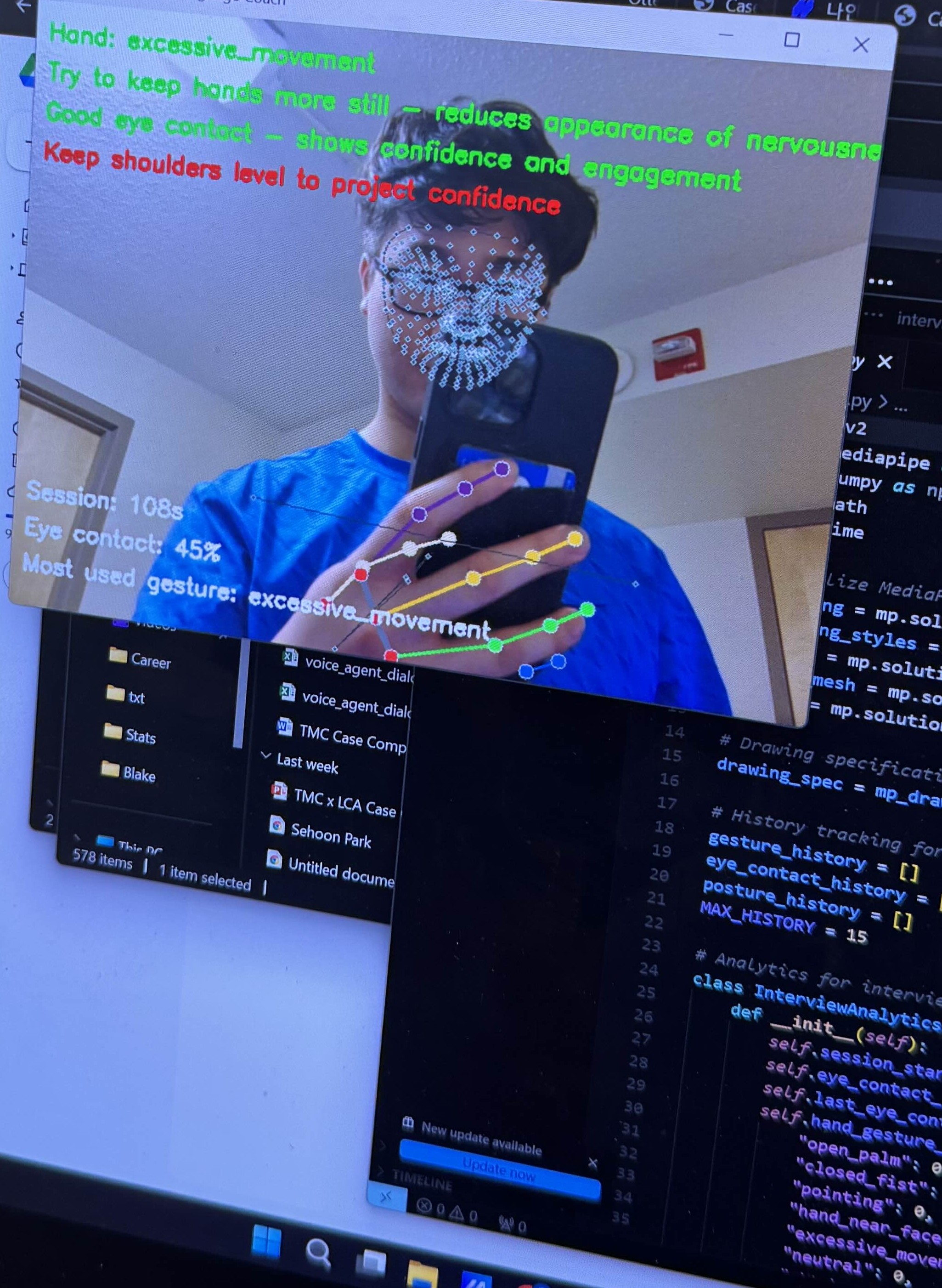
- Our computer vision model
- Posture tracking
- Eye contact monitoring
- Hand gesture analysis
- Our sentiment analysis model
- Analyzes interview responses for emotional tone
- Provides insights on communication effectiveness
- Our comprehensive summary model
- Interview performance overviews
- Key talking points extraction
- Our multilingual processing model
- Supports up to 99 languages
- Accent-aware transcription
- Our detailed feedback model
- Actionable improvement suggestions
- Strengths & development areas
- Evidence-based reasoning with direct dialogue references
- Personalized resource recommendations
This integrated system works together to provide comprehensive analysis of both verbal responses and visual cues that are critical in real interviews.
Everything is orchestrated through our Flask backend, which manages transcription, job parsing, resume analysis, persona logic, prompt generation, and visual tracking. Combining all these layers real-time audio and video processing, multi-language support, fine-tuned models, secure temporary storage, and adaptive interview logic required careful engineering and design thinking. But it's exactly what made this project meaningful.
We also built multi-language support to ensure the platform is inclusive and globally accessible. Whether someone is interviewing in their second language or practicing for a multilingual environment, the system adapts including translated prompts, accurate transcription, and regionally appropriate voice feedback.
Privacy and data protection were priorities from day one. We used Python's tempfile module to handle all processing in-memory and assigned UUIDs to every session to prevent collisions. No raw video or audio is ever stored on disk. Only anonymized, structured output is retained to power feedback and performance insights.
Challenges we ran into
Building this system wasn't without its challenges. Late-night debugging sessions became our norm, wrestling with countless integration errors as we connected the multimodal components. Our team persevered through roadblocks by implementing meticulous logging, creating clear documentation, and maintaining an evolving project space in Notion to track our progress. Regular touch-point meetings became essential as we navigated the complexities of real-time processing pipelines and model fine-tuning. Each challenge we overcame from audio processing latency to inconsistent webcam feeds taught us valuable lessons about building robust, responsive systems. The difficulties we faced ultimately strengthened not just our technical skills, but our ability to collaborate effectively under pressure and maintain focus on the user experience we were determined to deliver.
Accomplishments that we're proud of
InterviewIQ was not just another hackathon project. It was built with care, from firsthand experience, and with the belief that interview prep deserves more than templates and surface-level scoring. It taught us how to build sophisticated multi-modal systems and more importantly, reminded us why we build in the first place. To empower people. To build confidence. And to make preparation more human and effective.
What we learned
Through building InterviewIQ, we gained invaluable experience in:
- Real-time multimodal AI systems integration
- Fine-tuning language models for specialized domains
- Building secure, scalable backend architecture
- Creating effective user interfaces for complex AI tools
- Managing collaborative development with clear documentation
- Overcoming integration challenges in AI-powered applications
What's next for InterviewIQ
InterviewIQ is here — deeply considered and ready to help people show up as their best selves when it matters most. Looking ahead, we plan to continue refining our platform and enhancing it based on user feedback, with the goal of fully deploying InterviewIQ to support students at the Luddy School of Informatics by providing them with the interview preparation resources they need to succeed in today’s competitive job market.


Log in or sign up for Devpost to join the conversation.