-
-
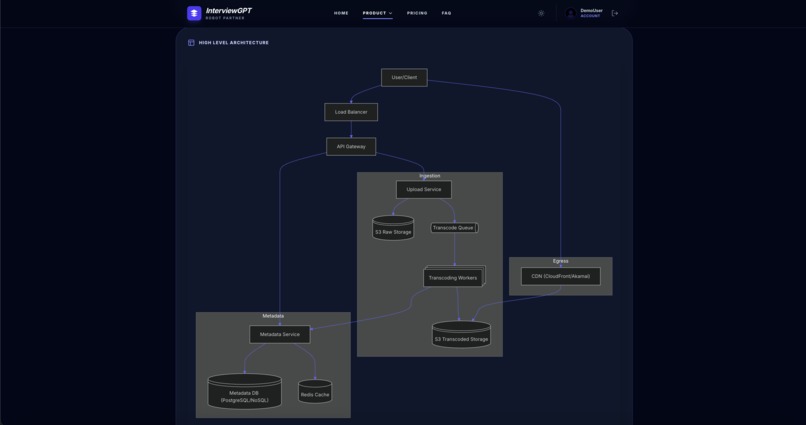
System Design
-
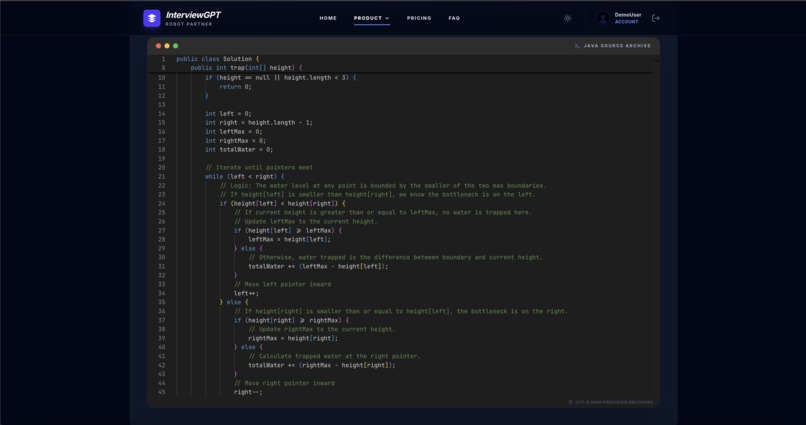
Coding
-
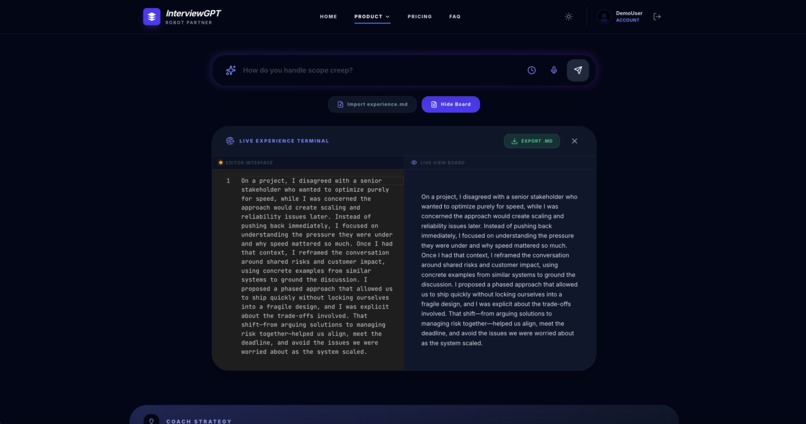
Behavioral
-
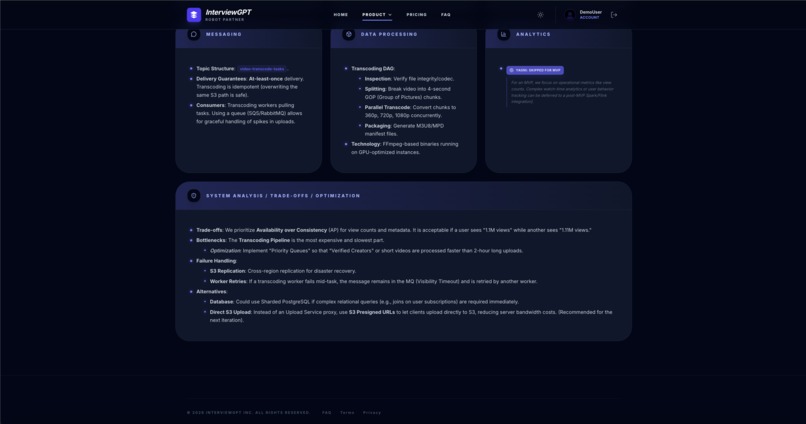
System Design
-
System Design
-
Coding
-
Behavioral
-
Behavioral
-
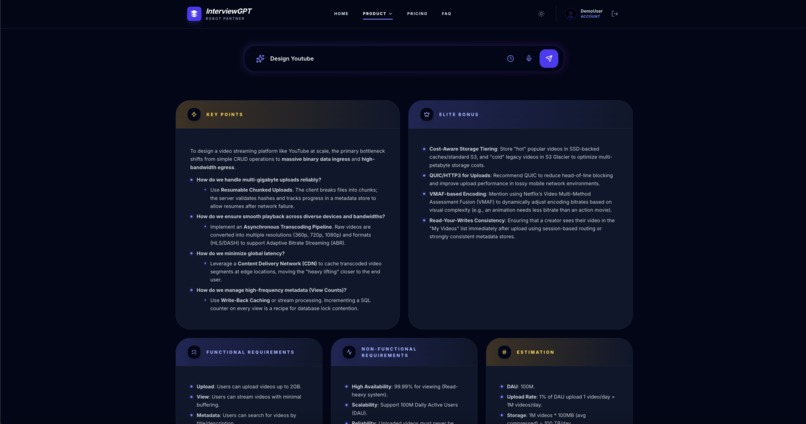
System Design
-
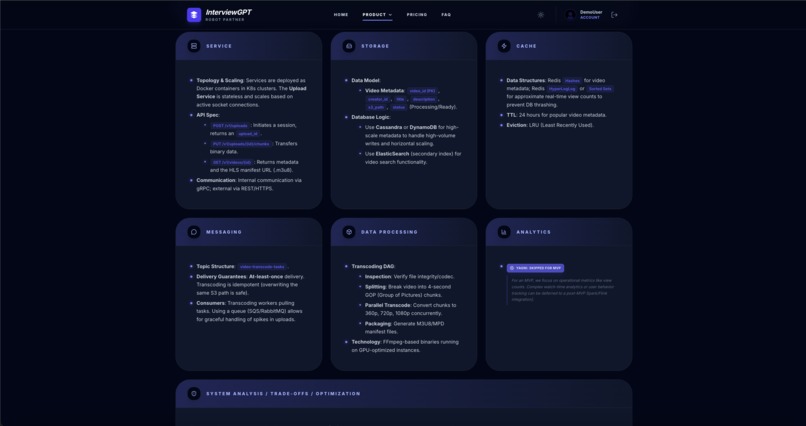
System Design
Inspiration
Tech interviews are broken. Most candidates study generic LeetCode solutions or stale system design blogs, only to fail because they didn't hit the specific Staff-level rubrics that Big Tech (FAANG) interviewers use.
We built InterviewGPT to bridge this "Signal Gap." Instead of just giving you an answer, it gives you the winning answer—structured, optimized, and critiqued through the lens of L6+ engineering standards at companies like Google, Meta, and OpenAI.
What it does
InterviewGPT provides three specialized workbenches designed to maximize your hireability:
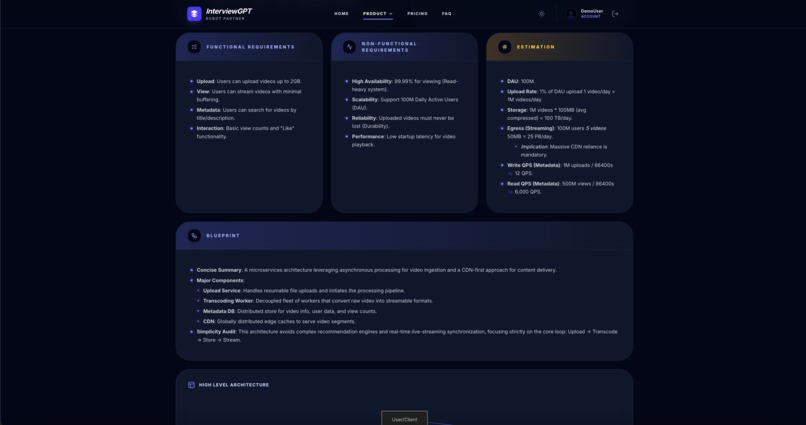
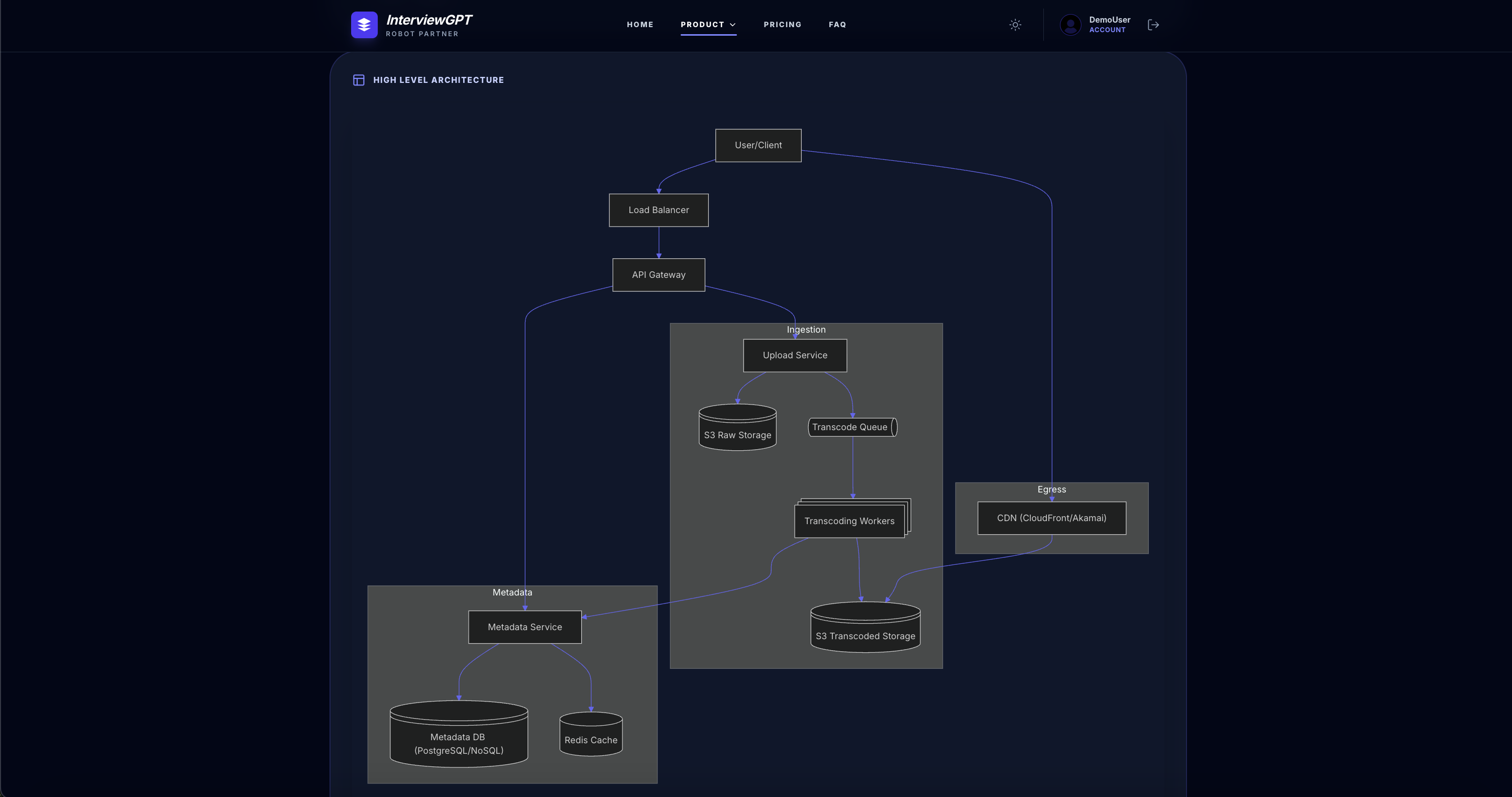
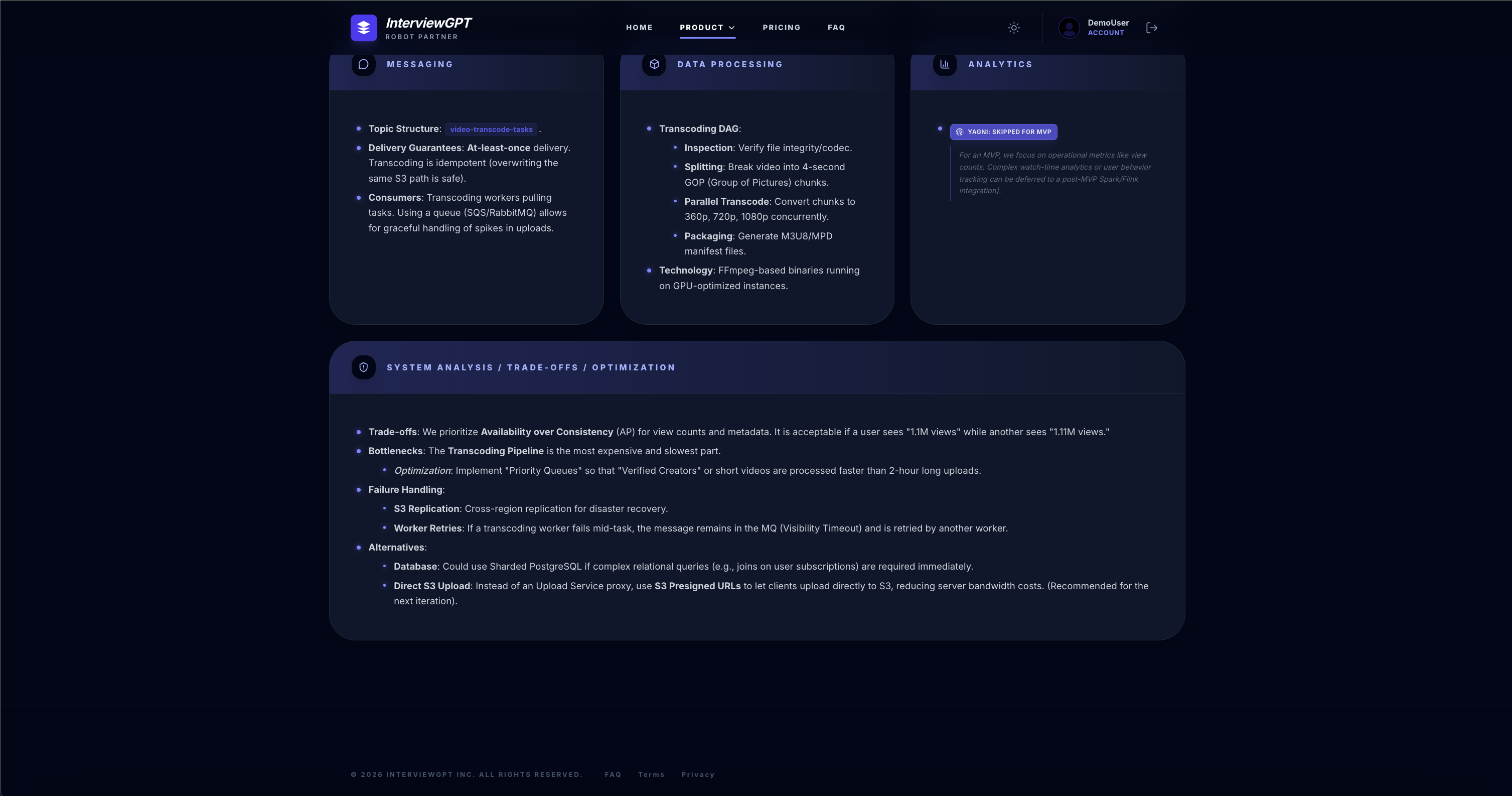
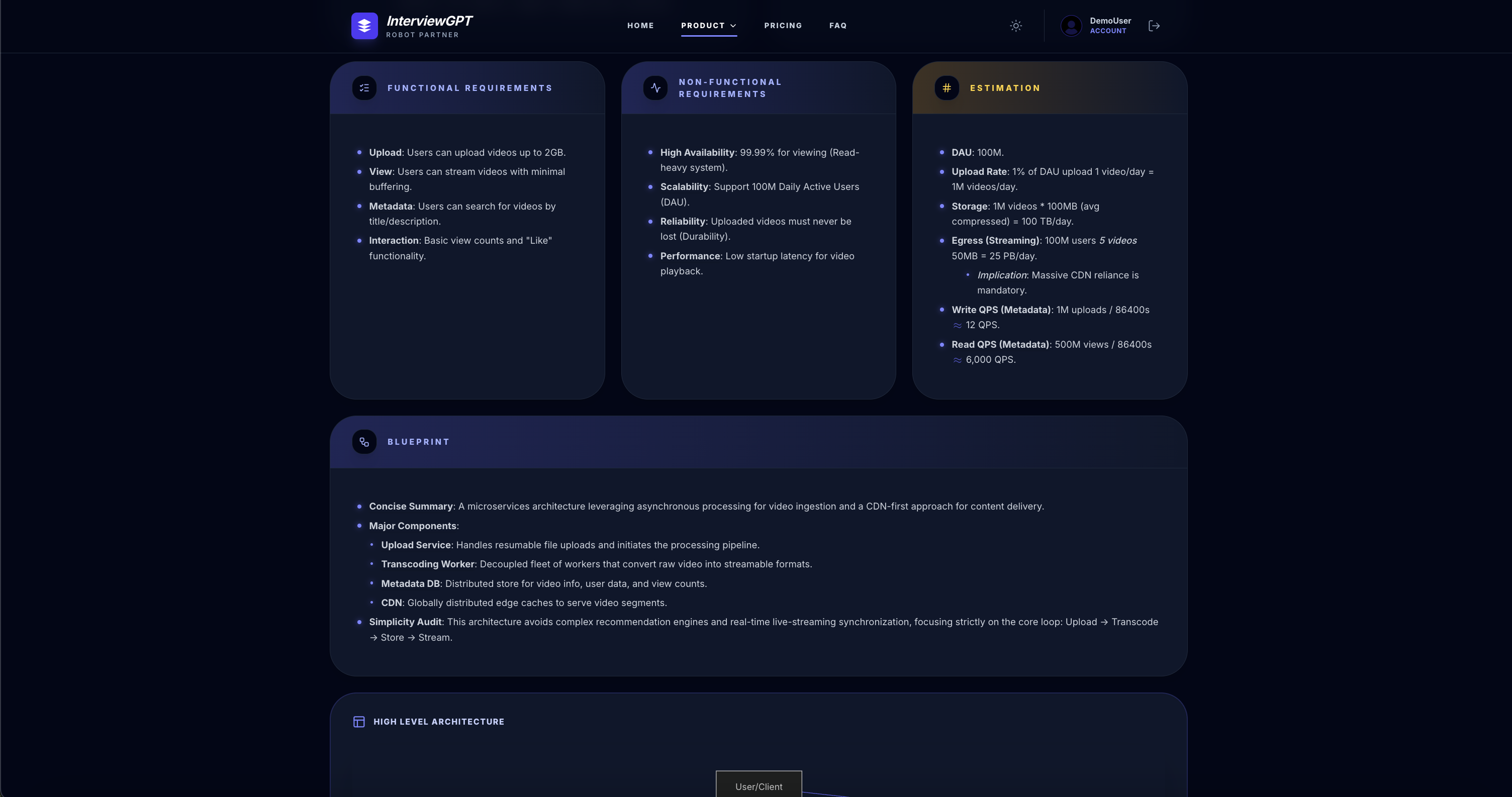
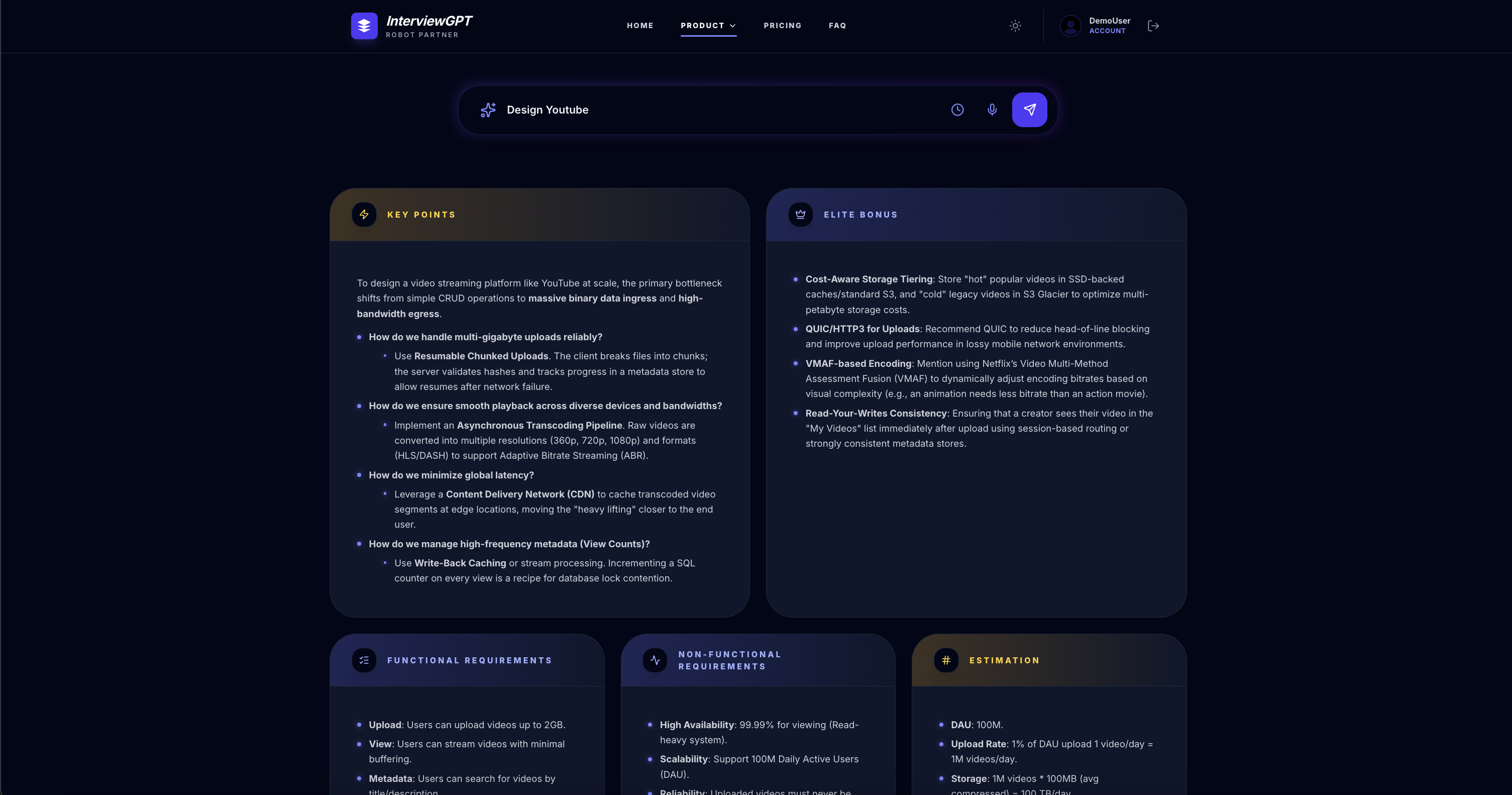
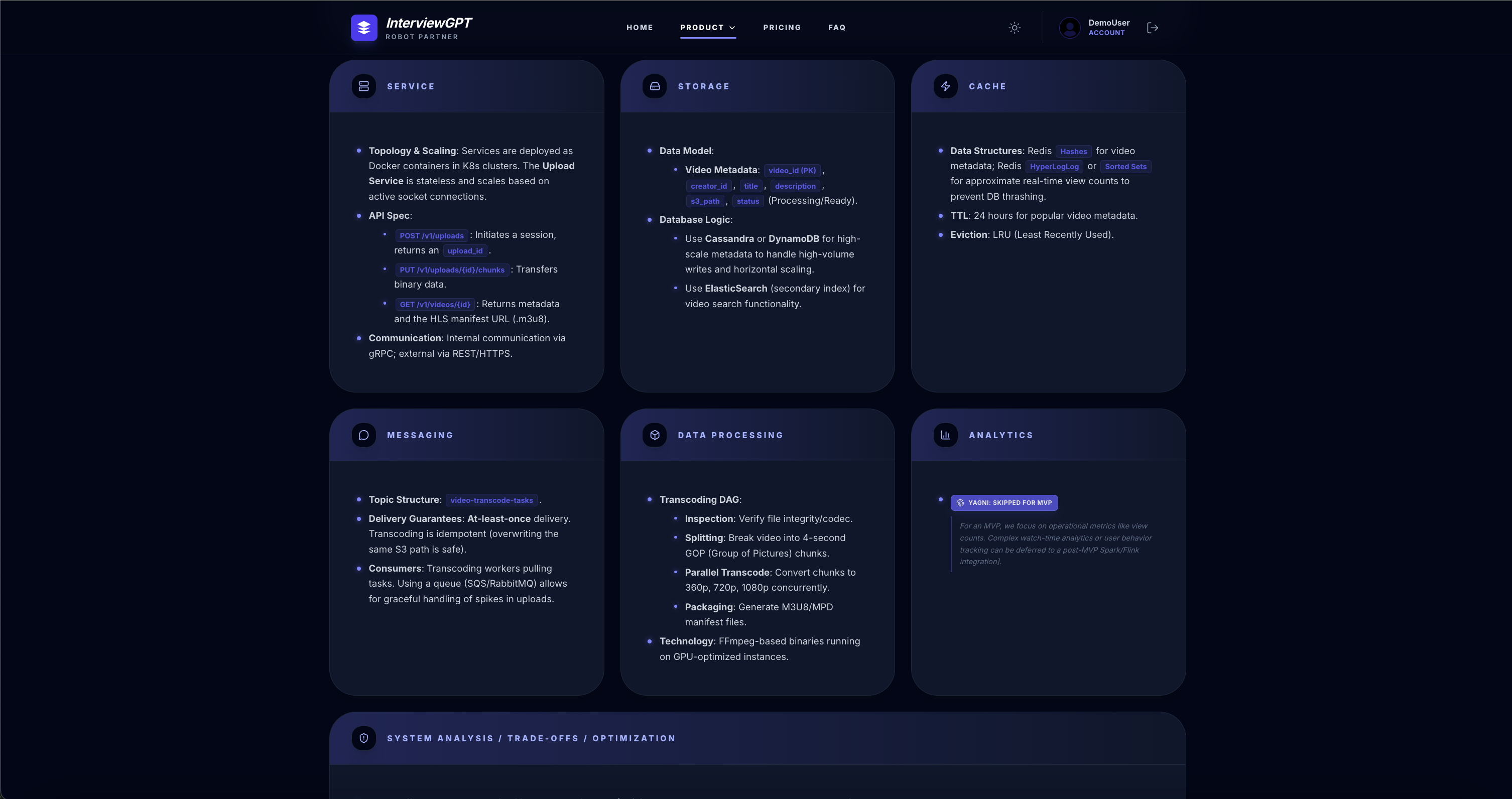
- System Design Architect ("The Forge"): Master complex systems with auto-generated Mermaid.js diagrams, scalability audits, and MVP-first thinking.
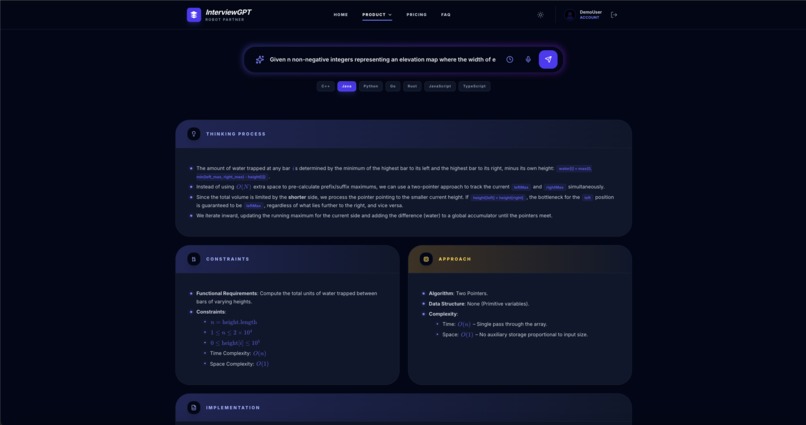
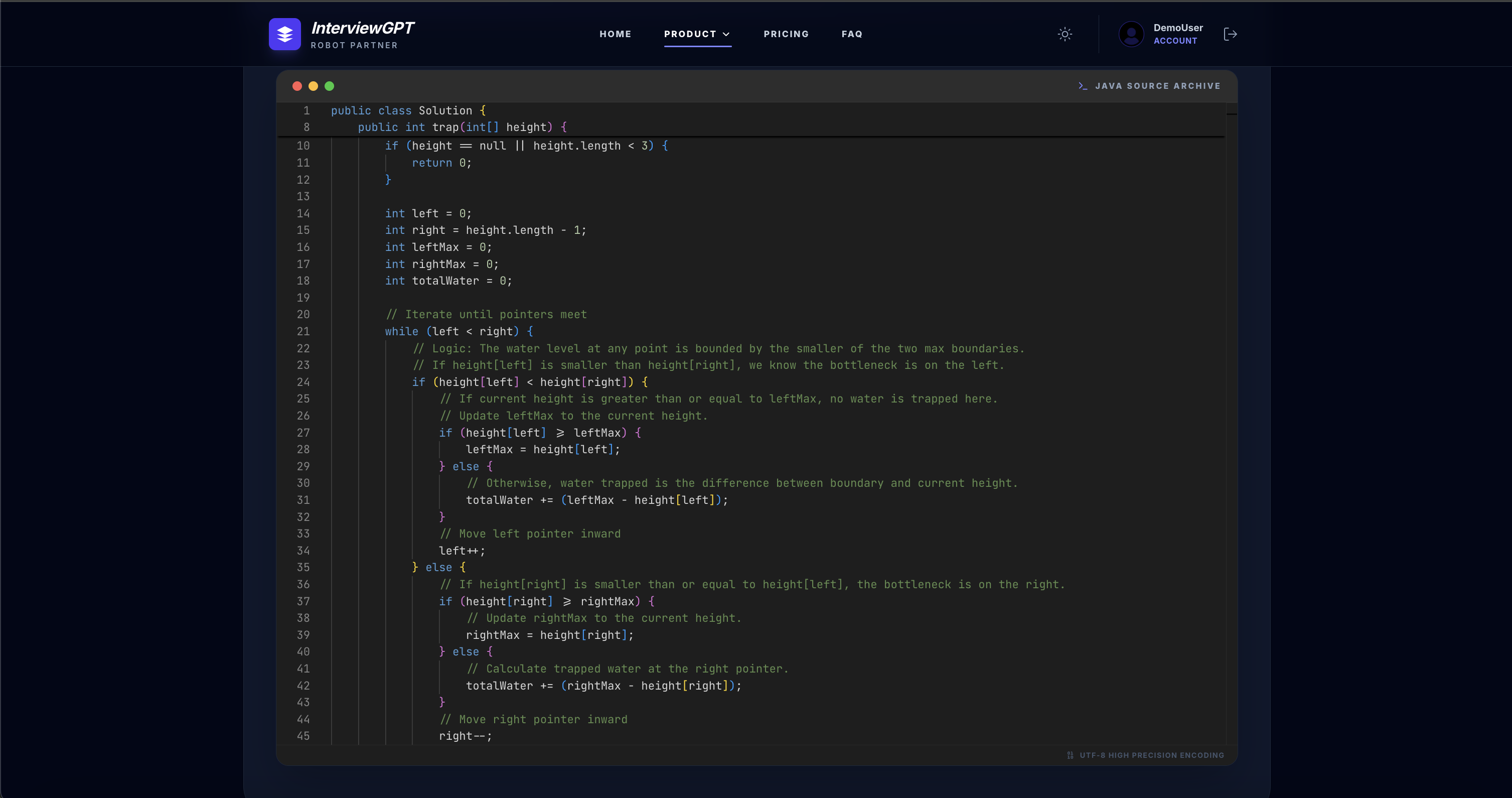
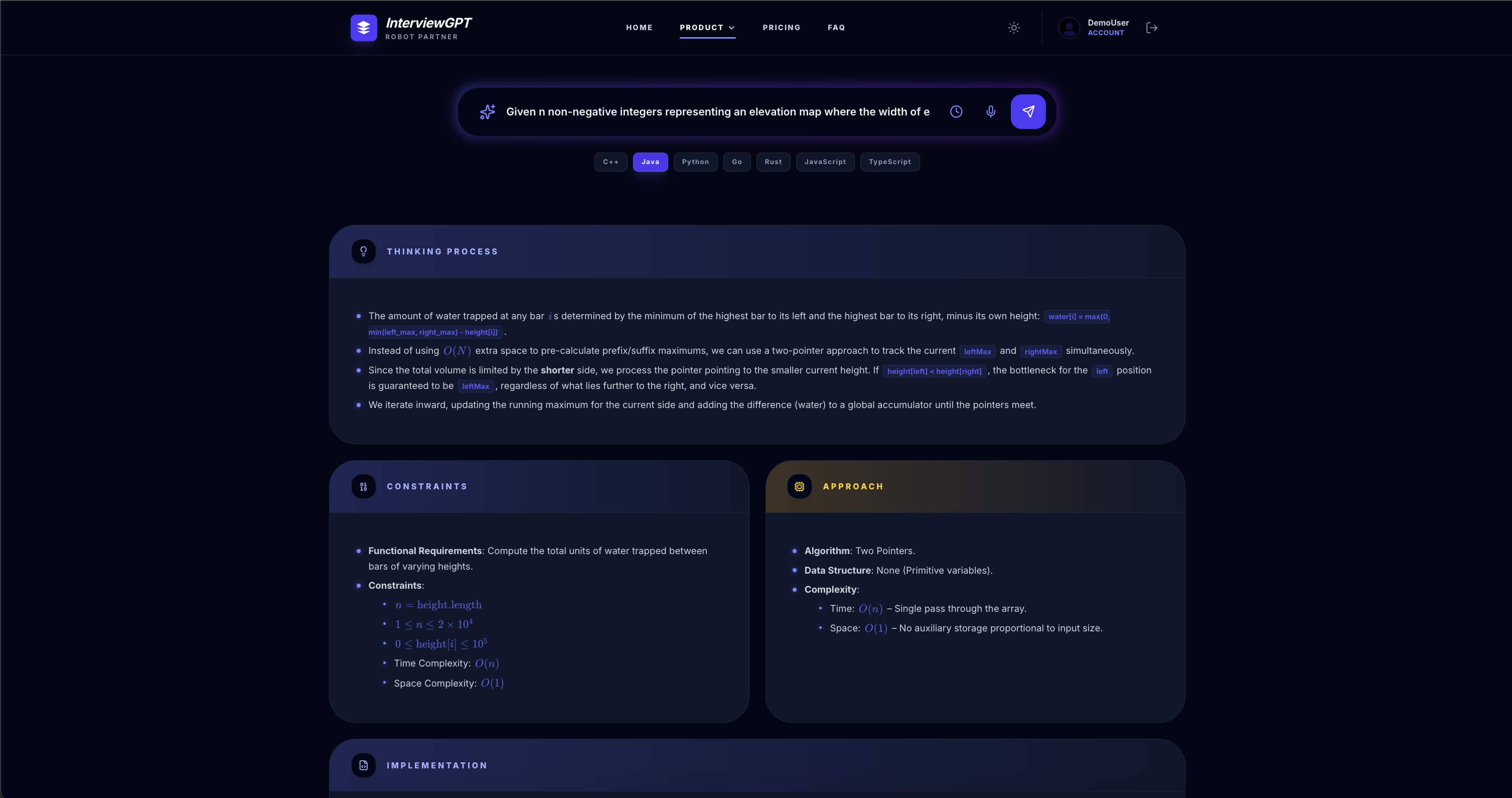
- Technical Coding Master ("The Terminal"): Get professional-grade feedback on complexity, edge cases, and code quality in your favorite language.
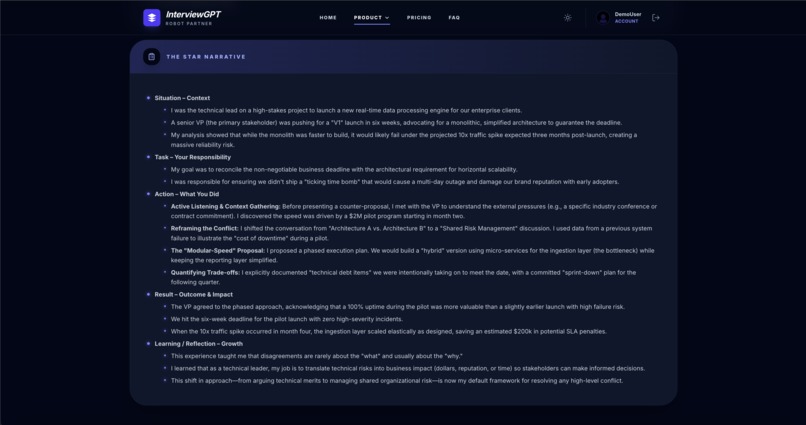
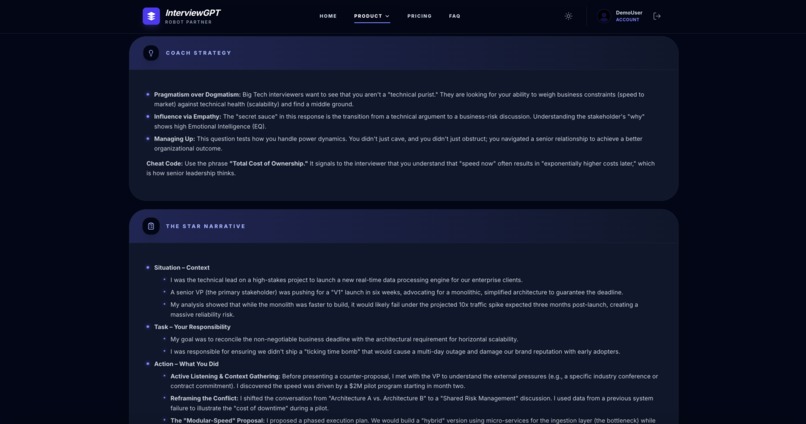
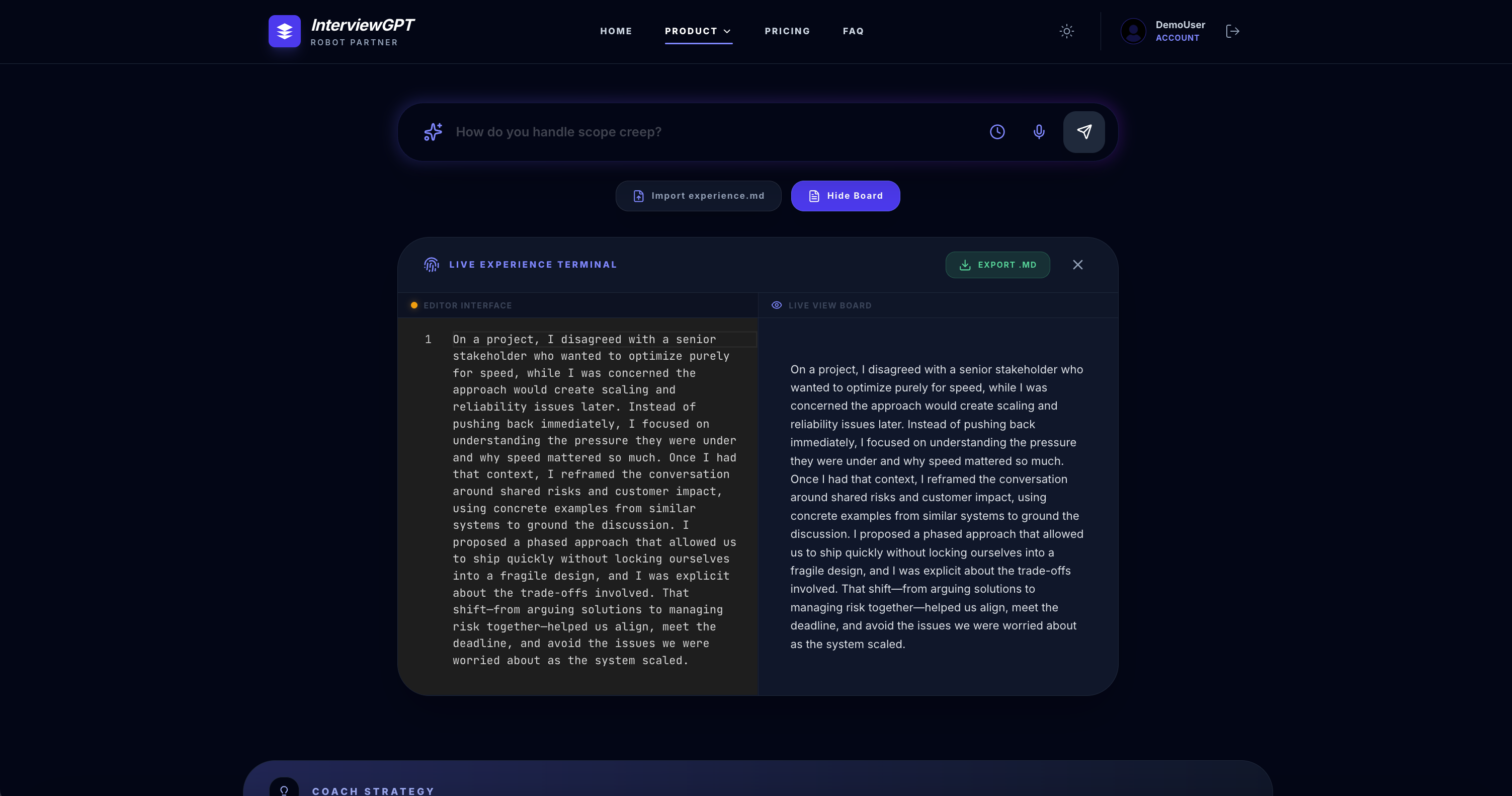
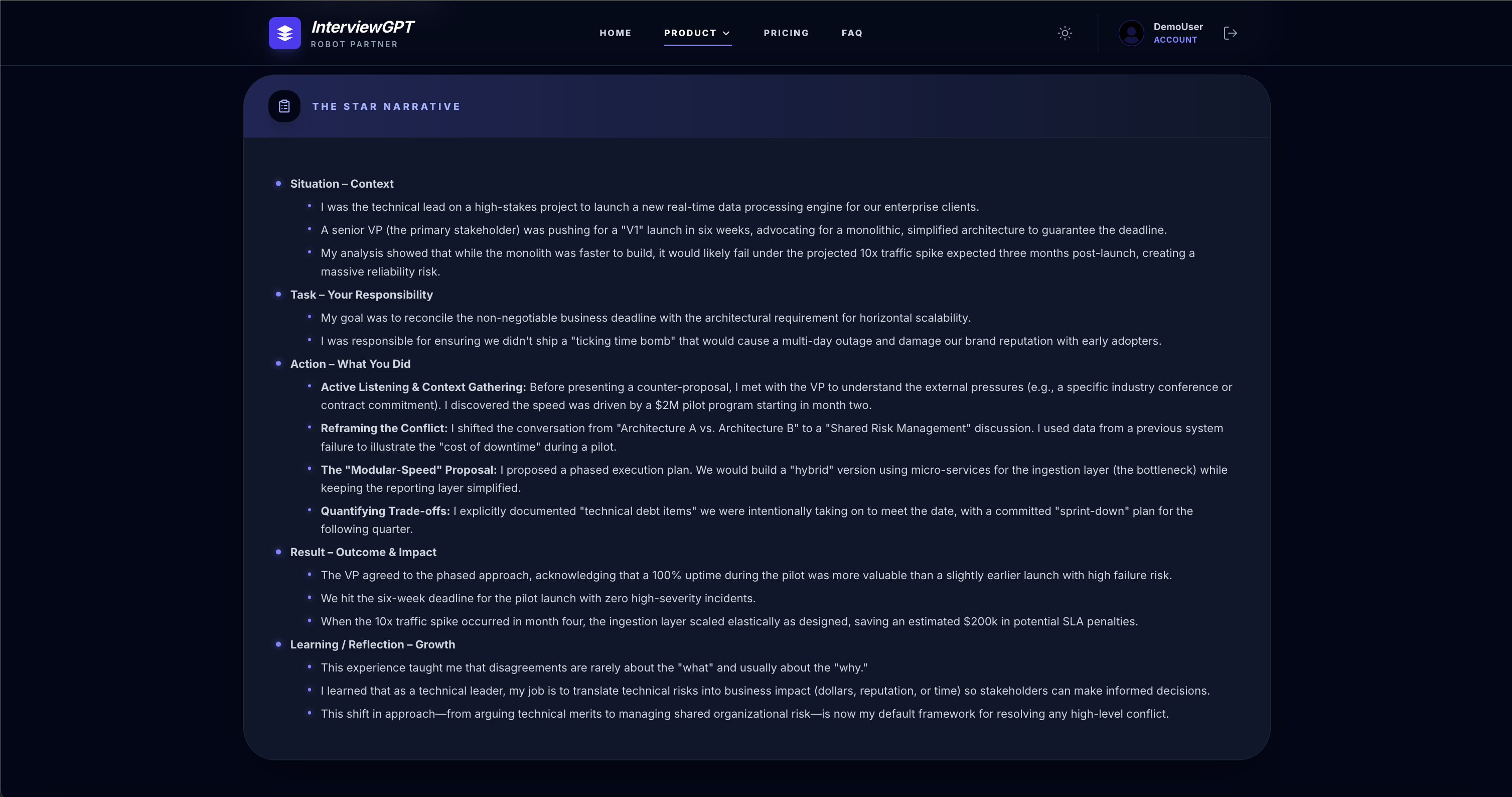
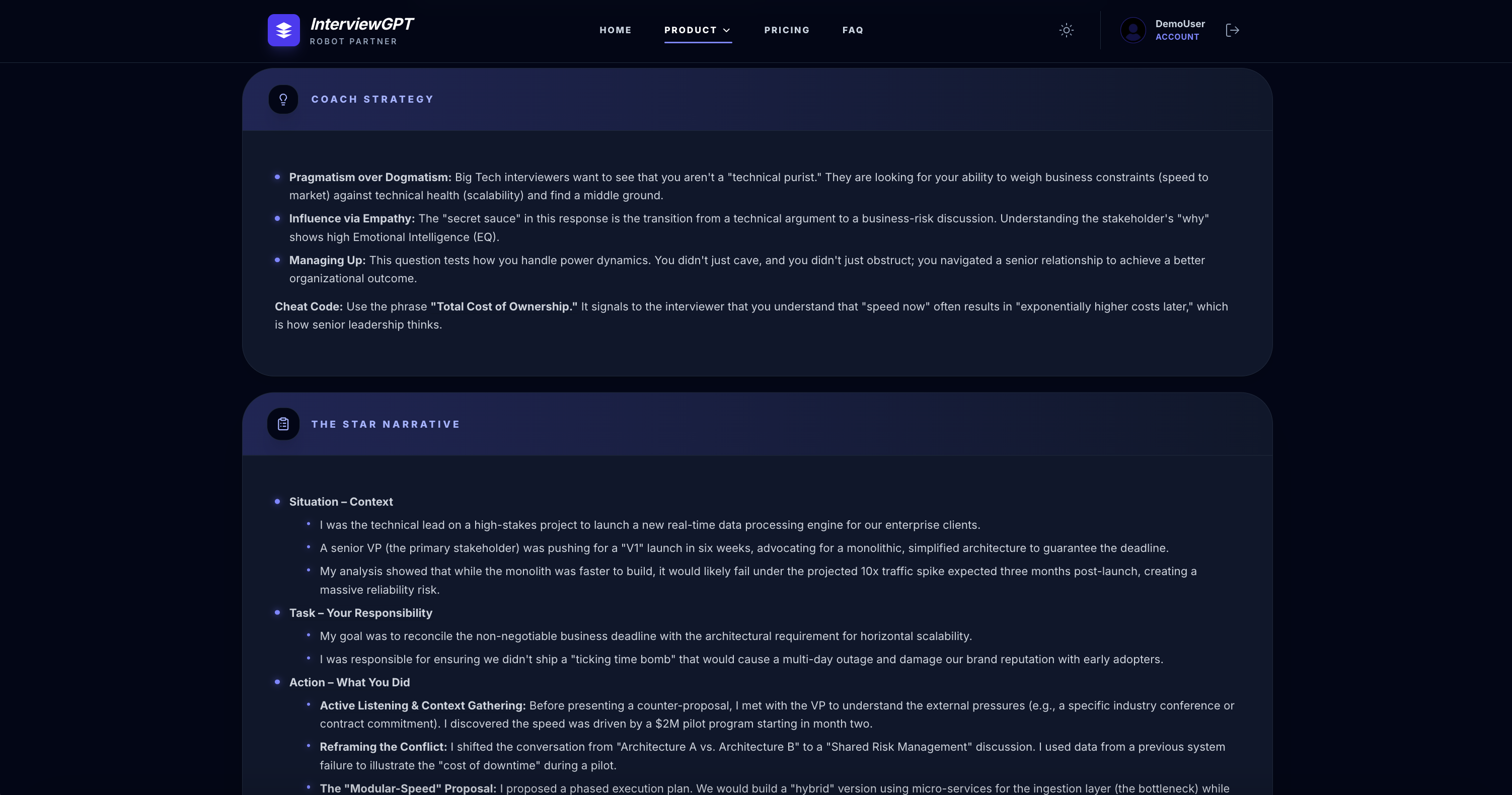
- Leadership & Behavioral Edge ("The STAR-L Loop"): Transform your career history into high-impact narratives using the STAR method, enhanced with a unique "Learning" reflection for L5+ seniority signal.
How we built it
We prioritized speed and visual excellence to create a "Pro" tool feeling.
- Framework: Next.js 16 with App Router for cutting-edge performance.
- AI Orchestration: Powered by Gemini 3.0 Flash. We chose Flash for its ultra-low latency (sub-20s generations) without sacrificing the reasoning depth required for technical rubrics.
- Database & Auth: Supabase provides our serverless PostgreSQL backend and secure magic-link authentication.
- Real-time & Caching: Upstash Redis manages global rate limiting and session quotas efficiently.
- Payment: Stripe provides our payment processing and subscription management.
- Design System: Built with Tailwind CSS 4.
- Deployment: Vercel provides our serverless deployment platform.
Challenges we ran into
- Mermaid.js Consistency: Ensuring the AI accurately followed specific Mermaid syntax for cylinders, stacks, and process icons while maintaining a valid logical flowchart.
- Stateless History: Managing deep technical context in a stateless Vercel Edge environment meant optimizing prompt engineering to keep history compact yet effective.
- Mobile-First Complexity: Porting a desktop-heavy IDE experience (with sidebars and diagrams) to an elegant, touch-friendly mobile interface.
- Data Consistency: Ensuring data consistency across Supabase tables, and handling edge cases like concurrent updates using transactions to ensure ACID compliance.
- Quota System: Implementing a robust, Redis-backed multi-product quota system that scales with user subscriptions.
- Performance: Optimizing database queries with indexes to ensure fast data retrieval and AI generation.
- Frontend: Optimizing frontend performance to ensure fast response times with lazy loading, SSR, CDN, and image optimization.
Accomplishments that we're proud of
- Real Production Ready: Deployed to production with Vercel and Supabase and has active users. This product achieves a premium, user-friendly UI that stays accessible and a high performance backend which can support a large number of concurrent users.
What's next for InterviewGPT
- More SKUs: Add more SKUs to support more use cases for quantitative researchers, data scientists and machine learning engineers's interview preparation.
Built With
- googleanalytics
- nextjs
- postgresql
- redis
- supabase
- tailwind
- typescript
- upstash
- vercel

Log in or sign up for Devpost to join the conversation.