-
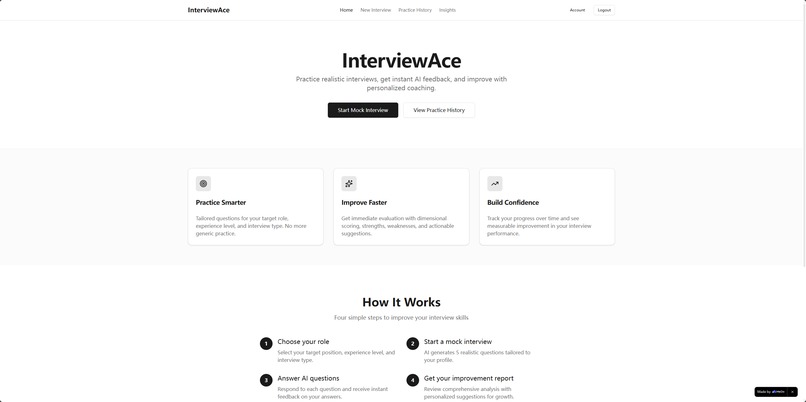
InterviewAce helps candidates practice smarter, improve faster, and build confidence with AI-powered interview coaching.
-
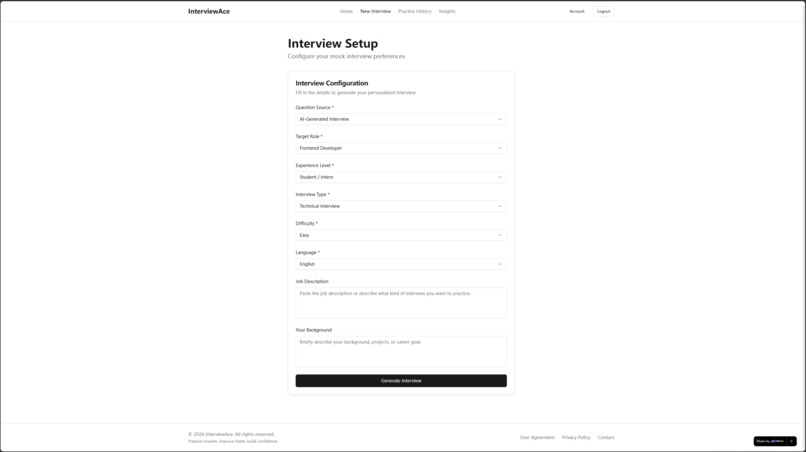
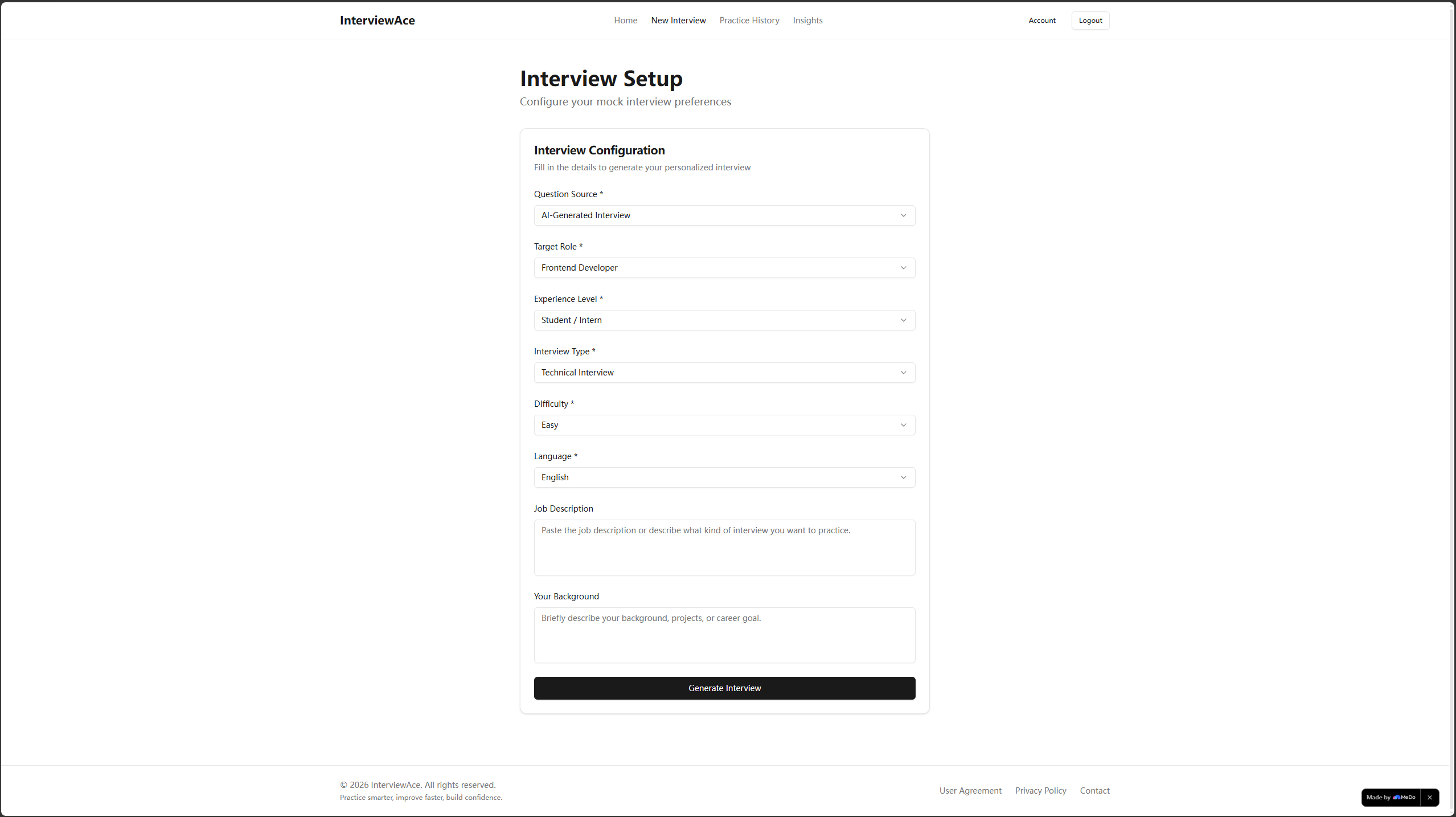
Users can customize role, difficulty, interview type, language, and question source for personalized practice.
-
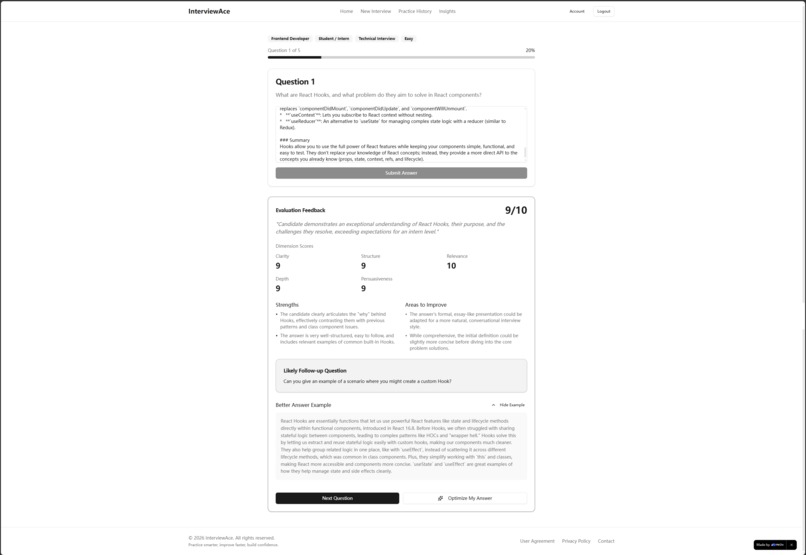
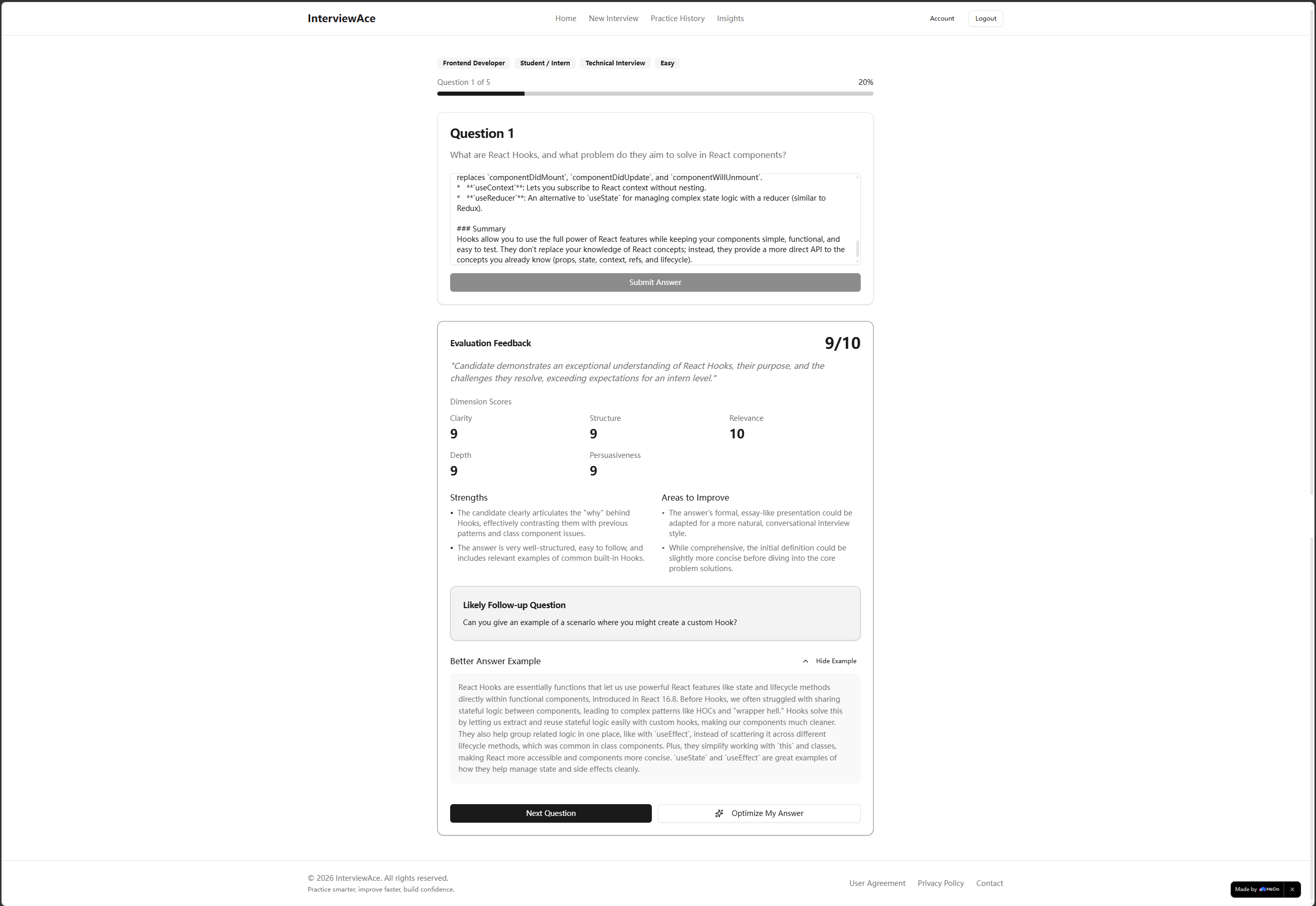
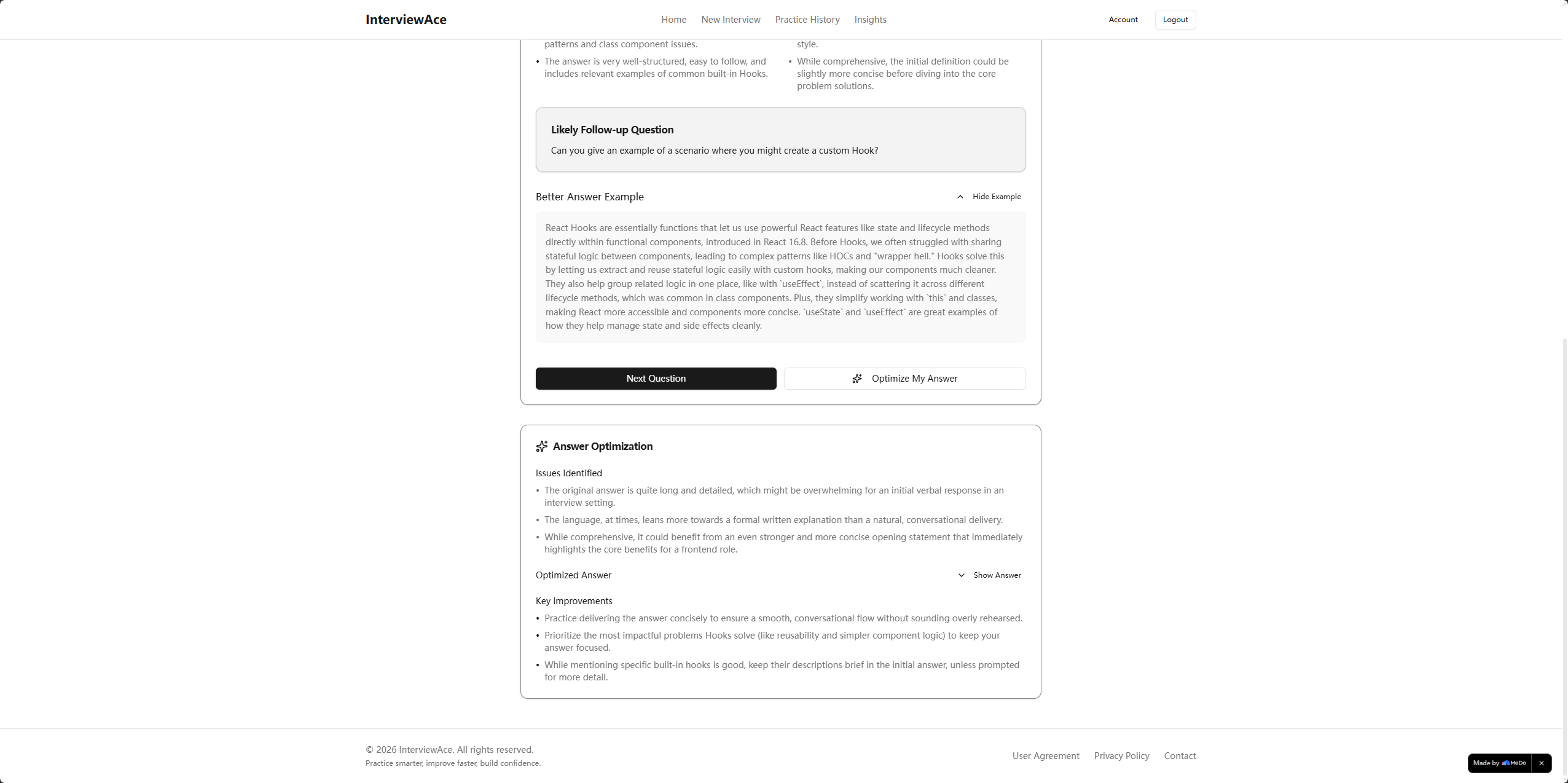
Each answer receives instant AI feedback with scoring, strengths, weaknesses, and likely follow-up questions.
-
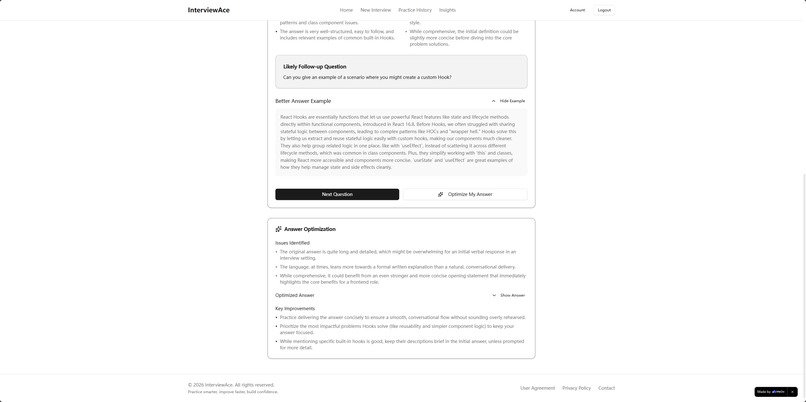
InterviewAce suggests better answer examples to help users learn how to respond more clearly and effectively.
-
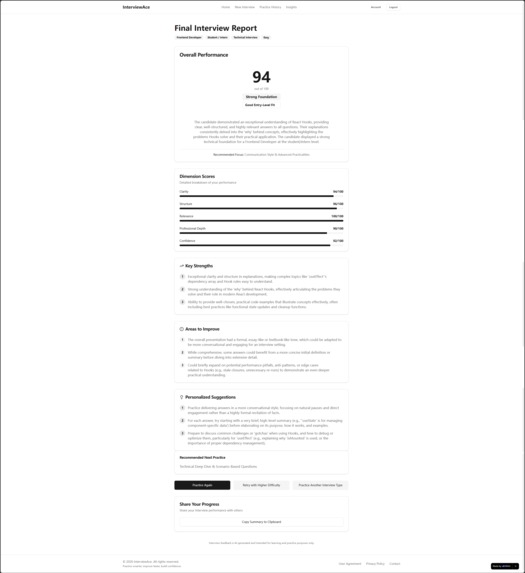
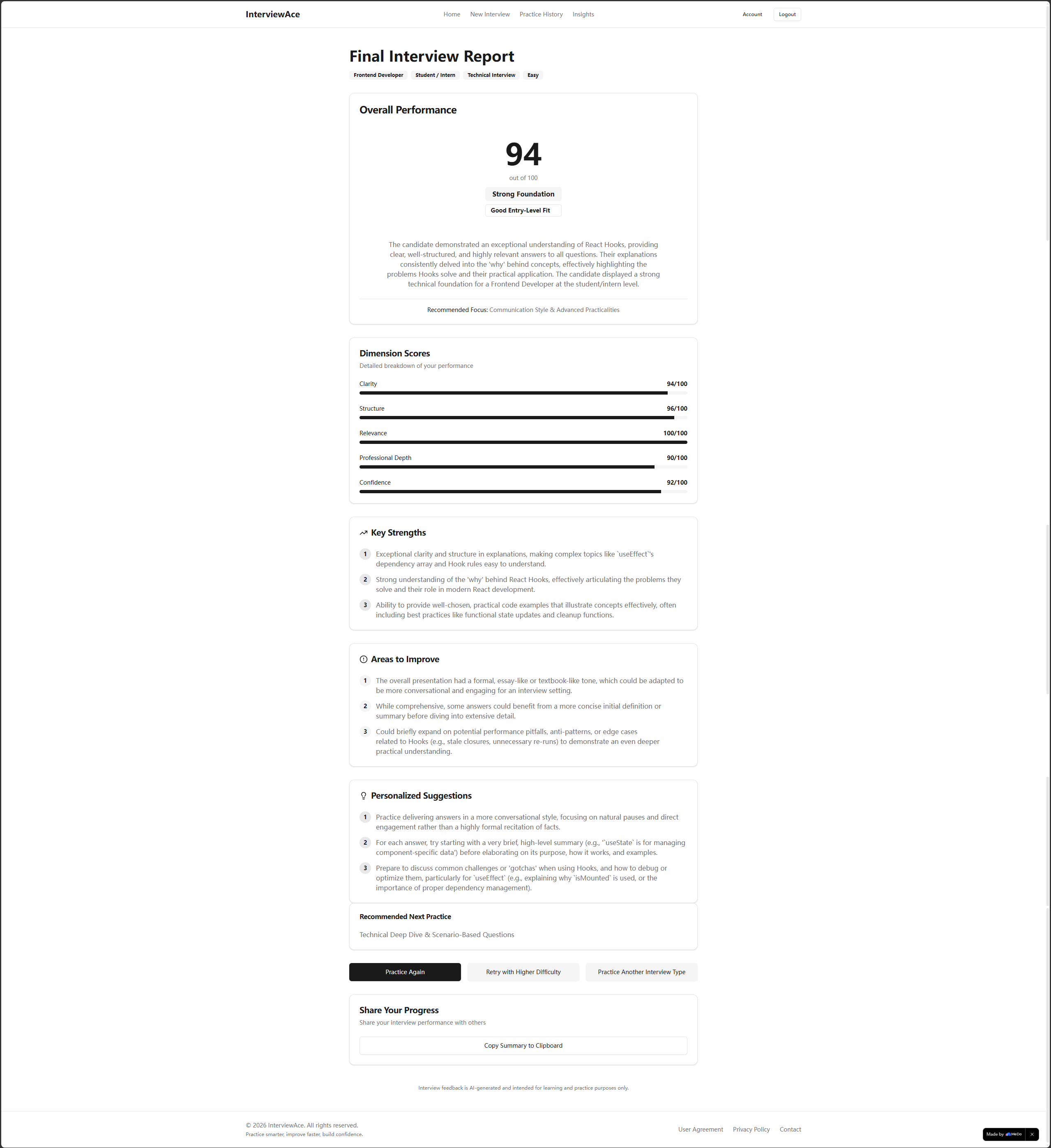
Every session ends with a full report including overall score, readiness summary, weak areas, and next steps.
-
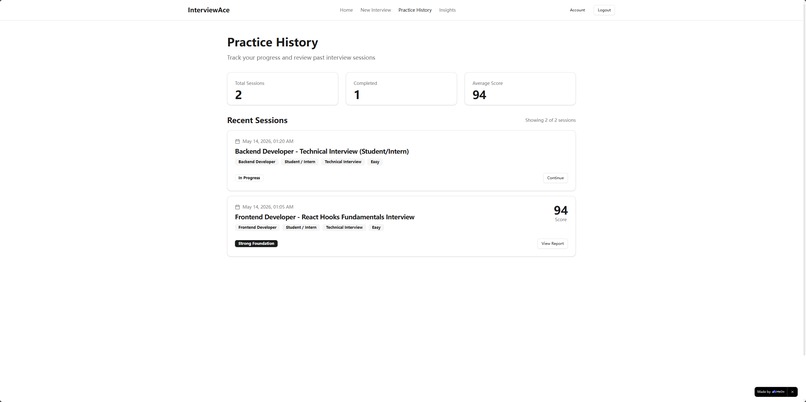
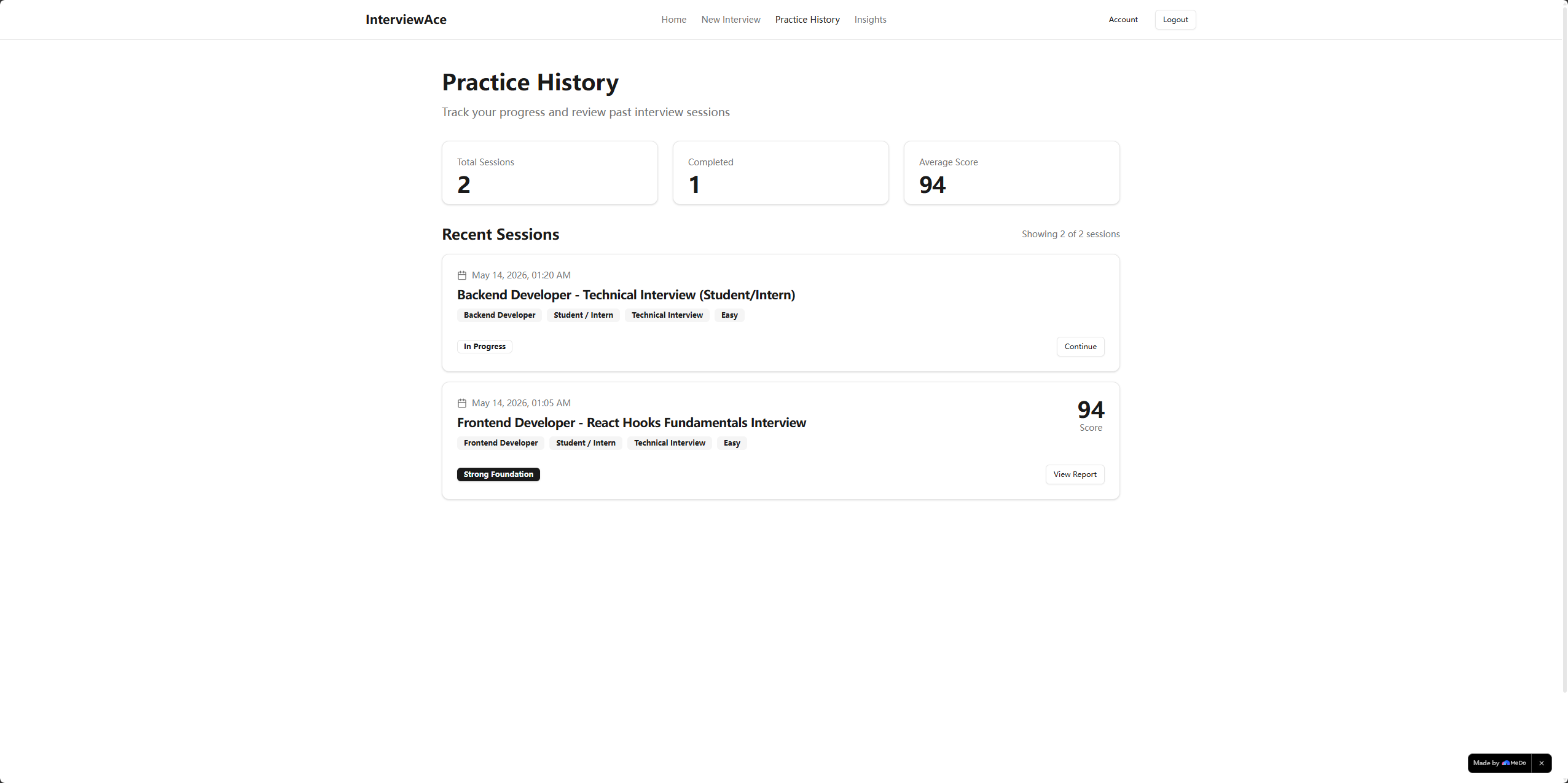
Practice history lets users revisit past sessions, resume incomplete interviews, and track improvement over time.
-
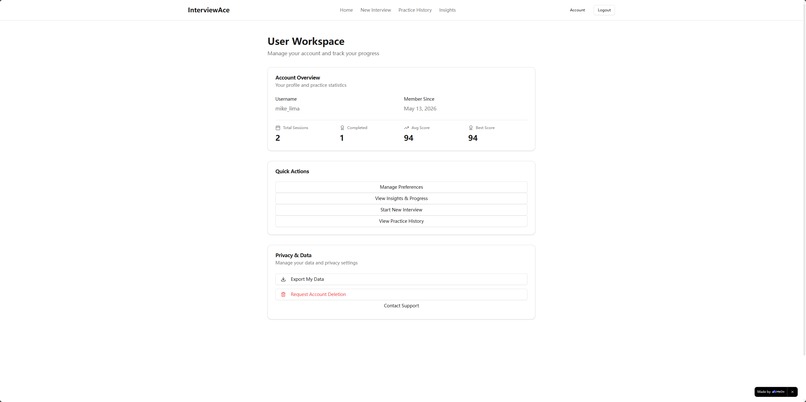
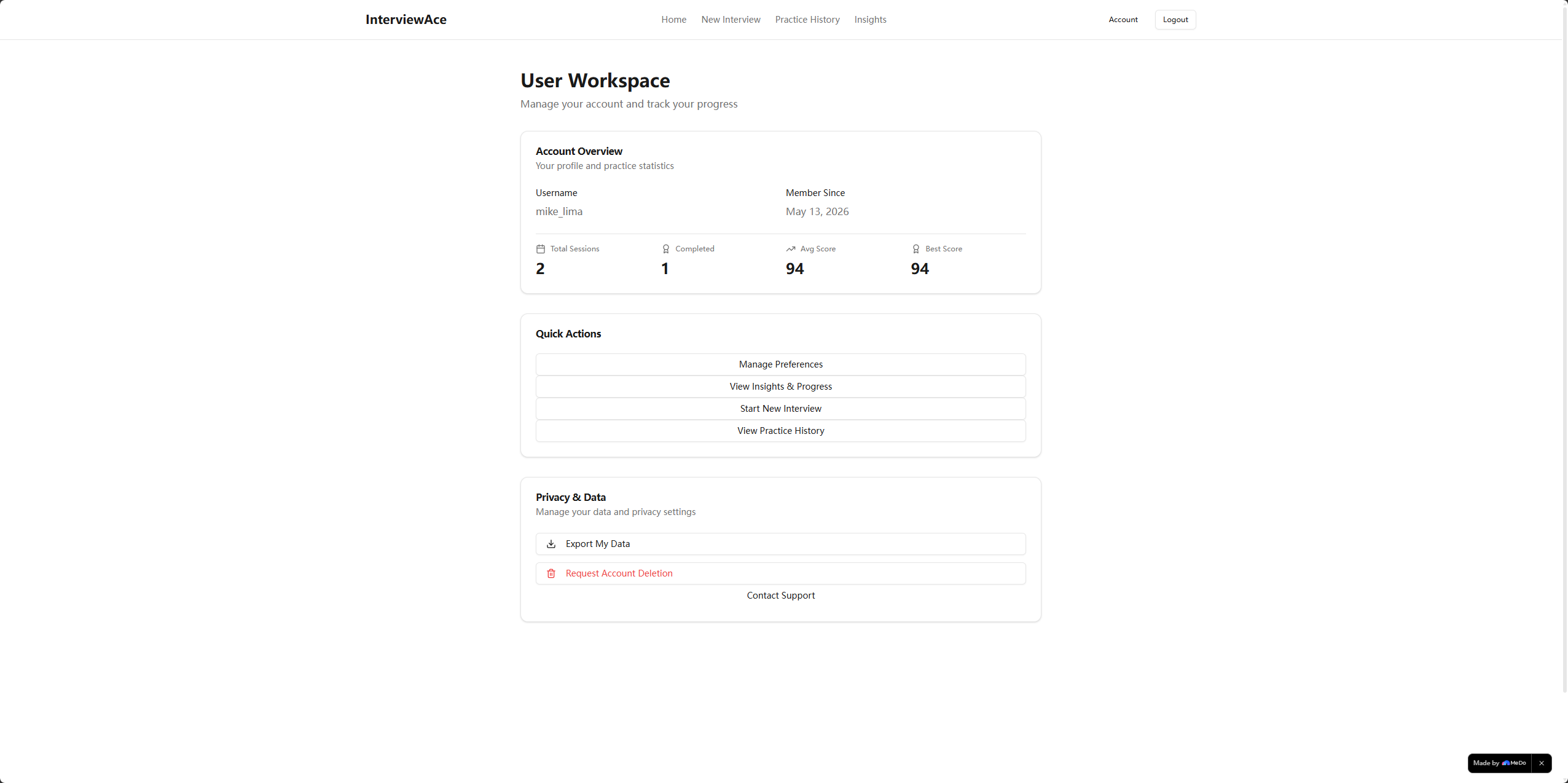
The user workspace includes preferences, account controls, data export, and quick access to practice tools.

Inspiration
Many candidates read question lists but rarely practice answering them under realistic conditions. I wanted a single product that simulates real interviews (voice + text), gives structured AI feedback, and helps users measure true progress over time. That became InterviewAce.
What it does
InterviewAce enables:
- Voice and text mock interviews with instant AI scoring and actionable feedback
- Resume-driven and JD-driven question generation for role-specific practice
- Bilingual support and on-demand report translation
- Context-aware questions using news and web search
- Progress tracking, history, and data export
How I built it
I built InterviewAce as a React + TypeScript frontend with Supabase for auth, storage, and DB. Core AI & multimodal capabilities are exposed via Edge Functions that call external plugins/APIs. Key components:
- VoiceRecorder & AudioPlayer for TTS/STT flows
- ResumeUpload & JDImport for resume/JD extraction and personalization
- generate-interview Edge Function enhanced to accept context:
resume_text,jd_extracted,news_context,search_context
Data model changes include storing session-level flags (voice_mode, resume_based, translation_enabled) and a voice_recordings table. Average session score is computed as usual, e.g.:
[
\bar{S} = \frac{1}{n}\sum_{i=1}^{n} S_i
]
where (S_i) are completed session scores.
Challenges
- Making AI feedback feel actionable (structuring scores, strengths, and improvement steps)
- Reliable speech transcription across Chinese/English with low latency and cost controls
- Extracting JD content robustly across varied job sites and cleaning HTML noise
- Ensuring privacy and data isolation (RLS, storage policies) while persisting audio artifacts
What I learned
- AI UX requires more than model outputs — product flow, persistence, and clear explanations matter.
- Multimodal features increase complexity (privacy, storage, cost) but greatly improve realism and user engagement.
- Edge Functions are effective for isolating third-party integrations and enforcing security.
Next steps
Refine personalization (saved practice plans), extend analytics (mode effectiveness), and add admin tools for curriculum & monitoring.
Built With
- medo
- postcss
- postgresql
- react
- supabase
- tailwind-css
- typescript
- vite

Log in or sign up for Devpost to join the conversation.