-
-
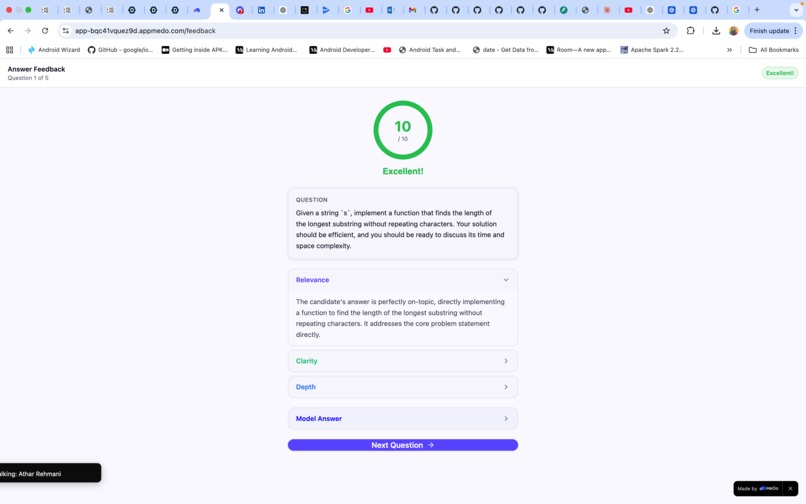
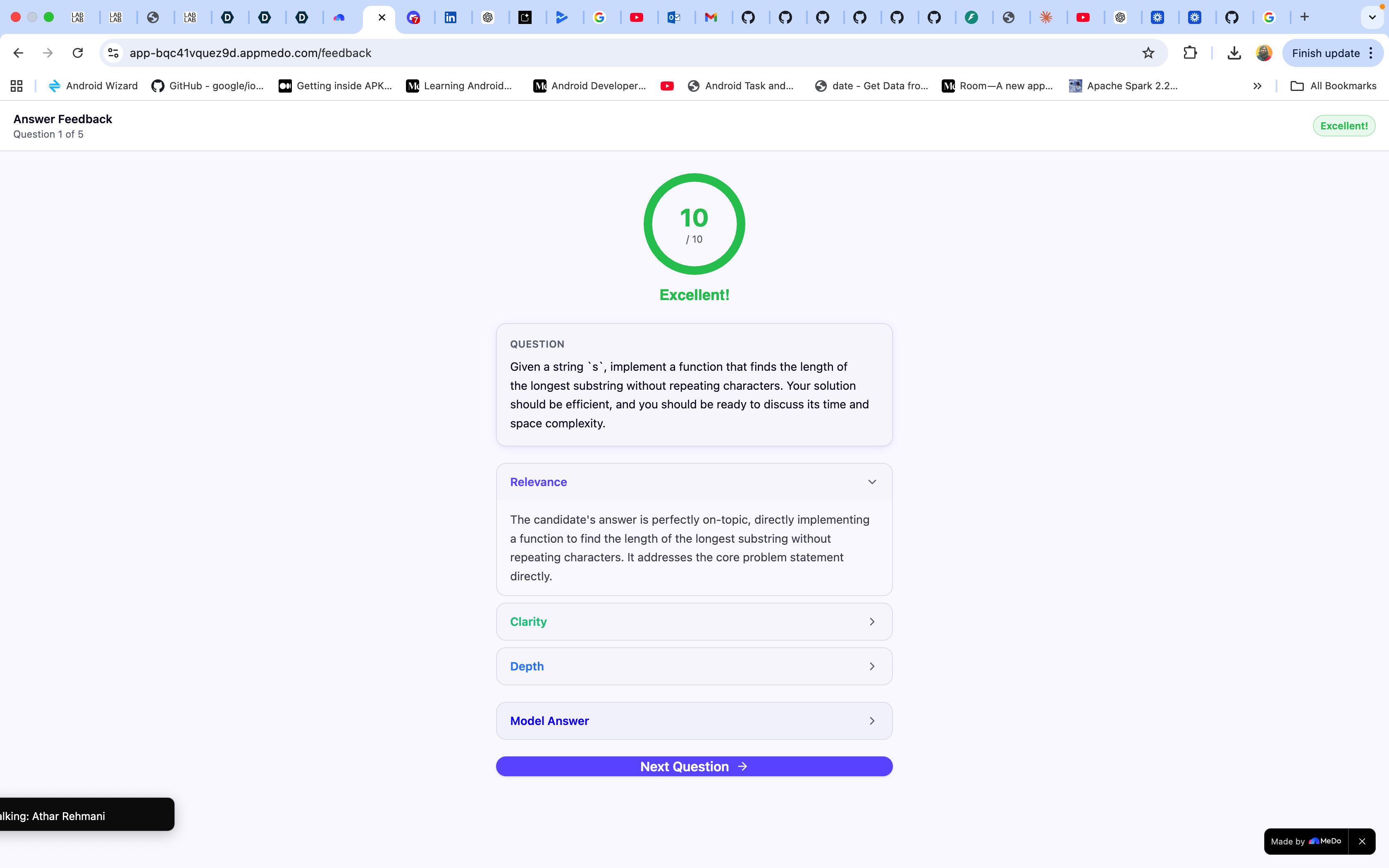
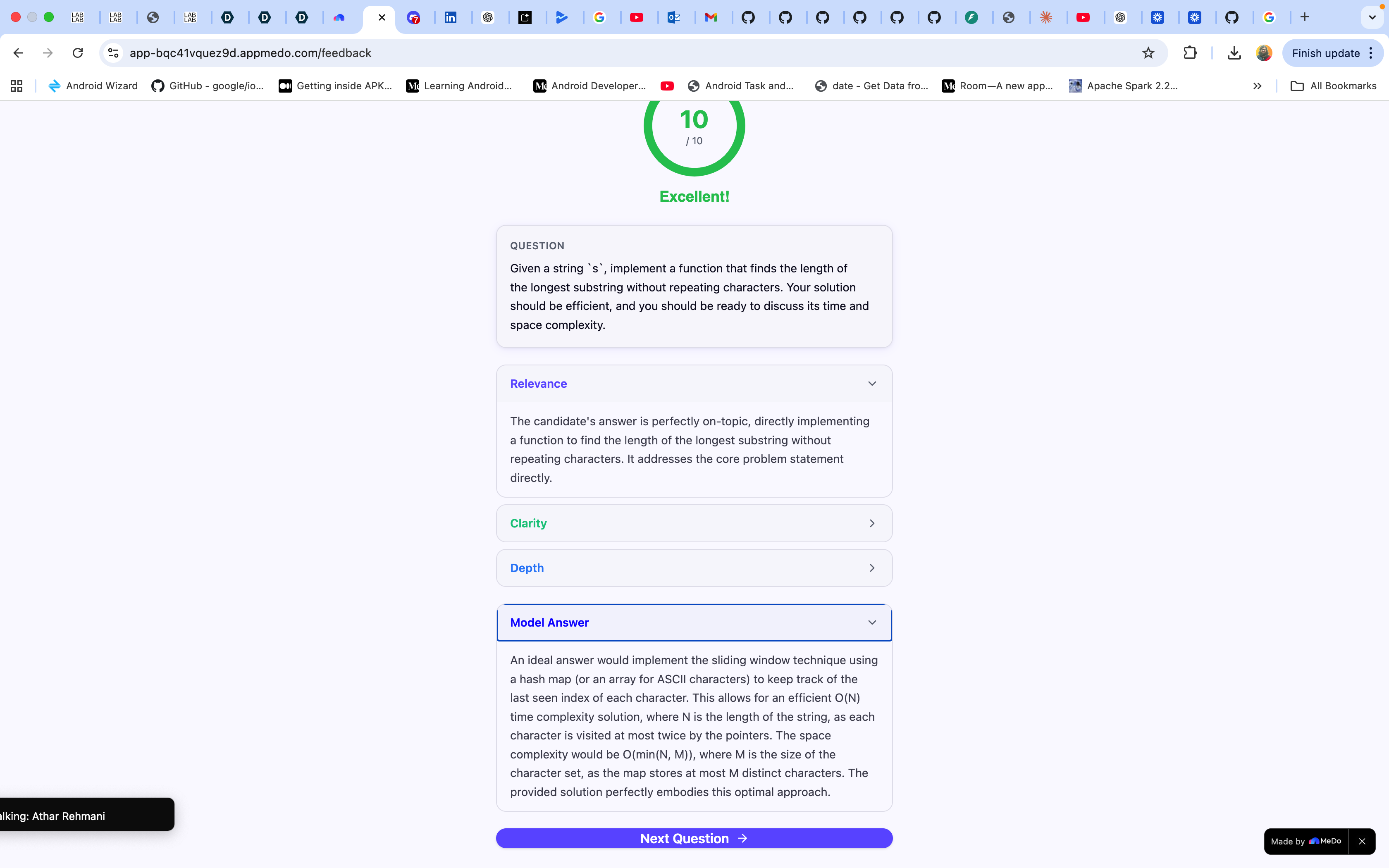
Correct answer
-
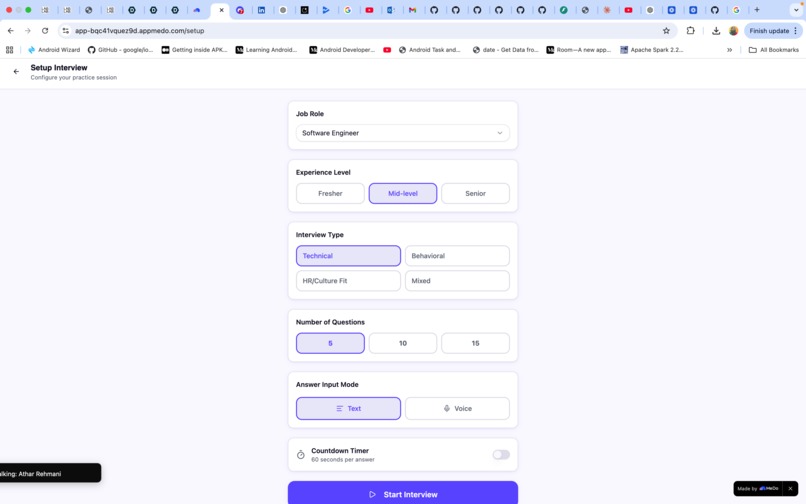
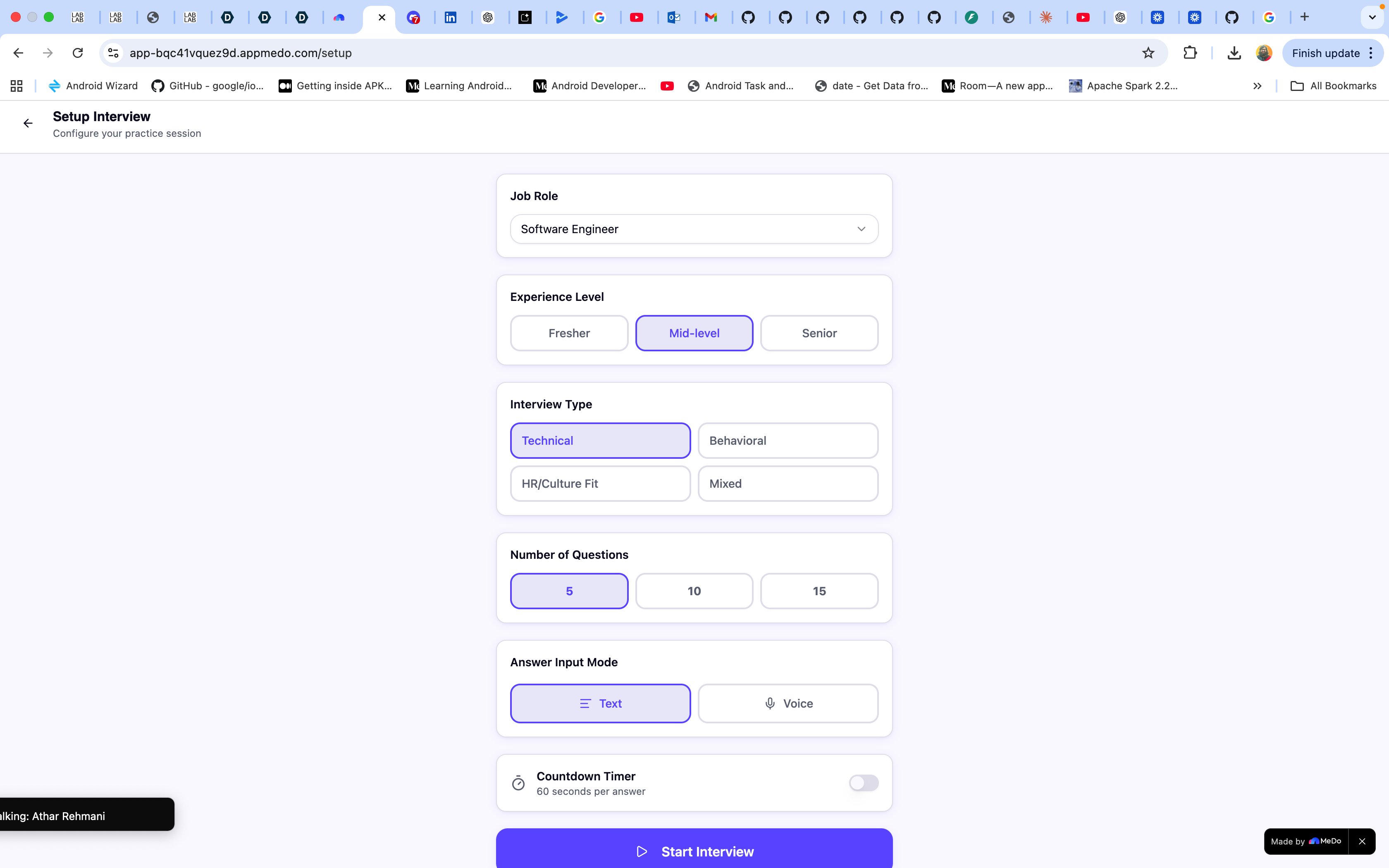
Start a new Interview Screen
-
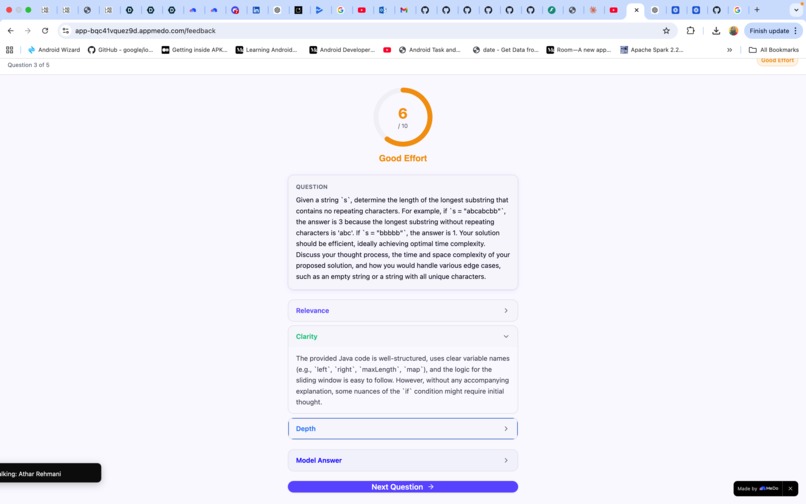
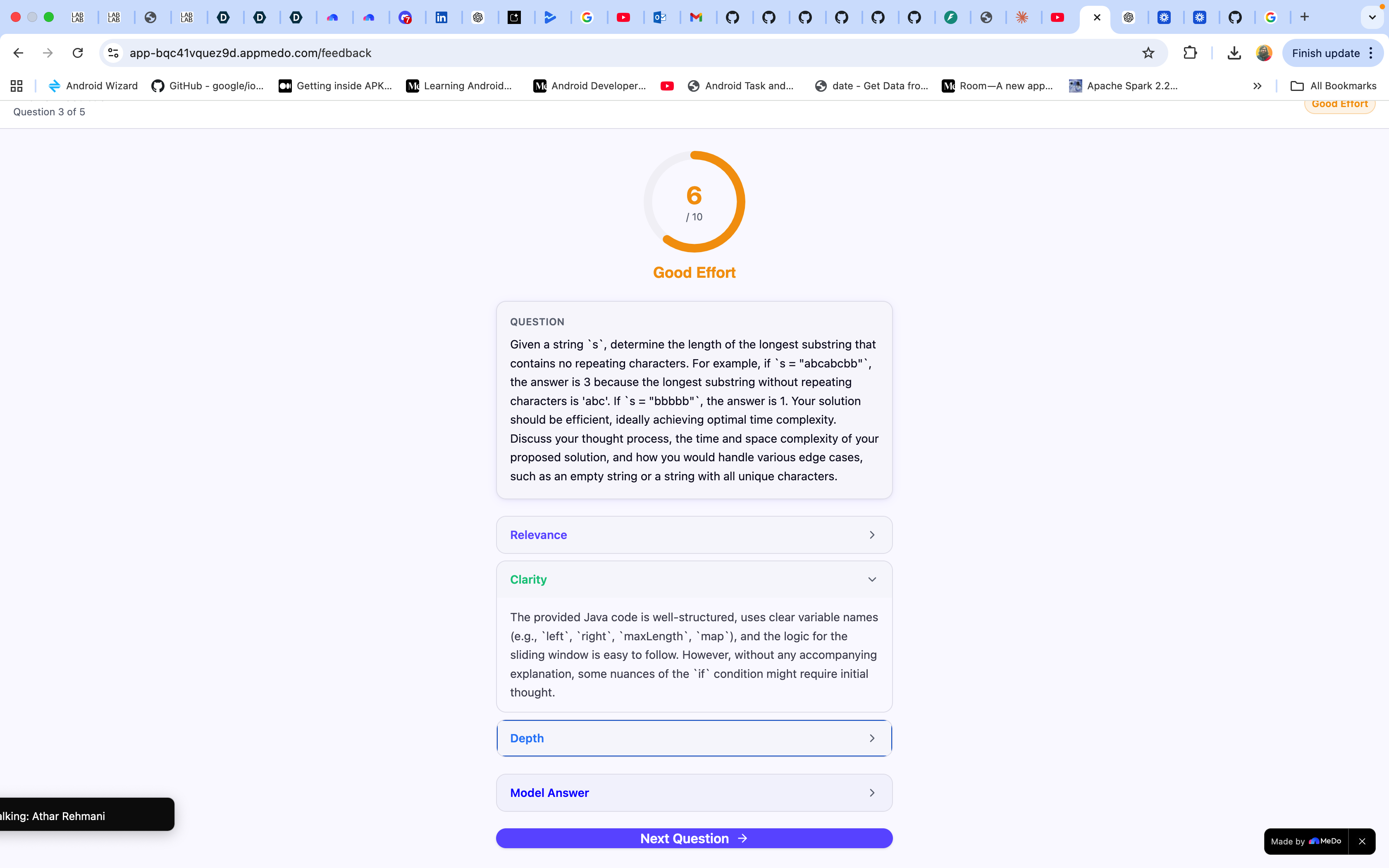
Half Correct answer
-
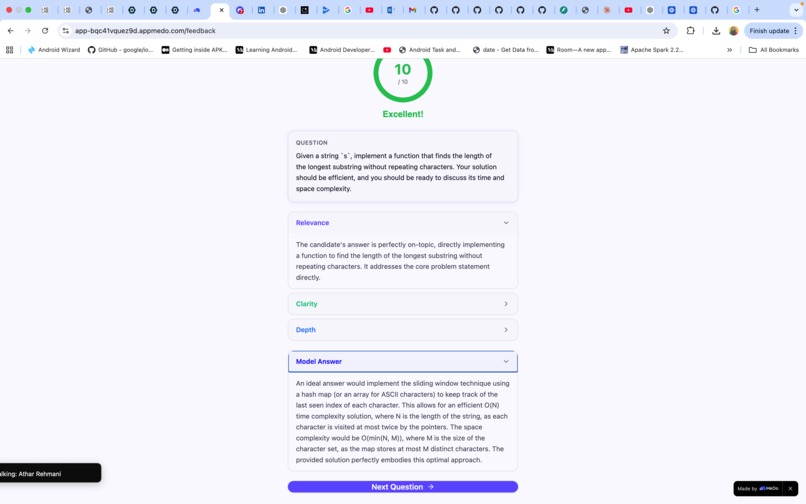
During Test scoring and description about answer
-
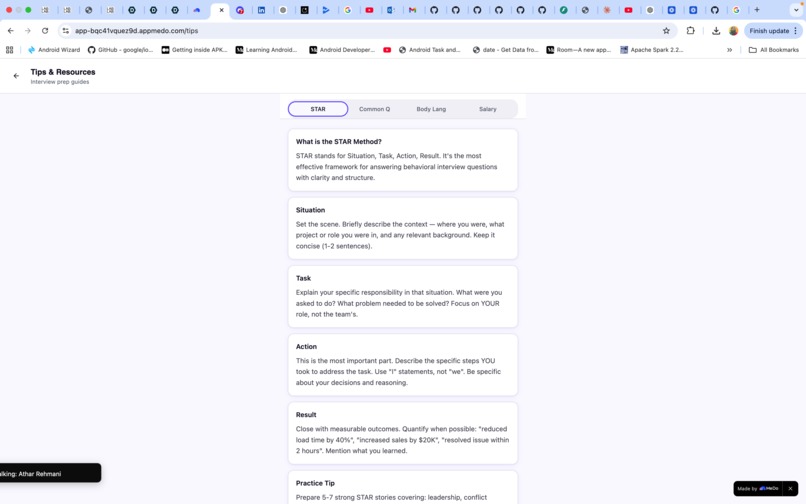
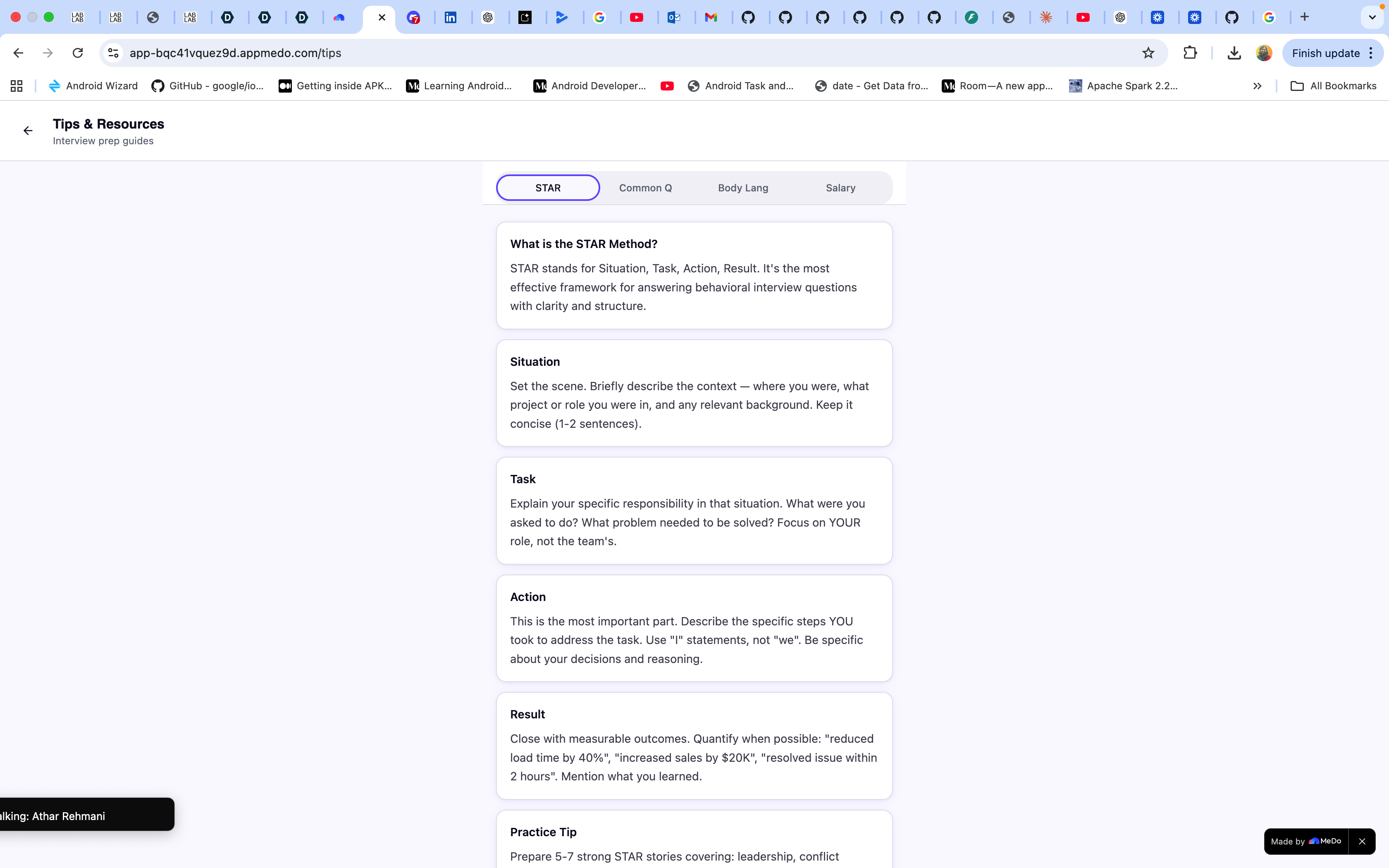
Relevant Resources
-
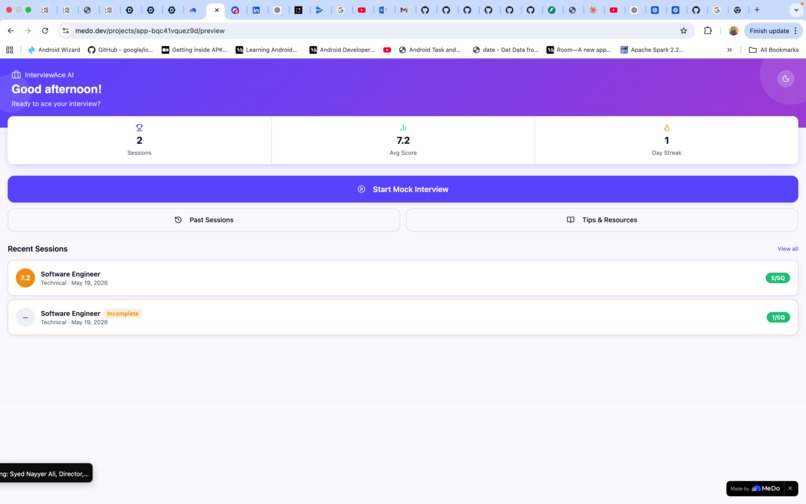
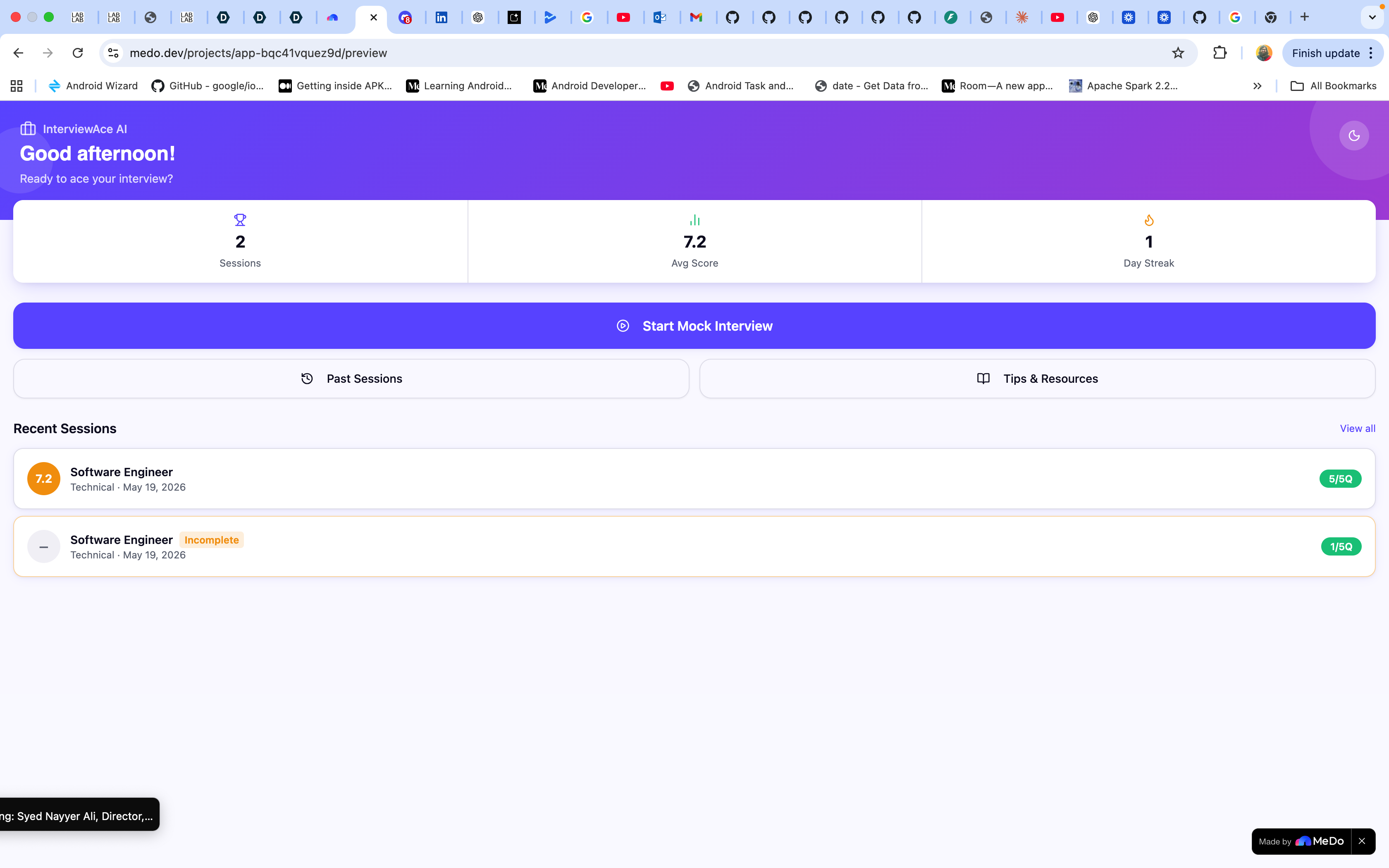
Dashboard
-
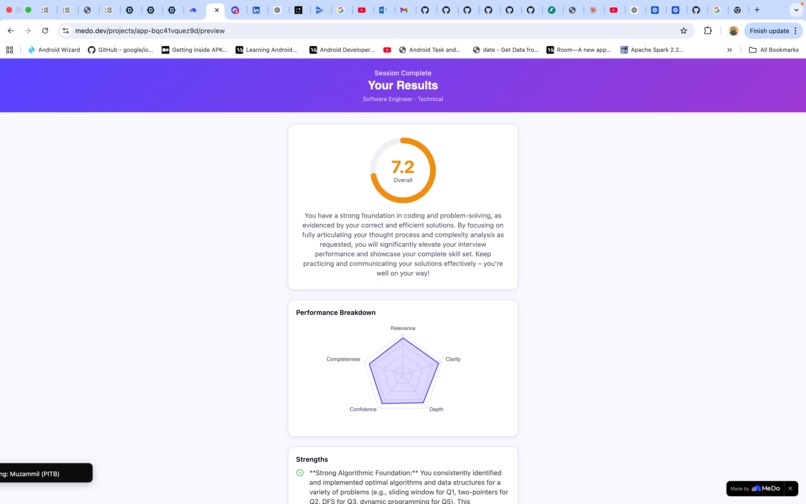
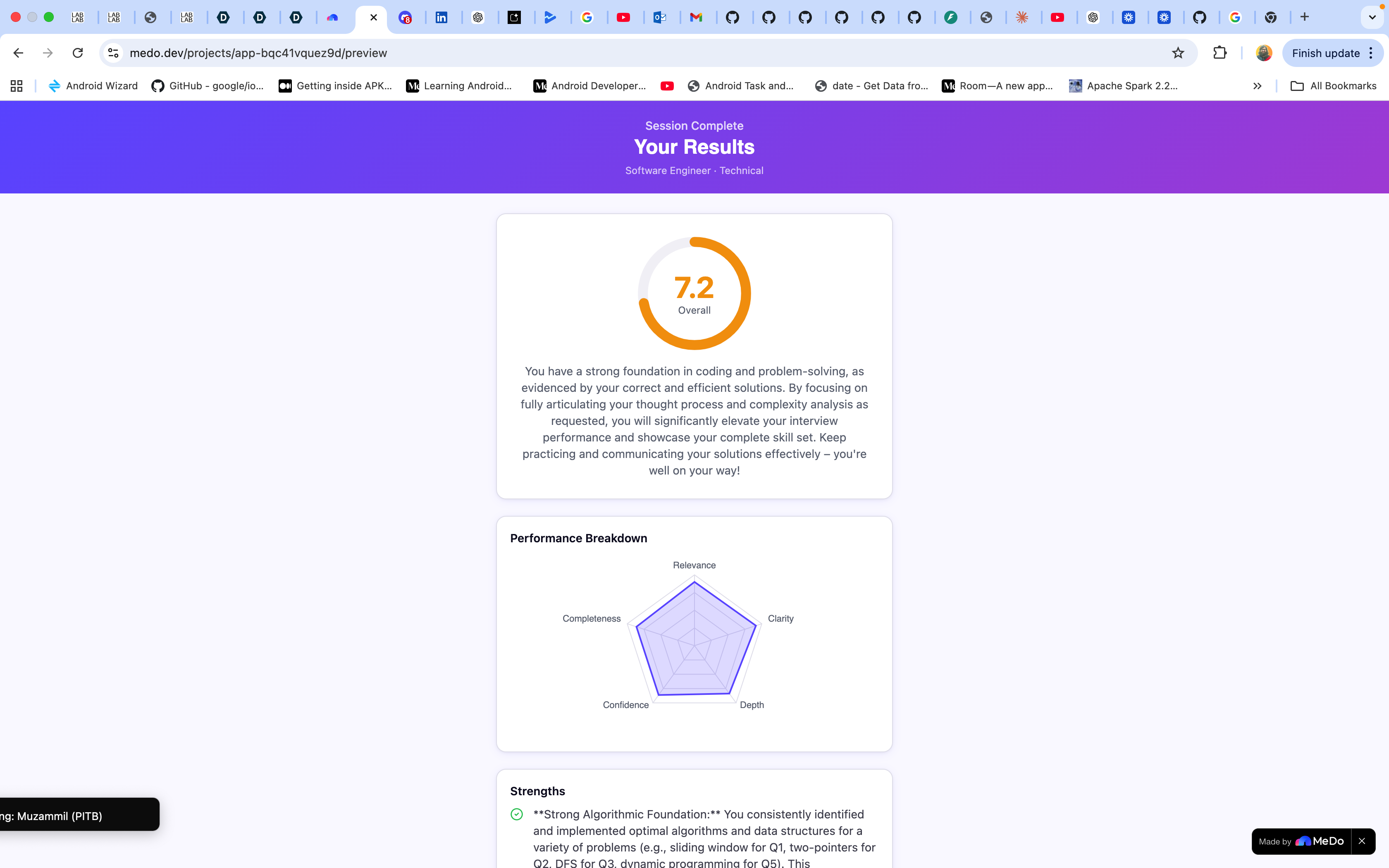
Session Feedback Summary
Inspiration
The idea for InterviewAce AI came from a very real and frustrating experience. As working professionals in the tech industry, we've seen talented people fail interviews — not because they lacked the skills, but because they never had the chance to practice out loud under realistic conditions. Professional interview coaches charge $100–$300 per hour, friends get tired of mock sessions, and YouTube videos give zero personalized feedback. We wanted to build something that felt like having a world-class interview coach in your pocket — available at midnight before your big interview, completely free, and brutally honest. When we discovered MeDo, we realized we could actually build this without writing a single line of code.
What it does
InterviewAce AI is a fully functional web application that simulates end-to-end job interview sessions powered by Gemini 2.5 Flash AI. Users select their target job role (Software Engineer, Product Manager, Data Scientist, and more), experience level, and interview type (Technical, Behavioral, HR/Culture Fit, or Mixed), then get questioned, evaluated, and coached in real time. After every answer, the AI instantly scores it from 0–10 across three dimensions — Relevance, Clarity, and Depth — and reveals a model answer for comparison. At the end of each session, users receive an overall score, a radar chart across five performance axes, a list of strengths, and specific areas to improve. All sessions are saved locally so users can track their improvement over time. No login required. Works entirely in the browser.
How we built it
We built InterviewAce AI entirely through MeDo using multi-turn conversation — no manual coding whatsoever. Here is how the process unfolded: We started by describing the full app architecture to MeDo in a single detailed prompt — every screen, navigation flow, data model, and user interaction. MeDo generated the complete React application in one pass, including the Setup screen, Interview screen, Feedback screen, Session Summary, History, and Tips & Resources. The most technically interesting part was designing the AI evaluation system. We structured three separate prompt templates for MeDo to wire into the Gemini 2.5 Flash API — one for generating role-specific interview questions, one for scoring answers and returning structured JSON feedback, and one for producing the session-level summary with strengths and improvement areas. We iterated on these prompts through natural language conversation with MeDo until the output quality was exactly what we wanted. We then used MeDo's follow-up chat to layer in additional features — localStorage persistence for offline history, the radar/spider chart for performance visualization, voice input mode, the countdown timer toggle, and mobile-responsive styling. Every UI refinement — color-coded score badges, expandable feedback sections, the model answer reveal — was added by simply describing what we wanted to MeDo. Finally, we deployed the app with MeDo's one-click hosting to get a publicly accessible URL.
Challenges we ran into
The biggest challenge was prompt engineering for consistent, structured AI output. Getting Gemini 2.5 Flash to always return clean JSON with the exact fields we needed — score, relevance feedback, clarity feedback, depth feedback, and model answer — required careful iteration. Early versions would occasionally return conversational prose instead of JSON, which broke the feedback UI. We solved this by refining the prompt structure through MeDo's chat until the output was reliable. Another challenge was managing state across a multi-screen React app without a backend. Since we wanted zero login and full offline capability, we relied entirely on localStorage — but structuring session data so that history, scores, and radar chart values all persisted correctly required several rounds of back-and-forth with MeDo to get right. We also had to think carefully about the question generation prompts to avoid repetition across a single session. MeDo helped us add context-awareness so each subsequent question would not repeat topics already covered in that session.
Accomplishments that we're proud of
We are most proud of the AI feedback engine. The fact that a user can type an answer to a complex technical interview question and receive — within seconds — a structured breakdown of exactly what was strong, what was unclear, and what was missing, along with a model answer they can compare against, feels genuinely useful. This is not a toy demo. People can actually use this to prepare for real interviews. We are also proud of how deeply we used MeDo's capabilities. We did not just use it to generate a simple form or static page — we built a full multi-screen application with API integrations, persistent data, dynamic charts, voice input, and a deployed public URL, all through conversation. The app had 48 page views and 3 unique visitors on its first day live, which validated that it actually works in the wild.
What we learned
This project fundamentally changed how we think about software development. The biggest lesson was that the quality of what you build with AI is directly proportional to the quality of how you think through the problem before you start prompting. The detailed upfront architecture — defining every screen, every data model, every AI prompt structure — was what made MeDo's output so accurate and usable on the first pass. We also learned that iterative refinement through conversation is a genuine superpower. Features we assumed would take days to implement — the radar chart, voice input, localStorage persistence — were added in minutes by simply describing them clearly to MeDo. The bottleneck is no longer writing code. It is thinking clearly about what you want to build.
What's next for InterviewAce AI
We have several features planned for the next version. First, we want to add a voice evaluation mode where the AI scores not just the content of an answer, but the delivery — pace, filler words, and confidence signals. Second, we plan to add company-specific interview tracks so users can practice for Google, Amazon, McKinsey, or any employer with tailored question styles. Third, we want to introduce a peer review feature where two users can interview each other and provide mutual AI-assisted feedback. Finally, we are exploring a progress dashboard with weekly practice goals and streak-based motivation, turning interview preparation into a daily habit rather than a last-minute panic.
Built With
- react
- typescript
- vite

Log in or sign up for Devpost to join the conversation.