-
-
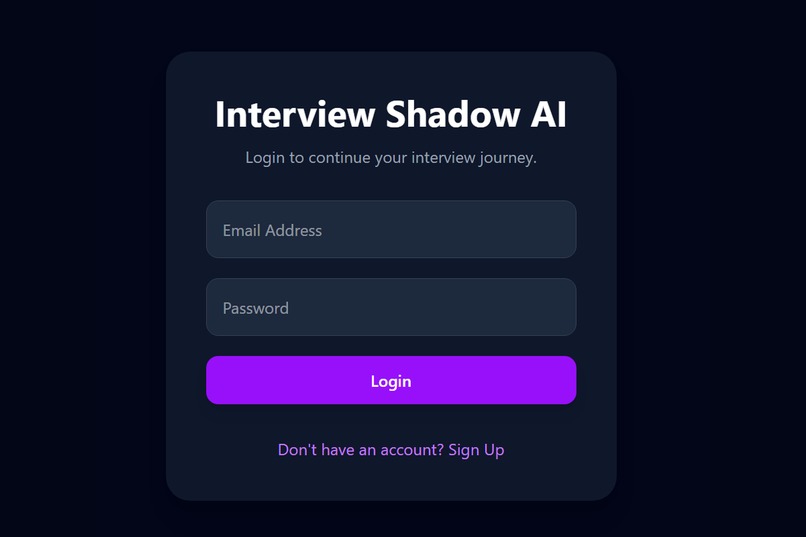
Secure login screen for candidates to continue their interview journey.
-
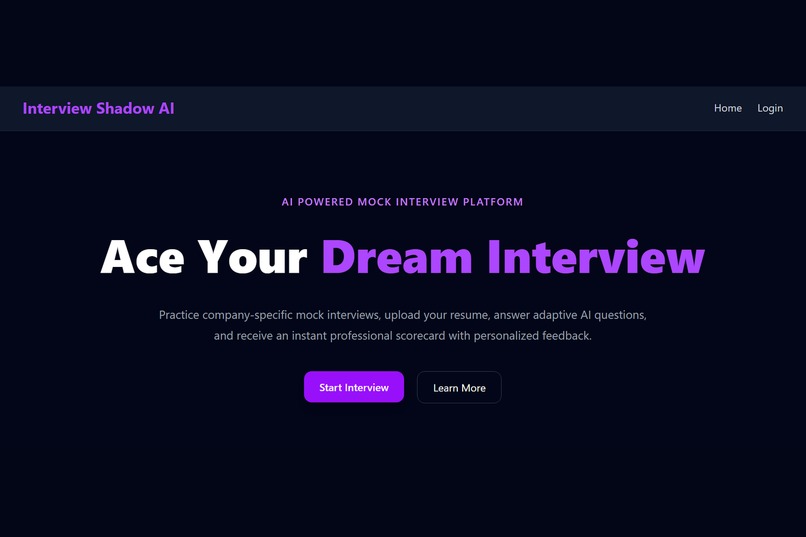
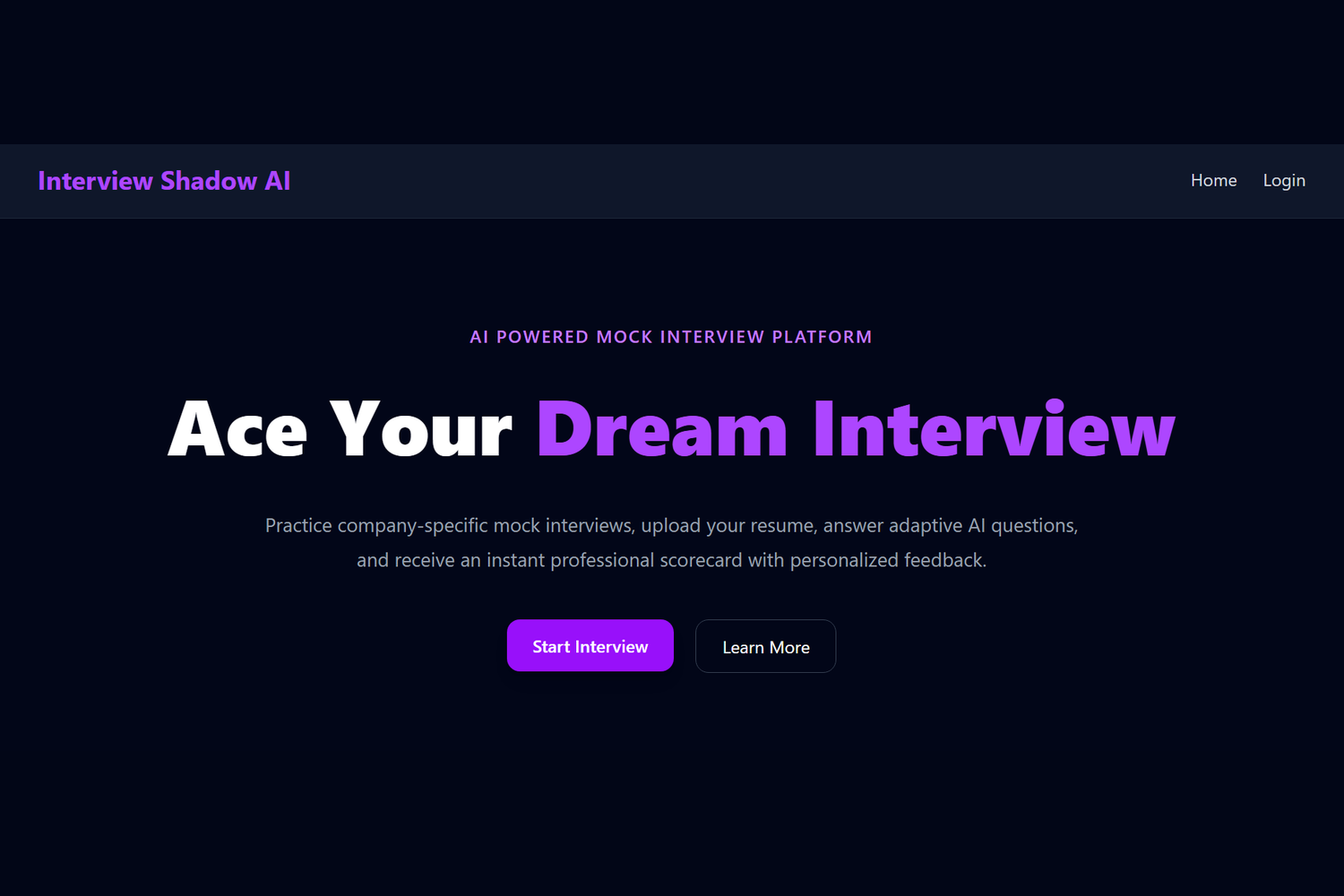
Landing page for AI-powered mock interview practice and personalised feedback.
-
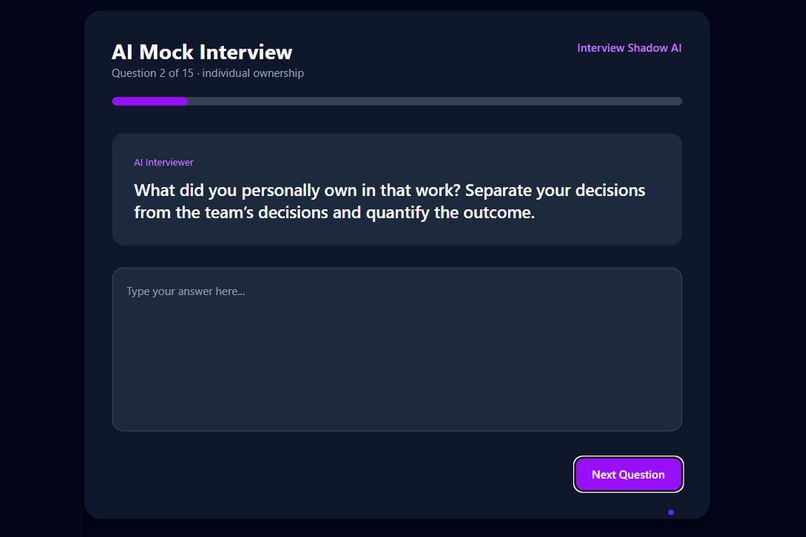
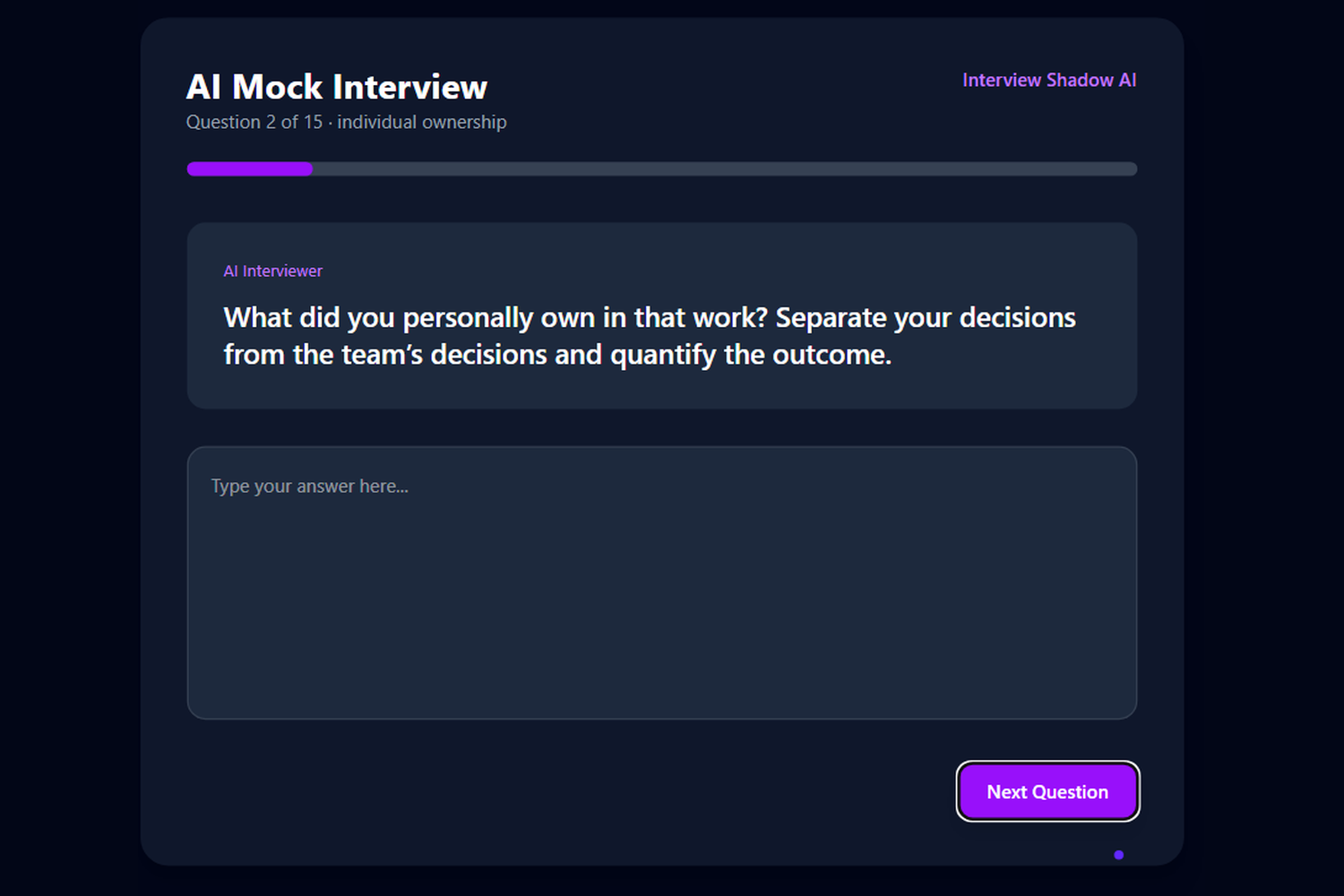
Adaptive follow-up question asks the candidate to separate individual contribution.
-
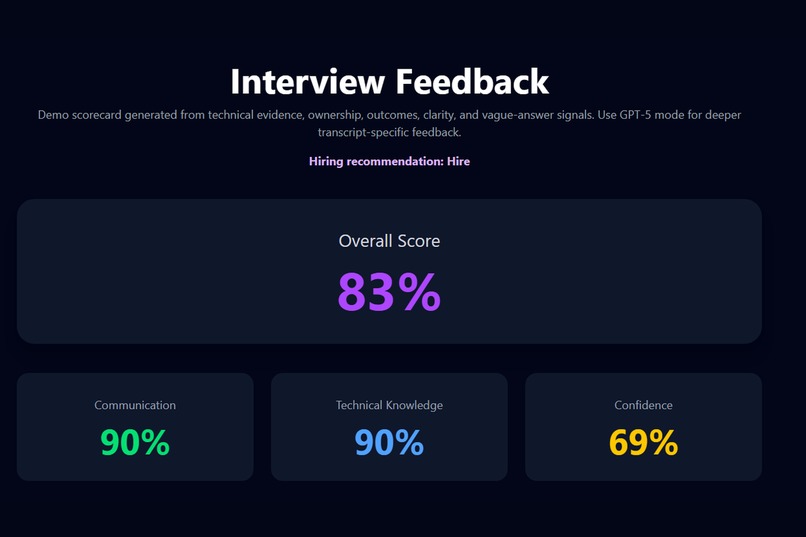
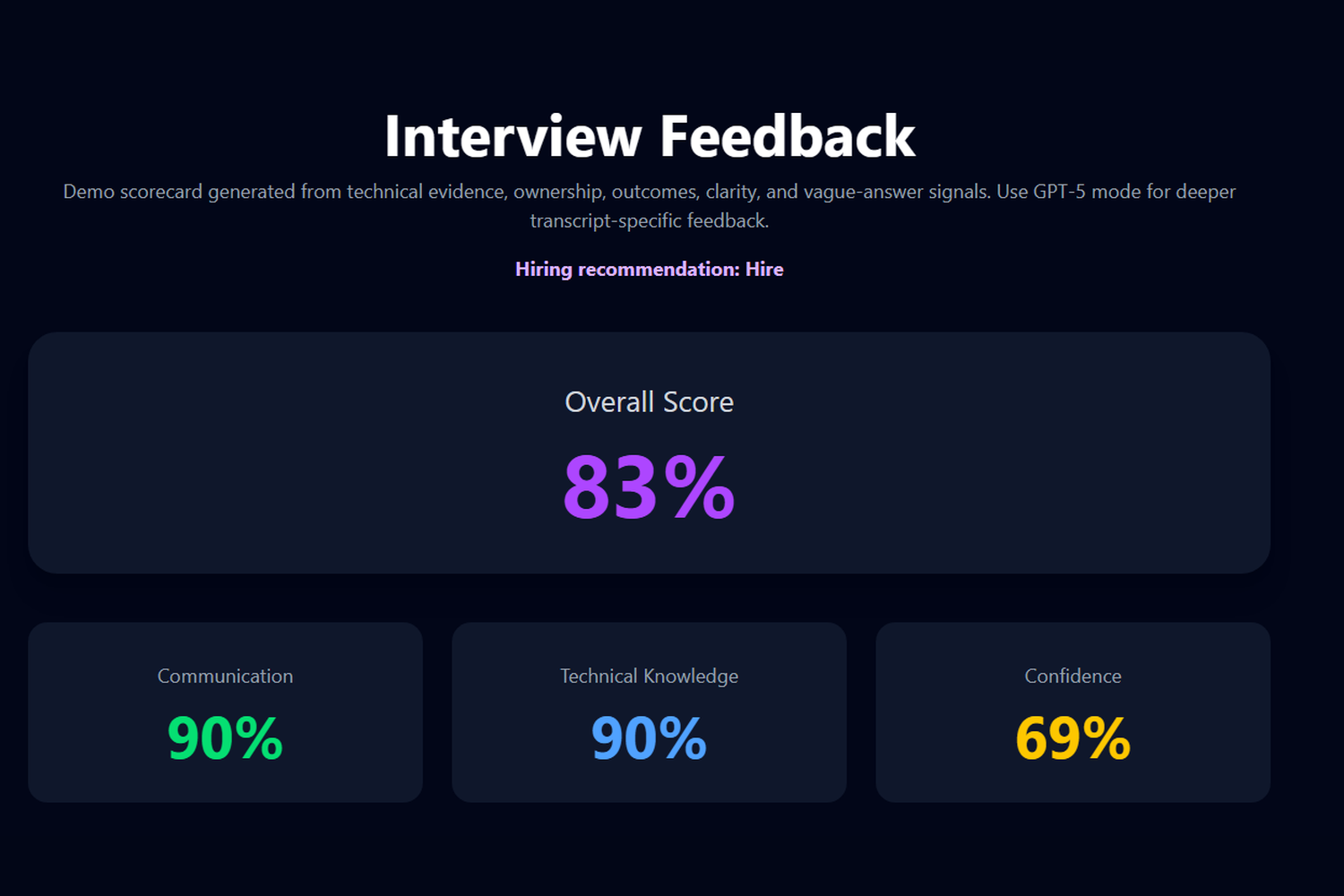
Scorecard uses varied category scores based on interview response quality.
-
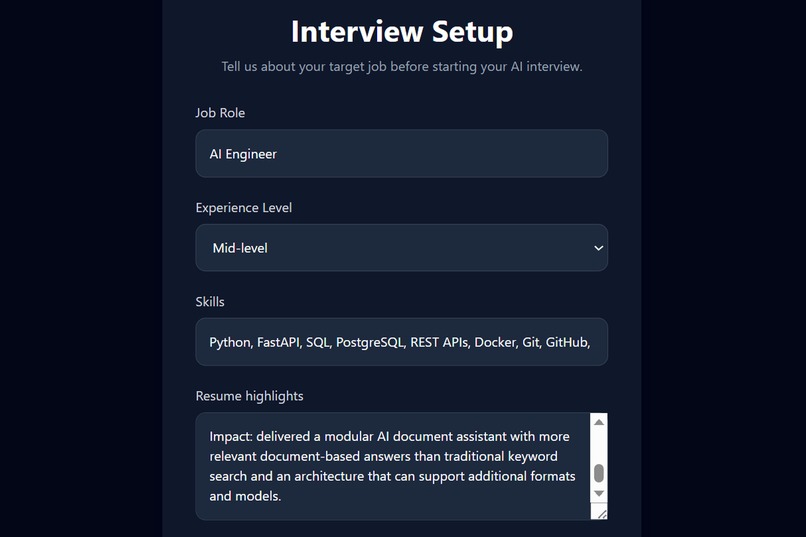
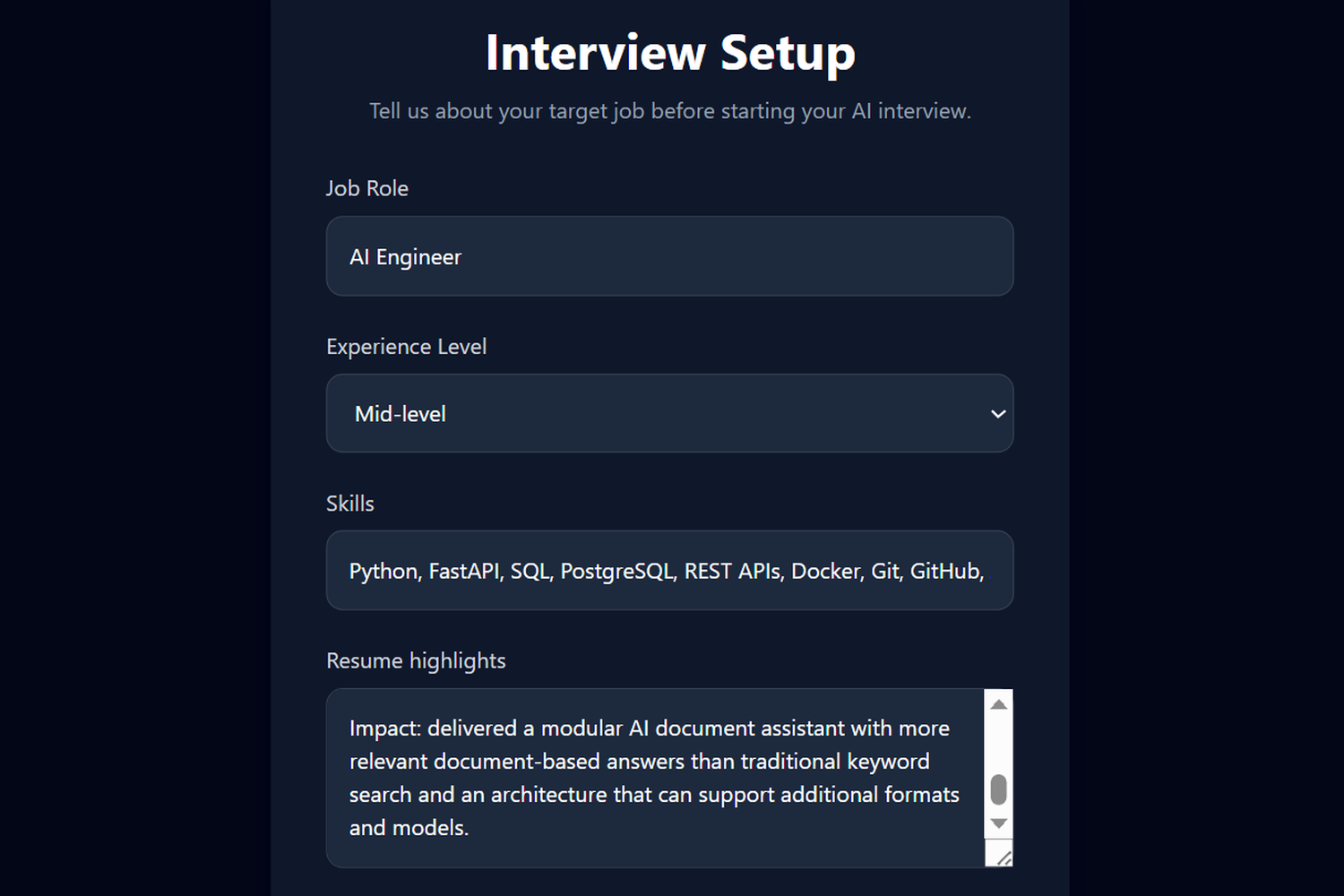
Interview setup with role, experience level, skills, and resume context.
-
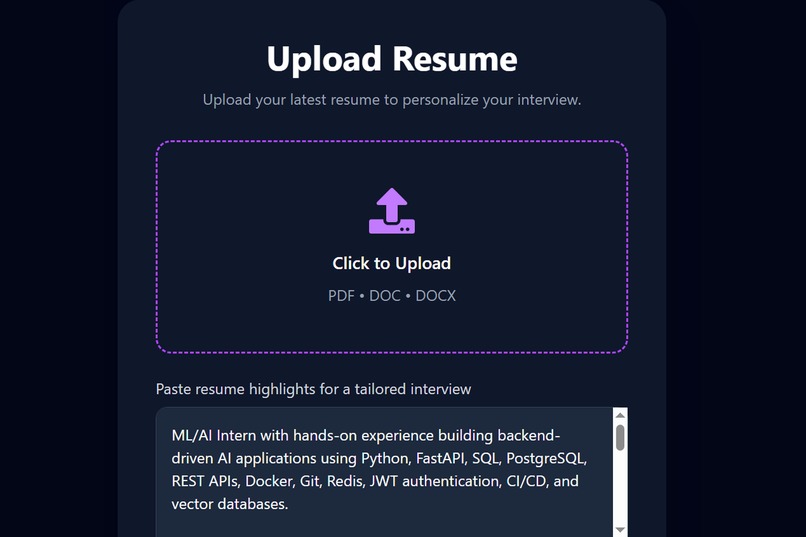
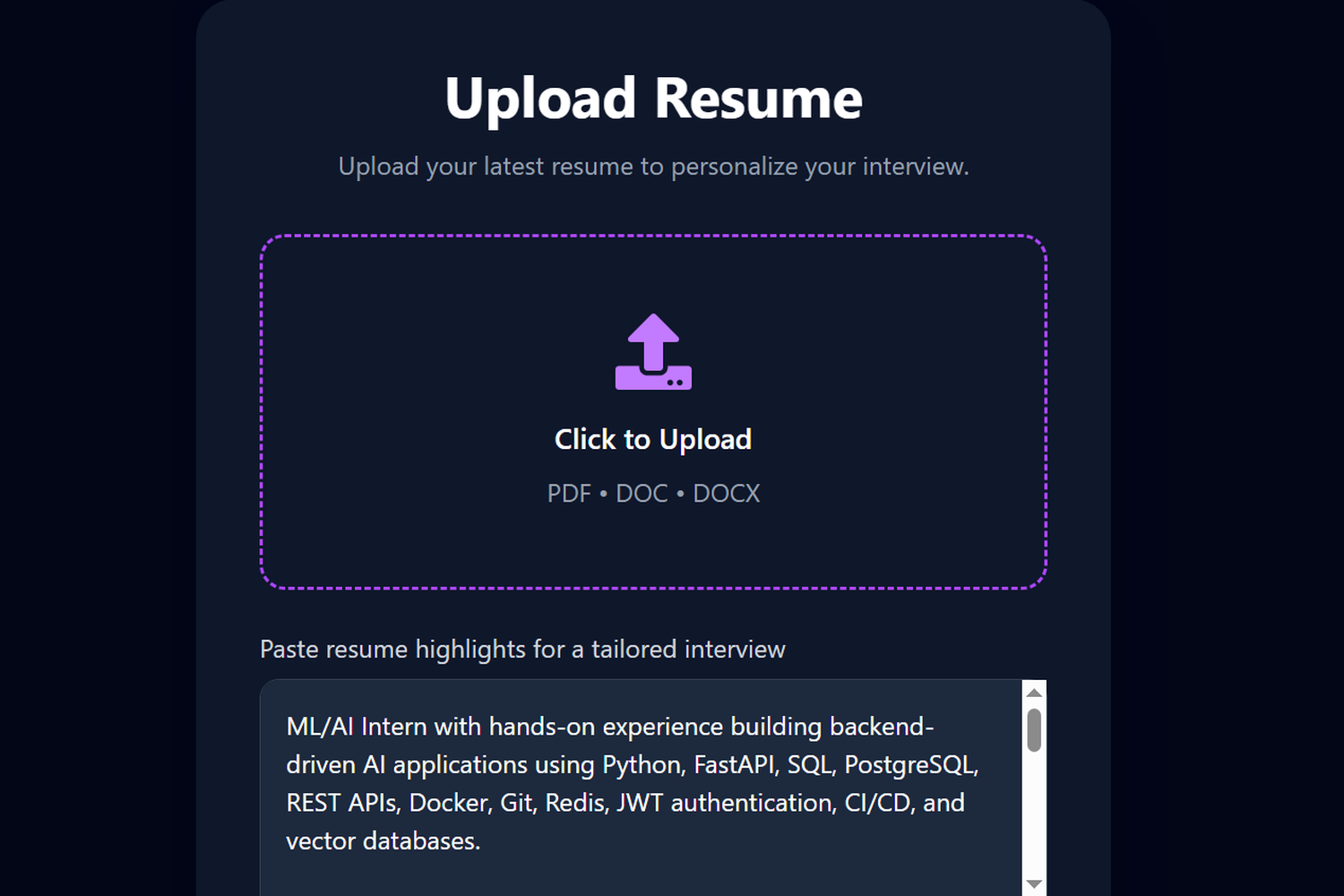
Resume upload and highlights input to personalise interview questions.
-
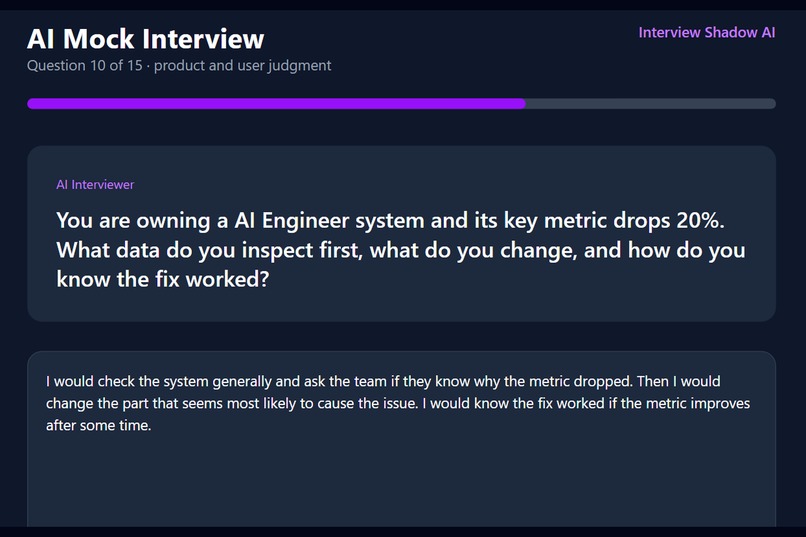
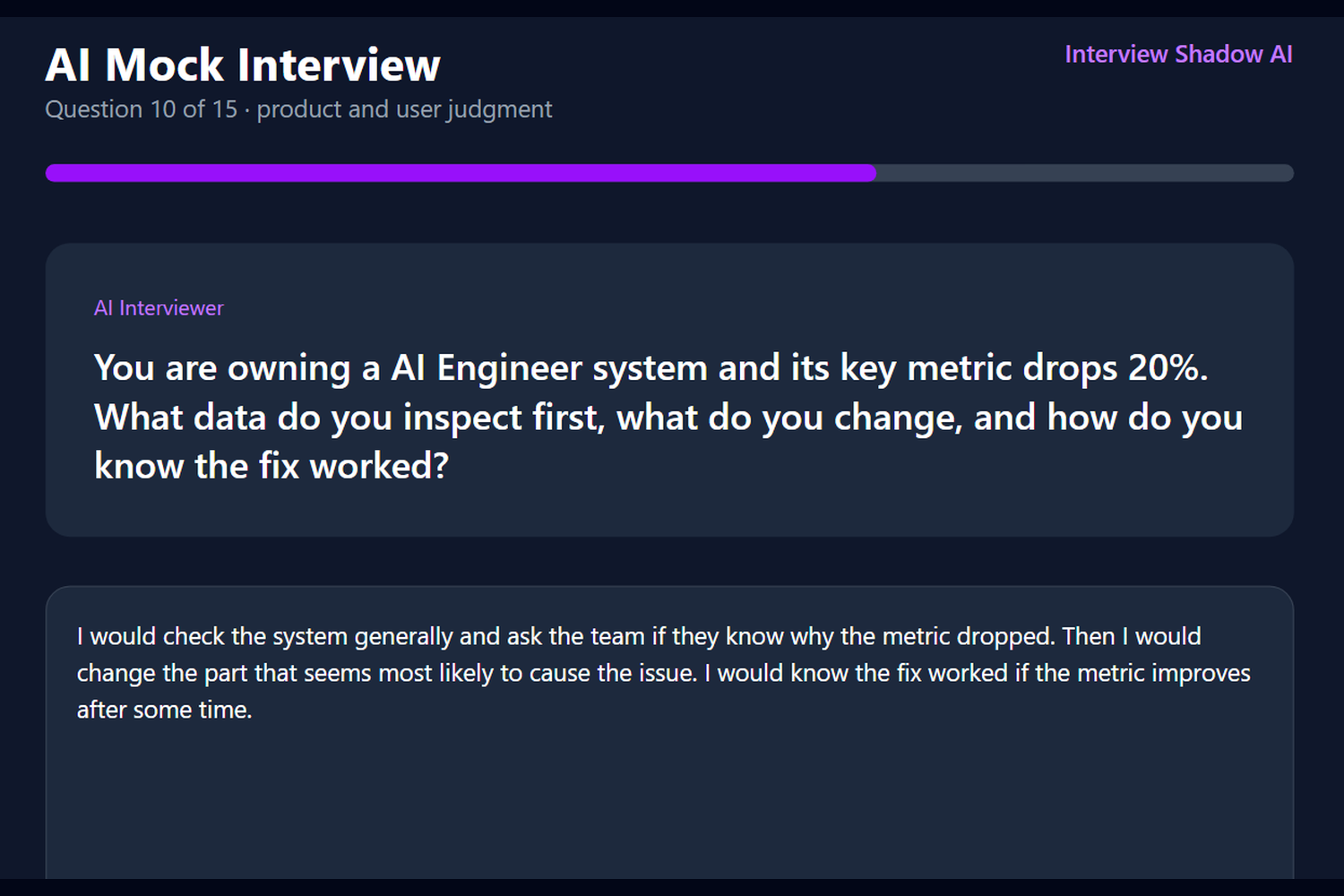
Question 10 tests product judgment, metrics, and decision-making.
-
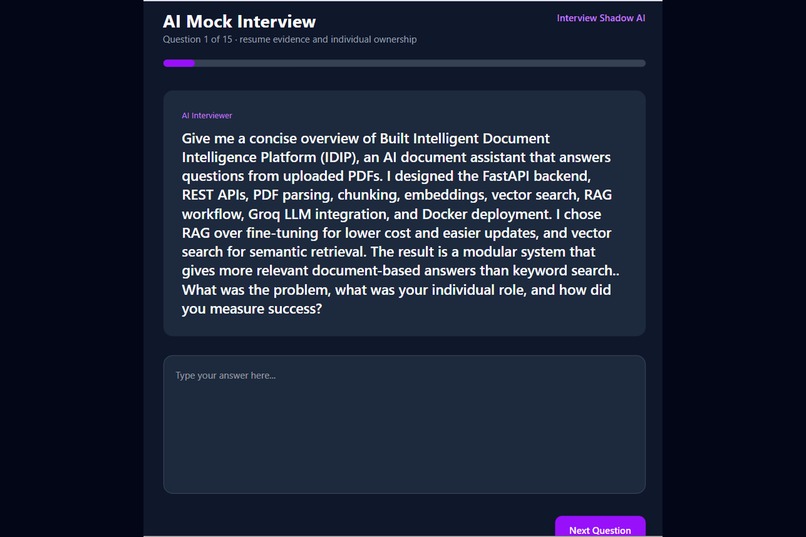
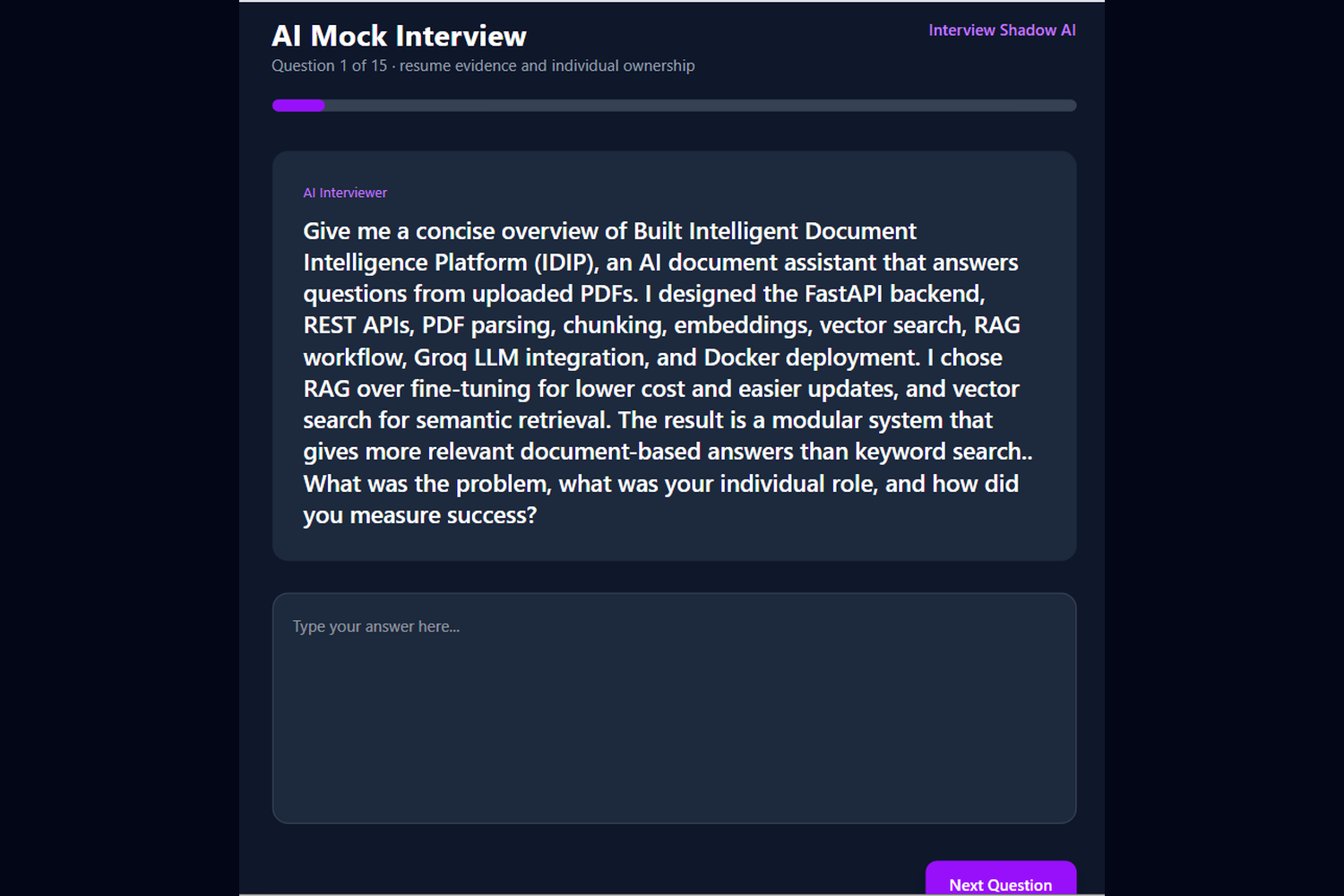
Question 1 starts with project-specific evidence and ownership.
-
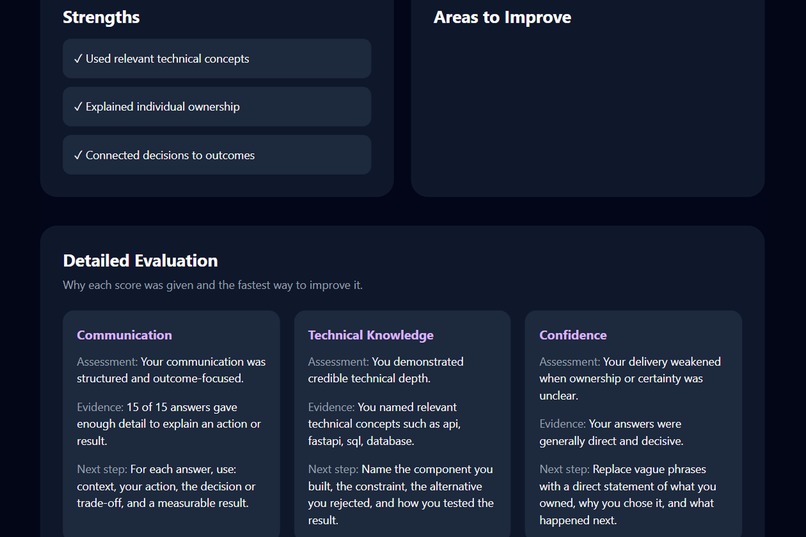
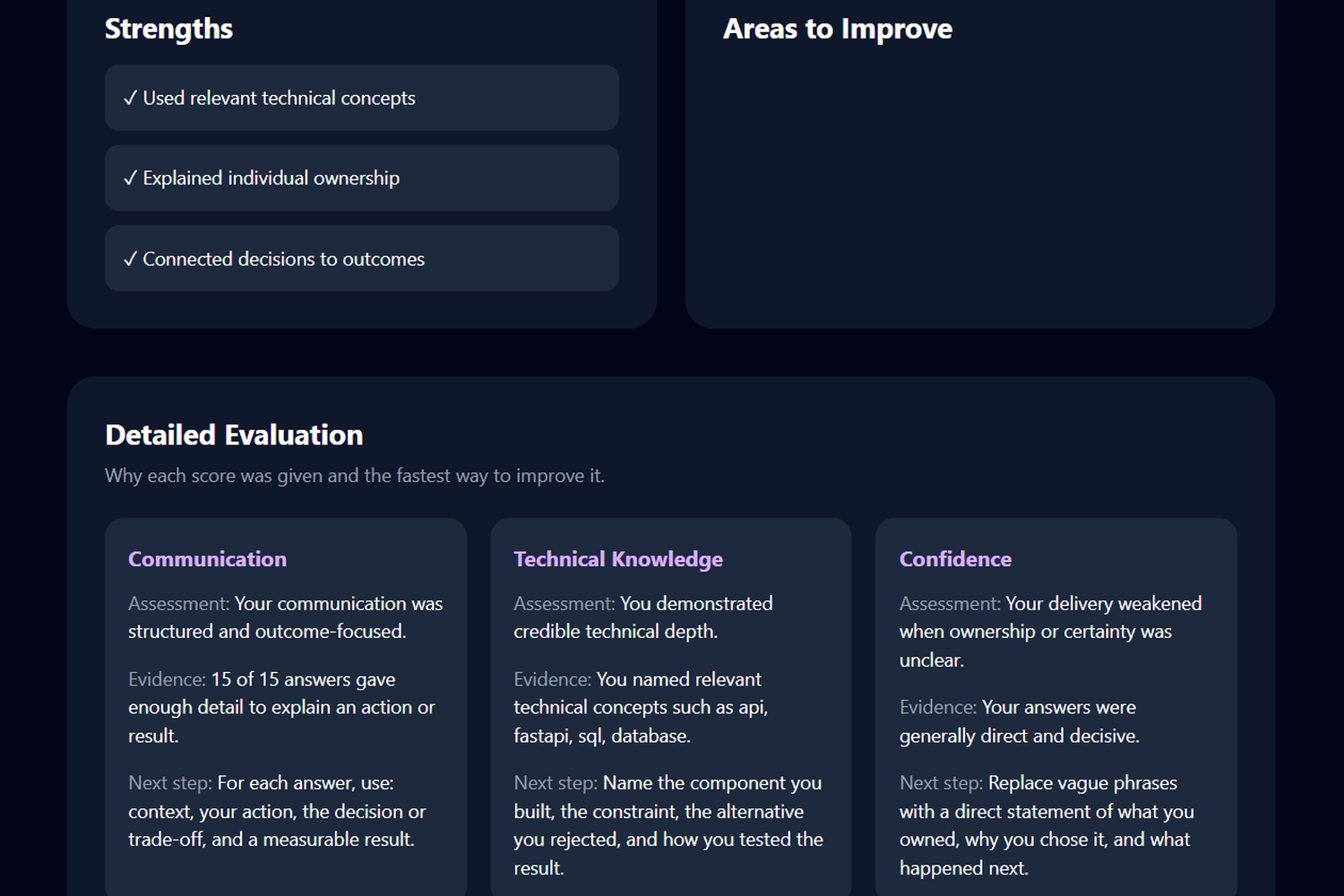
Detailed evaluation explains evidence, improvement areas, and next actions.
-
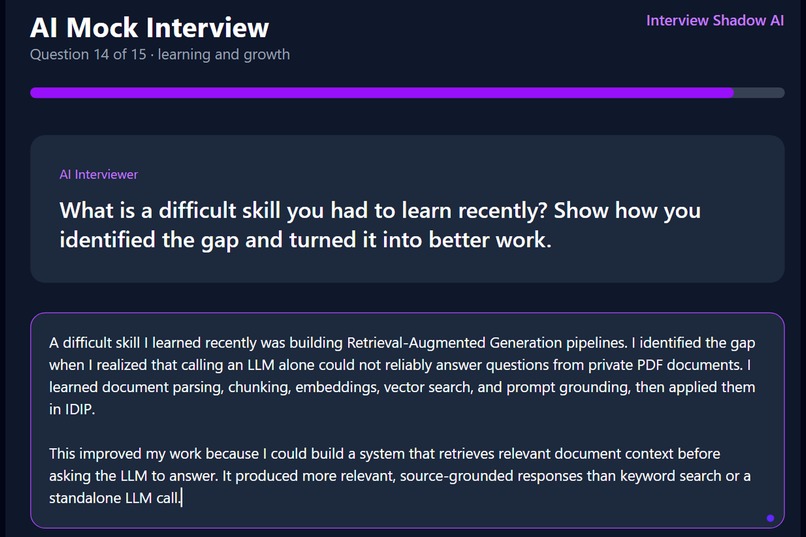
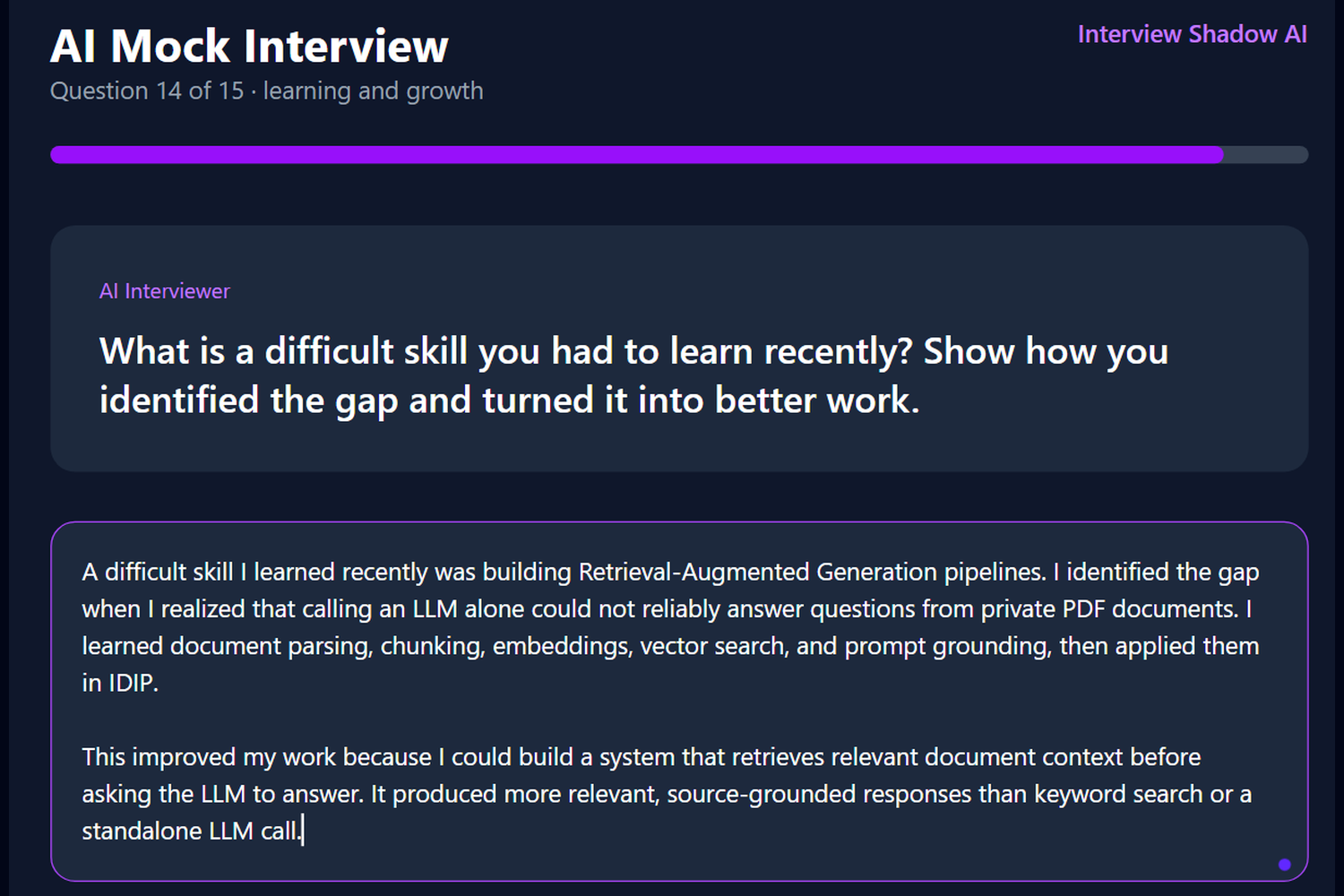
Question 14 evaluates learning ability and technical growth.
-
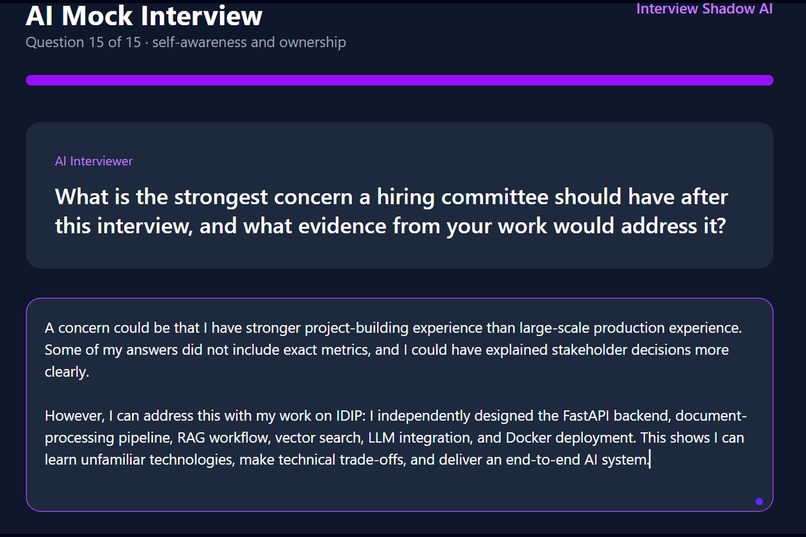
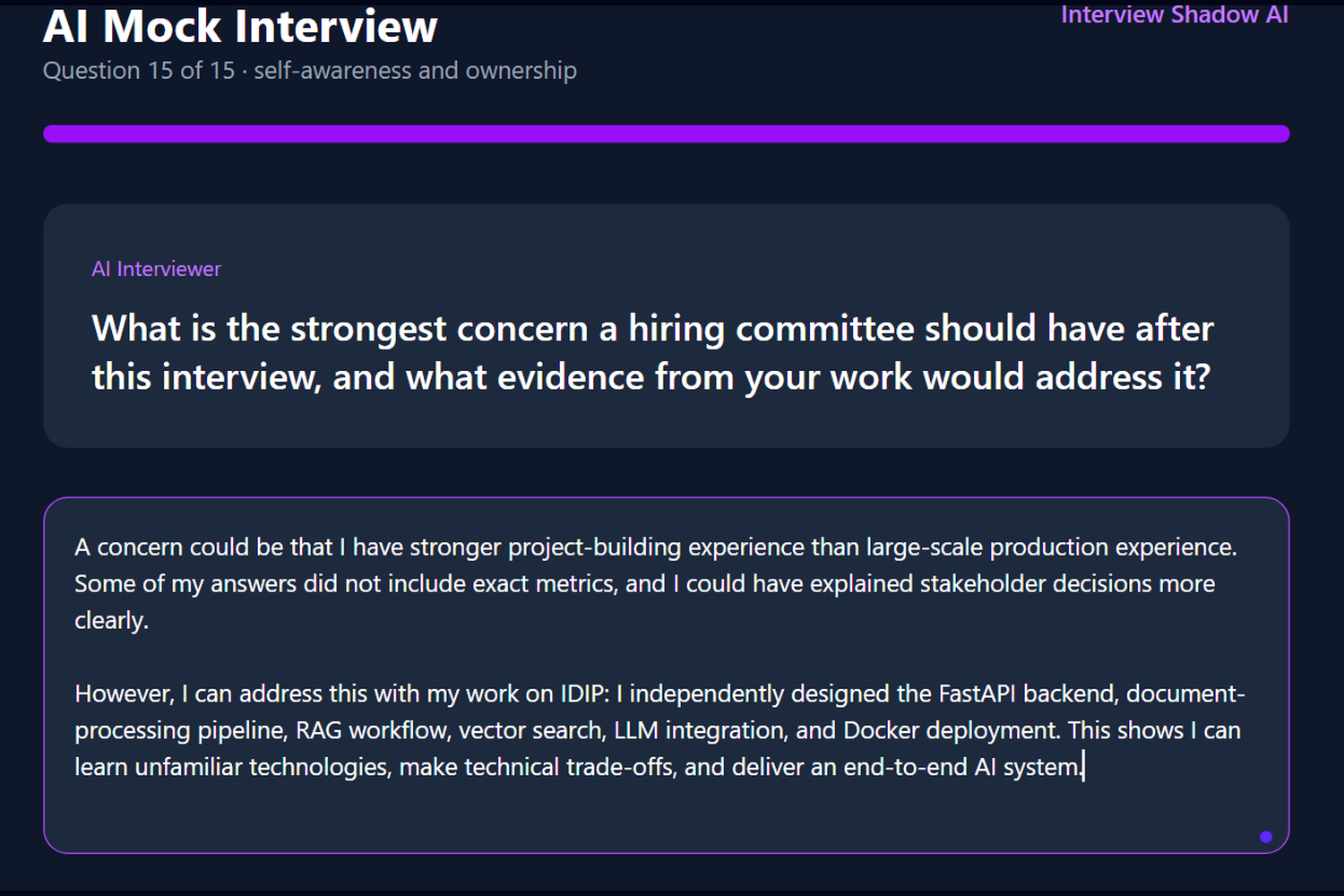
Final question evaluates self-awareness, ownership, and hiring readiness.
Inspiration
Technical interviews can feel unpredictable because candidates rarely get realistic follow-up questions or useful feedback after practice. We wanted to build a space where students can practise explaining their projects, technical decisions, trade-offs, and impact before a real interview.
What it does
Interview Shadow AI is a mock technical-interview platform. Candidates can sign in, upload a resume, enter their target role and skills, complete a 15-question interview, and receive a scorecard.
The scorecard evaluates communication, technical knowledge, and confidence. It also provides strengths, areas to improve, a hiring recommendation, and detailed evidence-based next steps.
How we built it
We built the frontend with React, Vite, Tailwind CSS, Axios, and Firebase Authentication. The backend uses FastAPI, Python, SQLAlchemy, and SQLite to store interview history, answers, and scorecards.
The interview flow uses candidate role, skills, resume highlights, project context, and previous answers to guide questions. GPT-5 support is included for adaptive questions and structured feedback. We also built a demo mode so the complete 15-question flow and answer-quality scoring can be demonstrated locally without API quota.
Challenges we ran into
The main challenge was making feedback meaningful instead of giving every candidate the same high score. We improved the scoring logic to consider technical concepts, ownership, outcomes, answer clarity, and vague responses.
We also handled API configuration, local frontend-backend communication, Firebase authentication setup, database persistence, and responsive UI states.
Accomplishments that we're proud of
- Built a complete 15-question technical interview experience.
- Personalised questions using resume, role, skills, project context, and prior answers.
- Created varied scorecards instead of fixed scores.
- Added detailed evaluation with assessment, evidence, and an actionable next step for each category.
- Connected authentication, interview storage, answers, and scorecards in one workflow.
- Created a polished responsive UI for the full candidate journey.
What we learned
We learned how to connect a React frontend with a FastAPI backend, design structured API contracts, manage authentication, persist user interview history, and create transparent scoring logic.
We also learned that interview feedback is most useful when it explains why a score was given and tells the candidate exactly how to improve.
What's next for Interview Shadow AI
Next, we plan to add public backend deployment, richer GPT-powered follow-up questions, resume parsing, voice interview mode, company-specific interview templates, interviewer analytics, and stronger production metrics for feedback quality.
Built With
- add-these-tags:-`react
- ai
- axios
- docker
- fastapi
- firebase-authentication
- git
- github
- gpt-5
- javascript
- machine-learning
- openai-api
- pdf-parsing
- prompt-engineering
- python
- rag
- render
- rest-api
- sqlalchemy
- sqlite
- tailwind-css
- vector-database
- vercel
- vite


Log in or sign up for Devpost to join the conversation.