-
-
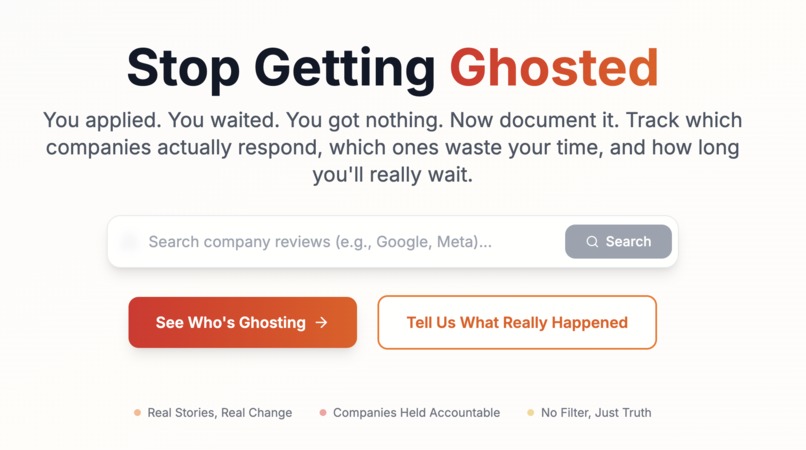
Landing Page
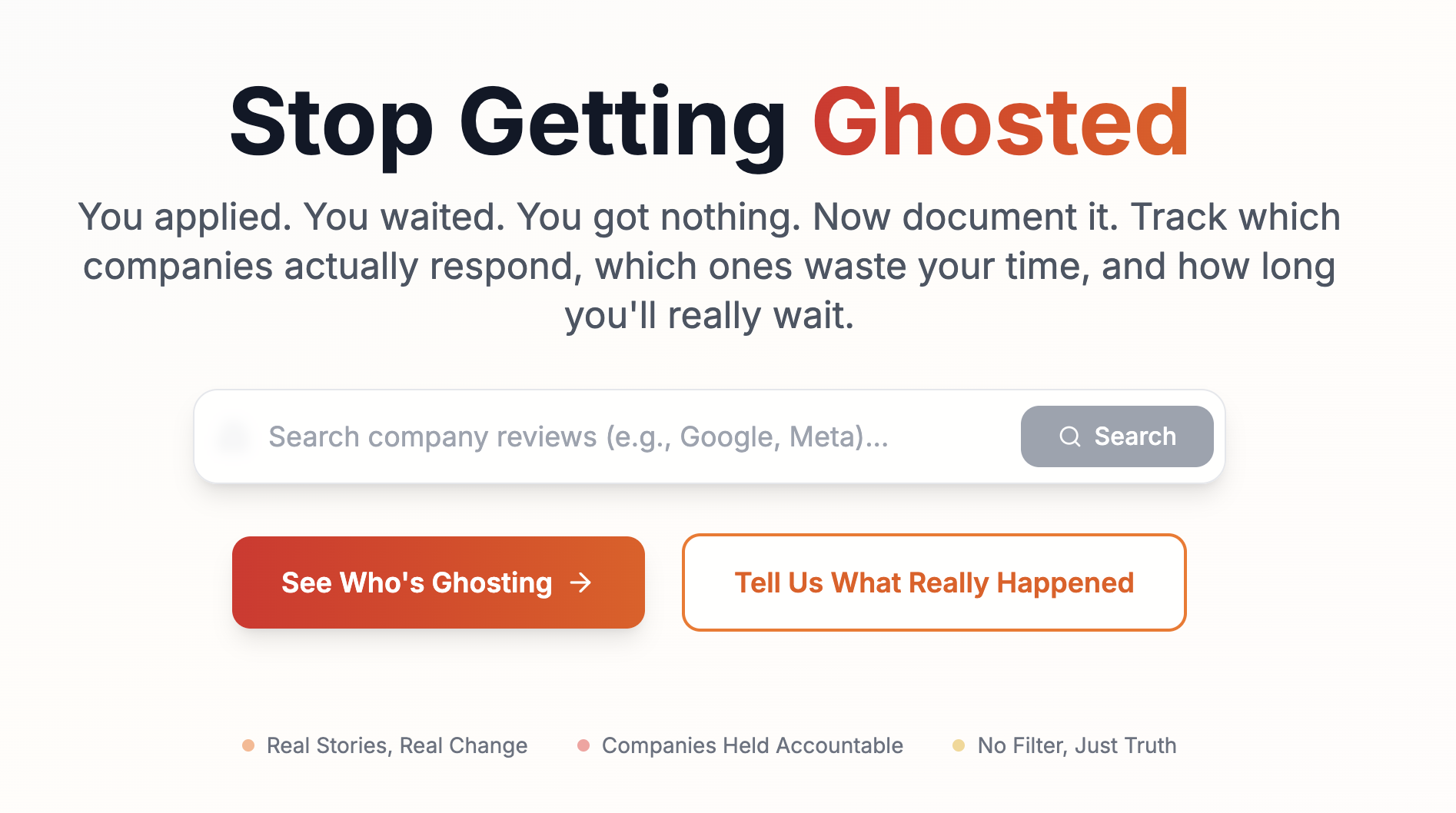
Interview Rage
Challenges Applied
Deploy Challenge - Deployed to Netlify Domain Challenge - Domain is interviewrage.com submitted through ionos.
Inspiration
I’m a fairly active LinkedIn user, and I see too many people in my network (or connected to it) posting about the hundreds of jobs they’ve applied to, only to hear nothing back. Or maybe they get 3 replies and just 1 interview.
This made me think: how can we document and expose those hiring practices?
My goal was to create a voice for these people. Rather than just posting about the broken process, this leans into real change.
What It Does
Interview Rage gives job seekers the power to document and expose real interview experiences—without filters and without risking their identity.
When users enter the site, they can:
- Browse Company Reviews:
See aggregated data for each company:
Average response times, interview difficulty, communication quality, and ghosting trends.
Wondering if a company actually follows up? Or how long they usually take to respond? Now you’ll know.
You can also spot patterns—
Do certain roles get better treatment?
Do some departments move faster than others?
This helps you decide the best way to apply, who to talk to, or even whether to apply at all.
- Submit Your Own Review (Anonymously):
Share your story without fear of backlash.
Whether you’re exposing a terrible experience or spotlighting a company that treated you right, your name stays hidden.
This gives candidates the freedom to be brutally honest.
You can talk about how many rounds you went through, how the communication felt, and whether the company kept their promises.
The Goal:
Clarity. Closure. Control.
If a company usually responds in 5 days and it’s been 2 weeks for you—
You’ll know it’s time to move on and clear your mind.
If a company has a history of ghosting—
You’ll see the red flags before wasting your time.
And if you’re targeting a company you really want to work for—
You’ll know the best channels, timing, and roles that actually get responses.
This isn’t just venting.
It’s crowd-sourced accountability.
How We Built It
Bolt!
Only a few things were done manually; like updating the landing/about page copy, deploying to Netlify, connecting Supabase, and pointing the domain to IONOS.
Otherwise, Bolt handled setup using:
- Next.js
- NextAuth
- TypeScript
- Supabase
Challenges We Ran Into
Deployment and testing with API keys inside Bolt was tricky. I had to pull the code into VS Code to test authentication and Supabase connections due to mismatched URLs provided by Bolt.
Also, I ended up restarting the project after Bolt didn’t play well with a huge prompt I gave it initially. From there, I prompted it feature-by-feature. Small, sequential changes worked much better.
Accomplishments We're Proud Of
I’m extremely proud of what this stands for.
All my friends and acquaintances who’ve been tortured by a process that favors the big guys over the individual, this is for them. To remind them they have value, and that their voice matters.
What We Learned
- Learned a lot about AI prompting. I had to be precise with wording to avoid missing key context clues.
- Discovered how to debug independently when Bolt failed to resolve an issue after 5 or 6 attempts. I tracked it back to the commit where it broke and had it re-implement the old logic.
What's Next for Interview Rage
I’m sharing this with all those people I constantly see posting about the job hunt grind.
I want this to become an anonymous, powerful tool for job seekers, especially those just trying to make a living. Eventually, I’d love to let people apply for jobs directly on the platform, but only at companies that respect their time and humanity.
Built With
- nextauth
- nextjs
- supabase
- typescript

Log in or sign up for Devpost to join the conversation.