-
-
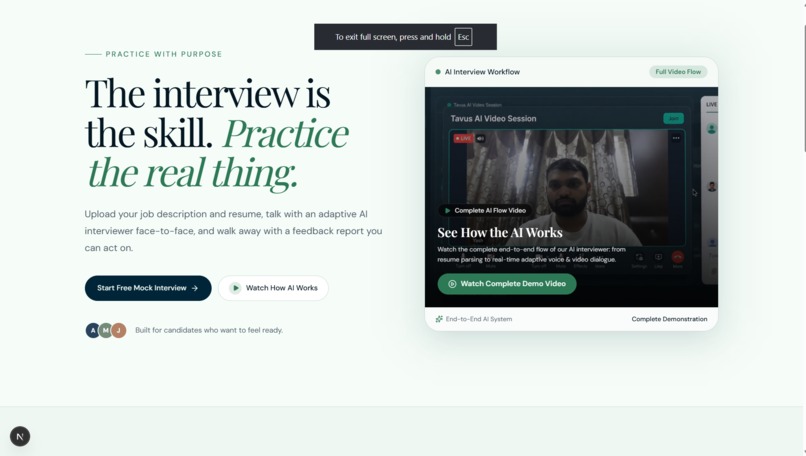
On Boarding
-
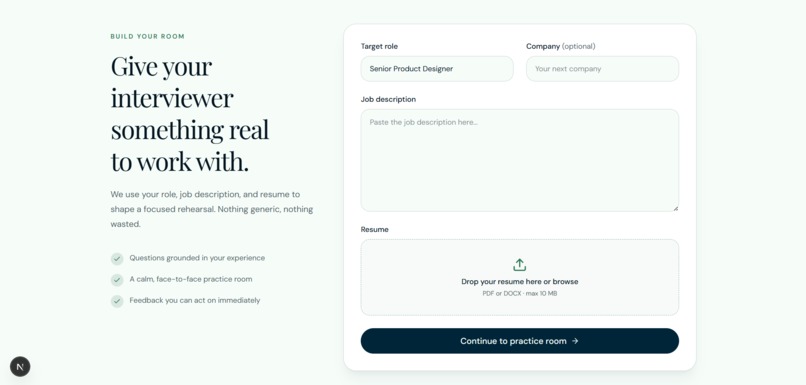
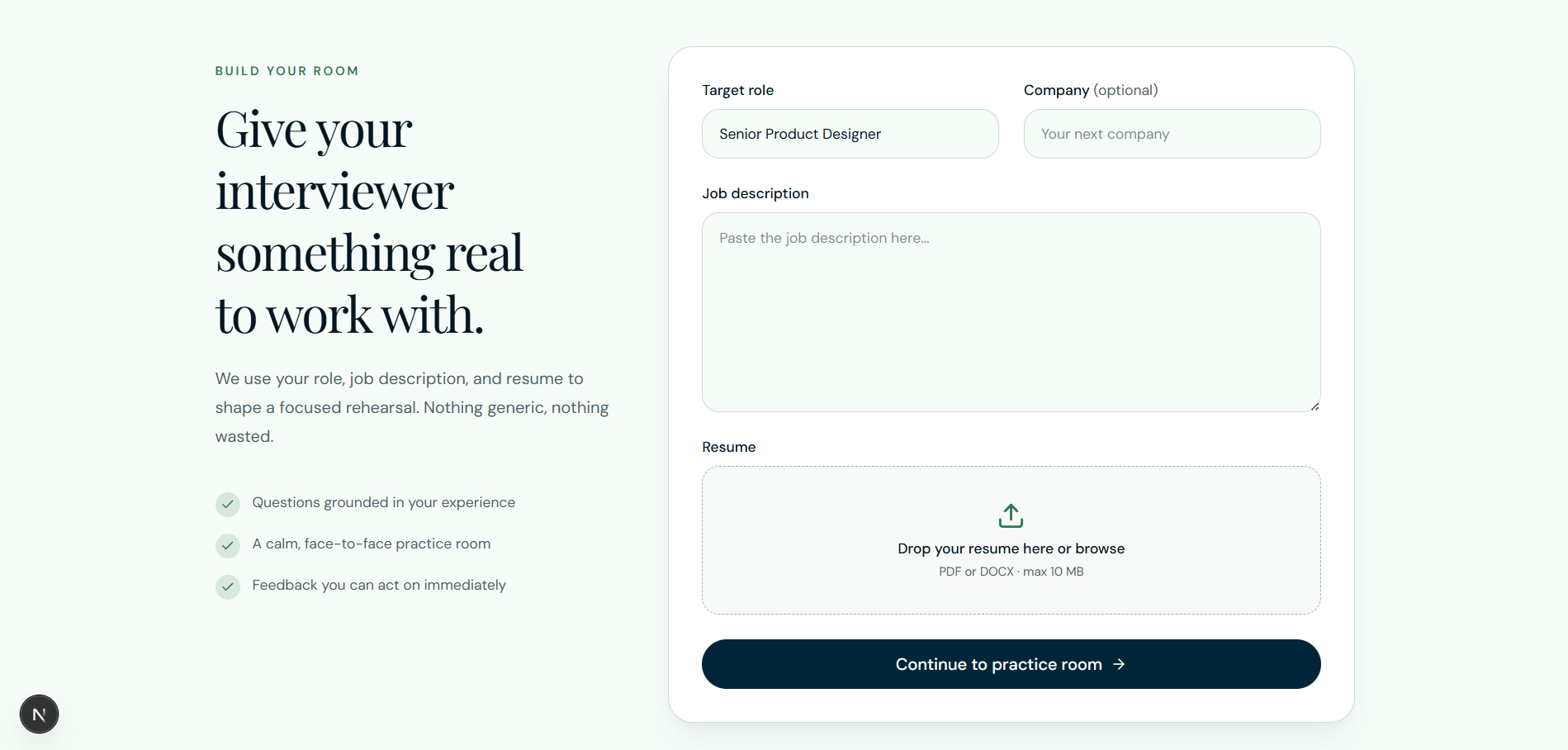
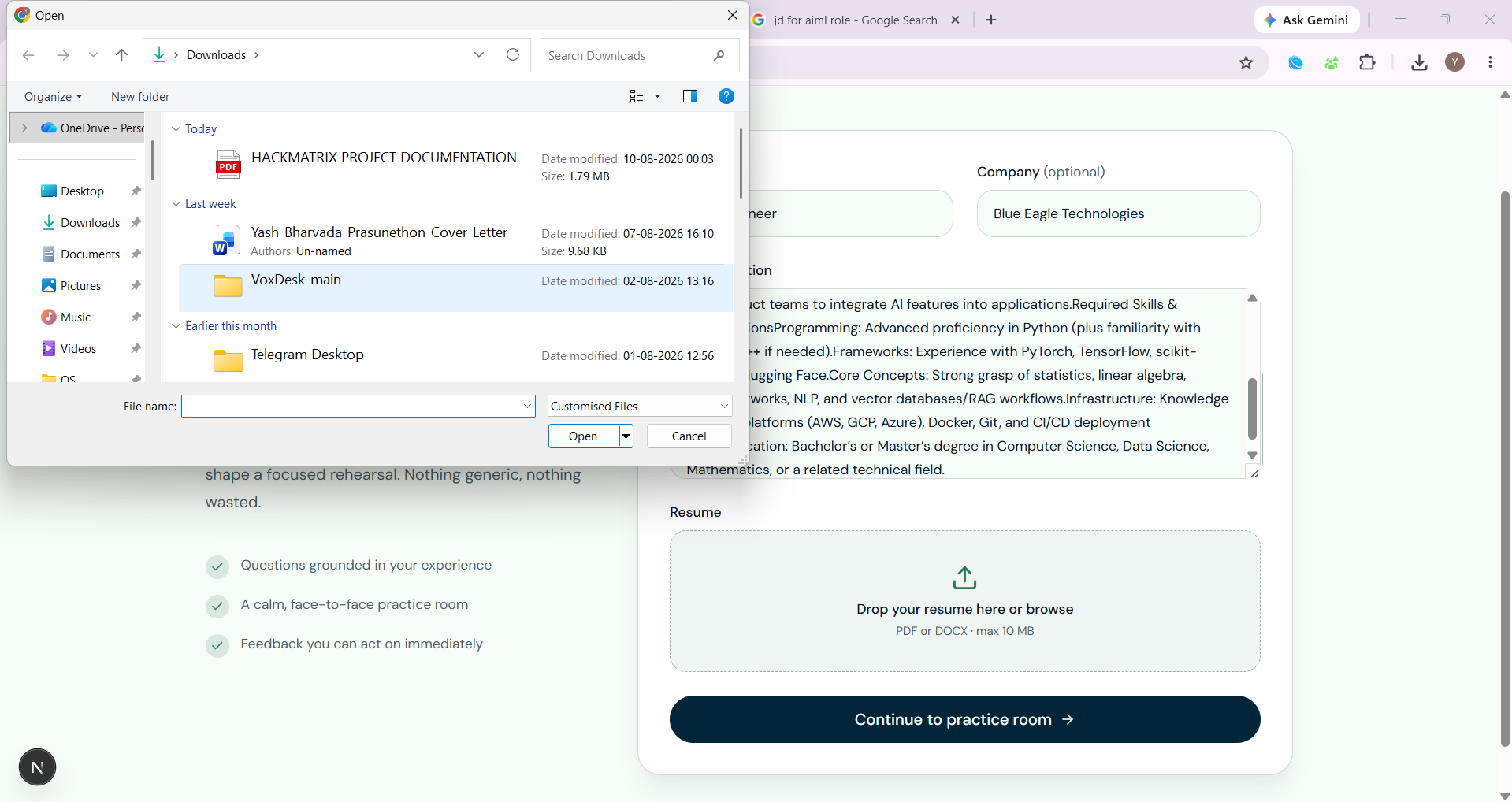
Job Role and JD Specs
-
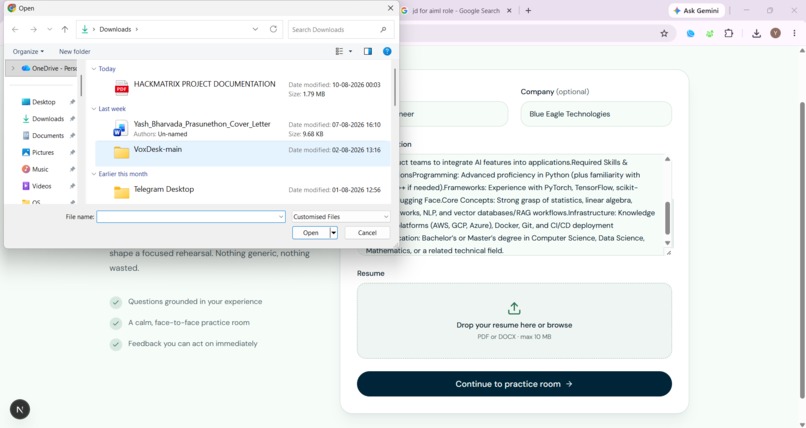
Resume Selection
-

Confirmation
-
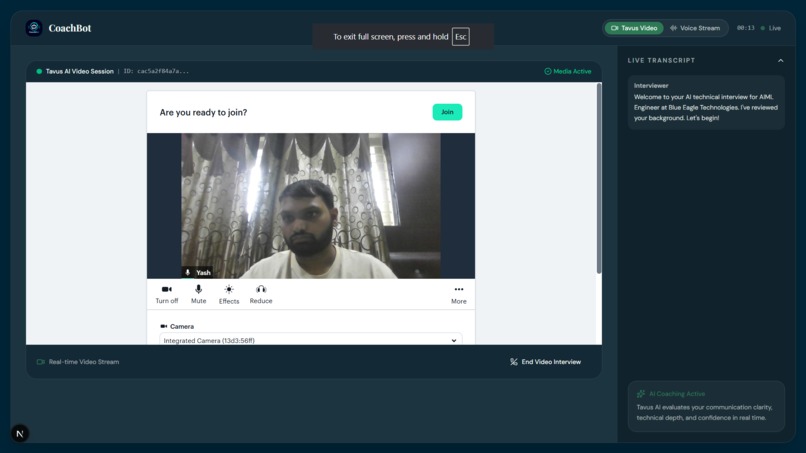
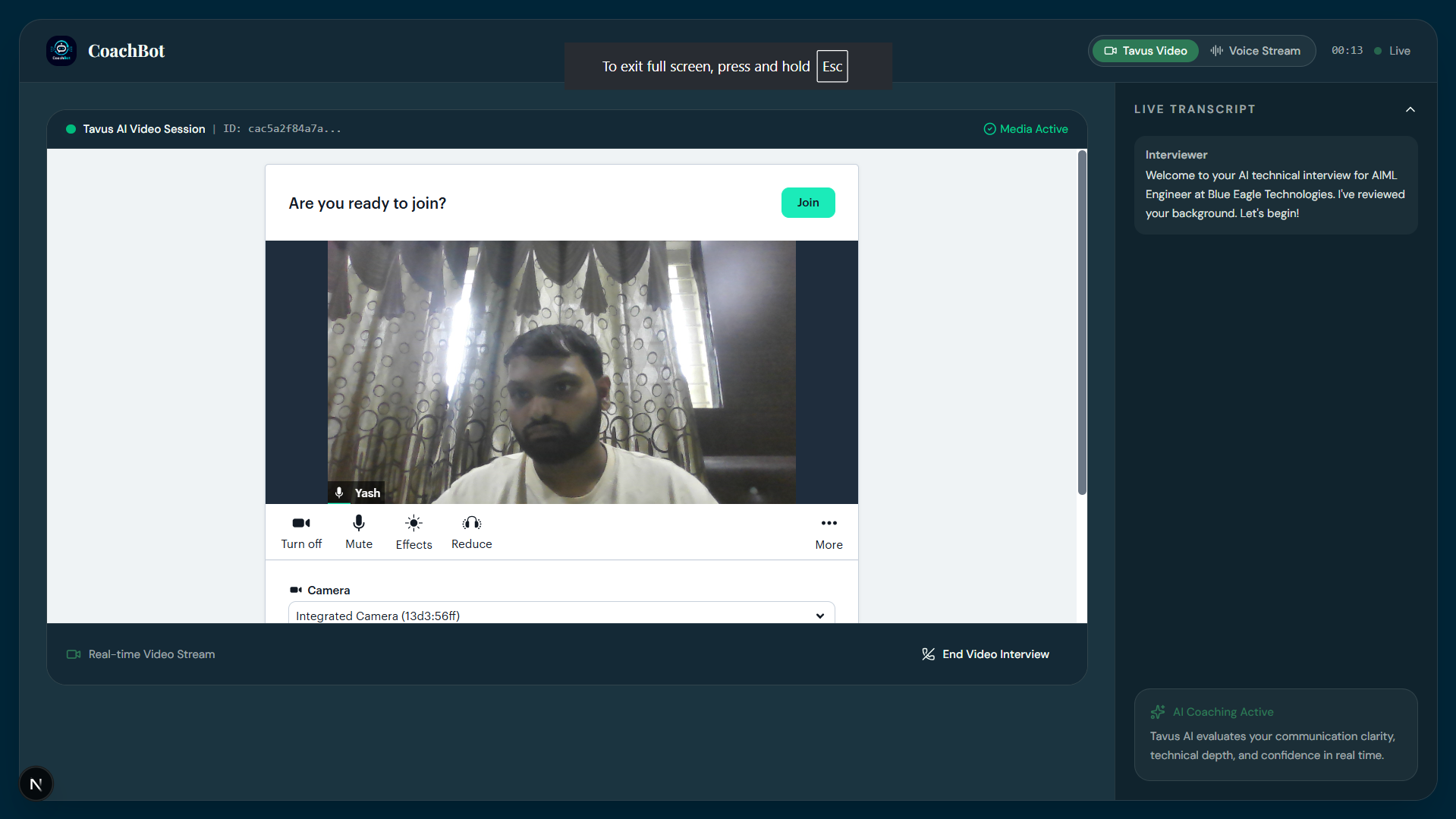
Thorogh Check of Readiness
-
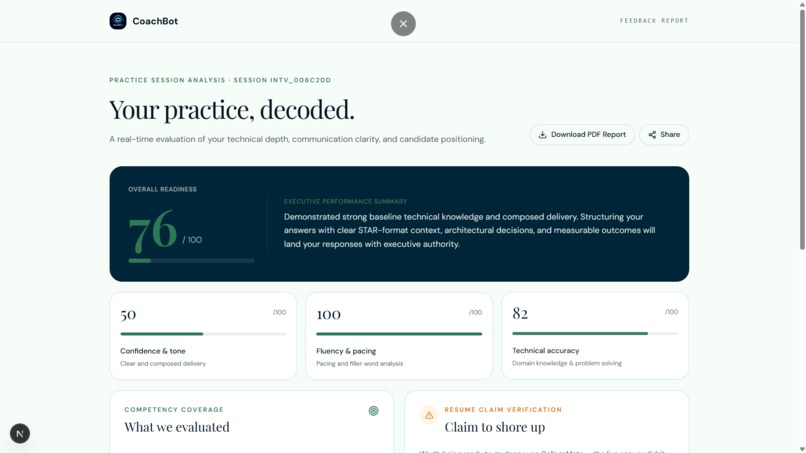
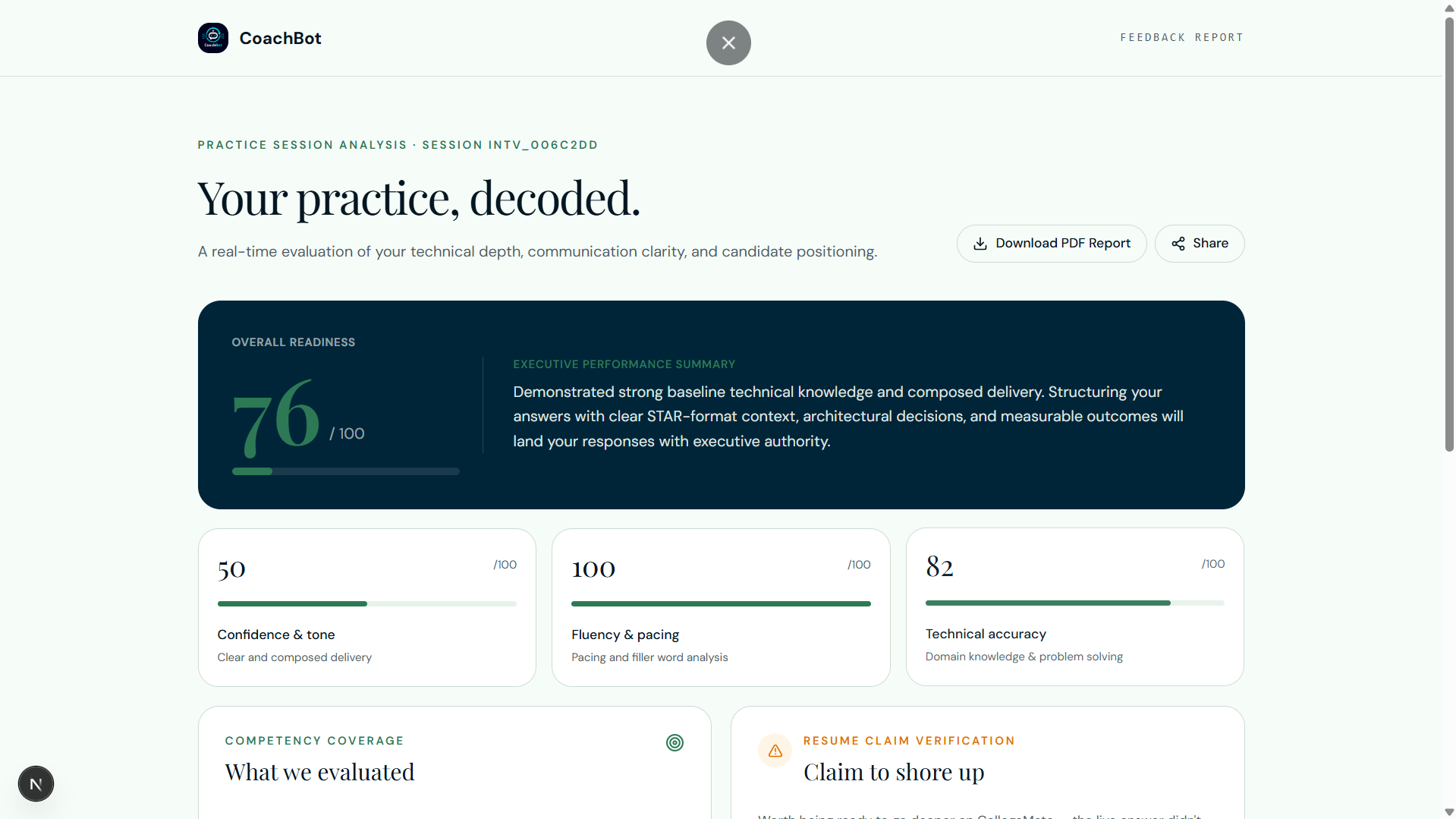
FeedBack
-
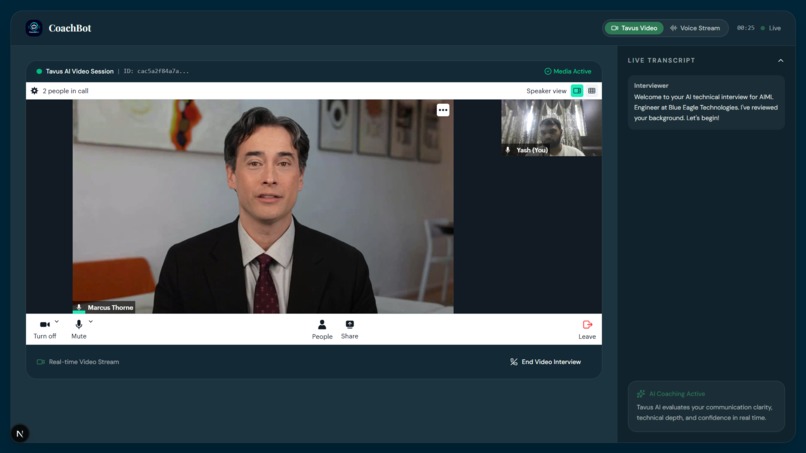
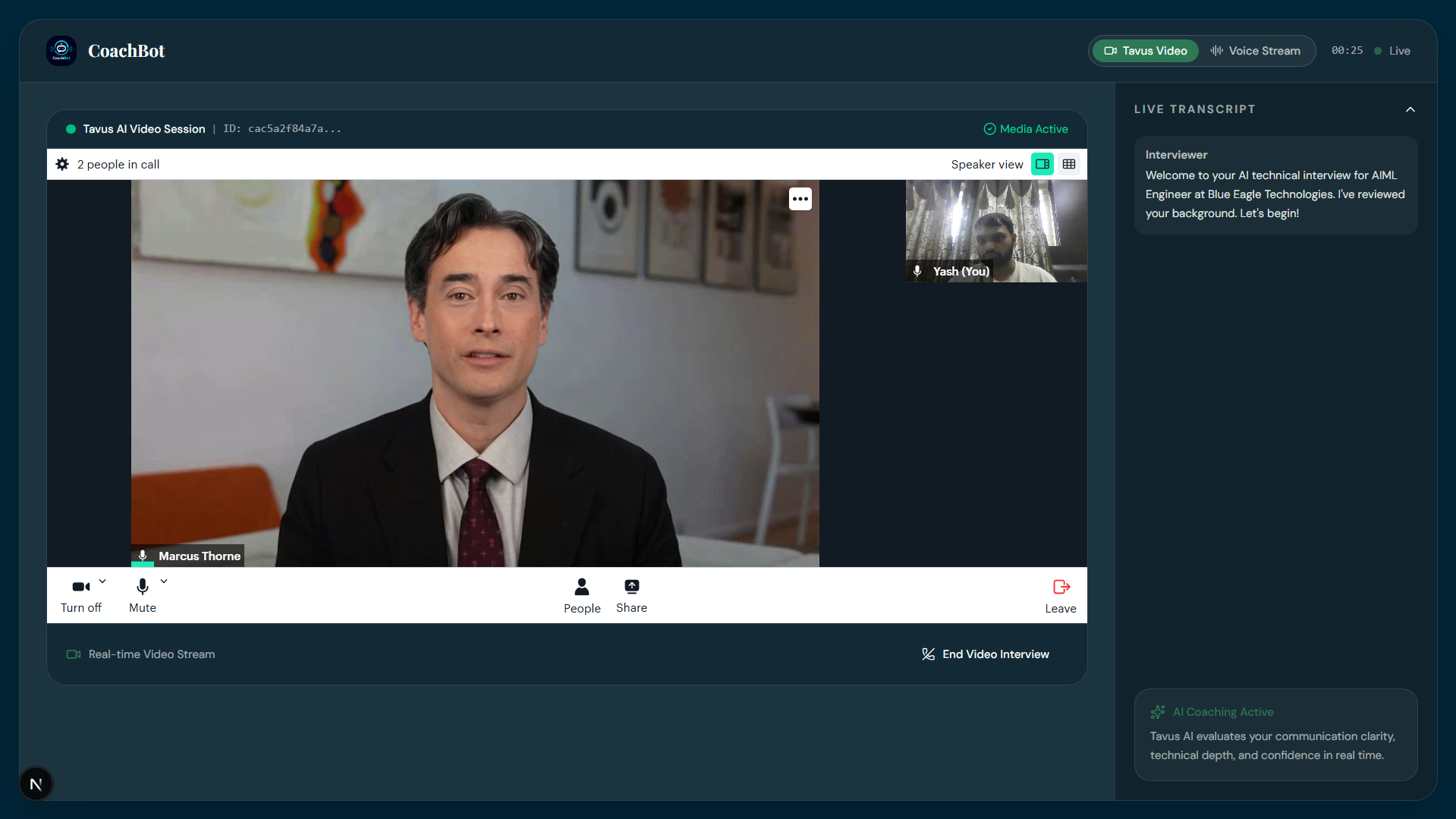
Live Interview with Tavus AI
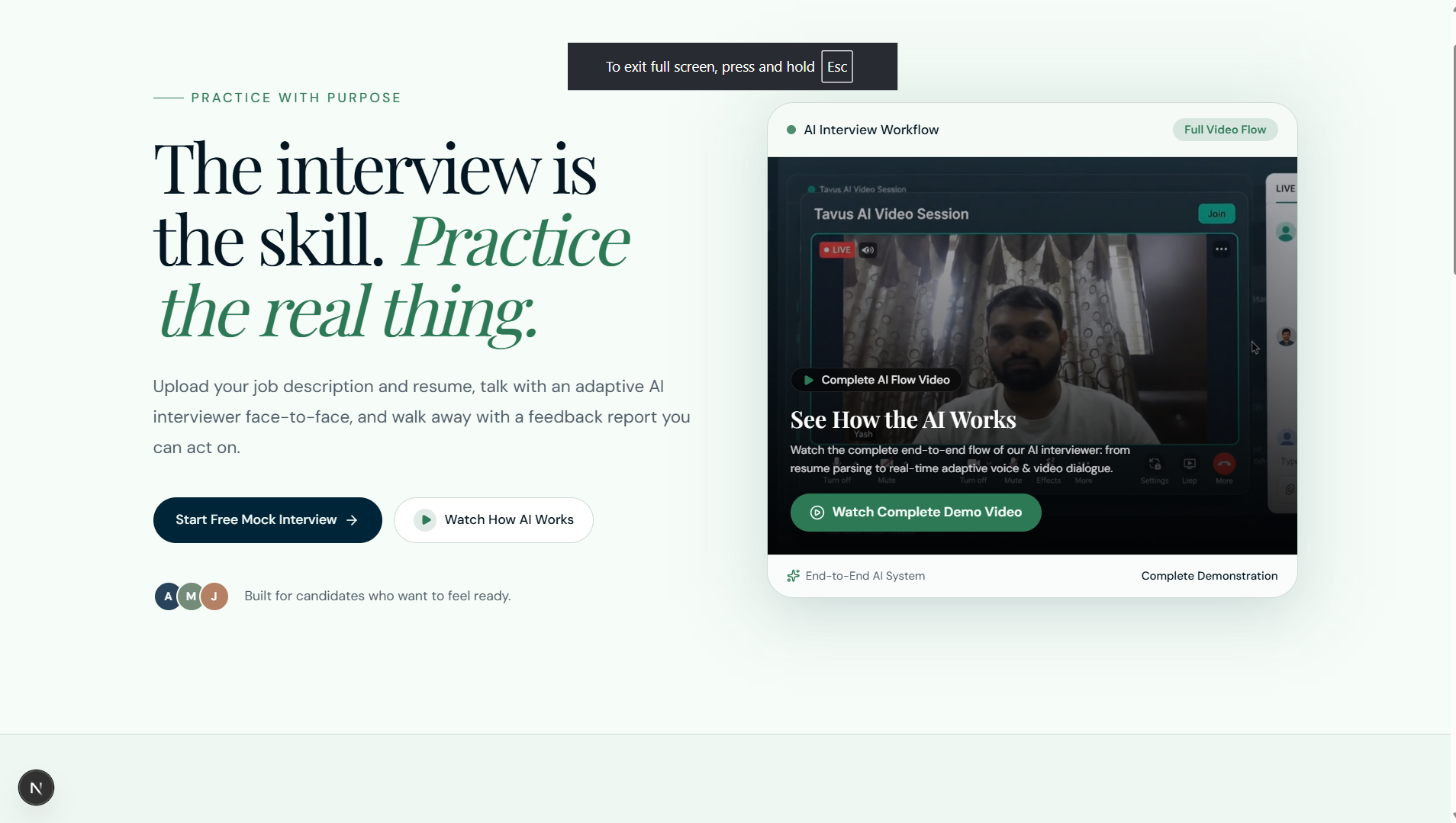

Inspiration
Job interviews are stressful, but traditional preparation is fundamentally broken. Candidates spend hours reading static question banks or practicing answers in front of a mirror. Neither approach replicates the real pressure of a face-to-face conversation: dynamic follow-up questions, evaluating vocal confidence under stress, or probing specific claims on a resume.
We built IntervAI to bridge this gap. We wanted to build a realistic, zero-judgment, face-to-face AI interviewer that knows your resume and your target job description inside out—giving candidates a safe space to fail, learn, and build real confidence before high-stakes interviews.
What it does
IntervAI is an interactive, voice-and-avatar AI mock interview platform that transforms job preparation into an immersive practice environment:
- Resume & Job Description Grounding: Candidates upload their resume and target JD. The system parses requirements, extracts key competency benchmarks, and crafts a custom interview plan.
- Real-Time Face-to-Face Avatar: Candidates speak directly with a photorealistic video avatar that listens, responds, and conducts the interview naturally in real time.
- Adaptive Difficulty Engine: Questions adapt dynamically based on candidate responses—diving deeper into technical details if the candidate excels, or pivoting to core concepts if they struggle.
- Comprehensive Performance Analytics: Post-interview, IntervAI generates a detailed report featuring an overall Readiness Score, section breakdowns, model answer suggestions, and Resume Gap Detection (flagging claims on the resume that weren't backed up live).
How we built it
- Frontend & UI: Built with Next.js 14, React, Tailwind CSS, and Framer Motion for a smooth, high-performance interface and live video overlay.
- Backend Infrastructure: Powered by FastAPI (Python) with MongoDB handling asynchronous session state and report storage.
- Intelligence & Grounding: Google Gemini API (
gemini-2.5-flash) drives resume parsing, job requirement extraction, dynamic question generation, and report evaluation. - Voice & Avatar Pipeline: Integrated Tavus CVI for low-latency interactive video avatars, combined with Groq Whisper for rapid speech-to-text (STT) transcription.
- Scoring & Adaptive Math Engine: Overall candidate readiness $S_{\text{readiness}}$ is calculated using a weighted multi-criteria formula:
$$S_{\text{readiness}} = 0.35 \cdot s_{\text{tech}} + 0.25 \cdot s_{\text{fluency}} + 0.20 \cdot s_{\text{tone}} + 0.20 \cdot s_{\text{relevance}}$$
Difficulty levels adjust dynamically turn-by-turn according to candidate performance:
$$D_{t+1} = \text{clamp}\left( D_t + \delta \cdot \text{sign}\left(s_{\text{turn}} - \theta\right), \, 1, \, 5 \right)$$
where $D_t \in [1, 5]$ represents difficulty, $s_{\text{turn}}$ is the turn score, and $\theta = 70.0$ is the performance threshold.
Challenges we ran into
- End-to-End Latency Optimization: Maintaining conversational flow required keeping overall round-trip latency $\tau_{\text{total}} \le 1.2\text{s}$. We optimized our backend pipeline by streaming Groq Whisper transcriptions directly into Google Gemini API prompts.
- Contextual Grounding vs. Hallucinations: Ensuring the AI interviewer strictly strictly adhered to the candidate's uploaded documents required carefully crafted system prompts and structured JSON response schemas.
- Resume Gap Verification: Designing a prompt heuristic that fairly evaluates whether a candidate's spoken response satisfies a claimed skill on their resume without penalizing natural verbal phrasing.
Accomplishments that we're proud of
- True Face-to-Face Interaction: Moving beyond text-based AI bots to deliver a natural voice-and-video avatar experience.
- Hyper-Personalized Content: Ensuring no two interviews are ever identical—every question stems directly from the user's background and target role.
- Actionable Post-Interview Diagnostics: Delivering structured feedback, score metrics, and model answers that give candidates clear steps to improve.
What we learned
- How to leverage Google Gemini API for structured JSON extraction and evaluation tasks.
- Techniques for handling real-time audio/video streaming, WebRTC events, and asynchronous turn management in FastAPI.
- The psychological value of avatar-based practice: realistic vocal and visual feedback significantly reduces candidate anxiety compared to text-only tools.
What's next for IntervAI
- Interviewer Personality Selection: Allowing candidates to choose interviewer personas (e.g., rigorous technical lead, supportive HR manager, fast-paced founder).
- Interactive Code & Whiteboard Sandbox: Adding live coding environments for technical software engineering rounds directly inside the interview view.
- Longitudinal Skill Tracking: Tracking candidate performance trends over multiple practice sessions to measure progress over time.
Built With
- artificial-intelligence
- fastapi
- framer-motion
- gemini-api
- google-gemini
- groq
- llm
- lucide-react
- machine-learning
- mongodb
- next.js
- node.js
- pydantic
- python
- react
- rest-api
- speech-to-text
- tailwindcss
- tavus
- text-to-speech
- typescript
- voice-ai
- web-development
- whisper-api

Log in or sign up for Devpost to join the conversation.