Inspiration
Interstellar Pitstop MR was inspired by cozy-leaning games, such as: Zoo Tycoon, Theme Park World, Slime Rancher, Choo Choo Crossing, and Event Planning In Zero G. It takes its artistic vision from sci-fi and retrofuture cartoons such as The Jetsons. Its core conceit came from thinking deeply about how people's attachment and investment to their existing personal space is affected by MR capabilities.
What it does
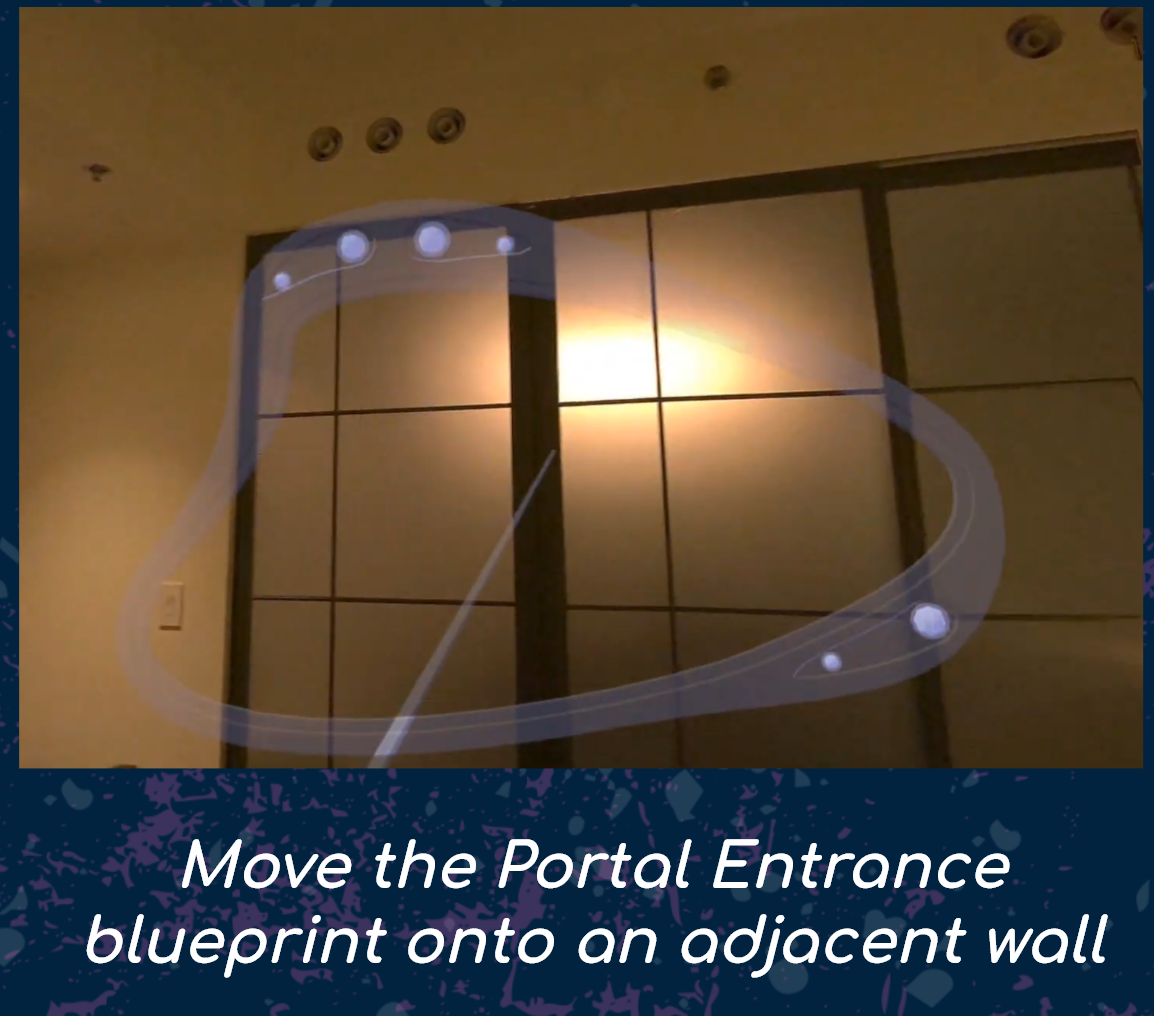
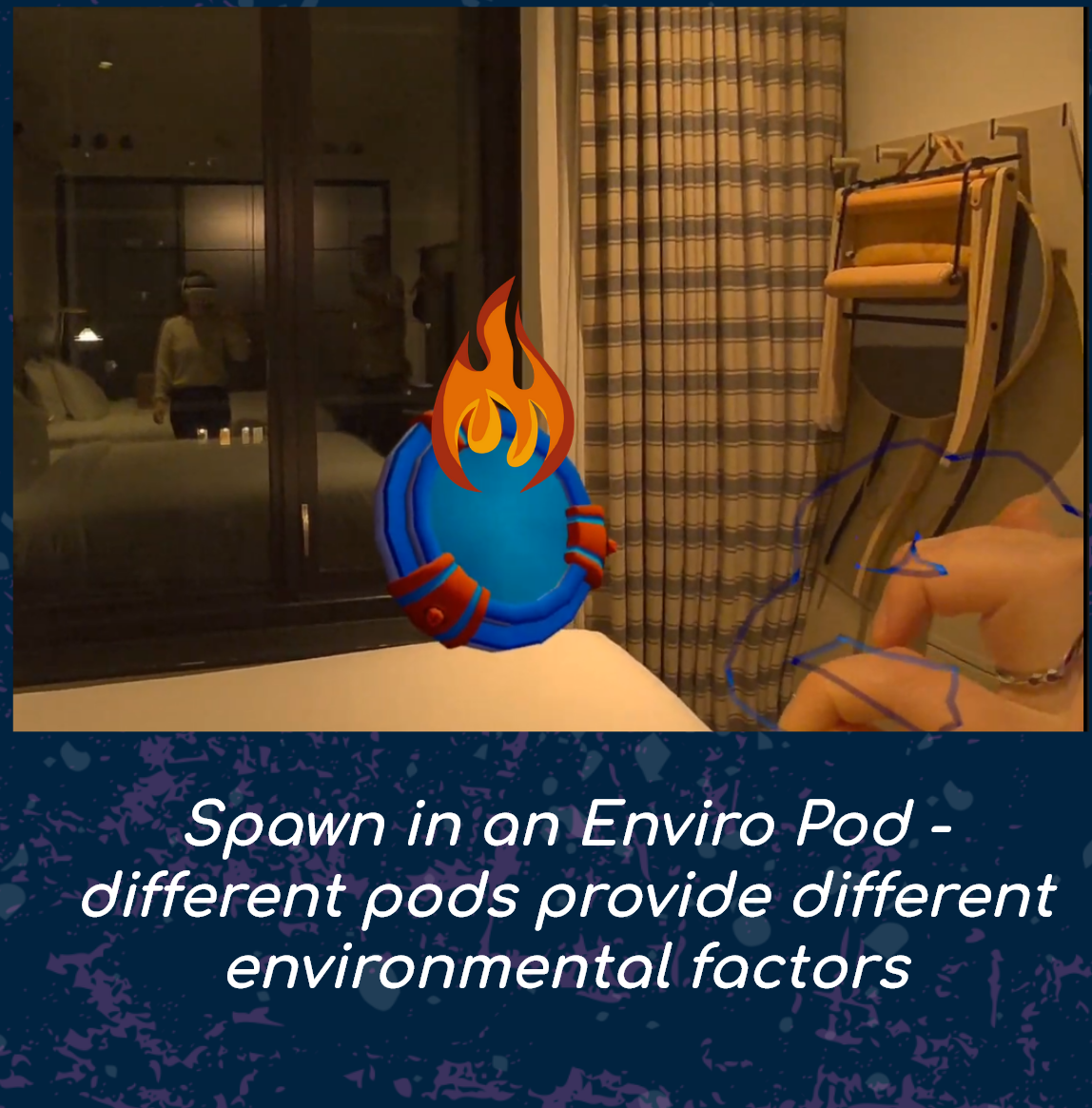
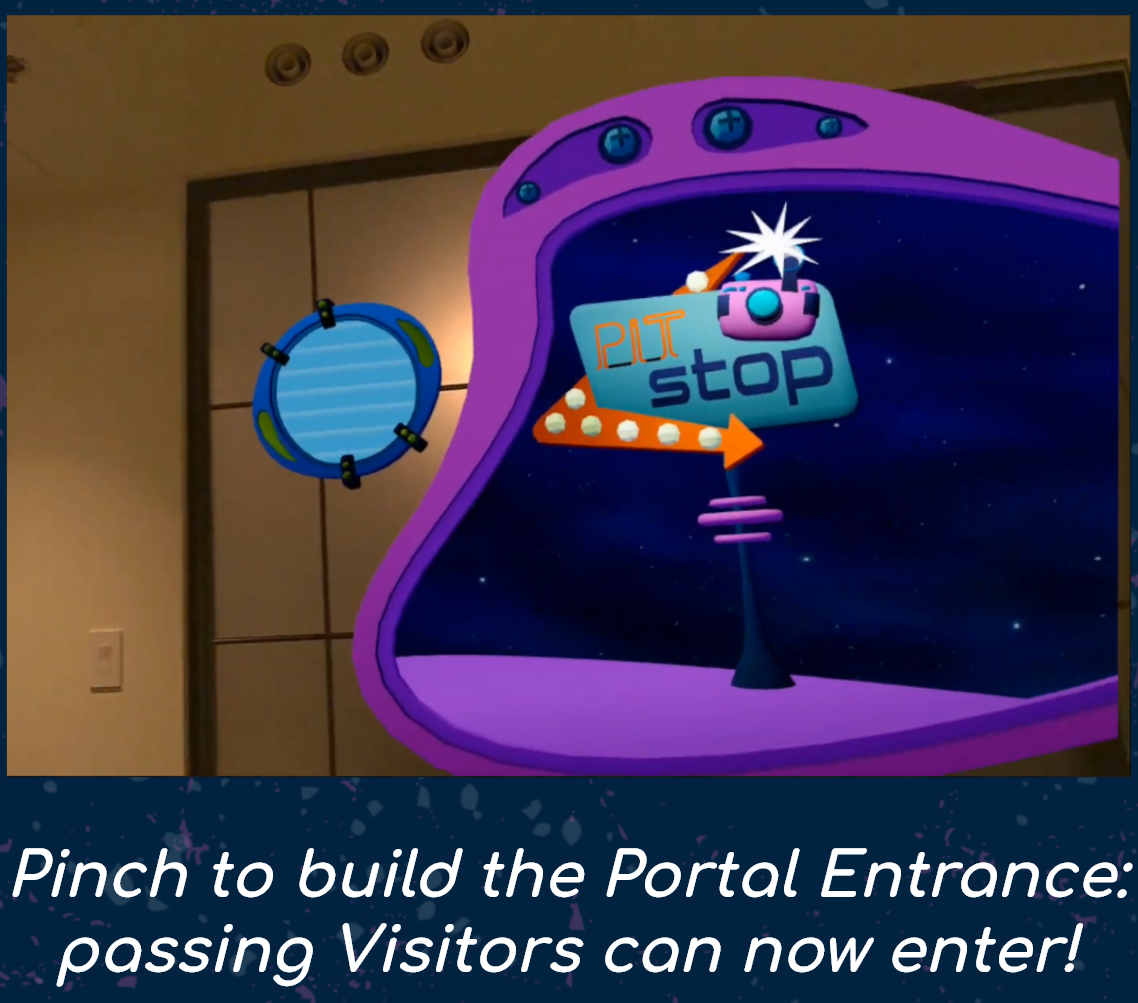
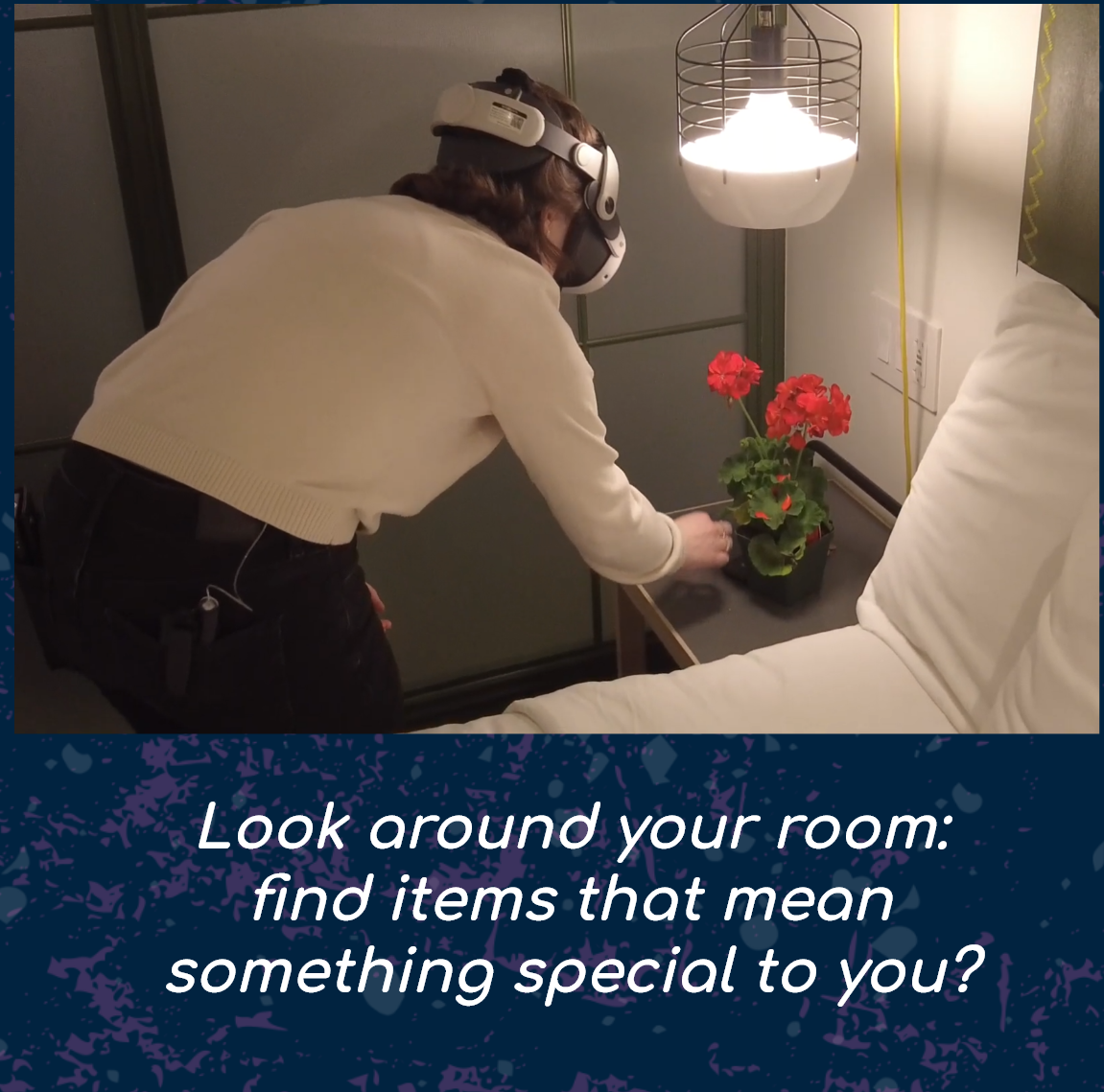
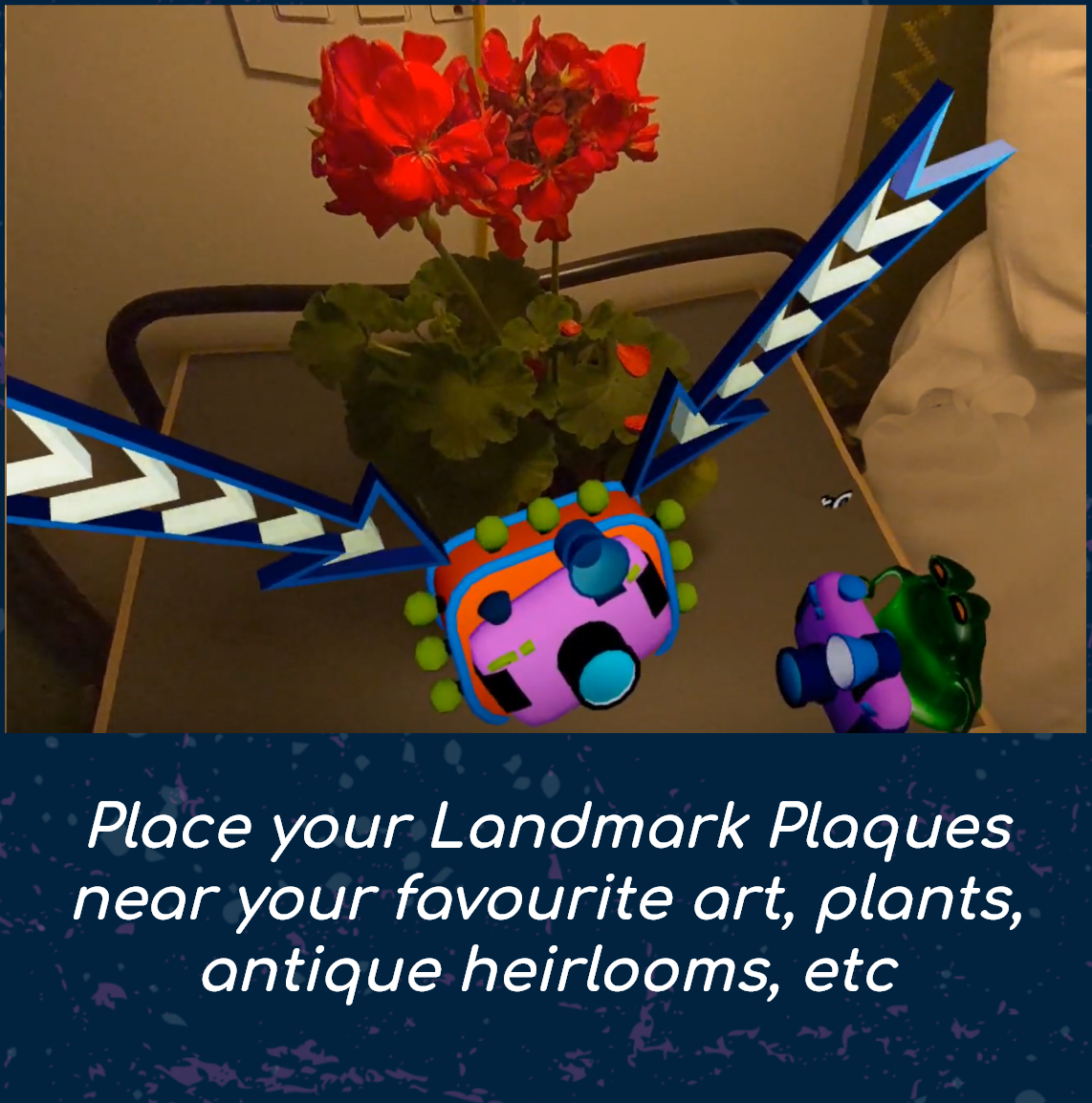
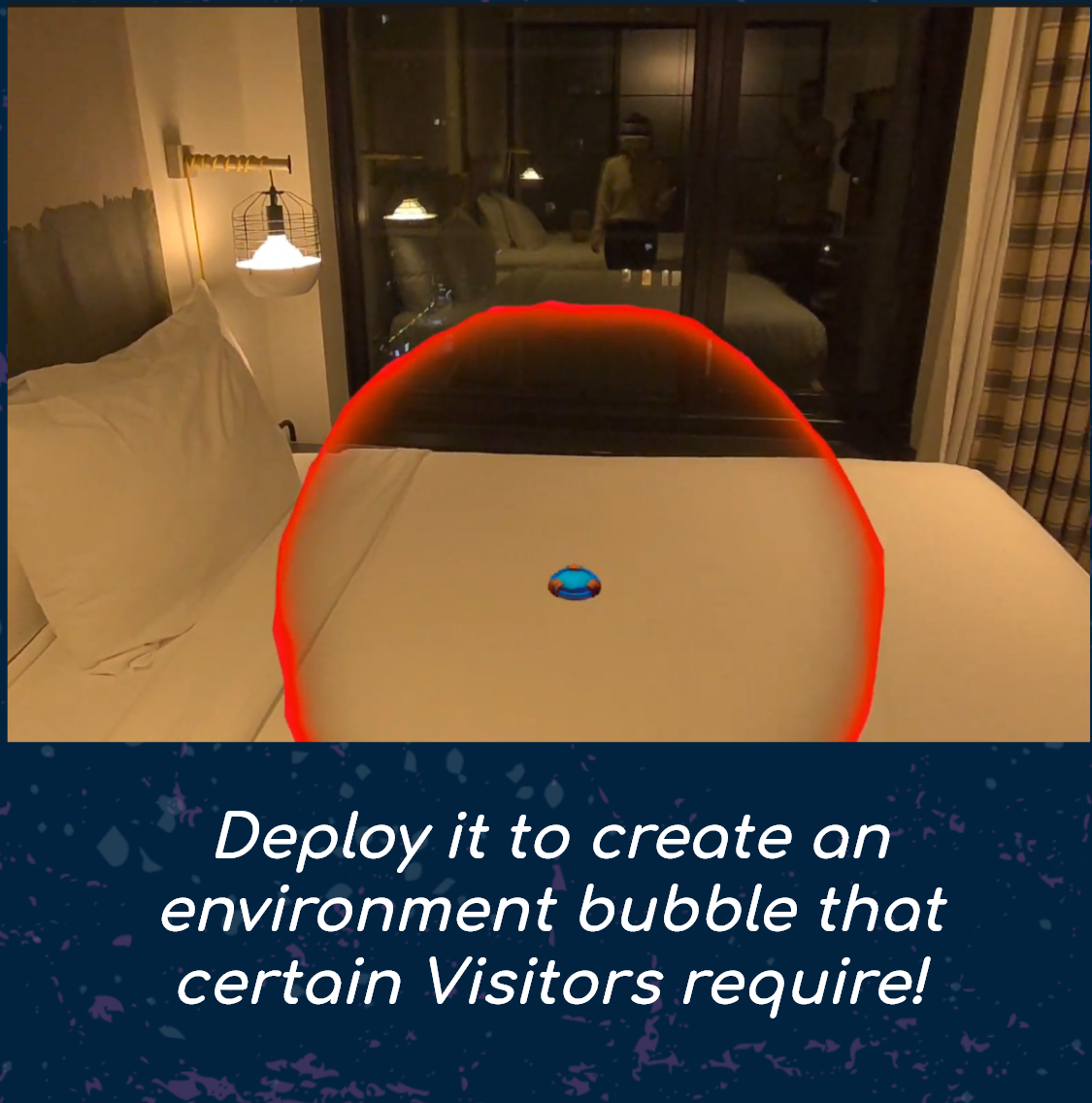
"Congratulations on joining the Interstellar Pitstop Program!" Our experience asks the player to enter into Mixed Reality to set the stage for a steady stream of alien Visitors to arrive, looking for a tourist activity to break up their travels along Galactic Highway 999. Players first build a space portal entrance by placing a MR schematic on any Scene registered Wall. This then invites Visitors to land their ships outside the portal and pass through into the physical world. Players then identify unique objects in their space that mean something to them (such as favourite house plants, art pieces, antique heirlooms etc.) and attach digital plaques to each, marking them as Landmarks. Visitors are keen to take pictures of all this 'human stuff' and snap photographs, creating Happy Memories (a progression currency) in the process. Happy Visitors leave great Reviews, a sign of success for your Pitstop! However, some Visitors have accessibility requirements, such as extreme temperature needs or certain gaseous concentrations. It is up to the Player to provide comfort to these Visitors as well as a good time, or risk receiving scathing Reviews. Fortunately Pitstop owners can adapt the environment by placing Enviro Pods around their space, generating spherical fields of effect that satisfy the needs of the different types of Visitors.
How we built it
We used Godot 4.3, an open source game engine that is lightweight, powerful, and extensible. Recent official updates have allowed us to access several Presence Platform SDKs, including: Hand-tracking, spatial anchors, scene and scene mesh SDKs and pass-through.
Challenges we ran into
The team faced a learning curve with the Godot Engine, as we tackled building all features from scratch. For some team members, it was their first dive into the engine, which meant a steep learning curve. While this pushed us to learn quickly, it did impact our efficiency in certain areas. As it does, scope creep snuck up on us. With ambitious plans and features for this project, the limited timeframe had us making tough decisions about which features were essential to include in order to deliver the best possible gameplay experience.
Accomplishments that we're proud of
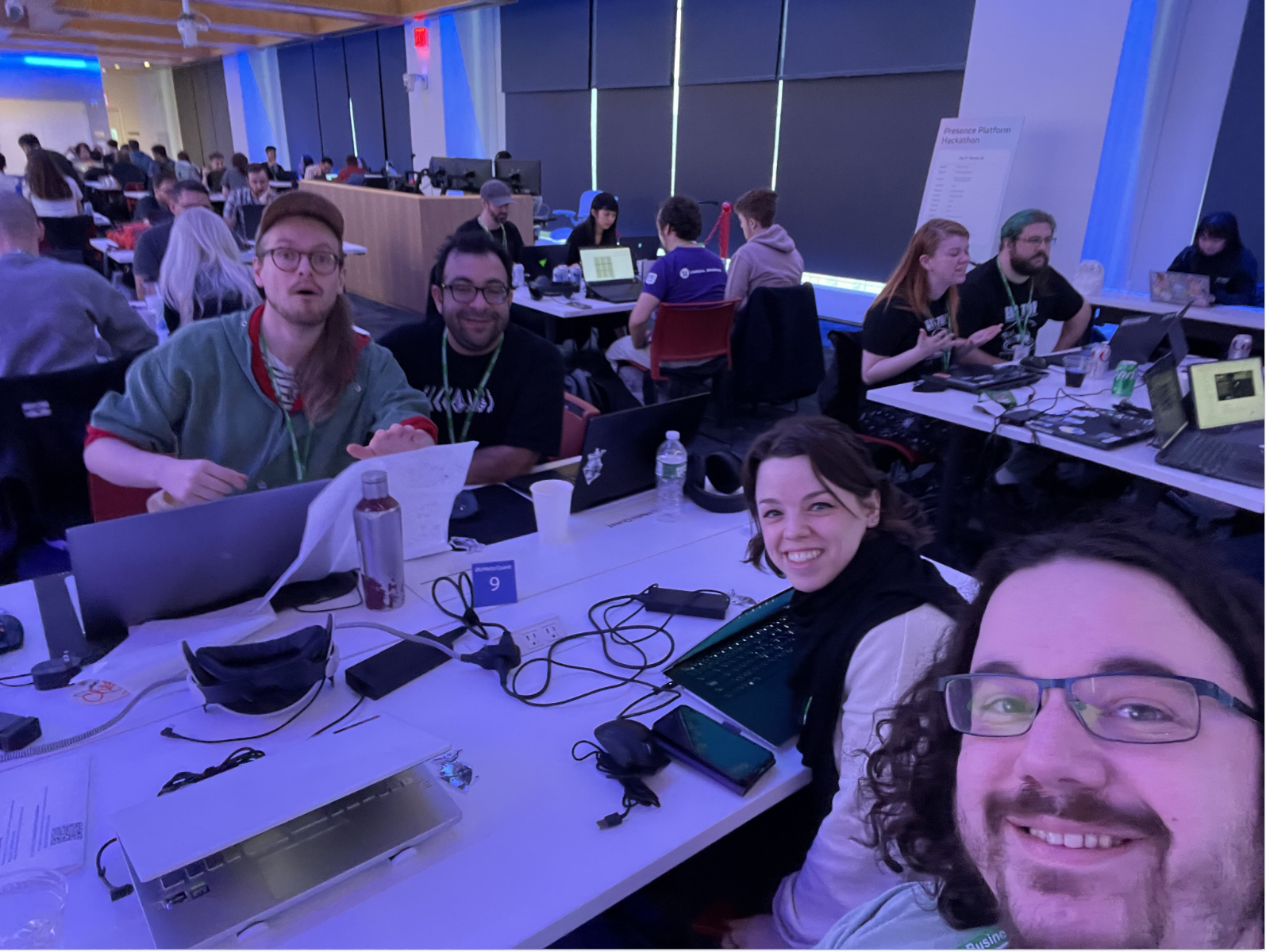
As a team of game developers and artists who have never worked together before we are exceptionally pleased to have collaborated so well together. We each took clear roles, supported each other, and learned from each other. We're also proud that we chose to use an open source engine outside of the major players - it is important to us to showcase the value of open source projects and to encourage future support of these projects.
What we learned
As a team, we learned new Godot skills from Daniel, our superstar developer! We also learned that developing for MR is hard, fun and an area we are excited to continue developing for. Some of us learned about new tools such as ShapesXR, Haptics Studio, AppLab, Oculus Start, and the Incubation program
What's next for Interstellar Pitstop MR
We believe this hackathon project is just the beginning. As Godot adapts to more of the Presence Platform SDKs we will be able to introduce additional features that make sense for our game. Our team would like more dedicated time for concepting and prototyping to understand the best means of making a cozy management sim in MR. Ideally, we'd like the player to return daily for a casual rearrangement and upgrade of their digital-physical hybrid space. Tweaking the progression system with this in mind will be an essential area of interrogation. Some other avenues we're already excited to explore are:
- More variation in characters and digital items, and even cuter / emotive characters with more traversal options!
- Spatial sound design options to immerse the player in the world.
- Co-location multi-player options.
Built With
- gdscript
- godot
- openxr


Log in or sign up for Devpost to join the conversation.