Inspiration
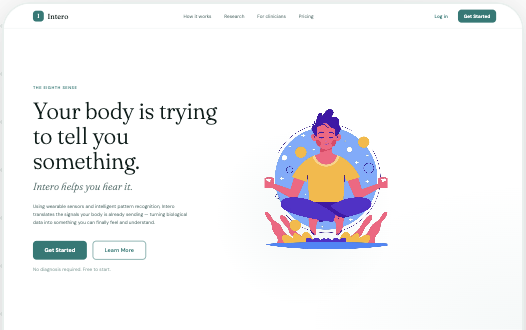
The digital age has quietly dismantled millions of people's ability to trust their own bodies. Diet culture, social media comparison, and chronic stress have broken the signal between body and brain — a condition called interoceptive dysfunction that underlies nearly every eating disorder. We wanted to build something that restored that signal rather than added more noise to it.
What it does
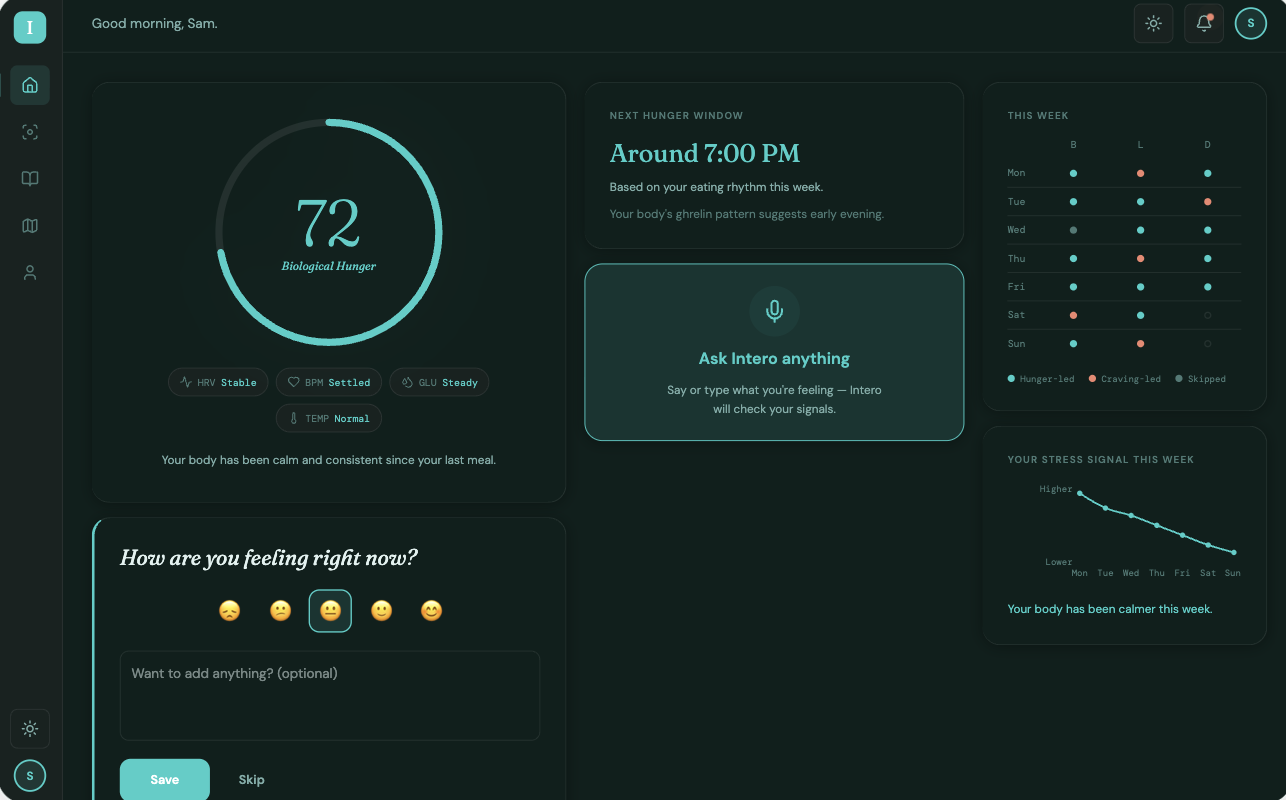
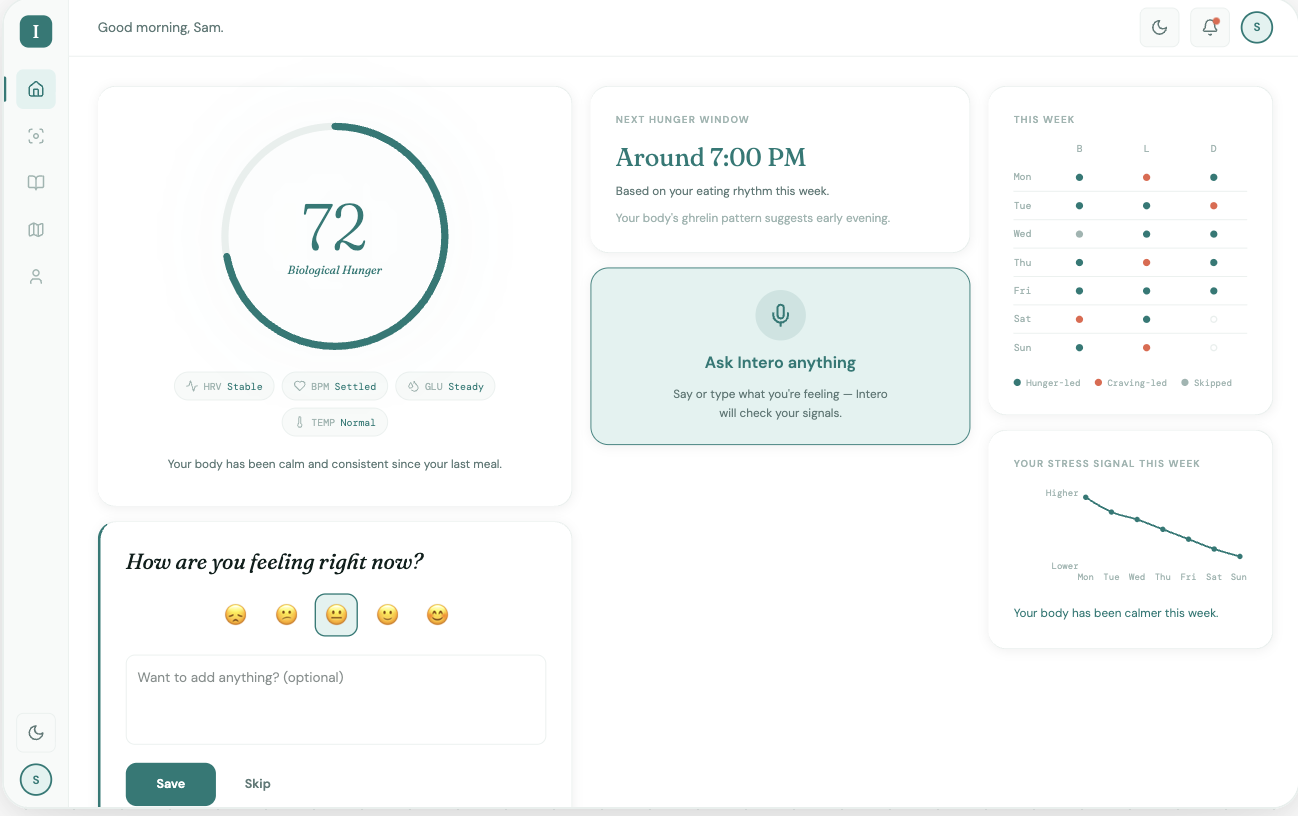
Intero connects smart glasses, a wristband, and an optional glucose monitor to translate your body's internal signals into one number, your Interoception Score. It tells you in real time whether what you're feeling is biological hunger or a craving state driven by stress, fatigue, or emotion. No calorie counts, no weight tracking, no triggering metric, just your body's language made legible.
How we built it
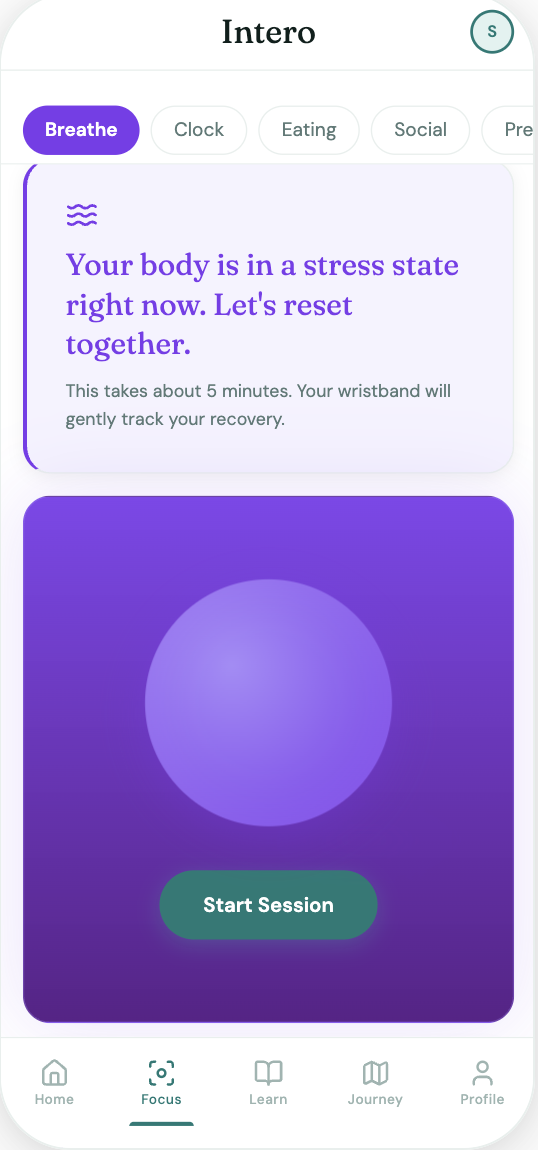
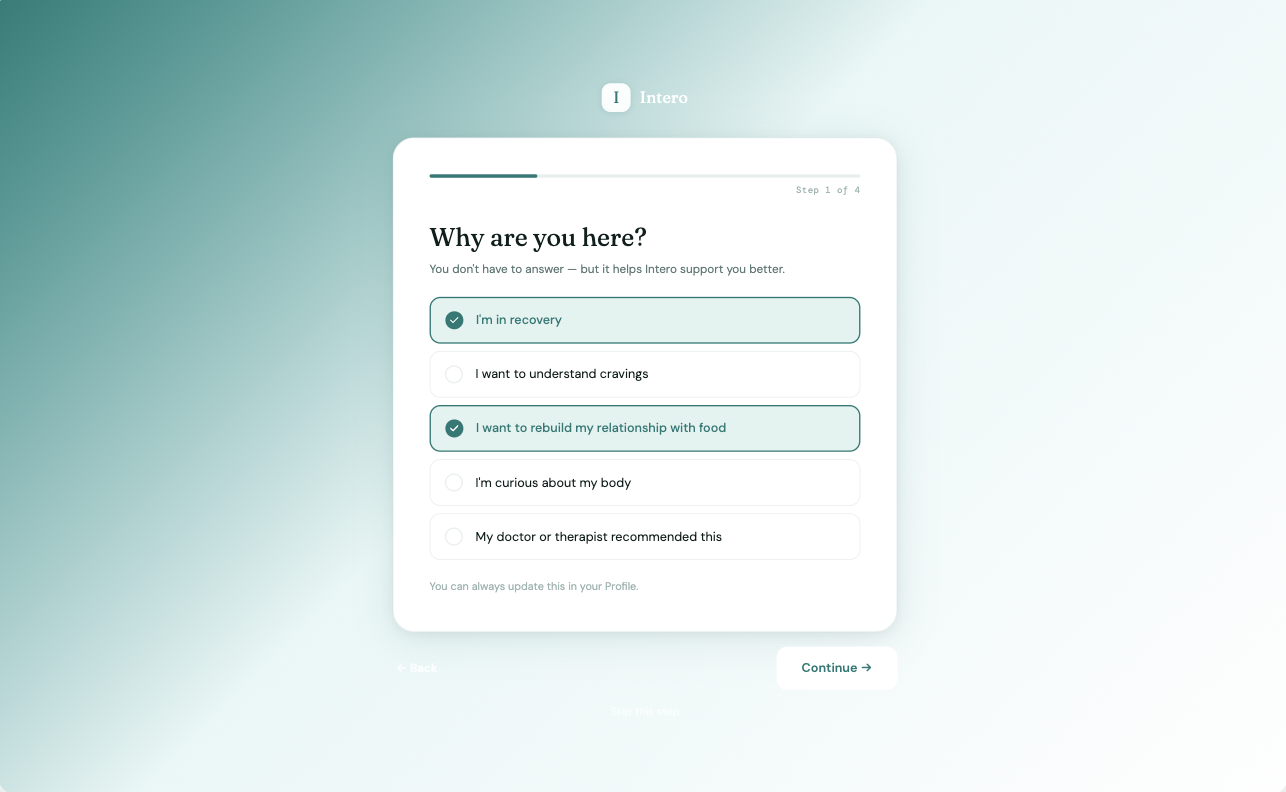
Figma and Figma Make for the full mobile and desktop prototype — Smart Animate interactions, a complete component library, and a responsive design system built around our teal-sage-coral palette and Fraunces + DM Sans typography. Canva for the presentation deck. Every feature decision was grounded in peer-reviewed literature across interoception, HRV, circadian biology, and eating disorder recovery.
Challenges we ran into
Building for a clinical-adjacent audience without becoming a clinical tool. Every design decision had a safeguard question attached to it, does this number trigger someone? Does this language center restriction? The hardest challenge was designing a data-rich platform that intentionally shows users less, not more, while still feeling intelligent and trustworthy.
Accomplishments that we're proud of
- The safeguard architecture, protection treated not as a feature toggle but as the floor of the entire product
- A diabulimia-specific CGM flow that separates glucose trends from eating guidance entirely
- The Body Vocabulary System that replaces all numeric eating data with directional language
- The breathing orb, HRV-responsive, four-phase, continuously looping, it works exactly the way we imagined it
What we learned
That the most meaningful design constraint isn't visual, it's ethical. Deciding what Intero would never show users forced us to think more clearly about what the product actually was. We also learned that interoception as a concept resonates immediately with almost everyone once you name it, people recognize the broken signal the moment you describe it.
What's next for Intero
- Intero's own CGM hardware partnership
- Respiratory rate tracking through the smart glasses
- Clinical outcome validation using the MAIA-2 interoception scale
- Broader language support, because interoceptive dysfunction doesn't speak only English
Built With
- canva
- figma
- figma-make
- interoception
- smart-glasses


Log in or sign up for Devpost to join the conversation.