-
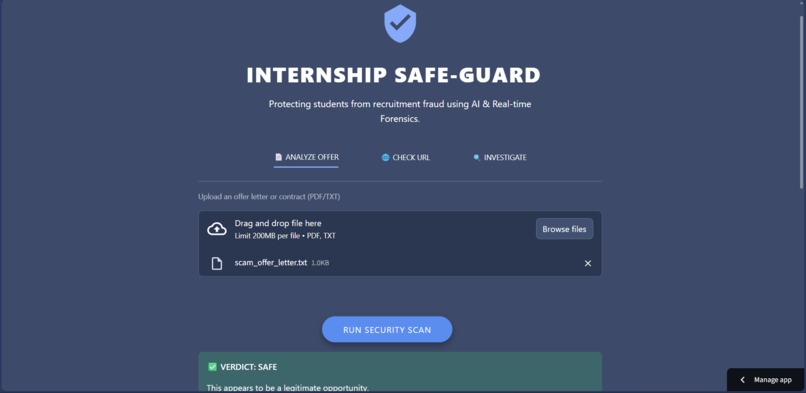
Analyze Feature
-
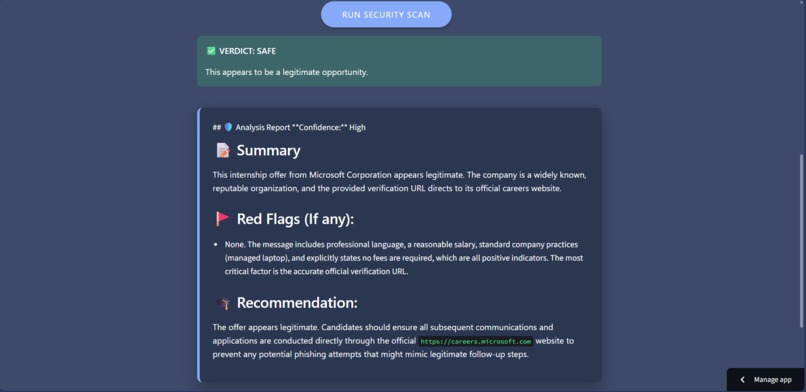
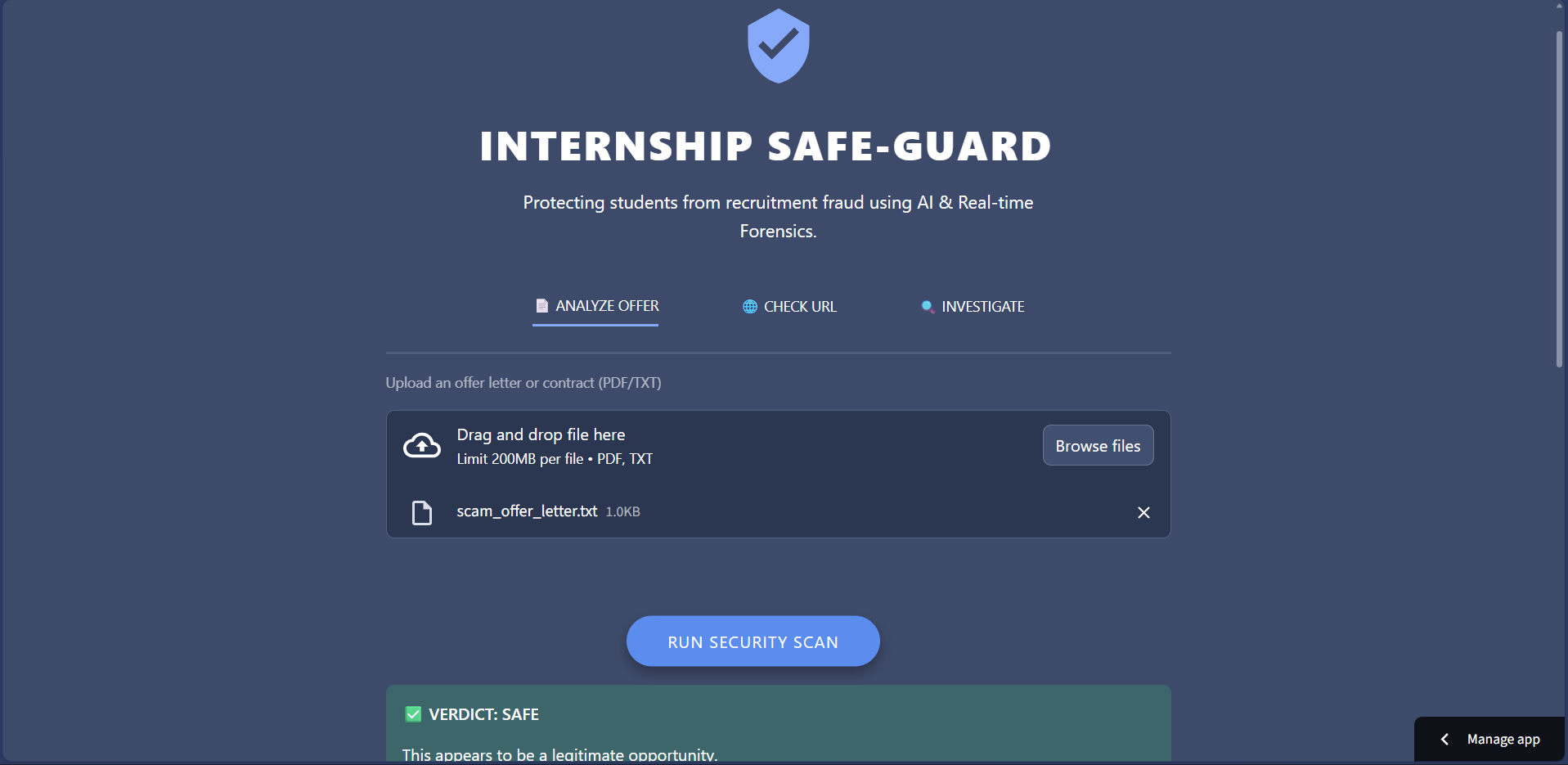
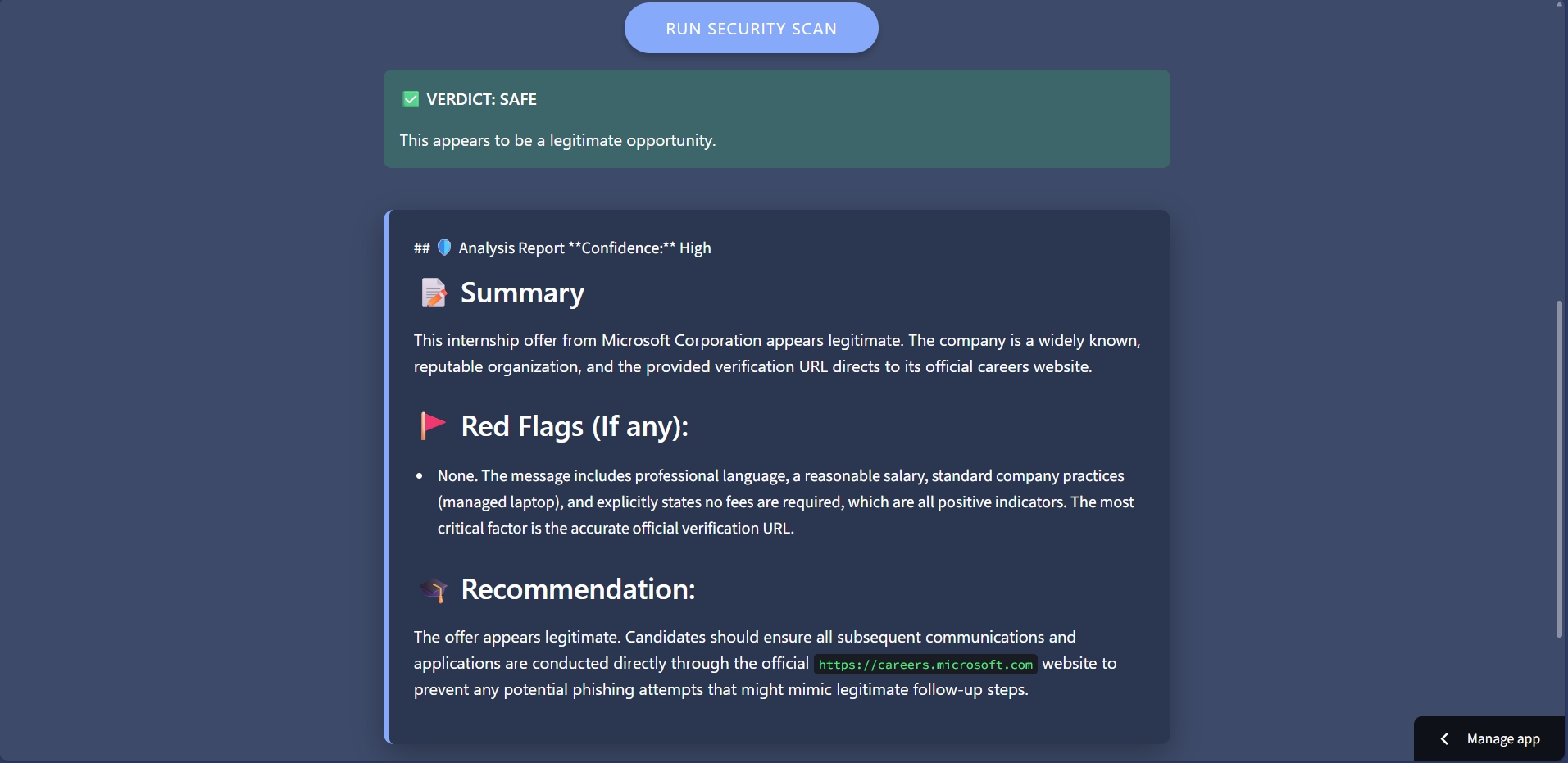
Analyze Result
-
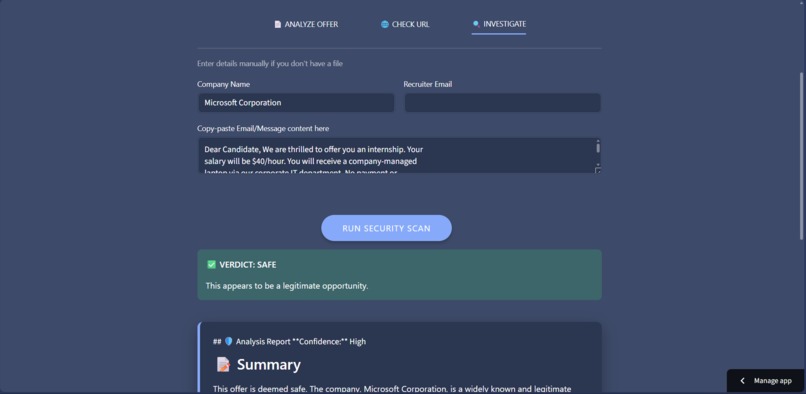
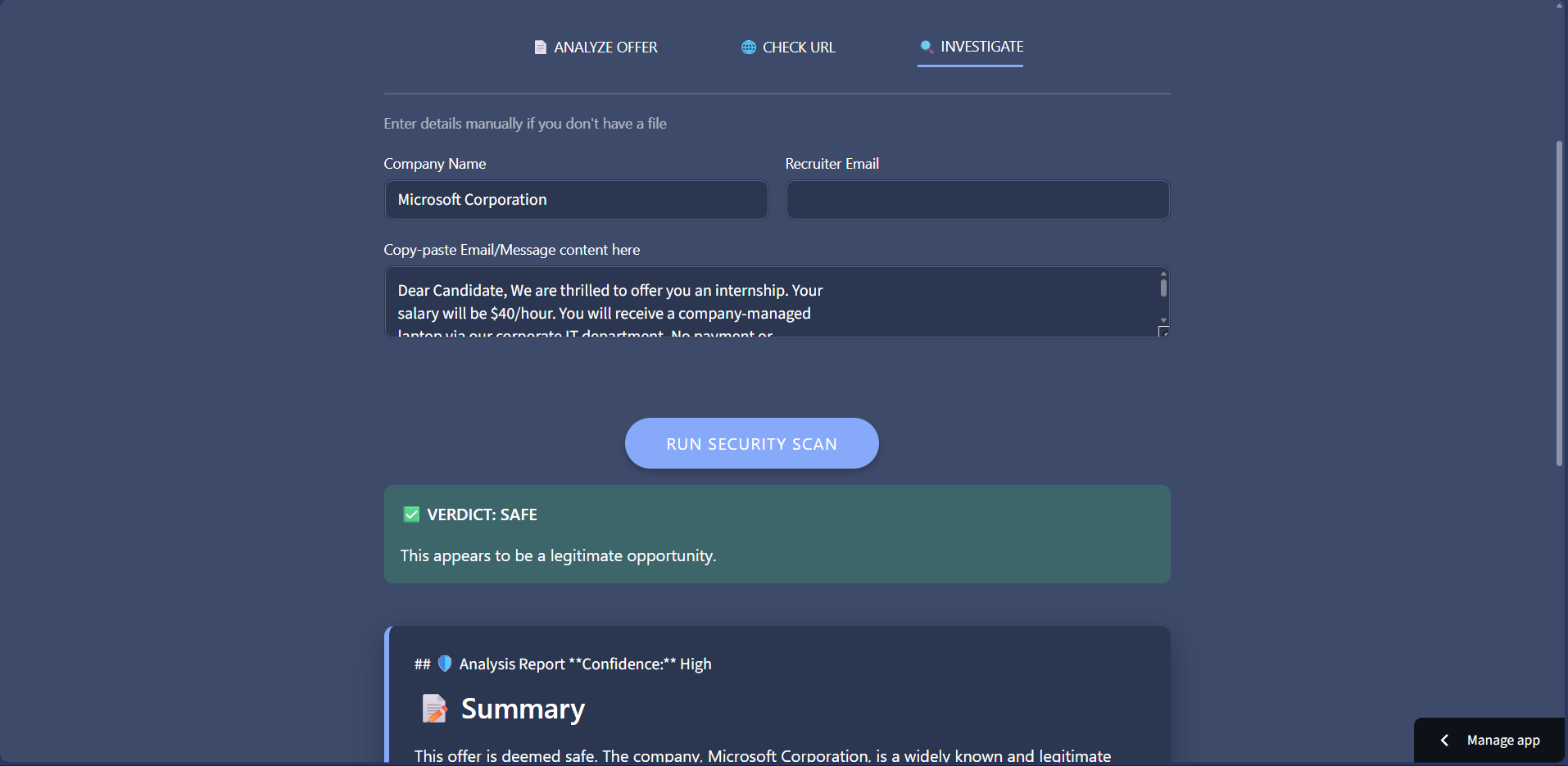
Manual way and Result
-
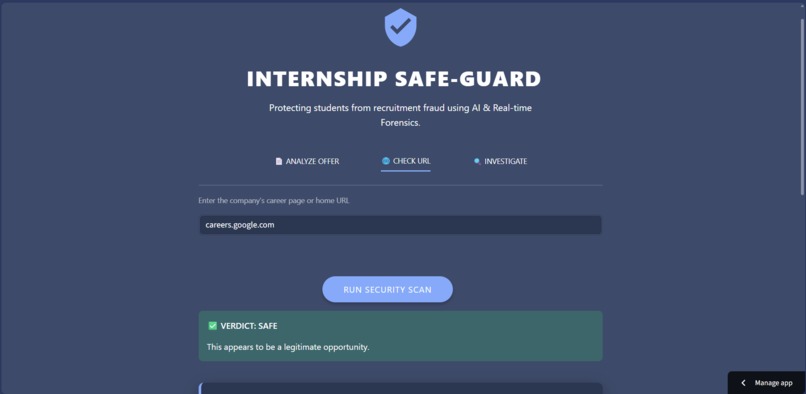
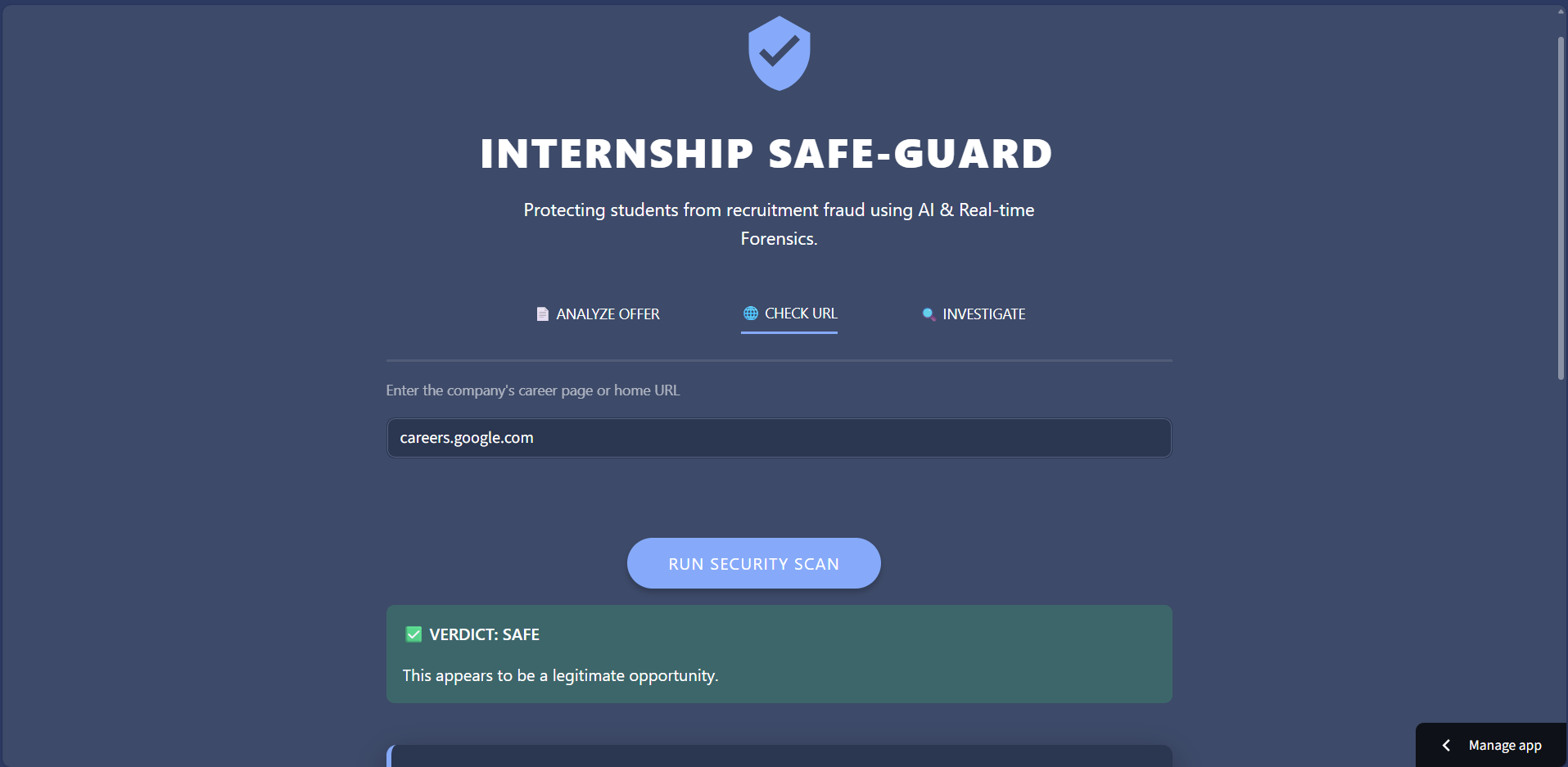
URL
-
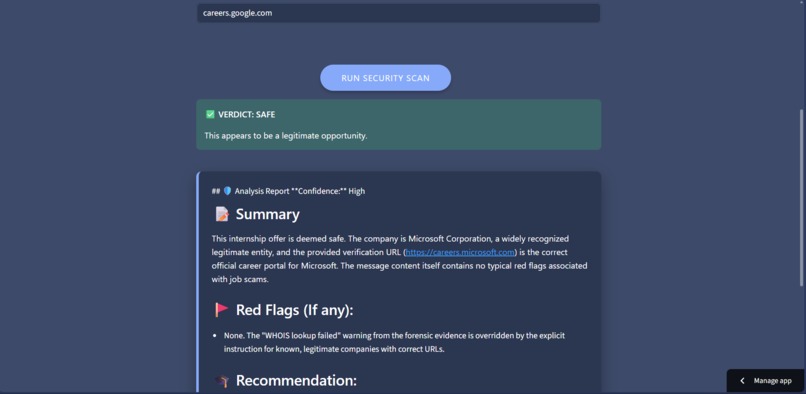
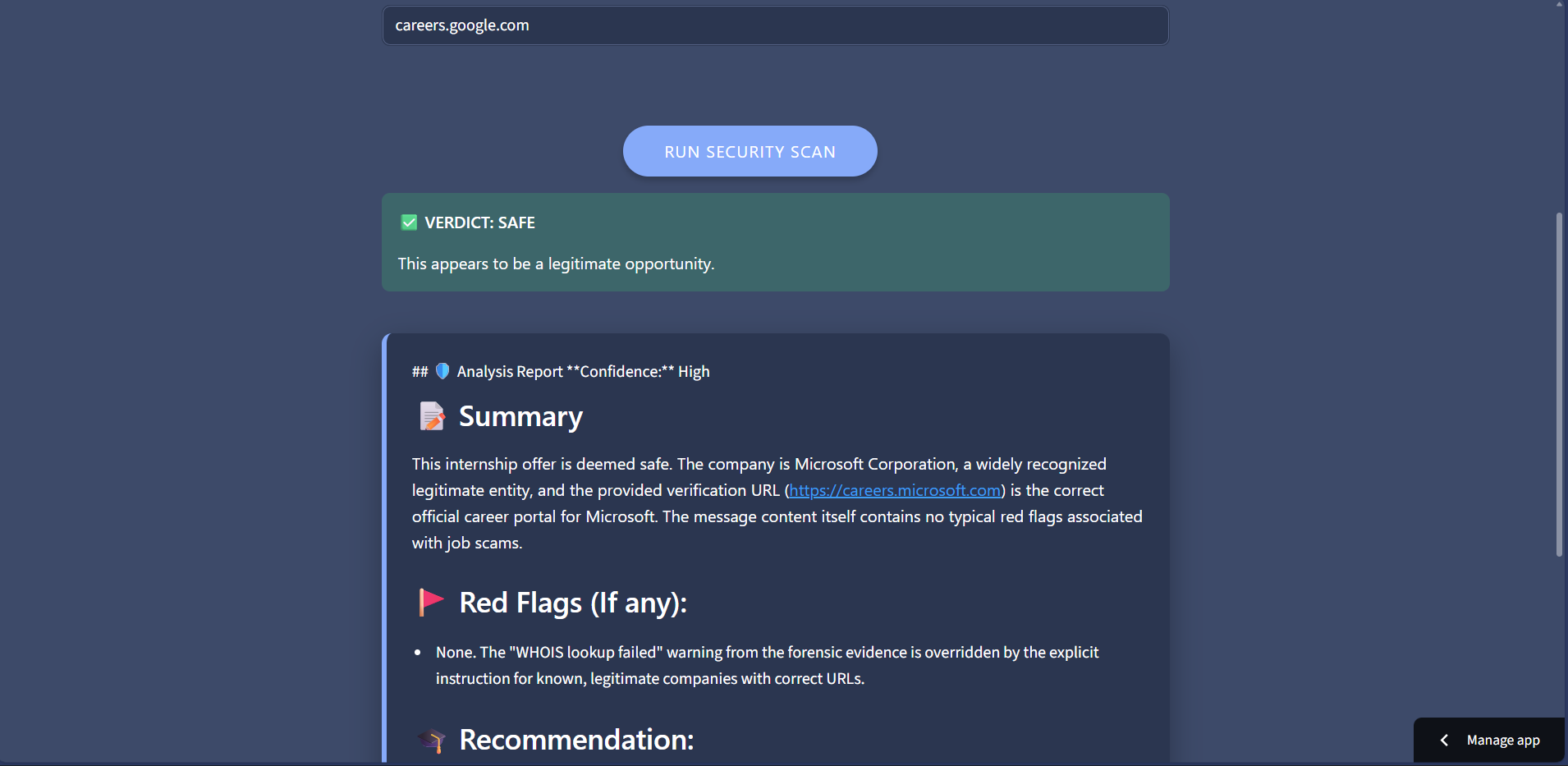
URL Check Resut
🚨 The Inspiration
Every year, thousands of students fall victim to internship scams. We personally know students who were excited about a "Remote Data Entry" job paying $45/hr, only to lose money in a fake check scheme or have their identity stolen.
Students are vulnerable targets. We are often desperate for experience, financially stressed, and may not have the corporate experience to spot "red flags" in a contract. We realized that while universities teach coding, they rarely teach Recruitment Cybersecurity.
We asked ourselves: What if every student had a Senior Cybersecurity Analyst looking over their shoulder before they signed a contract?
🛡️ What it does
Internship Safe-Guard is an intelligent defense tool that acts as that expert. It doesn't just "read" an email; it performs a full forensic investigation.
- 📄 Offer Analysis: The student uploads an offer letter (PDF/TXT). The system extracts the text and scans for known scam triggers like "wire transfer," "training fee," or "check processing."
- 🌐 Domain Forensics: We automatically check the creation date of the company's website. If a "Fortune 500 company" has a domain registered only 3 days ago, our system flags it instantly as a CRITICAL RISK.
- 🔍 Reputation Check: The system automates background checks, searching for fraud reports and complaints associated with the recruiter's email or company name.
- 🤖 AI Verdict: We use Google Gemini 2.5 Flash to synthesize all this forensic evidence. It acts as the "Judge," weighing the facts to provide a clear Visual Verdict: SAFE, CAUTION, or SCAM.
⚙️ How we built it
We built the application using Python and Streamlit for a rapid, responsive frontend.
- Backend: We used
pypdffor parsing documents andpython-whoisfor the forensic domain age lookups. - The Brain: The core intelligence is powered by Google's Gemini 2.5 Flash model via the new
google-genaiSDK. We engineered a specific "Persona Prompt" that forces the AI to act like a security analyst, prioritizing facts over creativity. - Deployment: The app is deployed on Streamlit Community Cloud, making it instantly accessible to any student with a browser.
🧠 Challenges we faced
- False Positives: Initially, the system flagged legitimate startups as "Scams" because their domains were young. We tuned the AI prompt to recognize major companies and treat domain age as one factor in a larger evidence chain.
- API Quotas: We navigated the daily free-tier quotas of the Gemini API by optimizing our prompt length and switching to the high-performance
gemini-2.5-flashmodel. - SDK Migration: Mid-hackathon, we successfully migrated our entire codebase from the deprecated
google-generativeailibrary to the brand-newgoogle-genaiSDK to ensure our project followed the latest Google standards.
🚀 What's next for Internship Safe-Guard
We plan to add a "Report to University" button that allows students to instantly forward a confirmed scam to their campus career center. We also want to build a browser extension that flags scam emails directly inside Gmail and LinkedIn.
Built With
- gemini(api)
- github
- python(language)
- streamlit(framework/platform)
- vscode(ide)


Log in or sign up for Devpost to join the conversation.