-
-
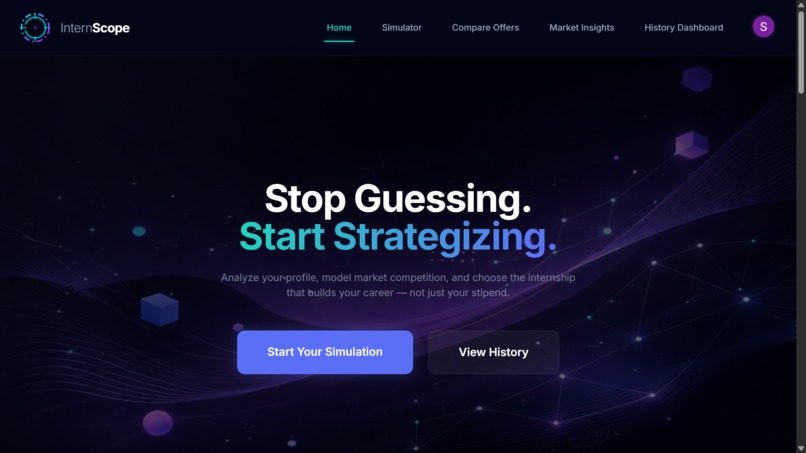
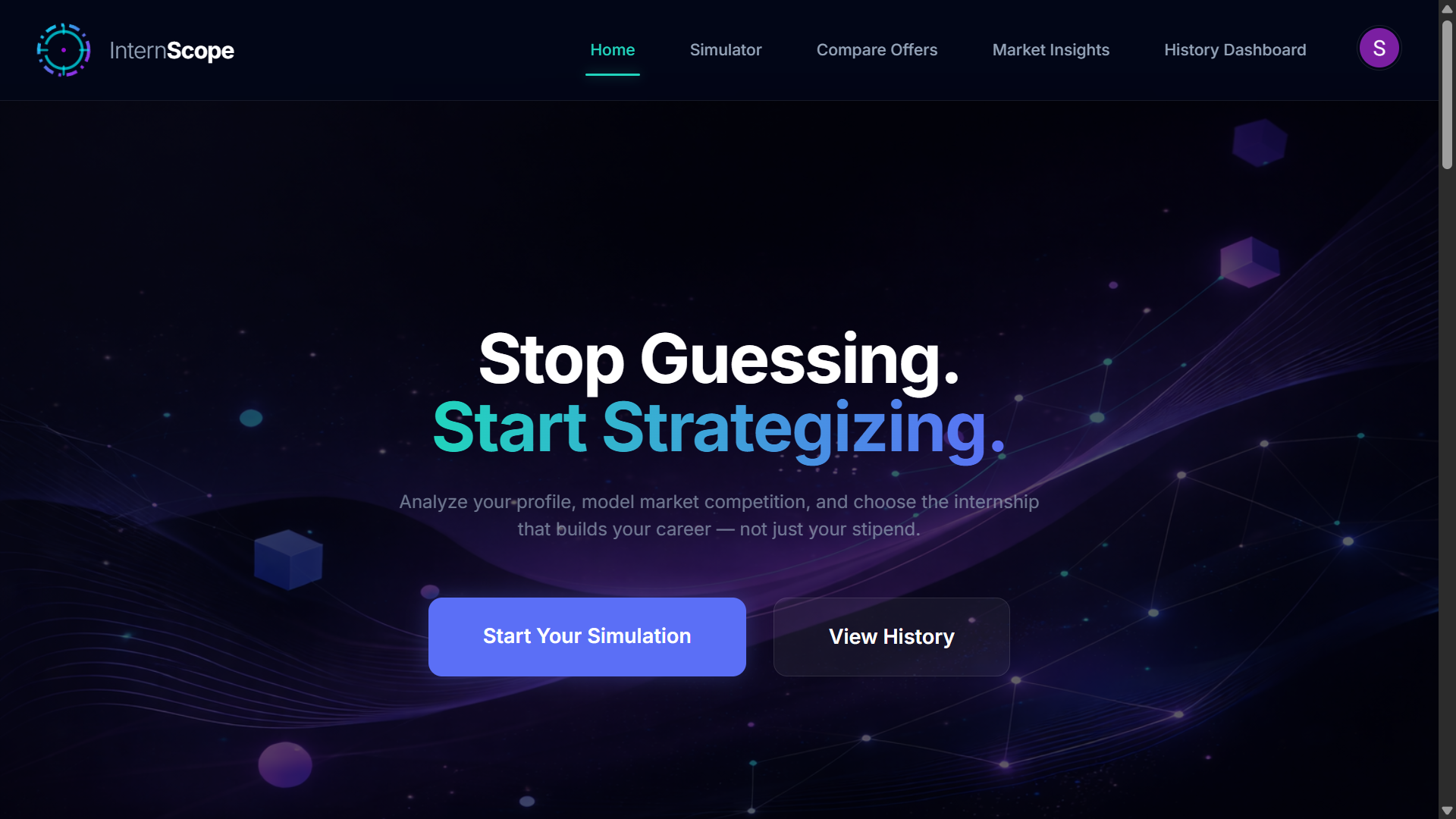
Landing Page
-
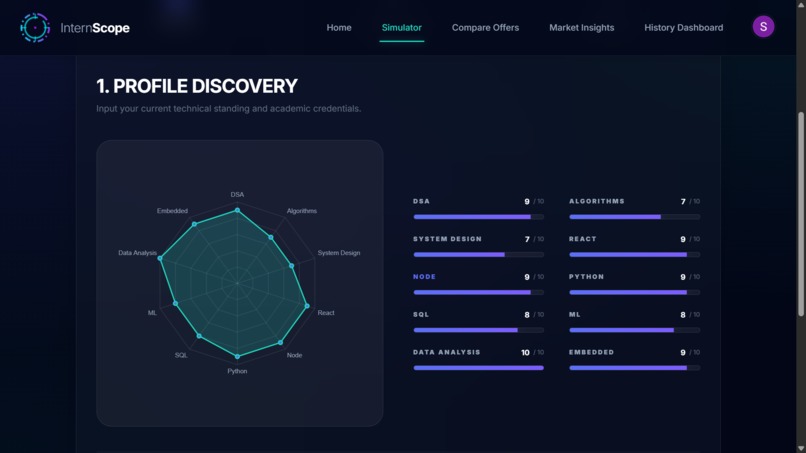
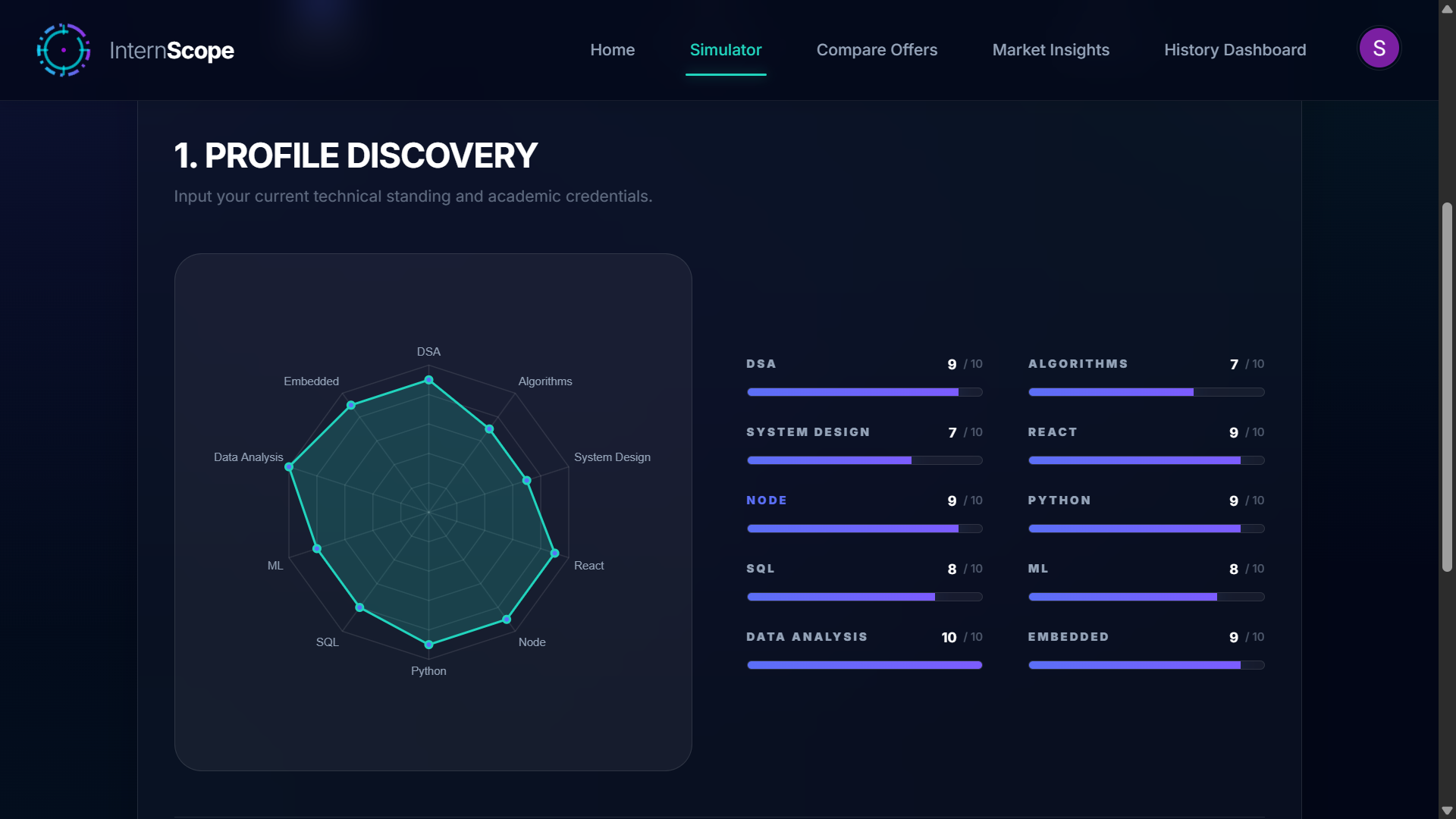
Profile Discovery
-
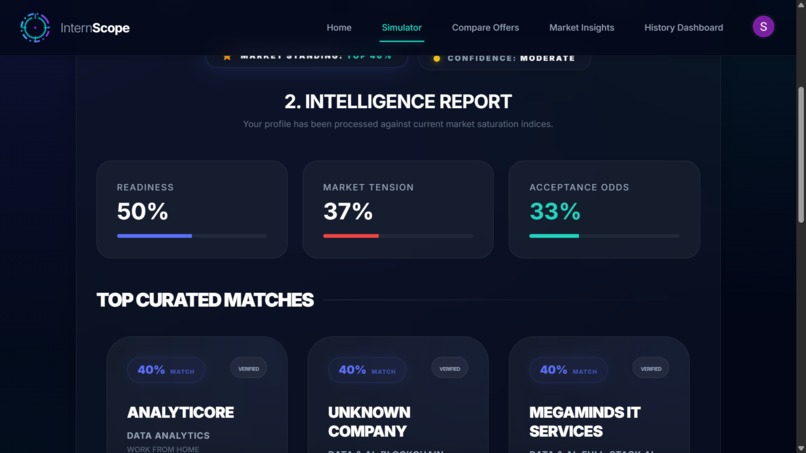
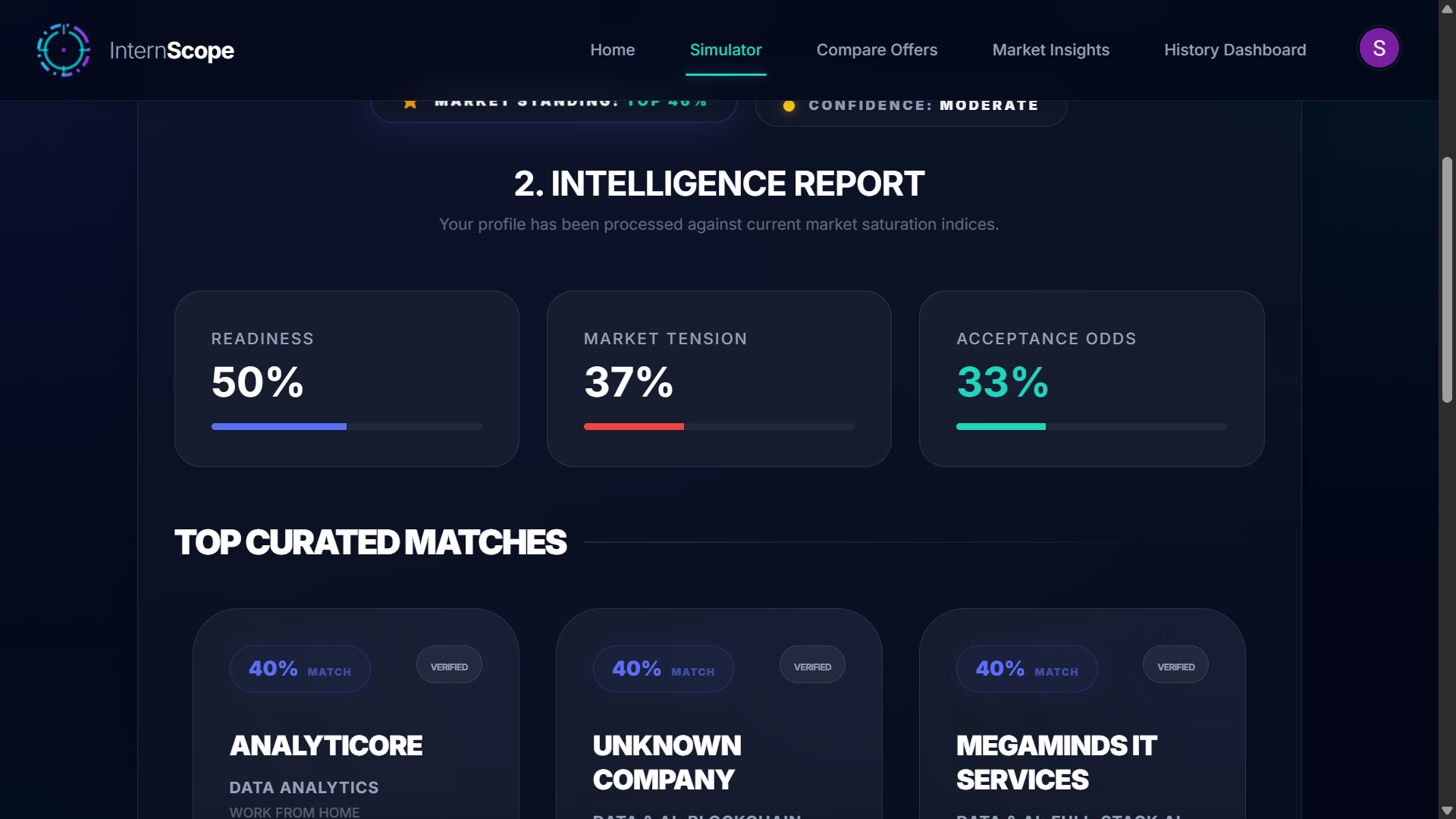
Intelligence Report
-
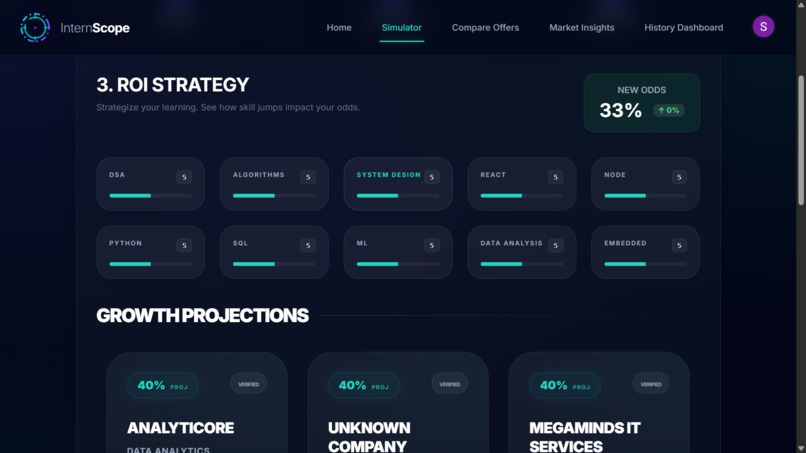
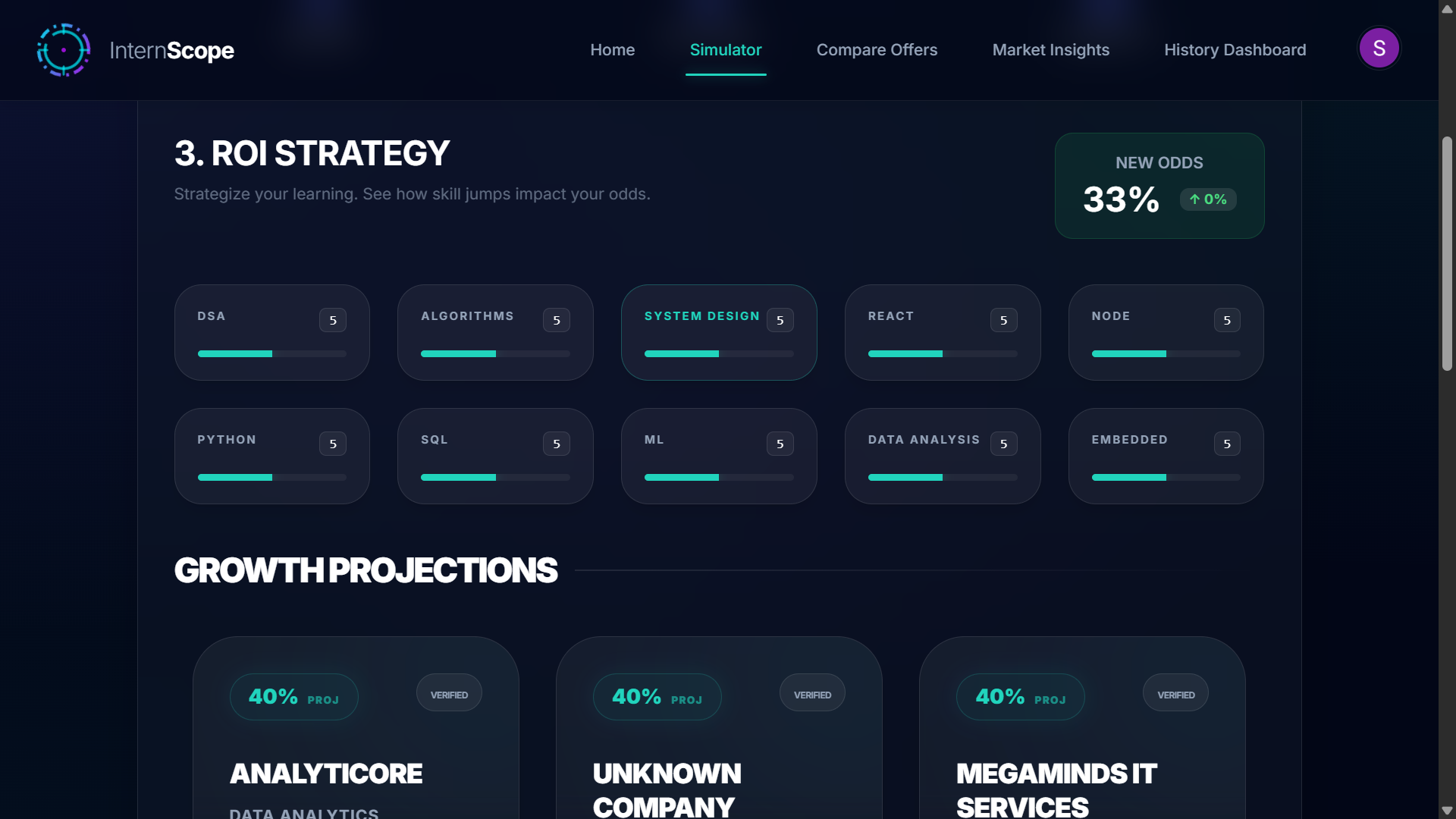
ROI Strategy
-
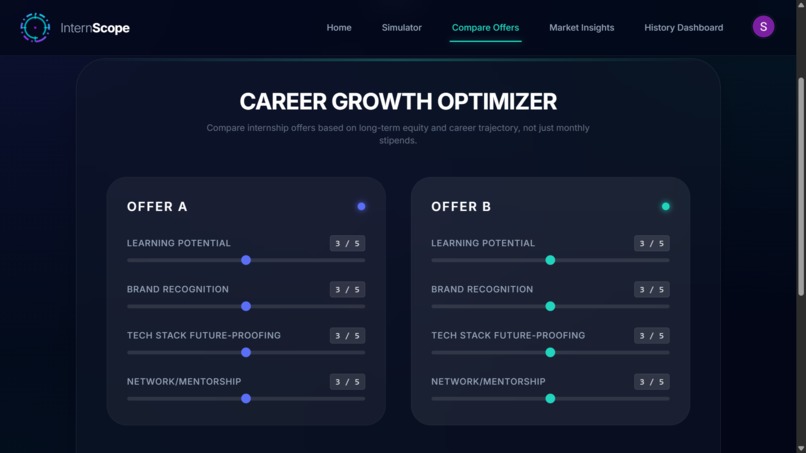
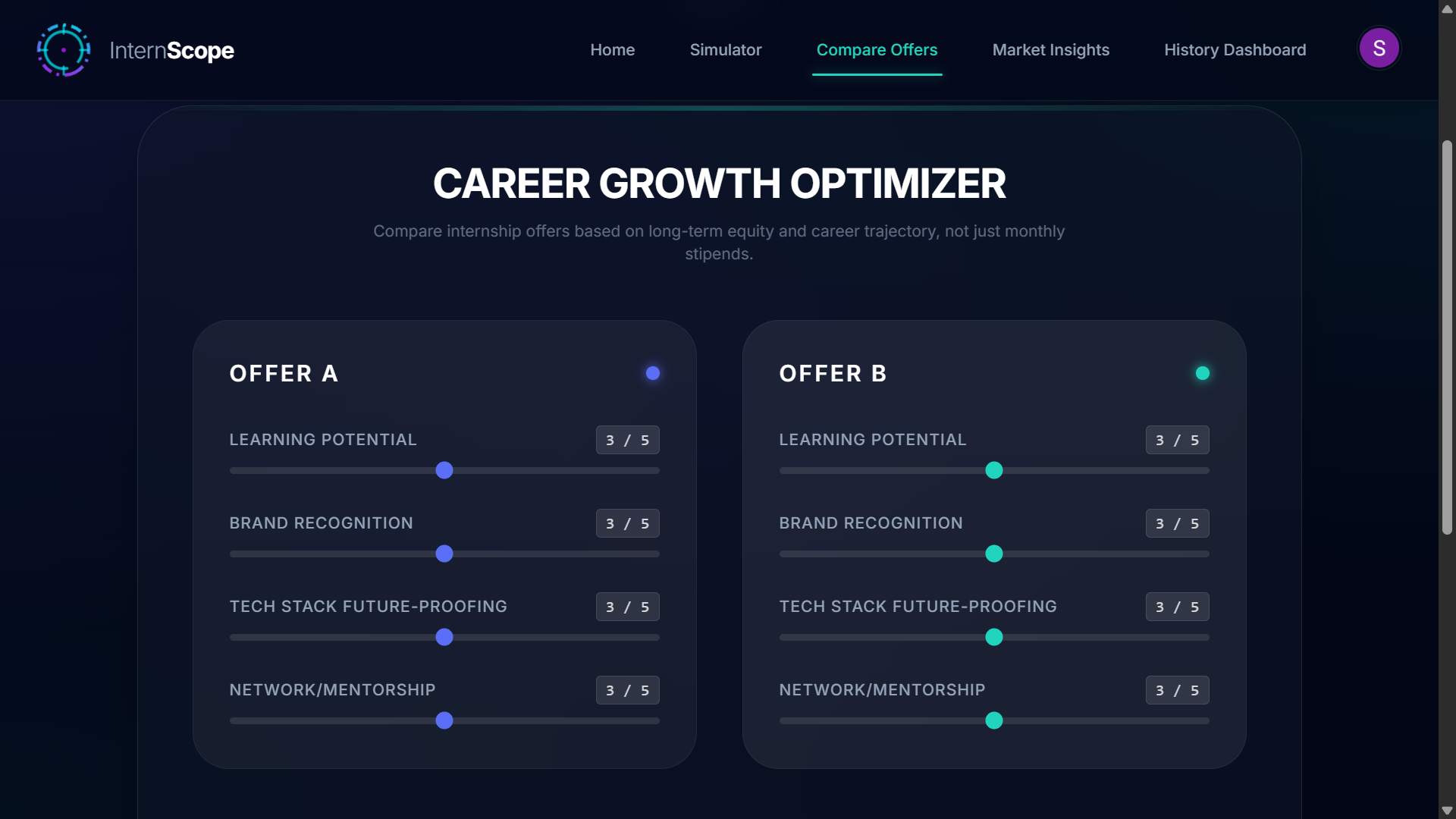
Career Growth Optimizer
-
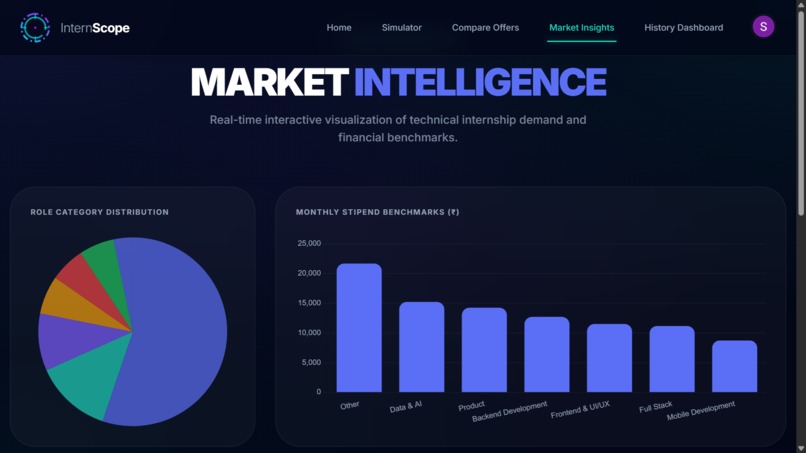
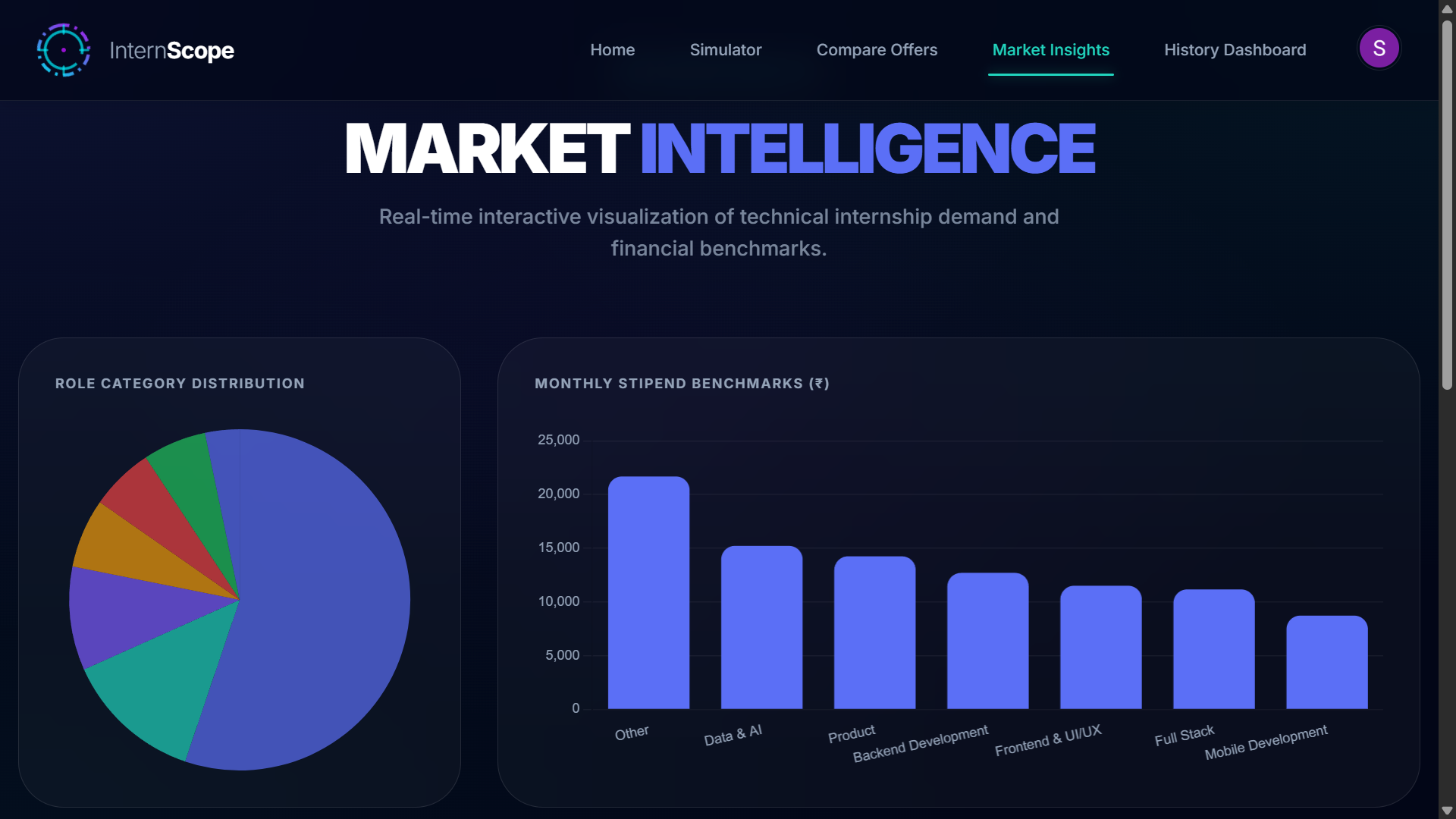
Market Intelligence
Inspiration
Engineering students apply to internships blindly. They don’t know how competitive a role really is. They don’t know whether their profile is strong enough. They don’t know which skills actually matter in the current market. Applications become guesswork. Rejections feel random. We wanted to build something that answers a simple but powerful question: “What are my real chances before I apply?” InternScope AI was inspired by the need to bring clarity, strategy, and data-driven insight into internship preparation.
What it does
InternScope AI is a market-calibrated internship intelligence platform that: Analyzes 450+ real internship listings Calculates a competition index per category Evaluates skill demand distribution Simulates personalized acceptance probability Suggests top matching internships Tracks historical simulations in a personal dashboard Instead of being just another job board, InternScope AI acts as a decision-support engine. It helps students: Understand their readiness level Identify gaps in their profile Make smarter application decisions
How we built it
We built InternScope AI using a modular, scalable architecture: Frontend Next.js (App Router) Tailwind CSS for responsive UI Backend Next.js API Routes Structured simulation engine Market analytics engine Matching engine Database PostgreSQL (Docker for development, cloud-hosted in production) Prisma ORM for schema modeling and querying Authentication NextAuth with Google OAuth Core Logic We built: A competition index model based on internship volume, stipend distribution, and skill demand A readiness scoring system using skill match %, CGPA, projects, and experience A probability balancing formula that adjusts readiness against market competition We normalized and cleaned raw internship data before seeding it into the database to ensure reliable modeling. The entire system was deployed to Vercel with secure environment configuration.
Challenges we ran into
- Data Inconsistency The internship dataset contained: Noisy skill entries Irregular stipend formats Mixed location strings We built a cleaning and normalization pipeline before integration.
- Competition Calibration Designing a probability model that feels realistic (not inflated or discouraging) required careful tuning of weight parameters.
- Production Deployment We faced: OAuth redirect mismatches Dynamic route issues with NextAuth Environment variable configuration errors Debugging these in production required careful runtime analysis and reconfiguration.
Accomplishments that we're proud of
Successfully modeling competition using real internship data Building a complete full-stack production system within tight time constraints Creating a modular architecture separating market engine, simulation engine, and matching engine Deploying securely with authentication and database integration Delivering a polished UI that feels production-ready Most importantly, we built something students can actually use — not just demo.
What we learned
Real data modeling builds far more trust than static simulations Clean architecture prevents chaos under time pressure Deployment configuration can be more challenging than writing code UX clarity dramatically affects perceived value Students don’t just want listings — they want strategic guidance
What's next for InternScope AI – Data-Driven Internship Intelligence Engine
Live integration with real-time internship APIs Skill gap recommendation engine (What-If simulation) Resume parsing for automated skill extraction University-level analytics dashboards Market trend visualization over time Expanding beyond internships into full-time role intelligence Our long-term vision is to evolve InternScope AI into a full career strategy intelligence platform.
Built With
- next.js
- nextauth
- postgresql
- prisma
- tailwind
- tailwind-css-backend:-next.js-api-routes-database:-postgresql-(docker-for-development
- vercel


Log in or sign up for Devpost to join the conversation.