-
-
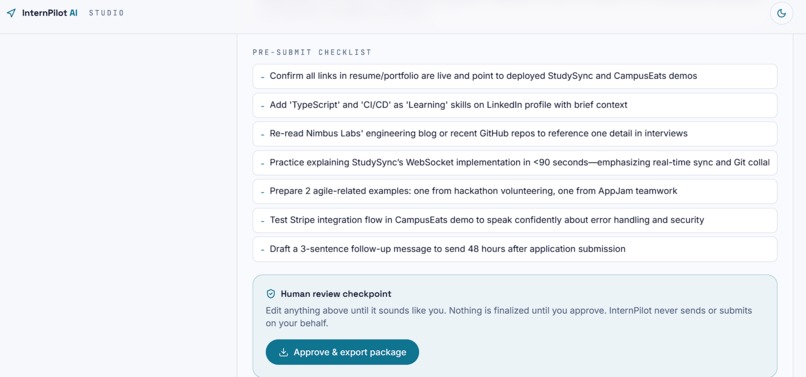
InternPilot AI export and share (scroll down)
-
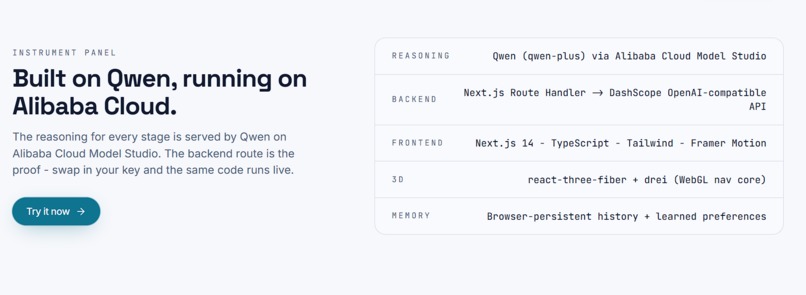
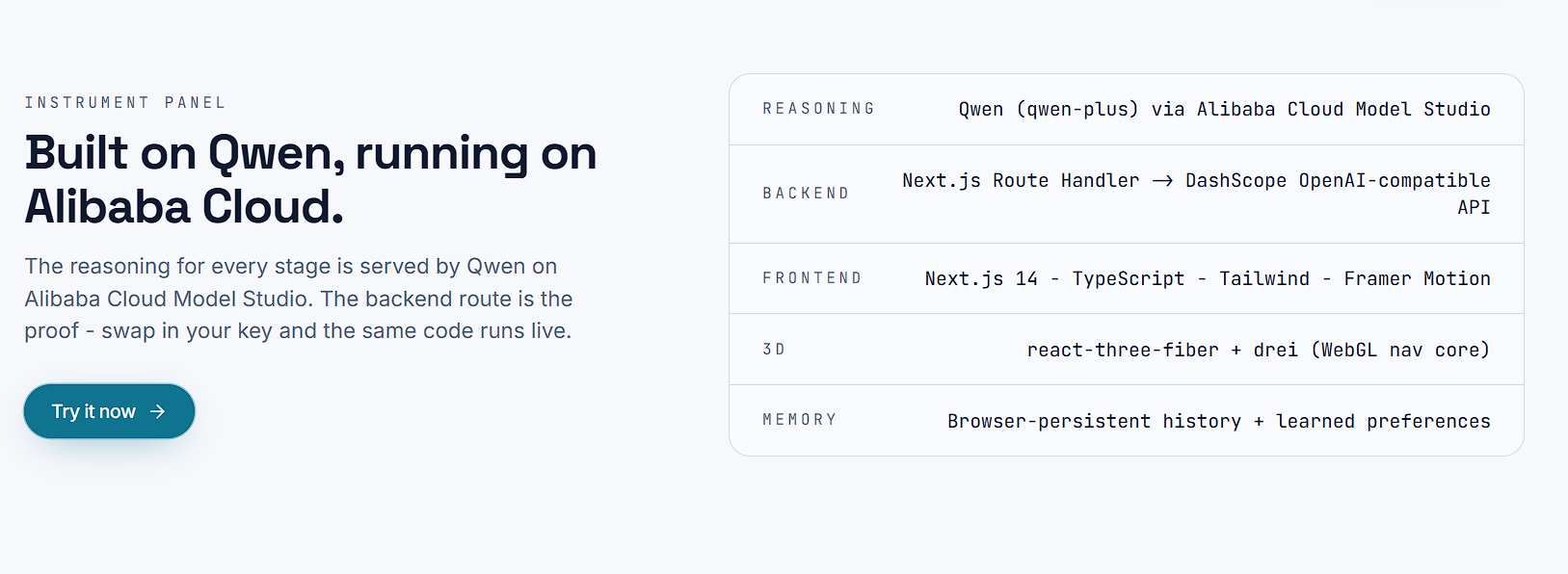
InternPilot AI Tech Stack
-
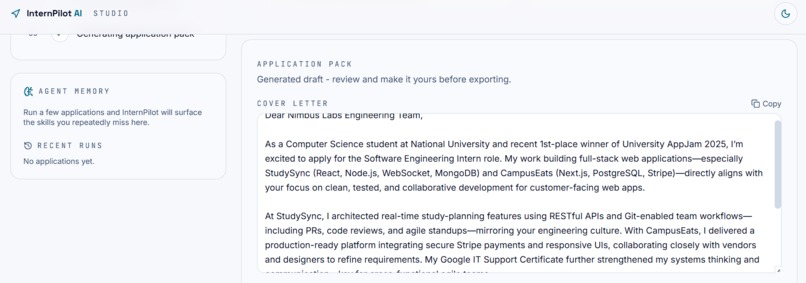
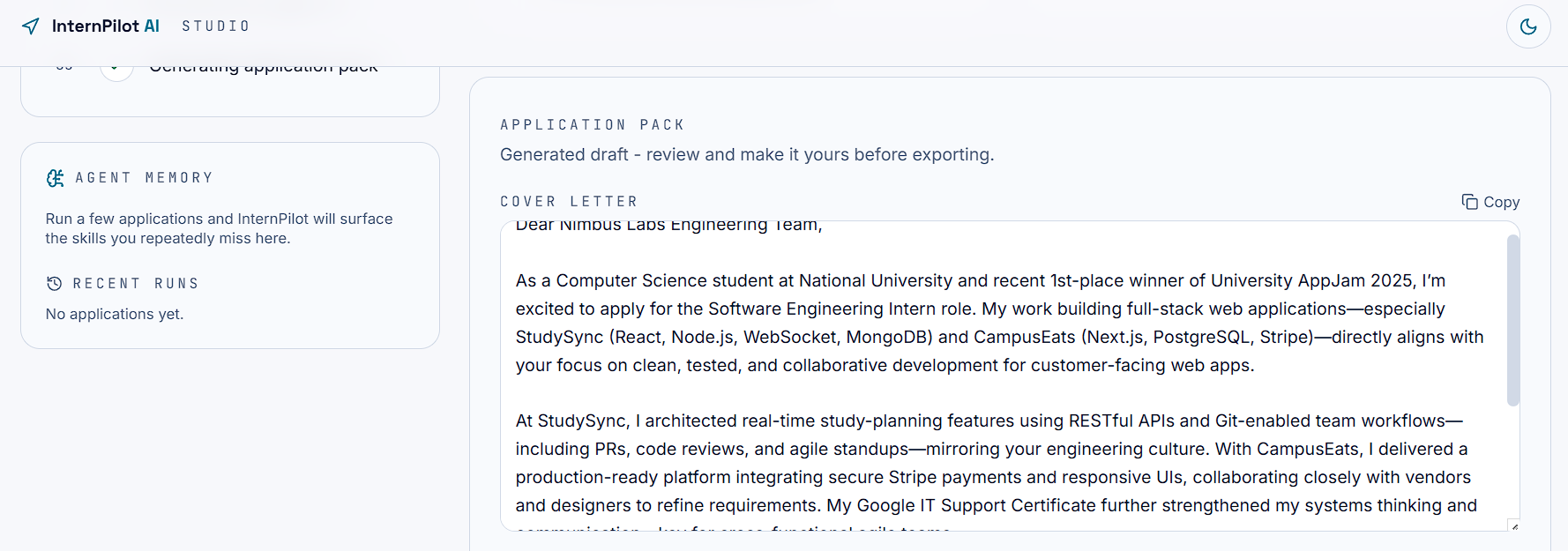
InternPilot AI Application Pack screenshot
-
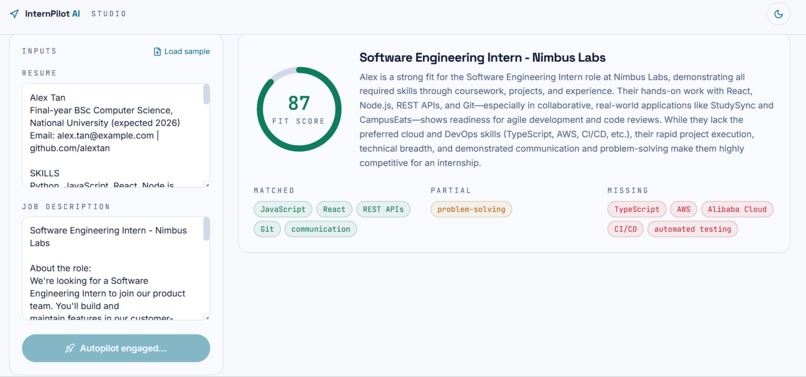
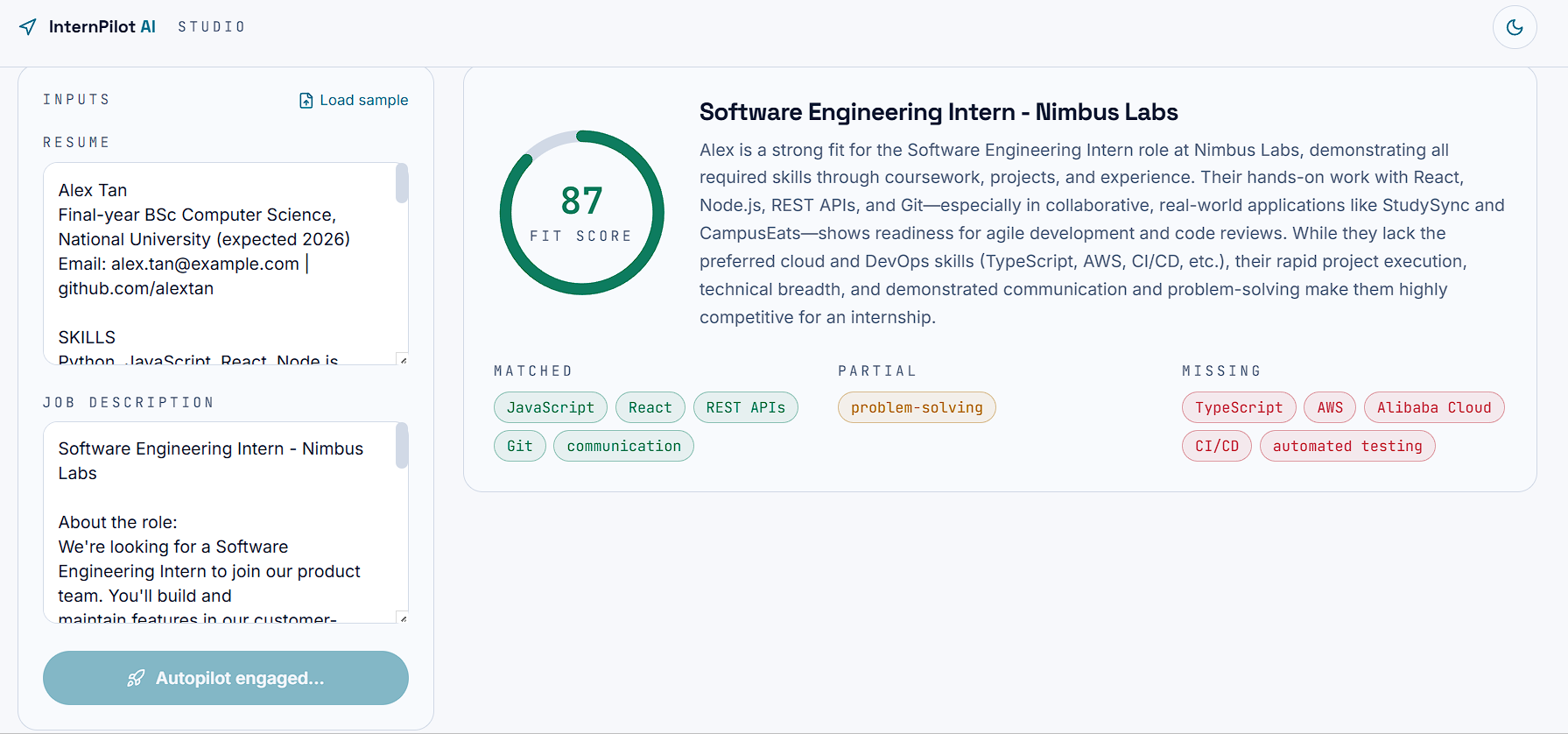
InternPilot AI Fit Score
-
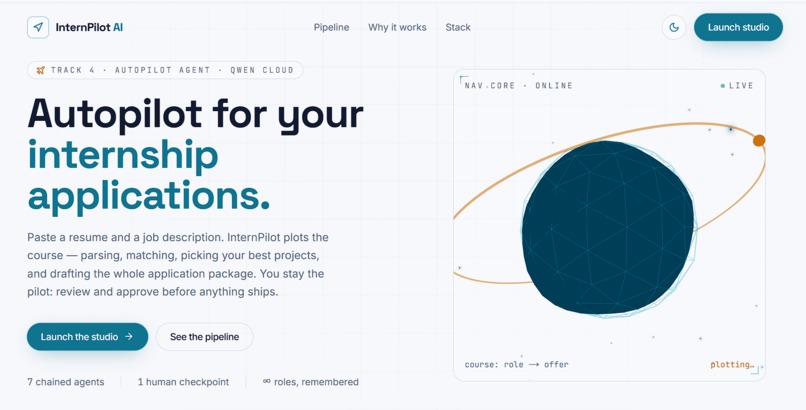
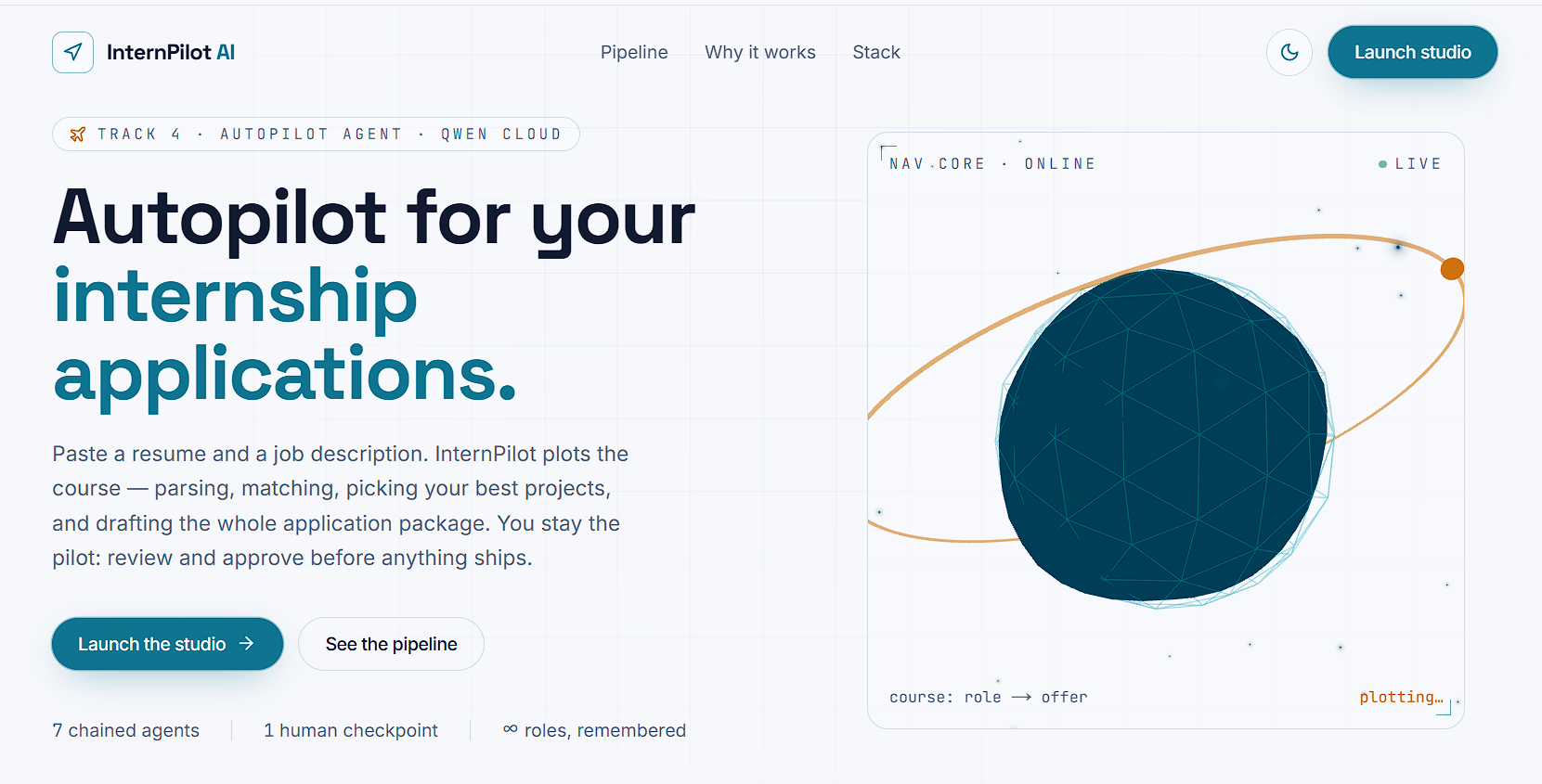
InternPilot AI Landing Page (Light Mode)
-
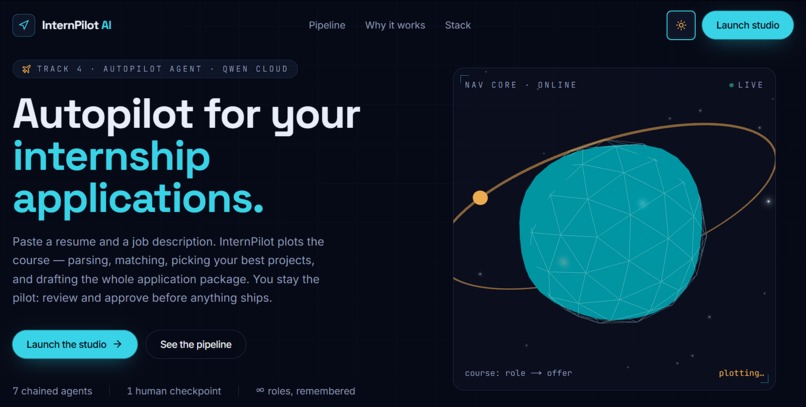
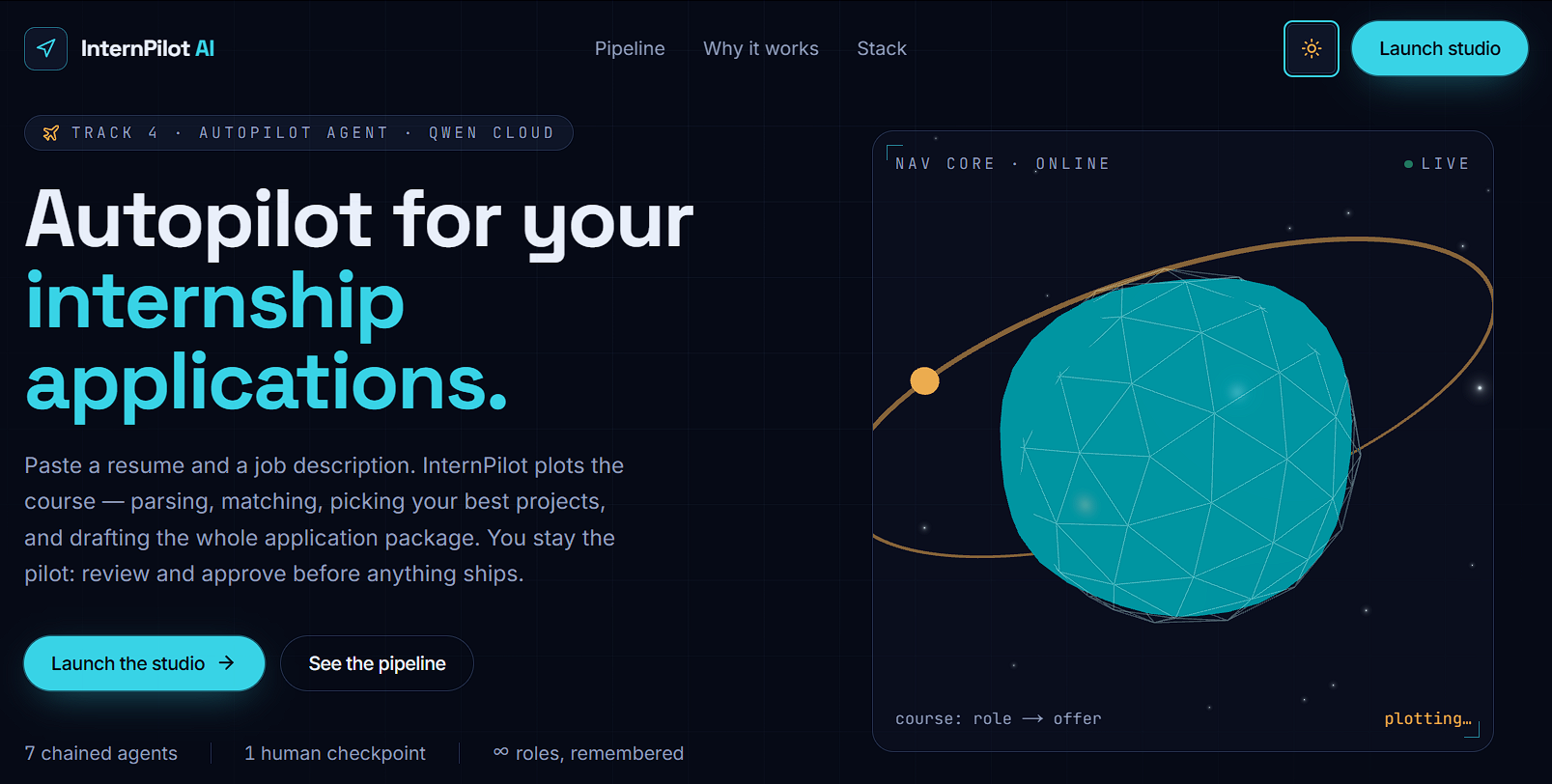
InternPilot AI Landing Page (Dark Mode)
Inspiration
Internship applications can be overwhelming for students. A single job description may contain many technical skills, soft skills, responsibilities, and hidden expectations. At the same time, students often have multiple projects, certifications, and experiences, but struggle to decide which ones to highlight for each role.
InternPilot AI was inspired by this problem. Instead of generating a generic cover letter, the goal was to build an AI autopilot agent that analyzes a job description, compares it with a student's resume and portfolio, identifies skill gaps, recommends the most relevant projects, and generates a tailored internship application package with human review before final use.
What it does
InternPilot AI turns a job description into a structured internship application package. It:
- Parses a student's resume and extracts skills, education, projects, achievements, and experience.
- Analyzes a job description to identify required skills, responsibilities, keywords, and role expectations.
- Compares the resume against the job description and produces a 0 to 100 skill-match score.
- Flags missing skills honestly, rather than claiming a perfect match.
- Recommends which portfolio projects to highlight for the role, with tailored talking points.
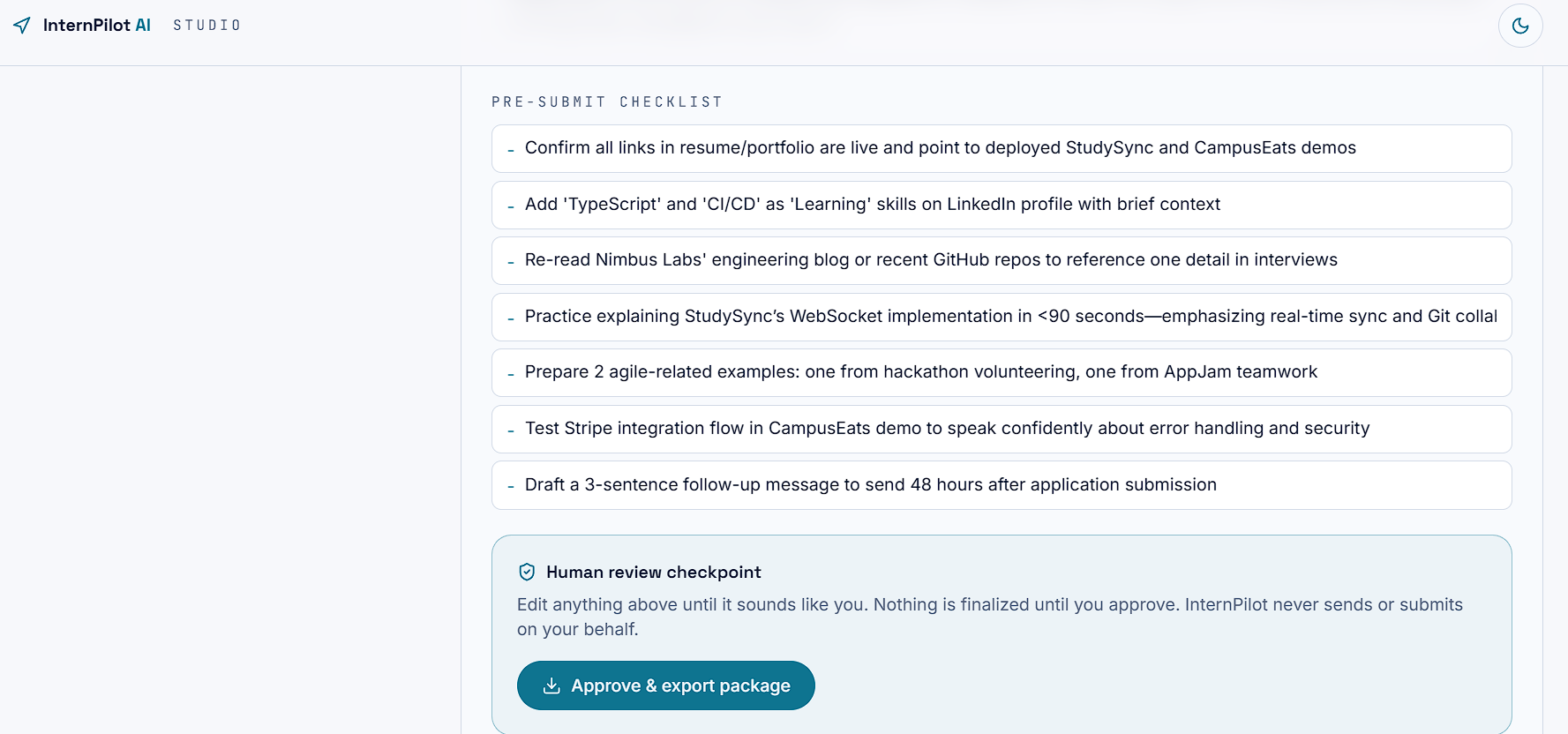
- Generates a cover letter, recruiter email, LinkedIn outreach message, and a pre-submit checklist.
- Includes a human-in-the-loop checkpoint so the user reviews, edits, and approves every output before exporting. Nothing is sent automatically.
- Stores application history and recurring skill gaps, so each new application starts smarter than the last.
How I built it
InternPilot AI is a full Next.js 14 web application written in TypeScript, with Tailwind CSS and Framer Motion for the interface and react-three-fiber for the 3D navigation-core hero. It includes a light and dark theme toggle.
The reasoning runs on Qwen (qwen-plus) through Alibaba Cloud Model Studio. A single Next.js backend route calls the OpenAI-compatible DashScope endpoint with a strict JSON contract for each stage, so every agent's output is structured and chains cleanly into the next.
The agent workflow is:
- Resume Parser Agent
- Job Description Analyzer Agent
- Skill Match Agent
- Portfolio Recommendation Agent
- Application Pack Generator
- Human Review Checkpoint
- Application Memory
A lightweight browser-persistent memory layer stores target roles and recurring skill gaps across sessions. The application is deployed live on an Alibaba Cloud ECS instance (Ubuntu, Node.js, pm2). A built-in demo mode lets the full flow run even without an API key, so reviewers can click through everything.
Challenges I ran into
The central challenge was getting reliable structured output from a reasoning model. I solved it with per-stage system prompts, JSON response formatting, and a recovery parser that salvages valid JSON from imperfect responses.
Designing a genuine human-in-the-loop checkpoint, rather than a fully automated black box, meant making every generated field editable and gating export behind explicit approval, since resumes and recruiter messages are personal documents that should never be sent automatically.
Deploying to Alibaba Cloud ECS on a small instance was also a challenge: the production build is memory-hungry, which I resolved by adding swap memory on the server.
Accomplishments that I'm proud of
I built a real, modular agent pipeline rather than a single prompt, where each stage is independently inspectable and replaceable. The honest fit score and "missing skills" feedback give students something genuinely useful even before they send anything. And the human checkpoint plus cross-session memory make it feel like a responsible assistant rather than an autopilot that flies off on its own. The whole thing is deployed and running live on Alibaba Cloud.
What I learned
Chaining focused agents with strict JSON contracts beats one giant prompt for reliability and debuggability. I also learned how naturally Alibaba Cloud Model Studio drops into an OpenAI-compatible workflow, and went through a full production deployment from scratch: provisioning a Linux server, handling secret keys through environment files, and keeping the app alive with a process manager.
What's next for InternPilot AI
Next steps include direct PDF resume ingestion, an interview-preparation agent that builds on the skill gaps memory finds, an optional Alibaba Cloud database so memory syncs across devices, and an application tracker with analytics on repeated skill gaps across multiple applications.


Log in or sign up for Devpost to join the conversation.