-
-
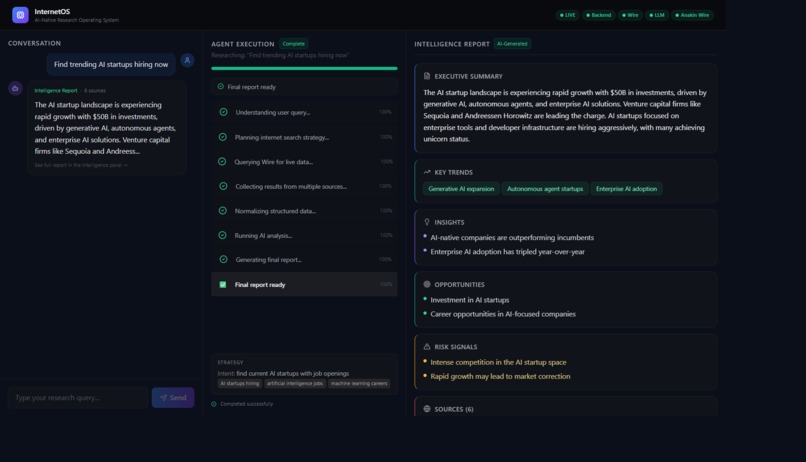
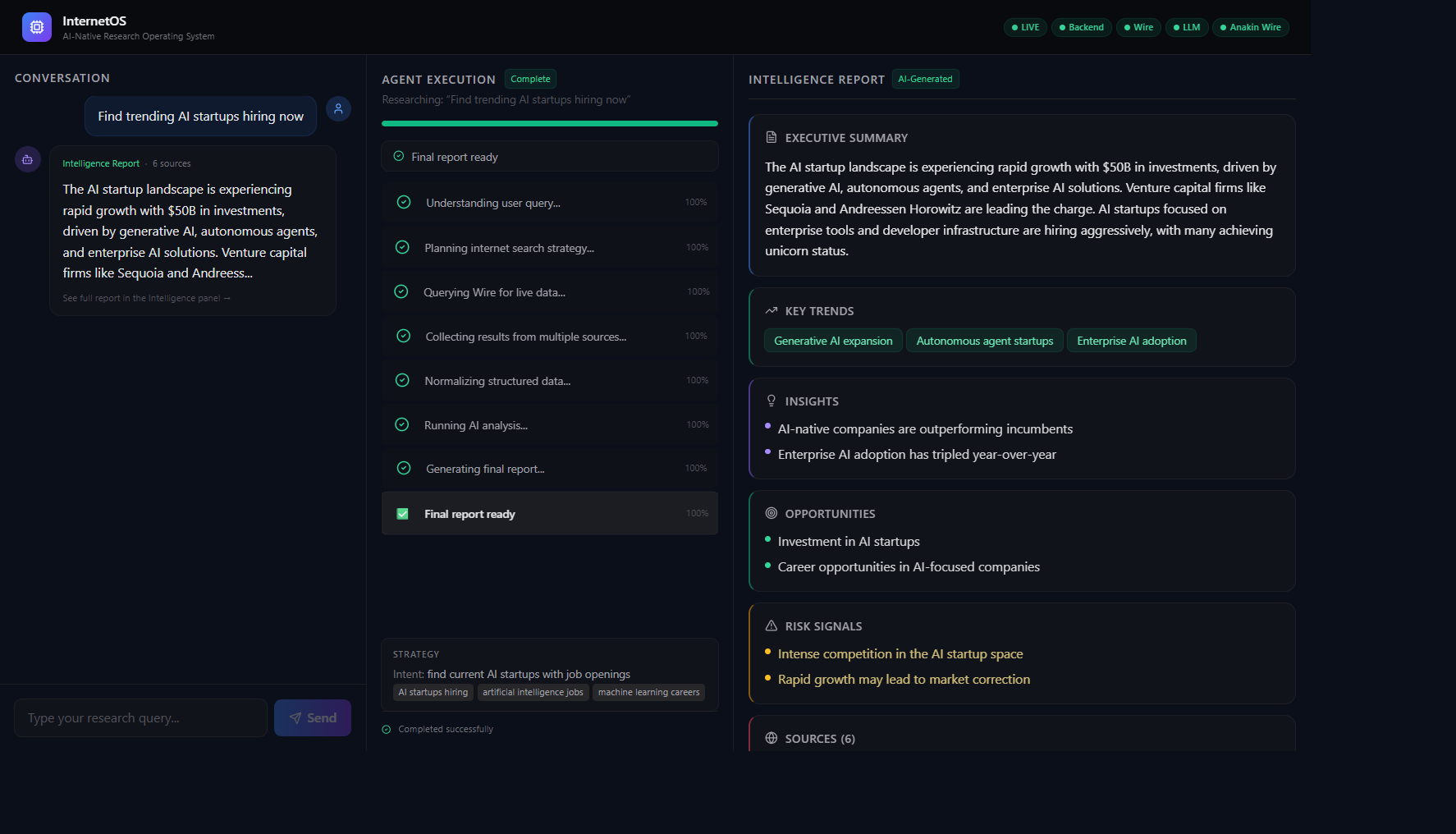
Live intelligence report generated from multi-source web data using AI agents.
-
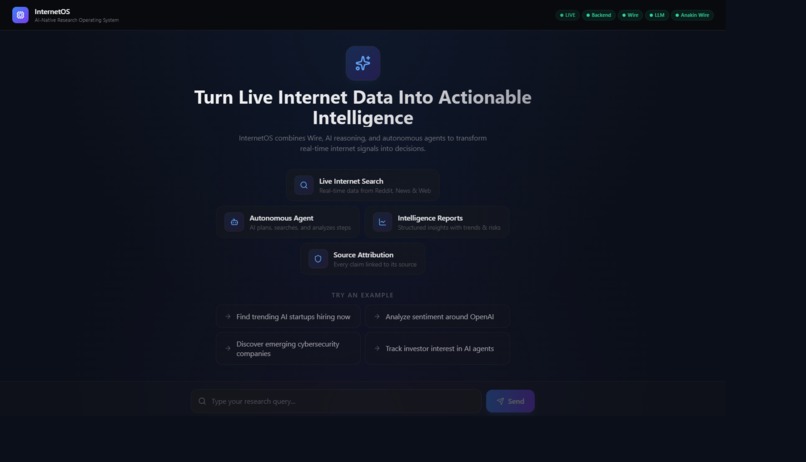
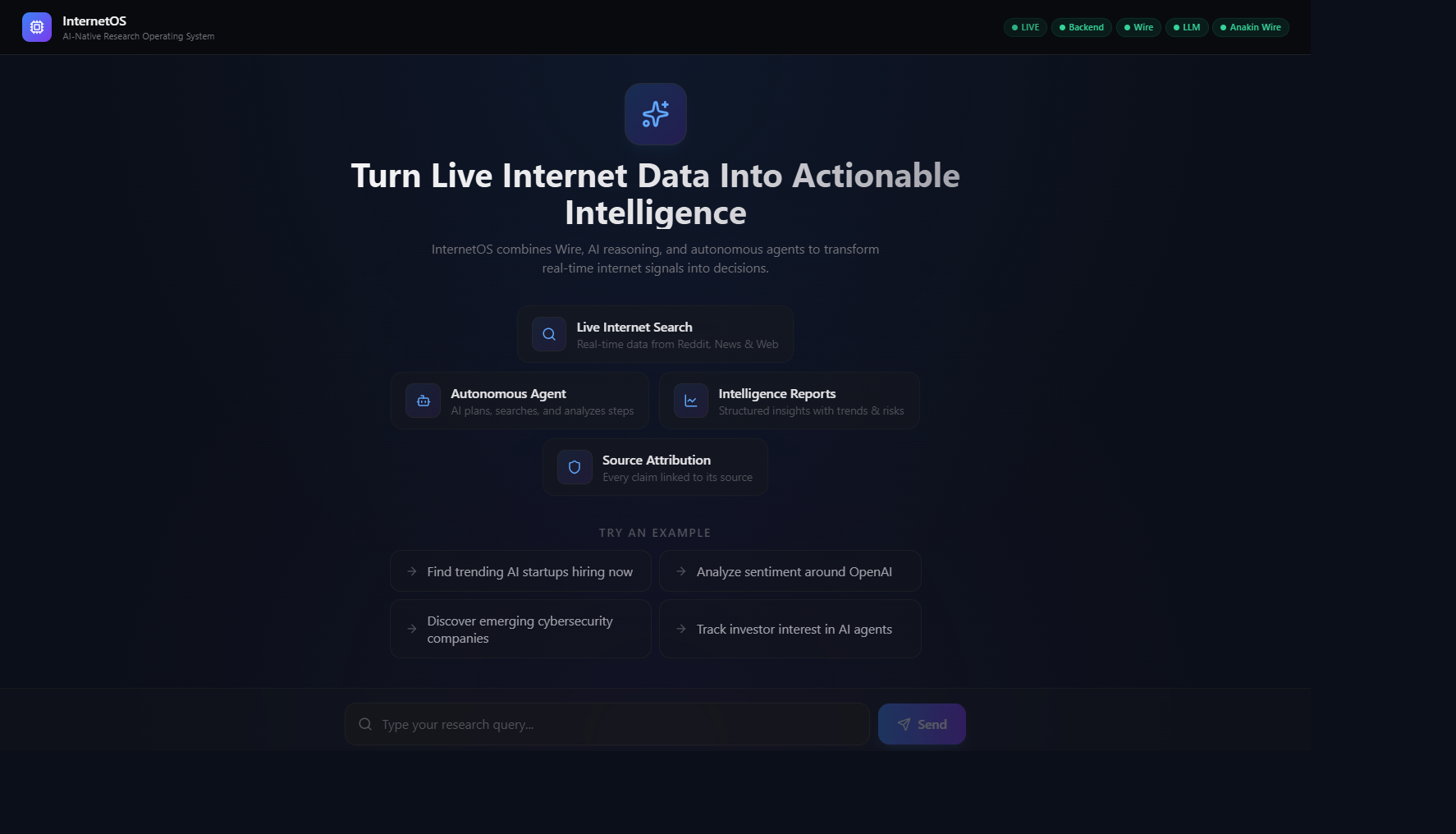
AI research interface with autonomous query execution and live results.
Inspiration
What it does
How we built it
Challenges we ran into
Accomplishments that we're proud of
What we learned
Inspiration
Modern internet research is fragmented. When users want to understand a topic, they often need to search multiple platforms, read dozens of articles, browse social discussions, compare opinions, and manually synthesize information.
Traditional search engines provide links, but they do not provide intelligence.
We wanted to build a system that behaves more like an analyst than a search engine—an autonomous agent that can gather information from multiple live sources, reason about it, identify patterns, and produce structured insights within seconds.
This vision led to InternetOS.
What it does
InternetOS is an Autonomous Internet Intelligence Agent powered by Anakin Wire and Groq LLM.
A user enters a natural language query, and the system automatically:
- Interprets user intent
- Creates a search strategy
- Searches Reddit, X/Twitter, News, and the Web simultaneously
- Extracts relevant information
- Identifies key entities and trends
- Generates a structured intelligence report
- Displays the entire execution process in real time
Instead of presenting a list of links, InternetOS delivers actionable intelligence.
How we built it
The system is built using a modern full-stack architecture:
- Next.js 14 for the frontend
- React and Tailwind CSS for the user interface
- Framer Motion for real-time agent animations
- FastAPI for backend orchestration
- Anakin Wire for live internet data retrieval
- Groq (Llama 3.3 70B Versatile) for reasoning and intelligence generation
- Vercel for frontend deployment
- Render for backend deployment
The application follows a three-layer architecture:
- User Interface Layer
- Agent Orchestration Layer
- Intelligence and Data Layer
An 8-step autonomous execution pipeline powers the entire experience, making AI reasoning visible and transparent.
Challenges we ran into
One of the biggest challenges was coordinating multiple data sources while maintaining low latency.
We needed to:
- Execute searches in parallel
- Normalize different response formats
- Handle incomplete or failed data sources
- Maintain a responsive user experience during long-running operations
Another challenge was creating a system that feels intelligent while remaining transparent. We addressed this by designing a visible execution timeline so users can observe every stage of the agent workflow.
Accomplishments that we're proud of
- Built a fully functional autonomous research agent
- Integrated multiple live internet data sources
- Created a real-time 8-step execution engine
- Developed a professional intelligence-report interface
- Successfully deployed the application using free-tier infrastructure
- Achieved fast end-to-end research generation with live data
What we learned
This project taught us valuable lessons about:
- Agent orchestration systems
- Multi-source information retrieval
- Large language model integration
- Real-time user experience design
- Building scalable AI-powered applications
We also learned that users trust AI systems more when they can see the reasoning process rather than only the final answer.
What's next for InternetOS
Future plans include:
- Persistent research sessions
- Scheduled intelligence reports
- Multi-agent collaboration
- Exportable PDF and CSV reports
- Advanced entity relationship visualization
- User accounts and saved research history
- Additional data source integrations
InternetOS is our step toward a future where internet research is autonomous, transparent, and intelligence-driven.
What's next for InternetOS – Autonomous Internet Intelligence Agent
Built With
- 3.3
- 70b
- anakin
- api
- asyncio
- css
- fastapi
- framer
- groq
- llama
- motion
- next.js
- openai
- pydantic
- python
- react
- render
- rest
- sdk
- tailwind
- typescript
- vercel
- versatile
- wire


Log in or sign up for Devpost to join the conversation.