-
-
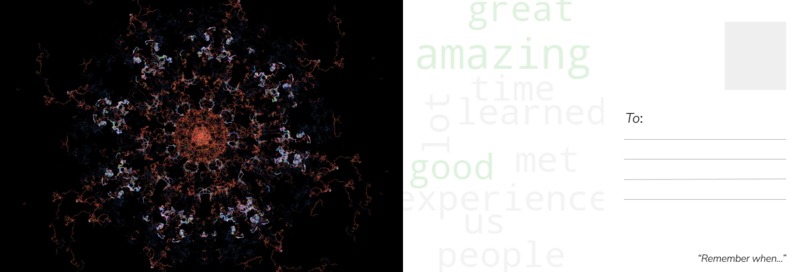
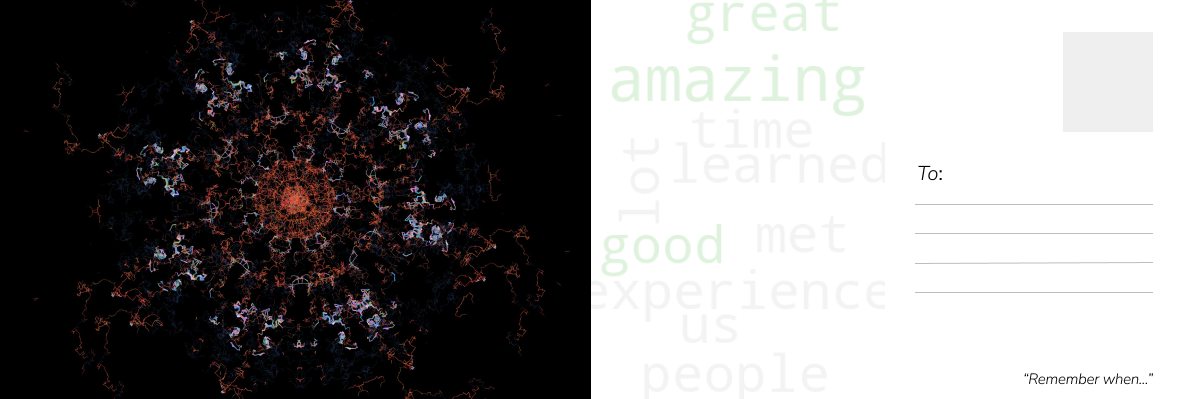
Customized Postcard Example 1
-
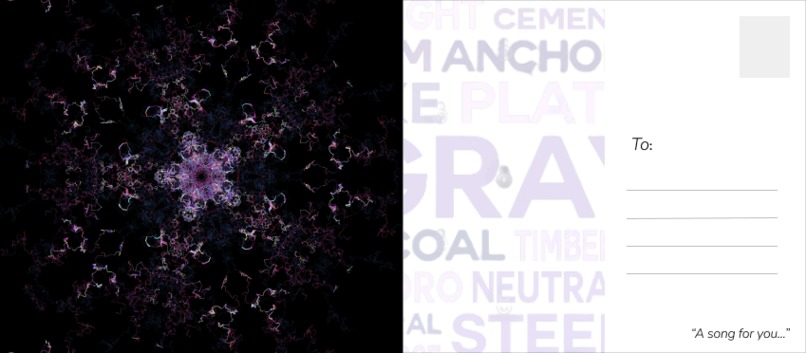
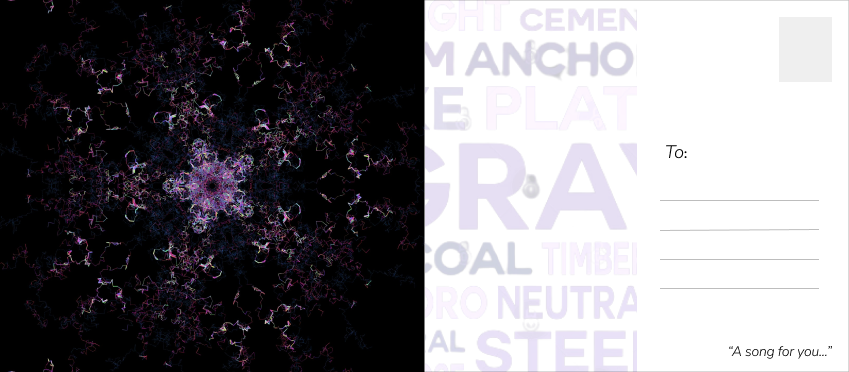
Customized Postcard Example 2
-
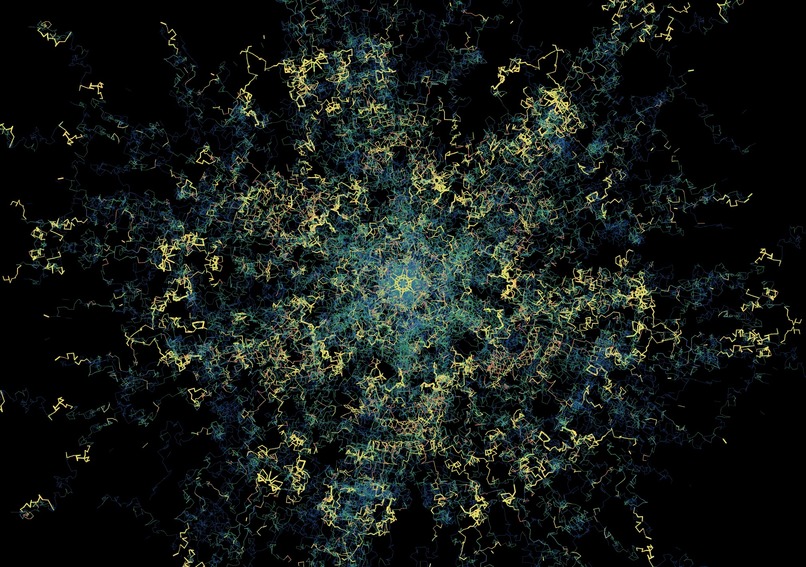
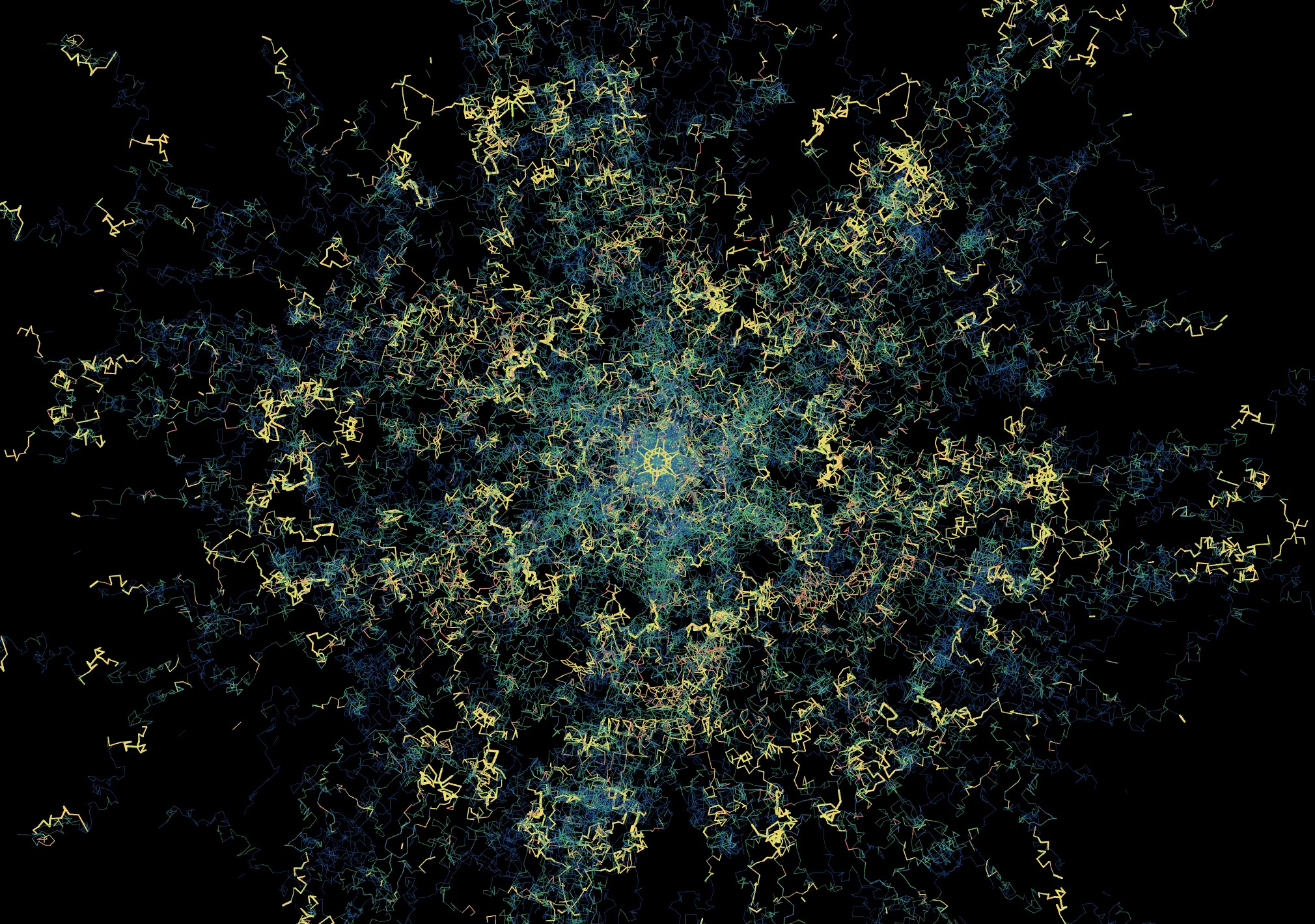
Voice Generated Art Example 1
-
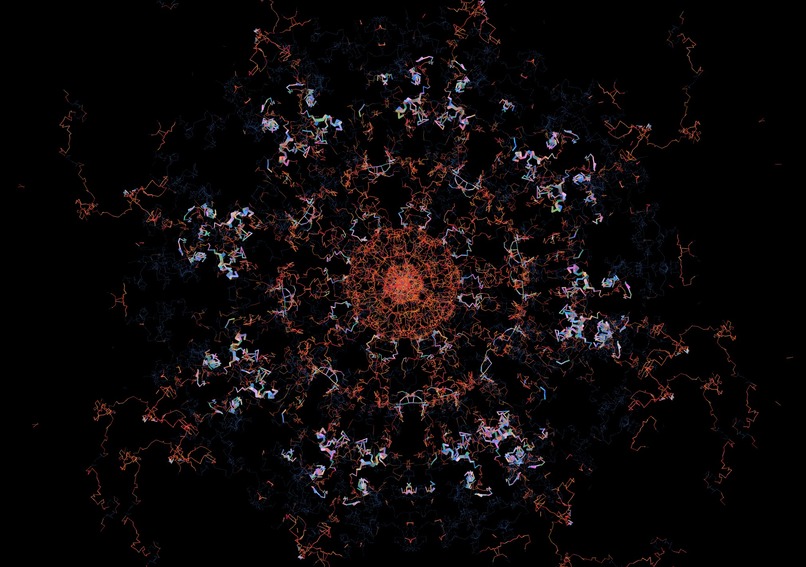
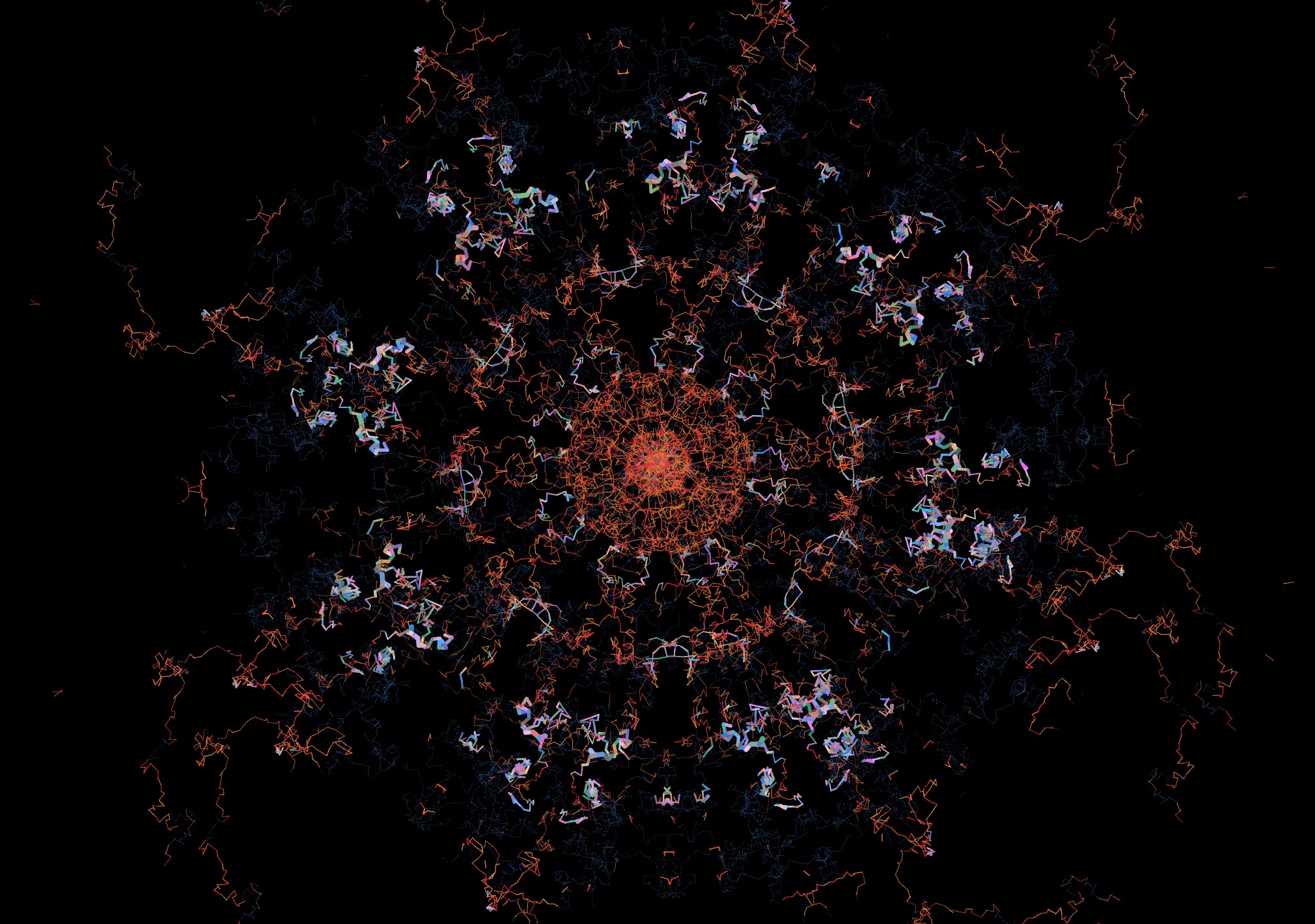
Voice Generated Art Example 2
-
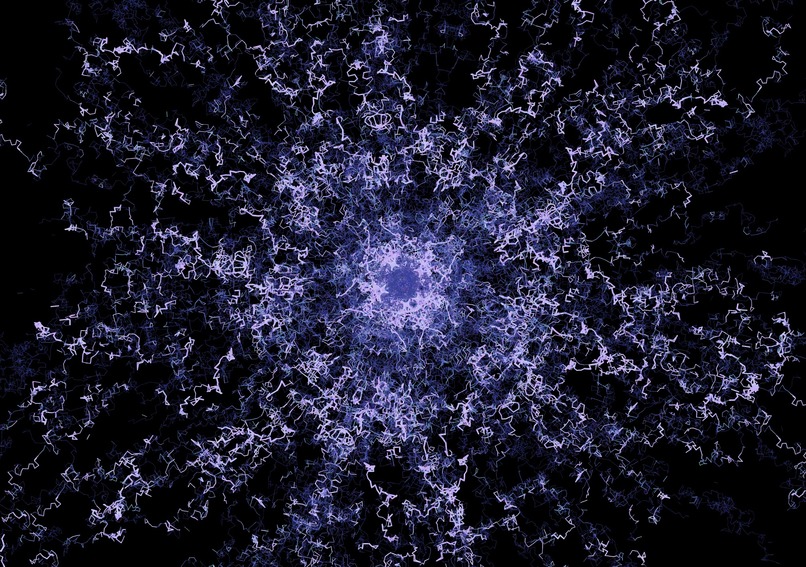
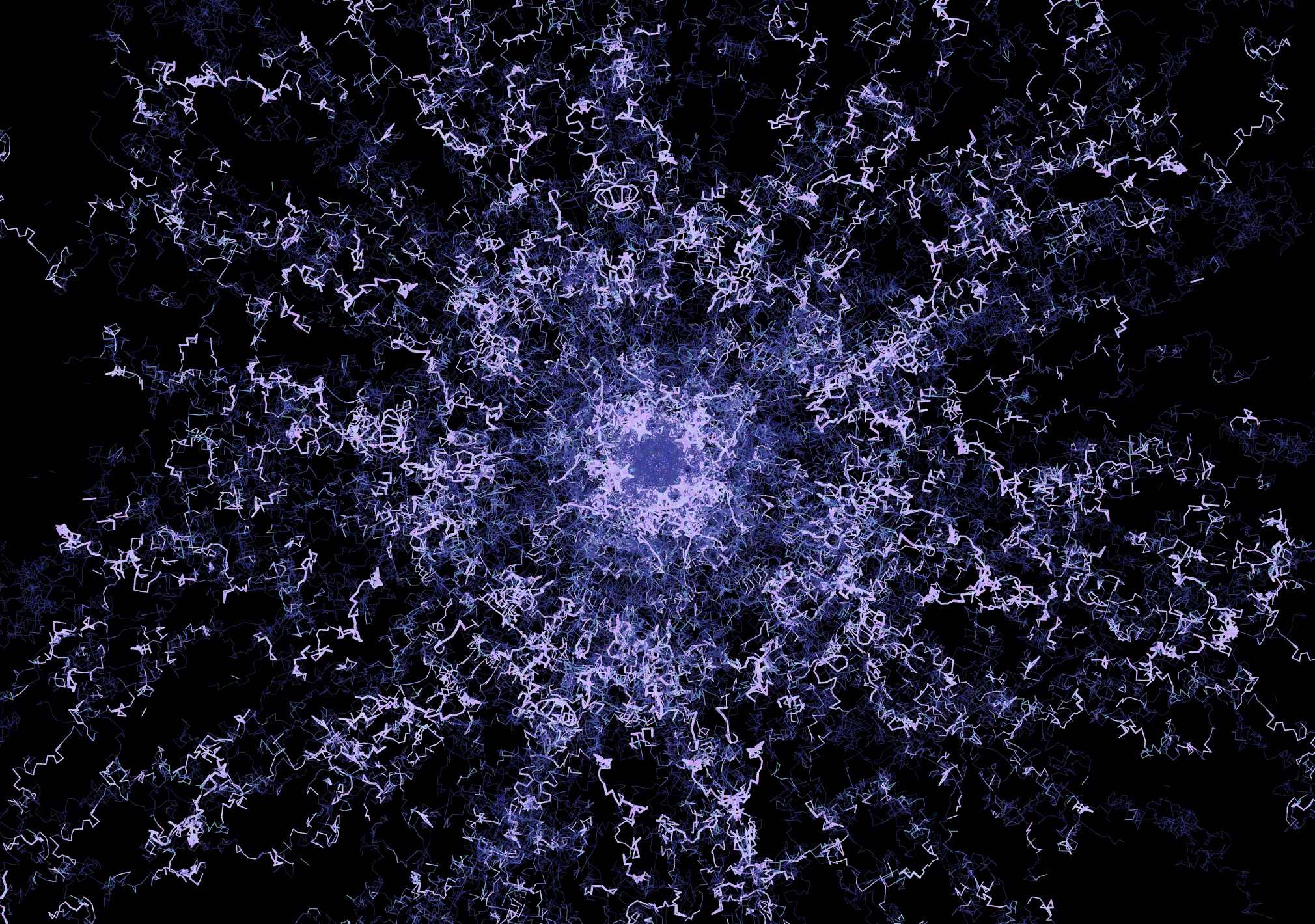
Voice Generated Art Example 3
-
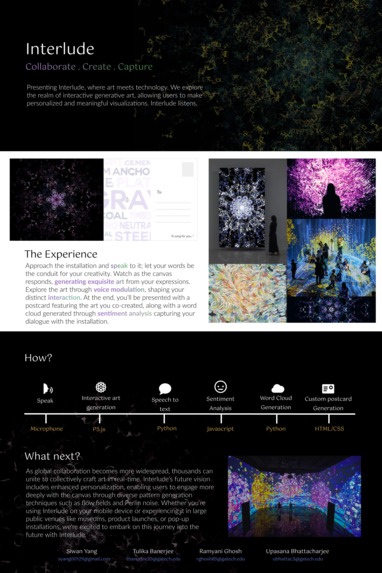
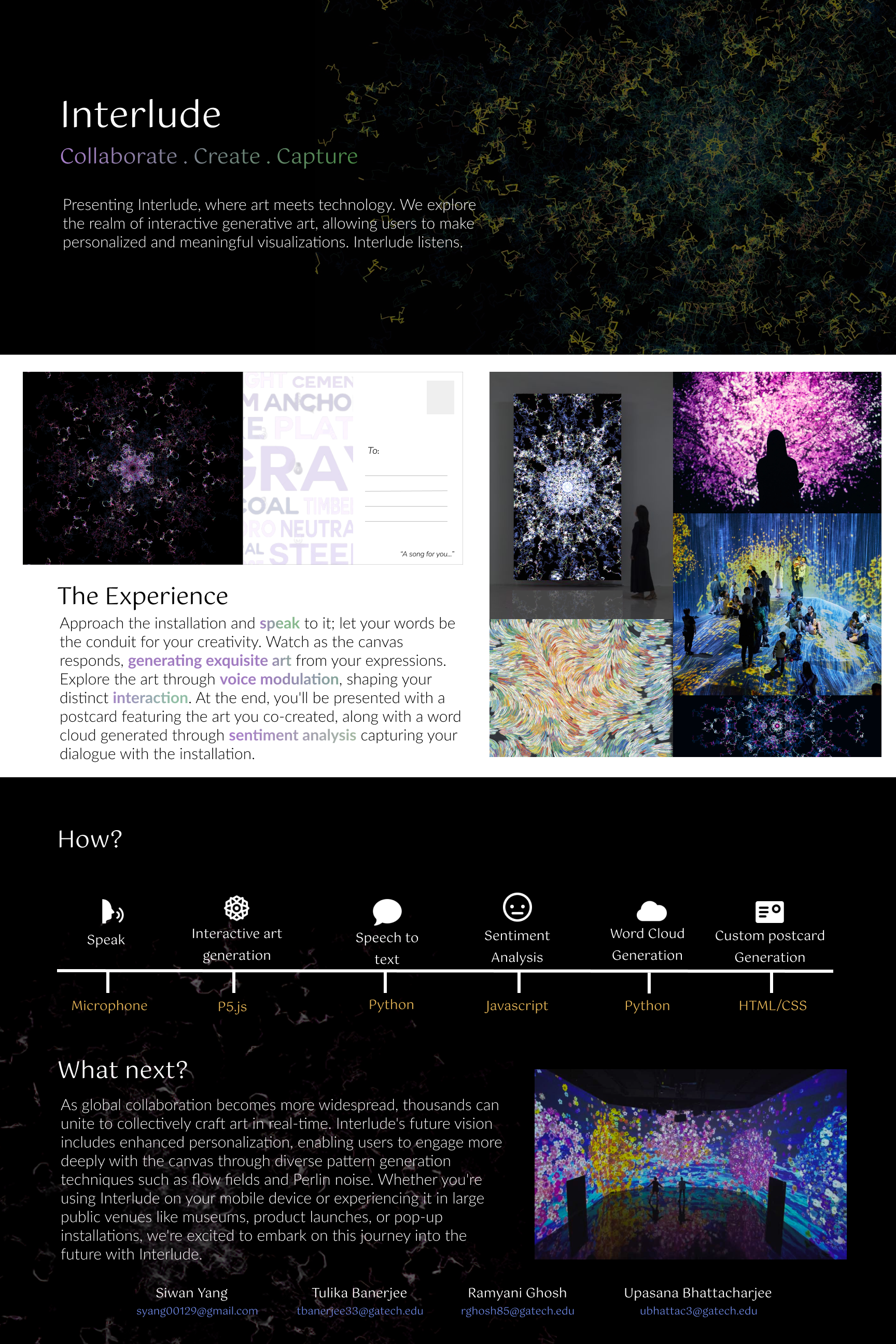
Poster
Inspiration
Have you ever considered that your voice has the power to create art? Being a team of primarily UX designers with a knack for creative coding, we wanted to make an interactive and immersive experience that's fun and relaxing. Also, being inspired by synesthesia and the wonders of generative art, we wanted to explore how we can use sound to interact with art. The final touch was making a memorable experience for our users by gauging their emotions through sentiment analysis, thus leading us to the idea of quick, generative and unique postcards!
What it does
In Interlude, art seamlessly merges with technology through a journey into interactive generative art. This unique experience empowers users to craft personalized and deeply meaningful visualizations, harnessing the expressive potential of their words and voice.
Interlude comes to life as you speak. Its dynamic generative art adapts stroke weight and color palette in harmony with the nuances of your volume and frequency. The interplay of randomized symmetry and radial strokes ensures that every creation is a distinctive masterpiece.
Beyond its visual prowess, Interlude lends an attentive ear to your spoken words, subjecting them to sentiment analysis. This fusion of your verbal expression and artistic interpretation culminates in a bespoke postcard that encapsulates the essence of your experience.
The crowning achievement of Interlude is a custom postcard, a tangible manifestation of voice-generated art. This unique piece captures a fragment of your sentiment in a mesmerizing word cloud. Positive emotions dance in shades of green, negatives resonate in bold red, and neutrals find a tranquil haven in subtle gray hues. Interlude transforms your voice into an artistic narrative, creating a vivid and emotive keepsake of your journey.
How we built it
To create the generative art based on audio input, we made use of the p5.js library and built a web application using HTML/CSS and JavaScript. For capturing the speech and converting it to text, we utilized the Google web speech API and finally made use of python and NLP frameworks such as nltk, speech recognition, word cloud, matplotlib, to conduct the sentiment analysis and generate word clouds. We also used Figma for our design process in building out the postcard layout.
Challenges we ran into
Integrating the sentiment analysis to create a word cloud in real time and displaying the combined postcard with the generated art and word cloud was the toughest challenge as we needed to understand how to synchronize the timings of the various functions. Acquiring some of the hardware equipment for our expo over the weekend was tougher than expected but we were able to get everything we need for the expo.
Accomplishments that we're proud of
We got through our first intensive hackathon! Our expo setup is truly interactive and immersive with a projector and screens and printed postcards! We accomplished all the features we were aiming for and stepped out of our comfort zones to try a library p5.js that we hadn't worked with before. Understanding complex mathematical algorithms that govern randomized generative art.
What we learned
It's important to take breaks and rest! Don't burn yourself out. In the realm of interactive art, the possibilities are endless and we are excited to explore more of these in the future!
What's next for Interlude
We will deploy Interlude to be publicly accessible on the internet. Adding perlin noise to the art generation. Adding collaborative features for various users to contribute to a single piece of art.
Built With
- css3
- figma
- google-web-speech-api
- html5
- javascript
- matplotlib
- nltk
- p5.js
- python
- wordcloud


Log in or sign up for Devpost to join the conversation.