

Inspiration
The aspiration to democratize sophisticated interior design and make it accessible to everyone, irrespective of their design knowledge, was the primary inspiration behind Interior AI Design. The idea was to harness the power of artificial intelligence to break down the barriers between professional interior design and individuals looking to personalize their living spaces. The traditional route of home redesign can be cumbersome, expensive, and often requires professional intervention, which can be a hindrance for many. With Interior AI Design, the goal was to create a tool that empowers users to become their own interior designers, fostering a sense of creativity and personalization in home design endeavors.
What it does
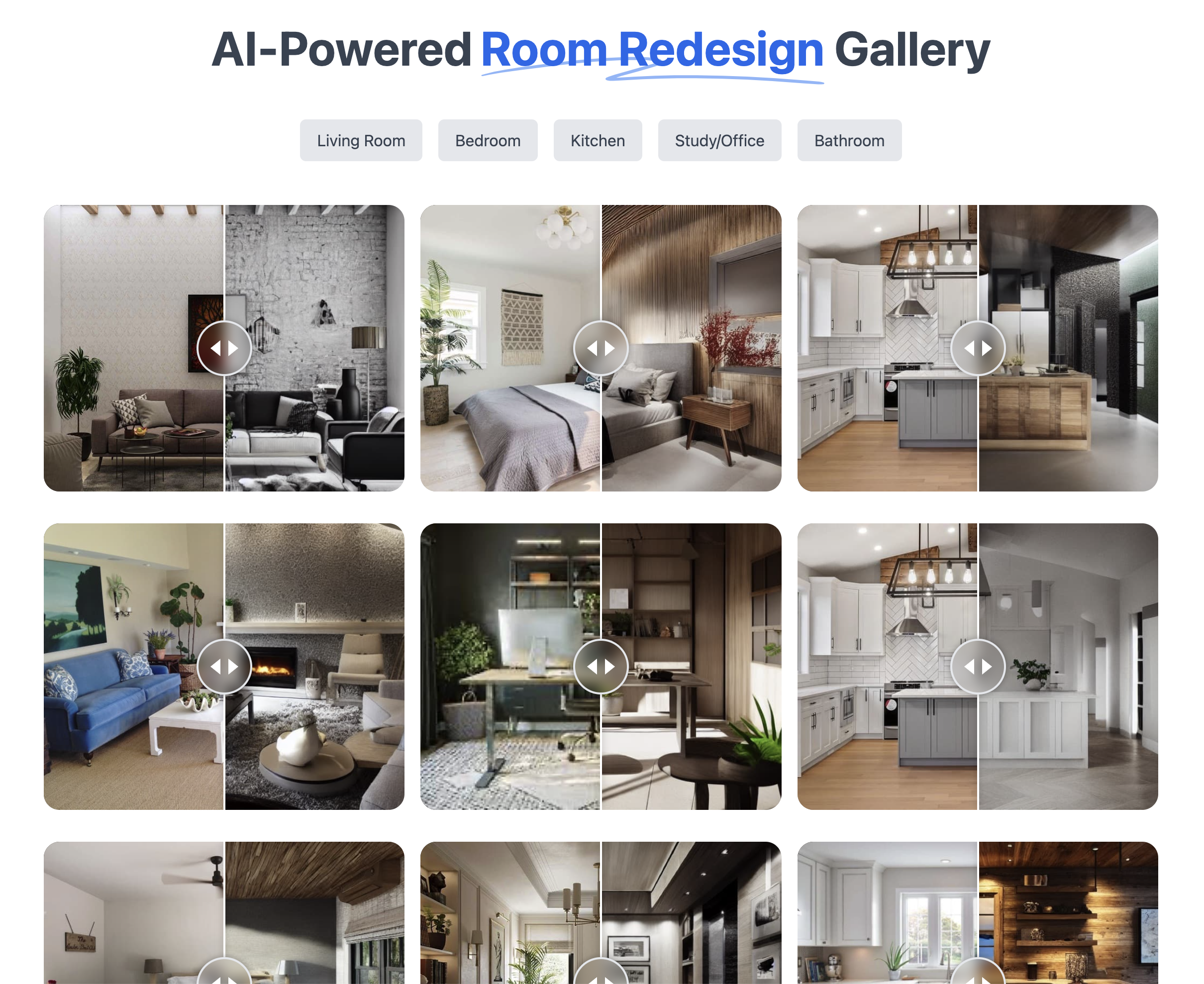
Interior AI Design is an intuitive tool that utilizes artificial intelligence to aid users in room and home redesign ventures. Users can choose from a variety of styles to tailor their living spaces effortlessly to their tastes. The tool streamlines the design process, allowing users to visualize and refine their interiors according to personal preferences with ease. Through advanced AI algorithms, Interior AI Design ensures the final design output closely matches professional interior design quality, thereby making sophisticated design accessible to all.
How I built it
The platform was built by integrating advanced artificial intelligence algorithms capable of understanding user preferences and translating them into realistic design outputs. A user-friendly interface was developed to ensure ease of use, enabling users to select and modify design themes effortlessly. Moreover, a comprehensive database of design elements and styles was created, which the AI utilizes to generate personalized design suggestions. The iterative process involved prototyping, testing, and refining the tool to ensure it met the desired objectives of simplifying the interior design process while delivering high-quality, professional-grade results.
Challenges I ran into
One of the major challenges was ensuring the AI algorithms could accurately interpret user preferences and translate them into design outputs that reflected professional quality. Additionally, creating a user-friendly interface that could cater to a wide range of users, from novices to design enthusiasts, posed a significant challenge. Ensuring the tool remained responsive and efficient while handling a diverse array of design requests was another hurdle that required meticulous optimization and testing.
Accomplishments that I'm proud of
The successful integration of AI to facilitate a user-centric, simplified approach to interior design is a significant accomplishment. The platform not only makes professional-grade interior design accessible but also encourages users to explore their design sensibilities. Moreover, the positive feedback from users on the ease of use and the quality of design outputs generated by Interior AI Design has been incredibly rewarding. The tool has bridged the gap between professional interior design services and individuals seeking to personalize their living spaces.
What I learned
The development of Interior AI Design was a learning curve in understanding how advanced AI algorithms can be harnessed to simplify complex processes like interior design. It also provided insight into the importance of user-centric design, ensuring that technology serves to enhance user experience rather than complicate it. The project underscored the potential of AI in making professional services more accessible and personalized.
What's next for Interior AI Designs
The journey doesn’t stop here; the vision is to continually evolve Interior AI Design, incorporating more advanced AI algorithms, expanding the design database, and possibly integrating virtual reality (VR) to offer a more immersive design experience. Additionally, partnerships with furniture retailers and interior design professionals could be explored to provide users with a seamless end-to-end design and shopping experience. Engaging with the user community to garner feedback and continually refine the tool to meet emerging needs and trends in interior design is also a part of the roadmap.
