-
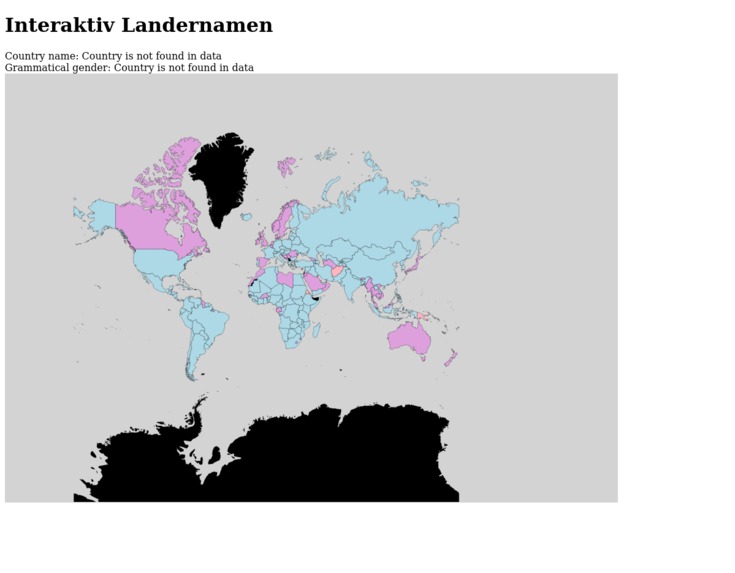
ui capture
Inspiration
I've been studying German and one of the things I find most interesting about the language is its use of grammatical gender. In English, we don't assign any gender when referring to, let's say, the shoe. We just said "a shoe", but in German it would be "der Schuh" to indicate that it's masculine. "Die" would be for feminine and "das" for neuter, likewise. This also applies to countries. Each country falls into one of these three categories (plus an extra one for plural articles).
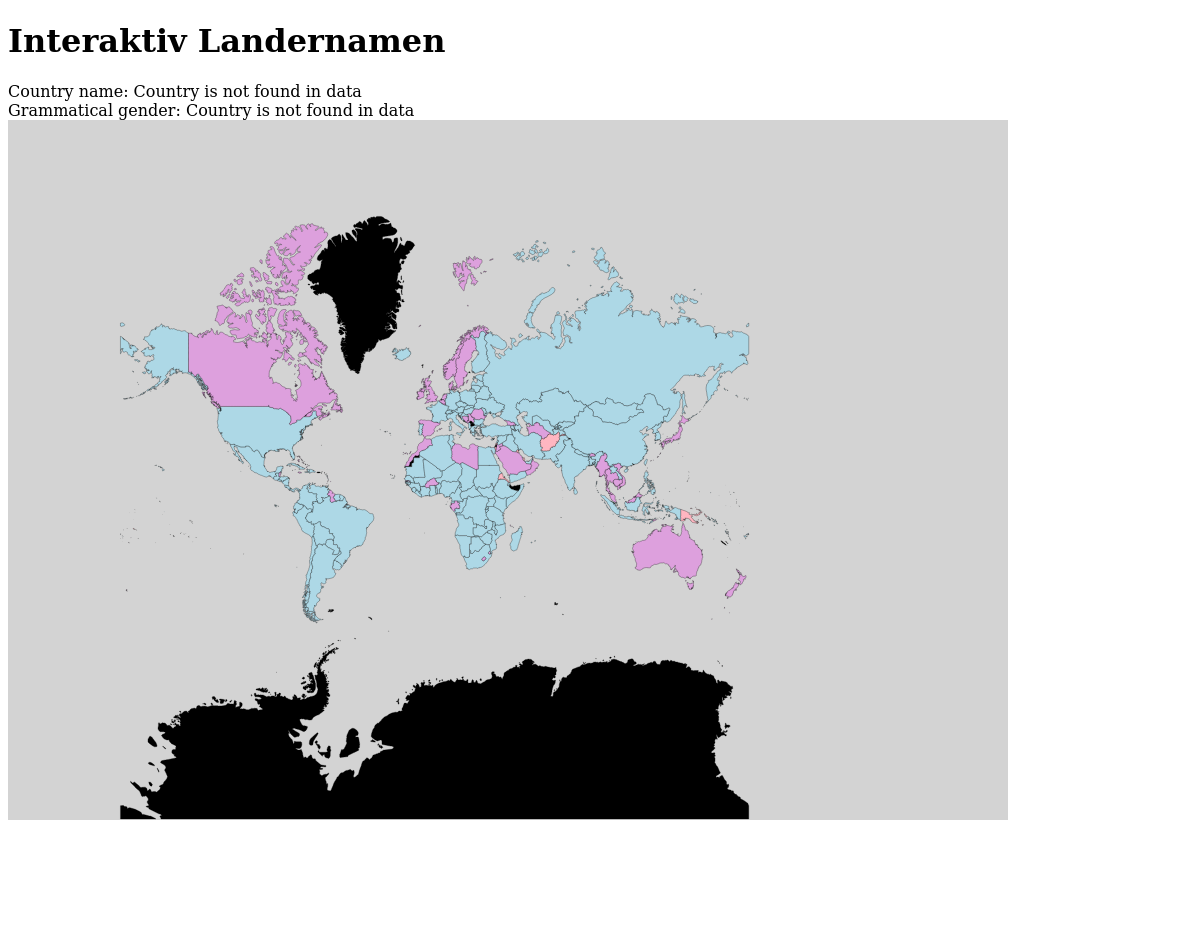
I thought it would be a cool concept to have an interactive web map that would color out the grammatical gender of different countries in German.
What it does
It displays a thematic map showing which grammatical gender each country has, with some interactivity when you hover over a country. There's also a zoom feature.
How we built it
It's a simple static website, no backend or anything. I used the D3.js library for creating the map. Data was collected from an online source via webscraping with Python BeautifulSoup module, and edited manually for missing/incorrect data.
Challenges we ran into
Accomplishments that we're proud of
Learning how to make maps with d3.js!
What we learned
What's next for Interaktiv Ländernamen
German isn't the only language that has grammatical gender (Spanish, French to name a few). This concept can be applied for any language which I will do next.
Right now, the data only contains formal names. The infobox can include more information about the country in reference to the selected language (e.g. what is the nationality called in this language - we are Amerikaner (m), Amerikanerin (f) in German)

Log in or sign up for Devpost to join the conversation.