-
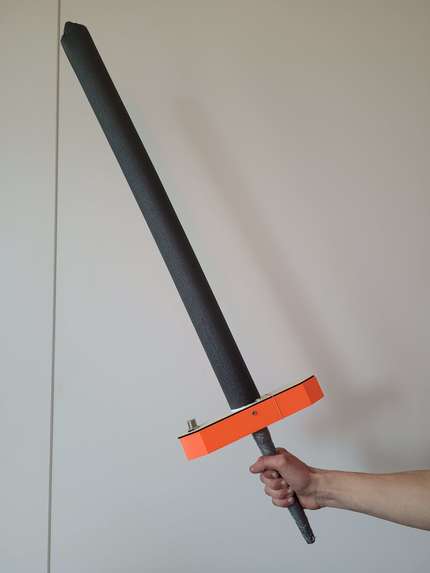
The interactive s(w)ord
-
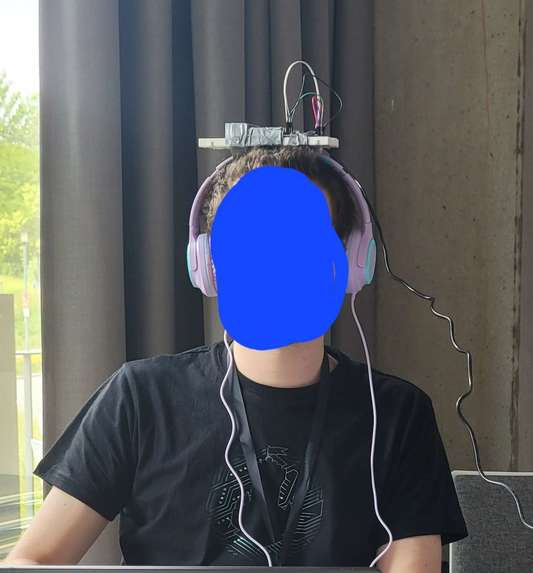
The audio system providing the game environment
Inspiration
The project came to life when we connected the pitch for a toy that functions interactively but without a screen and reliving the fun of using motion control in video games like it is used in the Nintendo Wii and possibly too few other consoles. We think it is important that games including sports and movement are encouraged in kids, teens and players in general, since lots of digital games focus on play that takes place sitting still in front of a desk, Furthermore we were inspired by pitches highlighting accessibility issues. Those would have been our second choice of topic and therefore we decided to design a game that is not dependet on having eyesight, which posed an interesting challenge to us.
What it does
The game provides engaging haptical feedback if the sword is swung (and the mechanic of swinging a sword Fuck yeah!). Our prototype involves an opponent approaching the player in a purely auditive environment. The player then has to reposition to be able to hit the opponent with the sword and if successful receives auditive feedback through a sound effect. Therefore our prototype provides an interesting and movement-encouraging gameplay for the users.
How we built it
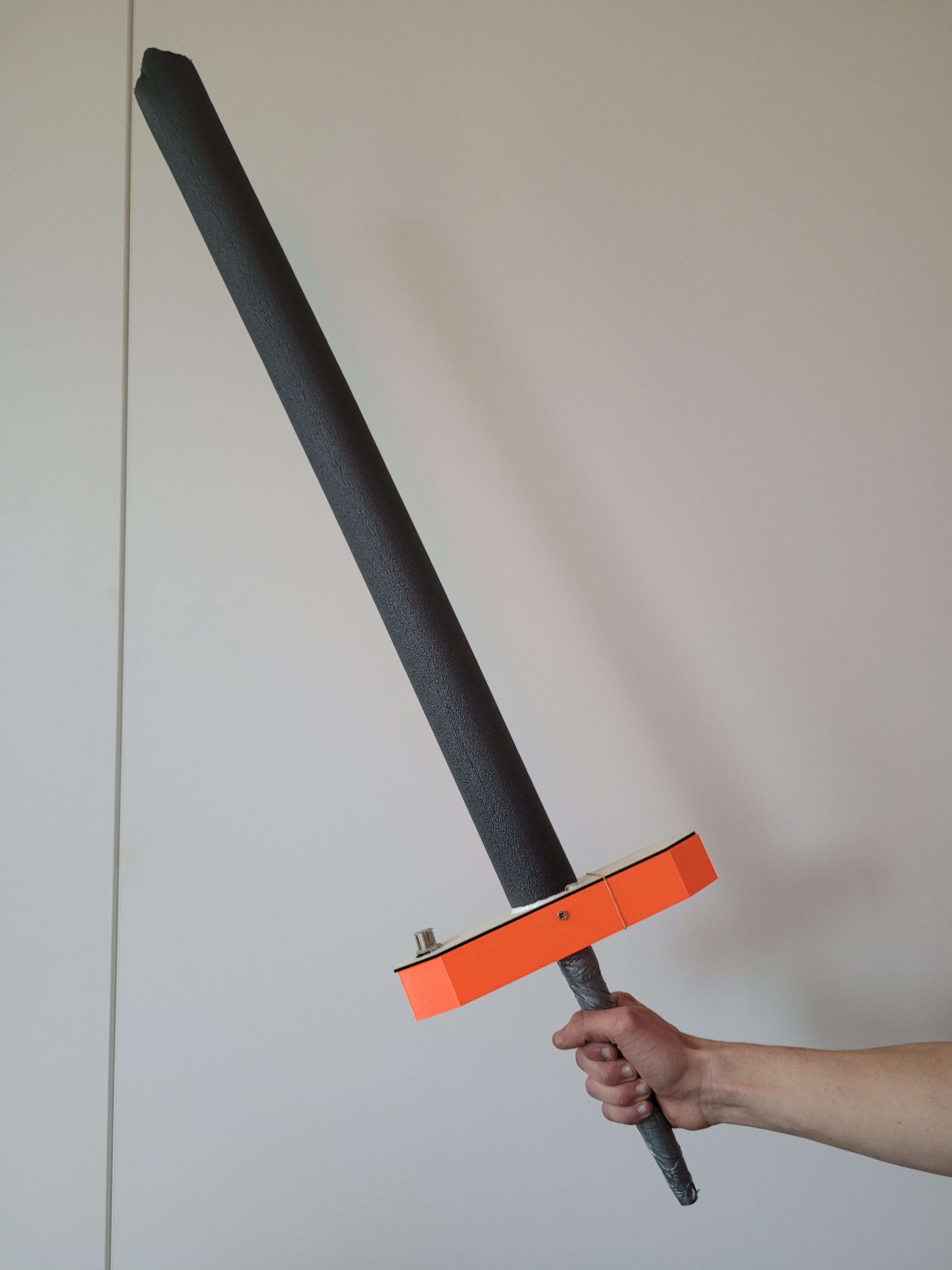
We designed a setup of an ESP8266 microcontroller, a vibration motor, a gyroscopic sensor and a button to be hidden in the crossguard of our prototype sword made of an upcycled broomstick and some foam. Furthermore we made use of a 3D printer to build a crossguard, that fits our needs.
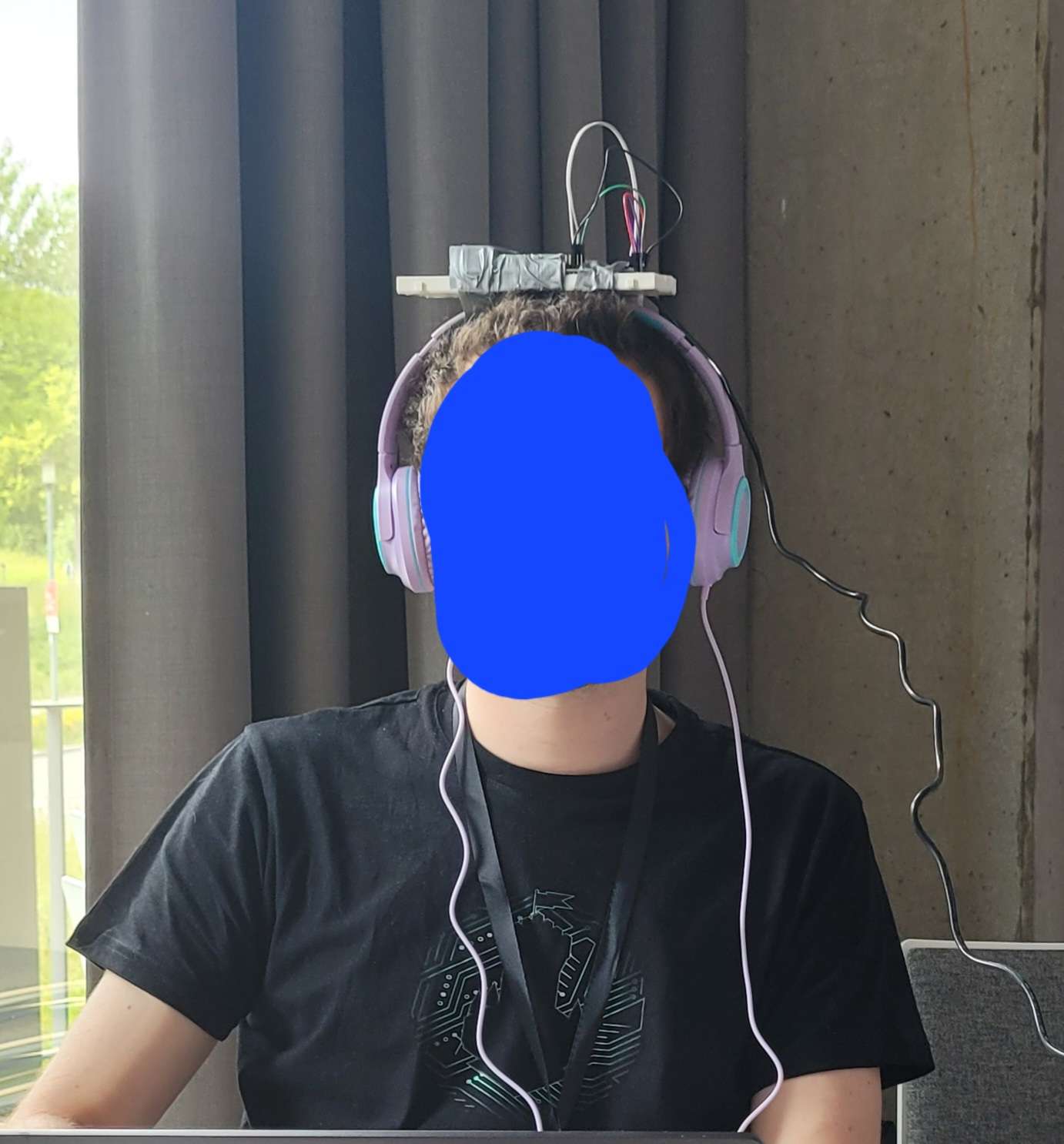
The audio environment is based on a Raspberry Pi 4b connected to another gyroscopic sensor generating spatial audio for the attached headphones. The two components communicate via WiFi.
Challenges we ran into
- Trying to make Unity work on a Raspberry Pi. Unsuccessfully.
- The gyrosensor crashing regularly for no obvious reason.
- Finding and using functioning and compatible libraries for our project requirements and hardware.
- Having too many ideas how to make the project well rounded and enjoyable that couldn't all be implemented.
- Making the crossguard and the electronic robust enough to function inside a moving sword.
Accomplishments that we're proud of
- Somehow making the prototype work after having this many embedded and dependency issues.
- The fact that we compiled the valve audio library on a new platform. (And therefore connected the unconnected library).
- Never having a great team conflict occur.
- To realize our idea in such a short time frame. Even though we were working with many new technologies
What we learned
- To possibly structure the project more in the beginning.
- To test our hardware and possibly hardware libraries before implementing a lot of content for them and then realizing they are to buggy to be fixed and used within the limited time we have during the hackathon.
- To avoid an "ugly-cable-situation" to design a board to put into our prototype.
- A lot about different hard- and software components.
What's next for Interactive-S(w)ord
We had an array of further ideas of what could improve our prototype. Examples include game design concepts such as a variety of enemies and their movement, tracking different types of possible movements with a sword and other types of sensory feedback such as a LED strip illuminating the sword on hit. To encourage exploration of movement we could imagine a system of rewarding combos of movement with a system of scoring points. communicated through a variety of sounds. A more compelling design in general.
Built With
- alsa-(audio-out)
- arduino
- c
- esp8266
- mpu6050
- opengl-glm
- python
- raspberry-pi
- steam-audio


Log in or sign up for Devpost to join the conversation.