-
-
Home Screen
-
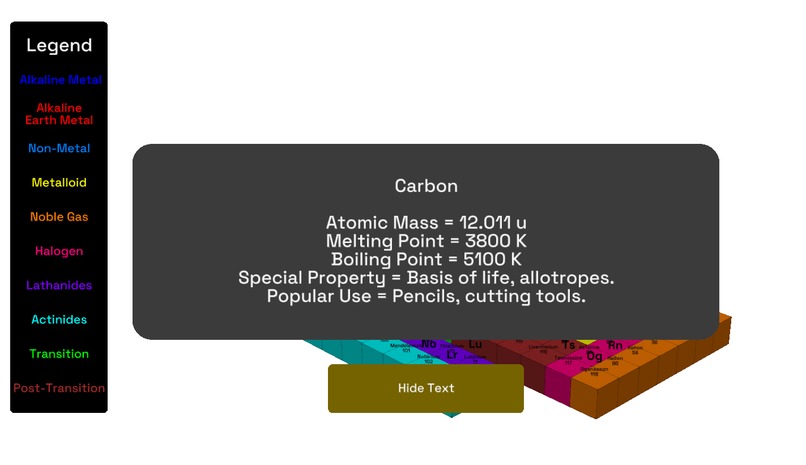
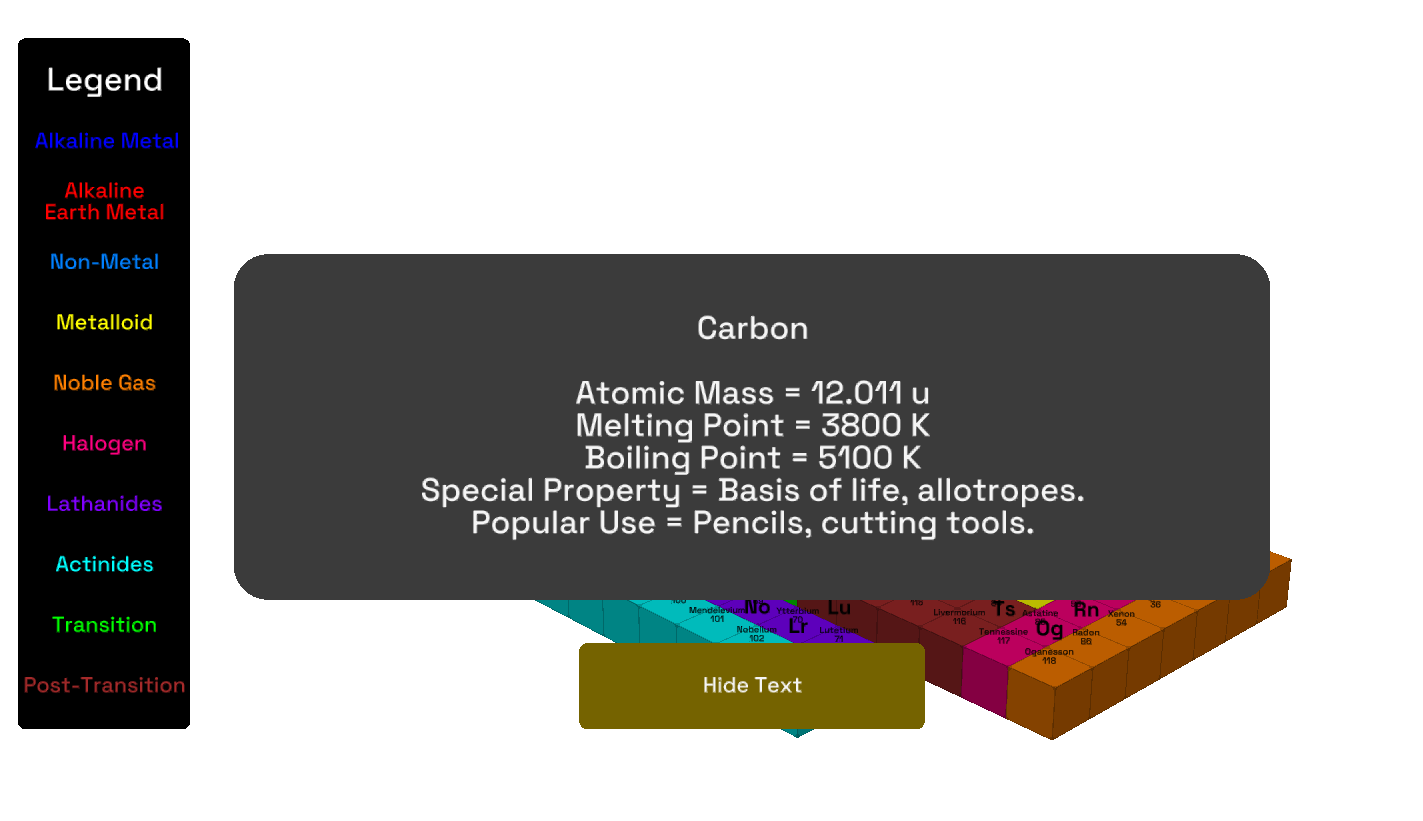
Information Display of An Element (Carbon taken here)
-
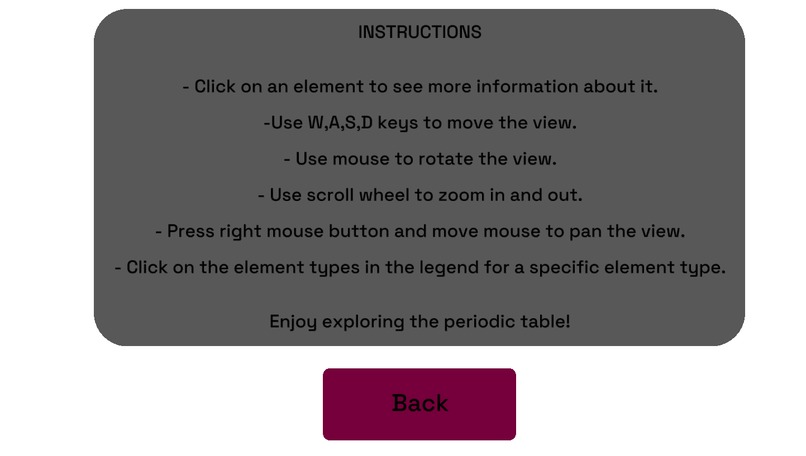
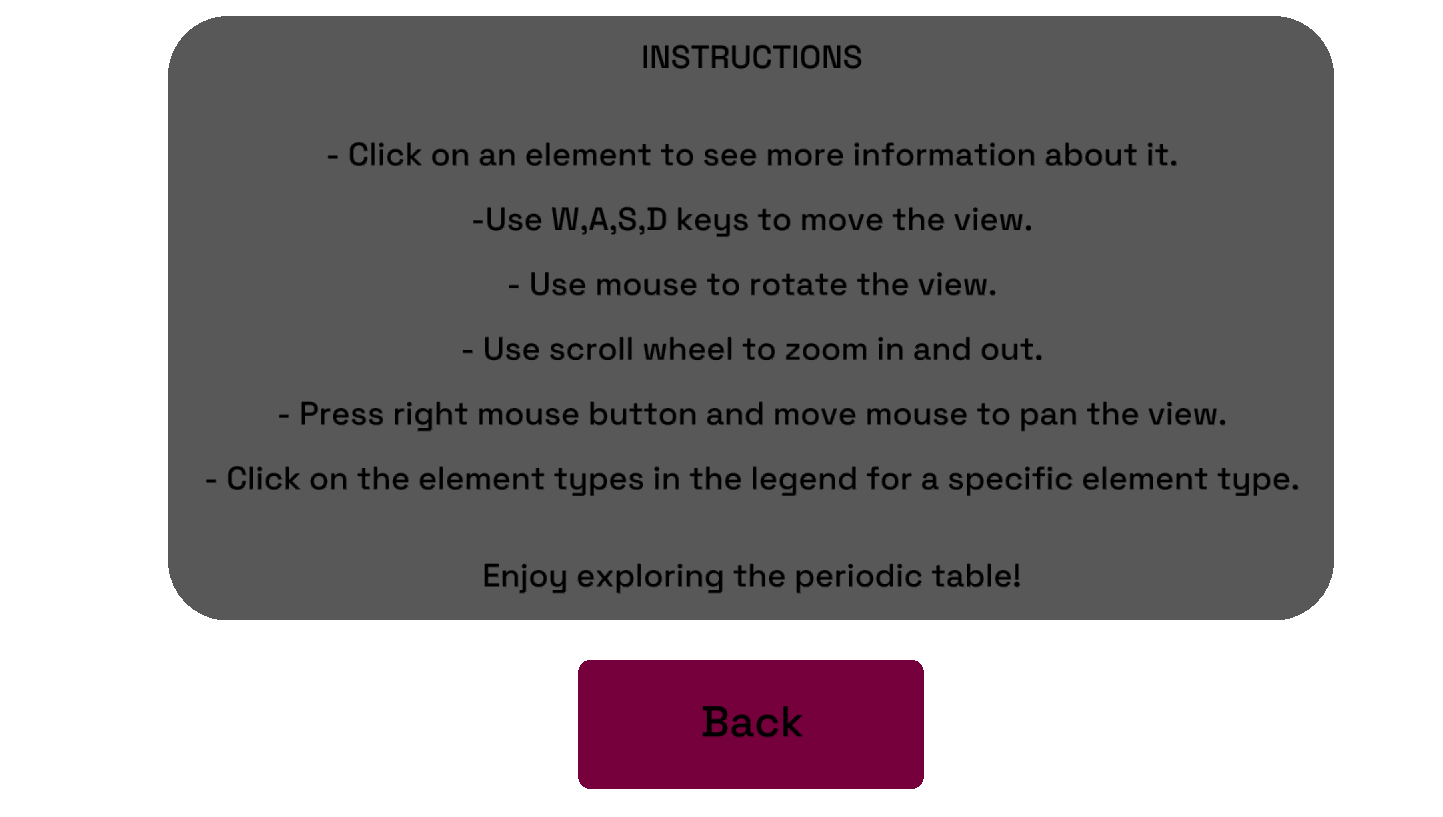
Instructions Menu
-
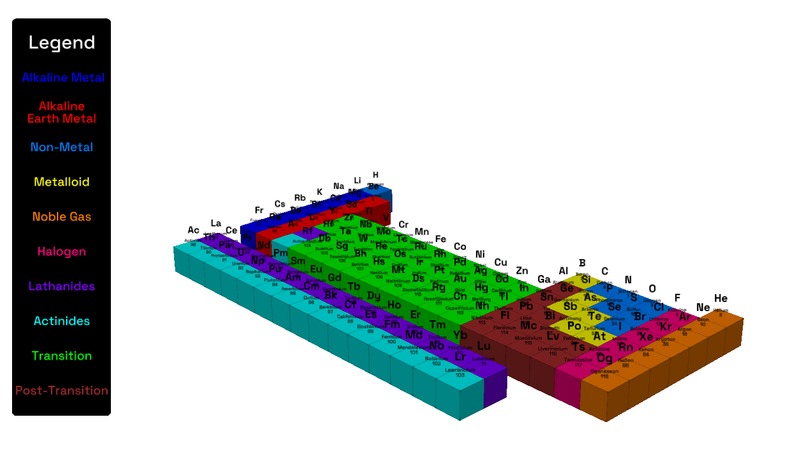
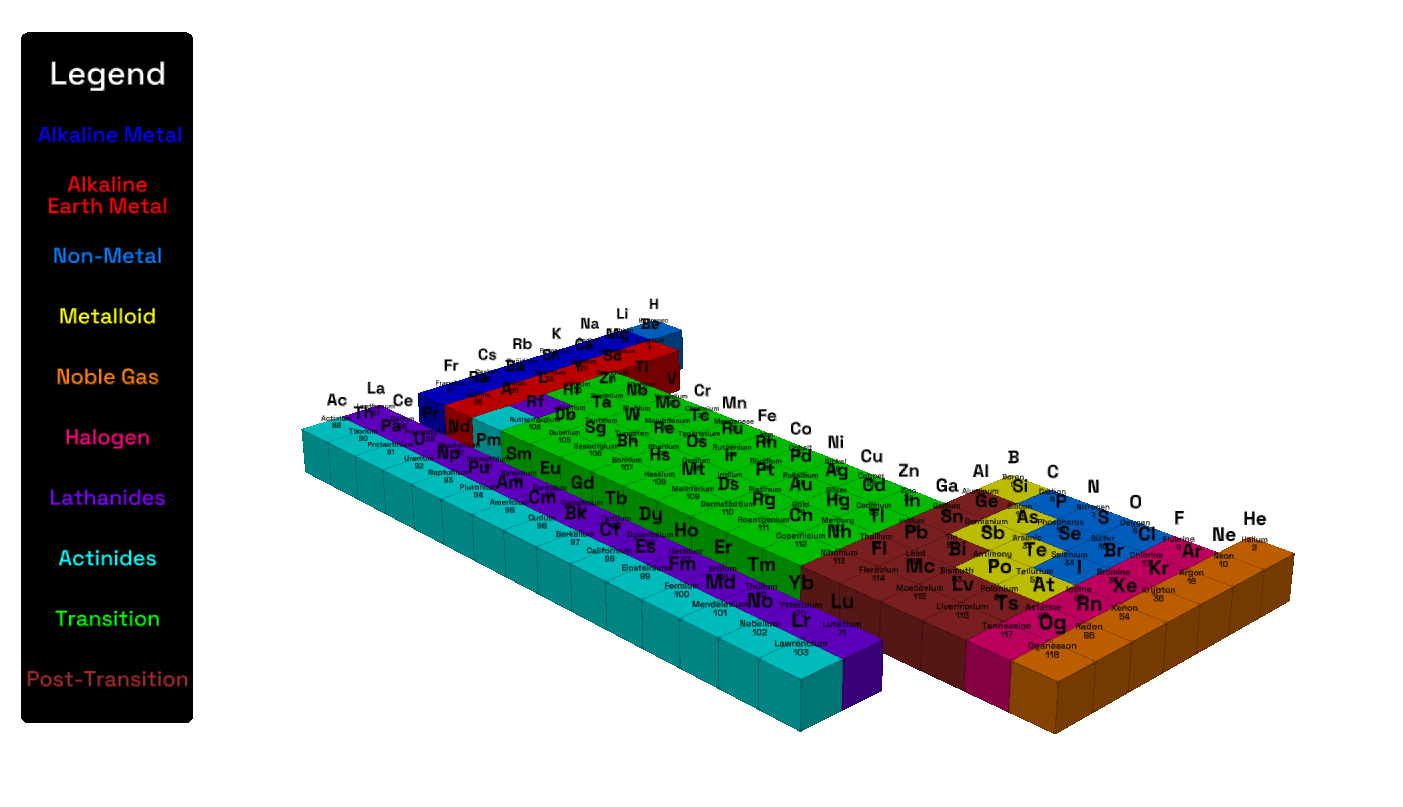
View Of The Periodic Table
Inspiration
There has always been a periodic table beside my study area, seeing the freedom of creating anything, I looked around myself. The period table happened to be the first thing I looked at.
What it does
This is a software which is basically a 3D, explorative software where you can move around and get details of each element.
How I built it
I obviously had to use AI (Gemeni) to generate the lists needed for each element since I couldn't hard code every single one.
The project is made in Python using the Ursina Engine. It is a library made for making 3D games, really easy syntax and I recommend it a lot!
For the positioning of the elements, I used the groups as the X-axis and the Periods as the Y-axis. For the lanthanides and actinides I just made them period number 9 and 10 (left 8 for a clear, legible gap) and started from 1 for the x-axis.
Each element is a cube which when clicked displays the info, the I made the legend both as a reference and a feature for clarity (if you want to see only one type of element once, say Noble Gases).
Challenges I ran into
I am a 10th grader so I did not know much of the information required. 118 elements overwhelmed me at first, I thought of doing it only till Xenon (54). Including the lanthanides and actinides was also challenging at first.
What I am LEARNING from MY project
As previously mentioned I am a 10th grader, for me it is fun to explore in my own software and checking out details of various elements to see their properties and what they are used for.
What's next for Interactive Periodic Table (if it performs well)
I am planning to include 3D models of elements which are display when the user, say hovers upon an element or right clicks on it.
A scroll bar for temperature shifting which simultaneously shows which elements are solid, liquid or gaseous at that particular temperature.
Built With
- python
- ursina

Log in or sign up for Devpost to join the conversation.