-
-
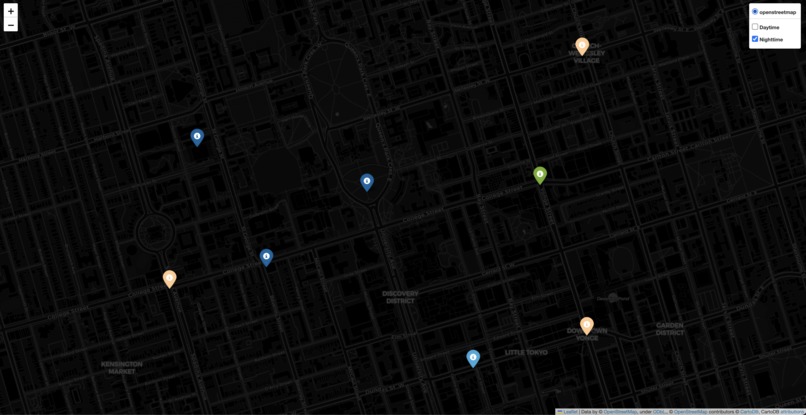
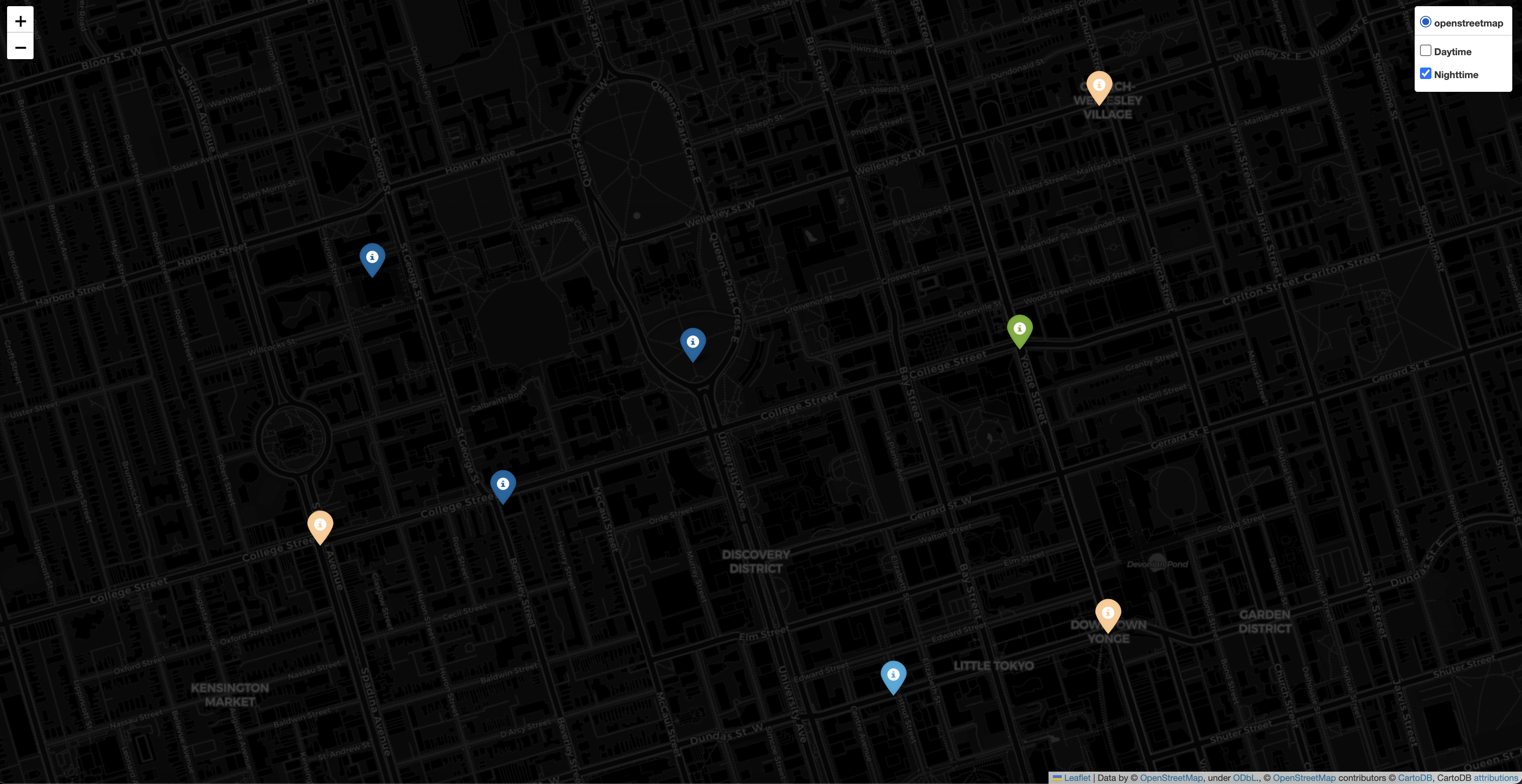
Nighttime Mapping
-
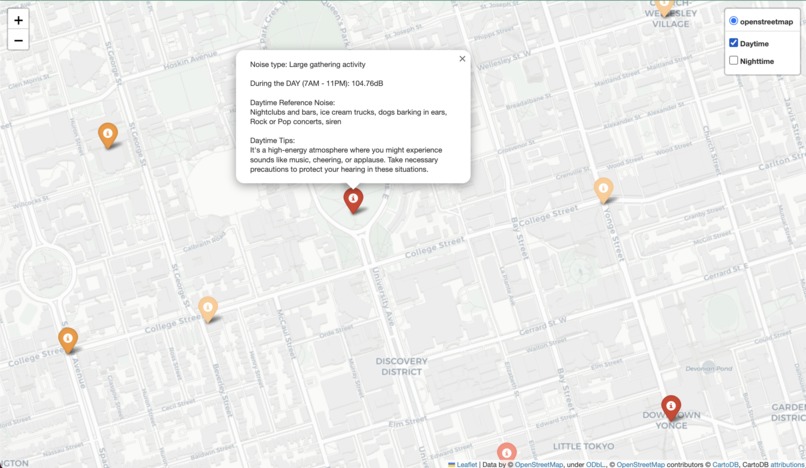
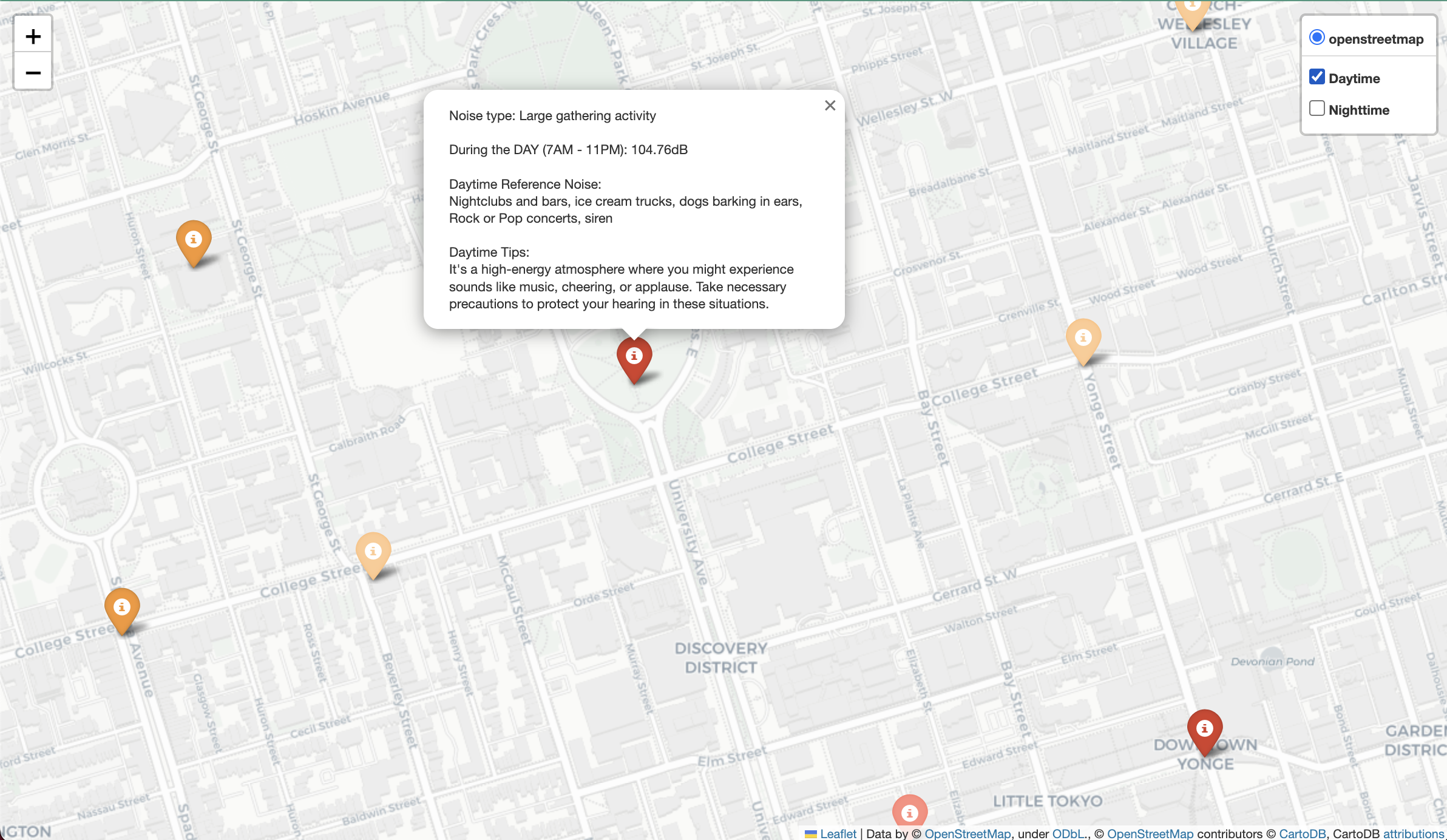
Daytime Mapping + Marker Popup Text Message
Inspiration
The objective of this noise mapping platform is to furnish reliable and actionable acoustic data that architects, urban planners, and local residents can utilize. Our aim is to present a clear picture of the surrounding noise levels within the region. By doing so, we intend to empower stakeholders with the necessary insights to make informed decisions regarding urban design, residential development, and community living spaces.
What it does
Deci-Belles is an innovative noise mapping platform that serves as a valuable tool for understanding the auditory landscape of a specific area. It is designed to inform users about the surrounding noise levels, categorize the types of noise, and provide tailored recommendations based on the data. The platform is equipped with two distinct tabs, offering insights into noise patterns for both daytime and nighttime. This dual-view approach enables users to gain a comprehensive understanding of the acoustic environment at different times, allowing for more informed decision-making, whether for personal comfort or professional planning purposes. Deci-Bells bridges the gap between complex acoustic data and actionable information, making it a resourceful companion for users like residents, architects, and urban planners.
How we built it
Our team commenced with the identification of a pervasive urban environmental issue: noise pollution. Through extensive research, we sought to grasp its multifaceted impact on urban life. Being part of the stakeholder group of this design fuelled our commitment to find a tangible solution. Recognizing the diverse needs and expectations of potential stakeholders was the next step. From architects to residents, our platform aims to serve as a reliable resource for informed decision-making of their interests, such as residency location selection and design requirements. Data collection was the backbone of our project. By deploying advanced data analytics, we transformed raw numbers into valuable insights, offering not just information, but also actionable recommendations. To put every piece together, we developed an intuitive user interface. A highlight of our interactive map is its simplicity and accessibility, allowing even those without technical expertise to effortlessly engage with the platform.
Challenges we ran into
As we navigated the complex process of developing our noise mapping platform, we encountered several significant challenges that tested our resolve and ingenuity. One of the challenges we faced was the intricate task of categorizing the wide spectrum of noise types. Each noise source, from the bustling traffic of city roads to the intermittent disturbances of construction sites, carries its own acoustic signature. Developing a classification system that was both comprehensive and intuitive proved to be a complex endeavour, one that required us to delve deep into the subtleties of acoustic analysis and environmental study. Another critical challenge was ensuring the scalability of our platform. As the volume of our data sets grew, maintaining the platform's performance without degradation was imperative. We needed to design a system robust enough to handle an increasing influx of data points while remaining responsive and user-friendly.
Accomplishments that we're proud of
As newcomers to the hackathon scene, simply crossing the finish line is an accomplishment that fills us with pride. We successfully integrated complex datasets into a user-friendly format, making noise levels and their impacts accessible and understandable to non-experts. Our commitment to user experience has resulted in an intuitive interface that prioritizes ease of use, ensuring that the valuable insights our platform provides are readily available to all users, regardless of their technical background. It is also noteworthy that beyond the direct outcomes of our project, there has been remarkable personal and professional growth among our team members. Lastly, perhaps our most gratifying accomplishment is the potential for our platform to effect real change by influencing noise pollution management and urban planning, contributing to more livable and SMART cities.
What we learned
In the development of our platform, we explored new tools such as the Python library Folium, which empowered us to create interactive maps directly from our data sets. The process of acquiring and processing this data was an enlightening experience, as we navigated the complexities inherent in such tasks. We sourced our data from authoritative entities, such as the Government of Canada, ensuring our information's credibility and relevance. The meticulous process of parsing and cleansing the data encouraged us to retain only the most fitting segments for our platform's needs. Working extensively with noise data taught us that behind every dataset is a story waiting to be told. Data representation goes beyond mere numbers; it's about context, impact, and the lived experiences of individuals in noisy environments. Our work underscored the importance of transforming raw data into meaningful insights that can drive decision-making and affect change. Moreover, the project highlighted the critical role of an iterative design process. With each cycle, we refined our design, incorporating feedback and observations, and adapting our approach. This iterative cycle wasn't just about making changes—it was a learning process that emphasized the importance of flexibility and continuous improvement in technology design.
What's next for Deci-Belles
In the future, we aim to further refine our data categorization processes and enhance our system's infrastructure to support a larger, more dynamic pool of environmental noise data.
Built With
- csv
- excel
- folium
- github
- google-colab
- html
- python
- visual-studio

Log in or sign up for Devpost to join the conversation.