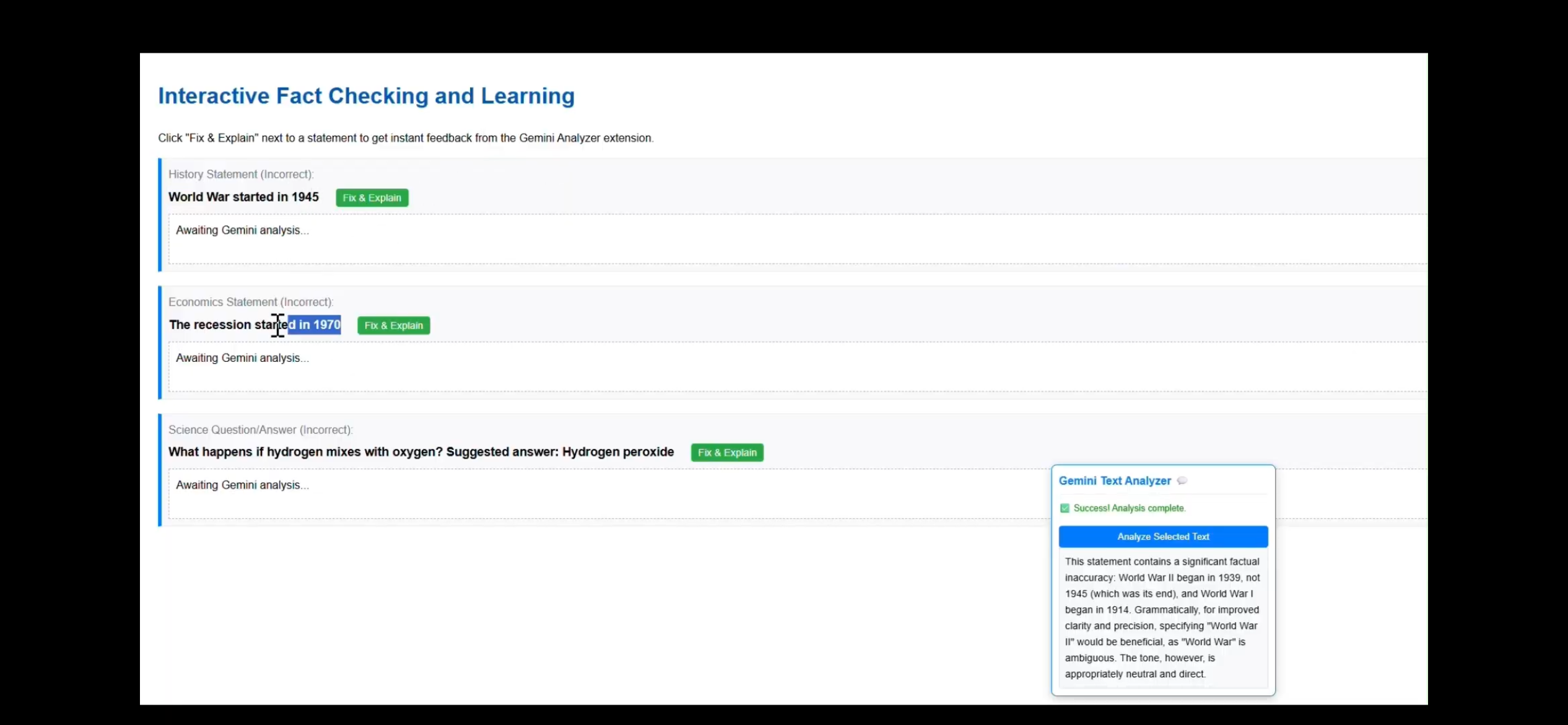
Empowering Every Child to Learn Smarter with AI That Personalizes Education and Inspires Curiosity What Inspired Me The idea was born from watching students in my community struggle with one-size-fits-all learning. Some students raced ahead while others felt left behind, losing confidence and curiosity along the way. I wanted to build something that could adapt to each child’s pace, strengths, and interests—just like a personal tutor who understands how they learn best. That vision inspired me to explore how AI could make education more inclusive, engaging, and empowering. What I Learned Throughout this journey, I learned that education isn’t just about delivering information—it’s about understanding learners. I discovered how data-driven insights can help identify learning gaps, how adaptive algorithms personalize content, and how ethical design ensures fairness and accessibility. I also deepened my technical skills in AI model integration, user experience design, and backend development while learning the importance of empathy in technology. How I Built My Project I began by designing an AI-driven learning platform that personalizes study recommendations and interactive exercises based on each student’s progress. Step 1: I collected open-source educational datasets and used them to train a recommendation model that identifies skill levels. Step 2: I integrated natural language processing (NLP) to let students ask questions and receive AI-generated explanations in simple, age-appropriate language. Step 3: I built a gamified dashboard using React and Python Flask, allowing students to set goals, track achievements, and explore new topics through curiosity-based challenges. Step 4: I tested it with students of different ages and refined the system based on feedback to ensure the AI responded with encouragement and personalized support. Challenges I Faced The biggest challenge was balancing personalization with fairness. I had to make sure the AI didn’t reinforce biases or label students by performance too early. Technical challenges included optimizing the model for limited computing resources so it could run smoothly on school devices. Another challenge was ensuring the AI explanations were accurate and encouraging—helping students feel confident, not corrected. The Impact Seeing students light up when the AI adapted to their needs was the most rewarding part. Some who struggled with math started exploring new problems out of curiosity, while others discovered topics they’d never have chosen before. It showed me that AI can do more than teach—it can inspire.
Built With
- gemini
- javascript
- summarizer

Log in or sign up for Devpost to join the conversation.