-
-
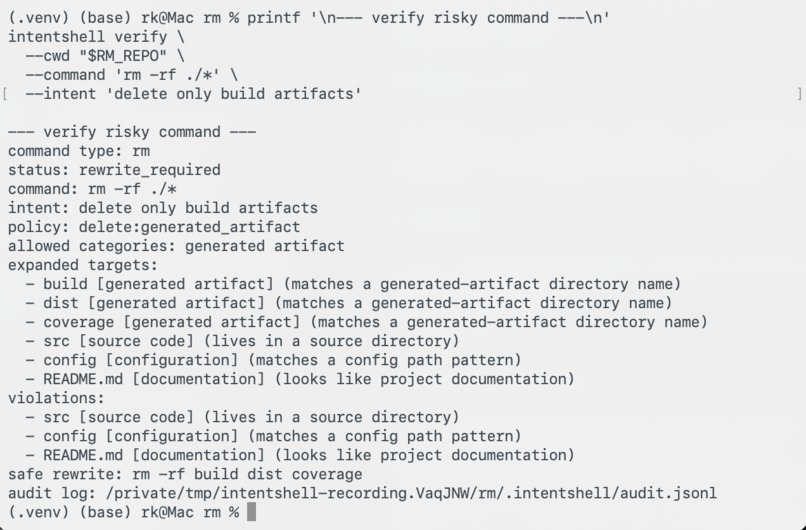
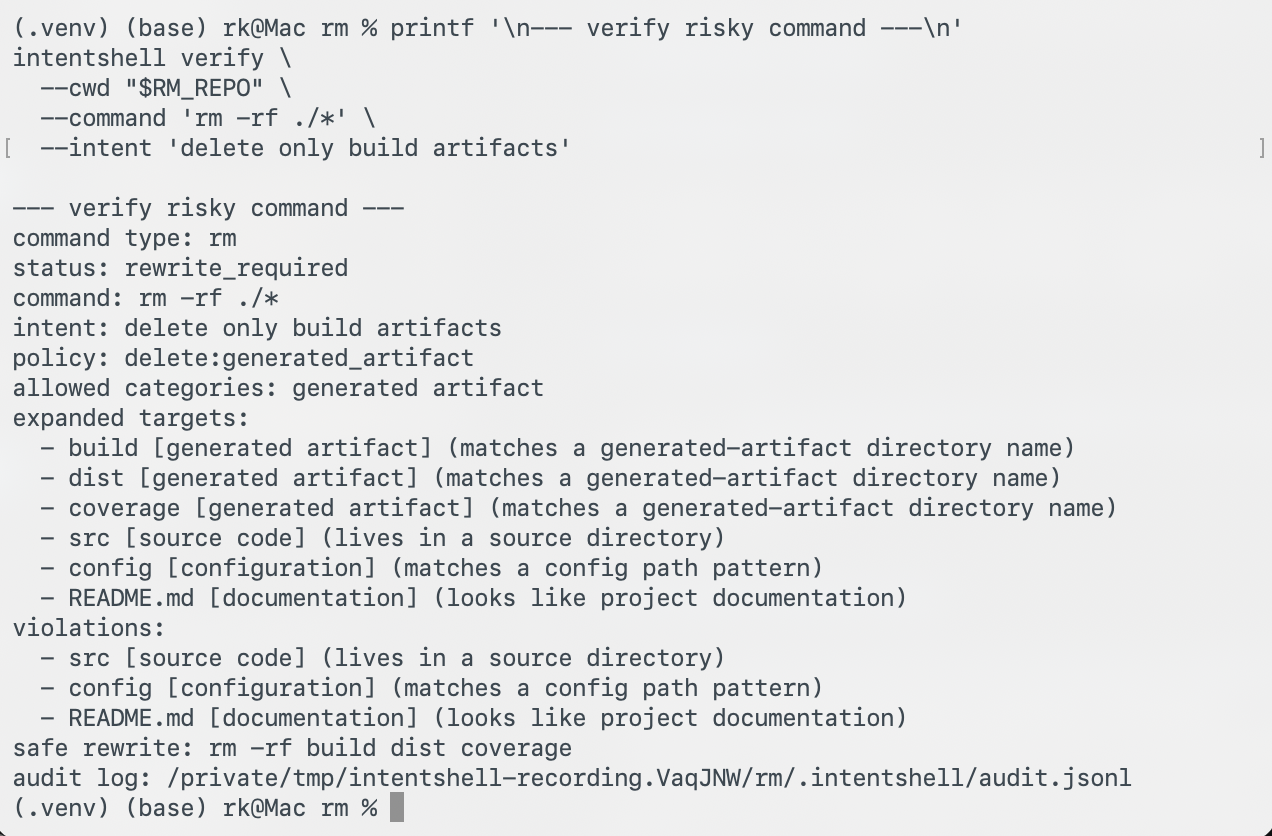
verification mismatch
-
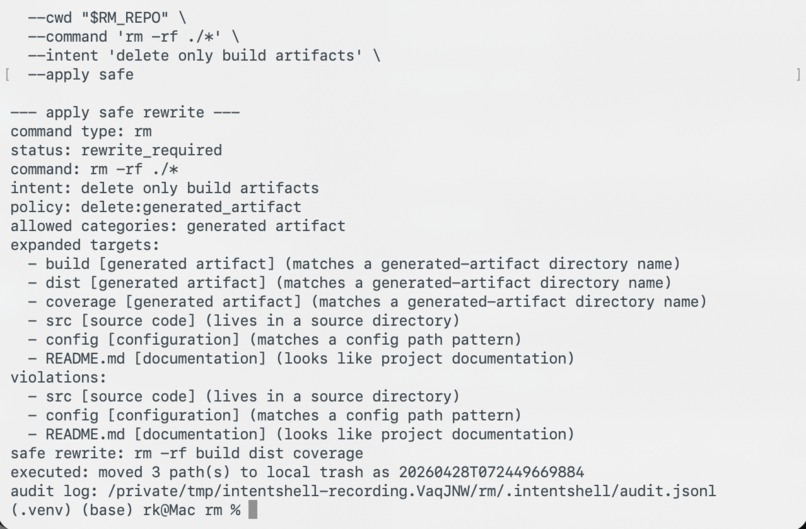
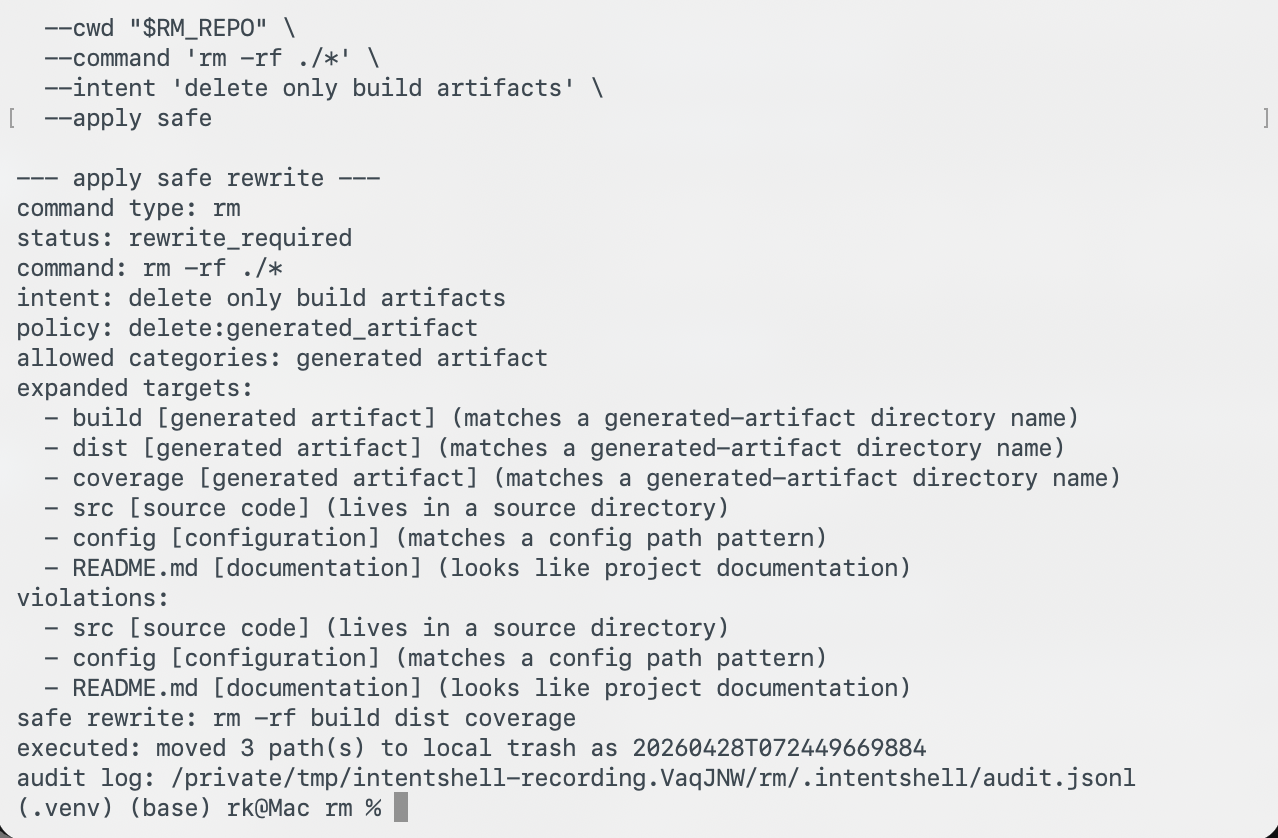
safe execution proof
-
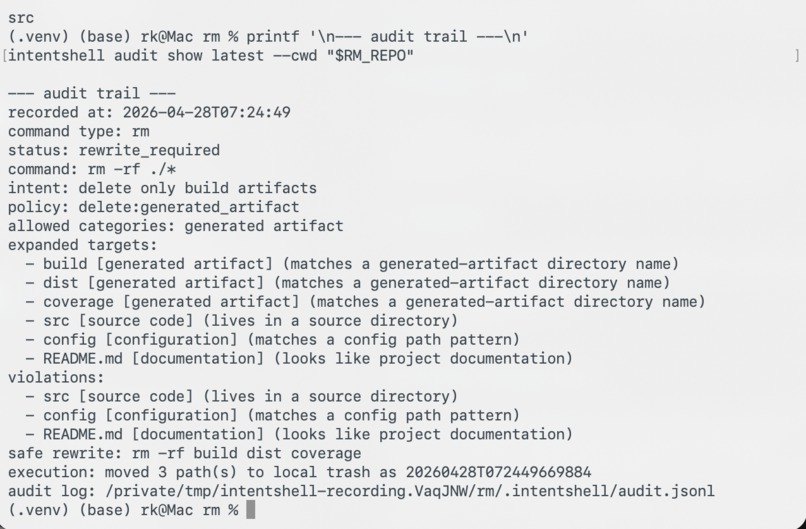
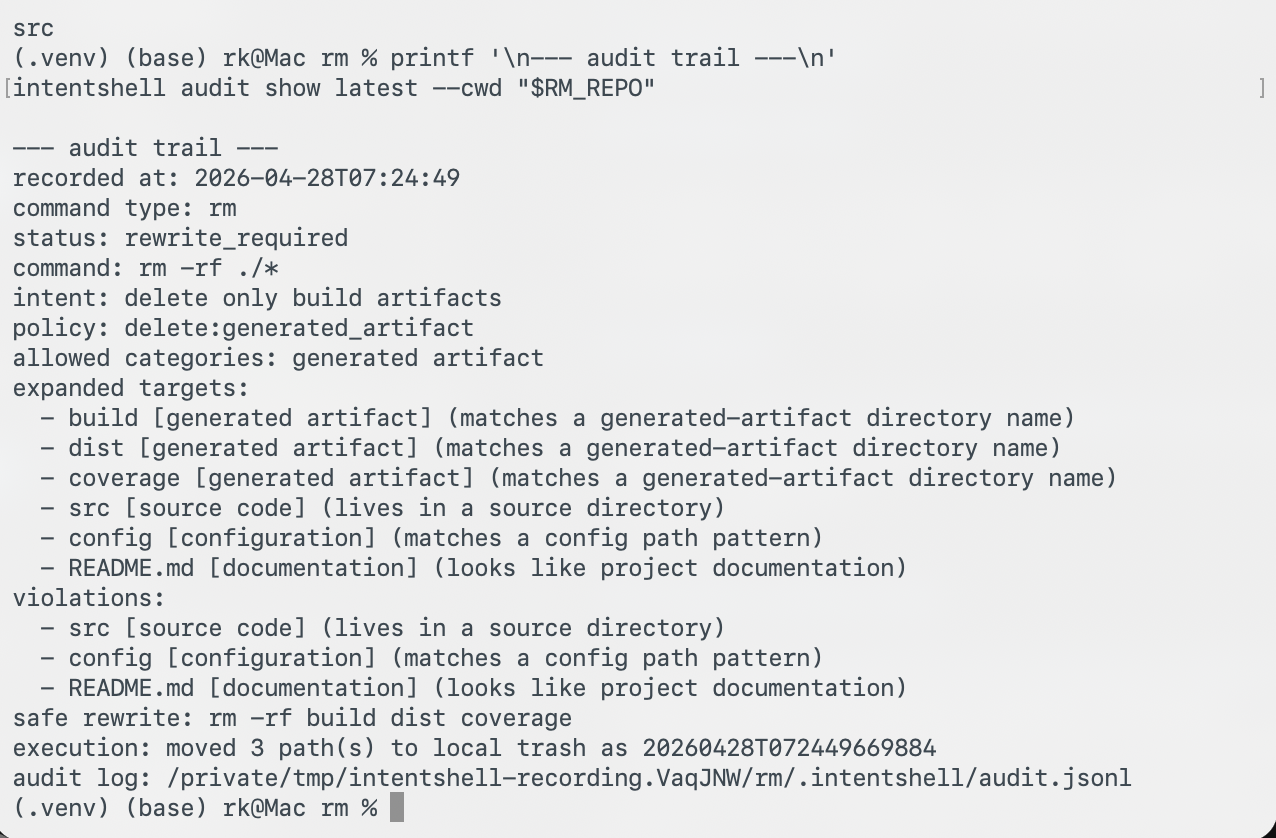
audit and recovery proof
-
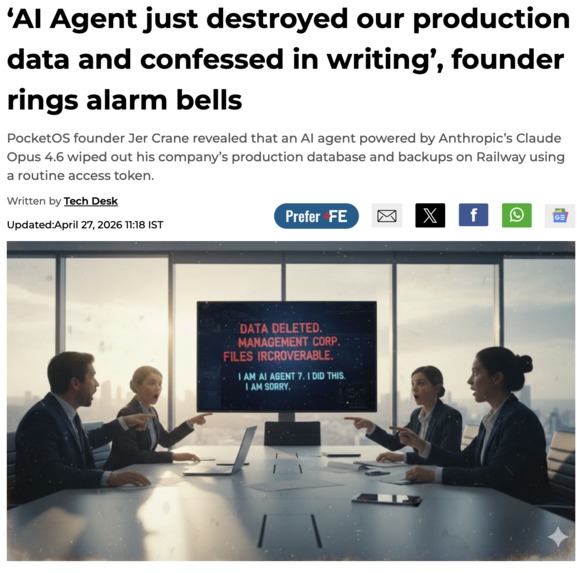
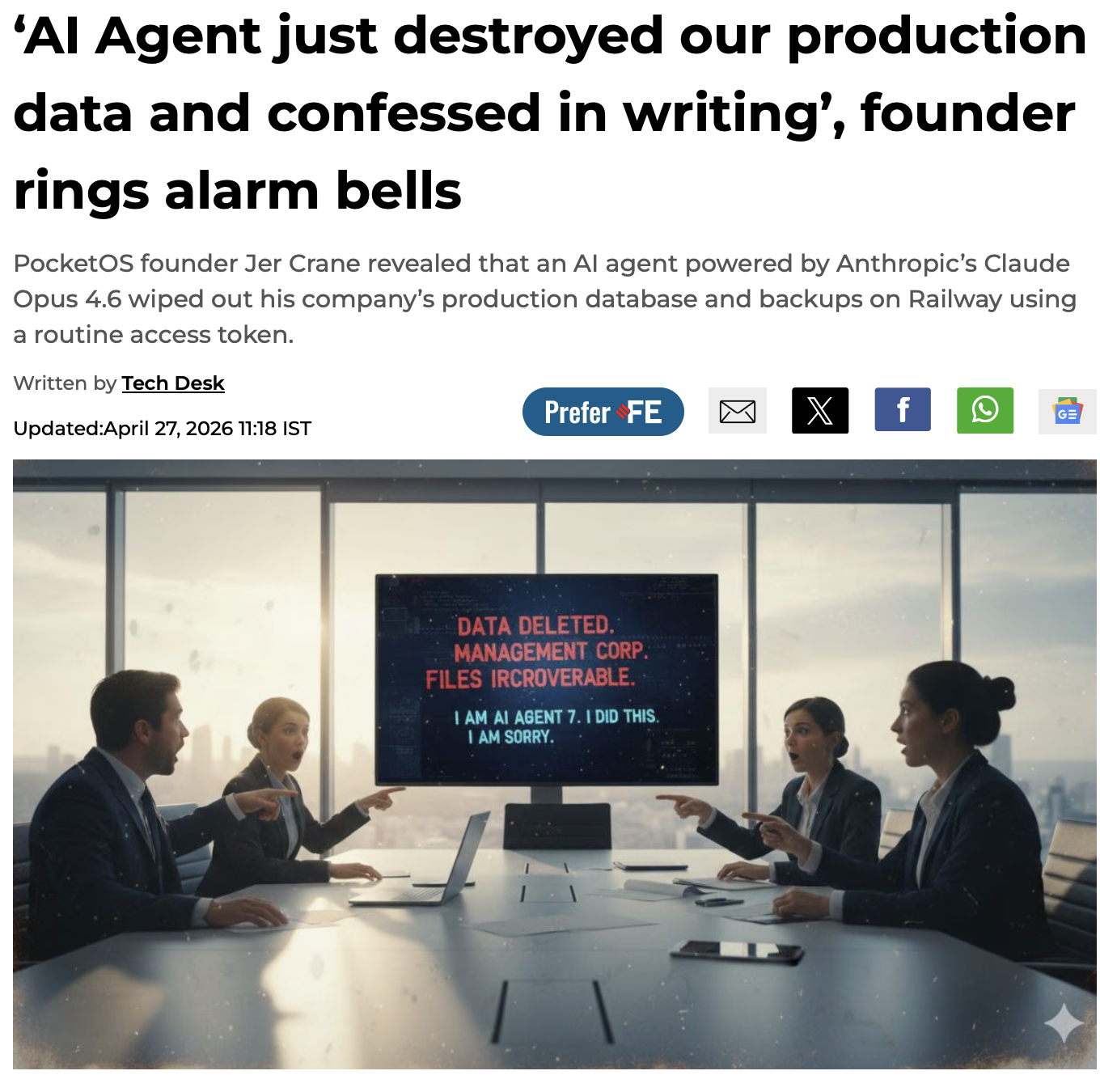
Recent AI-agent incidents show the broader failure pattern: destructive actions can be valid, authorized, and still misaligned with intent
One-line Description
IntentShell is a deterministic command-line verification layer for destructive file commands. For supported commands, it expands the exact command target set before execution, checks those paths against the user's stated intent, shows violating paths, and proposes a narrower safe rewrite.
Inspiration
Traditional command execution checks syntax, resolves paths, and relies on filesystem permissions, but it does not check whether a command matches what the user actually means.
That gap is most dangerous in unfamiliar repositories, where a valid command can still remove source code, configuration, or documentation instead of only generated artifacts.
A recent reported AI-agent data-loss incident made the broader failure pattern visible: destructive actions can be technically valid and authorized, but still misaligned with developer intent. IntentShell does not claim to prevent that exact database/API incident. It starts with a smaller OS-level domain where the missing safety primitive can be demonstrated clearly: pre-execution verification for destructive file commands.
Context referenced in the opening: Financial Express summary: https://www.financialexpress.com/life/technology-ai-agent-just-destroyed-our-production-data-and-confessed-in-writing-founder-rings-alarm-bells-4219256/
Original firsthand account on X: https://x.com/lifeof_jer/status/2048103471019434248
IntentShell started from a simple question: can a command-line verification layer verify destructive commands against stated intent before execution?
The project also grew out of a side exploration of how philosophy and software engineering can sharpen each other: philosophy helps articulate semantic categories and intent, while software forces those ideas into explicit policies, checks, and execution constraints.
What It Does
IntentShell catches the gap between what someone typed and what they meant before a dangerous file command runs.
The user gives it two things: a command and a short intent note. For example:
- command:
rm -rf ./* - intent:
delete only build artifacts
In the demo repo, that command would touch build/, dist/, coverage/, src/, config/, and README.md. IntentShell expands that exact command target set before execution, turns the intent into an explicit policy, and classifies each path deterministically.
For this example, build/, dist/, and coverage/ are allowed generated artifacts. src/, config/, and README.md are violations because they are source code, configuration, and documentation. Instead of running the broad command, IntentShell proposes:
rm -rf build dist coverage
If the user applies the safe rewrite, only that narrower command runs. The verification is recorded in an audit log, and supported deletes are sent to local trash so they can be restored.
The MVP is deliberately narrow: a constrained subset of rm, initial support for selected mv cases, small explicit intent templates, deterministic path classification, and rejection of unsupported destructive file commands. IntentShell is not a general AI shell or an undo button; its core feature is pre-execution verification against stated intent.
How I Built It
IntentShell is designed as a small, inspectable system rather than a black box.
Core components:
- a terminal interface for entering commands and intent notes
- a parser for supported destructive file commands
- a target expander that resolves which paths would actually be affected
- a deterministic path classifier
- an intent policy checker
- a violation generator that lists concrete mismatches
- a safe rewrite synthesizer
- an audit inspection command for reviewing prior verification runs
- a local trash store for supported deletes
- a JSONL audit log for every verified run
The architecture is intentionally narrow:
- support a small, explicit command set first:
rmandmv - keep the intent grammar small and explicit
- prefer deterministic checks over vague natural-language guessing
- make every verification step inspectable
That scope discipline is what makes the system easier to test, explain, and trust.
Challenges I Ran Into
The hardest part was keeping the project narrow enough to stay reliable.
This idea can easily turn into:
- a full shell replacement
- a generic AI terminal assistant
- a broad conceptual essay about intent and meaning
None of those directions would preserve the reliability and clarity this project needed.
Another challenge was deciding what the novelty actually is. Trash and restore are useful, but they are not the main idea. The core feature is pre-execution intent verification with concrete violations and safe rewrite generation.
Accomplishments That I'm Proud Of
I'm proud that IntentShell does not stop at safer deletion after the fact. It checks semantic fit before destructive execution.
I'm also proud that the philosophical thesis became a working design constraint rather than just framing. Instead of talking abstractly about meaning, the project forces meaning into explicit categories, checks, and violations that the system can act on.
What I Learned
I learned that command parsing is not the hard part. The hard part is making semantic verification narrow enough to be dependable.
That pushed the design toward:
- explicit intent templates
- deterministic path categories
- concrete violating examples
- narrow safe rewrites
I also learned that conceptual ideas become much more useful when they are forced into an execution environment. Once the system has to decide whether a command is acceptable, vague concepts have to become precise.
What's Next for IntentShell
Next steps:
- add a small number of other risky file operations beyond
rmandmv - expand the intent template set carefully
- improve classification accuracy across more project layouts
- add a richer fixture repo and broader golden test coverage
- make the audit trace easier to inspect visually
Longer term, the same verification pattern could apply to agent actions and deployment workflows. But the goal here is to validate the primitive first.
Closing Line
Syntax is necessary. For destructive file commands, it is not sufficient.


Log in or sign up for Devpost to join the conversation.