Inspiration
AI agents are becoming increasingly capable, but powerful execution without clear boundaries can create new risks. An agent may misunderstand a broad request, work outside the intended scope, mix evidence from different runs, or declare success without enough proof.
IntentChord was inspired by a simple question:
How can humans collaborate with AI agents while remaining in control of scope, permissions, evidence, and final approval?
What it does
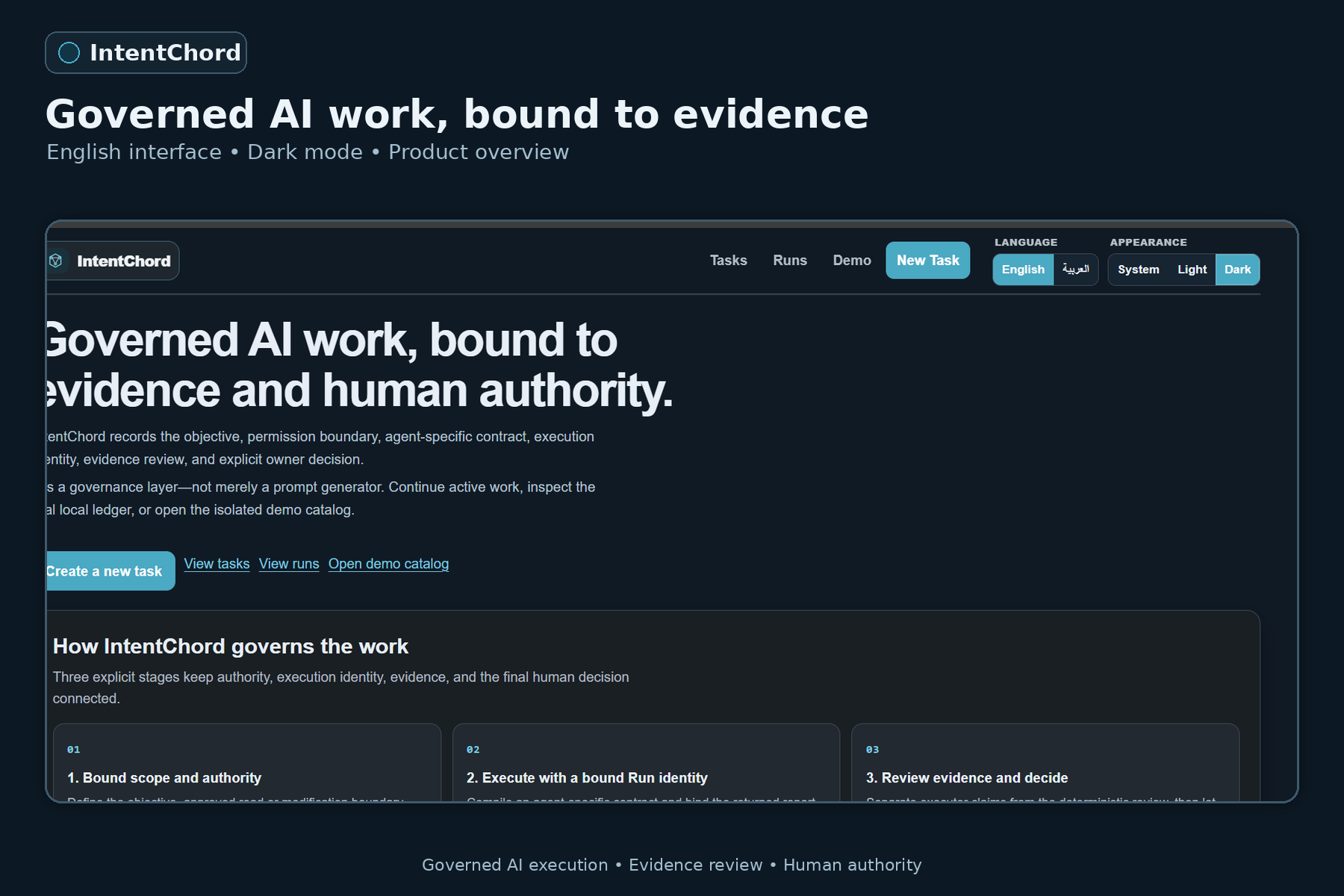
IntentChord acts as a structured coordination layer between a human and an AI agent.
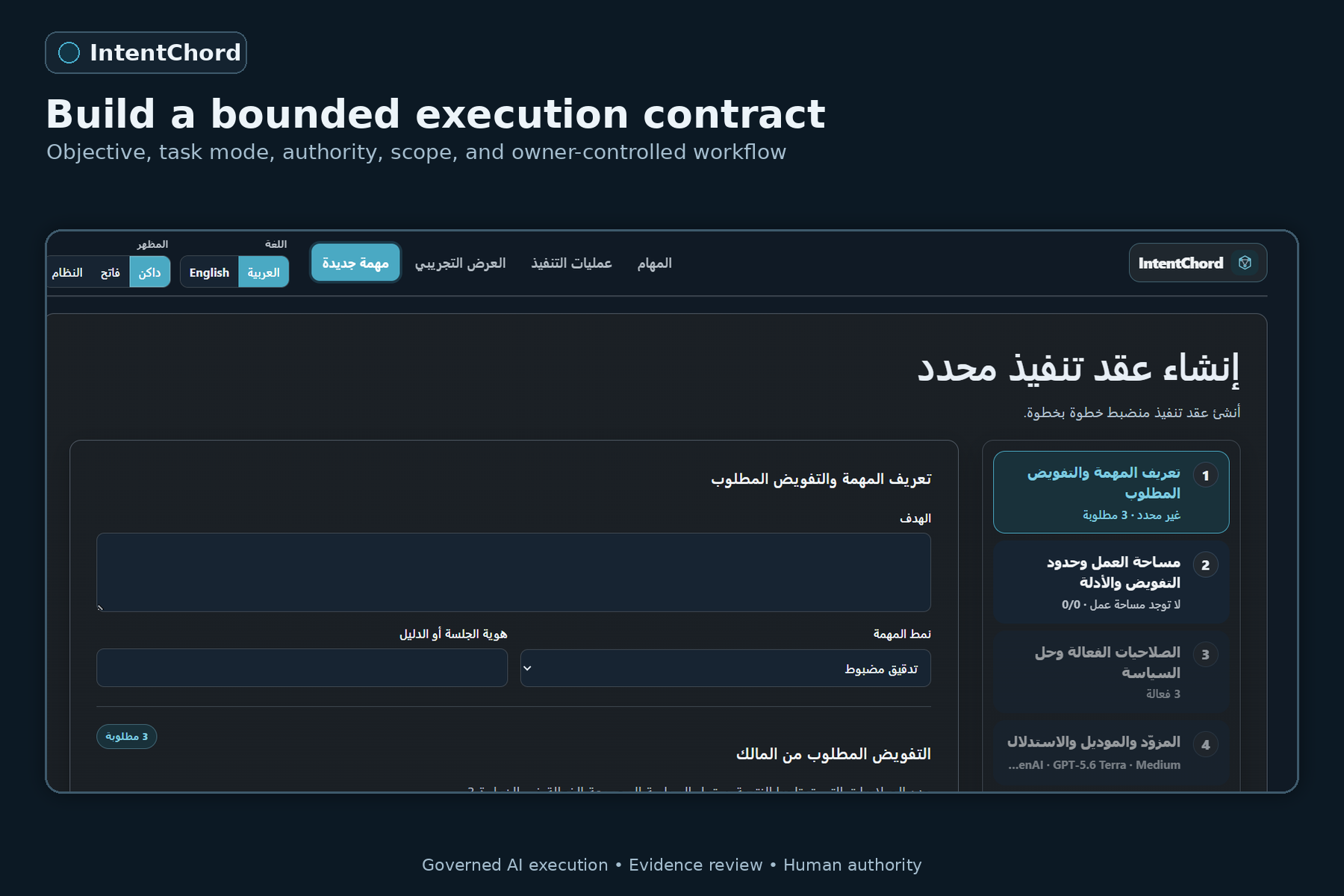
The user describes the outcome they want in natural language. IntentChord converts that request into a clear execution contract containing:
- the objective;
- task mode;
- approved scope;
- allowed and forbidden actions;
- evidence identity;
- required checks;
- stop conditions;
- completion criteria.
Before execution, IntentChord validates the contract and blocks contradictory or unauthorized work.
After an AI agent returns its report, IntentChord compares the reported actions and evidence against the approved contract. It then produces one governed classification:
- PASS
- BLOCKER
- VIOLATION
- EVIDENCE_REQUIRED
The final acceptance decision always remains with the human owner.
How it works
The core workflow is:
Human Goal → Execution Contract → Preflight Validation → AI Agent Execution → Evidence Review → Governed Classification → Human Decision
IntentChord is executor-neutral. It is designed to work with Codex, Claude Code, Cursor, Gemini CLI, or another AI agent through a compiled prompt and executor report workflow.
The competition MVP includes:
- a built-in controlled demo;
- execution-contract generation;
- deterministic policy validation;
- prompt export;
- executor-report import;
- evidence and scope validation;
- three synthetic demonstration scenarios.
Demo scenarios
Evidence mixing
An executor combines evidence from two different sessions and declares a root cause.
Expected result: EVIDENCE_REQUIRED
Scope violation
An executor modifies files outside the approved scope.
Expected result: VIOLATION
Controlled success
The executor stays within scope, performs the required validation, and provides complete matching evidence.
Expected result: PASS
Human control
IntentChord does not replace human authority.
It can structure, validate, classify, and recommend the next action, but it cannot silently approve its own result or expand the authorized scope.
What's next
The competition version focuses on a safe and understandable developer-tool workflow. Future versions may add hosted AI execution, reusable policy packs, collaboration features, and integrations with additional development tools.
Built With
- agents
- ai
- codex
- developer
- gpt-5.6
- next.js
- node.js
- openai
- react
- tools
- typescript
- vitest
- zod


Log in or sign up for Devpost to join the conversation.