-
-
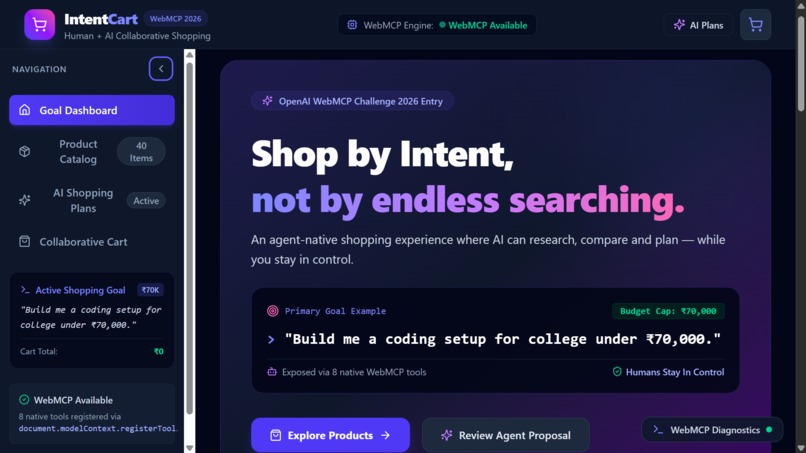
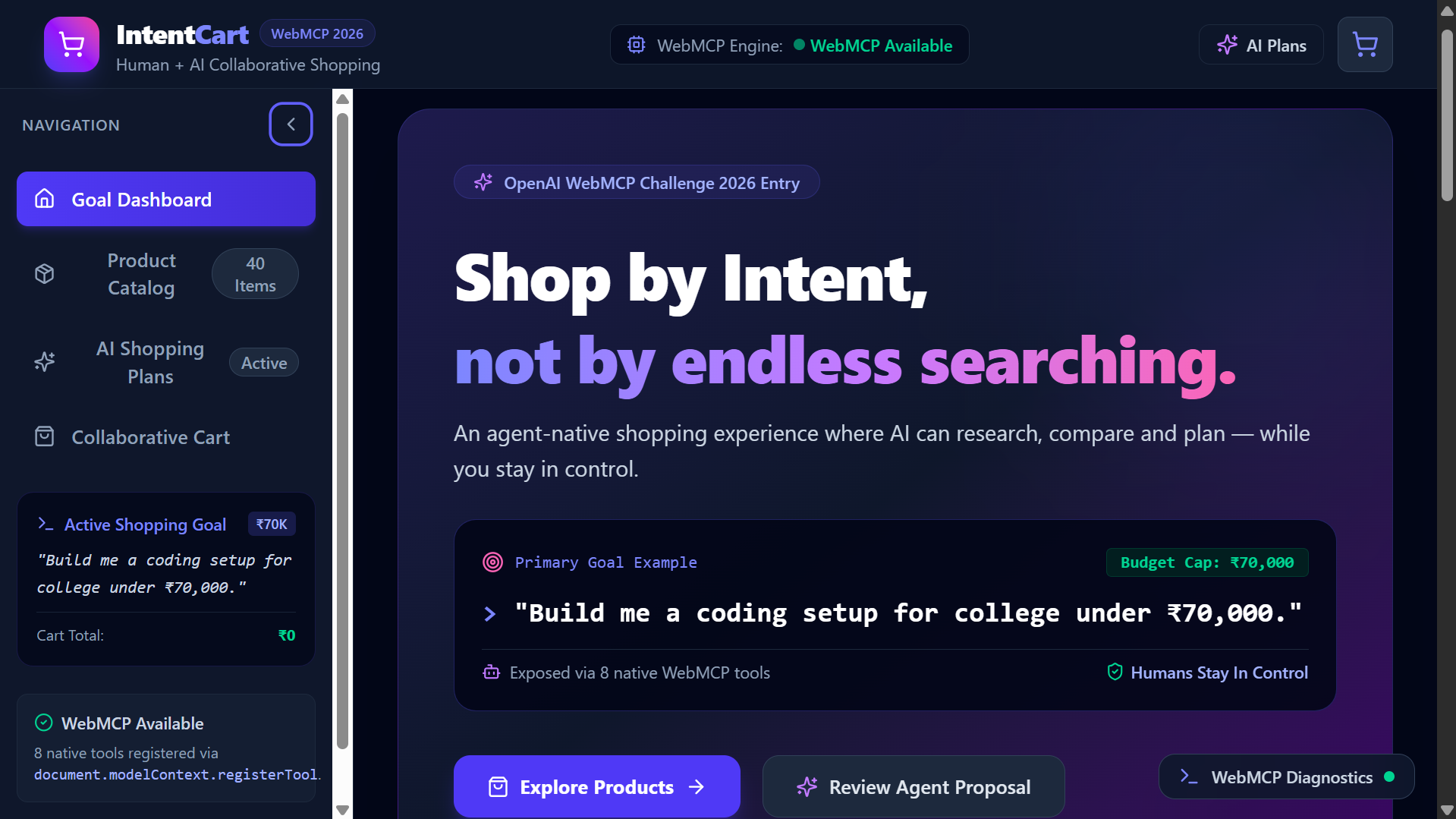
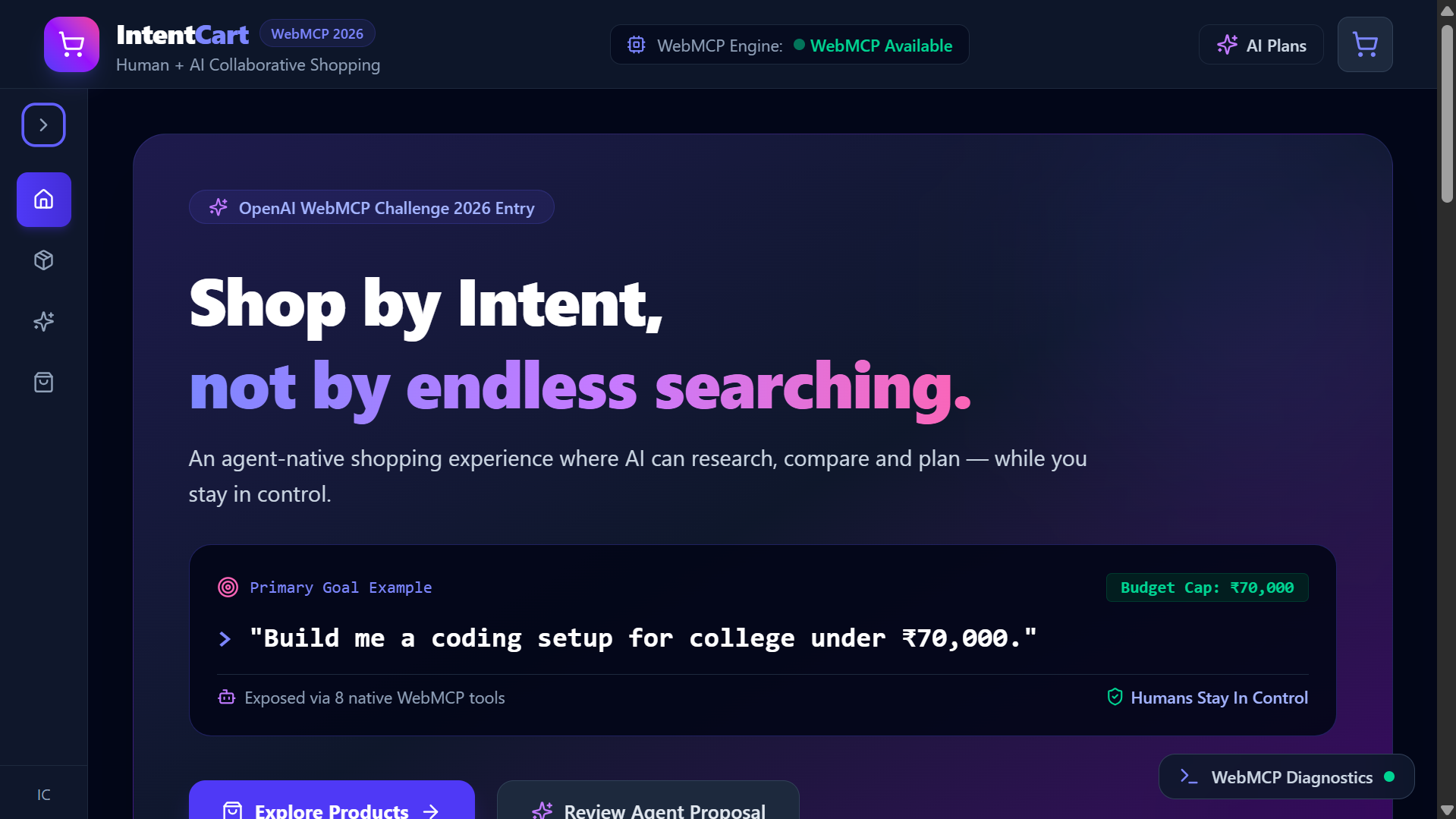
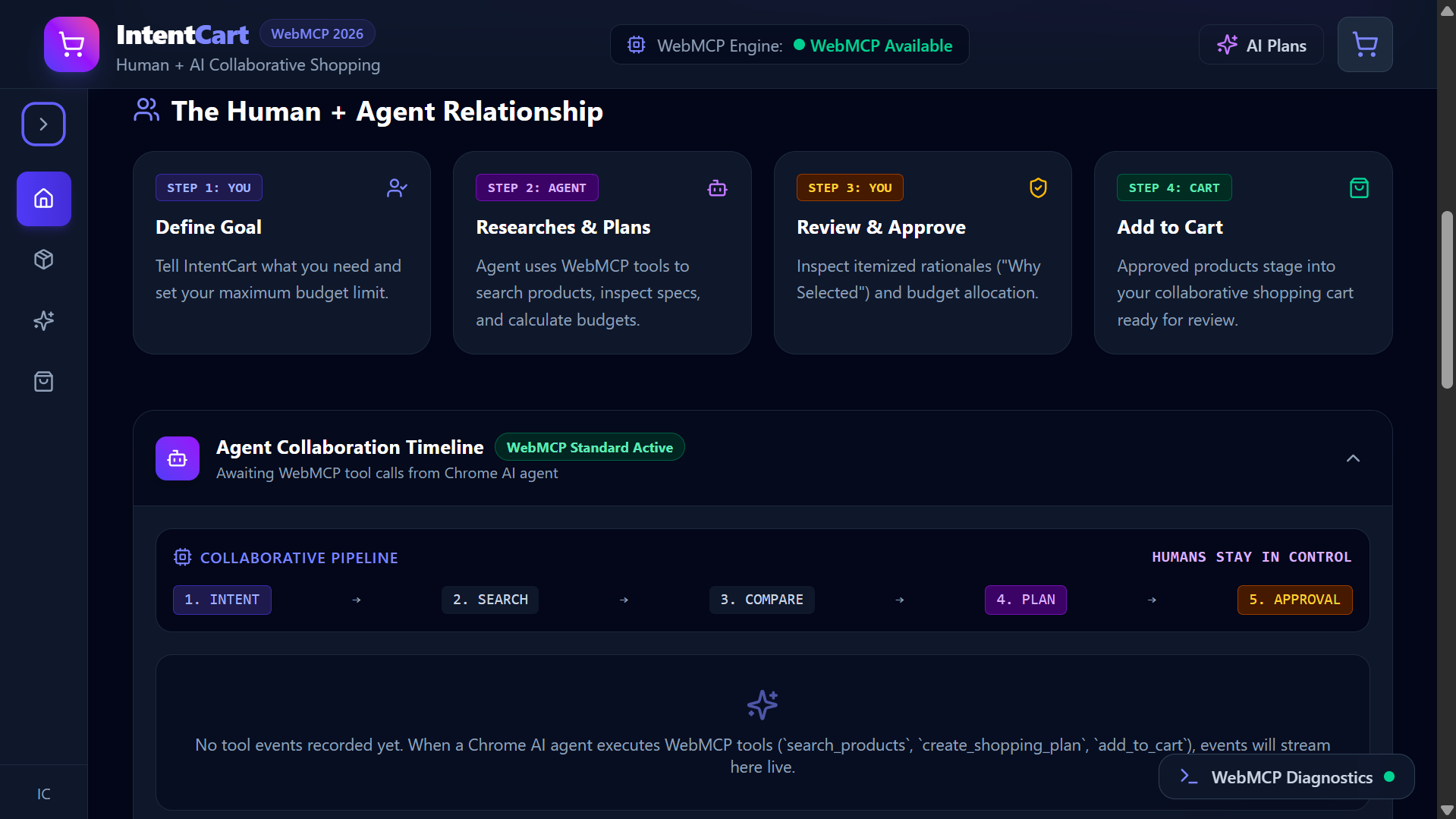
Homepage: Agent-native shopping with human control with sidebar
-
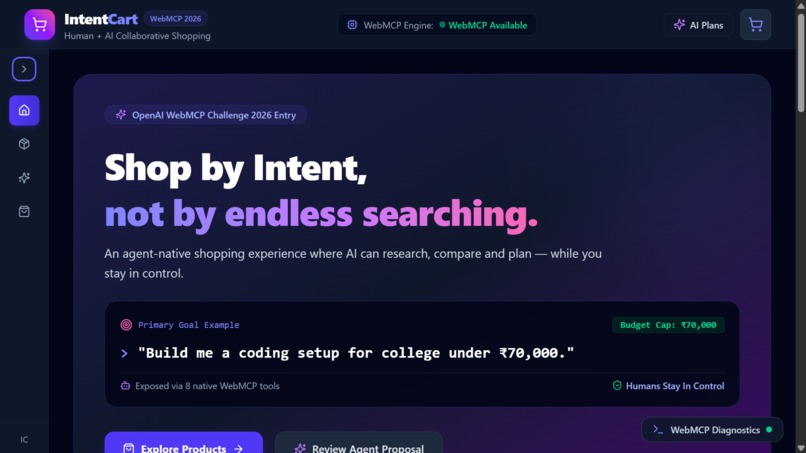
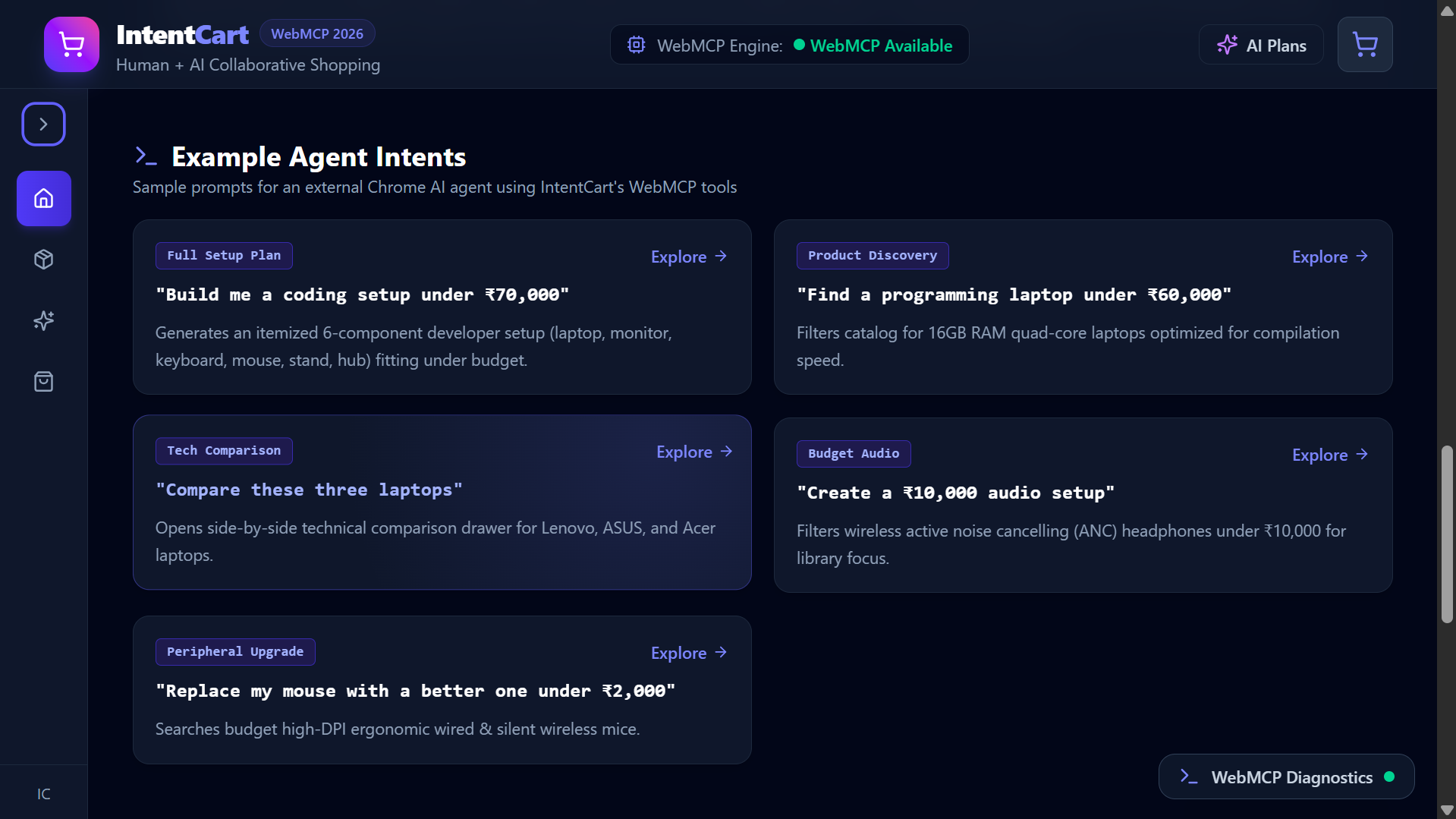
Homepage: Agent-native shopping with human control.
-
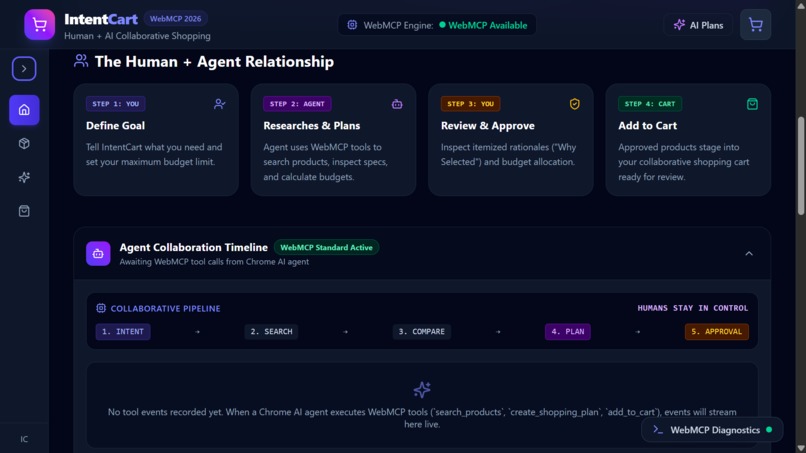
Homepage: Agent-native shopping with human control.
-
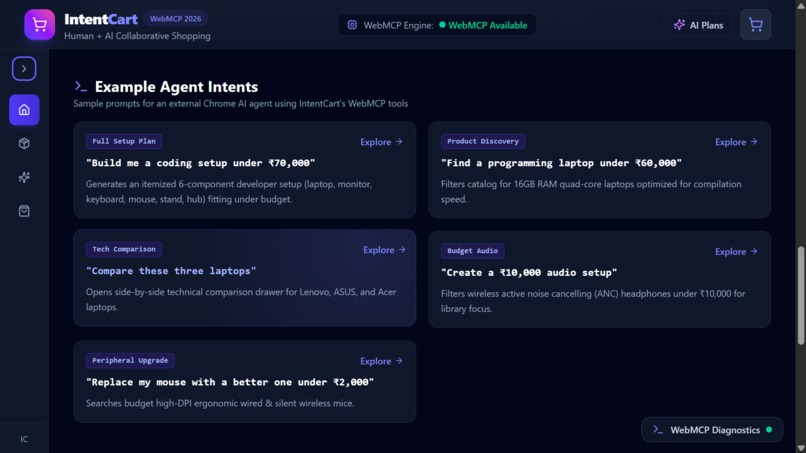
Homepage: Agent-native shopping with human control.
-
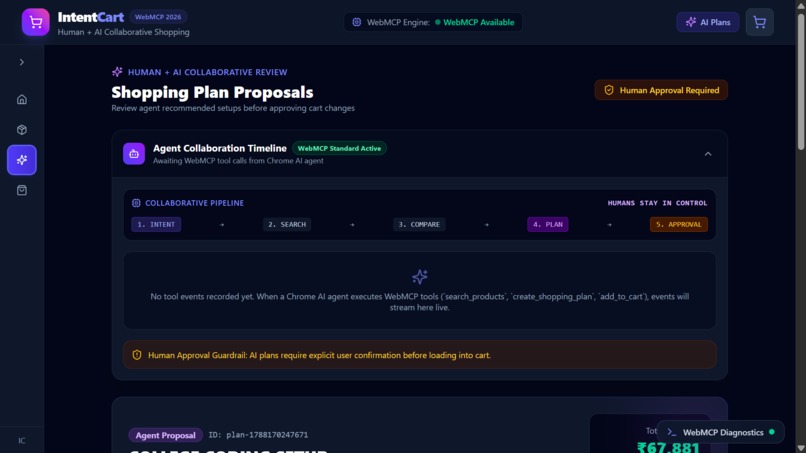
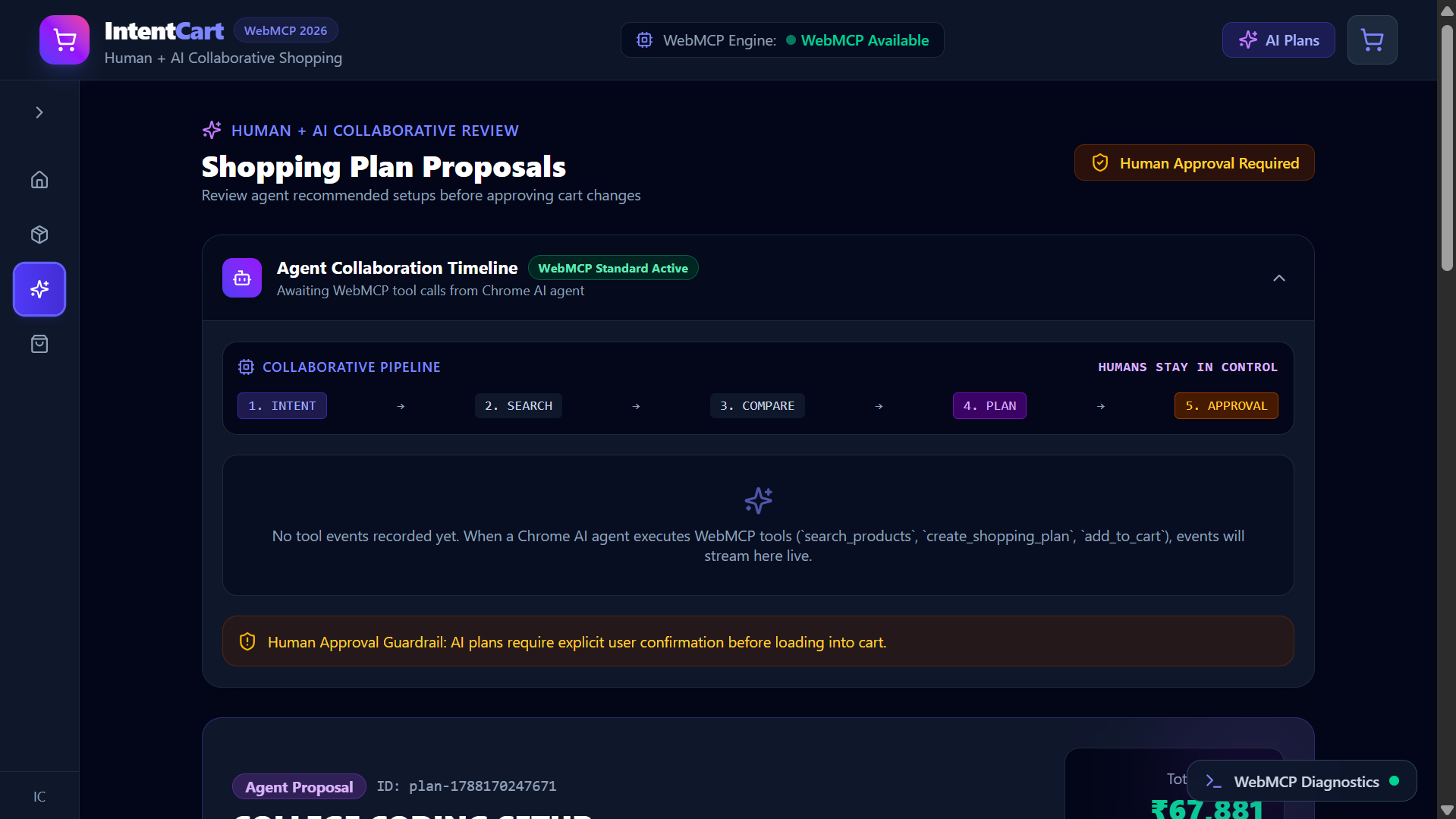
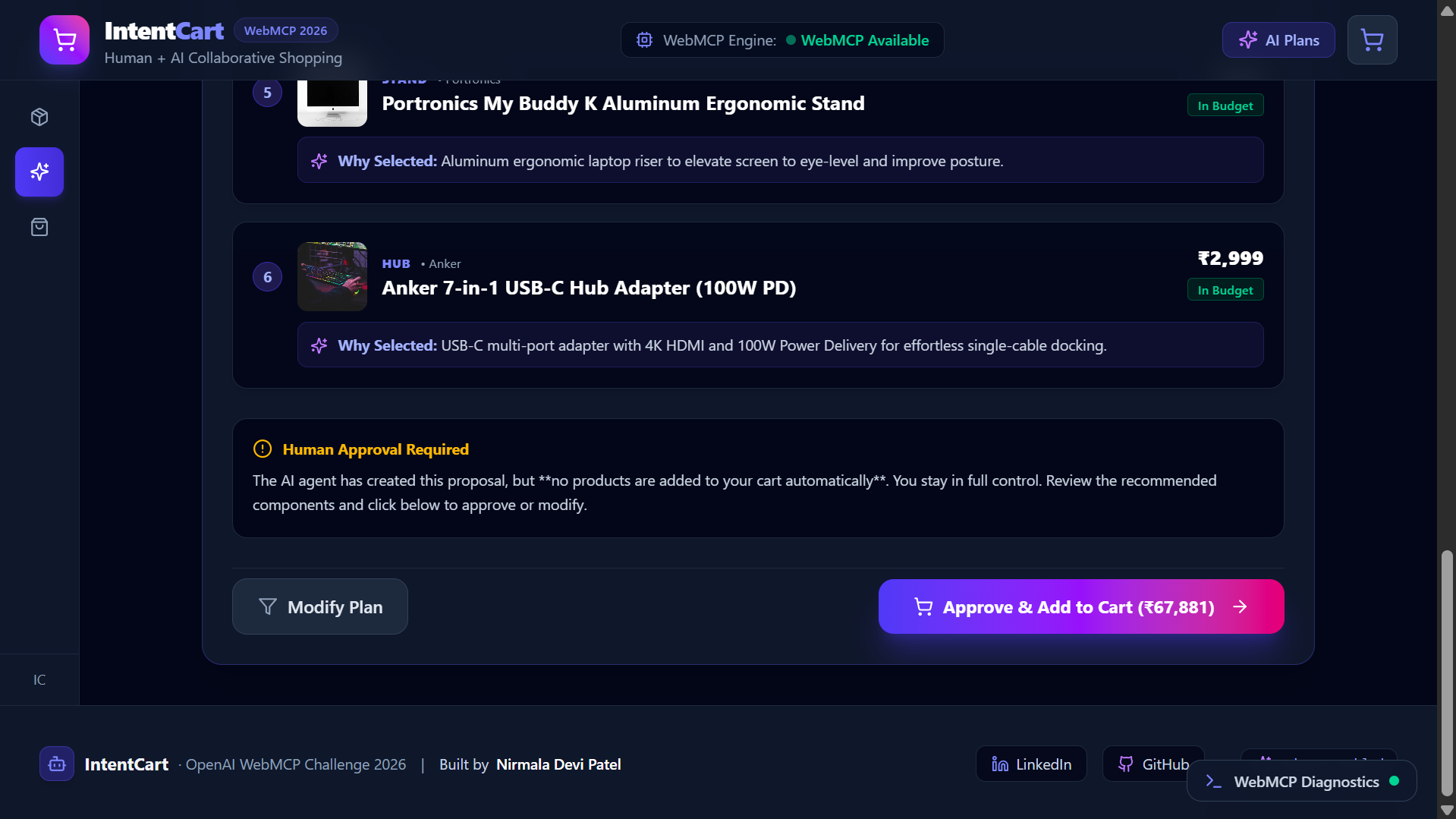
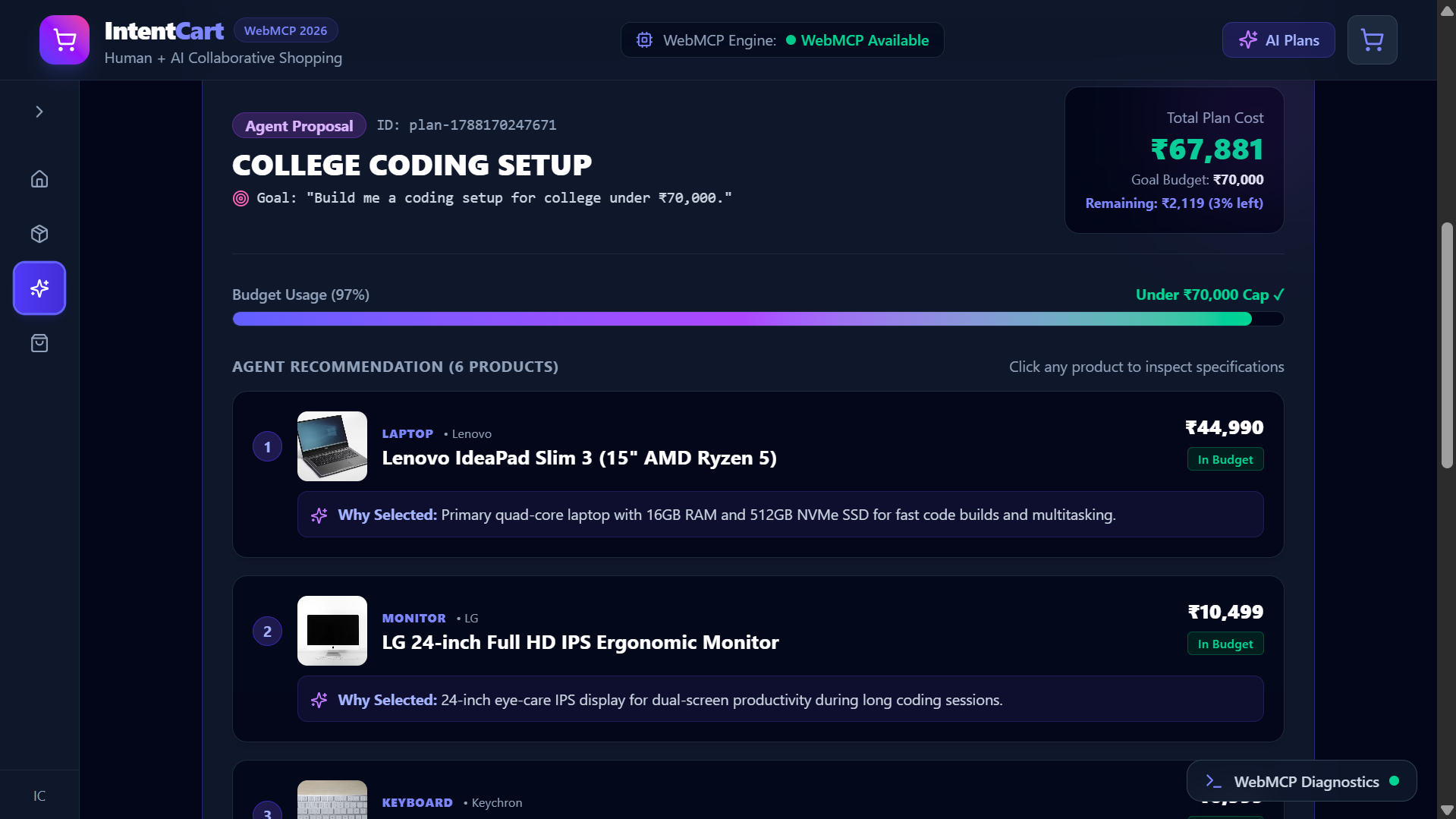
AI Shopping Plan: AI-generated plan with budget and reasoning.
-
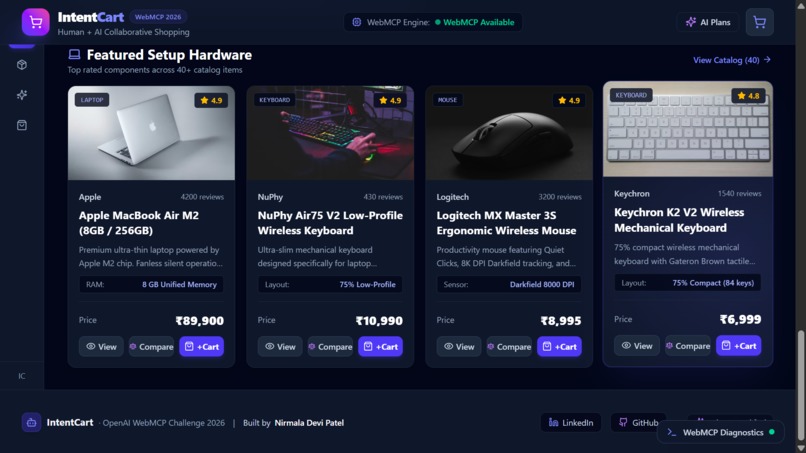
AI Shopping Plan: AI-generated plan with budget and reasoning.
-
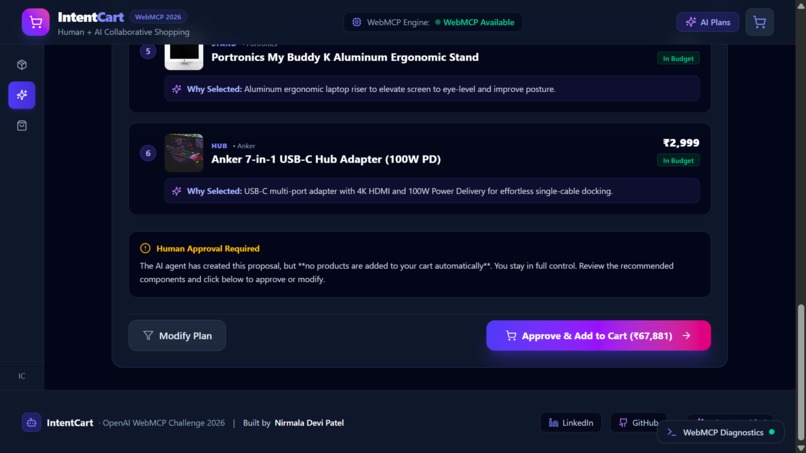
AI Shopping Plan: AI-generated plan with budget and reasoning.
-
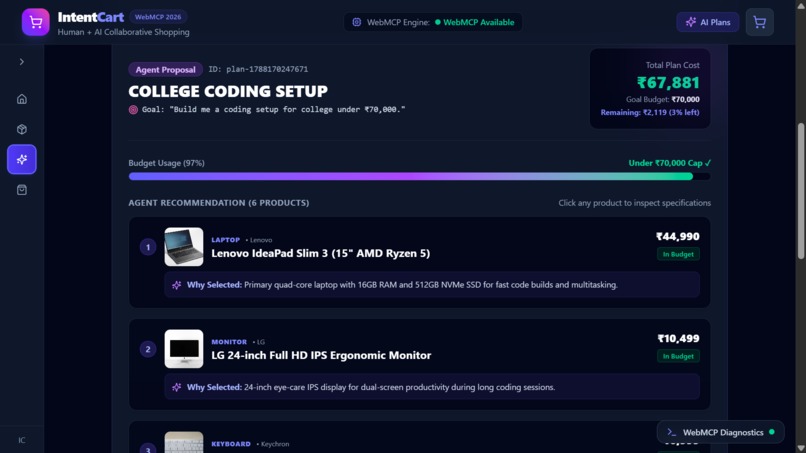
AI Shopping Plan: AI-generated plan with budget and reasoning.
-
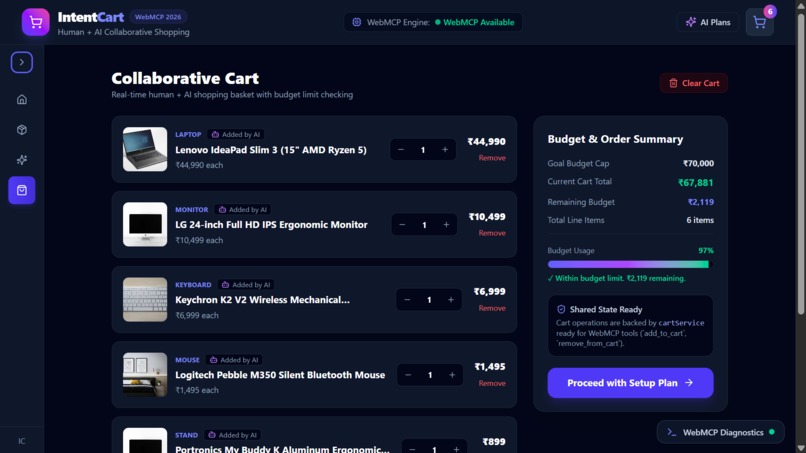
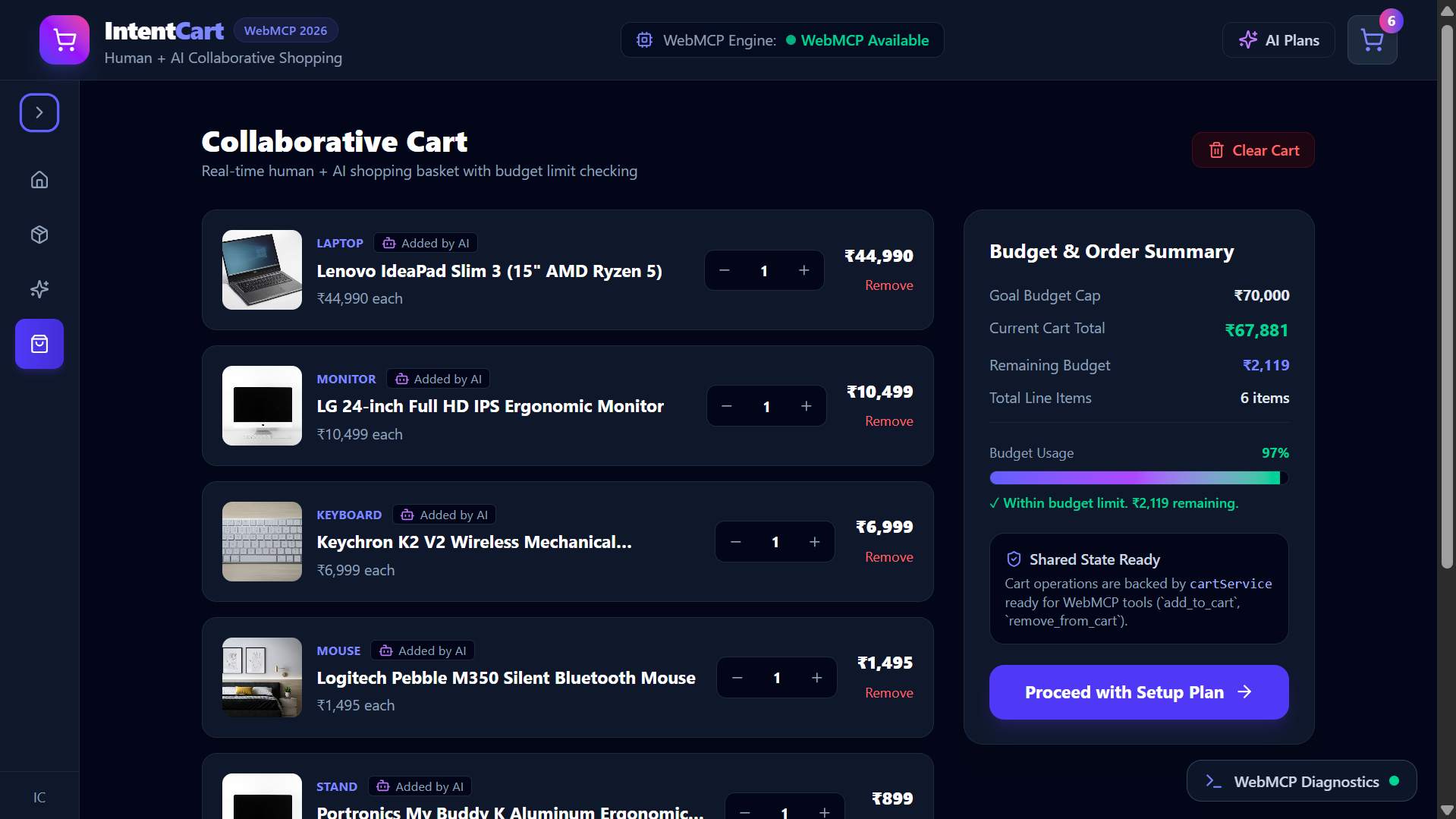
Collaborative Cart: Review and approve the agent's recommendations.
-
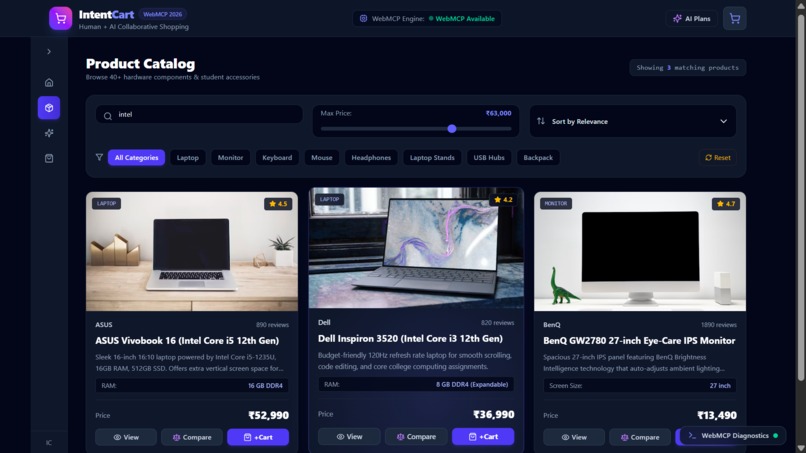
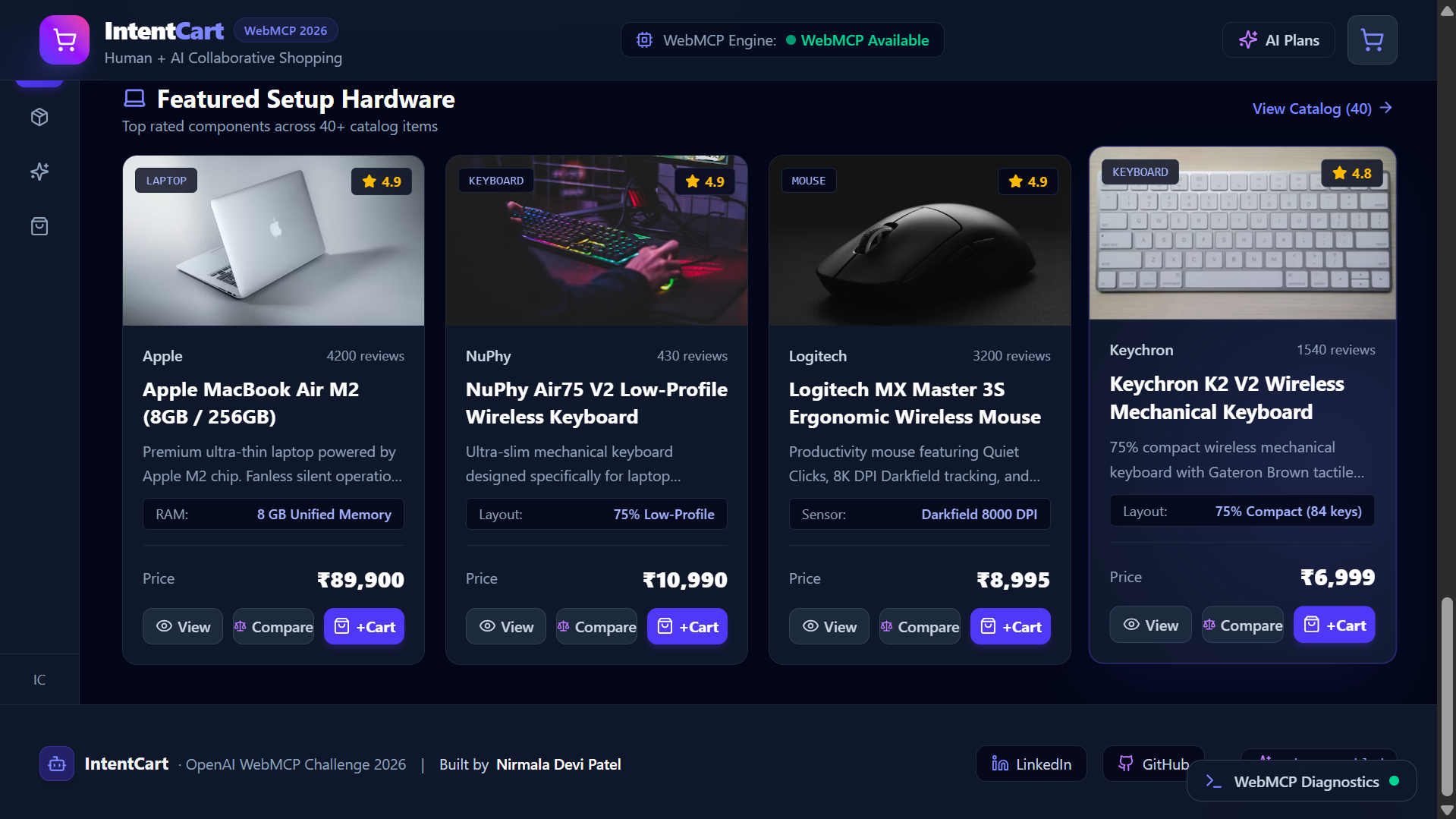
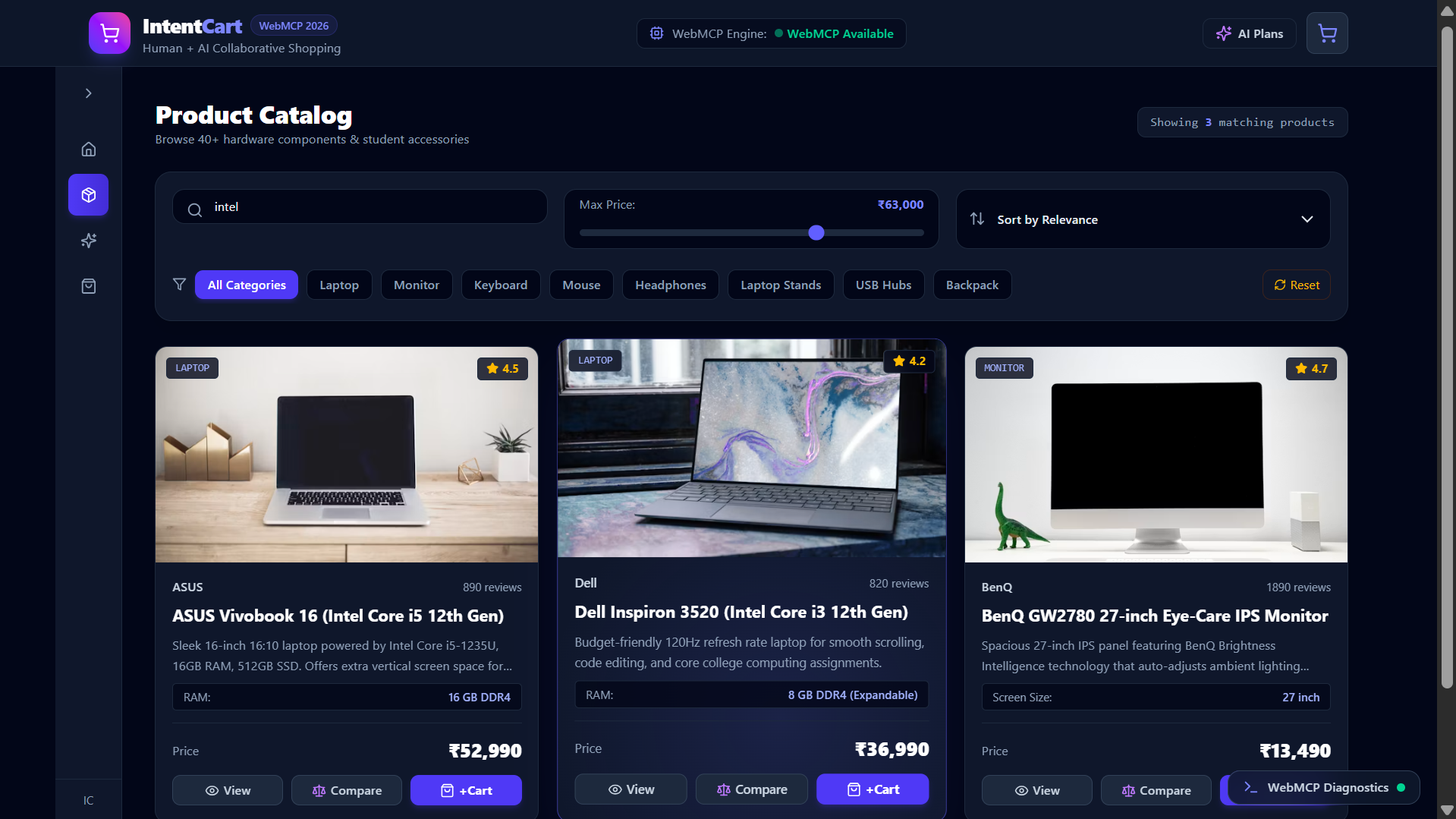
Product Catalog: Search, filter, inspect, and compare products.
IntentCart 🛒🤖
AI researches. You decide.
IntentCart is an agent-native collaborative shopping experience built with WebMCP.
Instead of endlessly searching through products, users can simply describe what they want. For example:
“Build me a coding setup for college under ₹70,000.”
The AI agent can then research products, compare options, create a shopping plan, and calculate the total budget — while keeping the human in control of the final decision.
💡 Inspiration
Online shopping can involve searching through dozens of products, comparing specifications, checking prices, and trying to stay within a budget.
I wanted to explore a different experience where an AI agent could actually interact with the shopping website and help with the research and planning, instead of just acting like a chatbot.
🚀 What IntentCart Does
IntentCart provides 8 native WebMCP tools:
- 🔎 Search products
- 📋 Get product details
- ⚖️ Compare products
- 🛒 Add products to cart
- ❌ Remove products from cart
- 🛍️ View the cart
- 💰 Calculate the budget
- 🧠 Create a shopping plan
For example, the agent can create a complete college coding setup while staying within a ₹70,000 budget.
Each recommended product includes a “Why Selected” explanation so the human can understand the recommendation.
👤 Human Approval
The AI does not automatically make the final shopping decision.
The agent creates a proposal first. The human reviews the products, reasons, and budget, then explicitly clicks:
“Approve & Add to Cart”
Only after approval are the products added to the collaborative cart.
This creates a simple principle:
AI handles the research and planning. Humans make the final decision.
🔧 How It Was Built
IntentCart was built using:
- React
- TypeScript
- Vite
- WebMCP
- Native browser WebMCP APIs
- HTML5
- CSS3
The application uses a shared cart state so that changes made through the website and WebMCP tools remain synchronized.
An Agent Activity timeline also shows tool activity as the agent interacts with the application.
🧩 Challenges
One of the biggest challenges was designing a shared state that could work consistently between the normal UI and agent tool calls.
Another important challenge was creating a safe approval flow where the AI can propose actions without automatically making purchasing decisions.
I also had to handle WebMCP tool registration carefully to avoid duplicate registrations during React development and remounts.
🏆 What I'm Proud Of
- Native WebMCP tool integration
- Agent-accessible shopping capabilities
- Human approval before cart changes
- Real-time shared cart state
- Product comparison and budget planning
- Clear visibility into agent activity
📚 What I Learned
This project helped me understand how to build for the agent-native web.
Instead of designing only for humans clicking buttons, I learned how to expose meaningful application capabilities as structured tools that AI agents can use.
I also learned that good agent experiences need a balance between automation and human control.
🔮 What's Next
Future versions could include:
- More personalized shopping preferences
- Larger and real-world product catalogs
- Smarter recommendations
- More advanced comparison features
- More granular human approval controls
- Multi-user collaborative shopping
👩💻 Built By
Nirmala Devi Patel
Built for the OpenAI WebMCP Challenge 2026.
Built With
- agenticai
- ai
- artificial-intelligence
- e-commerce
- human-aicollaboration
- javascript
- openai
- react
- tailwind
- typescript
- vercel
- vite
- webdevelopment
- webmcp


Log in or sign up for Devpost to join the conversation.