-
-
Chat
-
Alignment
-
Evidence
-
Simulation
-
Experiments
-
Validation
-
Overview
-
Admin
Inspiration
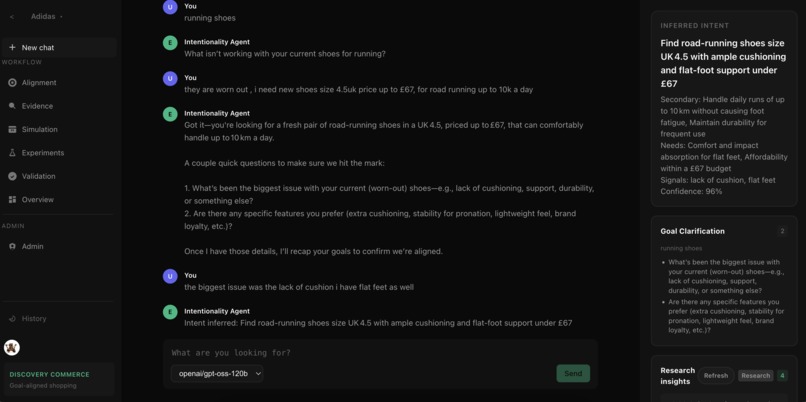
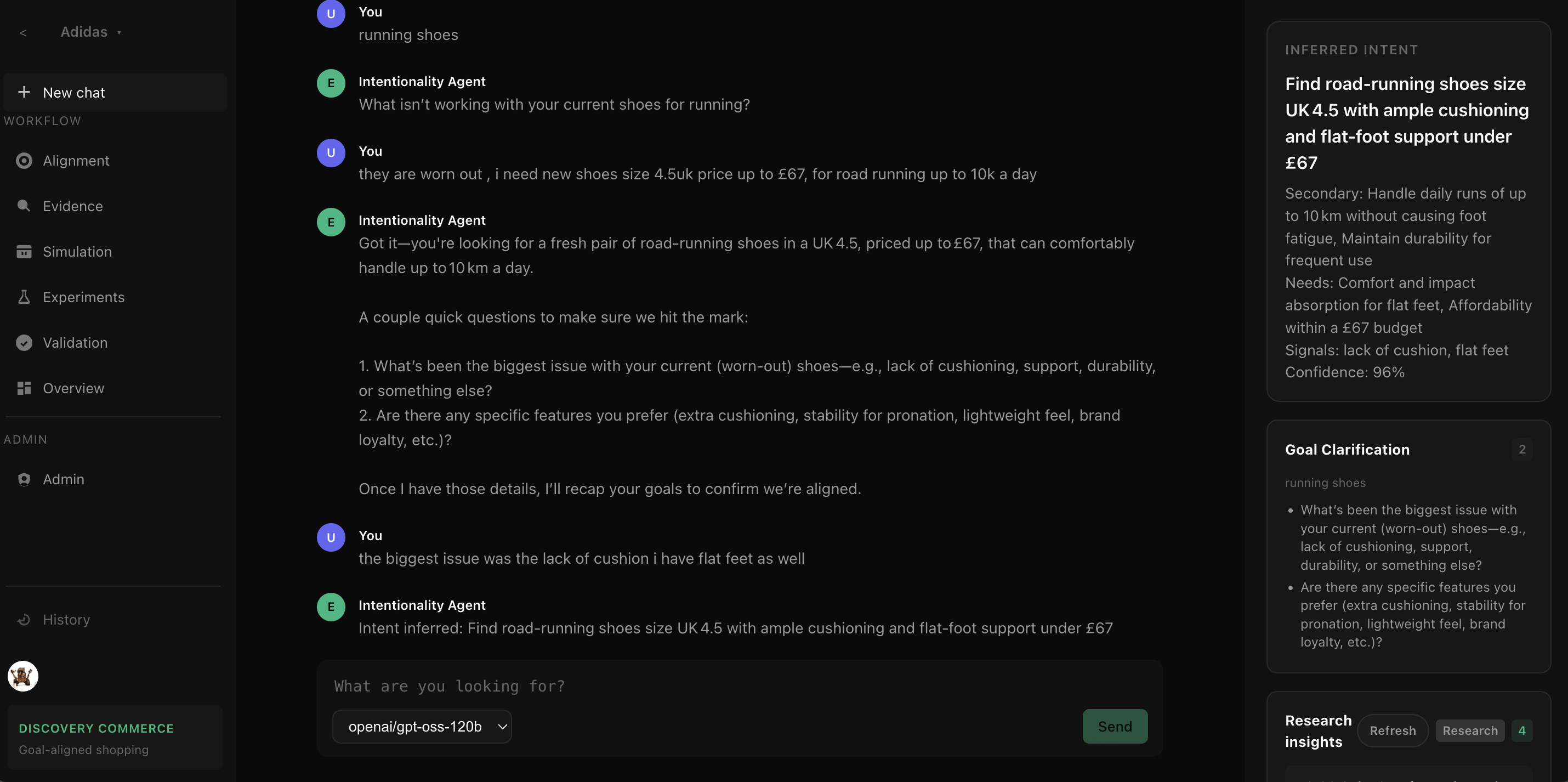
LLM shopping changed how people ask for products. Queries are now goal and context rich, not just keyword strings. We wanted to build a practical system for teams to test discoverability improvements without pretending lab scores are guaranteed production outcomes.
That led to Intent Loop Commerce: LLM Discoverability Lab: a validation-first loop for simulation, experimentation, and evidence-grounded iteration.
What it does
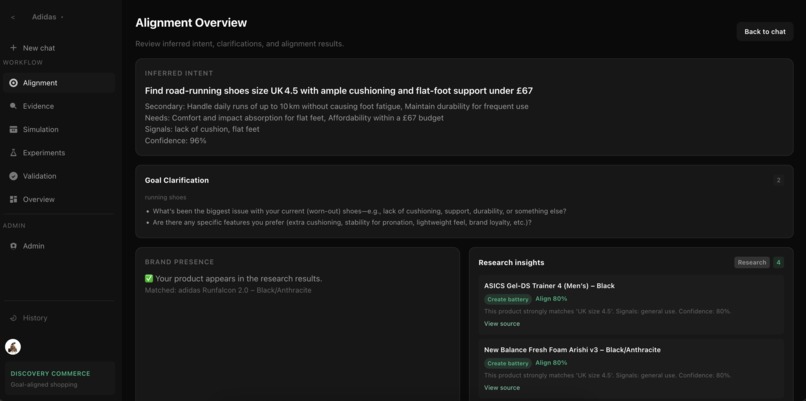
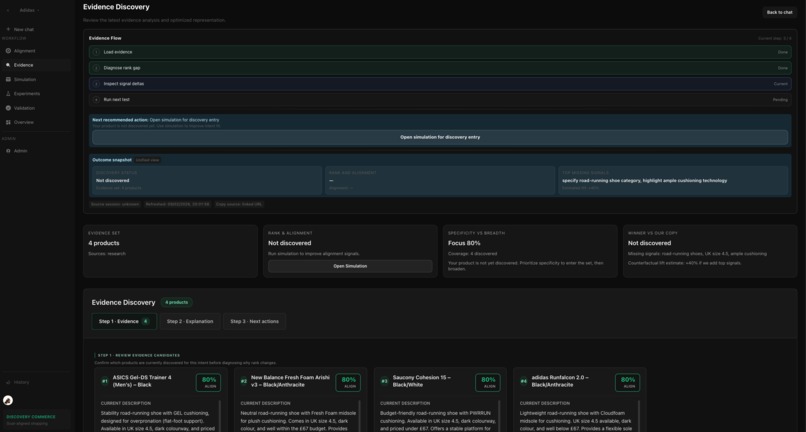
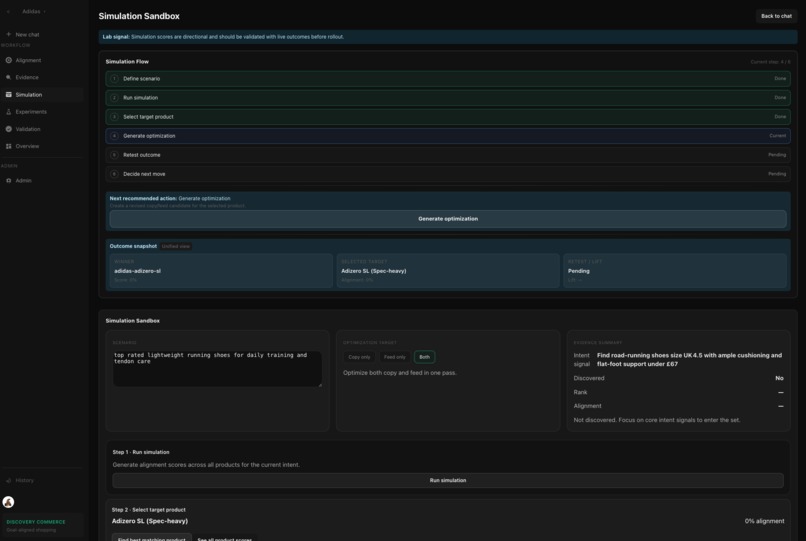
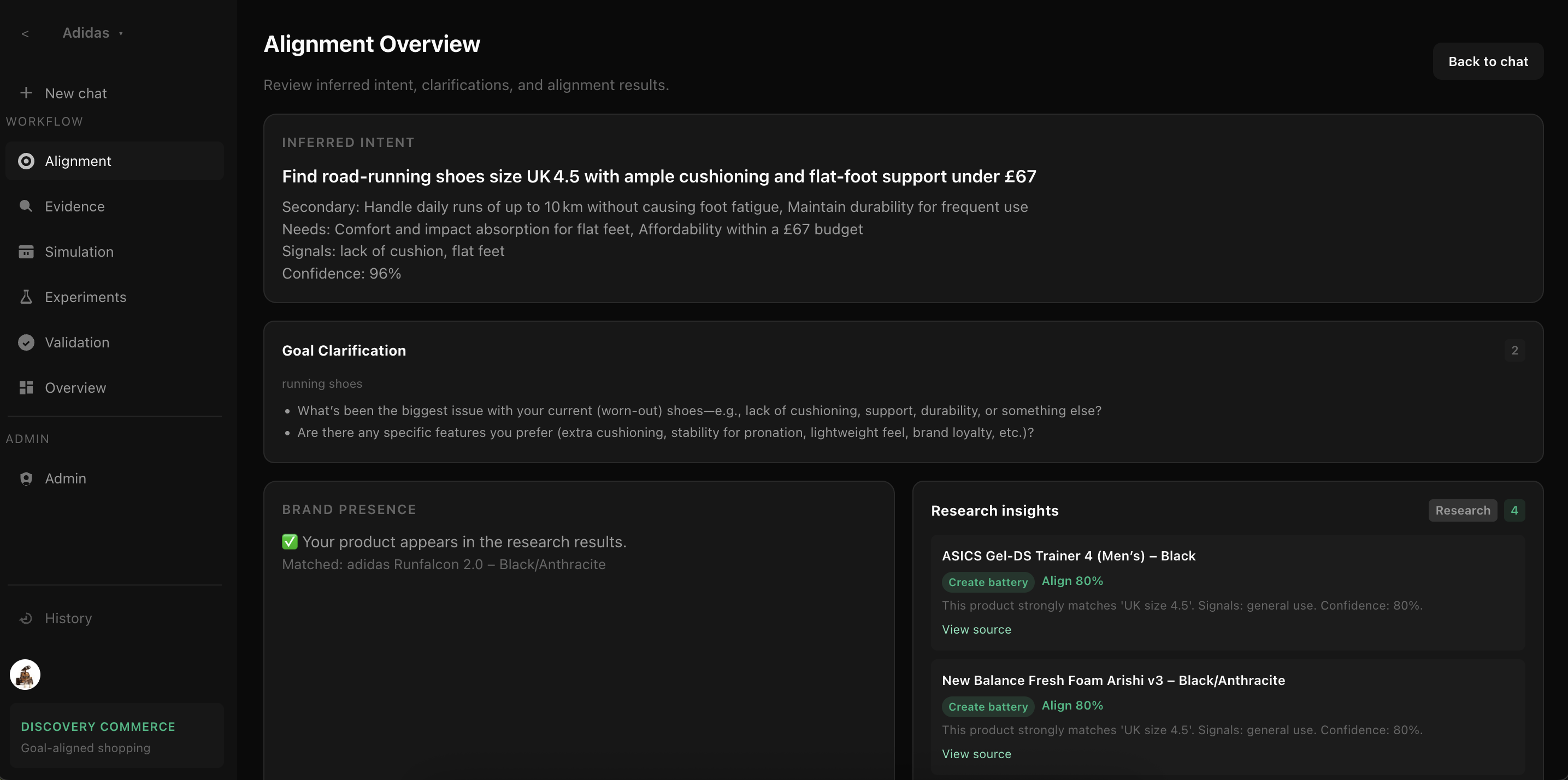
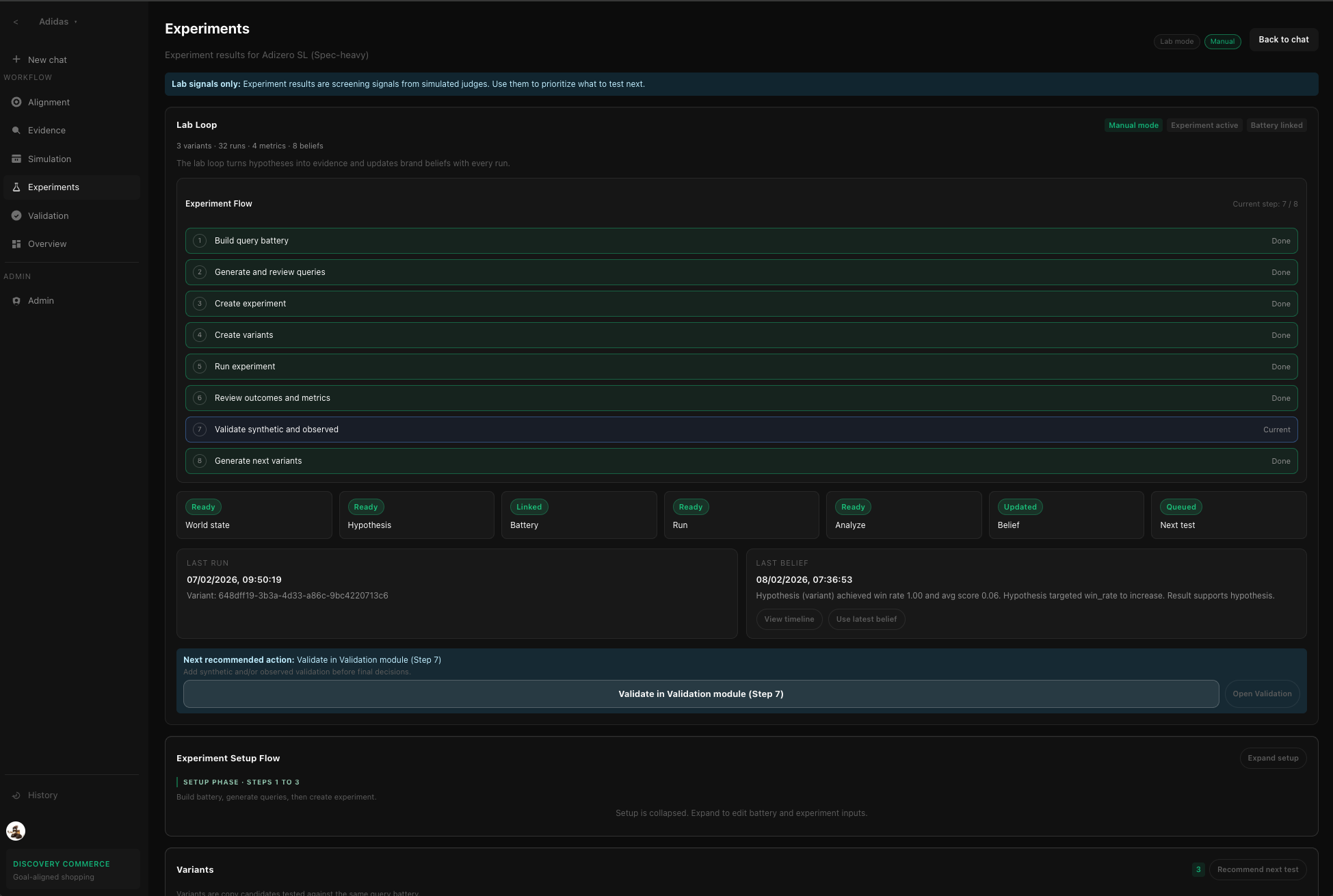
Intent Loop Commerce helps teams optimize product copy for LLM-driven discovery by running a structured closed loop:
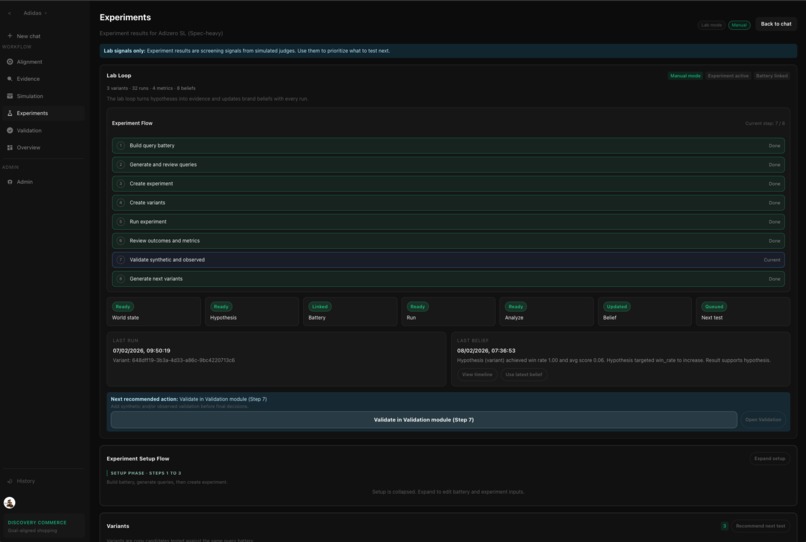
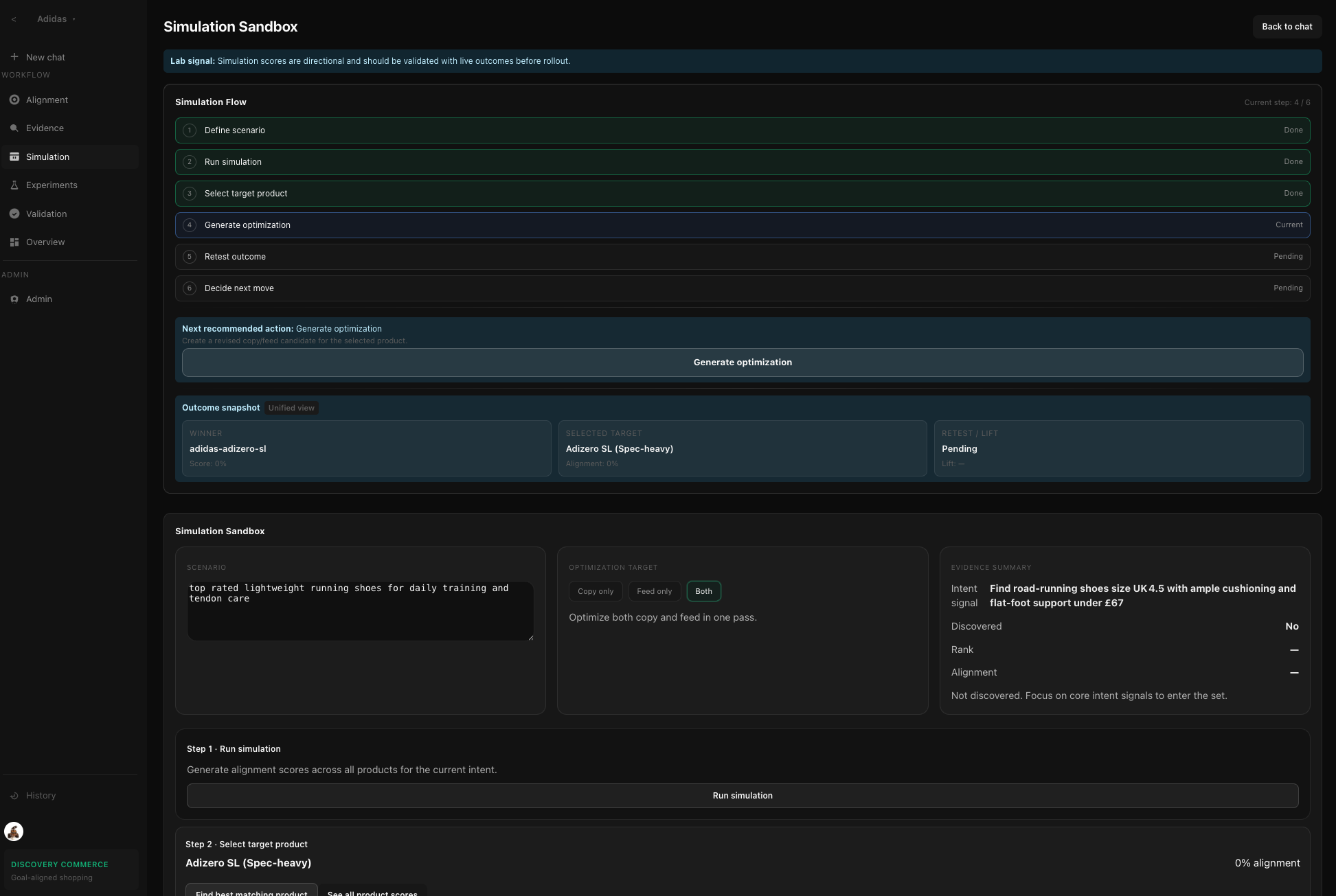
- Build query batteries (
bottom_up,top_down,hybrid). - Create and test copy variants in controlled experiments.
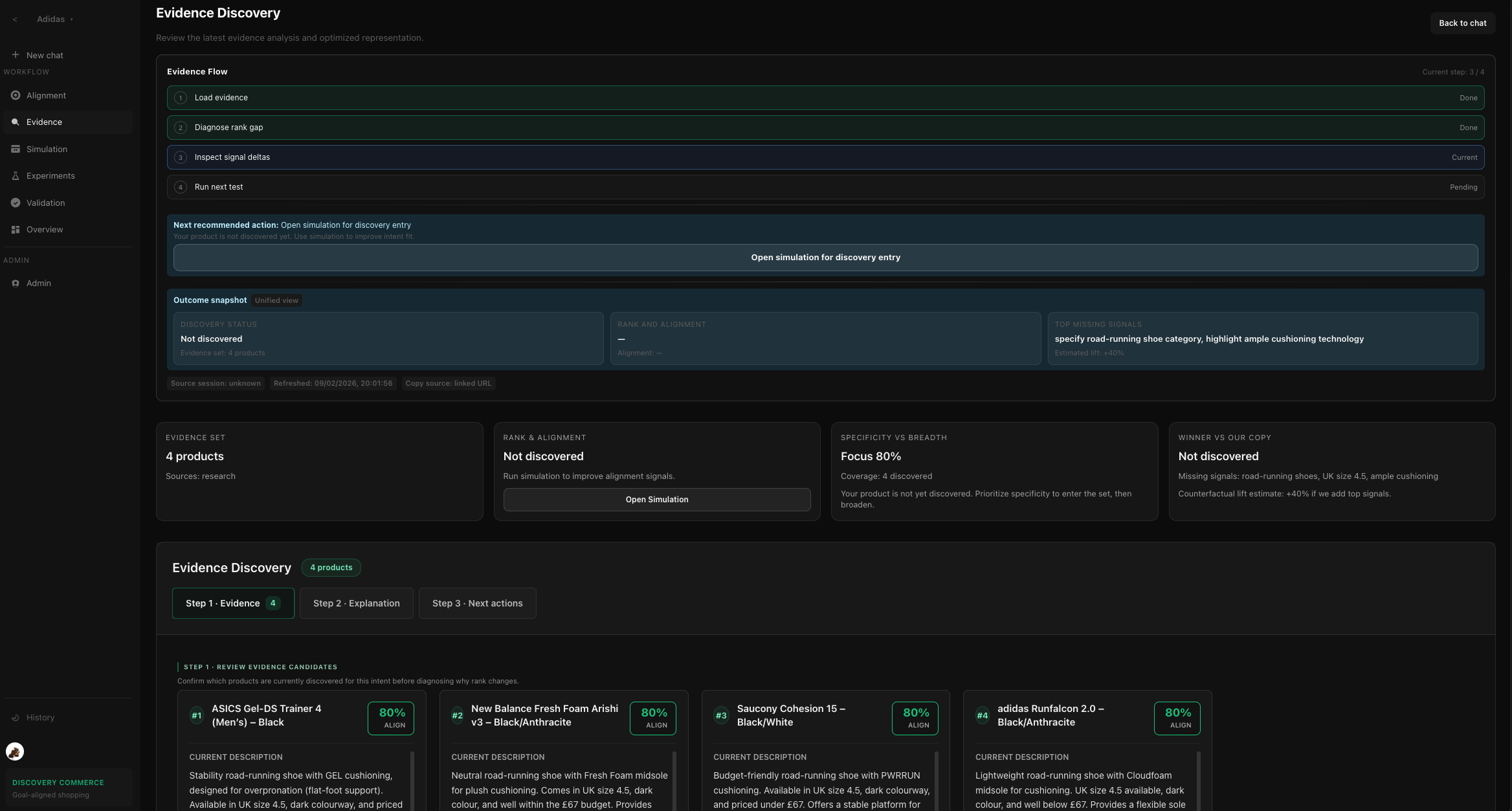
- Review run outcomes and aggregate metrics.
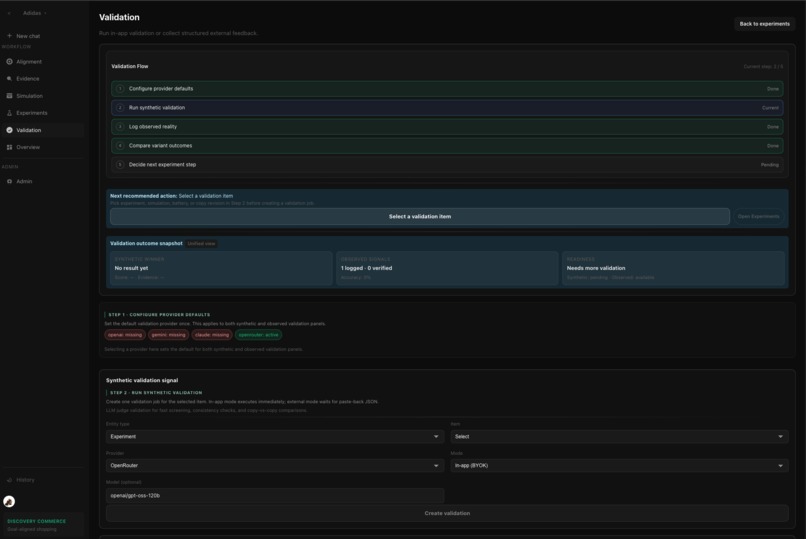
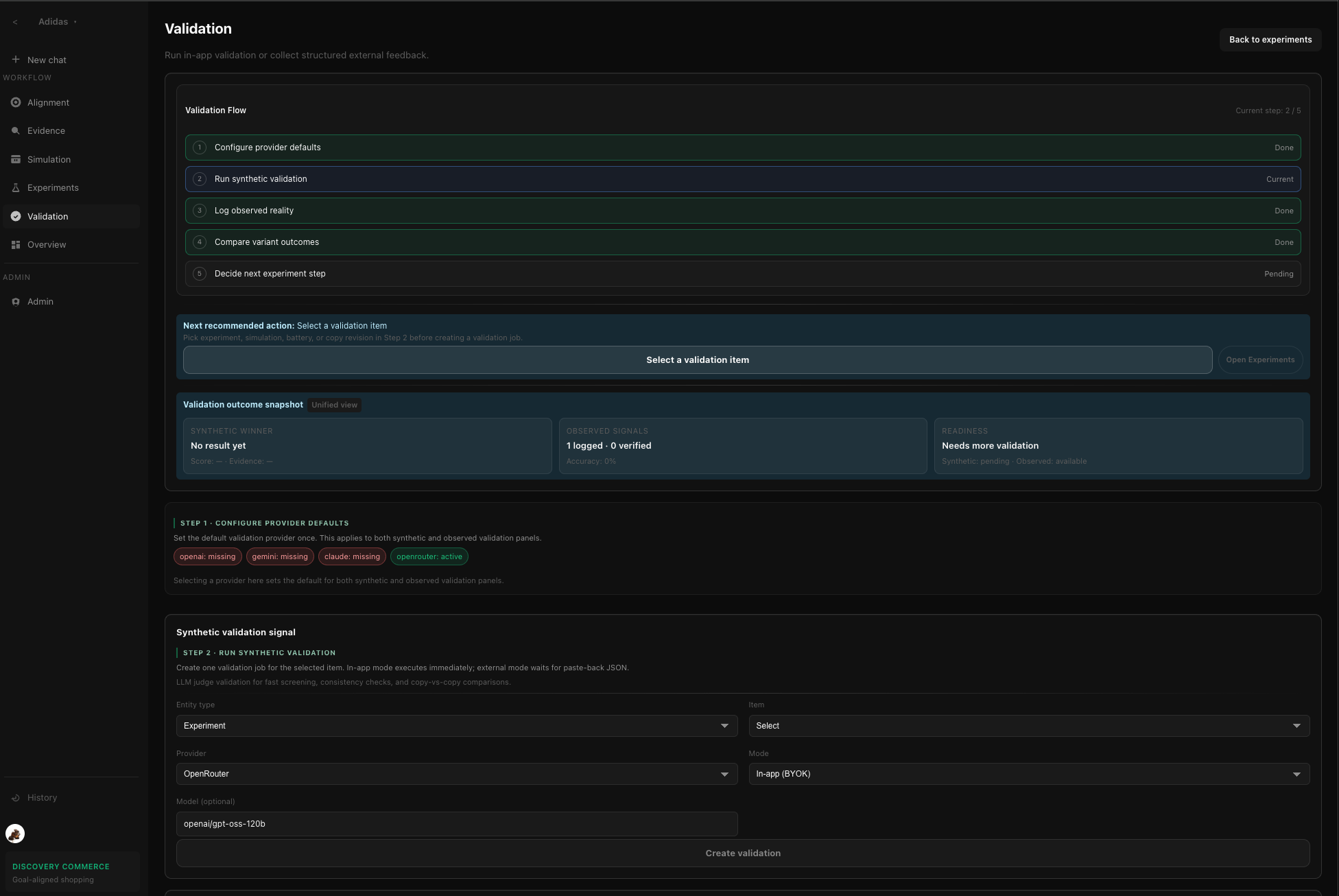
- Validate with two signals:
- synthetic validation (in-app BYOK, provider run, manual fallback),
- observed reality validation (manual observed checks).
- Generate next variants from weighted loop evidence (
validation > experiment > simulation).
The lab also supports cold-start variant generation and derives behavioral audience segments from recent session/analytics events to condition top-down/hybrid query generation.
How we built it
- Backend: FastAPI service architecture with scoped repositories and loop orchestration.
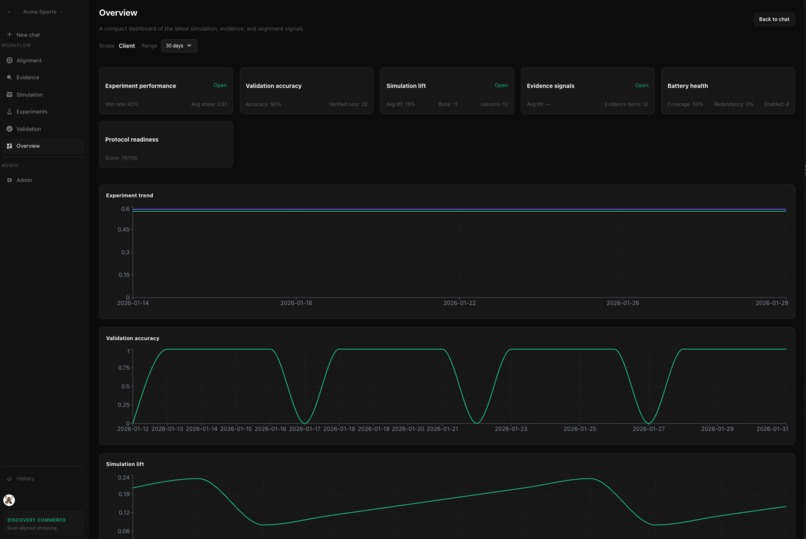
- Frontend: Next.js + TypeScript with step-based UX for simulation, experiments, and validation.
- Validation integration: Provider-run orchestration, callback verification, TTL, and replay protection.
- Learning loop: Beliefs, memory artifacts, calibration signals, and explicit evidence weighting.
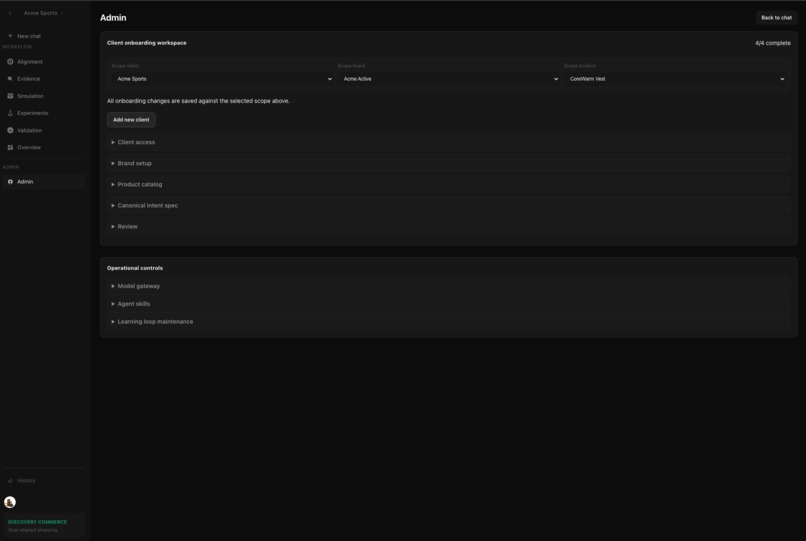
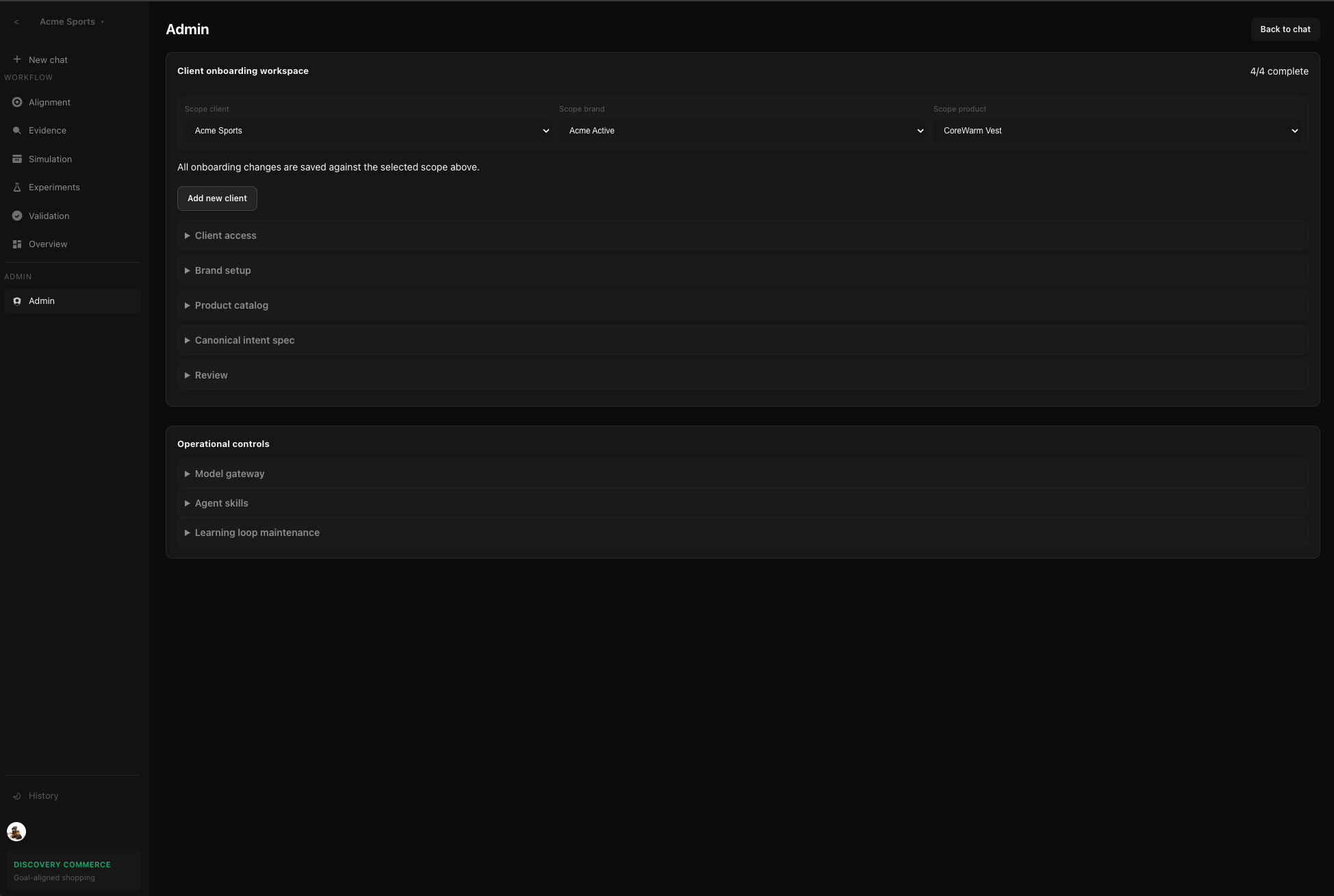
- Operational controls: Multi-tenant admin setup, canonical intent spec, model gateway (BYOK), and history/audit surfaces.
Challenges we ran into
- Avoiding overconfidence from synthetic metrics and keeping observed validation central.
- Making a complex, multi-step lab intuitive without requiring extensive onboarding.
- Balancing automation with user control in lab mode.
- Evolving quickly while keeping type and architecture consistency.
- Designing provider integration flows that are secure now and extensible later.
Accomplishments that we're proud of
- Delivered an end-to-end experiment flow with explicit validation checkpoint.
- Implemented closed-loop variant generation and cold-start generation in the same UX.
- Added provider-run validation contracts with callback security controls.
- Improved UX hierarchy across core modules for clearer next actions.
- Added session-derived audience segment conditioning for query generation, plus fallback behavior when session data is sparse.
- Produced complete docs for workflows, user guidance, external integrations, and experiment deep dive.
What we learned
- Signal tiers matter: synthetic is screening, observed is grounding.
- Workflow clarity materially affects experimentation quality.
- Reliability controls (fallbacks, gating, provenance) build trust faster than aggressive claims.
- Strong context contracts (canonical intent + audience data) are critical for better generation.
- Iteration quality depends as much on UX and data plumbing as on model quality.
What's next for Intent Loop Commerce: LLM Discoverability Lab
- Native session-data connectors (e.g., GA4/warehouse ingestion) for richer behavioral segmentation.
- Segment quality/drift analytics and automatic refresh policies.
- Complete Gemini provider-run execution path.
- Further automation in lab mode with explicit approval checkpoints.
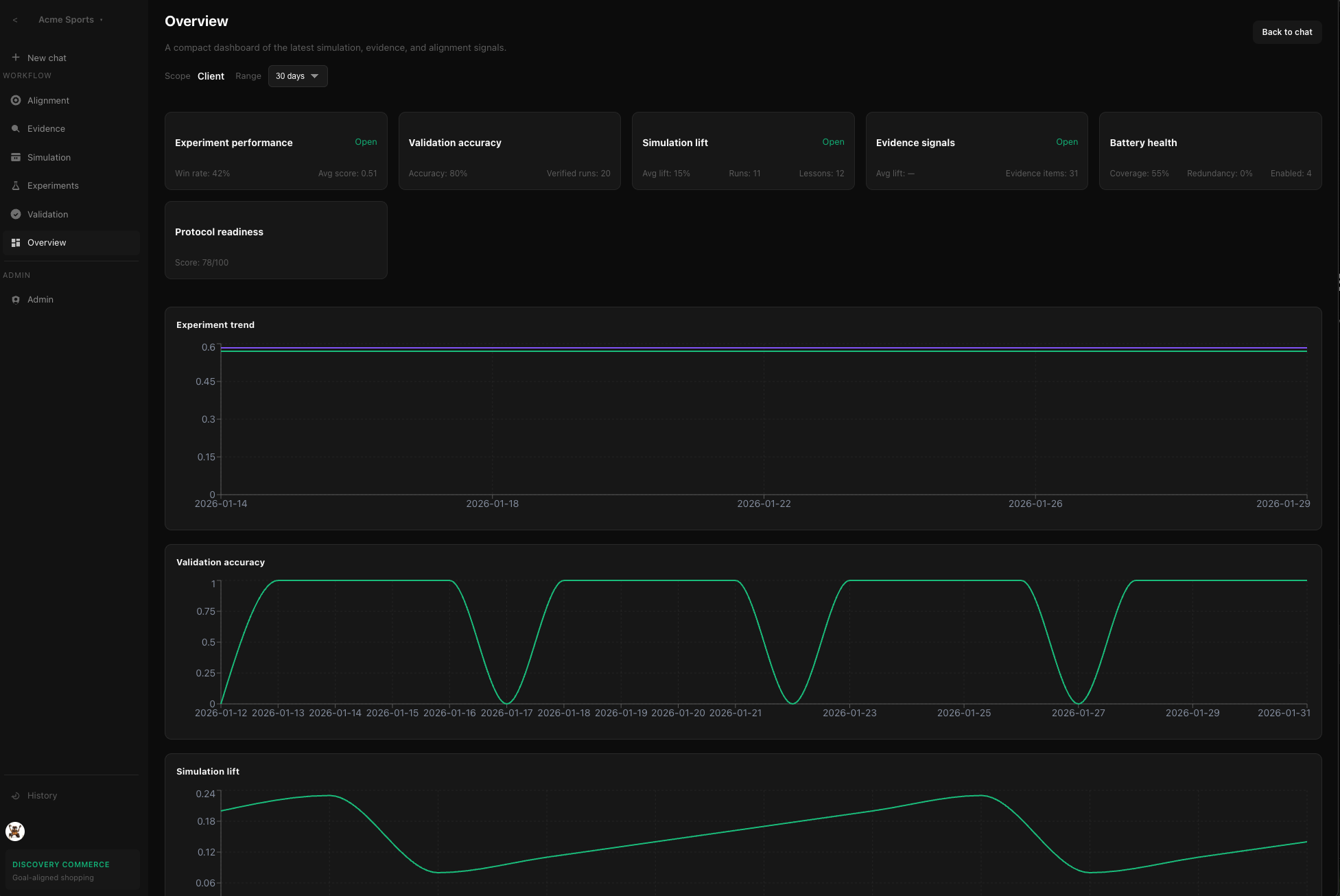
- Unified outcome snapshoting across runs, metrics, and validation.
- Production hardening: scalability, observability, and governance/security controls.
Built With
- experiments
- fastapi
- next.js
- python
- typescript

Log in or sign up for Devpost to join the conversation.