-
-
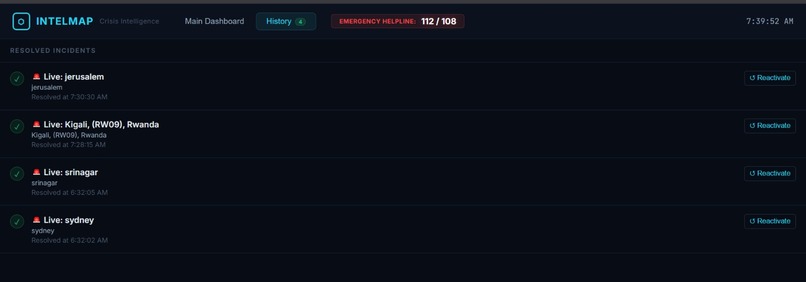
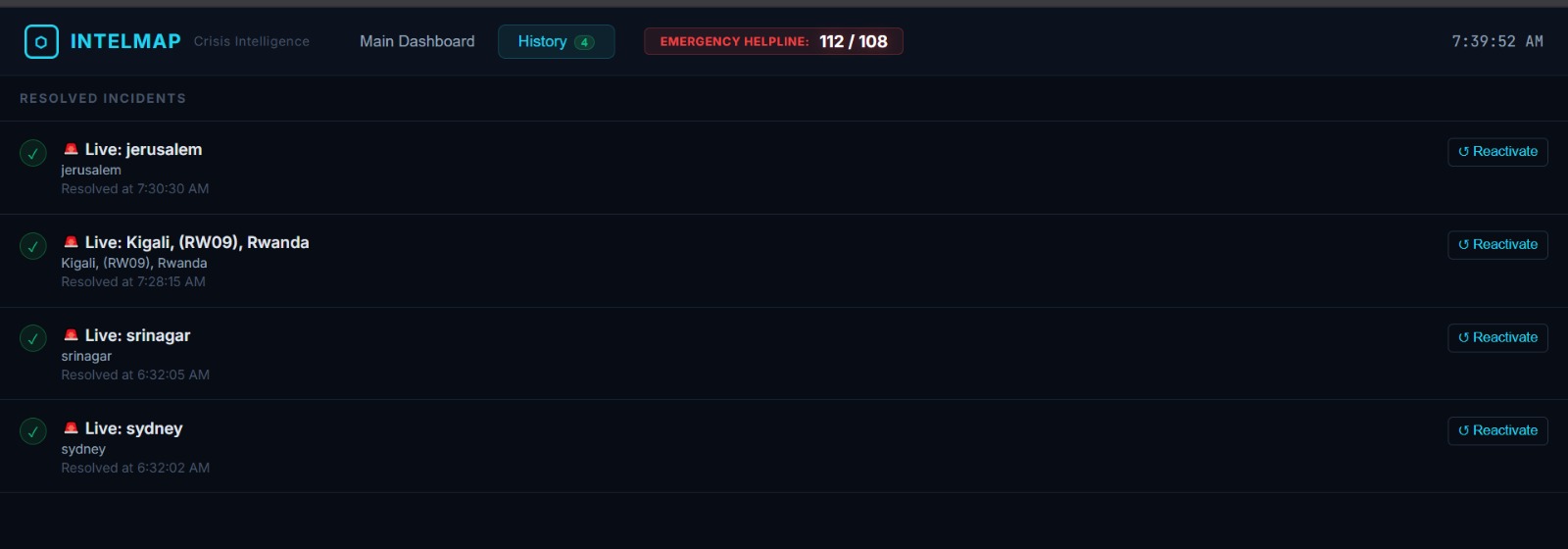
History tab
-
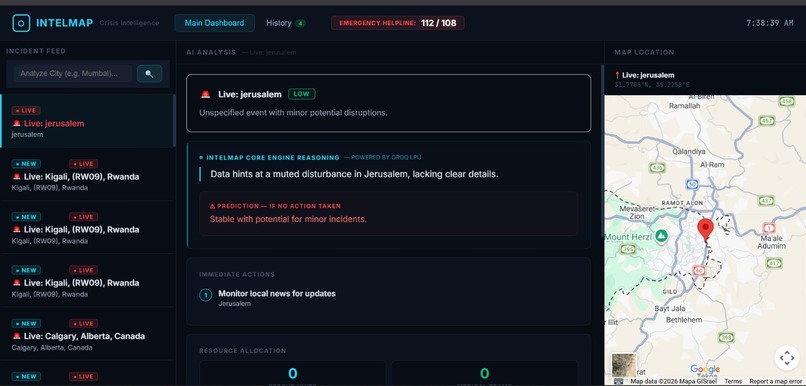
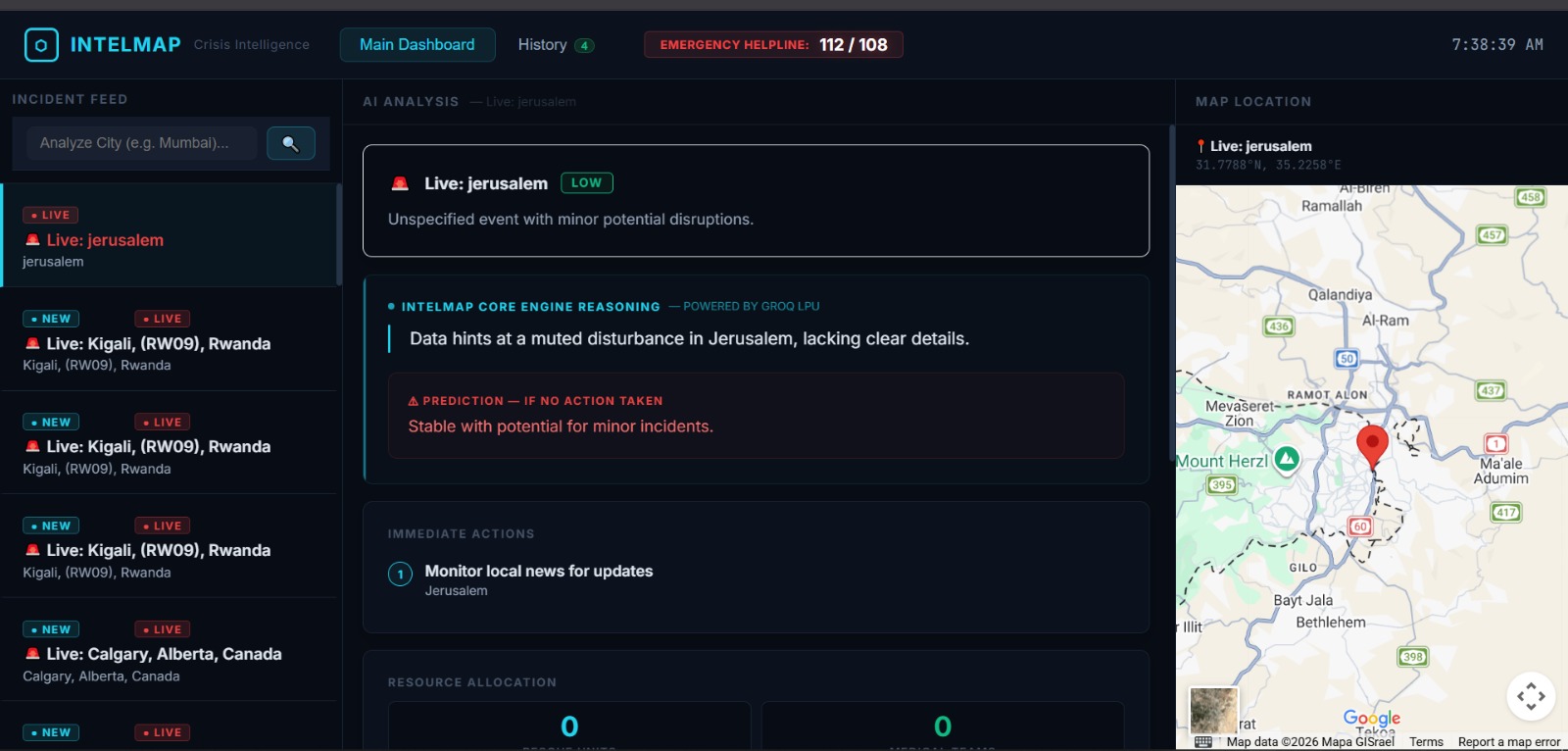
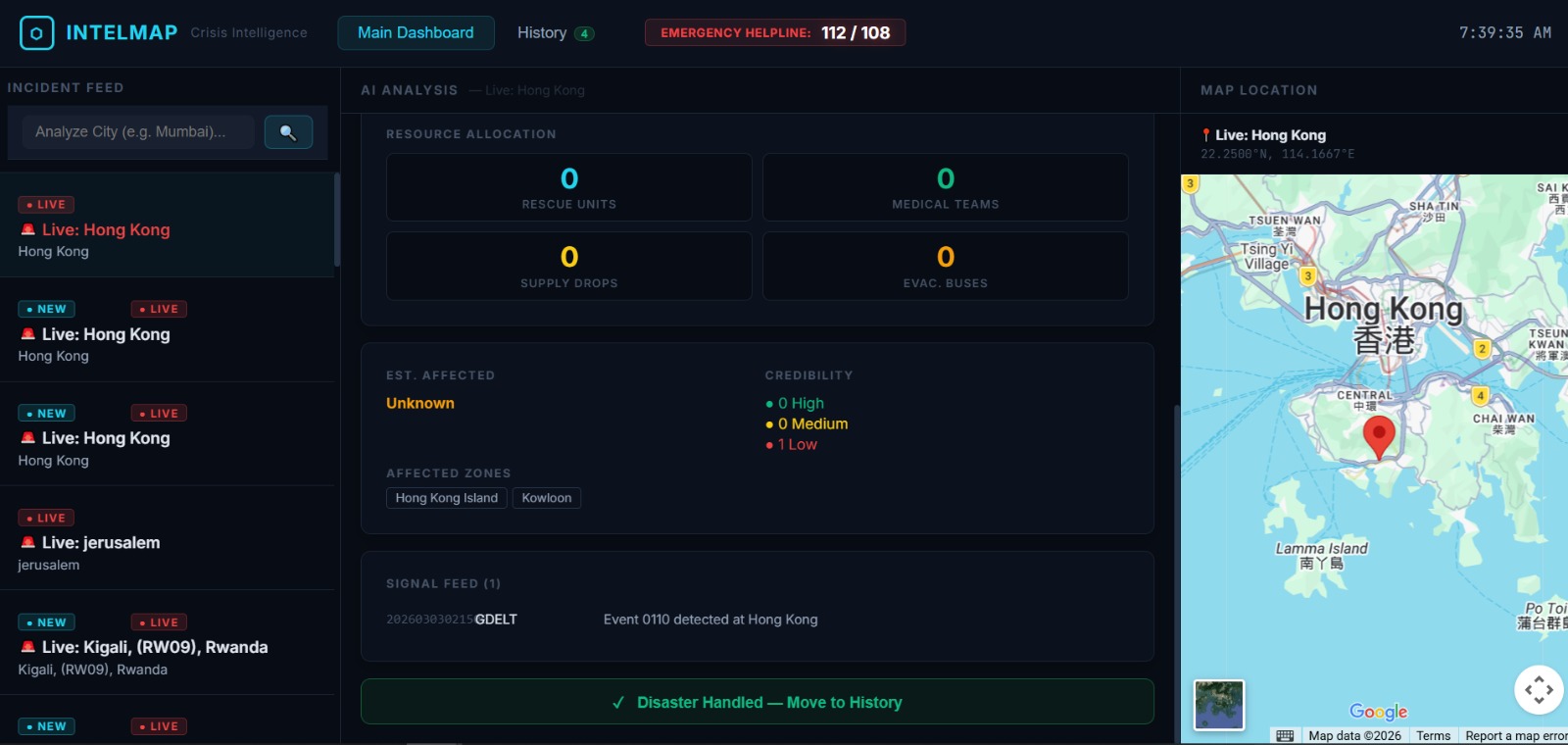
Searching for a place
-
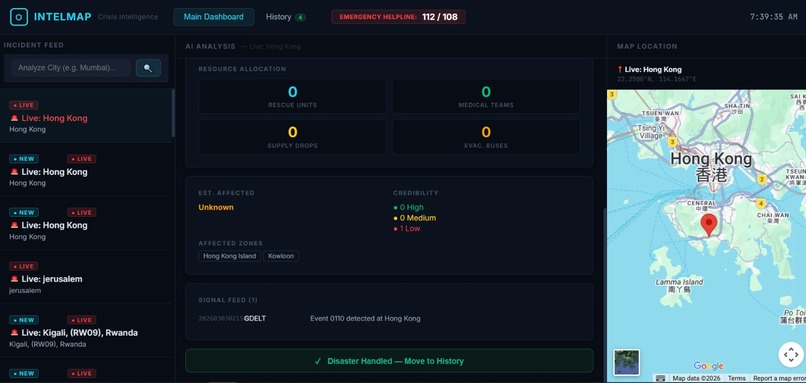
Analysis by Gemini
-
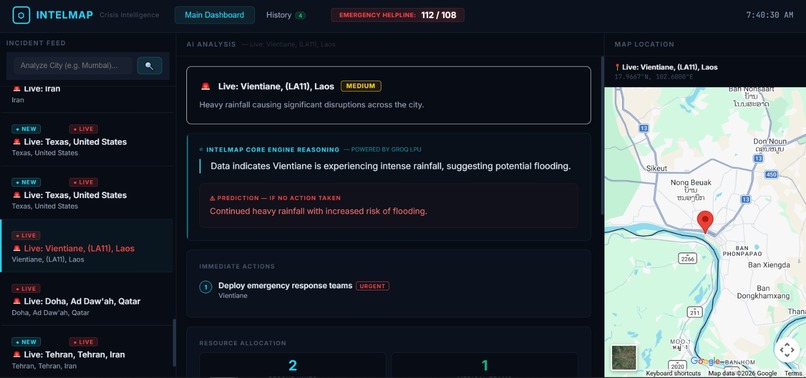
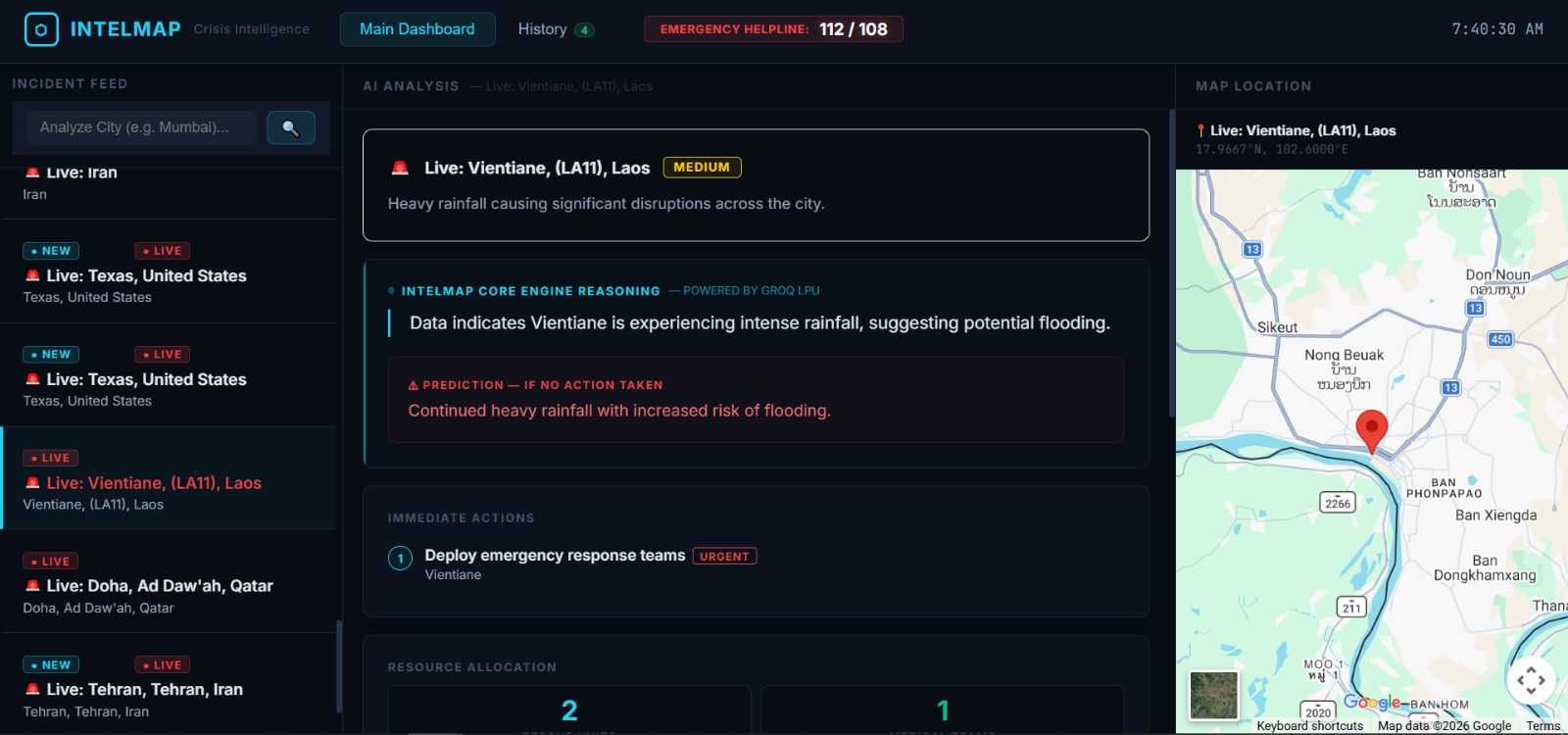
Place with medium level of danger
Team EQUINOX
Inspiration
IntelMap was inspired by the increasing frequency of climate-related disasters and the overwhelming amount of unstructured information that spreads during crisis situations. During emergencies, news reports, social media posts, and unofficial sources create confusion rather than clarity. We wanted to build a system that could transform scattered signals into structured, meaningful crisis intelligence. The goal was to simulate a real-world intelligence dashboard that combines AI, automation, and mapping into one unified platform.
What it does
IntelMap is a real-time crisis intelligence and disaster monitoring platform. It detects, analyzes, and visualizes disaster-related incidents. The system allows users to input disaster descriptions, fetches incident data through APIs, generates structured analysis, and displays it on an interactive dashboard. It includes an incident feed, AI-powered analysis, automatic updates at timed intervals, and map-based visualization of affected areas. The platform continuously refreshes data to simulate real-time monitoring.
How we built it
We built IntelMap using Antigravity, structuring both the frontend and backend to simulate a real-time intelligence pipeline.
The frontend was developed using React and Vite, featuring an interactive incident feed, AI analysis panel, and map visualization. It communicates with the backend through REST APIs and automatically refreshes data at regular intervals.
The backend was built using Node.js and Express. It includes endpoints such as GET /api/disasters and POST /api/analyze, stores disaster objects, processes custom inputs, and auto-generates new incidents every 5 minutes using an interval function:
Interval
5 × 60 × 1000 Interval=5×60×1000 This ensures the system remains dynamic and continuously updated.
Challenges we ran into
One of the biggest challenges we faced was a GitHub push glitch that deleted our updated code twice. The pushed version overwrote the correct local changes, forcing us to rebuild parts of the project from scratch. This was frustrating and time-consuming.
We also faced synchronization issues between frontend and backend, where the backend generated new data but the frontend did not refresh automatically. Debugging environment issues such as incorrect folder execution, missing dependencies, and import errors also slowed us down.
Accomplishments that we're proud of
We are proud that despite losing code twice, we rebuilt the project stronger and more structured. We successfully implemented a real-time simulation system with automatic refresh, dynamic state management, and API integration. The platform is fully functional, accepts custom disaster inputs, and demonstrates a complete frontend–backend intelligence workflow.
Most importantly, we transformed a complex idea into a working system that simulates operational crisis monitoring.
What we learned
We learned how to design real-time systems and manage frontend–backend communication effectively. We gained practical experience with REST APIs, state management, and automatic data refreshing.
We also learned important Git practices such as pulling before pushing, understanding merge conflicts, and committing frequently. The challenges taught us resilience, debugging discipline, and structured development workflows.
What's next for IntelMap
In the future, IntelMap can be expanded to include real-time social media scraping, natural language processing for automatic threat classification, PostgreSQL database integration, cloud deployment, and multi-user dashboards. With further development, IntelMap can evolve from a simulated intelligence dashboard into a fully scalable crisis intelligence platform.


Log in or sign up for Devpost to join the conversation.