-
-
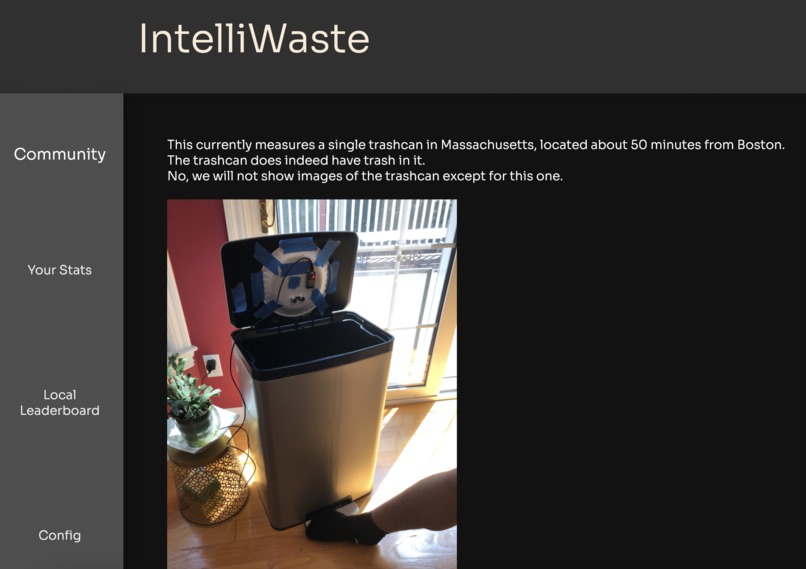
The IntelliWaste Website
Inspiration
Recycling and composting is only effective when people have the motivation to do so- and it is largely evident that many people don't have that motivation. But competition is a very effective motivator, and when the requirements to compete are simple, people are further engaged. Therefore, we had the idea of creating a trashcan that not only slows down the generation of waste that goes into landfills, but also keeps people continuously engaged in the act of recycling and/or composting. We introduce the IntelliWaste.
What it does
The IntelliWaste itself is a trashcan cover that simply weighs the amount of trash inside of the trashcan that it is on. However, the real magic lies in the web server that the IntelliWaste sends its output to. The web server displays the current weight of the trash inside of the IntelliWaste's trashcan, and also contains a leaderboard displaying the IntelliWaste users with the lowest weight in their trashcan. In this way, we not only fuel competition for the lowest amount of landfill waste produced, but we also keep people engaged in keeping the world clean through their need to be at the top of the leaderboard.
How we built it
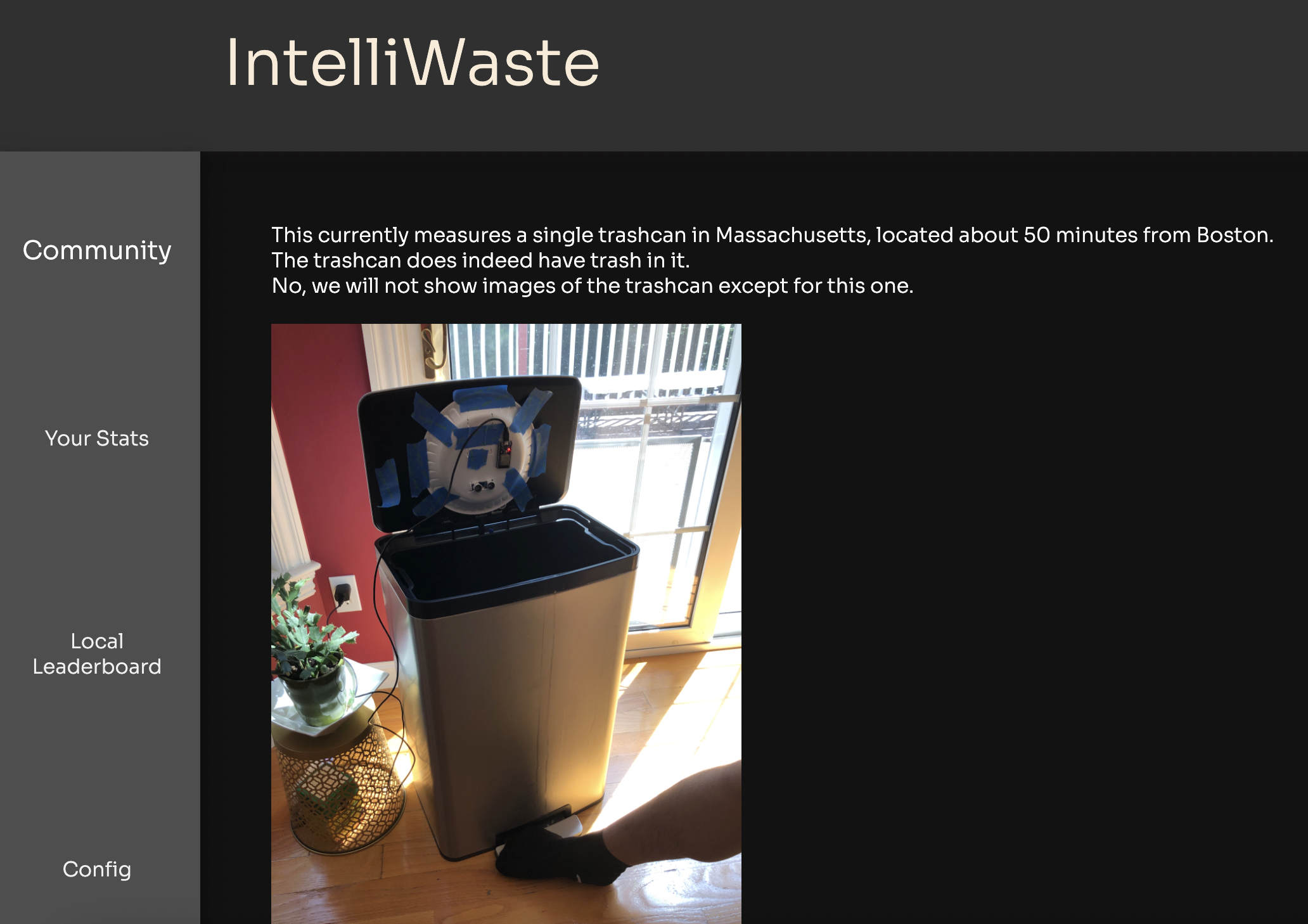
We built the IntelliWaste (more specifically a prototype) using an ESP32 microcontroller and an ultrasonic sensor. The ultrasonic sensor determines how much waste is inside of the trashcan, and from that information we can roughly determine the weight of the waste as well. The microcontroller then sends a GET request to our web server, which updates the value of the trash weight for that IntelliWaste user. That information then gets sorted and displayed on the leaderboard, and is updated every refresh. The web server was built using Flask, and the users, as well as their corresponding trash weights, are stored in a database made with SQLite.
Challenges we ran into
We originally wanted the IntelliWaste to be a simple scale; however, we did not have access to a piezoelectric sensor. We attempted to use one by taking apart a regular commercial scale, but those attempts failed, and we were left with about 16 hours left to complete the hackathon. It seemed dire, but we had an ultrasonic sensor left behind from a previous project, and we managed to substitute the scale with the sensor. We also had a problem when we realized we needed to provide a live demonstration of our project, as we did not think we would need to deploy the website. However, we managed to scrape with ngrok, although it is a bit of a rough fix.
Accomplishments that we're proud of
Being able to finish the hackathon despite our shortened time, as well as pulling off an allnighter and writing functional backend code. It's especially nice that we have a prototype to show off in our video, since It work completely (there is trash inside of the trashcan that is being measured by the website).
What we learned
We learned that commercial scales do not have viable piezoelectric sensors. However, at the same time, I think we had good review on both backend and frontend development- and the fact that the website is accessible is a nice lil' bonus on top.
What's next for IntelliWaste
Weekly charts, proper readings, and a nice, clean leaderboard. A functioning login system, and maybe even rewards for the top legitimate IntelliWaste users. There's lots of things we could do to continue this project, both frontend and backend, that would significantly improve the quality of the project and the user experience.

Log in or sign up for Devpost to join the conversation.